
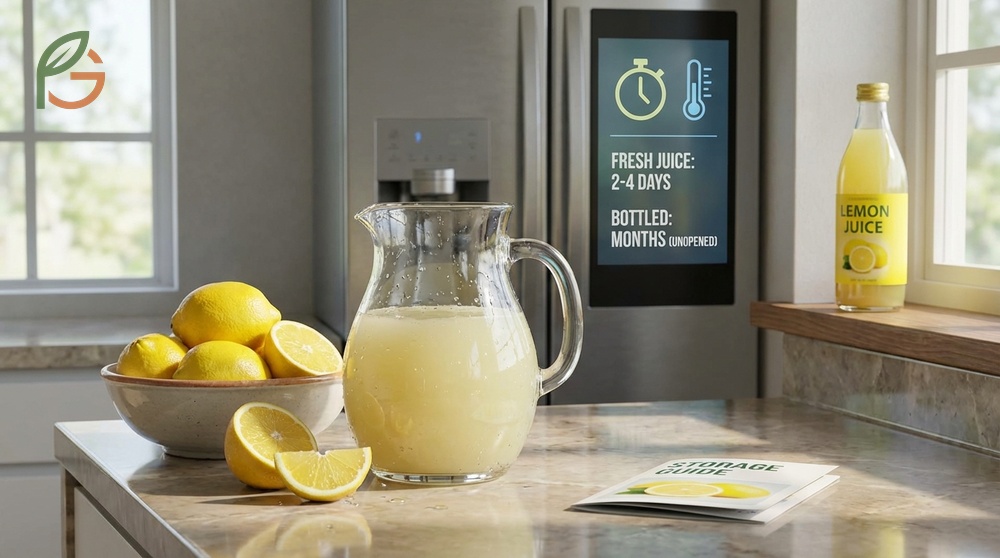
Does lemon juice go bad? Yes, all lemon juice eventually expires, though shelf life varies dramatically by type. Research shows fresh-squeezed lemon juice lasts only 2-4 days refrigerated, while unopened bottled juice can remain safe for months past its date[1]. Understanding proper storage methods can triple your juice’s lifespan and prevent foodborne illness. FruitGarden synthesizes USDA standards and food safety data to help you maximize freshness and recognize spoilage signs before they become health hazards.
Quick Answer
- Fresh lemon juice lasts 2-4 days refrigerated in airtight containers[2]
- Opened bottled juice keeps 6-12 months when refrigerated at 40-50°F (4.5-10°C)[3]
- Frozen lemon juice cubes remain good for up to 1 year at 0°F (-18°C) or lower[4]
- Signs of spoilage include mold growth, dark or cloudy color, fermented smell, and bitter taste[5]
Does Lemon Juice Go Bad
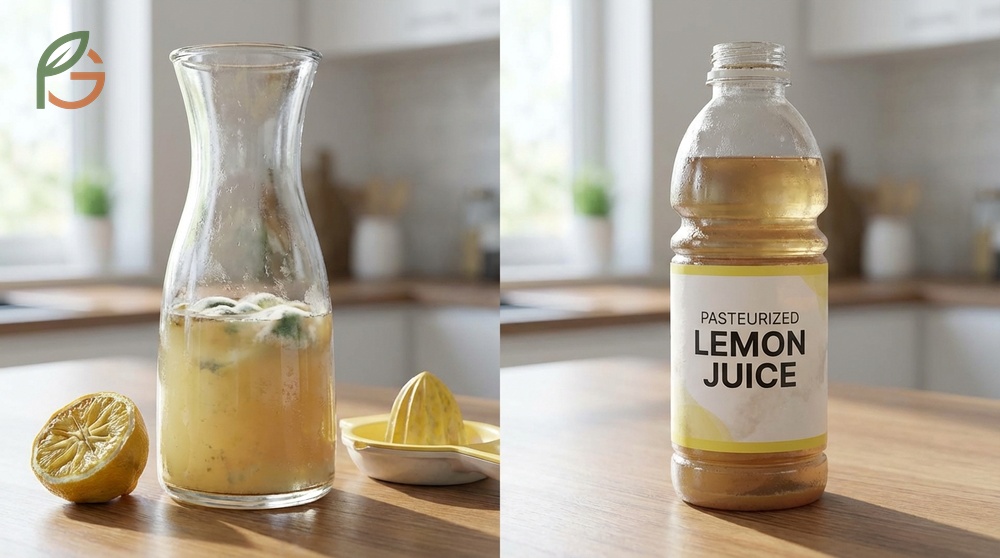
All lemon juice goes bad eventually, regardless of whether it’s fresh-squeezed or commercially bottled. The high citric acid content slows bacterial growth but doesn’t prevent spoilage indefinitely. Fresh juice contains active enzymes and zero preservatives, making it highly perishable compared to processed alternatives.
Commercial lemon juice undergoes thermal pasteurization to achieve a 5-log reduction in harmful microorganisms, as mandated by FDA regulations[6]. This process kills pathogens but can’t eliminate all spoilage organisms. Once you break the seal on any container, oxygen exposure triggers deterioration.
The rate of spoilage depends on storage temperature, container type, and whether preservatives are present. USDA standards specify that chilled commercial juice maintains quality for 2 months when kept at 40-50°F (4.5-10°C)[3]. Room temperature storage dramatically accelerates degradation, even in unopened bottles.
Why Lemon Juice Spoils
Lemon juice creates an ideal environment for yeast, mold, and bacteria despite its acidity. When exposed to air, microorganisms colonize rapidly on the juice surface. Fresh juice carries bacteria from lemon peels, cutting surfaces, and handling, which multiply when temperatures exceed 40°F.
Preservative-free juice lacks the chemical barriers that extend commercial products’ longevity. Studies demonstrate that perishable foods left at room temperature for more than 2 hours enter the danger zone for pathogen growth[1]. Even refrigeration only slows this process rather than stopping it completely.
Enzymatic Bittering Process
Enzymatic bittering transforms lemon juice flavor within hours of squeezing. When juice contacts oxygen, natural enzymes convert limonoid compounds into limonin, an intensely bitter chemical[7]. Lemons also contain nomilin, which accelerates this bitterness onset through synergetic reactions.
This process begins immediately after juicing but intensifies after 10 hours of oxygen exposure. Airtight containers and cold temperatures slow enzymatic activity but can’t prevent it entirely. The juice becomes progressively bitter and loses its bright, acidic character that makes it valuable for cooking and beverages.
Important Note: Don’t confuse enzymatic bittering with dangerous spoilage. Bitter juice from enzyme activity won’t make you sick, but it tastes unpleasant and works poorly in fresh applications like salad dressings or lemonade.
How Long Does Lemon Juice Last
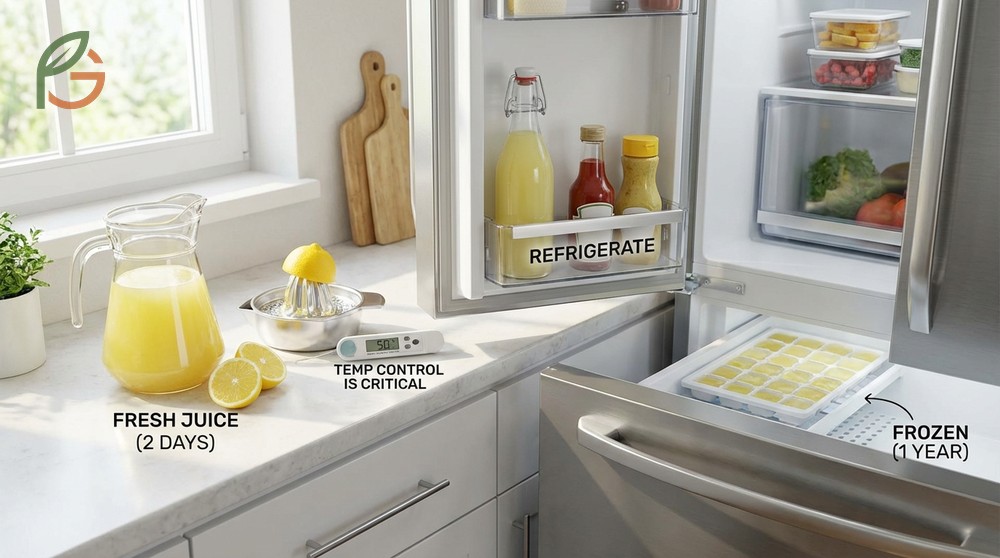
Lemon juice shelf life varies from 2 days to 12 months depending on processing method and storage conditions. Fresh-squeezed juice represents the shortest lifespan, while properly frozen juice can last an entire year. Temperature control remains the single most critical factor in preventing premature spoilage.
Understanding these timelines helps you plan purchases and avoid waste. The storage location matters as much as duration—pantry storage works for unopened bottles but fails catastrophically for fresh juice. Each juice type requires specific handling to maximize quality and safety.
This table compares shelf life durations for fresh squeezed, opened bottled, unopened bottled, and frozen lemon juice across different storage locations including room temperature, refrigerator, and freezer
| Juice Type | Room Temperature | Refrigerator (40°F/4.5°C) | Freezer (0°F/-18°C) |
|---|---|---|---|
| Fresh Squeezed | 1 day max[2] | 2-4 days[1] | 12 months in cubes[4] |
| Opened Bottled | 24 hours max[1] | 6-12 months[2] | Not recommended |
| Unopened Bottled | Several months past date[1] | 6-12 months past date | Not necessary |
| USDA Commercial (Chilled) | Not approved | 2 months at 40-50°F[3] | 12 months at 0°F[3] |
Fresh Squeezed Lemon Juice
Fresh lemon juice lasts only 2-4 days when refrigerated in airtight containers. The juice begins losing quality within hours as enzymes convert flavor compounds into bitter chemicals. Most people find the taste acceptable for salad dressings and fresh applications if used within 3 days.
Room temperature storage reduces this window to about 1 day before bacterial growth risks emerge. Contamination from lemon peels, cutting boards, and hands introduces microorganisms that multiply rapidly above 40°F. Glass containers work best because they don’t react with citric acid and maintain flavor integrity better than plastic.
Bottled Lemon Juice
Unopened bottled lemon juice can last several months past its best-by date when stored in cool, dark pantry locations. The USDA clarifies that “best by” dates indicate peak quality rather than safety deadlines[1]. Pasteurization and preservatives create this extended shelf stability that fresh juice can’t match.
Once opened, refrigeration becomes mandatory and extends usability to 6-12 months. The preservatives continue protecting against microbial growth, though flavor quality gradually declines. Many bottled juices are made from concentrate with added stabilizers, which explains their resilience compared to fresh alternatives.
Commercial products can develop off-flavors even before true spoilage occurs. The juice may taste dull, less acidic, or exhibit chemical notes from preservative breakdown over time. These changes don’t necessarily signal danger but indicate diminished culinary value.
Frozen Lemon Juice
Frozen lemon juice maintains quality for up to 12 months when stored at 0°F (-18°C) or lower. The freezing process suspends enzymatic activity and prevents microbial growth entirely. Ice cube tray portioning offers convenient single-serving options that thaw in minutes.
Optimal flavor retention occurs within the first 6-9 months, after which subtle taste changes may develop. Proper packaging in airtight containers or silicone bags prevents freezer burn and absorbs odors from other frozen foods. Transfer frozen cubes quickly to minimize defrosting during repackaging.
Storage Tip: Label frozen lemon juice cubes with the date before freezing. Most standard ice cube trays hold about 1-2 tablespoons per cube, making recipe measurements simple without thawing entire batches.
Signs of Bad Lemon Juice
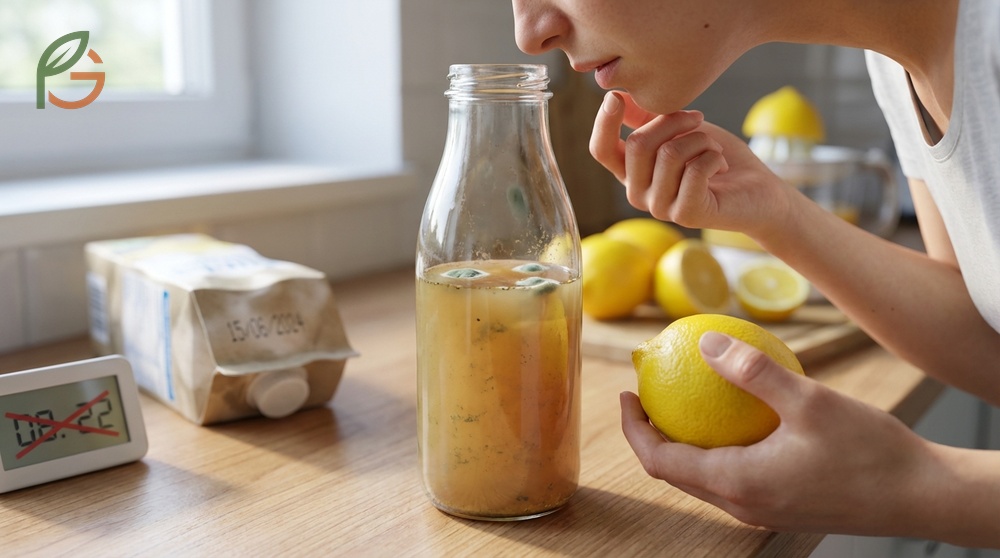
Recognizing spoiled lemon juice prevents foodborne illness and culinary disasters. Multiple sensory indicators reveal when juice has crossed from safe to hazardous. Never rely on expiration dates alone—your senses provide more accurate real-time assessments of actual condition.
Spoiled juice may contain harmful microbes including mold spores, yeast, and bacteria that cause digestive problems in sensitive individuals. If you’re uncertain about safety after checking these signs, discard the juice rather than risk illness. The cost of replacement is trivial compared to foodborne disease consequences.
- Mold growth: Visible green, white, or black fuzzy spots on the surface or container walls indicate fungal colonization[5]—discard immediately and wash containers thoroughly
- Color changes: Fresh lemon juice appears very light yellow, while spoiled juice turns dark yellow, brown, or develops cloudiness from suspended particles[5]
- Fermented smell: Bad juice emits musty, fermented, or vinegar-like odors that differ dramatically from the clean citrus scent of fresh juice
- Bitter taste: Spoiled juice loses its characteristic sour-sweet citrus flavor and develops harsh bitterness or chemical aftertaste that signals compound degradation
- Texture changes: Slimy or syrupy consistency indicates bacterial byproducts accumulating in the liquid—this texture never occurs in safe juice
Some confusion exists between enzymatic bittering (harmless but unpleasant) and true spoilage (potentially dangerous). Enzymatic changes produce bitter flavor without visible mold, off-smells, or texture changes. True spoilage combines multiple warning signs simultaneously.
The most critical sign is mold presence. Even small amounts of surface mold indicate extensive contamination throughout the liquid[5]. Mold grows rapidly in liquids, and the visible portions represent only a fraction of actual fungal presence in the container.
Safety Warning: Don’t taste suspicious juice to test for spoilage. Visual inspection and smell tests provide sufficient information without potential exposure to harmful bacteria or mold toxins.
How to Store Lemon Juice
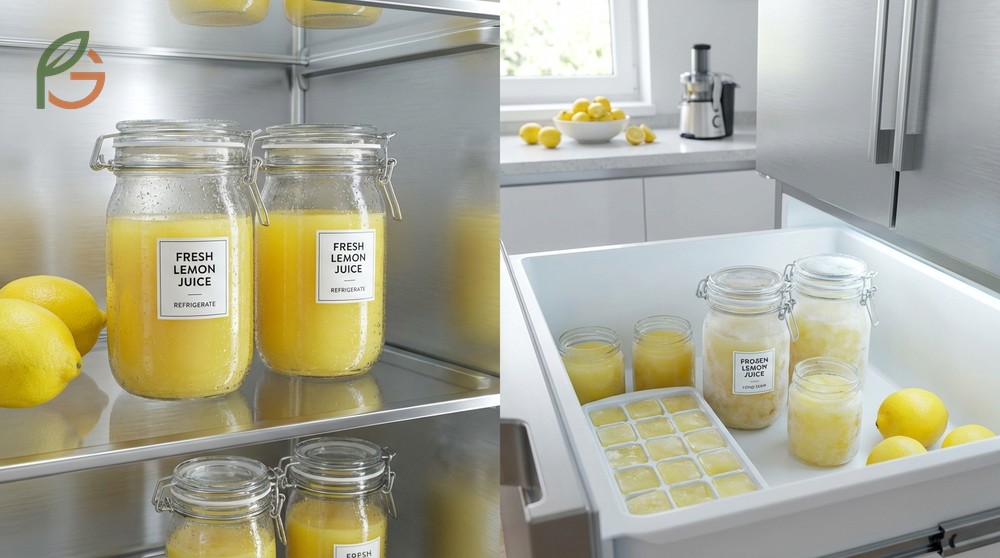
Proper storage methods can triple lemon juice’s usable lifespan while maintaining flavor quality. Container selection, temperature control, and sealing technique all impact preservation success. Glass containers outperform plastic alternatives because they don’t interact with citric acid or absorb odors from surrounding foods.
For short-term use (within a week), refrigeration in airtight glass jars keeps fresh juice at peak quality. Long-term storage requires freezing in portioned cubes or specialized containers that eliminate air exposure. Commercial bottled juice needs refrigeration immediately after opening, regardless of pantry storage before the seal breaks.
- Clean thoroughly: Wash glass containers with hot soapy water and dry completely before adding juice—residual moisture or contaminants accelerate spoilage
- Fill containers completely: Minimize air space at the top of storage containers to reduce oxygen exposure that triggers enzymatic bittering
- Position strategically: Store juice at the back of the refrigerator where temperatures remain most stable at 40°F (4.5°C)[1], rather than in door shelves
- Filter before storing: Strain out pulp and seeds through fine mesh to prevent particle breakdown that creates cloudiness and accelerates degradation
- Label with dates: Mark containers with squeezing or opening dates to track the 2-4 day freshness window for optimal quality
For freezing lemon juice, pour strained juice into silicone ice cube trays set on cookie sheets for stability. Freeze until completely solid (6-8 hours), then transfer cubes to airtight freezer bags or containers. Remove as much air as possible from bags to prevent freezer burn during the 12-month storage period.
You can use frozen cubes directly in hot dishes, beverages, or recipes without thawing. For applications requiring liquid juice, defrost cubes in small bowls at room temperature or in the refrigerator overnight. Since cubes freeze individually before bagging, they don’t stick together and allow easy single-serving removal.
Store unopened bottled lemon juice in cool, dark pantry locations away from heat sources and direct sunlight. Temperatures above 75°F can degrade preservatives faster than expected. Once opened, reseal bottles tightly after each use and always return them to the refrigerator immediately—even brief room temperature exposure compounds over multiple uses.
| Factor | Fresh Squeezed Juice | Bottled Juice (Opened) |
|---|---|---|
| Container Type | Glass airtight jars preferred | Original bottle with tight cap |
| Temperature | 40°F (4.5°C) consistently | 40-50°F (4.5-10°C) range |
| Maximum Duration | 2-4 days refrigerated[1] | 6-12 months refrigerated[2] |
| Room Temp Limit | 1 day maximum | 24 hours after opening |
| Freezing Option | Yes—12 months in cubes[4] | Possible but not recommended |
Pro Tip: Freeze lemon juice in both standard ice cube trays (1-2 tablespoons each) and larger silicone muffin cups (1/4 cup each) to have multiple portion sizes available for different recipes.
Conclusion
The evidence is clear: does lemon juice go bad depends entirely on storage method and processing type. Fresh juice demands refrigeration and consumption within 2-4 days, while bottled alternatives provide 6-12 months of usability after opening. Freezing extends this timeline to a full year without sacrificing culinary applications.
Current food safety guidance emphasizes temperature control as the primary spoilage prevention strategy. Recognition of mold, color changes, off-odors, and texture abnormalities protects you from consuming contaminated juice. FruitGarden recommends establishing clear labeling systems and storage protocols to maximize your citrus juice investment while maintaining household food safety standards.
Frequently Asked Questions
Can lemon juice go bad in the freezer?
Frozen lemon juice remains safe indefinitely at 0°F (-18°C) but experiences quality decline after 12 months. The flavor stays optimal for 6-9 months before subtle taste changes develop. Proper airtight packaging prevents freezer burn and odor absorption that compromise quality before true spoilage occurs.
Does lemon juice expire if unopened?
Unopened bottled lemon juice can last several months past its printed best-by date when stored in cool, dark locations. The date indicates peak quality rather than a safety deadline according to USDA guidelines. Fresh lemons themselves last 2-4 weeks refrigerated before juice extraction becomes problematic.
How long is fresh squeezed lemon juice good for at room temperature?
Fresh squeezed lemon juice lasts only about 1 day at room temperature before bacterial growth risks become significant. Perishable foods shouldn’t remain unrefrigerated for more than 2 hours under food safety protocols. Refrigeration extends this window to 2-4 days while maintaining both safety and flavor quality.
How long will fresh lemon juice last in the refrigerator?
Fresh lemon juice lasts 2-4 days in the refrigerator when stored in airtight glass containers. The juice remains safe for this duration but develops increasing bitterness from enzymatic activity after day 3. Use within 3 days for applications like salad dressings where fresh citrus flavor is critical to recipe success.
How can you tell if bottled lemon juice has gone bad?
Check for visible mold on the surface or container walls, dark or cloudy color compared to the original light yellow, fermented or musty smell, and unusual slimy texture. Bottled juice can also develop off-flavors or chemical tastes from preservative breakdown even before true microbial spoilage occurs.
Is fresh lemon juice better than bottled for long-term storage?
Fresh lemon juice offers superior flavor but terrible long-term storage compared to bottled alternatives. Fresh juice lasts only 2-4 days refrigerated, while opened bottled juice keeps 6-12 months due to pasteurization and preservatives. Freezing fresh juice in cubes provides the best compromise—12-month storage with near-fresh taste quality.
What happens if you drink spoiled lemon juice?
Consuming spoiled lemon juice can cause foodborne illness including nausea, vomiting, diarrhea, and stomach cramps, especially in children, elderly, or immunocompromised individuals. Mold-contaminated juice poses particular risks from mycotoxins. If juice shows any spoilage signs including mold, discard it immediately rather than tasting to confirm.





