
Does lemon water break a fast? No, plain lemon water won’t break your fast for most people. Research shows that a typical serving contains only 3-6 calories[1] and doesn’t trigger significant insulin response, keeping your body in a fasted state. FruitGarden synthesizes current nutritional research and fasting protocols to help you understand when and how citrus fruits affect metabolic processes.
Quick Answer
- Plain lemon water contains 3-6 calories per serving and won’t break most fasts[1]
- One lemon wedge has only 1.3 calories with 0.149g sugar[2]
- Lemon water doesn’t spike insulin levels, allowing fat-burning to continue during fasting periods[3]
- Autophagy starts after 12-16 hours of fasting and peaks at 24-48 hours[4]
- Avoid adding sugar, honey, or sweeteners—these additions will break your fast immediately[2]
Does Lemon Water Break a Fast
Plain lemon water doesn’t break a fast because it contains minimal calories that don’t trigger metabolic changes. Studies demonstrate that the tiny amount of natural sugars in lemon—less than 0.5g per serving—won’t raise insulin levels enough to stop fat burning[3]. Most people find that adding a squeeze of fresh lemon to water actually makes fasting easier by providing flavor without compromising results.
Research shows that your body remains in a fasted state as long as insulin levels stay low. The juice from half a lemon translates to roughly 3 calories when diluted in 8 oz of water[1]. This amount is far below the threshold that would signal your body to exit ketosis or stop burning stored fat for energy.
Current nutritional guidance emphasizes that beverages containing fewer than 10 calories are generally safe during fasting windows. What often gets overlooked is that lemon water’s citric acid content can actually enhance digestion and provide antioxidants without disrupting your fast[5]. The vitamin C in lemons supports immune function even when you’re not eating solid food.
Caloric Content of Lemon Water
A whole lemon contains approximately 29 calories per 100g[6], but you’re not consuming an entire lemon when making lemon water. One tablespoon (15ml) of pure lemon juice provides about 6 calories, while the juice from half a lemon gives you 3-5 calories when mixed with water[3].
Even if you squeeze a full lemon into 16 oz of water, you’re only adding 12-15 total calories to your drink. This remains well below the 50-calorie threshold that many fasting experts use as a guideline for maintaining a fasted state. The carbohydrate content is equally minimal—less than half a gram per wedge, with only 0.149g coming from natural sugars[2].
Important Note: The calorie count changes dramatically when you add sweeteners. Just one teaspoon of honey adds 21 calories and 6g of sugar, which will break your fast by triggering insulin release. Stick to plain lemon and water only during fasting periods.
Insulin Response and Metabolism
The key factor in determining what breaks a fast isn’t just calories—it’s insulin response. Evidence indicates that insulin requires substantial carbohydrate intake to spike significantly, far more than the trace amounts found in diluted lemon juice[3]. When insulin levels remain low, your body continues burning fat for fuel instead of switching to glucose metabolism.
Lemon water keeps insulin stable because it contains citric acid rather than simple sugars like glucose or sucrose. The small amount of fructose present—less than 0.2g per serving—doesn’t provoke the same metabolic response as drinking fruit juice or soda. This is why plain lemon water can enhance your fast rather than interrupt it, providing hydration and electrolytes without compromising fat-burning benefits.
Can You Drink Lemon Water While Fasting
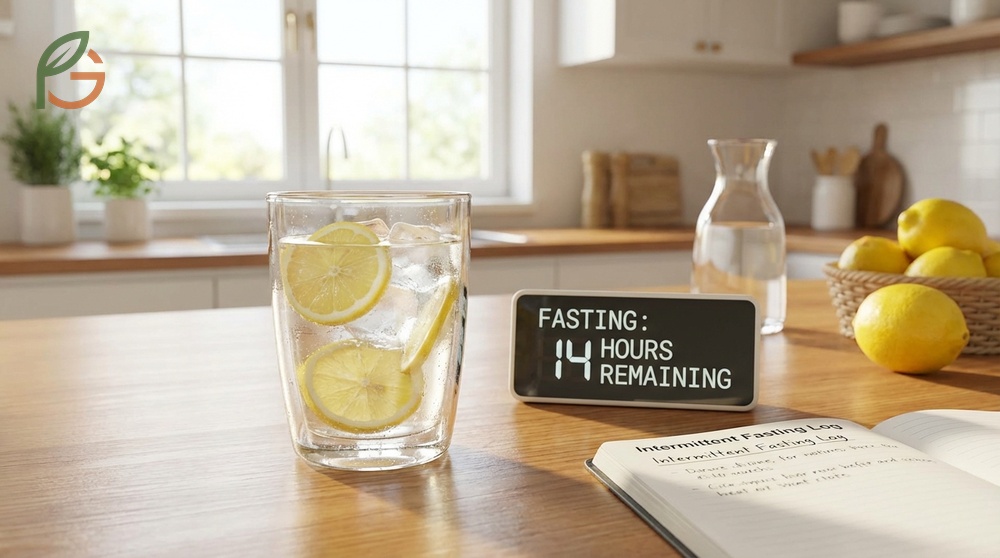
You can absolutely drink plain lemon water during intermittent fasting windows without concern. Current fasting protocols classify lemon water as a non-nutritive beverage that supports rather than hinders your fasting goals[5]. Most people practicing time-restricted eating for weight loss or metabolic health find that lemon water improves their fasting experience by curbing hunger and providing a refreshing alternative to plain water.
Research across multiple fasting studies confirms that beverages with negligible caloric content don’t interfere with the metabolic benefits you’re seeking. The vitamin C in lemons—approximately 53mg per 100g of fruit[6]—provides antioxidant support during your fast without triggering digestive processes that would break the fasted state.
Intermittent Fasting Rules for Drinks
During fasting periods, the golden rule is to consume only zero-calorie or near-zero-calorie beverages. Water, black coffee, plain tea, and lemon water all fall within acceptable limits because they don’t spike blood sugar or insulin levels. What you’re trying to avoid is anything that switches your body from fat-burning mode to glucose-processing mode.
Studies demonstrate that when you keep caloric intake below 10 calories per serving, your body maintains ketosis and continues autophagy processes. The 3-6 calories in lemon water fit comfortably within this range, unlike beverages such as bone broth (40+ calories) or bulletproof coffee with butter and MCT oil (100+ calories) that may provide benefits but technically break a strict fast.
- Plain water (still or sparkling) – zero calories, the baseline for all fasting
- Black coffee – fewer than 5 calories per cup, no cream or sugar allowed
- Plain green, black, or herbal tea – zero calories when consumed without additives
- Lemon water – 3-6 calories per serving with fresh-squeezed juice only
- Apple cider vinegar diluted in water – 1 tablespoon provides 3 calories and may help stabilize blood sugar
What Breaks a Fast
A fast is broken when you consume enough calories to trigger an insulin response that stops fat burning and autophagy. This typically happens at around 30-50 calories for most people, though individual thresholds vary based on metabolism and fasting goals[7]. Anything containing protein, fat, or significant carbohydrates will signal your body to exit the fasted state and begin digestion.
The reason lemon water doesn’t break your fast is simple: it doesn’t provide enough macronutrients to activate digestive enzymes or insulin secretion. In contrast, drinking a protein shake, eating a handful of nuts, or having milk in your coffee introduces enough calories and nutrients to restart your metabolism. Even diet sodas, while technically zero-calorie, may trigger cravings or insulin responses in some people due to artificial sweeteners.
- Any food, even small amounts – a single bite of anything solid starts digestion
- Milk, cream, or non-dairy creamers in coffee – 20-50 calories per tablespoon
- Fruit juice – 25-50 calories per 4 oz serving with high sugar content
- Sweetened beverages including honey, sugar, or syrups – immediate insulin spike
- Supplements containing calories – protein powders, mass gainers, or oil-based vitamins
- Bone broth – 40-50 calories per cup with protein and minerals
Watch Out: Pre-made lemon water products often contain added sugars or sweeteners. Always check labels or make your own by squeezing fresh lemon into plain water. Even “natural” flavored waters may include enough calories to break your fast if you’re following strict protocols.
Does Lemon Water Break Autophagy
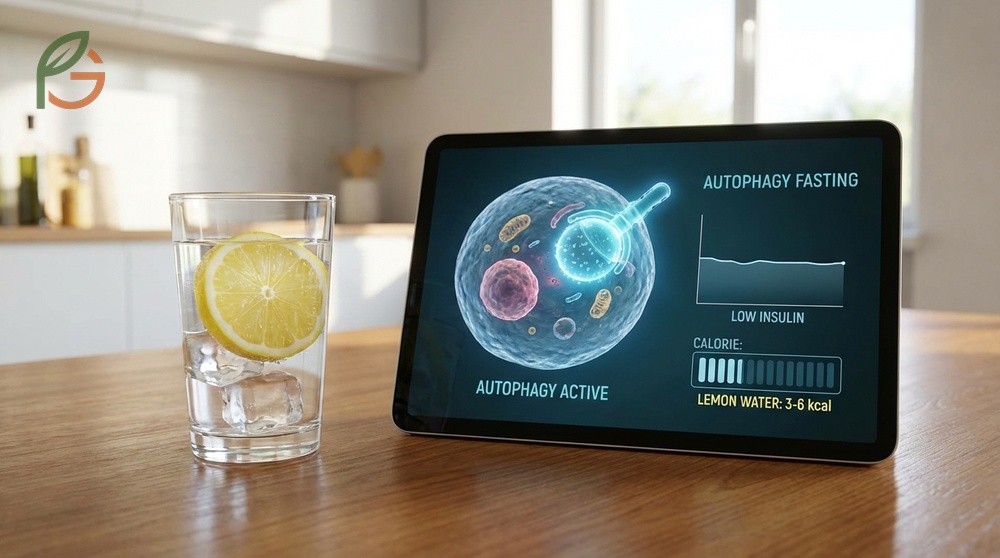
Plain lemon water doesn’t significantly disrupt autophagy, the cellular cleanup process that’s one of fasting’s most valuable benefits. Research suggests that autophagy activation requires maintaining low insulin levels rather than absolute zero-calorie intake[4]. The 3-6 calories in lemon water fall well below the threshold that would stop this process, allowing your cells to continue their self-renewal work.
Animal studies indicate that autophagy shuts down only when caloric intake reaches approximately 30 calories or more[7]. A splash of lemon juice contains less than one-tenth of that amount. What matters most for maintaining autophagy is avoiding protein and keeping carbohydrate intake minimal—both conditions that plain lemon water satisfies.
Autophagy Benefits During Fasting
Autophagy begins ramping up after about 12-16 hours of fasting, with peak activity occurring between 24-48 hours depending on your individual metabolism and activity levels[4]. During this process, your cells break down and recycle damaged proteins, clear out dysfunctional components, and regenerate healthier cellular structures. This cellular housekeeping provides anti-aging benefits and may reduce inflammation throughout your body.
Most people don’t realize that staying hydrated actually enhances autophagy rather than hindering it. Lemon water supports this process by providing hydration plus small amounts of electrolytes—approximately 15mg of potassium per serving[7]—without interfering with cellular cleanup mechanisms.
Caloric Threshold for Autophagy
The exact caloric threshold for maintaining autophagy varies by individual, but current evidence points to a range between 30-50 calories as the cut-off point. Below this threshold, your body continues its cellular renewal processes without interruption. Above it, insulin levels rise enough to signal that nutrients are available, which slows or stops autophagy as your body shifts focus to processing incoming food.
This is why plain lemon water remains safe for autophagy-focused fasting—it provides only 3-6 calories per serving, far below even the most conservative estimates. The citric acid and vitamin C in lemon may even support autophagy by reducing oxidative stress in cells. However, if you’re following a therapeutic fasting protocol for specific medical reasons, consult your healthcare provider before adding anything to water during fasting periods.
Dirty Fasting vs Clean Fasting With Lemon Water
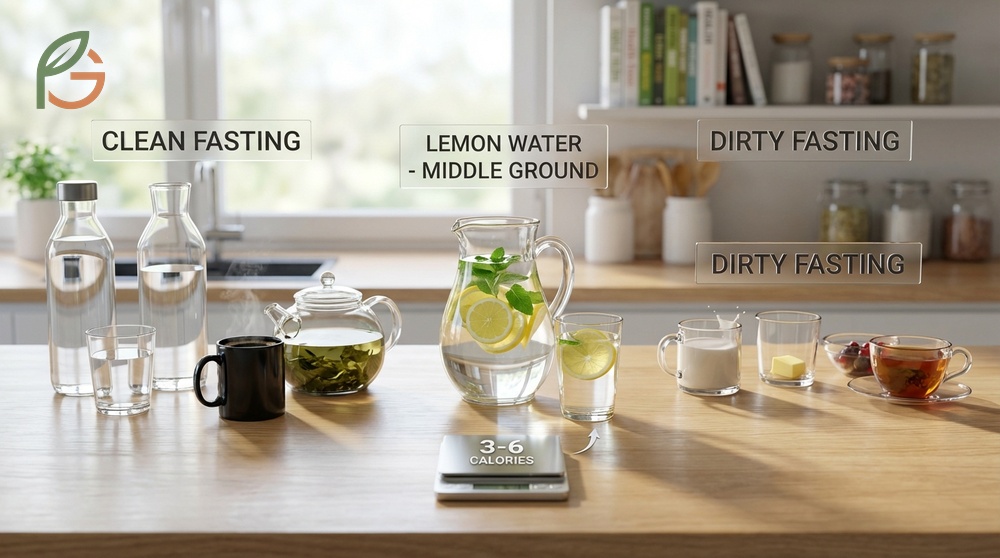
Clean fasting allows only zero-calorie beverages like water, black coffee, or plain tea, while dirty fasting permits small amounts of calories—typically under 50—from sources that don’t significantly spike insulin[8]. Lemon water sits in an interesting middle ground: it’s technically not zero-calorie, but its 3-6 calories per serving are so minimal that most fasting experts classify it as acceptable for clean fasting protocols.
Studies demonstrate that clean fasting produces deeper autophagy and more efficient fat burning compared to dirty fasting because it maintains the lowest possible insulin levels. Dirty fasting may include items like bulletproof coffee with butter, a handful of nuts, or even a small amount of cream—additions that make fasting easier but potentially reduce metabolic benefits. For practical purposes, plain lemon water aligns more closely with clean fasting principles since it doesn’t meaningfully impact ketosis.
The main difference between these approaches comes down to your goals. If you’re fasting primarily for weight loss, dirty fasting with items under 50 calories might work fine and help you stick with the program longer. If you’re seeking maximum autophagy benefits or following a therapeutic fast, clean fasting with only water, black coffee, and plain lemon water will deliver stronger results.
This table compares clean fasting and dirty fasting approaches, showing allowed beverages, calorie limits, and metabolic effects on ketosis and autophagy
| Aspect | Clean Fasting | Dirty Fasting |
|---|---|---|
| Allowed Beverages | Water, black coffee, plain tea, lemon water | Items above plus cream, MCT oil, bone broth (under 50 cal) |
| Calorie Limit | 0-10 calories[8] | 10-50 calories[8] |
| Ketosis Depth | Maintains deepest ketosis and fat burning | Maintains ketosis but at slightly reduced levels |
| Autophagy Benefits | Maximum cellular cleanup and regeneration[8] | Reduced autophagy compared to clean fasting[8] |
| Best For | Maximum metabolic benefits, therapeutic fasting, experienced fasters | Beginners, social situations, long-term adherence |
Pro Tip: If you’re new to fasting, starting with dirty fasting and gradually transitioning to clean fasting can improve long-term success. Adding lemon water helps bridge this transition by providing flavor and satisfaction without significantly compromising results.
Black Coffee vs Lemon Water Fasting
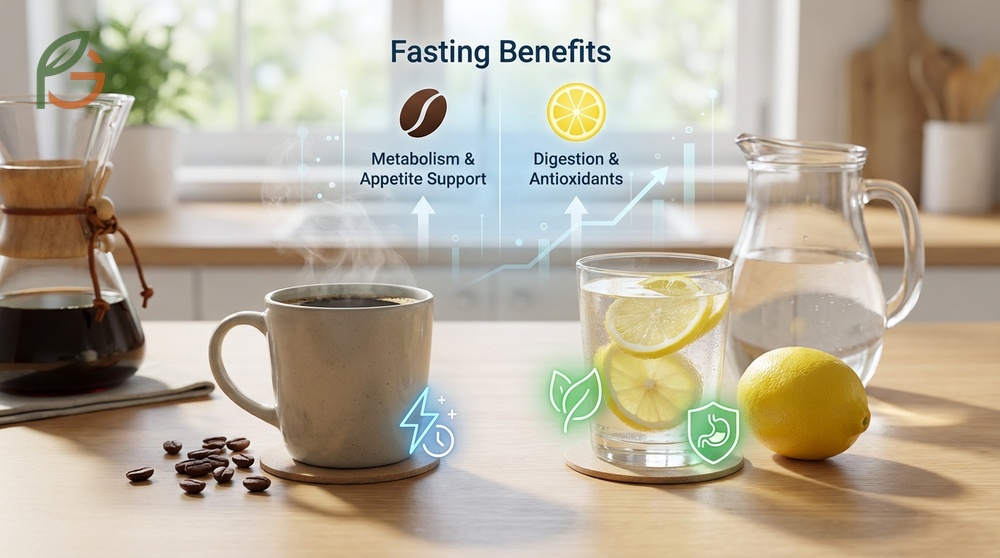
Both black coffee and lemon water are acceptable during fasting, but they offer different benefits. Black coffee contains fewer than 5 calories per cup and provides caffeine that can suppress appetite and boost metabolism by 3-11%. Lemon water delivers 3-6 calories per serving with vitamin C and citric acid that support digestion and provide antioxidants without the stimulant effects.
Research shows that black coffee may enhance autophagy through compounds called polyphenols, while lemon water provides electrolytes and helps maintain hydration more effectively than plain water for some people. The choice between them often comes down to personal preference and timing—coffee works best in the morning for energy, while lemon water can be consumed throughout the day without affecting sleep.
Many experienced fasters use both strategically: black coffee in the morning to extend fasting windows and curb hunger, then switching to lemon water in the afternoon to stay hydrated without caffeine. Neither beverage breaks a fast when consumed plain, making them the two most popular fasting-friendly drinks after water.
- Black coffee: Appetite suppression, increased metabolism, enhanced mental focus and alertness
- Black coffee: Contains polyphenols that may boost autophagy and provide anti-inflammatory benefits
- Lemon water: Improved hydration with electrolytes, especially potassium at 15mg per serving[7]
- Lemon water: Vitamin C antioxidants at 53mg per 100g of lemon[6] support immune function during fasting
- Lemon water: Citric acid aids digestion and may reduce bloating when breaking your fast
- Both: Zero impact on insulin levels when consumed without sweeteners or cream
Conclusion
The evidence is clear: plain lemon water doesn’t break a fast for the vast majority of people practicing intermittent fasting. With only 3-6 calories per serving and no significant insulin response, it fits comfortably within both clean and dirty fasting protocols while providing hydration, vitamin C, and a refreshing alternative to plain water. Current research supports using lemon water throughout fasting windows without compromising fat burning, ketosis, or autophagy benefits.
Whether you’re fasting for weight loss, metabolic health, or cellular renewal, plain lemon water can enhance your experience without undermining your goals. Just remember to skip the sweeteners, use fresh-squeezed juice only, and keep serving sizes reasonable. FruitGarden continues to synthesize emerging research on citrus fruits and metabolic health to help you make informed decisions about your fasting practice.
Medical Disclaimer
Important Medical Disclaimer: This content is for informational and educational purposes only. It’s not intended as a substitute for professional medical advice, diagnosis, or treatment. Always consult a qualified healthcare professional before starting any fasting protocol, making changes to your diet, or modifying your health routine, especially if you have diabetes, metabolic disorders, or other medical conditions. Individual results may vary, and what works for most people may not be appropriate for your specific situation.
Frequently Asked Questions
Will Lemon Water Break a Fast for Weight Loss?
No, lemon water won’t break a fast when you’re fasting for weight loss. The 3-6 calories per serving don’t trigger insulin release or stop fat burning, allowing your body to continue using stored fat for energy. Studies show that beverages under 10 calories maintain the metabolic benefits of fasting, making lemon water an ideal choice for staying hydrated during weight loss fasting protocols.
Does Lemon Juice Break a Fast Differently Than Lemon Water?
Pure lemon juice contains more calories than diluted lemon water—about 6 calories per tablespoon versus 3-6 for a full glass of lemon water. However, both remain below the threshold that would break a fast. The key is dilution: when you squeeze lemon into water, you’re consuming far fewer calories per sip compared to drinking straight lemon juice, making lemon water the better choice for fasting.
Can I Drink Lemon Water During a 16:8 Intermittent Fast?
Yes, you can drink plain lemon water throughout your 16-hour fasting window during 16:8 intermittent fasting. The minimal calorie content won’t disrupt your fast or interfere with the metabolic benefits you’re seeking. Many people find that lemon water makes their fasting window more enjoyable and helps them stay consistent with their 16:8 schedule long-term.
Does Hot Lemon Water Break a Fast vs Cold Lemon Water?
Temperature doesn’t change whether lemon water breaks a fast—both hot and cold versions contain the same calories and have identical effects on insulin levels. Hot lemon water may feel more satisfying during morning fasting periods, while cold lemon water can be more refreshing throughout the day. Choose based on your preference, as neither will compromise your fasted state.
Can You Have Lemon Water While Fasting for Blood Work?
No, you shouldn’t have lemon water when fasting for blood work or medical tests. Medical fasting requires consuming nothing but plain water for 8-12 hours before testing to ensure accurate results. Even though lemon water won’t break an intermittent fast for weight loss, the small amount of nutrients can affect certain blood test measurements. Always follow your healthcare provider’s specific fasting instructions before medical procedures.
Does Lemon Water Spike Insulin During Fasting?
Lemon water doesn’t cause significant insulin spikes during fasting. Research shows that insulin response requires substantial carbohydrate intake—far more than the 0.2-0.5g found in a serving of lemon water. The citric acid and minimal natural sugars in diluted lemon juice keep blood sugar and insulin levels stable, allowing your body to maintain its fasted metabolic state.
How Much Lemon Water Can You Drink While Fasting?
You can drink several glasses of lemon water throughout your fasting window without concern. Even if you consume 4-5 glasses per day with half a lemon each, you’re only adding 12-30 total calories—well below the 50-calorie threshold that might affect your fast. Focus on staying hydrated rather than limiting lemon water consumption, as proper hydration supports all the metabolic benefits of fasting.





