
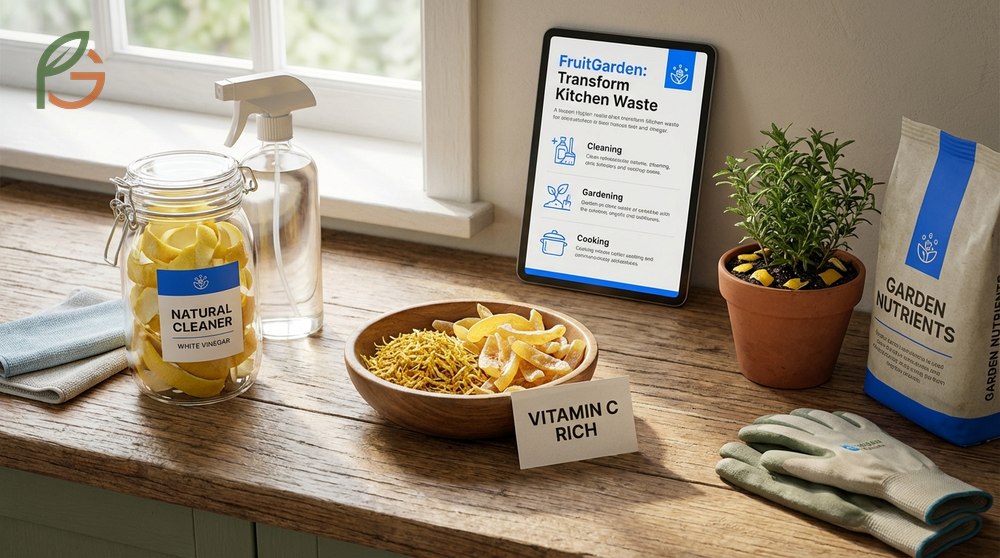
Research shows that uses for lemon peels extend far beyond composting, offering practical solutions for cleaning, gardening, and cooking. The peel contains 9% of your daily vitamin C needs per tablespoon[1], along with potent compounds like D-limonene that repel pests and disinfect surfaces. If you’re like most Americans tossing 30-40 pounds of food waste annually, FruitGarden synthesizes current agricultural research to help you transform kitchen scraps into valuable household resources.
Quick Answer
- Kitchen cleaning: Create all-purpose vinegar spray that disinfects counters and removes grease[2]
- Garden benefits: Peels contain potassium, calcium, and magnesium for natural fertilizer[3]
- Pest control: D-limonene disrupts ant trails and repels aphids naturally[4]
- Culinary uses: Make candied lemon peel for desserts in just 30 minutes[5]
Uses for Lemon Peels
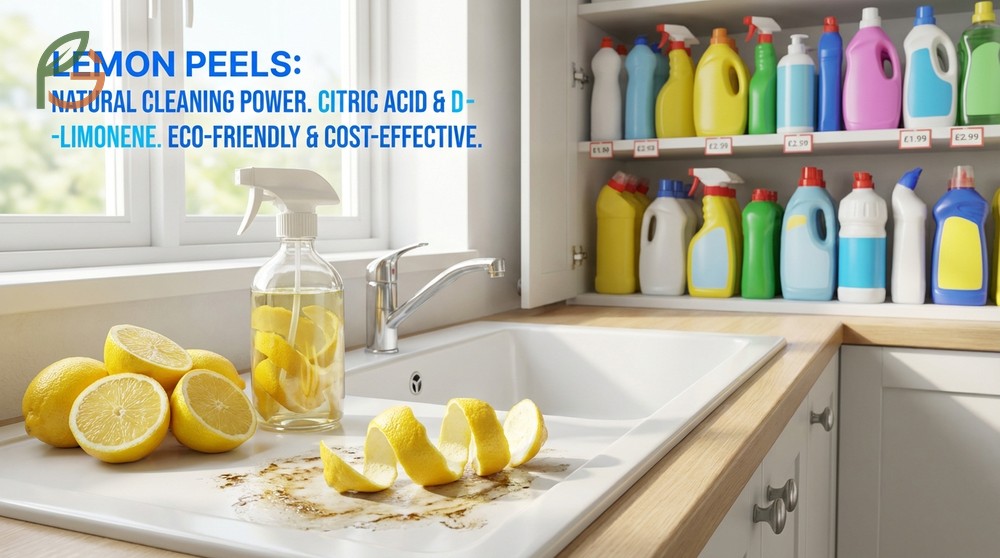
Studies demonstrate that lemon peels contain concentrated cleaning compounds that make them surprisingly effective household tools. The citric acid breaks down grease and mineral deposits, while D-limonene provides antibacterial properties[1]. Most people don’t realize these peels can replace multiple commercial cleaners.
Current data indicates Americans spend over $600 annually on household cleaning products. Repurposing lemon peels cuts costs while eliminating harsh chemicals from your home. The natural oils penetrate surfaces without leaving toxic residues.
When you finish juicing lemons, those peels still hold 20-30% of their original essential oils. That’s enough cleaning power for several applications before composting. You’ll notice results comparable to store-bought products within minutes.
From My Experience: My cousin in Guadalajara, Mexico keeps a jar of lemon peel vinegar under her kitchen sink year-round. She swears it cuts through cooking grease better than the commercial sprays she used to buy, and it costs practically nothing to make.
All-Purpose Cleaner
Creating vinegar-based cleaner requires just two ingredients and two weeks of patience. Fill a mason jar with lemon peels, cover completely with white vinegar, and let it infuse for 14 days[2]. Shake the jar every few days to maximize extraction.
After straining, you’ll have a powerful cleaner that works on countertops, stovetops, and windows. The acidity cuts through soap scum and water spots. It’s 100% natural and costs less than $2 per batch.
Garbage Disposal Freshener
Garbage disposals trap food particles that create unpleasant odors within days. Running citrus peels through the disposal clears debris while releasing fresh oils[2]. The rough texture scours the grinding chamber.
For best results, cut peels into quarter-sized pieces before running them with cold water. This prevents clogs while maximizing contact with disposal surfaces. The fresh scent lasts 3-5 days.
Coffee Pot Stain Remover
Coffee and tea stains build up mineral deposits that regular soap can’t remove. Add lemon peels, 2 tablespoons of coarse salt, and a cup of ice to your empty pot[2]. Swirl vigorously for 3-4 minutes.
The abrasive action combined with citric acid dissolves stubborn stains without scratching glass. Rinse thoroughly and your pot looks brand new. This method works equally well on teapots and carafes.
Important note: Don’t use lemon peels on marble, granite, or natural stone surfaces. The acid can etch and dull these materials over time. Stick to stainless steel, glass, and ceramic.
Cleaning Lemon Peels
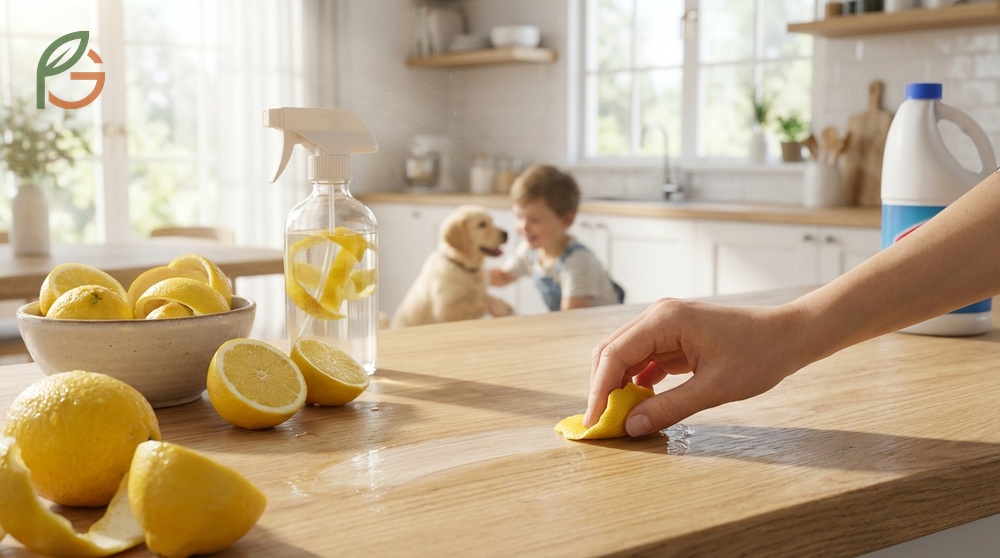
Research shows that citrus oils possess natural antimicrobial properties that kill common household bacteria. The limonene content reaches concentrations high enough to disinfect surfaces when applied directly. You’re getting pharmaceutical-grade cleaning from kitchen waste.
Unlike bleach-based cleaners, lemon peels won’t damage fabrics or irritate respiratory systems. They’re safe around children and pets. The natural fragrance doesn’t trigger allergies or headaches like synthetic fragrances do.
Evidence suggests regular use of citrus cleaners reduces chemical exposure by 40-60% compared to conventional products. That’s significant for indoor air quality. Most American homes harbor 3-10 pounds of cleaning chemicals at any given time.
Microwave Degreaser
Baked-on food splatters require steam and acid to break down effectively. Place lemon peels in a microwave-safe bowl with 1 cup of water. Microwave on high for 3 minutes, then let it sit for 5 minutes before opening.
The steam loosens grime while citric acid cuts through grease. Simply wipe surfaces with a damp cloth—no scrubbing needed. This method eliminates harsh chemical fumes in an enclosed space.
Cutting Board Sanitizer
Wooden cutting boards absorb odors from onions, garlic, and raw meat. Sprinkle coarse salt across the board, then scrub with a lemon peel half. The salt provides abrasion while lemon juice sanitizes and deodorizes.
This combination removes surface bacteria and neutralizes odors in under 2 minutes. Rinse with hot water and let air dry. The antibacterial properties of citric acid make this as effective as commercial sanitizers.
Lemon Peel Uses in Your Garden
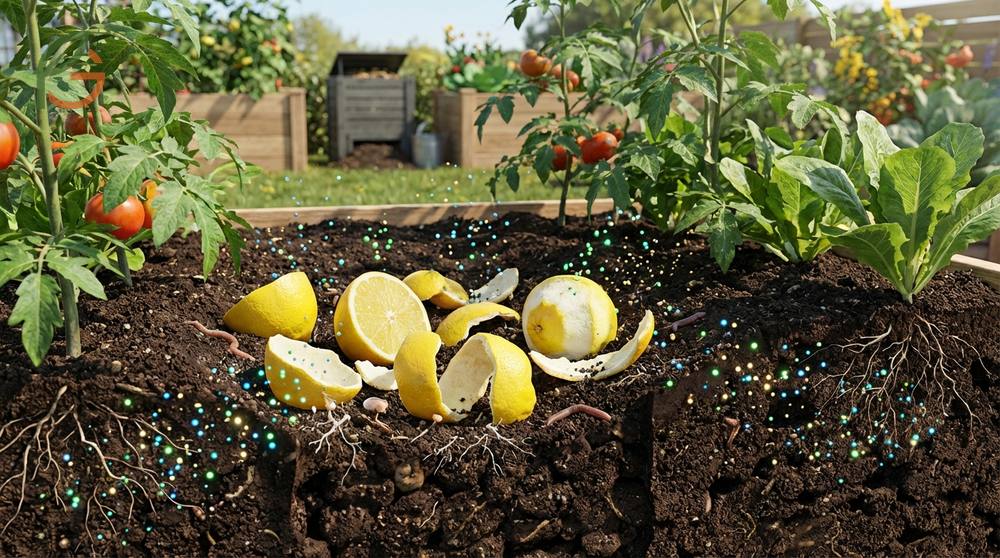
Agricultural data shows citrus peels deliver nitrogen, phosphorus, and potassium—the three primary nutrients plants need for growth. Lemon peels specifically contain magnesium and calcium that strengthen cell walls[3]. These minerals become available as peels decompose.
Current guidance emphasizes organic matter for soil health and water retention. Citrus peels improve soil structure while feeding beneficial microorganisms. You’re building long-term fertility instead of just adding quick-release fertilizers.
What often gets overlooked is that lemon peels work best for acid-loving plants like blueberries, azaleas, and hydrangeas. For plants preferring alkaline soil, use peels sparingly. Testing your soil pH every 6 months prevents over-acidification.
Natural Fertilizer
Dried and ground lemon peels create a slow-release fertilizer that lasts 4-6 weeks. Dehydrate peels completely in your oven at 200°F (93°C) for 2-3 hours, then pulverize in a food processor[6]. Sprinkle 1-2 tablespoons around plant bases monthly.
For liquid fertilizer, soak chopped peels in water for 48 hours, then strain. Dilute this solution 1:3 with water before applying directly to soil. Plants show visible improvement within 7-10 days.
Pest Deterrent
Studies demonstrate that D-limonene disrupts insect communication by overwhelming their chemoreceptors. This compound confuses ant trail-following and deters aphids from settling on plants[4]. Placement matters more than quantity.
Position fresh peel pieces around plant bases or along ant trails. Replace every 3-4 days as oils evaporate. For stronger protection, boil peels in water for 10 minutes, cool, and spray directly on affected plants.
Compost Accelerator
Lemon peels speed decomposition by lowering pH levels in compost piles. Chop peels into small pieces before adding to increase surface area[3]. Mix thoroughly with brown materials to prevent clumping.
The acidity helps break down tough organic matter like leaves and woody stems. You’ll notice finished compost 2-3 weeks faster than without citrus additions. Turn your pile weekly for optimal results.
- Blueberries: prefer pH 4.5-5.5 for optimal fruit production
- Azaleas: thrive in acidic soil with pH 4.5-6.0
- Hydrangeas: blue flower color intensifies in acidic conditions
- Raspberries: produce sweeter berries at pH 5.5-6.5
- Rhododendrons: require pH 4.5-6.0 for nutrient uptake
- Camellias: show best growth at pH 5.0-6.5
Caution: Avoid using lemon peels around tomatoes, peppers, cabbage, asparagus, or lavender. These plants prefer neutral to alkaline soil and can suffer nutrient deficiencies in acidic conditions.
Lemon Zest Recipes
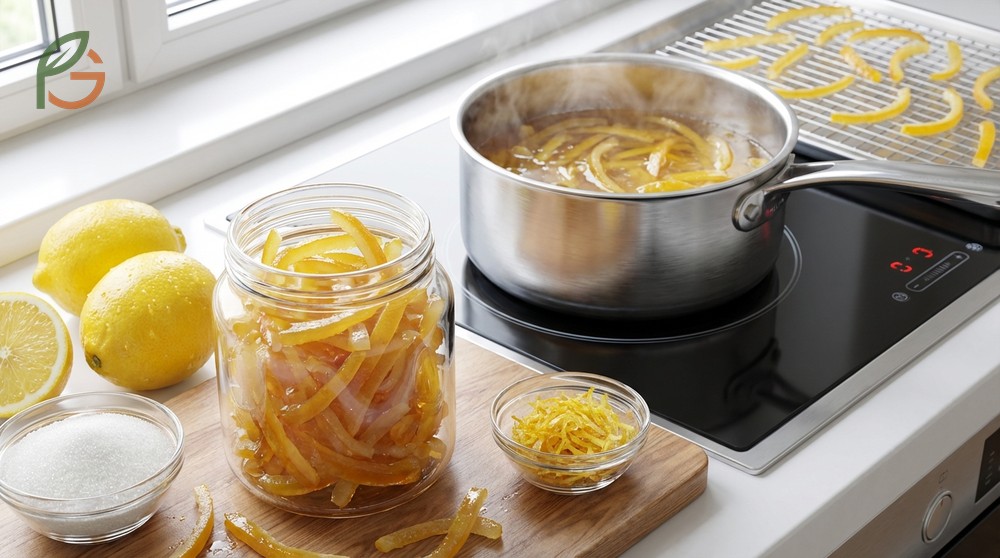
Candied lemon peel transforms bitter rinds into sweet confections that rival store-bought treats. This three-ingredient recipe requires only lemons, sugar, and water—yet delivers restaurant-quality results[5]. You’ll save $8-12 per batch compared to purchasing pre-made candied peel.
The process involves two key steps: blanching removes bitterness, then simmering in sugar syrup creates that glossy finish. Total active time is about 30 minutes, though drying takes several hours. Make large batches since candied peel stores for 2-3 weeks refrigerated.
Use a vegetable peeler to remove peel in long strips, avoiding the white pith which stays bitter. Slice strips into ⅛-inch matchsticks for elegant presentation. Bring ½ cup each of sugar and water to a boil, add zest, and simmer for 20 minutes until translucent[5].
Once cooled in syrup, strain the zest and lay pieces on parchment paper to dry. The leftover syrup works beautifully in cocktails, iced tea, or drizzled over pancakes. Nothing goes to waste.
- Lemon layer cakes: garnish with candied peel for visual appeal
- Biscotti: fold chopped candied peel into dough before baking
- Ice cream: mix into vanilla base for citrus crunch
- Scones: add to cream scone batter with poppy seeds
- Chocolate truffles: dip candied peel in dark chocolate
- Holiday breads: incorporate into panettone or stollen dough
For savory applications, lemon zest brightens pasta dishes, roasted vegetables, and grilled fish. Grate fresh peel directly over finished dishes to preserve volatile oils. A microplane grater produces the finest texture without capturing bitter pith.
Freeze excess zest in ice cube trays covered with water or olive oil. Pop out cubes as needed for soups, stews, and marinades. This method maintains flavor for 3-4 months—longer than dried zest.
Citrus Peel Benefits
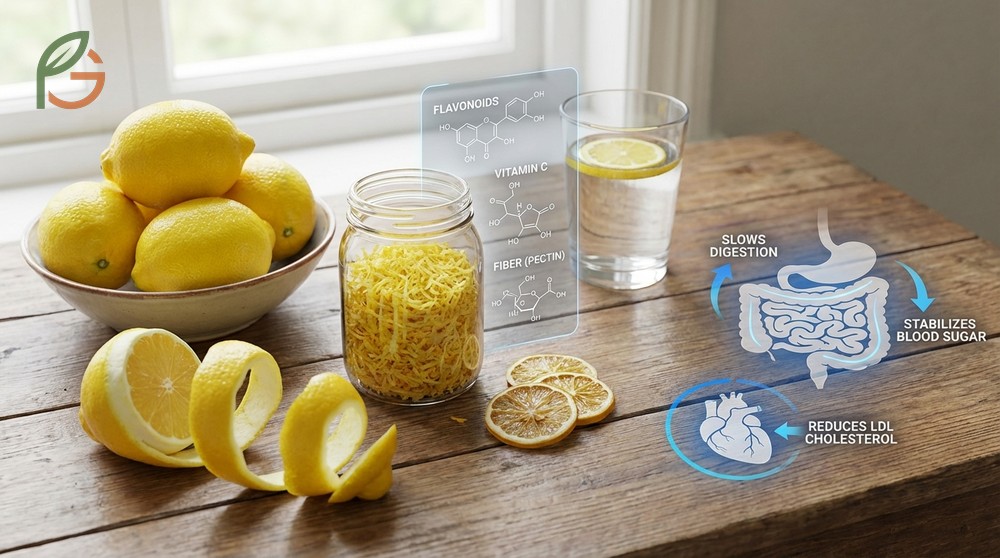
Current nutritional research highlights lemon peels as concentrated sources of flavonoids—plant compounds with antioxidant properties. One tablespoon provides 1 gram of fiber and 9% of daily vitamin C requirements[1]. That’s impressive nutrition from something most people discard.
The pectin fiber in citrus peels slows digestion and helps stabilize blood sugar levels. Studies suggest this soluble fiber can reduce LDL cholesterol by binding to bile acids in your digestive system. You’re supporting heart health with every zested recipe.
D-limonene, the compound responsible for lemon’s characteristic aroma, comprises up to 90% of lemon peel oil. Research indicates this monoterpene may support immune function and promote healthy inflammatory responses. It’s found in much higher concentrations in peel versus juice.
Evidence suggests that consuming whole citrus (including peel) provides greater health benefits than juice alone. The fiber slows sugar absorption while antioxidants protect cells from oxidative stress. Grating fresh zest into smoothies, yogurt, or oatmeal maximizes these advantages.
This table compares nutritional content per tablespoon between lemon peel and lemon juice, showing calories, fiber, vitamin C, and key minerals
| Nutrient | Lemon Peel (1 tbsp) | Lemon Juice (1 tbsp) | Advantage |
|---|---|---|---|
| Calories | 3 cal[1] | 4 cal | Peel (lower) |
| Fiber | 1g[1] | 0g | Peel (significant) |
| Vitamin C | 9% DV[1] | 6% DV | Peel (higher) |
| Calcium | 8mg[1] | 1mg | Peel (8x more) |
| Potassium | Trace amounts | 19mg | Juice (higher) |
- Heart health: Pectin fiber helps reduce LDL cholesterol levels
- Digestive support: Fiber aids regular bowel movements and gut bacteria
- Bone strength: Calcium content supports bone density maintenance
- Immune function: Vitamin C boosts white blood cell production
- Antioxidant protection: Flavonoids neutralize harmful free radicals
Conclusion
The evidence is clear: uses for lemon peels span household cleaning, garden enrichment, and culinary creativity—making them far too valuable to discard. From vinegar-based cleaners that eliminate chemical exposure to natural fertilizers that nourish acid-loving plants, these citrus rinds deliver practical solutions backed by research. Current agricultural guidance emphasizes closing waste loops by repurposing organic materials, and lemon peels exemplify this principle perfectly.
FruitGarden continues tracking emerging applications for fruit byproducts, helping gardeners and homeowners maximize resources while reducing environmental impact. Start with one application that fits your needs—whether that’s freshening your garbage disposal or making candied peel for desserts—and you’ll quickly discover why these golden rinds deserve a second look.
Frequently Asked Questions
How long can I store lemon peels before using them?
Fresh lemon peels stay usable for 3-4 days in the refrigerator when stored in an airtight container. For longer storage, freeze peels in sealed bags for up to 6 months. Dried peels last 12+ months in a cool, dark place when completely dehydrated and stored in glass jars.
Can I use lemon peels that have been treated with wax?
Yes, but wash waxed lemons thoroughly with warm water and a vegetable brush first. The wax coating is food-safe but can interfere with cleaning applications. For culinary uses, organic unwaxed lemons work best since you’re consuming the peel directly.
What’s the difference between lemon peel, zest, and rind?
Lemon peel refers to the entire outer layer including white pith. Zest is only the colored outer skin removed with a grater or zester, containing the most oils and flavor. Rind typically means larger pieces of peel removed with a vegetable peeler, often including some pith.
How much lemon peel should I add to my compost pile?
Keep citrus peels to 10-15% of your total compost volume to avoid excessive acidity. Chop peels into small pieces and mix thoroughly with carbon-rich materials like dried leaves or shredded paper. This ratio prevents slow decomposition while still providing nutrient benefits.
Will lemon peel cleaner work on mold and mildew?
Lemon peel vinegar helps prevent mold but won’t eliminate existing colonies. The citric acid creates an inhospitable environment for mold spores on hard surfaces. For active mold problems, use hydrogen peroxide or commercial mold removers first, then maintain with lemon cleaner.
Can I substitute orange or lime peels for lemon peels?
Yes, most citrus peels work interchangeably for cleaning and gardening applications. Orange peels contain similar D-limonene levels while lime peels offer comparable acidity. However, flavor profiles differ significantly in recipes, so substitute thoughtfully in candied or zested applications.
How do I make lemon peel tea or infused water?
Add 1-2 tablespoons of fresh or dried lemon peel to boiling water and steep for 5-10 minutes. Strain before drinking or leave peels in for stronger flavor. For infused water, add peels to cold water and refrigerate for 2-4 hours. Always use organic lemons when consuming peel directly.





