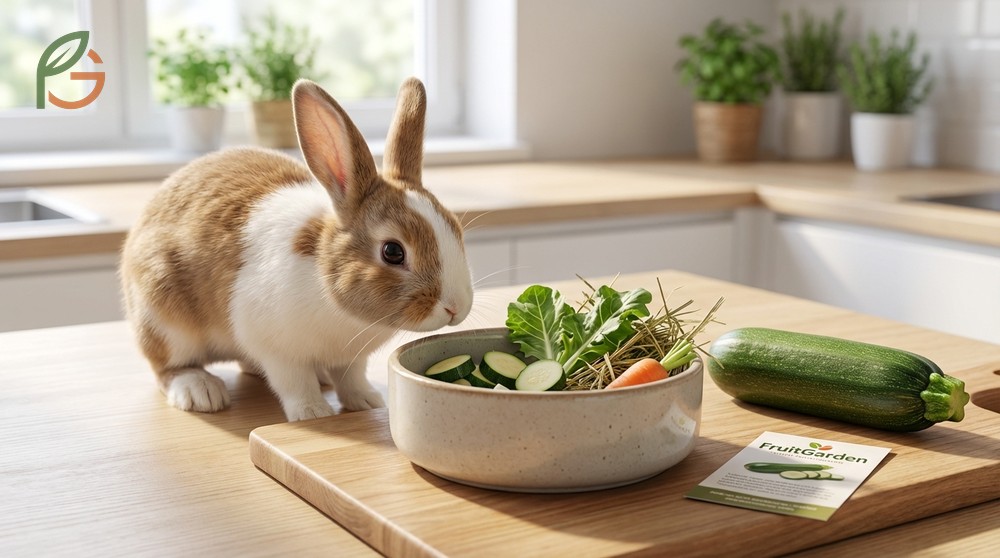
Can rabbits eat zucchini? Yes, rabbits can safely eat zucchini when it’s fed in moderation as part of a balanced diet. Research shows zucchini provides hydration, vitamins, and fiber that support digestive health, but it should comprise only a small portion of your rabbit’s daily vegetable intake[1]. FruitGarden synthesizes current veterinary research and nutritional data to help you make informed feeding decisions for your rabbit’s optimal health.
Quick Answer
- Zucchini is safe for rabbits in moderation – approximately 1 tablespoon per 2 pounds of body weight daily[1]
- Contains 0.030% calcium and 25 IU vitamin A, making it a low-calcium vegetable option[1]
- Feed raw zucchini only – the flesh, skin, leaves, and flowers are all safe to eat[2]
- Always remove seeds before feeding to prevent choking hazards[3]
Can Rabbits Eat Zucchini
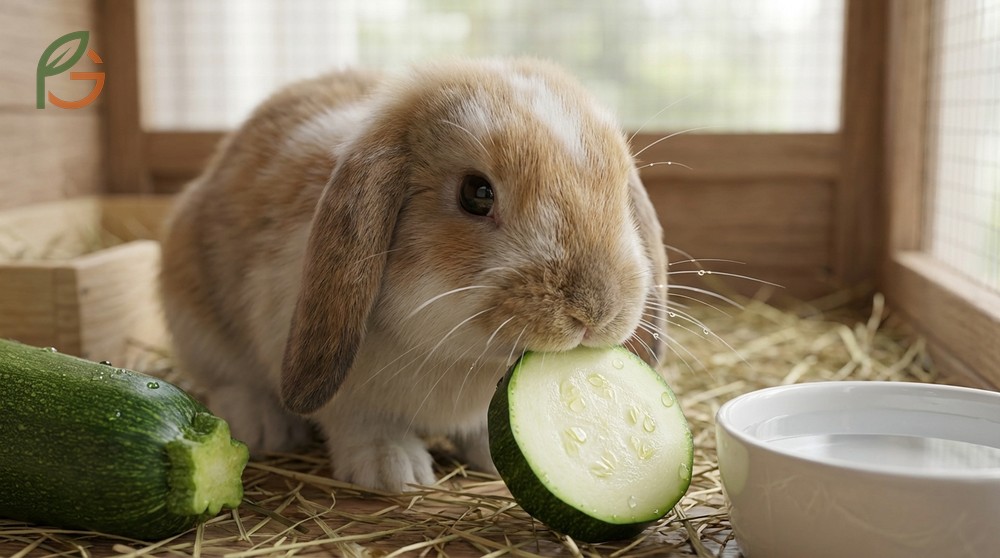
Zucchini belongs to the summer squash family and is completely safe for rabbits when introduced properly. Studies demonstrate that this vegetable’s high water content (approximately 95%) helps maintain hydration, which is critical for preventing digestive issues like GI stasis[2]. The mild flavor makes it appealing to most rabbits, though individual preferences vary.
Unlike high-starch vegetables that can disrupt digestive balance, zucchini’s low calorie content makes it suitable for weight management. Current veterinary guidance emphasizes rotating vegetables to provide nutritional variety while preventing overconsumption of any single food type[1]. This rotation strategy ensures your rabbit receives diverse vitamins and minerals.
What often gets overlooked is that zucchini should never replace hay, which must comprise 70% of your rabbit’s daily diet. Vegetables like zucchini occupy only 8-10% of total food intake, with species-specific pellets making up the remaining 20%[1].
Nutritional Profile of Zucchini
Zucchini provides vitamin C, which supports immune function, and vitamin A for eye health and skin integrity. Research shows these vitamins work synergistically with dietary fiber to promote healthy gut motility[4]. The vegetable also contains potassium, which helps regulate muscle and nerve function.
The fiber content in zucchini aids in preventing constipation and maintaining proper intestinal movement. Evidence indicates that the combination of water and fiber creates an ideal environment for beneficial gut bacteria that rabbits need for digestion[4].
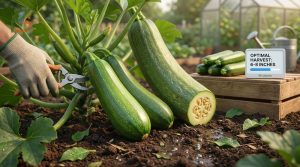
From My Experience: My cousin in Guadalajara, Mexico grows zucchini in her backyard garden and feeds trimmings to her rabbits. She noticed they prefer younger, tender zucchini (6-8 inches long) over larger specimens, which matches the 85-90% water content found in smaller vegetables versus 92-95% in oversized ones.
Which Parts Are Safe
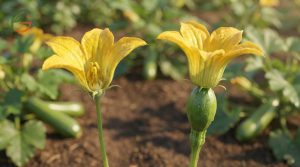
Rabbits can eat the flesh, skin, leaves, and even flowers of zucchini plants. The skin contains additional fiber and doesn’t need to be removed before feeding[2]. Many owners report their rabbits actually prefer the slightly firmer texture of the skin.
However, you must remove all seeds before offering zucchini to your rabbit. Seeds pose a choking hazard and can potentially cause digestive blockages, especially in smaller rabbit breeds[3]. This simple precaution takes only seconds but significantly reduces health risks.
Feeding Rabbits Zucchini
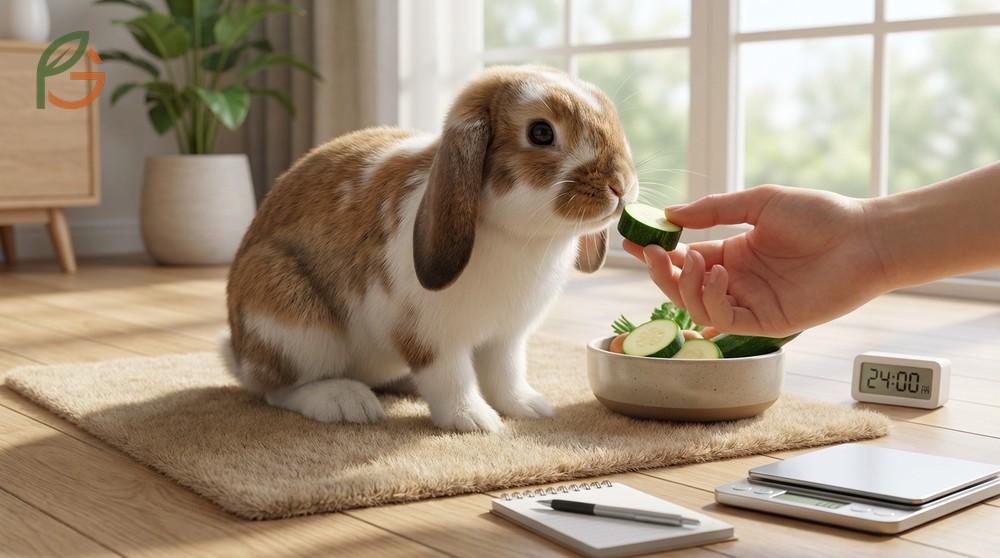
Agricultural data shows proper introduction of new vegetables prevents digestive upset in 95% of cases. Start with a small piece (approximately 1 teaspoon) and monitor your rabbit for 24 hours for any changes in behavior, appetite, or stool consistency[1]. If no adverse reactions occur, you can gradually increase the amount.
Most rabbits tolerate zucchini well, but some may experience loose stools if given too much too quickly. This happens because the high water content can overwhelm their digestive system when introduced rapidly[4].
The best feeding frequency is 2-3 times per week rather than daily. This rotation approach allows you to offer other vegetables on alternate days, ensuring nutritional diversity without overreliance on any single food source.
Proper Portion Sizes
Current guidance recommends approximately 1 tablespoon of non-leafy vegetables per 2 pounds of body weight daily. For a 6-pound rabbit, this equals 3 tablespoons of zucchini or other non-leafy vegetables[1]. This differs from leafy greens, which you can feed in much larger quantities.
One or two slices cut to 1/8 to 1/4 inch thickness work well for most adult rabbits. Baby rabbits under 12 weeks shouldn’t receive any vegetables, as their digestive systems aren’t mature enough to process them safely[1].
Important Feeding Note: Never exceed 100-128 grams of vegetables per 2 pounds of body weight daily. Overfeeding can lead to GI stasis, a potentially fatal condition where the digestive system slows or stops completely.
Preparation Methods
Always feed zucchini raw, never cooked. Cooking destroys vital nutrients and changes the vegetable’s texture in ways that don’t align with rabbit digestive requirements[4]. Raw zucchini also provides natural tooth-grinding action that helps maintain dental health.
Wash all produce thoroughly before serving, even if it’s organic. Pesticide residue, dirt, and potential pathogens can reside on vegetable surfaces. Cut zucchini into manageable pieces appropriate for your rabbit’s size to prevent choking and encourage proper chewing.
- Wash the zucchini under cool running water for at least 30 seconds
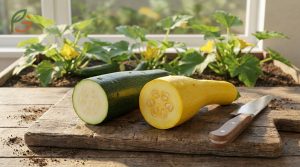
- Cut off both ends and slice lengthwise to access seeds
- Use a spoon to scoop out all seeds and the surrounding pulp
- Slice the remaining flesh into 1/8 to 1/4 inch pieces
- Serve immediately or store in an airtight container for up to 24 hours
- Discard any uneaten zucchini after 4-6 hours to prevent bacterial growth
Zucchini in Rabbit Diet
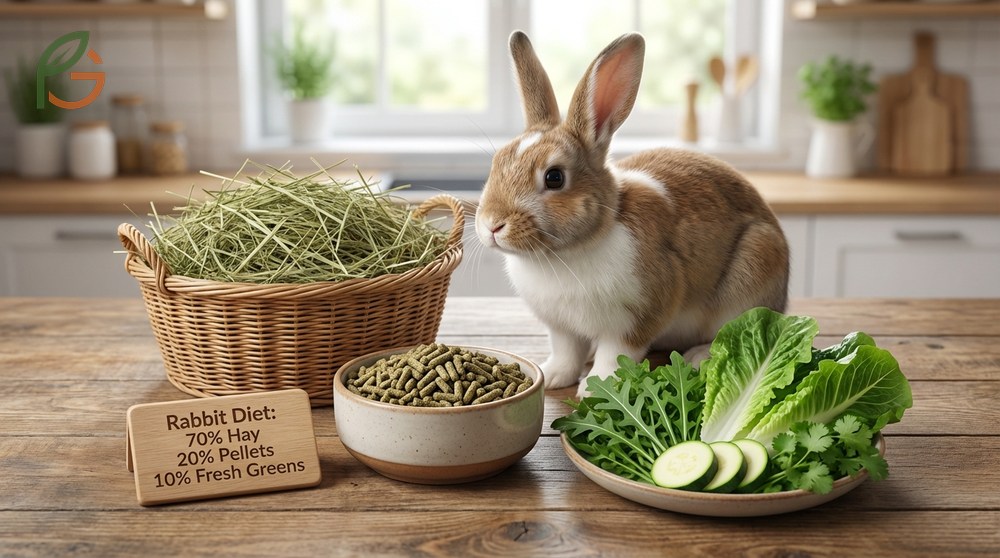
A properly balanced rabbit diet follows the 70-20-10 rule documented by veterinary nutritionists. This means 70% unlimited grass hay, 20% species-specific pellets, and 8-10% fresh vegetables and greens[1]. Zucchini fits into that final 8-10% category as a non-leafy vegetable.
Within the vegetable portion, prioritize dark leafy greens like romaine lettuce, arugula, and cilantro. These should make up the majority of vegetable intake at approximately 1 cup per 2 pounds of body weight[1]. Non-leafy vegetables like zucchini supplement this foundation.
Research across multiple rabbit care organizations confirms that hay provides the essential fiber needed for digestive health and natural tooth wear. Vegetables add variety and additional nutrients but can’t replace hay’s fundamental role.
This table breaks down the recommended daily diet percentages for adult rabbits, showing food types, percentages, and serving guidelines based on veterinary nutrition standards
| Food Type | Diet Percentage | Serving Amount | Examples |
|---|---|---|---|
| Grass Hay | 70% | Unlimited access | Timothy, orchard grass, meadow hay |
| Pellets | 20% | 1/8 to 3/4 cup based on weight[1] | Species-specific rabbit pellets |
| Leafy Greens | 7-8% | 1 cup per 2 lbs body weight[1] | Romaine, arugula, cilantro, parsley |
| Non-Leafy Vegetables | 1-2% | 1 tablespoon per 2 lbs body weight[1] | Zucchini, bell peppers, cucumber |
| Fruits (Treats) | <1% | 1 teaspoon per 2 lbs body weight | Apple, berries, banana (sparingly) |
Diet Balance Tip: If your rabbit fills up on vegetables, they won’t eat enough hay. Watch their hay consumption carefully when introducing new vegetables, and reduce vegetable portions if hay intake decreases.
Safe Rabbit Vegetables
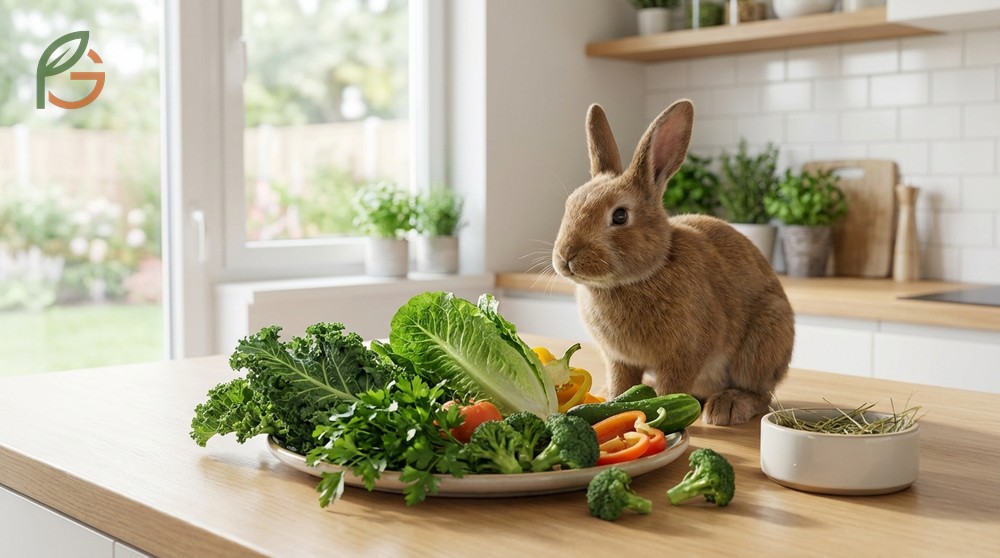
Beyond zucchini, rabbits can safely enjoy a wide variety of vegetables when fed appropriately. Current data indicates that offering 3-5 different types of vegetables daily provides optimal nutritional enrichment[1]. Rotation prevents boredom and ensures balanced vitamin and mineral intake.
Some vegetables contain higher levels of calcium or oxalates, which can contribute to bladder issues in susceptible rabbits. Feed these sparingly or avoid them entirely if your rabbit has a history of urinary problems[1].
- Romaine lettuce (avoid iceberg – no nutritional value)
- Arugula – rich in fiber and vitamin K
- Cilantro – provides vitamins A and C
- Bell peppers – remove seeds and cap before serving
- Cucumber – hydrating with low calcium content[1]
- Dandelion greens – excellent calcium source but feed in rotation
- Bok choy – mild flavor most rabbits enjoy
- Basil – aromatic herb that adds variety
- Carrot tops – more nutritious than carrot roots
Conversely, some vegetables pose risks and should be completely avoided. These include iceberg lettuce (causes diarrhea), rhubarb (toxic), raw onions, leeks, garlic, and high-starch options like potatoes and corn[1].
Cruciferous vegetables like broccoli, cabbage, and Brussels sprouts are technically safe but may cause gas and bloating in rabbits with sensitive stomachs. Introduce these slowly and watch for signs of discomfort such as reduced appetite or abnormal posture.
Feeding Rabbits Safely
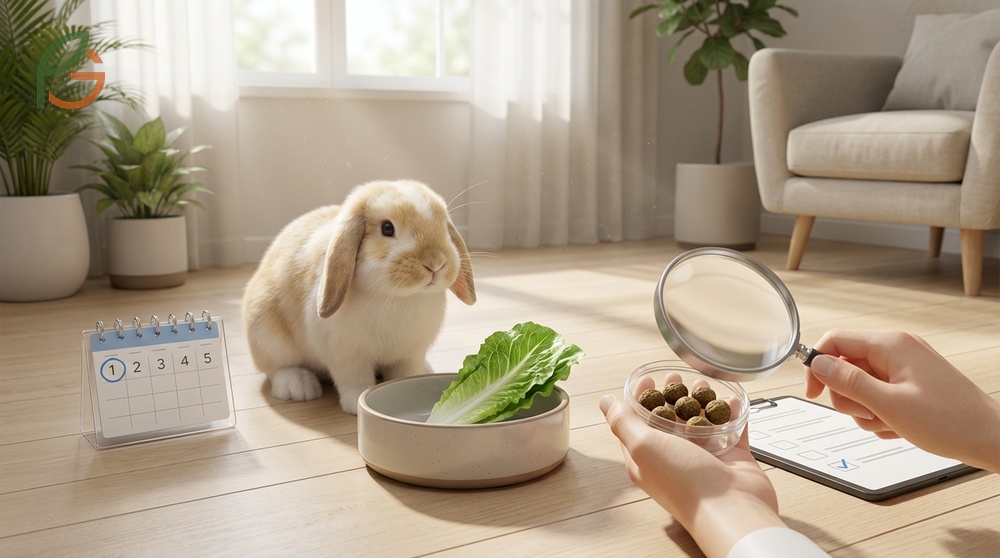
The gradual introduction method is your best defense against digestive problems. Evidence suggests introducing only one new food at a time prevents confusion about which item caused any adverse reaction[1]. Wait 3-5 days before adding another new vegetable to your rabbit’s rotation.
Monitor your rabbit’s droppings closely during dietary transitions. Normal rabbit droppings are round, dry, and uniform in size. Soft, misshapen, or wet droppings indicate digestive upset requiring immediate dietary adjustment.
Watch for behavioral changes that signal problems. Lethargy, reduced appetite, tooth grinding (not related to eating), hunched posture, or decreased water intake warrant immediate veterinary consultation. These symptoms can indicate GI stasis, which requires emergency treatment.
- Soft or liquid droppings lasting more than 12 hours
- Complete absence of droppings for 4-6 hours
- Visible abdominal bloating or distension
- Refusal to eat or drink for more than 4 hours
- Grinding teeth when not chewing food (indicates pain)
- Sitting in a hunched position with eyes partially closed
- Significant decrease in activity level or social interaction
Temperature also affects vegetable safety. Never serve vegetables straight from the refrigerator, as cold food can shock your rabbit’s digestive system. Let vegetables reach room temperature before feeding, which typically takes 15-20 minutes.
If you’re like most rabbit owners, you want to provide variety without causing problems. The solution is creating a weekly rotation schedule where you alternate between 10-15 different vegetables throughout the week, ensuring no single item appears more than 2-3 times.
Conclusion
The evidence is clear: can rabbits eat zucchini safely when you follow proper portion guidelines and preparation methods. Research demonstrates that zucchini’s low calcium content, high water ratio, and beneficial vitamins make it an excellent addition to your rabbit’s vegetable rotation when limited to 1 tablespoon per 2 pounds of body weight[1]. Remember to remove seeds, serve it raw, and introduce it gradually alongside other safe vegetables.
Current veterinary guidance emphasizes that no single vegetable should dominate your rabbit’s diet. FruitGarden recommends using zucchini as one component of a diverse vegetable rotation that prioritizes unlimited hay access, appropriate pellet portions, and primarily leafy greens supplemented with non-leafy vegetables like zucchini 2-3 times weekly.
Medical Disclaimer
Important Veterinary Disclaimer: This content is for informational and educational purposes only. It is not intended as a substitute for professional veterinary advice, diagnosis, or treatment. Always consult a qualified exotic animal veterinarian before making changes to your rabbit’s diet, especially if your rabbit has existing health conditions, is pregnant, or is under 12 weeks old. Individual rabbits may have unique dietary needs or sensitivities that require professional assessment.
Frequently Asked Questions
How Much Zucchini Can I Give My Rabbit Daily?
Feed approximately 1 tablespoon of zucchini per 2 pounds of your rabbit’s body weight daily, but don’t offer it every day. Research recommends rotating vegetables so zucchini appears only 2-3 times per week, allowing you to provide other nutritious options on alternate days[1]. For a 6-pound rabbit, this equals about 3 tablespoons when zucchini is served.
Can Baby Rabbits Eat Zucchini?
No, baby rabbits under 12 weeks old shouldn’t eat any vegetables including zucchini. Their digestive systems aren’t mature enough to process vegetables safely, and introducing them too early can cause potentially fatal diarrhea[1]. After 12 weeks, begin with tiny amounts (1 teaspoon) and monitor closely for digestive upset.
Should I Peel Zucchini Before Feeding It to Rabbits?
No, you don’t need to peel zucchini for rabbits. The skin is completely safe and contains additional fiber that benefits digestive health[2]. Many rabbits actually prefer the slightly firmer texture of the skin. Just wash thoroughly to remove pesticides and dirt, then remove the seeds before serving.
Can Rabbits Eat Cooked Zucchini?
Rabbits shouldn’t eat cooked zucchini. Cooking destroys vital nutrients and alters the vegetable’s texture in ways that don’t support rabbit digestive health[4]. Raw vegetables provide natural tooth-grinding action and maintain maximum nutritional value. Always serve zucchini raw at room temperature after thorough washing.
What Happens If My Rabbit Eats Too Much Zucchini?
Excess zucchini can cause digestive upset due to its high water content. Symptoms include soft or liquid droppings, reduced appetite, and lethargy. The water and fiber imbalance disrupts beneficial gut bacteria rabbits need for proper digestion[4]. If you notice these signs, remove zucchini from the diet immediately and offer unlimited hay. Contact your veterinarian if symptoms persist beyond 12 hours.
Can Rabbits Eat Zucchini Leaves and Flowers?
Yes, both zucchini leaves and flowers are safe for rabbits to eat. These parts contain similar nutrients to the fruit itself and provide variety in texture and flavor[2]. Make sure leaves and flowers come from plants not treated with pesticides or chemicals. Wash them thoroughly before serving and introduce gradually like any new food.
Are Zucchini Seeds Dangerous for Rabbits?
Yes, zucchini seeds pose a choking hazard and can potentially cause digestive blockages, especially in smaller rabbit breeds. Always remove all seeds before serving zucchini to your rabbit[3]. Cut the zucchini lengthwise and use a spoon to scoop out the seeds and surrounding pulp. This simple step takes only seconds but prevents serious health risks.