

Benefits of green grapes include powerful antioxidants, heart health support, and essential vitamins that protect your body from cellular damage. Research shows that one cup of green grapes delivers 191mg of potassium, 14.6mcg of vitamin K[1], and over 1,600 antioxidants[2] that work together to reduce disease risks. FruitGarden synthesizes current nutritional research to help you understand how these bite-sized fruits support your wellness goals.
Quick Answer
- Green grapes contain 69 calories per 100g with zero fat and cholesterol
- They’re packed with 191mg potassium[1] that helps regulate blood pressure naturally
- Flavonoids in green grapes provide anti-inflammatory benefits[3] broken down by gut bacteria
- The 81% water content[1] keeps you hydrated while supporting digestion
Benefits of Green Grapes
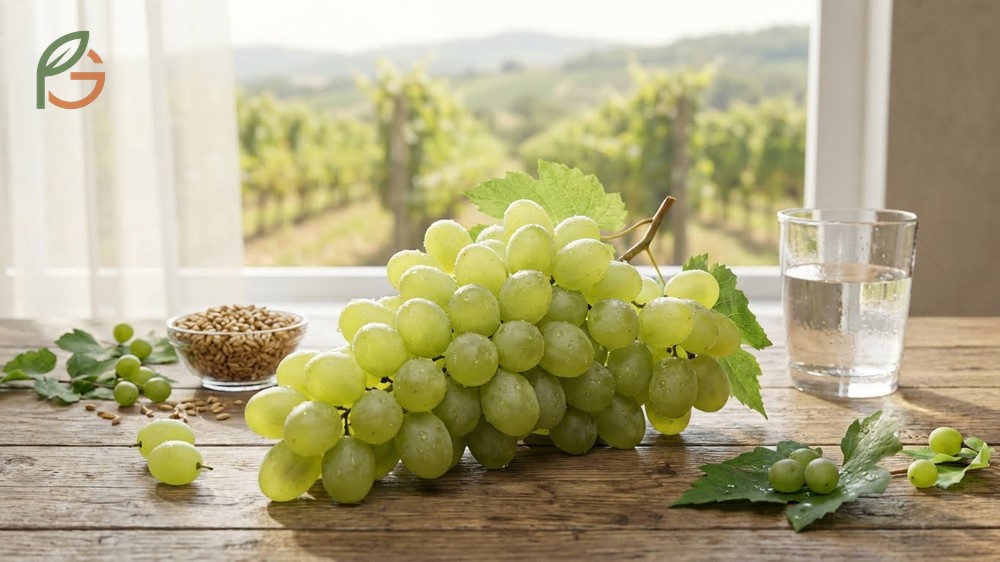
Green grapes deliver a powerful combination of nutrients that support multiple body systems. Studies demonstrate that regular consumption provides cardiovascular protection, immune system support, and cellular defense against oxidative stress. The unique blend of vitamins, minerals, and plant compounds works synergistically to promote overall wellness.
Current nutritional data indicates that green grapes offer exceptional value for calorie-conscious individuals. At just 52 calories per half-cup serving[4], they provide essential micronutrients without contributing to weight gain. The naturally fat-free and cholesterol-free profile makes them ideal for heart-healthy eating patterns.
Evidence suggests that the polyphenols in green grapes contribute to long-term health maintenance. Research shows these compounds reduce inflammation markers and protect blood vessels from damage. The fiber content, while modest at 0.7g per half-cup[4], still supports digestive regularity when combined with adequate daily intake from other sources.
Antioxidants in Green Grapes
Green grapes contain more than 1,600 antioxidant compounds that protect cells from free radical damage. Flavonoids, particularly flavanols, dominate the antioxidant profile and provide anti-inflammatory benefits through gut bacteria metabolism[3]. This unique breakdown process allows the body to absorb and utilize these protective compounds efficiently.
The antioxidant team includes vitamin C, beta-carotene, quercetin, and ellagic acid working together to neutralize harmful molecules. Clinical trials suggest these compounds reduce disease biomarkers in cardiovascular conditions and metabolic disorders. The combined effect produces stronger protection than any single antioxidant could provide alone.
- Flavanols support vascular function and promote healthy blood flow throughout the body
- Quercetin acts as a natural antihistamine and reduces allergic response inflammation
- Vitamin C strengthens immune defense while supporting collagen production for skin health
- Beta-carotene converts to vitamin A in the body for vision and cellular growth
- Ellagic acid shows promise in laboratory studies for inhibiting abnormal cell growth
Potassium in Green Grapes
Green grapes pack 191mg of potassium per 100g serving[1], contributing to the recommended daily intake of 2,600-3,400mg for adults. This essential mineral regulates fluid balance, muscle contractions, and nerve signal transmission. Research shows that adequate potassium intake helps counteract sodium’s blood pressure-raising effects.
The potassium-fiber combination in green grapes supports cardiovascular health through multiple mechanisms. Studies demonstrate that this pairing helps maintain healthy blood pressure levels and reduces strain on arterial walls[5]. The modest 2mg sodium content per half-cup[4] creates an ideal potassium-to-sodium ratio for heart protection.
Important Note: People with chronic kidney disease should monitor potassium intake carefully. While green grapes contain moderate potassium levels, portion control remains essential for maintaining balanced electrolyte levels in advanced kidney conditions.
Nutrition Facts of Green Grapes

Green grapes deliver concentrated nutrition in a convenient, portable package. Agricultural data shows these fruits provide essential vitamins and minerals while maintaining a low-calorie density. The nutritional profile supports multiple dietary goals from weight management to disease prevention.
Current USDA data reveals that green grapes contain zero fat and zero cholesterol[6], making them ideal for heart-conscious eating plans. The naturally occurring sugars provide quick energy without requiring added sweeteners. Most people find that the 15.5g of natural sugars per 100g[1] satisfies sweet cravings while delivering beneficial plant compounds.
This table compares nutritional content per 100 grams versus half-cup serving of green seedless grapes including calories, macronutrients, and key vitamins and minerals
| Nutrient | Per 100g | Per 1/2 Cup (76g) | Daily Value % |
|---|---|---|---|
| Calories | 69 kcal[1] | 52 kcal[4] | 2.6% |
| Protein | 0.72g[1] | 0.54g[4] | 1.4% |
| Carbohydrates | 18.1g[1] | 13.67g[4] | 6.6% |
| Fiber | 0.9g[1] | 0.7g[4] | 3.2% |
| Potassium | 191mg[1] | 144mg | 5.6% |
| Vitamin K | 14.6mcg[1] | 11.1mcg | 12.1% |
Green Seedless Grapes Calories
Green seedless grapes contain 52 calories per half-cup serving[4], making them one of the lowest-calorie snack options available. This calorie count allows generous portions without derailing weight management goals. The absence of seeds doesn’t change the nutritional profile compared to seeded varieties.
Research shows that the high water content—approximately 81%[1]—contributes to the low calorie density. This means you get substantial volume and satiety for minimal calories. Most people can enjoy 1-2 cups of green grapes as a satisfying snack that provides hydration and nutrition simultaneously.
Vitamins in Green Grapes
Green grapes supply vitamin K at 14.6mcg per 100g[1], providing over 12% of the daily requirement. This fat-soluble vitamin supports blood clotting mechanisms and bone mineralization. Current guidance emphasizes vitamin K’s role in preventing calcium deposits in soft tissues while promoting proper calcium utilization in bones.
Vitamin C content reaches 3.2mg per 100g[1], contributing to collagen synthesis and immune function. While not as high as citrus fruits, this amount still supports daily antioxidant needs when combined with other vitamin C sources. The vitamin works alongside other antioxidants in grapes to provide comprehensive cellular protection.
- Vitamin K ensures proper blood coagulation and prevents excessive bleeding from minor injuries
- Vitamin C acts as both a vitamin and antioxidant to protect cells from oxidative damage
- Vitamin B6 supports amino acid metabolism and neurotransmitter production for brain health
- Vitamin A from beta-carotene conversion maintains healthy vision and immune response
- Thiamin supports energy metabolism by helping convert carbohydrates into usable fuel
Green Grapes vs Red Grapes
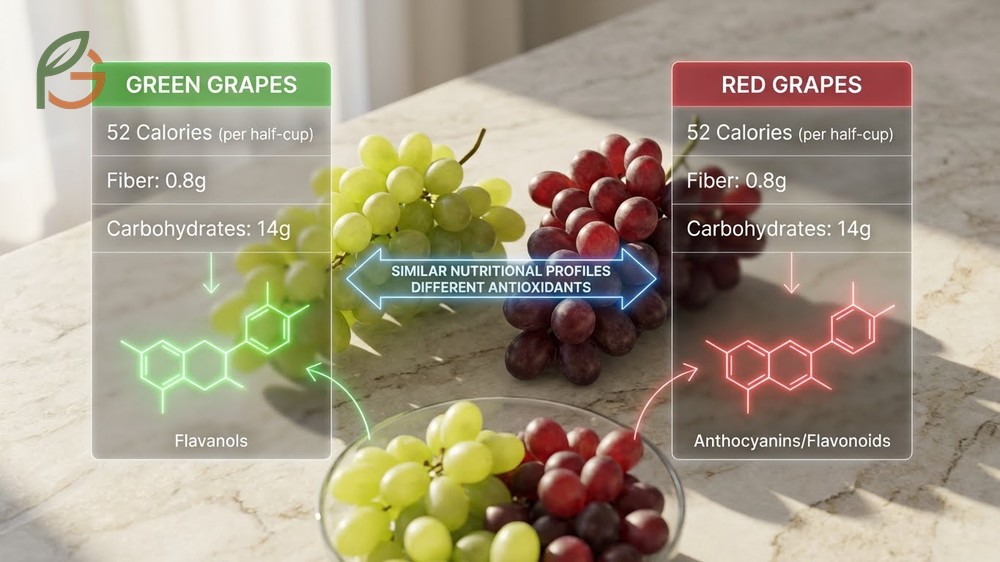
Green and red grapes share remarkably similar nutritional profiles for calories, carbohydrates, fiber, and most vitamins[3]. The primary difference lies in their antioxidant composition rather than basic macronutrients. Both varieties provide approximately 52 calories per half-cup serving[4] with identical fiber and protein content.
The antioxidant profiles diverge based on pigmentation compounds. Green grapes contain flavanols that gut bacteria break down for anti-inflammatory benefits[3]. Red grapes deliver resveratrol and anthocyanins—the pigments responsible for their color—which research links to stronger cardiovascular and vascular support.
Flavor and texture characteristics differ noticeably between the two varieties. Green grapes offer a crisp, tart, refreshing taste with subtle herbal notes from natural methoxypyrazines. Red grapes provide a balanced sweet-tangy flavor profile with softer flesh and slightly thicker skins that contain concentrated antioxidants.
Choosing Between Varieties: Select green grapes when you prefer crisp texture and bright, tart flavors. Choose red grapes if you’re specifically seeking resveratrol and anthocyanin antioxidants for cardiovascular support. Both varieties contribute equally to daily fruit intake goals.
Green Grapes for Weight Loss
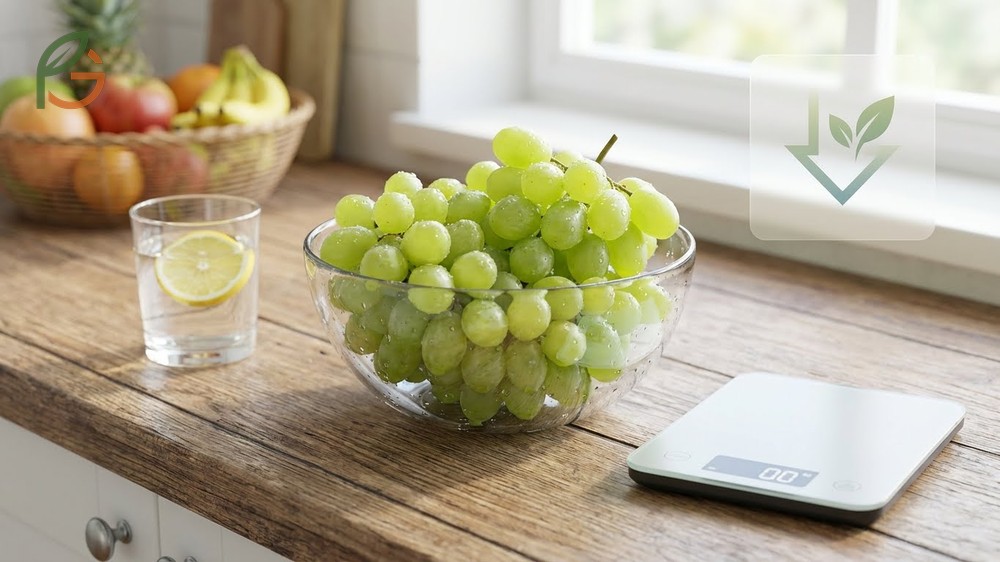
Green grapes support weight loss efforts through their high water and fiber content that promotes satiety without excessive calories. Studies demonstrate that the 81% water content[1] helps you feel fuller longer while the fiber slows digestion to prevent rapid blood sugar spikes. At just 52 calories per half-cup[4], they provide substantial volume for minimal caloric investment.
Research shows that green grapes work best for weight management when consumed strategically throughout the day. Morning or mid-afternoon consumption provides natural energy without triggering excessive insulin response. The natural sugars deliver quick fuel for physical activity when eaten 30-60 minutes before exercise.
Current nutritional guidance emphasizes pairing grapes with protein or healthy fats for optimal satiety. Combining half a cup of grapes with a handful of almonds or a serving of Greek yogurt creates a balanced snack that stabilizes blood sugar. This pairing prevents the energy crashes that often lead to overeating later in the day.
- Replace high-calorie desserts with frozen grapes for a naturally sweet treat with added texture
- Add green grapes to salads for sweetness and crunch without heavy dressings or toppings
- Pair morning grapes with protein sources to create sustained energy through lunch hours
- Use grapes as pre-workout fuel 45 minutes before exercise for quick, digestible carbohydrates
- Avoid late-night grape consumption due to natural sugar content that may interfere with sleep
Evidence indicates that while all grape varieties support weight loss through fiber and water content, green grapes offer advantages for calorie-conscious individuals. The crisp texture requires more chewing, which research links to increased satiety signals. The tart flavor profile satisfies sweet cravings without triggering the desire for additional sugary foods.
Green Grapes for Digestion

Green grapes support digestive health through their fiber content and high water composition. The 0.7g fiber per half-cup serving[4] contributes to the recommended 25-38g daily intake that promotes regular bowel movements. While not a high-fiber food individually, grapes add meaningful roughage when consumed as part of a varied fruit intake.
The 81% water content[1] works synergistically with fiber to prevent constipation and maintain digestive flow. Research shows that adequate hydration from water-rich fruits helps fiber perform its digestive functions more effectively. This combination softens stool consistency and promotes comfortable elimination.
Current data indicates that the natural compounds in grape skins provide additional digestive benefits. The polyphenols support healthy gut bacteria populations that aid in nutrient absorption and immune function. Most people experience improved digestive comfort when incorporating grapes into their daily routine alongside adequate water intake from other sources.
Digestive Tip: If you’re new to eating grapes regularly, start with smaller portions and gradually increase intake. Some people experience temporary bloating when suddenly increasing fruit consumption due to the natural sugars and fiber adjusting gut bacteria populations.
Best Time to Eat Green Grapes

The optimal timing for green grape consumption depends on your specific health and fitness goals. Research shows that morning consumption alongside breakfast provides natural energy to kickstart metabolism and sustain focus through mid-morning hours. The quick-digesting carbohydrates deliver immediate fuel while the fiber prevents rapid blood sugar crashes that trigger mid-morning hunger.
For weight loss objectives, mid-afternoon consumption between 2-4 PM works best. This timing addresses the common energy dip that leads many people to reach for processed snacks. The natural sweetness and hydration from grapes satisfy cravings while providing only 52 calories per half-cup[4], preventing the caloric surplus that derails weight management efforts.
Pre-workout consumption 30-60 minutes before exercise delivers easily digestible carbohydrates that fuel performance without causing digestive discomfort. Current sports nutrition guidance emphasizes simple sugars from whole fruits for quick energy availability. The potassium content of 191mg per 100g[1] also supports proper muscle function during physical activity.
For individuals managing blood sugar levels, pairing grapes with protein or healthy fats during mid-morning or afternoon snacks creates optimal glycemic control. Evidence suggests avoiding consumption on an empty stomach or immediately before bed. The natural sugars can cause unwanted blood glucose fluctuations in sensitive individuals when eaten without complementary macronutrients.
Hydration needs benefit from grape consumption any time during warm months or following exercise. The 81% water content[1] contributes meaningfully to fluid replacement while delivering electrolytes. This makes grapes an excellent post-workout recovery snack when combined with protein sources for muscle repair.
Conclusion
The evidence is clear: benefits of green grapes extend far beyond their delicious taste to provide measurable health advantages through antioxidants, essential vitamins, and cardiovascular support. Research demonstrates that incorporating these nutrient-dense fruits into your daily routine delivers 191mg potassium, 14.6mcg vitamin K, and over 1,600 protective compounds for just 52 calories per serving. Current nutritional guidance emphasizes whole fruits like green grapes as foundational components of disease-prevention eating patterns that support long-term wellness.
Whether you’re managing weight, supporting heart health, or simply seeking nutritious snacks, green grapes offer versatile benefits that align with multiple health goals. FruitGarden continues to provide evidence-based fruit nutrition information to help you make informed choices for your garden and table.
Medical Disclaimer
Important Medical Disclaimer: This content is for informational and educational purposes only. It is not intended as a substitute for professional medical advice, diagnosis, or treatment. Always consult a qualified healthcare professional or registered dietitian before making significant changes to your diet, especially if you have diabetes, kidney disease, or other medical conditions that require dietary modifications. Individual nutritional needs vary based on age, activity level, and health status.
Frequently Asked Questions
Are Green Grapes Healthy for Daily Consumption?
Yes, green grapes are healthy for daily consumption when eaten as part of a balanced diet. They provide essential vitamins, minerals, and antioxidants at only 52 calories per half-cup serving without any fat or cholesterol. Most adults can safely enjoy 1-2 cups daily as part of the recommended 2-3 servings of fruit, though individuals with diabetes should monitor portion sizes and pair grapes with protein sources.
What Are Green Grapes Good for Specifically?
Green grapes are particularly beneficial for cardiovascular health, hydration, and antioxidant protection. The 191mg potassium per 100g helps regulate blood pressure, while over 1,600 antioxidant compounds protect cells from oxidative damage. They’re also excellent for weight management due to high water content and low calorie density, and they support bone health through vitamin K content.
How Do Green Grapes Compare to Other Fruits Nutritionally?
Green grapes rank among the lower-calorie fruits with moderate vitamin and mineral content. They contain less vitamin C than citrus fruits or berries but provide more potassium than apples or pears. Their antioxidant content rivals many popular fruits, and the 81% water content exceeds most other fresh fruits, making them particularly effective for hydration.
Can Green Grapes Help With Weight Loss Goals?
Green grapes can support weight loss when incorporated strategically into a calorie-controlled eating plan. Their high water and fiber content promotes satiety while delivering only 52 calories per half-cup. Research shows that eating grapes as morning or afternoon snacks helps prevent overeating by providing natural sweetness and volume, though they work best when paired with protein sources for sustained fullness.
Should I Eat Green Grapes With or Without the Skin?
You should eat green grapes with the skin to maximize nutritional benefits. The skin contains concentrated antioxidants, flavonoids, and fiber that contribute significantly to the health benefits. Washing grapes thoroughly under running water removes pesticide residues while preserving the beneficial compounds in the skin that support heart health and provide anti-inflammatory effects.
When Should I Avoid Eating Green Grapes?
Avoid eating green grapes late at night if you’re managing blood sugar or trying to lose weight, as the natural sugars may interfere with overnight fat burning and sleep quality. People with advanced kidney disease should monitor portion sizes due to potassium content, and those with fructose intolerance may experience digestive discomfort. Always cut grapes into quarters for children under age 5 to prevent choking hazards.
How Should I Store Green Grapes to Maintain Freshness?
Store unwashed green grapes in their original ventilated bag or a perforated plastic bag in the refrigerator’s crisper drawer where they’ll stay fresh for 1-2 weeks. Wash grapes only immediately before eating to prevent moisture accumulation that causes mold growth. For extended storage, freeze grapes in a single layer on a baking sheet before transferring to freezer bags for up to 12 months.





