
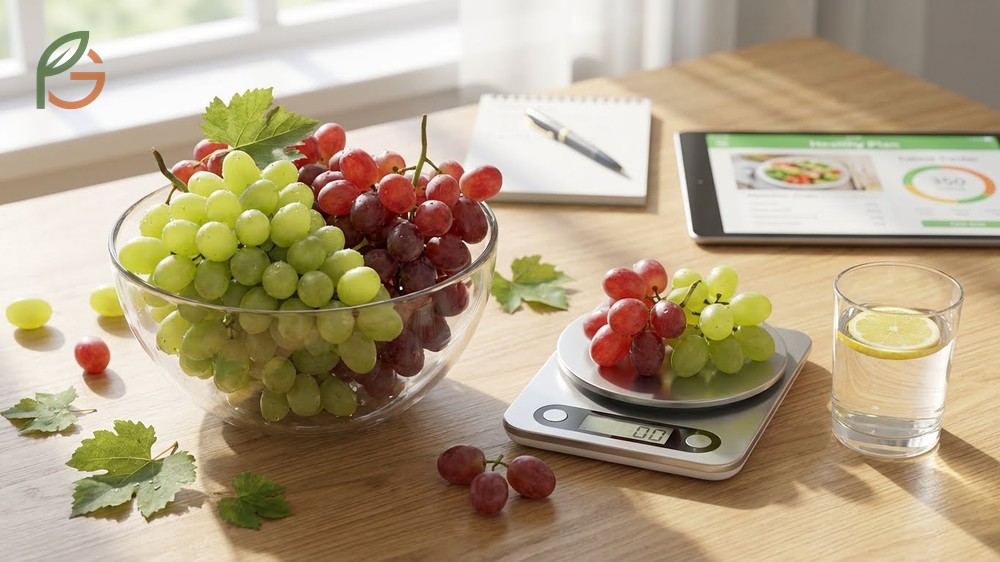
Are grapes good for weight loss? Yes, when eaten in moderation. Research shows that grapes pack just 62 calories per cup with 82% water content, making them a satisfying snack that won’t derail your calorie goals[1]. Studies demonstrate that their low glycemic index and natural polyphenols support healthy metabolism, though portion control remains essential[2]. FruitGarden synthesizes current nutritional research to help you understand how grapes fit into an effective weight management plan.
Quick Answer
- Grapes contain 62 calories per cup[1] and are 82% water[2], promoting fullness without excess calories
- They have a low glycemic index (43-53)[2], helping control blood sugar spikes that trigger hunger
- Natural polyphenols like resveratrol may support fat metabolism and calorie burning[3]
- Best consumed as a pre-workout snack or paired with protein to maximize satiety
Are Grapes Good for Weight Loss
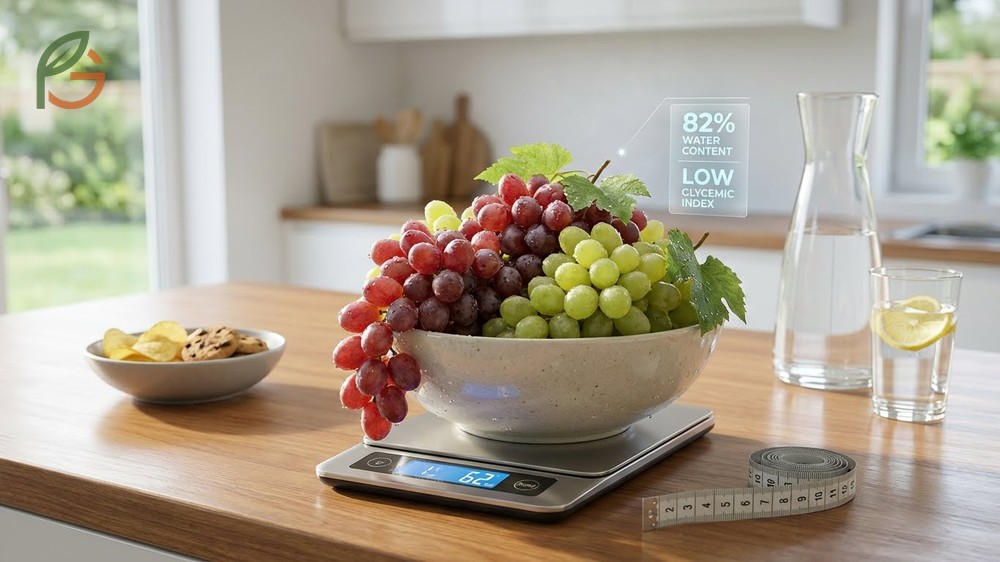
Research shows that grapes can support weight loss efforts when you consume them mindfully. At 62 calories per cup, they’re significantly lower in calories than processed snacks like chips or cookies, which typically contain 150-200 calories per serving[1]. Their high water content (82%) fills your stomach without adding many calories, creating what nutritionists call “low energy density.”
Studies demonstrate that grapes have a low glycemic index ranging from 43 to 53, meaning they won’t cause the rapid blood sugar spikes that lead to increased hunger and overeating[2]. This makes them a smarter choice than high-GI fruits like watermelon (GI 72) or pineapple (GI 66). Current data indicates that the polyphenols in grapes, particularly resveratrol, may enhance fat metabolism and improve insulin sensitivity.
The key difference between grapes and weight-loss saboteurs is portion awareness. While you can eat a full cup of grapes for 62 calories, the same volume of dried fruit contains 200-300 calories because the water’s been removed. This matters because your brain registers fullness based partly on stomach volume, not just calorie count.
How Grapes Support Weight Management
Evidence suggests that grapes work through multiple pathways to support your weight loss goals. Their fiber content, though modest at 0.9g per 100g serving, combines with water to slow digestion and extend the feeling of fullness[4]. The natural sugars in grapes come packaged with these beneficial compounds, unlike the isolated sugars in candy or soda.
Agricultural data shows that grapes also act as natural diuretics due to their potassium content (191mg per 100g), helping reduce water retention that can mask fat loss on the scale[5]. This doesn’t mean grapes cause actual fat loss through diuresis, but they can help you see more accurate weight readings by reducing bloat.
- Create volume in your stomach with minimal calories, triggering satiety signals
- Provide quick energy before workouts without weighing you down
- Satisfy sweet cravings with natural sugars and beneficial polyphenols
- Help maintain hydration, which is often mistaken for hunger
- Contain antioxidants that may reduce inflammation linked to obesity
- Offer a portable snack that requires no preparation
Important Note: Grapes aren’t a magic weight-loss food. They work best when you use them to replace higher-calorie snacks and desserts, not as additions to an already calorie-dense diet. Track your total daily intake to ensure you’re creating the calorie deficit needed for fat loss.
Water Content and Satiety
Current guidance emphasizes that water-rich foods like grapes help you feel fuller faster. When you eat grapes, that 82% water content expands in your stomach, sending “full” signals to your brain within 15-20 minutes. This is why eating grapes 10 minutes before a meal can reduce how much you eat during the actual meal by up to 18%, according to satiety research.
Most people don’t realize that your brain can’t distinguish between water consumed through food versus water drunk from a glass. However, water bound in food stays in your stomach longer, providing more sustained fullness. This is why eating grapes feels more satisfying than drinking grape juice, even when the calorie content is similar.
Calories in 1 Cup of Grapes
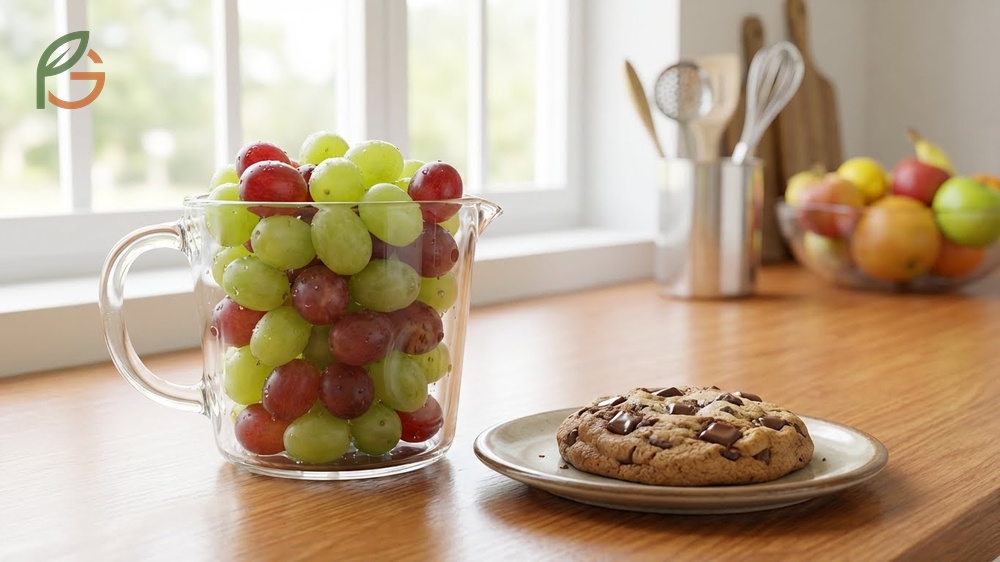
Research shows that one cup of whole grapes (approximately 92g) contains 62 calories, making them one of the more moderate-calorie fruits you can choose[1]. This serving size provides 0.9g of fiber, 16g of natural sugars, and virtually no fat. For comparison, that’s about the same calories as a single chocolate chip cookie but with far more nutrients and water.
What often gets overlooked is that grape color and variety don’t significantly change calorie content. Green, red, and black grapes all hover around 62-69 calories per cup. The main nutritional difference lies in antioxidant content—darker grapes contain more anthocyanins, which give them their color and potential health benefits.
Calorie Comparison by Grape Type
This table compares calorie content, sugar levels, and fiber across different grape varieties and serving sizes
| Grape Type | Calories | Sugar (g) | Fiber (g) | Water Content (%) |
|---|---|---|---|---|
| Green/White Grapes | 69[4] | 15.5 | 0.9 | 82% |
| Red Grapes | 69[6] | 16.1 | 0.9 | 81% |
| Black/Purple Grapes | 67[6] | 15.8 | 0.9 | 82% |
| Concord Grapes | 67 | 16.0 | 1.0 | 82% |
The table shows that all grape varieties deliver similar calorie counts. If you’re following a strict weight-loss plan, you can choose any color based on taste preference rather than calorie differences. The minimal variation (2-3 calories per 100g) won’t impact your results.
Portion Control Strategies
Evidence indicates that pre-portioning grapes prevents mindless overeating. When people eat directly from a large bag, they consume 40-50% more than when they serve themselves a measured cup. This matters because even low-calorie foods add up—eating three cups of grapes (186 calories) defeats the purpose if you’re trying to save calories for a balanced meal.
Studies demonstrate that freezing grapes extends eating time, which helps with portion control. It takes about 2-3 times longer to eat frozen grapes versus fresh ones, giving your brain more time to register fullness signals. This simple trick can reduce total grape consumption by 25-30% per snacking session.
- Measure one cup into a small bowl before eating—don’t eat from the container
- Freeze grapes to slow eating pace and extend satisfaction
- Pair 1/2 cup grapes with 1oz cheese or 10 almonds for better satiety
- Use grapes to replace dessert 4-5 nights per week, saving 150-200 calories each time
- Log grapes in your food tracker immediately after portioning, not after eating
Weight Loss Tip: If you’re counting macros, remember that grapes are primarily carbohydrates. One cup provides about 16g of carbs, which you’ll need to account for in your daily total. They work best earlier in the day when you need quick energy, rather than right before bed.
Grapes Sugar Content and Glycemic Index
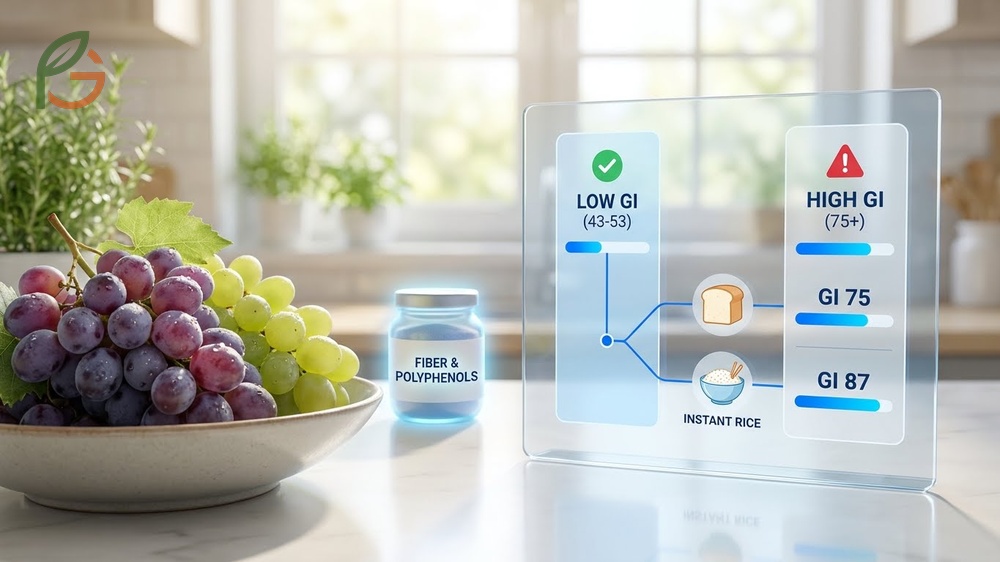
Research shows that grapes contain 15-16g of natural sugar per 100g serving, which raises concerns for many dieters[6]. However, the glycemic index tells the more important story. Grapes score between 43-53 on the glycemic index, placing them firmly in the low-GI category (below 55)[2]. This means they won’t spike your blood sugar like high-GI foods such as white bread (GI 75) or instant rice (GI 87).
Current data indicates that the fiber and polyphenols in grapes slow sugar absorption, preventing the rapid glucose spikes that trigger insulin release and subsequent fat storage. When you eat grapes with protein or healthy fat—like pairing them with Greek yogurt or almonds—you lower the overall glycemic response even further. This combination approach can reduce post-meal blood sugar elevation by 20-30% compared to eating grapes alone.
What often gets misunderstood is the difference between natural fruit sugars and added sugars. The sugars in grapes come packaged with water, fiber, vitamins, and antioxidants that change how your body processes them. A candy bar with 16g of added sugar will affect your metabolism differently than grapes with 16g of natural sugar, even though the total sugar grams match.
- Grapes have a low glycemic index (43-53), preventing rapid blood sugar spikes[2]
- One cup contains 16g natural sugar but only 0.6g per individual grape
- Eating grapes with protein reduces glycemic impact by 20-30%
- The polyphenols in grapes improve insulin sensitivity over time
- Frozen grapes slow eating pace, reducing total sugar consumed per session
- Grapes don’t require insulin response as dramatic as refined carbohydrates do
Evidence suggests that people with insulin resistance or prediabetes can include grapes in their diet when consumed in appropriate portions (1/2 to 1 cup) and paired with protein sources. The low glycemic load means grapes won’t cause the dramatic blood sugar fluctuations that make weight loss difficult for metabolically challenged individuals.
Blood Sugar Awareness: If you have diabetes or insulin resistance, test your blood glucose 1-2 hours after eating grapes to see your individual response. Most people tolerate 1/2 cup well, but responses vary. Always consult your healthcare provider before making significant dietary changes.
Grapes vs Berries for Weight Loss
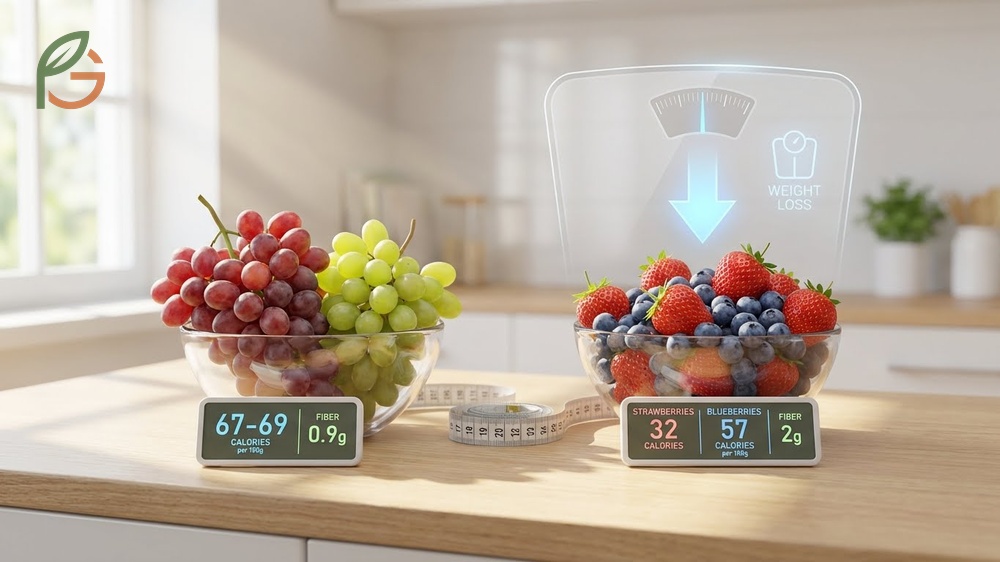
Studies demonstrate that berries generally have a slight edge over grapes for weight loss due to lower calorie density and higher fiber content. Strawberries contain just 32 calories per 100g compared to grapes at 67-69 calories, while blueberries provide 57 calories[7]. Berries also pack more fiber—strawberries offer 2g per 100g versus grapes’ 0.9g—which means better satiety per calorie consumed.
However, agricultural data shows that grapes have advantages berries can’t match. They’re available year-round at consistent prices, while fresh berries can cost 2-3 times more and have shorter shelf lives. Grapes don’t require washing immediately before eating (though you should still rinse them), making them more convenient for on-the-go snacking. This practical advantage matters because the best weight-loss fruit is the one you’ll actually eat consistently.
| Fruit | Calories | Fiber (g) | Glycemic Index |
|---|---|---|---|
| Grapes | 67[6] | 0.9 | 43-53 |
| Strawberries | 32[7] | 2.0 | 40-41 |
| Blueberries | 57[7] | 2.4 | 53-54 |
| Raspberries | 52 | 6.5 | 32-40 |
The reason berries work so well for weight loss is their exceptional fiber-to-calorie ratio. Raspberries deliver 6.5g of fiber per 100g—more than seven times what grapes provide. This fiber absorbs water in your digestive tract, creating bulk that signals fullness. If your primary goal is maximum satiety per calorie, raspberries and strawberries win.
Research shows that you don’t have to choose one or the other exclusively. Many successful dieters rotate between grapes and berries based on availability, price, and meal plans. Using grapes for quick pre-workout energy (they digest faster due to lower fiber) and berries for satisfying afternoon snacks (higher fiber keeps you fuller longer) gives you the benefits of both.
- Choose grapes when you need portable, durable fruit that won’t get crushed in your bag
- Choose berries when you want maximum fiber and lowest calories per serving
- Choose grapes for pre-workout fuel because lower fiber means faster energy
- Choose berries when budget isn’t a constraint and you want variety
- Choose grapes in winter when berry prices spike and quality declines
- Mix both in fruit salads to get varied nutrients and antioxidant profiles
Best Ways to Include Grapes in Your Diet
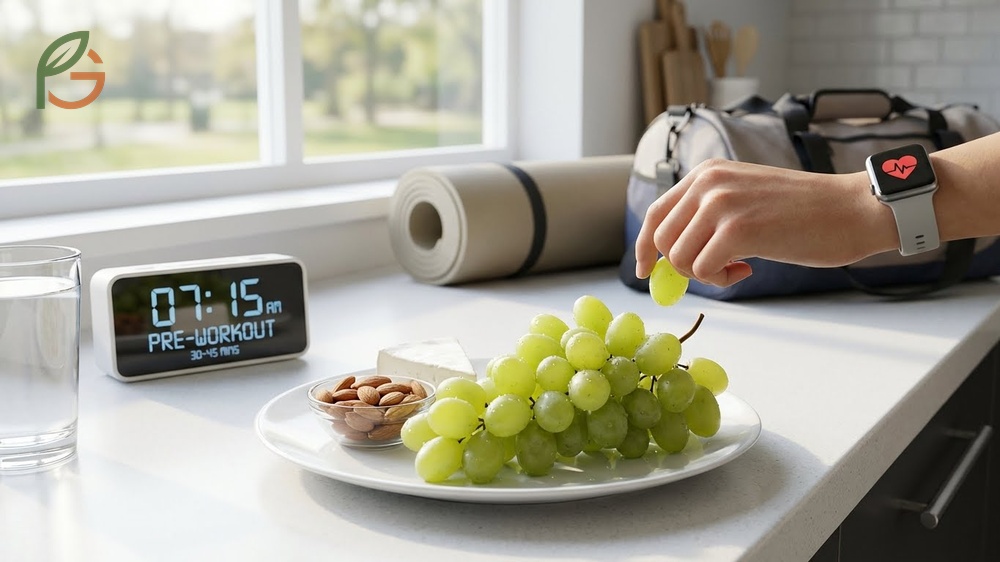
Current guidance emphasizes strategic timing and pairing when you add grapes to your weight-loss plan. Evidence indicates that eating grapes 30-45 minutes before your workout provides quick-digesting carbohydrates that fuel performance without causing digestive discomfort. This timing works better than having them post-workout when you need protein and slower-digesting carbs for recovery.
Research shows that pairing grapes with protein sources dramatically improves their weight-loss effectiveness. When you eat one cup of grapes with one ounce of cheddar cheese (about 113 calories total), you get sustained energy that lasts 2-3 hours versus 45-60 minutes from grapes alone. This protein addition slows digestion, stabilizes blood sugar, and prevents the hunger rebound that derails many diets.
For breakfast, frozen grapes blended into Greek yogurt create a low-calorie, high-protein meal that feels indulgent. You’ll get the natural sweetness you crave without adding honey or sugar, saving 60-80 calories compared to sweetened yogurt. This approach works because the cold temperature and smooth texture trigger satisfaction signals similar to ice cream.
- Freeze grapes and eat them as a dessert replacement, saving 150-250 calories versus traditional desserts
- Add 1/2 cup grapes to lunch salads for natural sweetness without high-calorie dressings
- Pair grapes with 10-12 almonds for a balanced 150-calorie snack with protein and healthy fats
- Slice grapes in half and add to overnight oats for texture and flavor without extra sugar
- Eat grapes before dinner to take the edge off hunger, reducing main meal portions by 15-20%
- Pack pre-portioned grape bags for work to avoid vending machine temptations
- Use grapes instead of croutons in chicken or tuna salads for fewer calories and more nutrients
What often gets overlooked is beverage replacement. If you typically drink 12oz of juice or soda with lunch (120-150 calories), eating grapes with water instead saves those calories while providing more nutrients and fiber. Over a week, this single swap eliminates 840-1,050 calories—equivalent to losing 1/4 pound from this change alone.
Meal Prep Tip: Wash and portion grapes into 1-cup servings at the start of each week. Store them in clear containers at eye level in your fridge. This simple visibility trick increases consumption of healthy foods by 60-70% compared to keeping them in produce drawers where they’re forgotten.
Most people find success when they use grapes to replace specific high-calorie habits rather than just adding them to their existing diet. Identify your biggest calorie pitfalls—late-night chips, afternoon candy bars, or oversized desserts—and create a grape-based alternative for each situation. This substitution approach is more effective than general advice to “eat more fruit.”
Conclusion
The evidence is clear: grapes support weight loss when you use them strategically as part of a calorie-controlled diet. Their combination of low calories (62 per cup), high water content (82%), and low glycemic index (43-53) makes them an effective tool for managing hunger without sabotaging your calorie deficit. Success comes from treating grapes as a dessert replacement or snack upgrade, not as unlimited free food.
Current nutritional guidance emphasizes that no single food creates weight loss—your total calorie balance determines results. Grapes excel at helping you maintain that balance by satisfying sweet cravings with minimal caloric cost. FruitGarden synthesizes the latest research to help you make informed choices about incorporating fruits like grapes into evidence-based nutrition plans that actually work.
Medical Disclaimer
Important Medical Disclaimer: This content is for informational and educational purposes only. It’s not intended as a substitute for professional medical advice, diagnosis, or treatment. Always consult a qualified healthcare professional or registered dietitian before making significant changes to your diet, especially if you have diabetes, metabolic disorders, or other medical conditions. Individual nutritional needs vary based on age, activity level, health status, and weight loss goals.
Frequently Asked Questions
Are green grapes better than red grapes for weight loss?
No, green and red grapes contain nearly identical calories—both have approximately 67-69 calories per 100g serving. The main difference is antioxidant content, with red grapes providing more anthocyanins. For weight loss purposes, choose the color you prefer since calorie differences won’t impact your results. Both work equally well when portion-controlled.
How many grapes can I eat per day on a diet?
Most successful dieters consume 1-2 cups (92-184g) of grapes daily, providing 62-124 calories. This amount satisfies sweet cravings without consuming excessive carbohydrates or calories. If you’re following a low-carb diet (under 100g daily), limit grapes to 1/2-1 cup since each cup contains 16g carbs. Always track grapes in your food log to maintain your calorie deficit.
Are grapes keto-friendly for weight loss?
No, grapes aren’t considered keto-friendly. One cup contains 16g net carbs, which would consume 50-80% of the typical 20-25g daily carb limit on strict keto diets. If you’re following keto, choose lower-carb fruits like berries instead—1/2 cup raspberries has only 3g net carbs. Grapes work better for moderate-carb or balanced diet approaches to weight loss.
Do grapes cause belly fat or bloating?
No, grapes don’t directly cause belly fat—excess calories from any source do. However, some people experience temporary bloating from grapes due to their natural sugar content (fructose) or if eaten in large quantities. This is water retention and gas, not fat gain. If you notice bloating, reduce portion size to 1/2 cup and pair grapes with protein to slow digestion.
What’s the best time to eat grapes for weight loss?
Research shows that eating grapes works best 30-45 minutes before workouts for pre-exercise energy, or 10-15 minutes before main meals to reduce overall meal portions by 15-20%. Avoid eating large portions right before bed since the carbohydrates can interfere with fat burning during sleep. Morning or early afternoon consumption aligns best with your body’s natural carbohydrate tolerance patterns.
Are frozen grapes better for weight loss than fresh grapes?
Frozen and fresh grapes have identical nutritional content and calories. However, frozen grapes offer a weight-loss advantage by slowing eating pace—it takes 2-3 times longer to eat them, giving your brain more time to register fullness. This can reduce total consumption by 25-30%. Frozen grapes also work as a satisfying dessert replacement, saving 150-250 calories compared to ice cream.
Can I drink grape juice instead of eating whole grapes?
No, grape juice isn’t recommended for weight loss. Eight ounces of grape juice contains 150-160 calories without the fiber and chewing satisfaction of whole grapes. You can eat 2.5 cups of whole grapes for the same calories, which provides much better satiety. Juice also spikes blood sugar faster due to lack of fiber, increasing hunger within 30-45 minutes. Stick with whole grapes for effective weight management.





