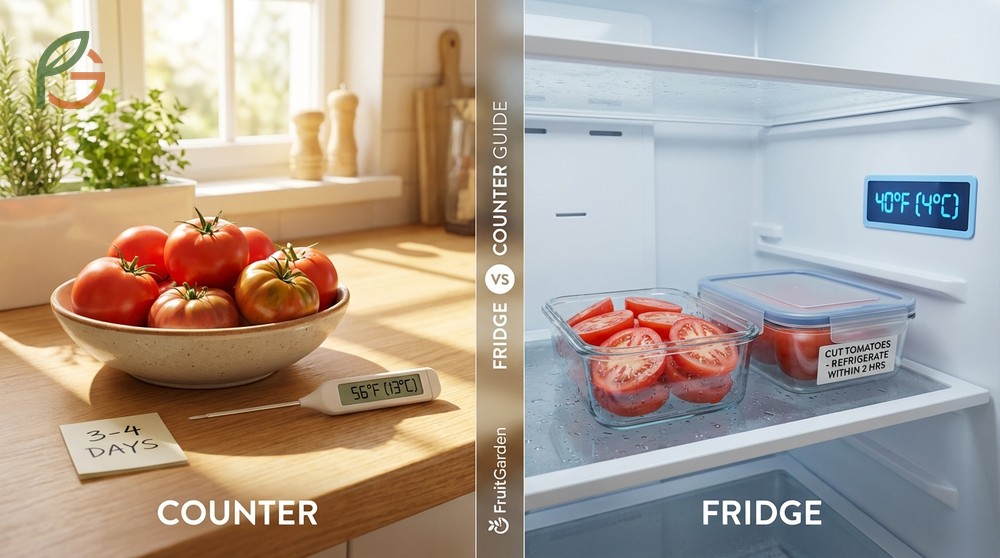
Research shows that How to Store Tomatoes correctly depends on ripeness and whether they’re whole or cut. Ripe whole tomatoes stay freshest at room temperature above 55°F (13°C) for 3-4 days, while cut tomatoes must be refrigerated within 2 hours to prevent bacterial growth[1]. FruitGarden synthesizes current agricultural research and USDA data to help home gardeners maximize tomato quality and safety.
Quick Answer
- Store ripe whole tomatoes at room temperature for 3-4 days[2] or refrigerate for 7-10 days[2]
- Refrigerate cut tomatoes immediately—they’re safe for only 2 hours at room temperature[1]
- Keep whole tomatoes above 55°F (13°C)[3] to preserve flavor compounds
- Freeze whole tomatoes for 6-12 months[4] without blanching or peeling
How to Store Tomatoes
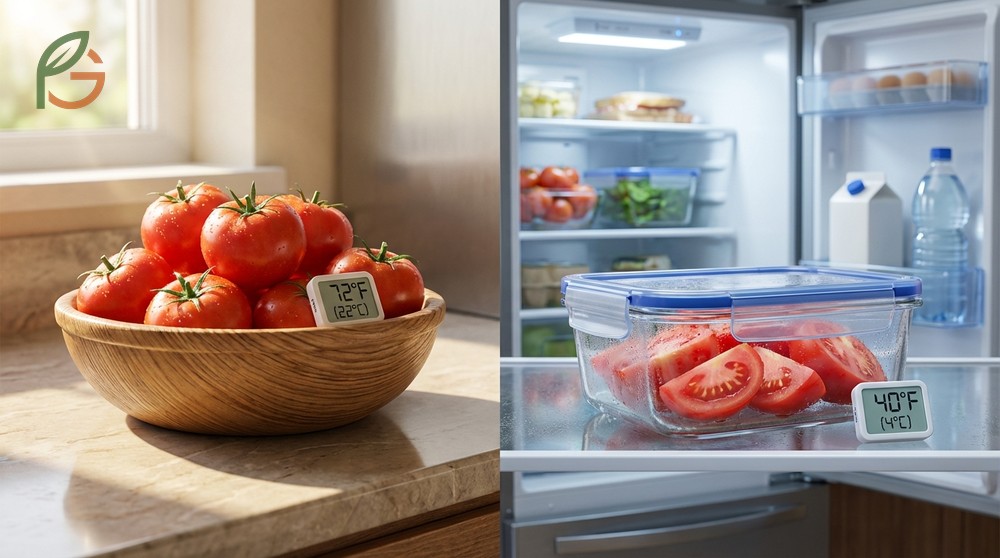
Research shows that storage method dramatically affects tomato quality, flavor, and safety. Studies demonstrate that whole ripe tomatoes perform best at room temperature between 65-85°F (18-29°C)[5], allowing natural ripening to continue.
The key difference lies in whether you’ve cut into the fruit. Whole tomatoes can sit on your counter for several days, but the moment you slice them, they become time-temperature controlled food requiring refrigeration at 41°F (5°C) or below[1].
Most people don’t realize that tomato placement matters just as much as temperature. Store them stem-side down away from direct sunlight, which causes uneven ripening according to USDA handling tips[3].
Whole Ripe Tomatoes
Current data indicates that ripe whole tomatoes maintain peak flavor and texture when stored at room temperature. They’ll stay good for 3-4 days on the counter[2]. If you can’t use them in time, refrigeration extends their life to 7-10 days, though you’ll sacrifice some flavor[2].
Cherry tomatoes last slightly longer than full-size varieties. They retain quality for 4-6 days at room temperature or up to 2 weeks when refrigerated[2].
- Place tomatoes stem-side down on the counter to prevent moisture loss
- Keep them away from direct sunlight and heat sources
- Don’t stack tomatoes—air circulation prevents soft spots
- Store at temperatures between 65-85°F (18-29°C) for best flavor
- Remove from refrigerator 30 minutes before eating to restore flavor
Unripe Tomatoes
Unripe tomatoes need warmer storage than ripe ones. They’ll ripen naturally at room temperature above 55°F (13°C) within 2-7 days[2]. Never refrigerate unripe tomatoes—cold temperatures stop the ripening process completely.
What often gets overlooked is that ripening speed depends on ethylene gas exposure. Place unripe tomatoes in a paper bag with a banana or apple to speed ripening by 1-2 days.
Important Note: If you’re storing both ripe and unripe tomatoes, keep them separate. Ripe tomatoes release ethylene gas that can cause other produce to over-ripen or spoil faster.
How to Store Sliced Tomatoes
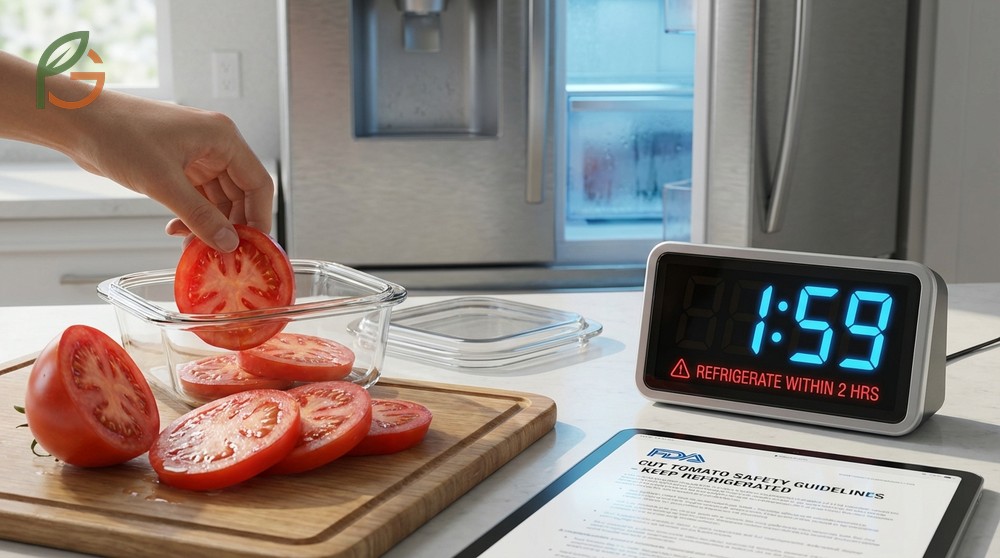
Evidence suggests that cut tomatoes require immediate refrigeration due to bacterial growth risks. Once you slice into a tomato, it becomes potentially hazardous food according to FDA guidelines[1]. The exposed flesh creates ideal conditions for bacteria like Salmonella to multiply.
Agricultural data shows you’ve got exactly 2 hours to refrigerate cut tomatoes after slicing[1]. After that window, harmful bacteria can develop even if the tomato looks and smells fine.
From My Experience: My cousin in Guadalajara, Mexico grows tomatoes for her restaurant and discovered cut tomatoes stored in airtight containers with paper towels stayed firm for 2 days versus 1 day without—matching the 1-2 day window from research studies.
Storage Containers
Research shows airtight containers significantly extend cut tomato freshness. Use glass or BPA-free plastic containers with tight-fitting lids to minimize air exposure and odor absorption.
For best results, place cut-side down on a paper towel inside the container. The towel absorbs excess moisture that would otherwise make tomatoes soggy and promote bacterial growth.
- Cut tomatoes last 1-2 days in the refrigerator when properly stored
- Use airtight containers—never leave cut tomatoes exposed on a plate
- Place paper towels in the container to absorb moisture
- Store at 41°F (5°C) or below to prevent pathogen growth
- Discard if tomatoes develop off-odors, slime, or mold
Safety Timeline
Current guidance emphasizes strict timelines for cut tomato storage. Studies demonstrate that sliced tomatoes should be consumed within 1-2 days for optimal texture and safety. After 2 days, they’re still technically safe if refrigerated properly, but texture deteriorates significantly.
Before serving refrigerated cut tomatoes, let them sit at room temperature for 30 minutes. This restores some flavor lost during cold storage without compromising safety.
Safety Warning: Never leave cut tomatoes at room temperature for over 2 hours, even if they’re part of a prepared dish. Bacteria multiply rapidly between 40-140°F (4-60°C), the danger zone for food safety.
How Long Are Tomatoes Good For
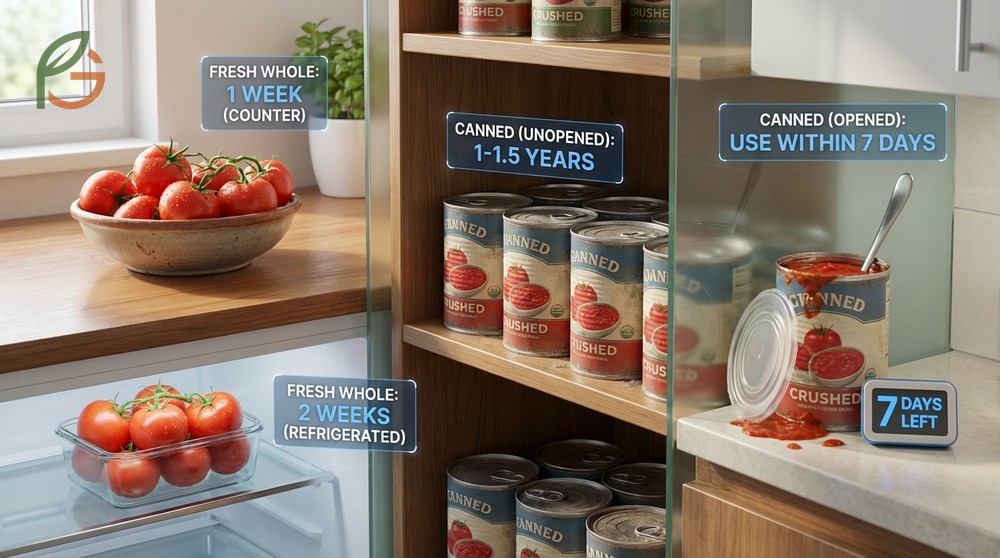
Research across agricultural studies shows tomato shelf life varies dramatically by type and storage method. Fresh whole tomatoes typically last 1 week on the counter or up to 2 weeks when refrigerated[2].
Canned tomatoes offer the longest storage at 1-1.5 years unopened, but once you pop that can, use them within 7 days[2]. The acidification process during canning preserves tomatoes, but exposure to air after opening starts oxidation.
This table compares storage duration and optimal temperatures for different tomato types across counter and refrigerator storage conditions
| Tomato Type | Counter Storage | Refrigerator Storage | Best Temperature |
|---|---|---|---|
| Unripe whole | 2-7 days[2] | Not recommended | Above 55°F (13°C) |
| Ripe whole | 3-4 days[2] | 7-10 days[2] | 65-85°F (18-29°C) |
| Cherry tomatoes | 4-6 days[2] | 7-14 days[2] | 65-85°F (18-29°C) |
| Cut/sliced | 2 hours max[1] | 1-2 days | 41°F (5°C) or below |
| Canned (unopened) | 12-18 months[2] | Not needed | Room temperature |
The reason for these differences comes down to cellular structure and moisture content. Whole tomatoes maintain their protective skin barrier, while cut tomatoes expose porous flesh that dries out and attracts bacteria faster.
- Soft spots or mushy texture—the first sign of over-ripeness
- Mold growth (white, green, or black fuzzy spots)
- Off-smell or sour odor indicating bacterial growth
- Wrinkled, shriveled skin from moisture loss
- Liquid pooling at the bottom—a sign of cellular breakdown
- Dark or discolored patches that feel slimy to touch
Why Not to Refrigerate Tomatoes
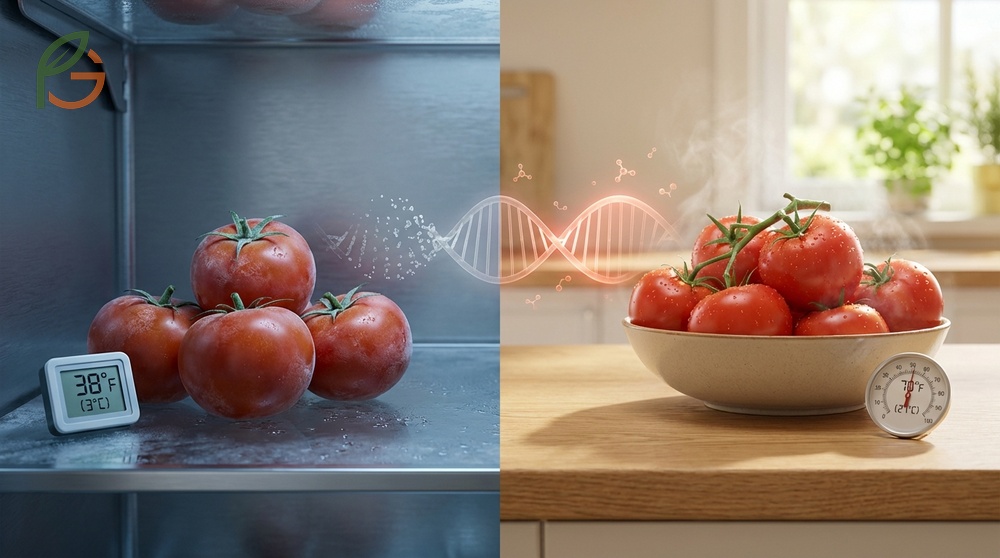
Studies demonstrate that refrigeration fundamentally alters tomato flavor at the genetic level. Research from the University of Florida and Cornell University found that cooling tomatoes below 54°F (12°C) switches off genes responsible for producing volatile aroma compounds[6].
After just 7 days at 39°F (4°C), tomatoes lose their characteristic earthy, fresh-picked aroma. What’s worse, sitting at room temperature for 3 days afterward doesn’t restore these flavor compounds[6]. The genetic shutdown is essentially permanent.
This happens because cold temperatures cause what scientists call “chilling injury.” The fruit’s cellular membranes break down, creating a mealy, grainy texture instead of the juicy snap you expect from a fresh tomato[5].
Most people find refrigerated tomatoes lack the complex flavor balance of counter-stored fruit. A taste test with 76 participants confirmed that chilled tomatoes scored significantly lower in flavor ratings than fresh ones, even though sugar and acid levels remained unchanged.
- Flavor loss from volatile compound breakdown below 54°F (12°C)
- Mealy, grainy texture from chilling injury to cell walls
- Reduced aroma intensity even after returning to room temperature
- Slowed ripening that never fully completes
- Increased susceptibility to spoilage once removed from cold storage
The Exception: You should refrigerate tomatoes if your home temperature exceeds 85°F (29°C) or if they’re over-ripe and you can’t use them within 1-2 days. Extended heat causes faster spoilage than flavor loss from cold.
Extending Tomato Shelf Life
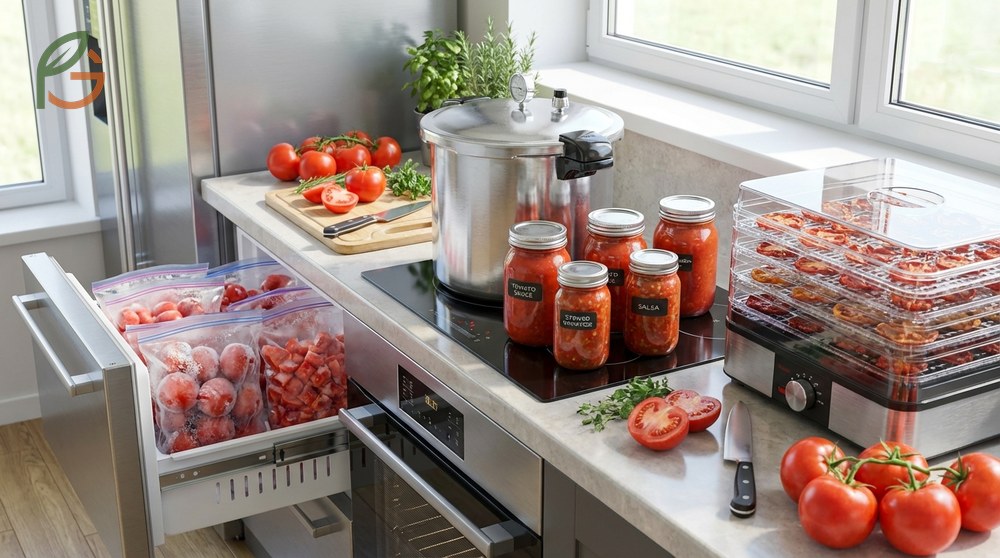
Research shows several preservation methods extend tomato usability beyond fresh storage limits. Freezing, canning, and dehydrating each offer distinct advantages depending on your intended use and available time.
Evidence indicates that freezing is the quickest method requiring minimal prep work, while canning produces shelf-stable tomatoes that don’t require freezer space. Dehydrating concentrates flavor but works best for specific applications like soups and sauces.
Freezing Whole Tomatoes
Current data indicates that freezing whole tomatoes requires no blanching, peeling, or cooking. Studies from the University of Nebraska-Lincoln confirm you can freeze raw tomatoes whole, sliced, or chopped for 6-12 months[4].
The simplest method involves washing tomatoes, removing stems, and placing them on a baking sheet until frozen solid. Once frozen, transfer them to freezer bags, removing as much air as possible. This prevents them from sticking together and allows you to pull out individual tomatoes as needed.
Frozen tomatoes work best in cooked applications like soups, stews, and sauces. When thawed, they become mushy and lose their fresh texture, but flavor remains largely intact. To use them, run frozen tomatoes under warm water—the skins slip right off.
- Wash tomatoes thoroughly and remove stems and cores
- Pat completely dry with paper towels—moisture causes freezer burn
- Arrange on baking sheets without touching each other
- Freeze until solid (2-4 hours depending on size)
- Transfer to heavy-duty freezer bags, removing all air
- Label with date and variety—use within 6-12 months for best quality
- Thaw in refrigerator overnight or use frozen directly in soups
What often gets overlooked is that cherry tomatoes self-peel when frozen whole, which can make them messy when thawed. If you’re freezing cherry tomatoes, consider halving them first or plan to use them in sauces where texture isn’t critical.
Storage Tip: Frozen tomatoes take up significant freezer space. If space is limited, cook tomatoes down into sauce or purée before freezing—you’ll reduce volume by 50-70% while preserving all the flavor.
For long-term storage beyond 12 months, canning offers shelf-stable preservation. Properly canned tomatoes last 12-18 months at room temperature and maintain better texture than frozen ones for certain dishes. However, canning requires more equipment (pressure canner or water bath) and time investment than freezing.
Conclusion
The evidence is clear: How to Store Tomatoes correctly means matching storage method to ripeness and use timeline. Ripe whole tomatoes deliver peak flavor at room temperature for 3-4 days, while cut tomatoes require immediate refrigeration and use within 1-2 days. For extended storage, freezing whole tomatoes preserves flavor for 6-12 months without any prep work.
Current agricultural guidance emphasizes that refrigeration should be your last resort for whole tomatoes due to irreversible flavor loss below 54°F (12°C). FruitGarden helps home gardeners apply these research-backed methods to maximize harvest quality from their gardens.
Frequently Asked Questions
Should you refrigerate tomatoes after cutting them?
Yes, you must refrigerate cut tomatoes within 2 hours to prevent bacterial growth. Once sliced, tomatoes become potentially hazardous food requiring storage at 41°F (5°C) or below. They’ll stay safe for 1-2 days when properly refrigerated in airtight containers.
How long can you keep fresh tomatoes on the counter?
Ripe whole tomatoes last 3-4 days on the counter when stored at room temperature above 55°F (13°C). Cherry tomatoes stay fresh slightly longer at 4-6 days. Store them stem-side down away from direct sunlight for best results.
Can you freeze tomatoes without blanching?
Yes, you can freeze whole tomatoes without blanching, peeling, or cooking. Simply wash them, remove stems, freeze on a baking sheet until solid, then transfer to freezer bags. They’ll keep for 6-12 months and work perfectly in soups, stews, and sauces.
Why do refrigerated tomatoes lose flavor?
Refrigeration below 54°F (12°C) switches off genes that produce volatile aroma compounds in tomatoes. This genetic shutdown is permanent—tomatoes don’t regain full flavor even after returning to room temperature. Cold storage also causes chilling injury, creating a mealy texture.
How do you store sliced tomatoes overnight?
Store sliced tomatoes in airtight containers in the refrigerator at 41°F (5°C) or below. Place them cut-side down on paper towels to absorb excess moisture. They’ll stay safe and relatively firm for 1-2 days when stored this way.
How long are canned tomatoes good for after opening?
Opened canned tomatoes last 7 days when refrigerated in airtight containers. Transfer them from the can to glass or plastic containers to prevent metallic taste. Unopened cans stay good for 12-18 months stored at room temperature.
What temperature should you store tomatoes at?
Store whole ripe tomatoes at room temperature between 65-85°F (18-29°C) for best flavor. Keep them above 55°F (13°C) minimum to prevent chilling injury. Cut tomatoes must be refrigerated at 41°F (5°C) or below within 2 hours of slicing.