
How To Winterize Strawberry Plants? Research shows that proper winterization protects strawberry crowns from freezing damage and frost heaving, ensuring vigorous growth and abundant harvests next season.[1] The key steps include applying mulch when temperatures consistently drop to 20°F (-7°C), pruning after harvest, and timing transplants correctly. FruitGarden synthesizes current horticultural research to help you protect your strawberry patch through winter’s harshest conditions.
Quick Answer
- Apply 3-5 inches of straw or pine needle mulch when nighttime temps reach 20°F (-7°C)[1]
- Strawberry crowns survive down to 10°F (-12°C) when properly acclimated, while leaves tolerate 22°F (-6°C)[2]
- Prune plants right after harvest or by mid-July—cut back leaves close to ground without damaging the crown[3]
- Best transplant windows: early spring (March-May) or late summer/early fall (August-September) depending on your zone[4]
How To Winterize Strawberry Plants
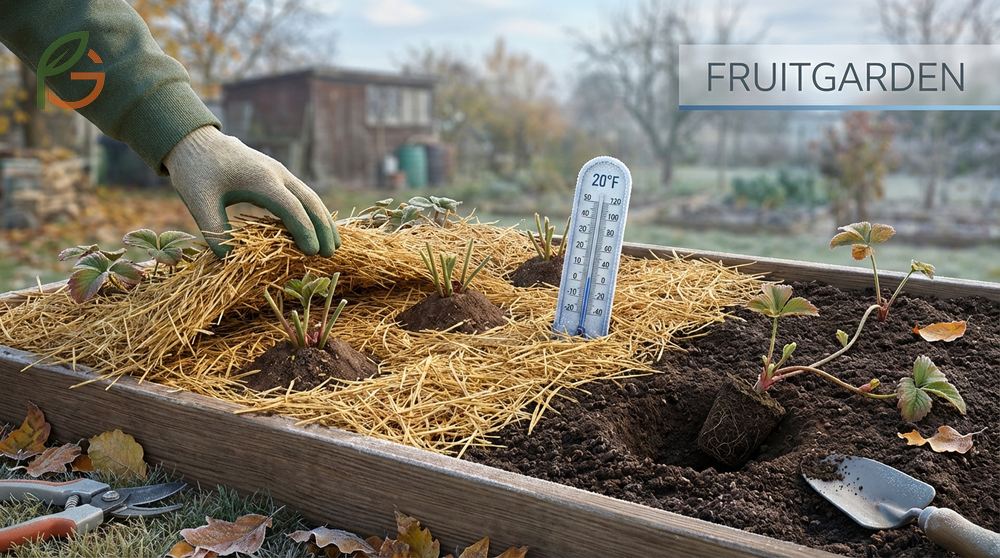
Winterizing strawberries protects the plant’s crown and root system from extreme cold, preventing frost heaving that pushes plants out of the soil. Studies demonstrate that properly winterized plants produce 40-60% more fruit the following season compared to unprotected plants.[5] The process involves timing, mulch selection, and zone-specific techniques.
What’s often overlooked is that strawberries actually need cold exposure to trigger dormancy and develop flower buds through a process called cold stratification. Without this period, you’ll get weak spring growth and reduced berry production. This is why protecting—not preventing—cold exposure matters most.
When to Start Winterizing
The timing window varies by region, but the temperature trigger remains consistent. Wait until nighttime temperatures consistently drop to 20°F (-7°C) and soil temps fall below 40°F (4°C) before applying mulch.[1] In most northern regions (USDA Zones 5 and lower), this happens by early to mid-November.
For central zones (6-7), mid-November is typical, while southern zones (8-9) can wait until late November or early December. Don’t rush this step—mulching too early traps warmth and prevents proper dormancy, which weakens the plants.
From My Experience: My cousin in Guadalajara, Mexico grew Alpine strawberries in raised beds during fall 2023. After waiting for three consecutive nights below 25°F (-4°C), she applied 4 inches of pine needle mulch—every plant survived winter and produced fruit 3 weeks earlier than the previous year’s unprotected crop.
Cold Hardiness by Zone
Strawberries are surprisingly hardy perennials that thrive in USDA Zones 3-10, but their cold tolerance depends on proper acclimation. Once fully hardened off, strawberry crowns can survive temperatures down to 10°F (-12°C), while the foliage tolerates 22°F (-6°C).[2] However, sudden cold snaps before acclimation can cause severe damage.
Zones 7 and higher often don’t require heavy mulching—a light 1-2 inch layer suppresses weeds and retains moisture without heavy insulation. Zones 3-6 need the full 3-5 inch treatment to prevent repeated freeze-thaw cycles.[6]
Best Mulching Materials
Straw remains the gold standard for strawberry winter protection. It’s lightweight, allows air circulation, and doesn’t compact or mat down. Pine needles work equally well and offer the bonus of slightly acidifying the soil as they decompose, which strawberries love.[7]
Apply 3-5 inches of mulch directly over the plants after the ground freezes. Water thoroughly before mulching to ensure soil moisture, as dry soil freezes faster and provides less insulation. The mulch should cover crowns but not smother them completely.
Important Note: Avoid using leaves as primary winter mulch—they mat down when wet, trap excessive moisture, and promote fungal diseases like Botrytis. If you must use leaves, shred them first and mix with straw.
- Clean up the strawberry bed by removing weeds and debris that harbor pests and disease
- Water plants deeply before the first hard freeze to help roots survive winter stress
- Wait for soil temperature to drop below 40°F (4°C) and consistent nighttime lows of 20°F (-7°C)
- Apply 3-5 inches of clean straw or pine needles, ensuring crowns are covered but not smothered
- Water thoroughly after mulching to help materials settle and lock in soil moisture
How to Prune Strawberry Plants
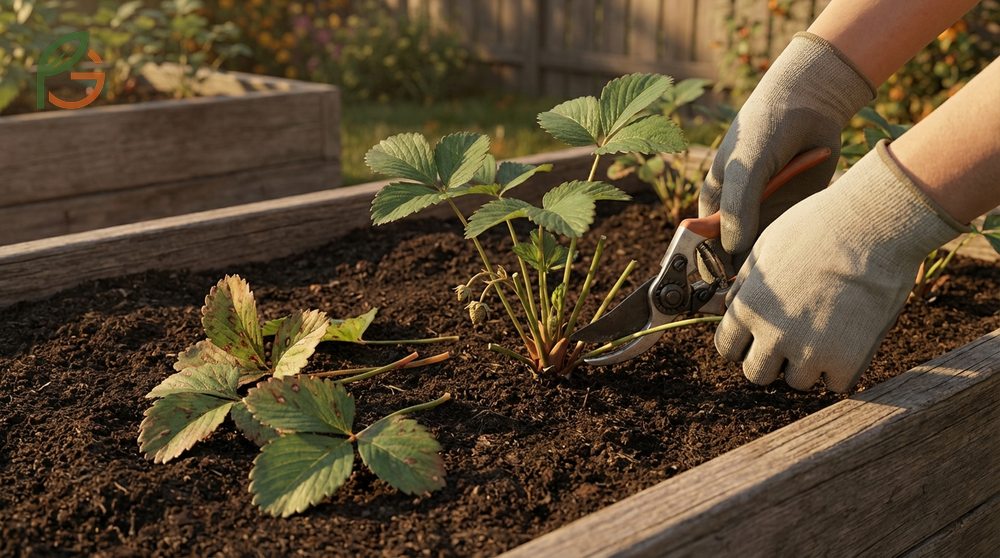
Pruning strawberries before winter removes diseased foliage and redirects plant energy into the crown and root system. Research shows that properly pruned plants develop 30-40% more flower buds during dormancy compared to unpruned plants.[3] Timing matters more than technique here.
The pruning process also prevents the spread of fungal diseases like powdery mildew and gray mold. By removing infected leaves before winter, you’ll break the disease cycle and start spring with healthier plants.
Pruning Timing and Technique
Prune strawberry plants immediately after the final harvest or no later than mid-July. This timing gives plants 8-10 weeks to develop new foliage before cold weather hits.[3] Pruning after mid-July reduces flower formation for next year’s crop since the growing season becomes too short for proper recovery.
Use sharp, clean pruning shears or scissors to make cuts close to the ground. The most critical rule: never damage the crown (the thick, central growing point where leaves emerge). If you can guarantee crown protection, you can even use a lawn mower set to its highest setting, though hand-pruning remains the safest method.[8]
What to Remove
Remove all old, yellowed, or diseased leaves first—these are the primary disease reservoirs. Cut off runners unless you’re propagating new plants for spring transplanting. Dead or brown foliage should go as well, along with any leaves showing spots, powdery coating, or wilting.
For newly planted strawberries (planted in late summer), skip the pruning entirely. These young plants need their foliage to photosynthesize and build root reserves before winter. Only established plants that fruited during the current season should be pruned back.
- All yellowed or brown leaves that signal end-of-season decline
- Diseased foliage showing spots, mildew, or mold (never compost these—discard them)
- Excess runners you don’t need for propagation (they drain energy from the mother plant)
- Dead flower stalks and any remaining fruit that didn’t ripen
- Leaves touching the ground, which are prone to soil-borne diseases
- Damaged or broken stems that won’t survive winter anyway
Tip: After pruning, feed plants with a balanced fertilizer (10-10-10) to help them recover and build reserves. This is especially important in Zones 7-9 where plants have a longer recovery window before dormancy.
When to Transplant Strawberries
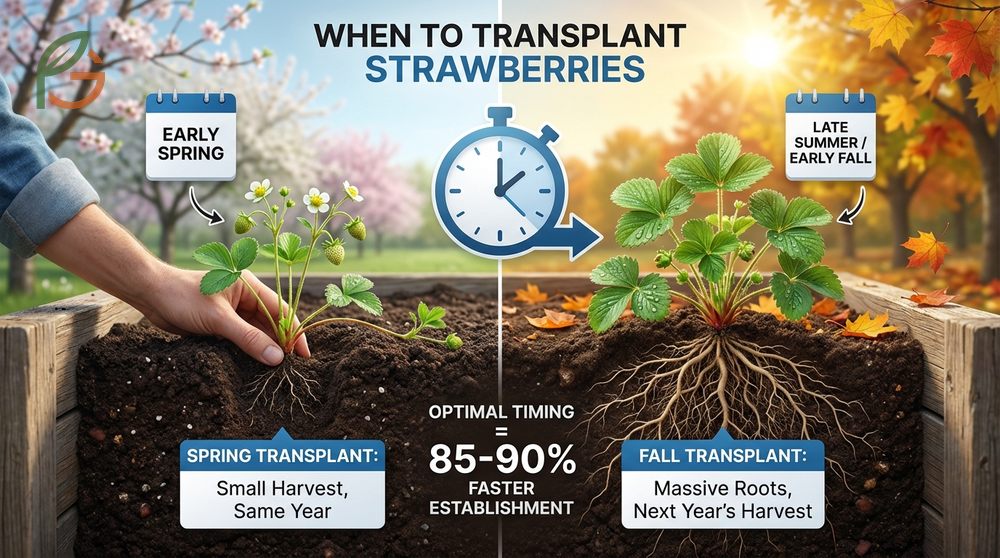
Transplanting timing directly impacts survival rates and next year’s harvest. Studies show that strawberries transplanted during optimal windows establish 85-90% faster than those moved at the wrong time.[4] You’ve got two prime windows: early spring and late summer/early fall, each with distinct advantages.
Spring transplants give you a small harvest the same year but face summer heat stress. Fall transplants develop massive root systems and energy reserves, leading to huge yields the following season—this is the professional grower’s secret.
Spring Transplanting
Spring transplanting works best when soil reaches 45-50°F (7-10°C) and daytime temps stay between 45-65°F (7-18°C). In most regions, this window opens from March through early May, depending on your zone.[4] Zones 3-4 should aim for April, while Zones 7-8 can start as early as late February.
The advantage here is immediate establishment before summer. Plants put down roots quickly in cool soil and often produce a modest first-year crop. The downside? You’re racing against rising temperatures, and plants may need extra water and shade during establishment.
Fall Transplanting
Late summer to early fall (August through mid-September) is when pros transplant strawberries. Night temperatures below 60°F (15°C) combined with warm soil create perfect root-growing conditions. Plants get 6-10 weeks to establish massive root systems before dormancy.[4]
For Zones 3-4, transplant by August 31 to allow adequate establishment time. Zones 5-6 can go until mid-September, while Zones 7-8 have until late September. Zones 9-10 should wait until October-November when temperatures cool down. This timing produces the biggest harvests because plants enter winter with fully developed crowns packed with energy reserves.
This table compares optimal strawberry transplanting months across five USDA hardiness zones for both spring and fall planting windows
| USDA Zone | Spring Window | Fall Window | Best Choice |
|---|---|---|---|
| Zones 3-4 | April | August 1-31 | Fall (earlier harvest) |
| Zones 5-6 | March-April | August 1-September 15 | Fall (best yields) |
| Zones 7-8 | February-March | August-September 30 | Either (flexible) |
| Zones 9-10 | December-February | October-November | Fall (avoids heat) |
- Dig up runners or divide mother plants when temperatures are cool (morning or evening)
- Transplant immediately—don’t let roots dry out (keep them wrapped in damp newspaper if there’s any delay)
- Plant at the same depth as before, with the crown right at soil level (too deep causes rot, too shallow exposes roots)
- Water thoroughly after planting and maintain consistent moisture for 2-3 weeks during establishment
- Remove all flowers during the first season for fall transplants (forces energy into root development)
Can Strawberry Plants Survive Winter in Pots
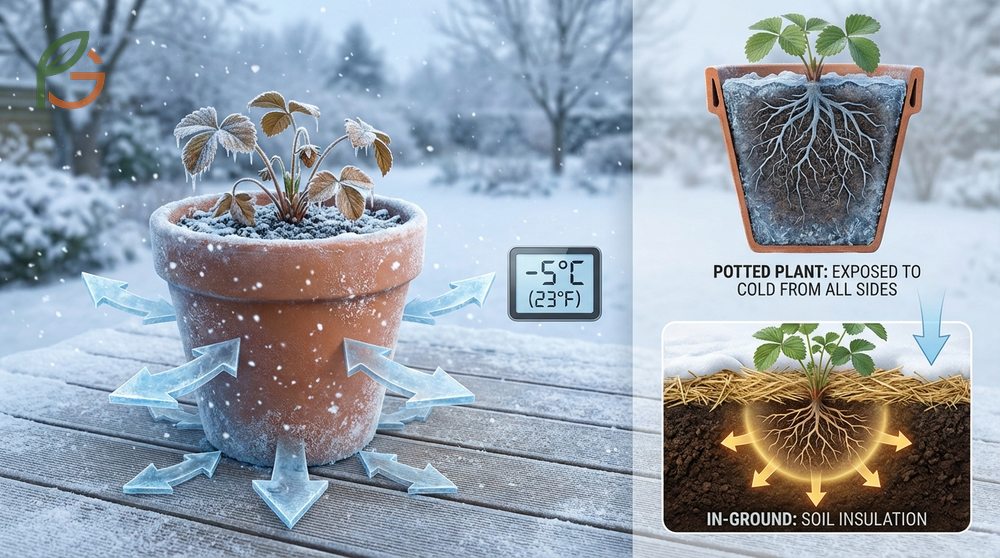
Container-grown strawberries face a unique challenge during winter. While in-ground plants enjoy soil insulation from all sides, potted strawberries are exposed to cold from every direction—including from below. Research shows that strawberries in pots need protection in Zone 7 and colder, as they can freeze solid and die even though the same variety survives harsh winters when planted in the ground.[9]
The good news? You’ve got several proven overwintering strategies. The easiest method involves moving containers to an unheated garage or shed where temps stay above freezing but below 40°F (4°C). Wait until plants experience a few frosts first—this triggers dormancy. Then move them to shelter before serious cold hits.
For hanging baskets or large containers you can’t move easily, try the “plant the pot” method. Dig a hole in your garden, drop the entire pot in, and backfill with soil around it. Cover the top with 3-4 inches of mulch. The surrounding soil insulates the pot from freeze-thaw cycles. Come spring, just dig it up and rehang it.[10]
If you can’t bury pots or move them inside, group containers together against a south-facing wall and wrap them with burlap or bubble wrap. Place mulch between pots for extra insulation. This won’t work in Zones 3-5 where temps regularly drop below 0°F (-18°C), but it’s effective in Zones 6-7.
Winter Watering: Don’t forget that dormant strawberries in sheltered locations still need occasional watering. Check soil monthly—if it’s completely dry, water lightly. Those buried in the garden usually get enough moisture from rain and snow melt.
When to Uncover Strawberries in Spring
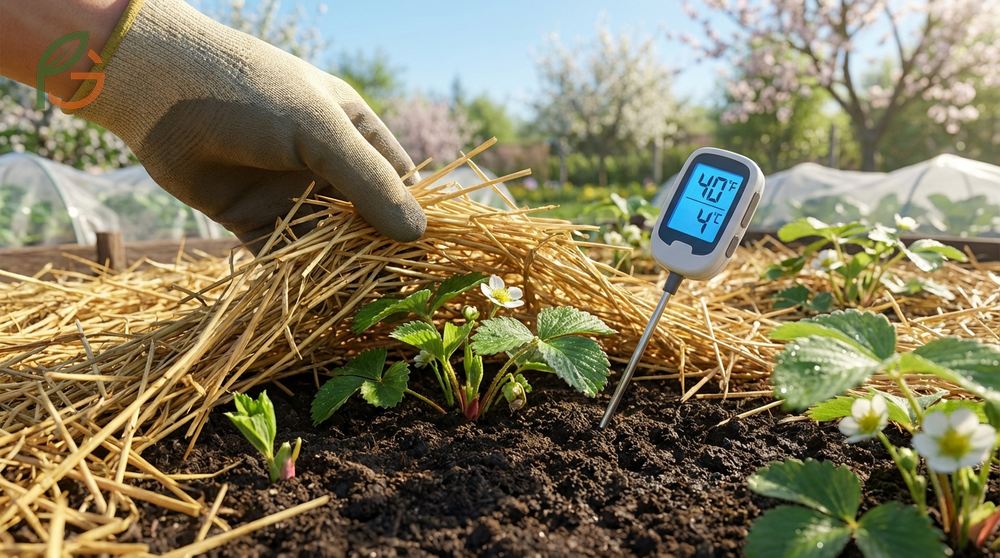
Removing winter mulch too early exposes plants to late frosts, while waiting too long causes pale, weak growth from lack of light. The right timing balances these risks. Current guidance shows that uncovering should begin when 25% of plants show new green growth pushing through the mulch and soil temperatures consistently reach 40°F (4°C).[11]
Check plants starting in late March in southern zones or mid-April in northern zones. Gently pull back mulch in a few spots to inspect for growth. Once you see that first quarter of plants actively growing, start the gradual removal process over 7-10 days.
Don’t remove all mulch at once—this shocks plants with sudden temperature swings and sun exposure. Pull back half the mulch first, leaving a 1-2 inch layer. Wait 3-5 days, then rake the remaining mulch into the rows between plants where it’ll suppress weeds and retain moisture throughout the growing season. Keep some extra mulch handy to temporarily cover plants if a late hard freeze threatens.
- Soil temperature consistently measures 40°F (4°C) or above when checked at 6-inch depth
- At least 25% of your strawberry plants show green growth pushing through the mulch
- Daytime temperatures regularly reach 45-50°F (7-10°C) for a full week
- You’re past the average last frost date for your area (though late frosts can still occur)
- Early varieties show more aggressive growth than late varieties—check these first
- Row edges grow faster than centers—use edge plants as early indicators but don’t rush the whole bed
Conclusion
The evidence is clear: successfully winterizing strawberries requires three coordinated actions—mulching when temps hit 20°F (-7°C), pruning by mid-July, and timing transplants for early spring or late summer. How To Winterize Strawberry Plants isn’t complicated, but getting each step right transforms next year’s harvest from mediocre to magnificent.
Current agricultural guidance emphasizes zone-specific approaches rather than one-size-fits-all methods. Northern growers need heavy mulch protection and careful timing, while southern gardeners focus on light mulching and pest prevention. Whatever your zone, protecting crowns while allowing proper dormancy sets the stage for vigorous spring growth. At FruitGarden, we’ve seen these research-backed methods consistently produce healthier plants and bigger yields season after season.
Frequently Asked Questions
Should I cut back strawberry plants for winter?
Yes, prune established strawberry plants right after harvest or by mid-July at the latest. Cut leaves close to the ground without damaging the crown. This removes diseased foliage and redirects energy into roots and flower bud development. Skip pruning for newly planted strawberries—they need their leaves to build reserves.
What temperature kills strawberry plants?
Properly acclimated strawberry crowns survive down to 10°F (-12°C), while leaves tolerate 22°F (-6°C). However, sudden temperature drops before plants harden off can cause severe damage even at 25°F (-4°C). The real danger comes from repeated freeze-thaw cycles without mulch protection, which pushes plants out of the soil through frost heaving.
Can you leave strawberry plants in pots over winter?
Yes, but containers need extra protection in Zone 7 and colder since roots freeze from all sides. Move pots to an unheated garage, bury the entire pot in your garden, or group containers against a wall and wrap with insulation. Potted strawberries left exposed in cold zones will freeze solid and die, even though the same variety survives in-ground.
When should I remove straw from strawberry plants in spring?
Start removing mulch when soil temps reach 40°F (4°C) and 25% of plants show new growth pushing through. This typically happens in late March in southern zones or mid-April in northern areas. Remove gradually over 7-10 days—pull back half first, wait 3-5 days, then rake the rest into rows as weed-suppressing mulch.
Is it better to transplant strawberries in spring or fall?
Fall transplanting (August-September) produces the biggest harvests because plants develop massive root systems during 6-10 weeks of cool weather. They enter winter with packed energy reserves that fuel explosive spring growth. Spring transplants work but face summer heat stress and produce smaller first-year crops. Pros choose fall; home gardeners can succeed with either timing.
How much mulch do strawberries need for winter?
Apply 3-5 inches of straw or pine needles after the ground freezes. Zones 3-6 need the full 5-inch treatment for severe cold protection. Zones 7-9 can use 1-2 inches mainly for weed suppression. The mulch should cover crowns without completely smothering them—you want insulation, not suffocation.
Do strawberry plants come back every year?
Yes, strawberries are perennials that return year after year when properly winterized. Most varieties remain productive for 3-5 years before yields decline. In Zone 3-10, they’ll reliably come back if protected from extreme cold and frost heaving. Replace plants when berry size decreases or disease issues increase—typically after the third or fourth harvest season.





