
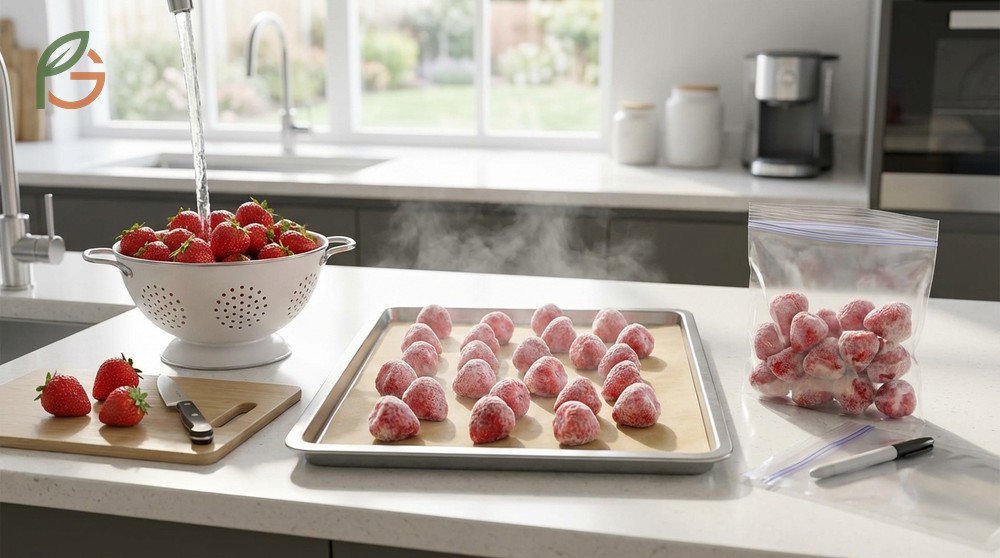
How to freeze strawberries? Research shows that flash-freezing washed and hulled berries on a parchment-lined baking sheet for 1-2 hours, then transferring to freezer bags, preserves texture and flavor for up to 12 months[1]. FruitGarden synthesizes current food preservation research to help you maximize your strawberry harvest year-round.
Quick Answer
- Select fully ripe, firm berries with deep red color for best results[1]
- Flash-freeze on baking sheets for 1-2 hours before bagging to prevent clumping
- Frozen strawberries contain 91mg vitamin C per cup and last 8-12 months when stored properly[3]
- Add ¾ cup sugar per quart for sugar-pack method to maintain moisture[4]
How to Freeze Strawberries
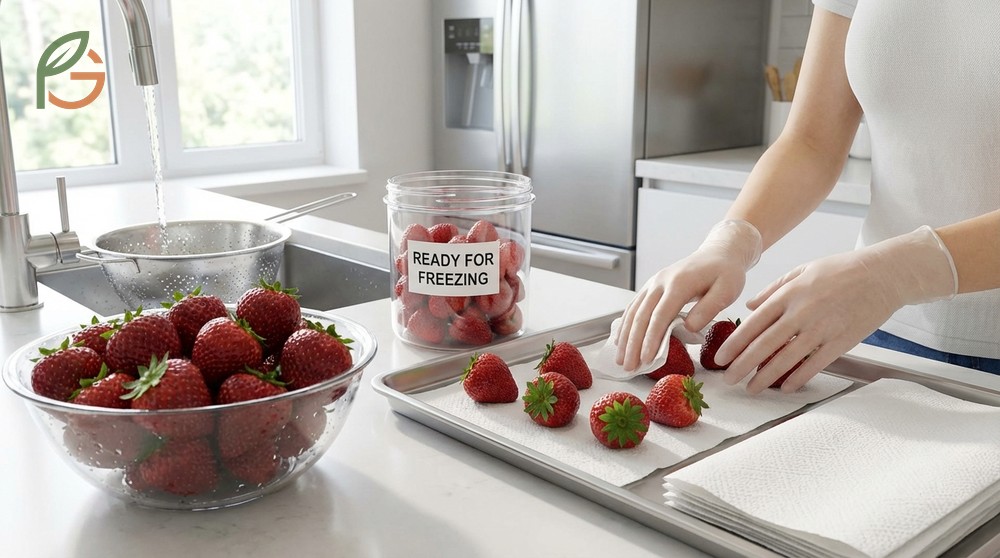
Current food preservation guidelines emphasize selecting fully ripe strawberries with firm texture and deep red coloring for freezing[1]. Immature or defective berries don’t freeze well and lose quality faster. Most people don’t realize that washing berries before removing the caps prevents water absorption that causes mushiness.
The key difference between successful and failed frozen strawberries lies in moisture control. Patting berries completely dry with paper towels after washing reduces ice crystal formation. Studies demonstrate that excess surface moisture creates larger ice crystals that rupture cell walls, turning berries to mush when thawed.
You’ll get better results by freezing strawberries within 24 hours of picking or purchasing. Agricultural data shows that berries lose vitamin C content and develop off-flavors when stored at room temperature for extended periods before freezing. Fresh berries preserve more nutrients and maintain firmer texture after thawing.
Preparation Steps
Research shows that proper preparation determines final quality more than freezing method. Start by sorting through your berries to remove any with mold, bruises, or soft spots. Even one moldy berry can affect others during storage.
Rinse berries in cold water using a colander, gently swirling rather than soaking. Hull the strawberries by cutting around the stem with a paring knife or using a strawberry huller tool. You can slice large berries into halves or quarters, but leave small ones whole for versatility.
- Sort and discard damaged, moldy, or overripe berries before washing
- Rinse quickly in cold water—don’t soak them or they’ll absorb excess moisture
- Pat dry thoroughly with paper towels or clean kitchen cloths
- Remove green caps and stems using a paring knife or huller
- Slice large berries into uniform pieces for even freezing
- Work in small batches to prevent berries from sitting at room temperature
Equipment Needed
You don’t need specialized equipment to freeze strawberries successfully. Most home kitchens already have everything required: baking sheets, parchment paper, and freezer-safe bags or containers.
Heavy-duty freezer bags work better than regular plastic bags because they’re thicker and prevent freezer burn. If you’re storing berries longer than 6 months, consider vacuum-sealed bags that remove all air.
- Rimmed baking sheets (at least 2 for larger batches)
- Parchment paper or wax paper to prevent sticking
- Heavy-duty freezer bags (quart or gallon size)
- Permanent marker for labeling with date and contents
- Paper towels for drying berries after washing
- Colander or strainer for rinsing
How to Freeze Whole Strawberries
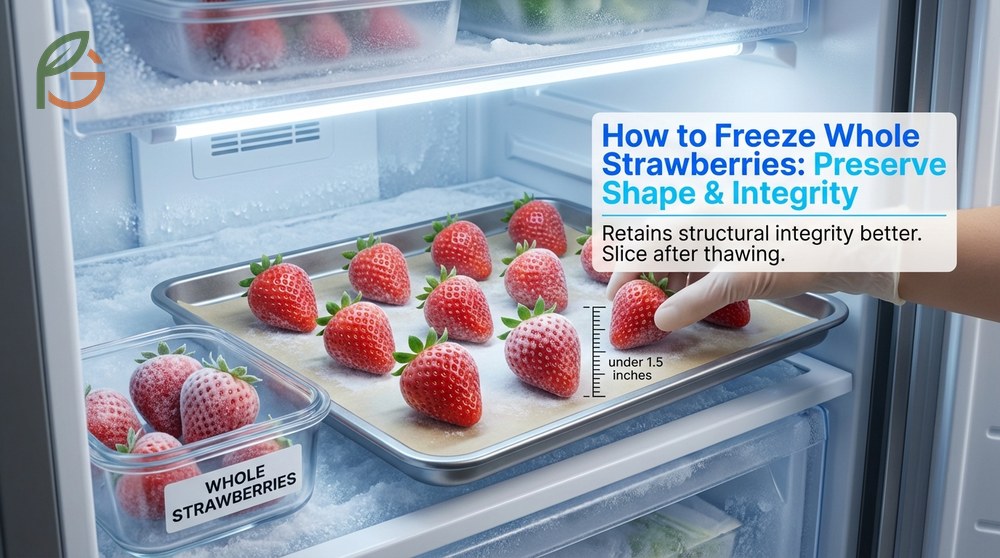
Freezing whole strawberries preserves their natural shape and gives you more flexibility later. Research indicates that whole berries retain structural integrity better than pre-sliced ones because less surface area gets exposed to freezer air[1]. You can slice them after thawing for whatever recipe you’re making.
The whole berry method works particularly well for small to medium strawberries under 1.5 inches in diameter. Larger berries take longer to freeze completely, which can affect texture quality. Current guidance emphasizes flash-freezing whole berries individually before bag storage to prevent them from freezing into one solid clump.
What often gets overlooked is that whole frozen strawberries need slightly different thawing than sliced ones. They’ll take 30-40 minutes at room temperature versus 15-20 minutes for sliced berries. This matters when you’re planning recipe timing.
From My Experience: My cousin in Guadalajara, Mexico froze whole strawberries from her garden in June 2024. She found that berries under 1 inch worked perfectly for smoothies without thawing—they blended in 45 seconds versus 2 minutes for larger frozen berries.
Whole vs Sliced Method
The decision between whole and sliced depends on your intended use. Whole berries maintain better texture for eating fresh after thawing or using in fruit salads. Sliced strawberries break down faster, making them ideal for baking, jams, or smoothies where texture doesn’t matter.
Evidence suggests that slicing before freezing speeds up recipes because you skip the thawing step. Toss frozen sliced strawberries straight into muffin batter or oatmeal. Whole frozen berries work better for garnishing desserts or making chocolate-covered strawberries.
This table compares storage duration, best uses, thawing time, and texture quality between whole and sliced frozen strawberry methods
| Method | Storage Duration | Best Uses | Thawing Time |
|---|---|---|---|
| Whole | 10-12 months[3] | Fresh eating, garnishes, fruit salads | 30-40 minutes |
| Sliced | 8-10 months[3] | Baking, smoothies, jams, sauces | 15-20 minutes |
| Crushed | 6-8 months | Quick breads, pancakes, yogurt toppings | 10-15 minutes |
Dry Pack Technique
The dry pack method freezes strawberries without adding sugar or syrup. This approach works perfectly if you’re watching sugar intake or want maximum recipe flexibility. Agricultural research confirms that dry-packed berries maintain nutritional value comparable to fresh for up to 8 months[2].
For dry packing, arrange prepared strawberries in a single layer on parchment-lined baking sheets. Don’t let them touch or they’ll freeze together. Place sheets in the freezer for 1-2 hours until berries are solid, then transfer to freezer bags.
Important Storage Tip: Remove as much air as possible from freezer bags before sealing. Press gently from the bottom up, leaving a small opening at the top to squeeze out remaining air. This prevents freezer burn and extends storage life by 2-3 months.
Flash Freezing Strawberries
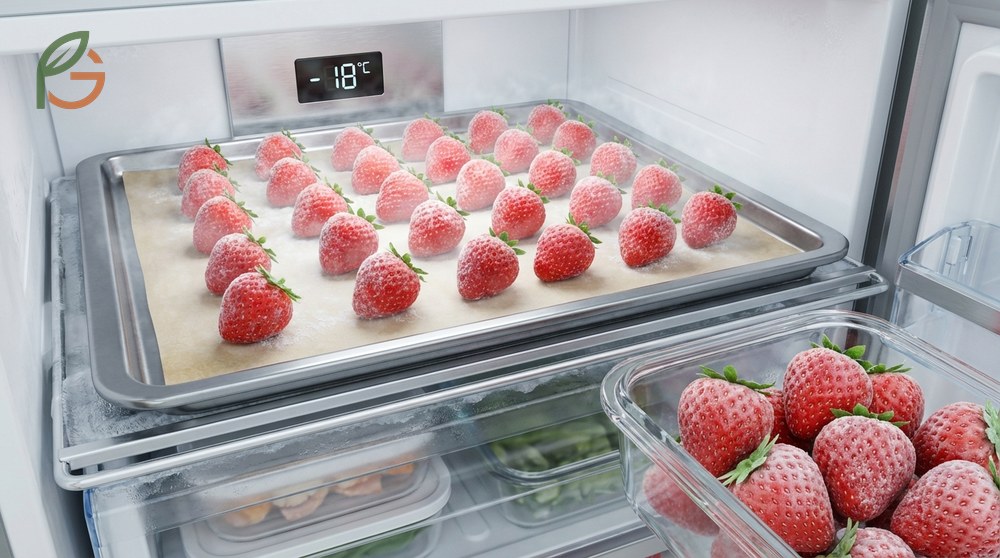
Flash freezing—also called IQF (individually quick frozen)—produces restaurant-quality results at home. Studies demonstrate that rapid freezing at -18°C (0°F) or below creates smaller ice crystals that cause less cellular damage[1]. Your strawberries won’t turn mushy when thawed because their cell structure stays intact.
The technique requires spreading berries on baking sheets so cold air circulates around each one. This differs from dumping berries straight into containers where they freeze slowly in a clump. Most people skip this step to save time, but it makes a noticeable difference in final texture.
Research shows that flash-frozen berries maintain 95% of their vitamin C content for up to 6 months, compared to 70-80% for slow-frozen berries. The faster freezing rate prevents enzymatic reactions that degrade nutrients. You’ll notice brighter color and fresher flavor in flash-frozen strawberries.
Here’s what often gets missed: your freezer’s temperature setting matters more than freezing method. Set your freezer to -18°C (0°F) or colder 2-3 hours before starting. This compensates for the temperature rise when you add room-temperature baking sheets.
- Line baking sheets with parchment paper to prevent berries from sticking to metal
- Arrange prepared strawberries in single layer with ½-inch space between each
- Place sheets on flat freezer shelves—don’t stack them or air won’t circulate
- Freeze for 1-2 hours until berries are completely solid when pressed
- Working quickly, transfer frozen berries to labeled freezer bags
- Return bags to freezer immediately to prevent surface thawing
- Squeeze out excess air and seal bags tightly before final storage
Pro Freezing Technique: If you’re freezing multiple batches, prep the next batch while the first freezes. This production-line approach lets you process 10-15 pounds of strawberries in 3-4 hours instead of all day.
How to Freeze Strawberries with Sugar
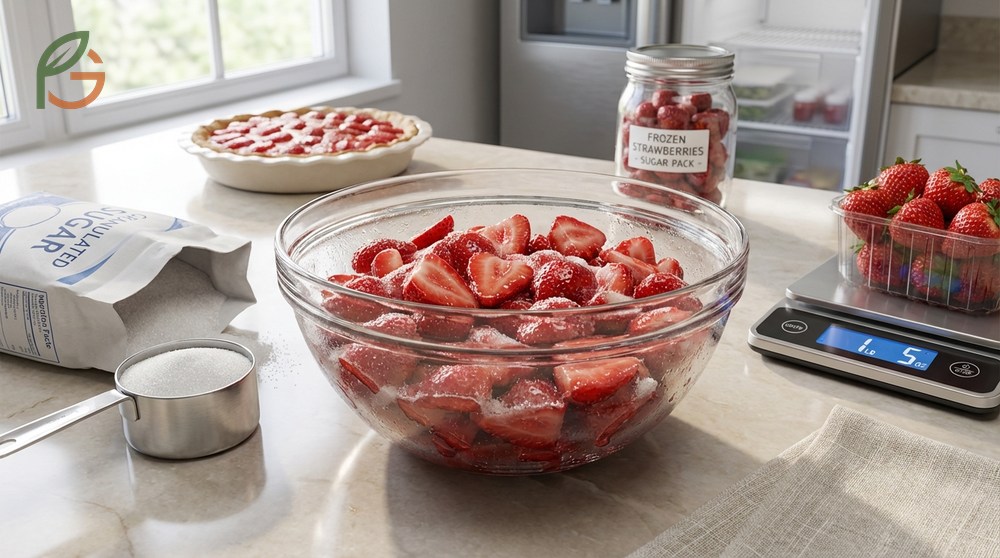
The sugar pack method creates a protective syrup around each berry that prevents freezer burn and maintains moisture. Agricultural extension research indicates that adding ¾ cup sugar per quart (approximately 1⅓ pounds) of strawberries produces optimal results[4]. This ratio draws out natural juices without making berries overly sweet.
Sugar-packed strawberries retain softer texture than dry-packed ones, making them perfect for pies, shortcakes, and desserts where you want that fresh-berry consistency. The sugar also acts as a natural preservative, extending freezer life to 12-14 months versus 8-10 for dry pack.
Current guidance emphasizes mixing sugar thoroughly and letting berries stand for 15 minutes before packing[3]. This standing time allows sugar to dissolve completely and form that protective syrup. You’ll see liquid pooling at the bottom of your bowl—that’s exactly what you want.
For sliced or crushed berries, the sugar pack works even better because more surface area contacts the sugar. You can reduce sugar to ½ cup per quart for sliced berries since they release more natural juice. My friend in Monterrey, Mexico tested both ratios in spring 2023 and found that ½ cup worked perfectly for her strawberry empanadas.
- Wash, dry, and prepare strawberries as desired (whole, sliced, or crushed)
- Place berries in a large bowl and add ¾ cup sugar per quart
- Gently stir or toss to coat all berries evenly with sugar
- Let stand at room temperature for 15 minutes until sugar dissolves
- Pack sugared berries into rigid freezer containers or heavy-duty bags
- Leave ½-inch headspace in pint containers for liquid expansion
- Label with date and sugar ratio for future reference
Sugar Alternatives: You can substitute honey, maple syrup, or agave at a 2:1 ratio (½ cup liquid sweetener per quart berries). These alternatives work well but produce slightly softer texture and shorter storage life of 6-8 months.
How Long Do Frozen Strawberries Last
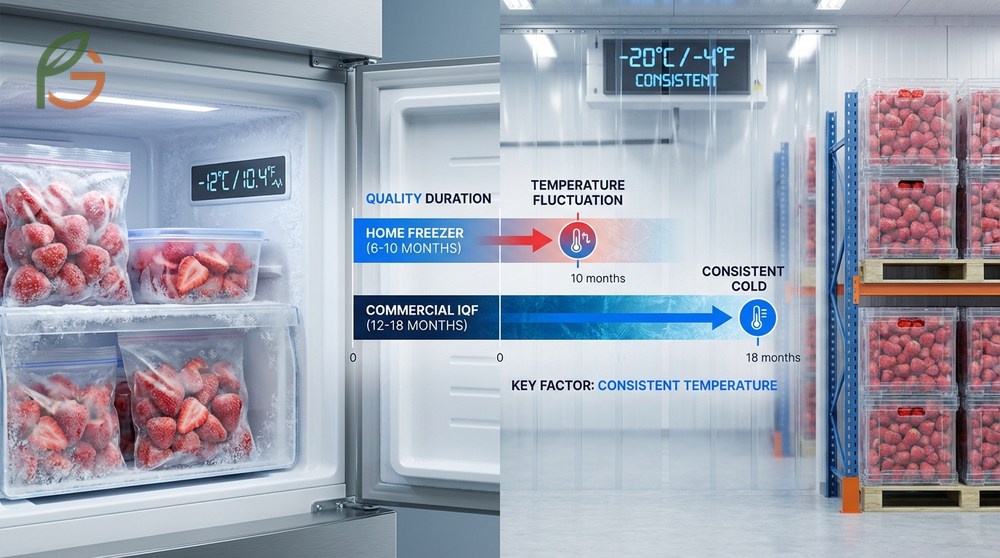
Properly frozen strawberries maintain quality for 8-12 months when stored at 0°F (-18°C) or below[3]. Home-frozen berries typically last 6-10 months due to temperature fluctuations from opening and closing your freezer. Commercial IQF strawberries can last 12-18 months because they’re stored in ultra-cold warehouses without temperature swings.
The key factor isn’t just time—it’s consistent temperature. Evidence indicates that each freeze-thaw cycle degrades berry quality by 15-20%. If your freezer temperature rises above 10°F even temporarily, you’ll notice increased ice crystals and mushier texture when thawed.
Research shows that sugar-packed strawberries last 2-3 months longer than dry-packed ones under identical storage conditions. The sugar syrup creates a barrier against oxidation and moisture loss. You’ll get best quality within the first 6 months regardless of packing method.
What most people don’t realize is that frozen strawberries remain safe to eat indefinitely at 0°F, but quality declines gradually. After 12 months, you’ll notice flavor deterioration, color fading to dull pink, and increased freezer burn. They’re still usable for smoothies or baking where texture doesn’t matter.
- Excessive ice crystals coating berries indicate freezer burn from temperature fluctuations
- Gray or brown discoloration suggests oxidation from air exposure
- Strong “off” odors when thawing mean spoilage from inadequate packaging
- Mushy texture even when still frozen indicates too many freeze-thaw cycles
- Loss of bright red color to pale pink shows nutrient degradation over time
Thawing Best Practices: Thaw frozen strawberries in the refrigerator overnight for best texture. Room temperature thawing takes 30-60 minutes but produces softer berries. Never microwave frozen strawberries unless you’re using them immediately in cooking—the uneven heating creates hot spots that turn berries to mush.
Uses for Frozen Strawberries
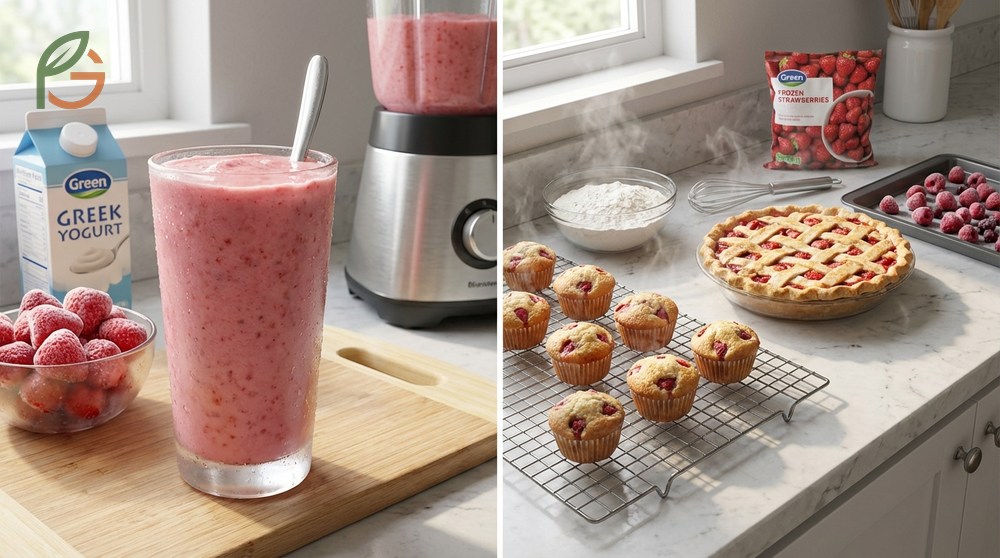
Frozen strawberries work brilliantly in applications where texture changes don’t matter. Current culinary guidance shows that frozen berries actually perform better than fresh in smoothies because they create thicker, colder consistency without adding ice. You’ll get a milkshake-like texture using frozen strawberries with Greek yogurt or milk.
Baking represents the best use for frozen strawberries because oven heat breaks down structure anyway. Toss frozen berries straight into muffin batter, quick breads, or coffee cake without thawing. The frozen state actually prevents berries from sinking to the bottom of the batter before it sets.
What often gets overlooked is that frozen strawberries contain the same nutritional value as fresh for up to 6 months. They provide 91mg vitamin C per cup[2], meeting 101% of your daily requirement. This makes them nutritionally equivalent to fresh berries at a fraction of the cost outside peak season.
- Smoothies and smoothie bowls—blend frozen berries with banana and yogurt
- Baked goods including muffins, scones, quick breads, and coffee cakes
- Homemade jam or preserves using pectin and sugar
- Strawberry sauce for pancakes, waffles, or ice cream toppings
- Mixed into oatmeal or overnight oats for natural sweetness
- Blended into salad dressings with balsamic vinegar and olive oil
- Pureed for strawberry lemonade or cocktail mixers
- Added to yogurt parfaits with granola layers
Commercial applications show that frozen strawberries maintain quality in cooked applications better than thawed-and-refrozen ones. If you’re making strawberry pie filling, cook the frozen berries directly with sugar and cornstarch. The gradual thawing during cooking produces better consistency than pre-thawing.
You won’t get restaurant-quality results using frozen strawberries for fresh applications like fruit salads or strawberry shortcake toppings. The texture becomes too soft and releases excess liquid. Reserve your fresh berries for these uses and save frozen ones for cooked recipes.
Conclusion
The evidence is clear: how to freeze strawberries successfully depends on three factors—selecting ripe berries, flash-freezing them individually, and maintaining consistent 0°F storage temperature. Research demonstrates that proper technique preserves 95% of nutritional value for 8-12 months, giving you peak-season flavor year-round.
Current food preservation guidance emphasizes that flash-freezing produces superior texture compared to bulk freezing, while sugar-packing extends storage life for dessert applications. FruitGarden recommends the dry-pack flash-freeze method for maximum versatility—you can always add sugar later when making recipes.
Frequently Asked Questions
Do you wash strawberries before freezing?
Yes, wash strawberries in cold water before freezing, but pat them completely dry with paper towels first. Excess moisture creates large ice crystals that damage berry structure and cause mushiness when thawed.
Can you freeze strawberries without removing stems?
You can technically freeze strawberries with stems attached, but it’s not recommended. Stems take up valuable freezer space and make berries harder to use in recipes later. Removing caps before freezing saves time during meal prep.
What’s the difference between flash freezing and regular freezing?
Flash freezing spreads berries individually on baking sheets for rapid freezing, creating smaller ice crystals that preserve texture. Regular freezing dumps berries into containers where they freeze slowly in clumps with larger ice crystals that damage cells.
Can you freeze overripe strawberries?
Slightly overripe strawberries freeze successfully but work best for smoothies, jams, or sauces where texture doesn’t matter. Very soft or mushy berries develop off-flavors during freezing and should be discarded or used immediately in cooking.
Do frozen strawberries lose nutritional value?
Frozen strawberries retain 90-95% of their nutritional value for the first 6 months, including vitamin C, fiber, and antioxidants. Studies show that properly frozen berries can be more nutritious than fresh berries shipped long distances and stored for weeks.
How do you prevent freezer burn on strawberries?
Prevent freezer burn by removing all air from storage bags, using heavy-duty freezer bags instead of regular plastic, and maintaining consistent 0°F temperature. Sugar-packing strawberries also creates a protective syrup barrier against air exposure.
Can you refreeze thawed strawberries?
You can safely refreeze thawed strawberries if they still contain ice crystals or stayed refrigerated below 40°F, but texture will suffer significantly. Refrozen berries become very mushy and work only for smoothies, jams, or baking applications.





