
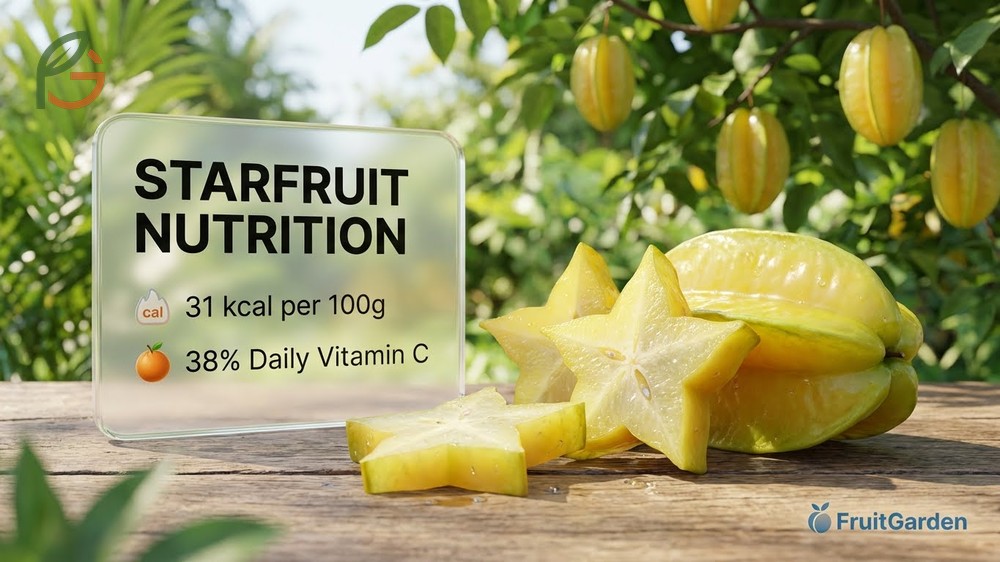
Starfruit Nutrition Facts show this tropical fruit is remarkably low-calorie at just 31 kcal per 100 grams[1], making it an ideal snack for weight management. Research shows starfruit—also called carambola—delivers 38% of your daily vitamin C needs[1] while remaining exceptionally low in fat and sugar. FruitGarden provides comprehensive nutritional information to help gardeners and health-conscious individuals understand the benefits of growing and consuming this star-shaped fruit.
Quick Answer
Starfruit Nutrition Facts
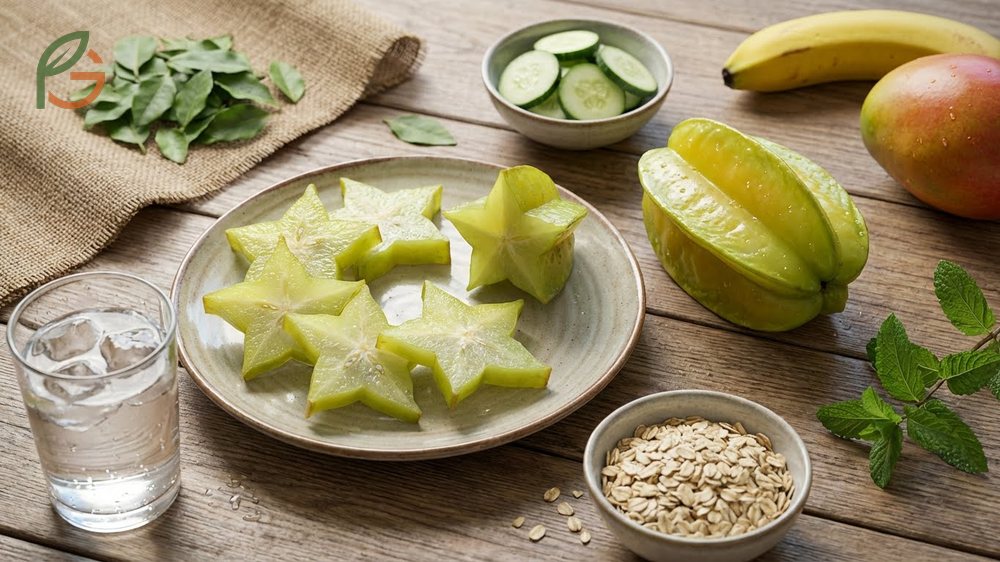
Starfruit stands out as one of nature’s lowest-calorie tropical fruits. Studies demonstrate that a 100-gram serving contains just 31 calories[1], making it comparable to cucumbers and far lighter than bananas or mangoes.
The fruit’s nutritional profile shows exceptional balance. You get significant vitamin C at 34mg per serving[1], plus valuable fiber content of 2.8 grams[1] without excess sugar or fat.
Research indicates starfruit contains powerful antioxidants including gallic acid, epicatechin, and L-ascorbic acid[2]. These compounds contribute to the fruit’s ability to scavenge reactive oxygen species and protect cellular health.
Calorie Content Starfruit
Current data indicates one medium starfruit (about 91 grams) provides approximately 28 calories. This makes it an excellent choice for calorie-conscious diets or weight management plans.
The calorie density remains remarkably low at 0.31 kcal per gram. For comparison, that’s nearly three times lower than apples and five times lower than grapes.
Important Note: Despite its low calorie count, starfruit contains oxalates that can be harmful to individuals with kidney disease. People with chronic kidney conditions should avoid this fruit entirely.
Macronutrient Breakdown
The macronutrient distribution shows starfruit is primarily composed of water and carbohydrates. Nutritional analysis reveals 91.4% water content[1], contributing to its refreshing, hydrating qualities.
Carbohydrates make up 6.7 grams per 100g serving[1], with net carbs at just 3.9 grams after accounting for fiber. Protein content sits at 1.04 grams[1], while fat remains minimal at 0.33 grams[1] per serving.
- Water: 91.4g—provides natural hydration
- Carbohydrates: 6.7g total, 3.9g net carbs
- Protein: 1.04g—modest amino acid profile
- Fat: 0.33g—primarily polyunsaturated fatty acids
- Sugar: 4g—natural fruit sugars
Vitamin Content Starfruit
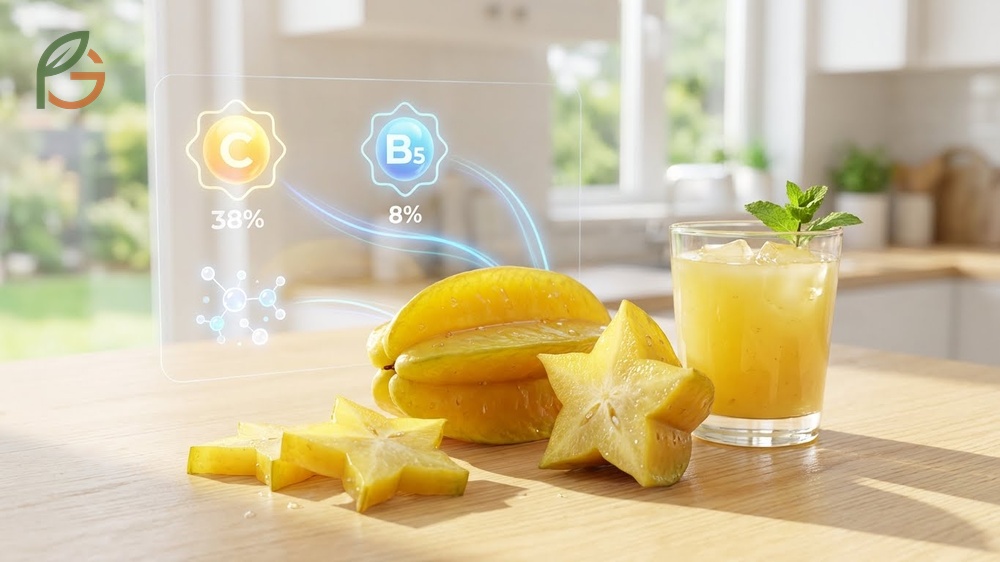
Starfruit delivers impressive vitamin content, particularly in the antioxidant category. The most notable nutrient is vitamin C at 34mg per 100g[1], representing 38% of the recommended daily intake.
Beyond vitamin C, the fruit provides valuable amounts of B-complex vitamins. Research shows starfruit contains vitamin B5 (pantothenic acid) at 0.39mg[1], contributing 8% of daily needs.
The vitamin profile supports multiple bodily functions. Evidence suggests these nutrients work synergistically to enhance immune response, collagen synthesis, and cellular energy production.
Vitamin C Antioxidant Power
One medium starfruit provides about 31mg of vitamin C—roughly one-third of adult daily requirements. This ascorbic acid content surpasses many common fruits including apples, pears, and watermelon.
Studies demonstrate starfruit’s antioxidant capacity extends beyond vitamin C alone. The fruit contains phenolic compounds and proanthocyanidins[2] that amplify its ability to neutralize free radicals.
B Vitamins Mineral Content
The B-vitamin complex in starfruit includes folate at 12 micrograms per 100g[1]. Additional B vitamins include riboflavin (B2), niacin (B3), and pyridoxine (B6) in smaller quantities.
Mineral content features potassium at 133mg[1], supporting heart health and blood pressure regulation. Copper content reaches 0.14mg[1], providing 15% of daily requirements for this essential trace mineral.
- Vitamin C: 34mg (38% DV)—immune support and collagen production
- Vitamin B5: 0.39mg (8% DV)—energy metabolism
- Folate: 12µg (3% DV)—cell division and DNA synthesis
- Potassium: 133mg (4% DV)—electrolyte balance
- Copper: 0.14mg (15% DV)—iron absorption and enzyme function
This table compares key vitamins and minerals in starfruit showing nutrient name, amount per serving, and percentage of daily value for nutrition assessment
| Nutrient | Amount | % Daily Value | Primary Function |
|---|---|---|---|
| Vitamin C | 34mg[1] | 38% | Immune function, antioxidant |
| Fiber | 2.8g[1] | 11% | Digestive health, satiety |
| Copper | 0.14mg[1] | 15% | Iron absorption, enzyme activity |
| Vitamin B5 | 0.39mg[1] | 8% | Energy metabolism |
| Potassium | 133mg[1] | 4% | Blood pressure regulation |
Fiber Content Starfruit
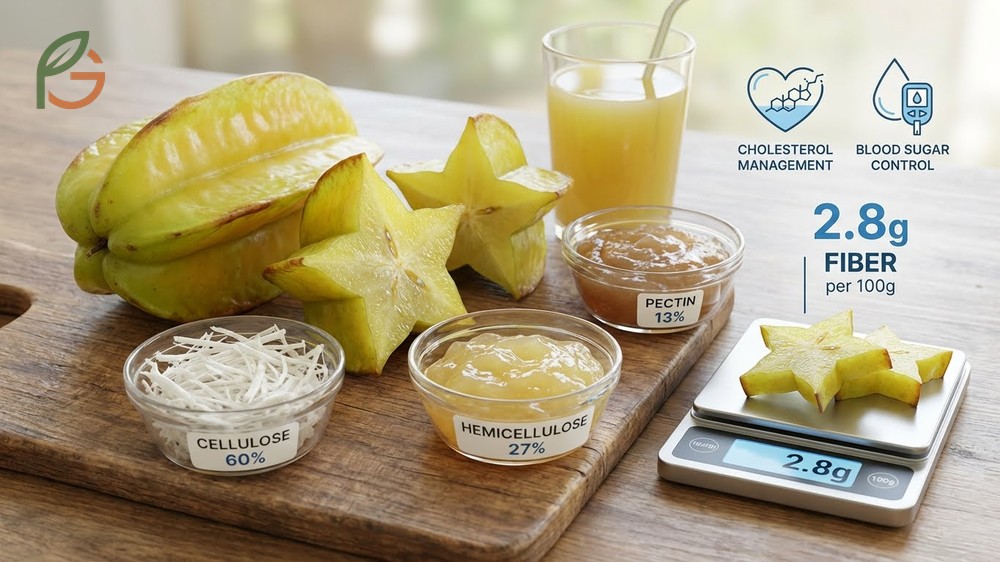
Dietary fiber stands as one of starfruit’s most valuable nutritional components. Each 100-gram serving delivers 2.8 grams of fiber[1], representing 11% of the recommended daily intake.
Research demonstrates starfruit contains approximately 60% cellulose, 27% hemicelluloses, and 13% pectin[2] in its fiber composition. This combination provides both soluble and insoluble fiber benefits.
The fiber’s impact extends to blood sugar control and cholesterol management. Animal studies show starfruit fiber increases fecal excretion of cholesterol and bile acids by 123-126%[2], though human studies remain limited.
Insoluble fiber in starfruit inhibits alpha-amylase activity, slowing glucose release from starch. This mechanism explains the fruit’s low glycemic index of 45[1] and its suitability for blood sugar management.
- Promotes digestive regularity and prevents constipation
- Enhances feelings of fullness, supporting weight management
- Slows glucose absorption for stable blood sugar levels
- Supports healthy cholesterol levels through bile acid binding
- Feeds beneficial gut bacteria for improved microbiome health
Practical Tip: To maximize fiber benefits, eat starfruit with the peel intact. The skin contains concentrated fiber and antioxidants that enhance the fruit’s nutritional value.
Carambola Nutrition Data
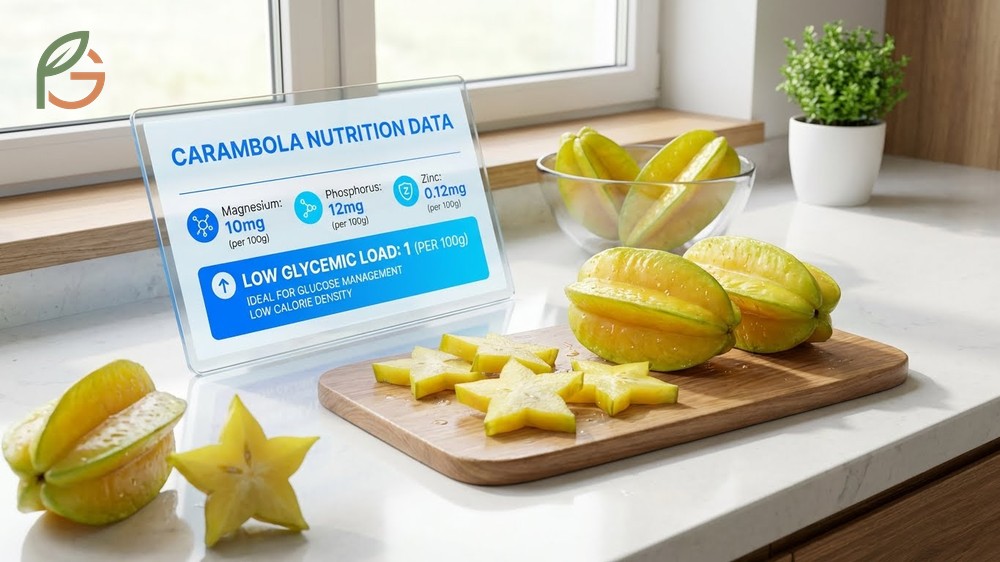
Comprehensive carambola nutrition data reveals this fruit’s complete nutrient profile. Beyond the headline numbers, starfruit provides trace amounts of essential minerals including magnesium (10mg), phosphorus (12mg), and zinc (0.12mg) per 100g serving[1].
The glycemic load of starfruit measures just 1 per 100g portion[1]—exceptionally low and favorable for glucose management. Combined with its low calorie density, this makes carambola an ideal fruit for various dietary approaches.
Phytochemical analysis shows starfruit contains flavonoids, alkaloids, tannins, and saponins[2] throughout its leaves, fruits, and roots. These bioactive compounds contribute to the fruit’s medicinal properties observed in traditional medicine systems.
Serving size variations affect total nutrient intake. One cup of sliced starfruit (108g) provides 33 calories[1], while one cup of cubes (132g) delivers 41 calories[1]—both remaining remarkably low for fruit servings.
| Serving Size | Weight | Calories |
|---|---|---|
| 100 grams | 100g | 31 kcal[1] |
| 1 cup, sliced | 108g | 33 kcal[1] |
| 1 cup, cubes | 132g | 41 kcal[1] |
| 1 medium fruit | 91g | 28 kcal |
- Alkaline-forming food with PRAL score of -2.1
- Zero cholesterol and virtually no saturated fat
- No trans fats—heart-healthy lipid profile
- Extremely low sodium at 2mg per 100g
- Contains choline (7.6mg) for brain health
Health Benefits Considerations
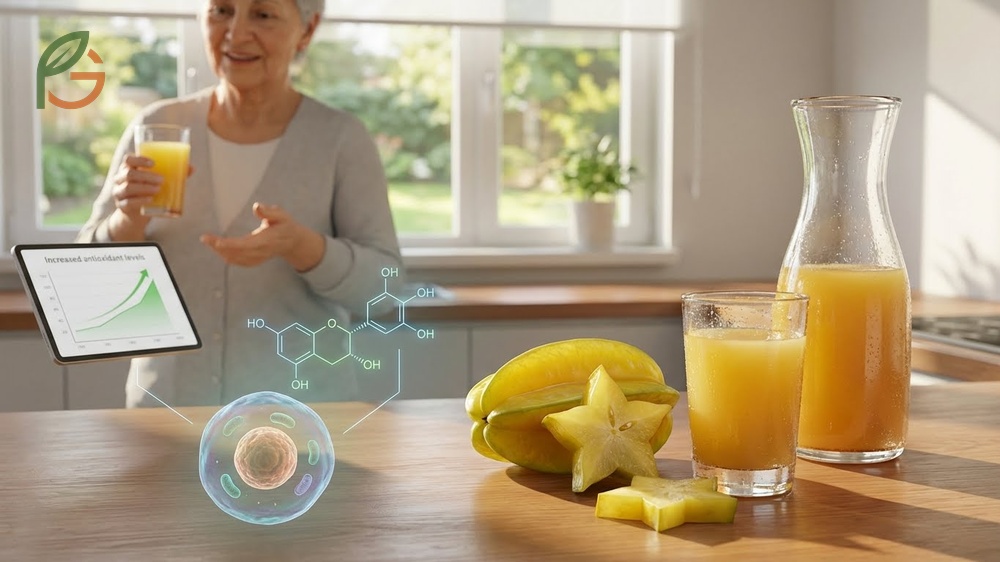
Current research indicates starfruit offers multiple health advantages when consumed appropriately. The fruit’s antioxidant compounds—including epicatechin and gallic acid[2]—demonstrate significant free radical scavenging capacity in laboratory studies.
A human study of 27 elderly individuals found that consuming 100g of starfruit juice twice daily for four weeks significantly improved antioxidant status[2]. Participants showed increased total antioxidant capacity and reduced markers of oxidative stress.
However, starfruit contains oxalates that pose serious risks for certain populations. People with chronic kidney disease, gastroenteropathies, or chronic pancreatitis should avoid starfruit entirely due to documented neurotoxic and nephrotoxic effects[2].
The toxic dose varies widely between individuals. Reported cases show toxicity occurring from as little as half a fruit to as many as 50 fruits consumed[2], making it difficult to establish safe consumption limits for at-risk populations.
- High antioxidant capacity supports cellular protection against oxidative damage
- Low calorie content aids weight management without nutrient deficiency
- Vitamin C content bolsters immune system function and collagen synthesis
- Contraindicated for individuals with any stage of kidney disease
- Should not be consumed on an empty stomach to minimize oxalate absorption
- May interact with certain medications similarly to grapefruit
Safety Warning: Starfruit contains caramboxin and high levels of oxalates. Even individuals with normal kidney function should consume this fruit in moderation. Never eat starfruit if you have kidney problems or are on dialysis.
Conclusion
The evidence is clear: Starfruit Nutrition Facts position this tropical fruit as an exceptional low-calorie snack option for health-conscious individuals. With just 31 calories per 100g[1], abundant vitamin C, and valuable fiber content, starfruit delivers impressive nutritional density for minimal caloric investment.
Current nutritional guidance emphasizes starfruit’s benefits for weight management, immune support, and antioxidant protection—while strongly cautioning against consumption by anyone with kidney conditions. FruitGarden recommends understanding both the nutritional advantages and safety considerations before incorporating starfruit into your diet or garden plans.
Medical Disclaimer
Important Medical Disclaimer: This content is for informational and educational purposes only. It is not intended as a substitute for professional medical advice, diagnosis, or treatment. Always consult a qualified healthcare professional before making any changes to your diet, especially if you have kidney disease, diabetes, or other medical conditions. Starfruit contains oxalates and caramboxin that can be dangerous for individuals with impaired kidney function. Never consume starfruit if you have chronic kidney disease or are undergoing dialysis treatment.
Frequently Asked Questions
How many calories are in one whole starfruit?
One medium starfruit weighing approximately 91 grams contains about 28 calories. This makes it one of the lowest-calorie fruits available, comparable to cucumbers and zucchini in energy density.
Is starfruit high in vitamin C?
Yes, starfruit provides 34mg of vitamin C per 100g serving, which represents 38% of the daily recommended intake. This vitamin C content exceeds that of apples, pears, and many other common fruits.
Can diabetics eat starfruit safely?
Research shows starfruit has a low glycemic index of 45 and minimal impact on blood sugar when consumed in moderation by individuals with healthy kidney function. However, diabetics with any kidney complications must avoid starfruit entirely due to oxalate toxicity risks.
What makes starfruit dangerous for kidney patients?
Starfruit contains caramboxin and high concentrations of oxalates that healthy kidneys normally filter out. When kidney function is impaired, these compounds accumulate and cause severe neurotoxic effects including confusion, seizures, and potentially fatal complications.
Does starfruit have more fiber than other tropical fruits?
Starfruit contains 2.8g of fiber per 100g serving—moderately high compared to tropical fruits. This exceeds pineapple and watermelon but falls below guava and passion fruit in total fiber content.
How should starfruit be consumed for maximum nutritional benefit?
Current guidance suggests eating fresh starfruit with the peel intact for maximum fiber and antioxidant benefits. Consume it with meals rather than on an empty stomach to minimize oxalate absorption, and limit intake to 1-2 fruits per day for individuals with normal kidney function.
Can you eat starfruit skin or peel?
Yes, starfruit skin is edible and contains concentrated amounts of fiber and antioxidant compounds. Simply wash the fruit thoroughly, trim the brown edges along the ridges, and slice to eat the entire fruit including its thin waxy peel.





