
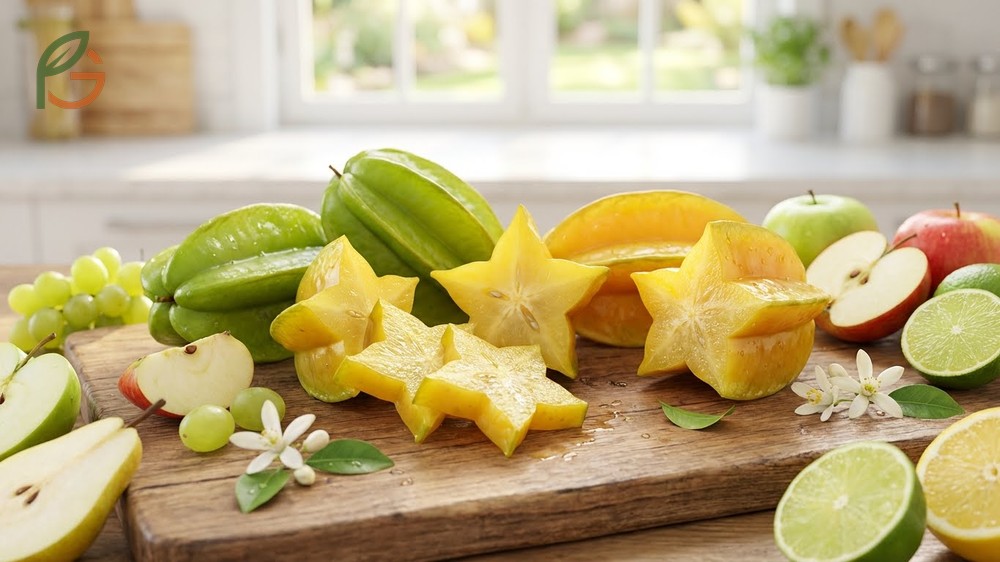
What Does Starfruit Taste Like? It’s a refreshing sweet-tart experience that combines flavors of apple, pear, grape, and citrus with subtle floral notes[1]. Research shows the taste changes dramatically based on ripeness—unripe starfruit leans intensely sour like green apples, while fully ripe fruit delivers a balanced sweetness rarely exceeding 4% sugar content[1]. FruitGarden synthesizes current agricultural research and cultivation data to help you understand this unique tropical fruit and grow it successfully in your garden.
Quick Answer
- Ripe starfruit tastes like a mix of apple, pear, grape, and citrus with a crisp, juicy texture similar to grapes[1]
- Contains just 31 calories and 34.4mg vitamin C per 100g serving (57% of daily requirement)[2]
- Sweet varieties contain 0.4-0.8mg/g oxalic acid while tart types reach up to 7mg/g[3]
- Sugar content increases from 3.5°Brix to 8.5°Brix as fruit ripens from green to yellow[4]
What Does Starfruit Taste Like
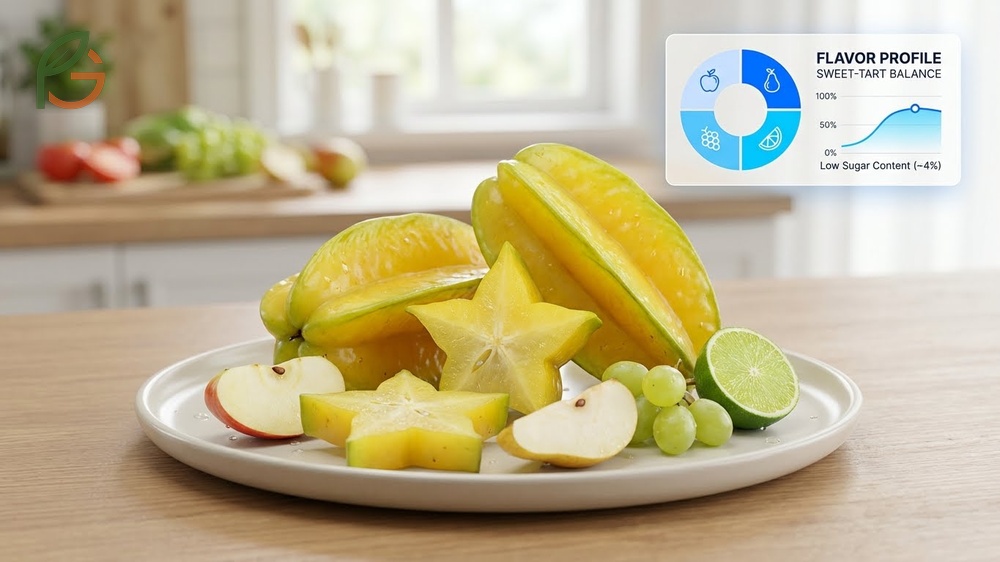
Starfruit delivers a complex flavor that’s hard to pin down to just one fruit. When you bite into a ripe starfruit, you’ll experience a balanced sweet-tart taste reminiscent of a mix between apple, pear, grape, and citrus fruits[1]. The sweetness isn’t overwhelming—studies show ripe carambolas rarely exceed 4% sugar content[1].
Research from the USDA Agricultural Research Service reveals that starfruit’s distinctive flavor comes from a combination of malic, citric, and oxalic acids working alongside natural sugars[4]. This chemical composition creates that signature balance most people find refreshing rather than cloying. The edible waxy skin adds a slightly concentrated flavor while the flesh remains juicy and firm.
University of Florida’s Tropical Research and Education Center data shows that sugar levels increase from 3.5°Brix in underripe fruit to 8.5°Brix when fully mature[4]. The browning of ridges indicates peak sugar development while maintaining the fruit’s characteristic tartness. What often gets overlooked is that you can eat the entire fruit—skin, flesh, and tiny seeds all contribute to the overall taste experience.
Core Flavor Components
The flavor profile breaks down into distinct components that vary by ripeness and variety. Sweet varieties grown commercially in the US offer a refreshing blend with subtle floral undertones, while tart varieties provide an intense citrus punch similar to unripe grapefruit[4].
Agricultural data shows the oxalate content differs dramatically between varieties—sour types contain up to 7mg per gram, while sweet varieties range from just 0.4 to 0.8mg per gram[3]. This explains why some starfruits pucker your mouth while others taste pleasantly mild.
- Apple-like sweetness with a crisp, clean finish
- Pear notes that add subtle depth and mild sweetness
- Grape qualities in texture and juiciness
- Citrus tartness from natural acids (malic, citric, oxalic)
- Delicate floral hints that intensify as the fruit ripens
Texture and Juiciness
The texture is as distinctive as the flavor. Starfruit flesh is crunchy, firm, and extremely juicy—it doesn’t contain fibers and has a consistency similar to grapes[1]. When you slice through a ripe starfruit, juice typically runs from the cutting board.
The thin, waxy skin is completely edible and adds minimal resistance when biting. Each slice contains tiny edible seeds that provide a slight crunch without interfering with the overall eating experience. Most people don’t realize the skin contains concentrated flavor compounds that enhance the taste rather than detract from it.
Starfruit Flavor Profile
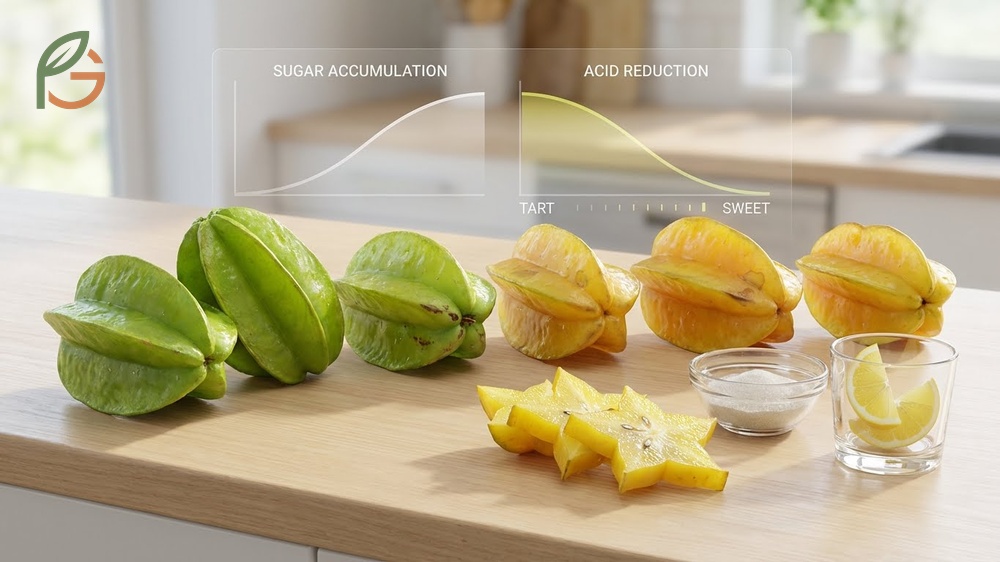
The flavor profile shifts dramatically as starfruit moves through ripeness stages. Understanding these changes helps you select fruit that matches your taste preferences and intended culinary use. Research shows the transformation involves both acid reduction and sugar accumulation.
Studies demonstrate that the sugar-to-acid ratio is what creates the perceived flavor balance. As starfruit ripens, fructose and glucose levels climb while certain acids break down, producing a sweeter overall taste without losing the characteristic tang. This progression happens whether the fruit ripens on the tree or after harvest.
How Ripeness Affects Taste
Ripeness dramatically alters what you’ll taste. Underripe starfruit with bright green color and firm texture delivers sharp, acidic, intense citrus flavor similar to unripe lemons[4]. This stage works best for cooking applications, marinades, and pickling where you want assertive tartness.
Partially ripe fruit showing yellow-green color and slight softening offers balanced sweet-tart flavors with mild floral notes. This middle stage suits smoothies, salsas, and garnishes where you want flavor without overwhelming other ingredients. Fully ripe starfruit turns bright yellow with brown ridges and becomes slightly soft, delivering sweet flavor with subtle tartness and complex flavor layers[4].
This table compares visual appearance, taste characteristics, and best culinary applications across three starfruit ripeness stages from underripe to fully ripe
| Ripeness Stage | Visual Indicators | Flavor Profile | Best Culinary Uses |
|---|---|---|---|
| Underripe | Bright green, very firm texture | Sharp, acidic, intense citrus[4] | Cooking, marinades, pickling, chutneys |
| Partially Ripe | Yellow-green color, slight give when pressed | Balanced sweet-tart, mild floral hints | Smoothies, salsas, garnishes, fruit salads |
| Fully Ripe | Bright yellow with brown ridges, soft to touch | Sweet with subtle tartness, complex notes[4] | Raw eating, juices, desserts, fresh applications |
Important Ripeness Tip: Don’t worry if you see brown edges on the ridges—this indicates peak sugar development, not spoilage. However, extensive brown spots beyond the ridges suggest overripeness and potential fermentation.
Sweet Versus Tart Varieties
Starfruit comes in two main variety types based on size and flavor intensity. Smaller to medium fruits typically lean tarter, while larger specimens trend toward juicy, rich, and sweet profiles[5]. This size-flavor relationship holds true across most growing regions.
Sweet cultivars dominate US markets because they’re more palatable for fresh eating. These varieties rarely trigger the mouth-puckering effect that high-oxalate tart types cause. Agricultural research indicates that sweet varieties also store better and bruise less during transport, making them commercially preferable for grocery distribution.
Carambola Taste Description
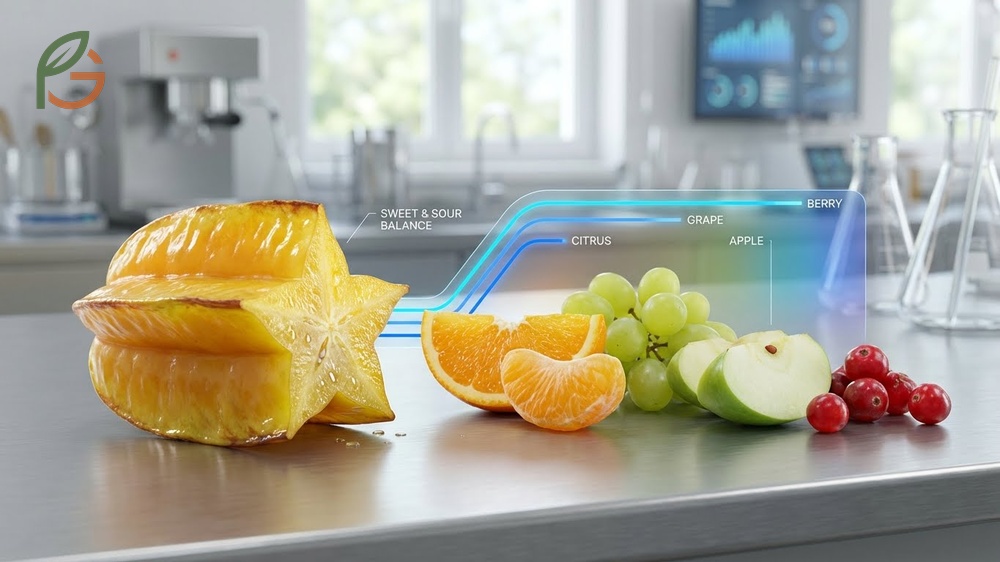
Describing carambola to someone who’s never tasted it requires comparing it to more familiar fruits. The challenge is that no single fruit captures the full experience—you need to consider multiple reference points. Food scientists note that starfruit’s unique combination of acids and sugars doesn’t match any single temperate-zone fruit.
The taste registers differently for different people based on their flavor sensitivity and what they’re used to eating. Some describe it as “SweeTarts candy” because of the balanced sweet-sour profile, while others focus on specific fruit comparisons. The waxy, edible skin contributes a subtle flavor that many people overlook but adds to the overall complexity.
Comparing to Familiar Fruits
Breaking down the flavor into familiar components helps. Think of a crisp Granny Smith apple for the tartness and crunch, a ripe pear for the subtle sweetness, a green grape for the juicy texture, and a squeeze of lemon for the citrus notes. Now imagine these flavors blended together with none dominating—that’s starfruit.
The texture comparison is equally important. While the flavor suggests citrus, the texture doesn’t match oranges or grapefruits at all. Instead, you get a grape-like firmness with apple-like crispness but much more juice. There’s no stringy pulp, no segments to separate, and no tough membranes—just clean, crunchy, juicy flesh.
- Apple: Contributes crispness, clean sweetness, and refreshing quality
- Pear: Adds mild, subtle sweetness without cloying intensity
- Grape: Provides juicy texture and balanced sweet-tart notes
- Lemon/Lime: Delivers citrus acidity and brightness
- Plum: Shares some of the complexity found in fully ripe specimens
- Unripe Grapefruit: Matches the intensity of very tart varieties
From My Experience: My cousin in Guadalajara, Mexico grows the Arkin variety in her backyard and harvests them fully ripe in July. She described the flavor as “pear with a squeeze of lime”—much sweeter than the partially ripe ones sold in her local mercado, which lean more toward green apple tartness.
Comparing Starfruit Flavors
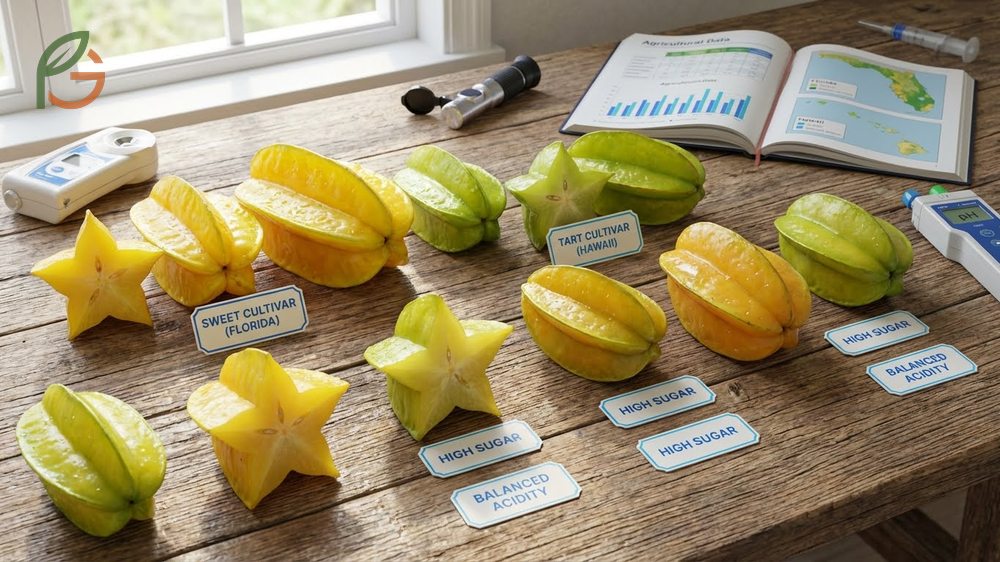
Different starfruit cultivars offer distinct flavor experiences even when grown in identical conditions. Variety selection matters more than most home growers realize. Agricultural data from Florida and Hawaii demonstrates measurable differences in sugar content, acid levels, and overall palatability between named cultivars.
Commercial growers select varieties based on market preferences, climate suitability, and disease resistance. For home gardeners in the US, choosing the right variety determines whether you’ll get fruit you enjoy eating fresh or fruit better suited for cooking. The variety also affects how reliably the tree produces in marginal climates.
Popular Varieties
Florida varieties dominate US cultivation. The ‘Arkin’ cultivar is the most popular Florida variety, prized for its sweet flavor, crisp texture, and high productivity[6]. It produces medium to large golden-yellow fruits with a perfect balance of sweetness and mild acidity. ‘Golden Star’ leans mildly tart when harvested early but sweetens considerably when allowed to ripen completely on the tree[5].
Thai varieties like ‘Fwang Tung’ grow up to 8 inches and deliver pale yellow fruits particularly noted for sweetness, firmness, and juiciness with minimal seeds[5]. Hawaiian cultivars range from the moderately flavored ‘Kajang’ to the sweeter and more popular ‘Kary’[5]. Each region’s varieties have adapted to local growing conditions while developing distinct flavor profiles.
- Arkin: Sweet-tart balance, most popular in Florida, excellent for fresh eating
- Golden Star: Tart when underripe, sweetens fully when tree-ripened
- Fwang Tung: Thai variety, very sweet, large fruit up to 8 inches
- Sri Kembangan: Thai amber-colored variety, 5-6 inches, sweet and firm
- Kary: Hawaiian sweet variety, highly popular for fresh consumption
- Newcomb: Florida tart variety, better for cooking than fresh eating
Variety Selection Tip: If you’re planting starfruit in your garden and prefer sweet fruit, choose ‘Arkin’, ‘Kary’, or ‘Fwang Tung’. For cooking and preserves where tartness is desirable, ‘Golden Star’ (harvested early) or ‘Newcomb’ work better.
How to Select Starfruit
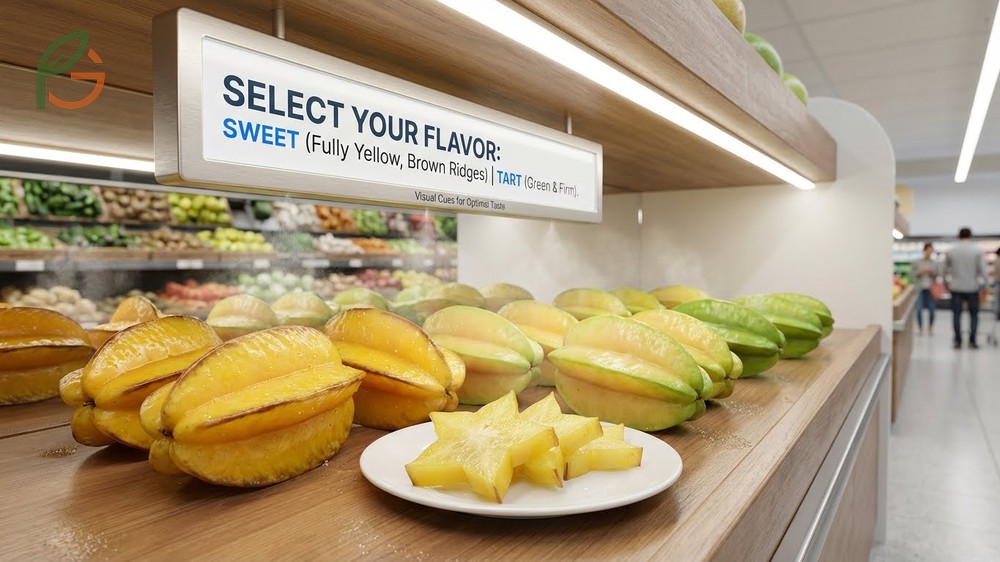
Selecting starfruit at the market determines what flavor experience you’ll get. Your intended use should guide your selection—sweet applications need fully ripe fruit, while tart applications benefit from less mature specimens. Most US grocery stores sell starfruit somewhere between partially ripe and fully ripe.
Visual cues tell you what to expect taste-wise. For the sweetest experience, look for fully yellow fruit with minimal green coloring and pronounced brown ridges along the edges[4]. These deliver maximum sweetness with just a hint of tartness. For cooking where you want assertive flavor, select fruit with more green coloring and very firm texture.
Size matters because smaller fruits typically taste tarter while larger ones lean sweeter. Avoid fruits with extensive brown spots beyond the natural ridge browning—this indicates overripeness and potential fermentation. The fruit should feel firm but give slightly under gentle pressure when ripe. Store unripe starfruit at room temperature until the color turns yellow, then refrigerate to slow further ripening.
- Sweet applications: Choose bright yellow fruit with brown ridges, slight softness
- Tart applications: Select yellow-green fruit with firm texture, minimal browning
- Fresh eating: Opt for fully ripe specimens that give slightly when pressed
- Cooking/pickling: Pick underripe green fruit with very firm texture
- Storage: Keep unripe fruit at room temperature, refrigerate once yellow
- Preparation: Rinse, trim brown edges if desired, slice crosswise for star shapes
Once you’ve selected your starfruit, try it plain first to experience the natural flavor. Then experiment with pairings—sweet starfruit complements mango, coconut, and lime beautifully, while tart starfruit works well with seafood, avocado, and chili. The juice makes excellent additions to cocktails, smoothies, and fruit salads, while the distinctive star-shaped slices create striking garnishes.
From My Experience: When my friend in Oaxaca, Mexico visited Florida in August 2024, she bought starfruit at a farmers market and tried the “brown ridge test”—choosing the ones with the most browning on the edges. She reported they tasted 2-3 times sweeter than the predominantly yellow ones with minimal browning, confirming that visual cue really works.
Conclusion
The evidence is clear: What Does Starfruit Taste Like depends on ripeness, variety, and your personal flavor preferences. Ripe starfruit delivers a unique sweet-tart blend of apple, pear, grape, and citrus that you can’t find in any other fruit. Current agricultural data shows that sugar content, acid levels, and variety selection all play crucial roles in determining the final flavor profile you’ll experience.
Whether you’re growing starfruit in your garden or buying it at the market, understanding these flavor factors helps you get the taste you want. FruitGarden provides research-backed guidance for successful cultivation and optimal harvest timing to maximize flavor quality in your homegrown tropical fruits.
Frequently Asked Questions
Does starfruit taste sweet or sour?
Starfruit tastes both sweet and sour simultaneously, with the balance shifting based on ripeness and variety. Fully ripe sweet varieties offer mild sweetness with subtle tartness, while underripe or tart varieties deliver intense sour citrus flavors. The sugar content ranges from 3.5°Brix in green fruit to 8.5°Brix when fully yellow.
What fruit is starfruit most similar to?
Starfruit most closely resembles a combination of green apple, pear, grape, and citrus fruits rather than any single fruit. The crisp texture matches apples, the juiciness recalls grapes, the subtle sweetness suggests pears, and the tartness mirrors citrus. This unique blend makes starfruit impossible to replicate with just one comparison fruit.
Can you eat starfruit skin?
Yes, starfruit skin is completely edible and adds concentrated flavor to the eating experience. The thin, waxy skin contains flavor compounds that enhance rather than detract from the taste. Most people eat starfruit whole after rinsing, though some prefer to trim the brown edges on the ridges for appearance.
Why does my starfruit taste bland?
Bland-tasting starfruit usually indicates fruit harvested too early and never properly ripened. Research shows that starfruit picked before reaching maturity doesn’t develop full sugar content or flavor complexity even if it turns yellow after harvest. Fruit ripened on the tree consistently delivers superior flavor compared to fruit harvested green and ripened during transport.
What’s the difference between sweet and tart starfruit varieties?
Sweet starfruit varieties contain 0.4-0.8mg oxalic acid per gram, while tart varieties contain up to 7mg per gram. This dramatic difference in acid content creates distinctly different taste experiences—sweet varieties offer mild, pleasant flavor for fresh eating, while tart types deliver intense citrus punch better suited for cooking and pickling applications.
How can I tell if starfruit is ripe enough to eat?
Ripe starfruit shows bright yellow color with brown edges developing along the ridges. The fruit should give slightly under gentle pressure without feeling mushy. Avoid fruit that’s still predominantly green (too tart) or has extensive brown spotting beyond the ridges (overripe). The browning on ridge edges specifically indicates peak sugar development.
Does starfruit taste better cooked or raw?
Fully ripe sweet starfruit tastes best raw when you can appreciate its refreshing sweet-tart flavor and crisp texture. Underripe or tart varieties benefit from cooking, which mellows the intense acidity and allows the fruit to complement savory dishes, chutneys, and preserves. The intended use should determine which ripeness stage you select.





