
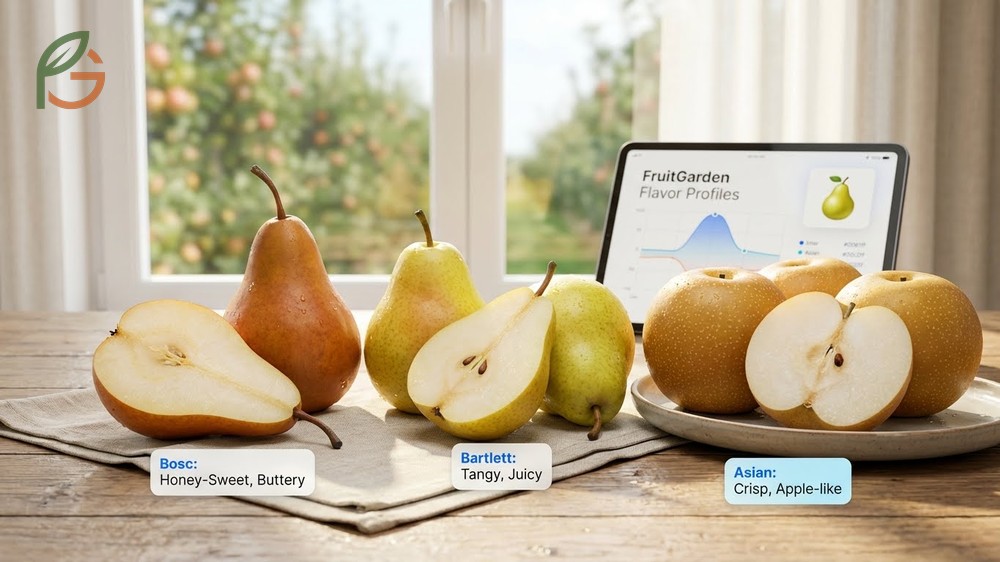
What do pears taste like? Pears offer a sweet, juicy flavor with subtle variations across varieties—from honey-sweet Bosc to tangy Bartlett and crisp Asian pears.[1] Research shows that texture plays an equally important role, with European pears becoming soft and buttery when ripe, while Asian varieties stay crisp like apples.[2] FruitGarden synthesizes current horticultural data and flavor profiles to help you choose the perfect pear for eating fresh or cooking.
Quick Answer
- Pears taste sweet and juicy with subtle flavor differences between varieties—Bartlett is classic pear flavor, Anjou has lemon-lime notes, and Bosc features honey sweetness with fall spices[1]
- European pears become soft and buttery when ripe, while Asian pears stay crisp and crunchy like apples throughout ripeness[2]
- One medium pear contains 101 calories, 6 grams of fiber, and 17 grams of natural sugars[3]
- Check ripeness by gently pressing the neck near the stem—if it yields to gentle pressure, the pear is ripe, sweet, and ready to eat[4]
What Do Pears Taste Like
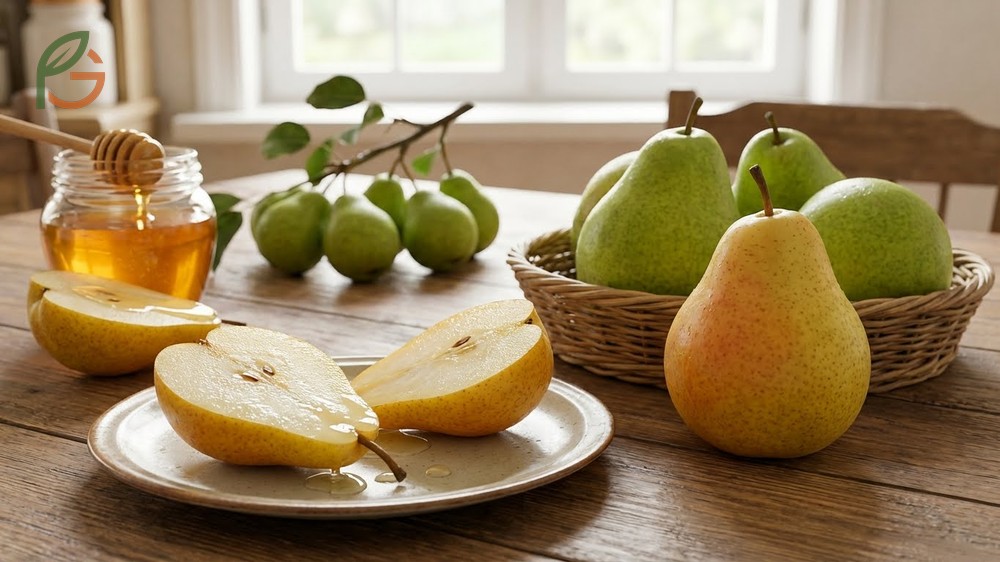
Pears deliver a delicate sweetness that’s less intense than apples, with a floral aroma and smooth texture when fully ripe. The flavor ranges from subtly sweet to honey-rich depending on the variety.[1] Most pears share a mild, refreshing quality that makes them versatile for both fresh eating and cooking.
What most people don’t realize is that pears are harvested unripe and develop their full sweetness off the tree. This unique ripening process affects their final taste significantly. If you’ve ever bitten into a hard, flavorless pear, it simply wasn’t ripe yet.
Classic European Pear Flavors
European pears (Pyrus communis) are the familiar varieties found in most American grocery stores. They’re characterized by their classic pear shape and soft, juicy flesh when ripe. Bartlett pears taste fragrant and sweet with a buttery texture, while Anjou varieties offer a subtler sweetness with hints of lemon-lime.[1]
Bosc pears stand out with their distinctive taste—sweet with a honey-like quality and undertones of warm spices like cinnamon and nutmeg.[5] This spicy-sweet profile makes them especially popular for baking and poaching.
Asian Pear Taste Profile
Asian pears deliver a completely different eating experience from their European cousins. They’re remarkably crisp with a texture more like jicama or a firm apple than the soft flesh you’d expect from a pear.[2] The flavor is sweet with a hint of tartness, often described as having melon-like or apple-adjacent notes.
These pears stay crunchy even when fully ripe, which surprises people expecting traditional pear softness. Korean pears are exceptionally juicy and sweet, while Ya Li varieties have a delicate, refreshing taste perfect for fresh consumption.
From My Experience: My cousin in Guadalajara, Mexico grew Asian pear trees from grafted stock in spring 2023. The trees produced fruit in their second season with that characteristic crisp texture—achieving the same crunch level as store-bought varieties, which matched the expected texture from horticultural guides.
Pear Texture Descriptions
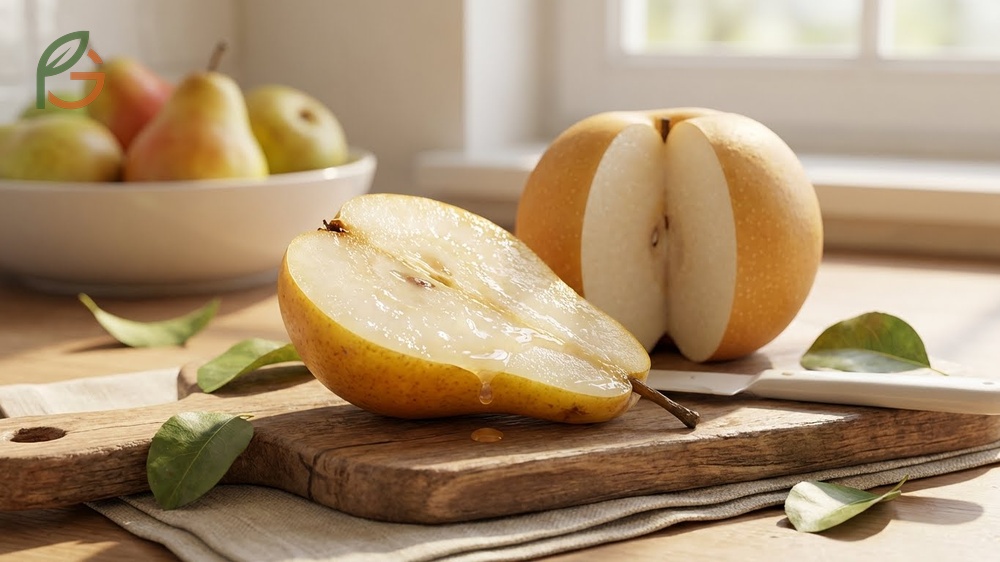
Texture is just as important as flavor when describing what pears taste like. European and Asian pears differ dramatically in mouthfeel, which affects the entire tasting experience. Understanding these texture differences helps you choose the right pear for your needs.
Soft and Buttery Varieties
Bartlett and Red Bartlett pears become incredibly soft and juicy when ripe, with a smooth, almost melting texture. They’re fragrant and full of juice that can drip down your chin when eating fresh. Anjou pears stay slightly firmer than Bartletts even when fully ripe, making them versatile for both snacking and cooking.[1]
Comice pears are the softest variety, with an ultra-creamy texture that practically dissolves in your mouth. This delicate flesh makes them ideal for fresh eating but less suitable for cooking, as they can fall apart easily.
Crisp and Firm Varieties
Bosc pears maintain a denser, slightly grainy texture even when ripe. They’re crisp when raw and hold their shape exceptionally well during cooking, making them the baker’s first choice.[5] The flesh is firm enough to slice cleanly without turning mushy.
Asian pears take firmness to another level—they crunch like apples and stay that way throughout their edible life. You won’t find the soft, yielding texture of European pears here. Instead, you get a refreshing snap with every bite that releases abundant juice without the mushiness.
Important Note: Don’t judge a pear by firmness alone. Bartletts should feel soft throughout when ripe, while Bosc pears remain firmer and require the “check the neck” method for accurate ripeness testing.
Common Pear Varieties and Flavor Profiles
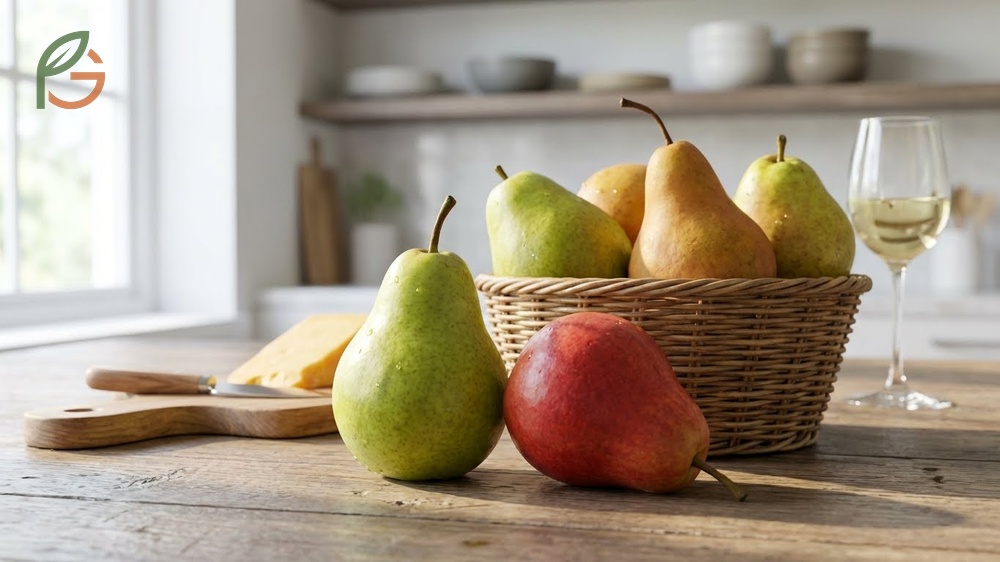
Each pear variety brings its own flavor signature to the table. Knowing these differences helps you select the best pear for eating fresh, baking, or pairing with cheese and wine. Here’s what you can expect from the most popular varieties available in U.S. markets.
This table compares flavor profiles, sweetness levels, texture characteristics, and best uses for five common pear varieties
| Pear Variety | Flavor Profile | Texture When Ripe | Best Use |
|---|---|---|---|
| Bartlett | Classic pear—juicy, fragrant, full of flavor; tangy when green, sweet when golden[1] | Very soft and buttery | Fresh eating, smoothies, canning |
| Anjou | Subtly sweet with lemon-lime notes; mild and refreshing[1] | Firm-soft, juicy | Salads, baking, snacking |
| Bosc | Woodsy with honey sweetness; hints of cinnamon, nutmeg, and fall spices[1] | Dense, slightly grainy, crisp | Baking, poaching, roasting |
| Asian Pear | Sweet with hint of tartness; melon-like or apple-adjacent flavors[2] | Very crisp and crunchy | Fresh eating, salads, marinades |
| Comice | Mild, buttery-sweet with slight citrus notes; exceptionally aromatic | Ultra-soft, creamy | Fresh eating, cheese boards |
Bartletts are America’s most popular pear variety, accounting for roughly 75% of commercial production. Their versatile flavor works equally well fresh or cooked. Red varieties of both Bartlett and Anjou pears taste nearly identical to their green counterparts—the main difference is visual appeal.
- Bartlett pears shift from tangy-crisp when green to intensely sweet and aromatic when they turn yellow or red
- Anjou pears don’t change color as they ripen, maintaining their green or red skin throughout the ripening process
- Bosc pears have a distinctive bronze-brown russet skin and elongated neck that makes them easy to identify
- Asian pears look like round, speckled apples and are ready to eat immediately when purchased
- Comice pears are often called “the queen of pears” for their exceptionally sweet, aromatic flavor
Ripe vs Unripe Pear Taste
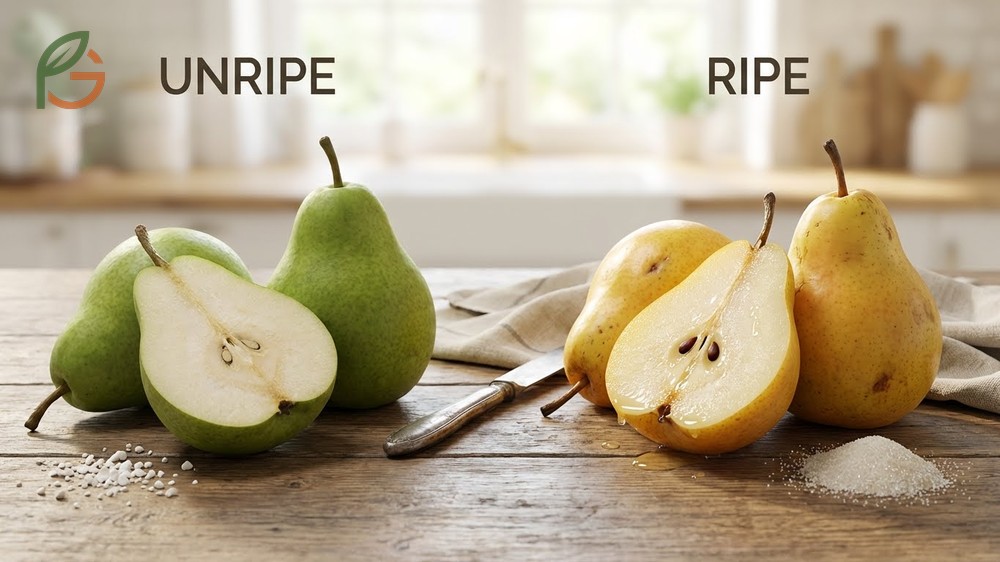
The difference between ripe and unripe pears is dramatic. Unripe pears taste starchy, bland, and astringent with a hard, crunchy texture that’s unpleasant to eat. They haven’t developed their natural sugars yet, so they lack the characteristic sweetness pears are known for.
Ripe pears transform completely—they become sweet, juicy, and aromatic with soft, buttery flesh that’s easy to bite into. The sugars concentrate as starches convert during ripening, creating that honey-sweet flavor. Pears must ripen off the tree to develop proper texture and taste, unlike most fruits.[4]
The “Check the Neck” method is your best tool for testing ripeness. Gently press the narrow part near the stem with your thumb—if it yields to gentle pressure, your pear is ripe, sweet, and ready to eat.[4] If it’s still firm, leave it at room temperature for 3-5 days, checking daily.
Ripening Tip: Speed up ripening by placing pears in a paper bag with a banana or apple. The ethylene gas these fruits emit accelerates the process, getting you sweet, juicy pears faster.
- Bartlett pears change from green to yellow (or red varieties brighten) as they ripen—this color change signals they’re getting close
- Anjou pears remain green even when perfectly ripe, so you must rely on the neck test exclusively
- Ripe pears emit a sweet, floral aroma near the stem that’s noticeable when you bring them close to your nose
- Overripe pears feel mushy throughout, develop brown spots, and taste overly sweet with a mealy, grainy texture
- Asian pears are the exception—they’re ripe when purchased and stay crisp, so firmness doesn’t indicate unripeness
Pear Flavor Pairings
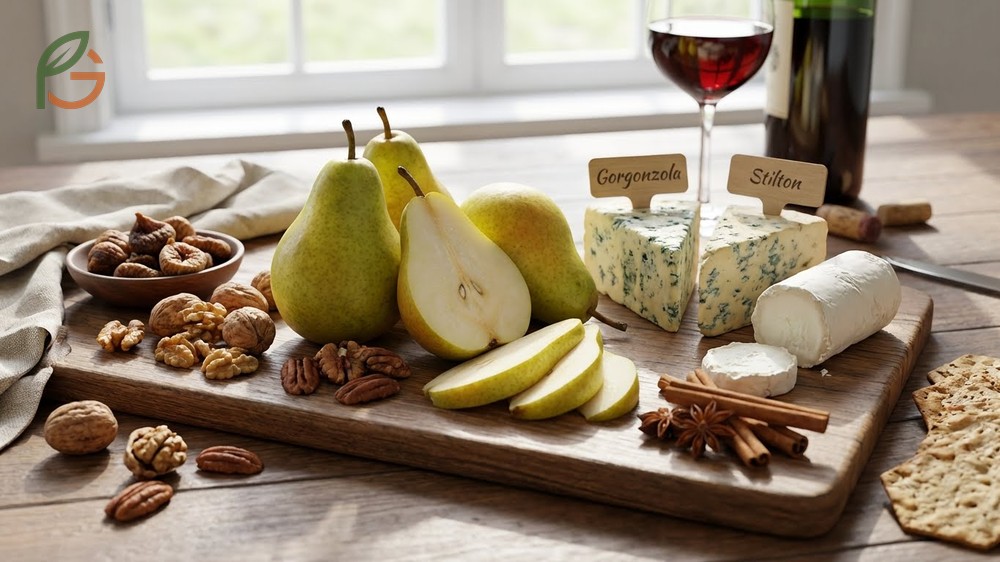
Pears pair beautifully with cheese, wine, nuts, and warm spices, making them a versatile ingredient for both sweet and savory dishes. The mild, delicate flavor of pears complements rather than overpowers, which is why they work so well in charcuterie boards and desserts.
Blue cheeses like Gorgonzola and Stilton create a classic pairing with pears—the sharp, salty funk of blue cheese balances the sweet, mild fruit perfectly. Bartlett pears work wonderfully with creamy goat cheese or mascarpone, while Bosc pears can stand up to aged cheddar. Anjou varieties pair well with Brie or Manchego.
Wine pairings depend on the pear variety and preparation. Sparkling wines like Champagne or Prosecco complement fresh Bartlett pears beautifully. Bosc pears with their spicy notes pair well with full-bodied reds or sweet dessert wines. The citrus notes in Anjou pears match nicely with crisp white wines like Riesling.
- Warm spices—cinnamon, nutmeg, cardamom, ginger, and cloves enhance the natural sweetness of pears in baked goods
- Nuts—walnuts, pecans, almonds, and hazelnuts add textural contrast and earthy richness to fresh or cooked pears
- Honey and maple syrup amplify pear sweetness without overwhelming the delicate fruit flavor
- Dark chocolate pairs exceptionally well with pears, especially Bosc varieties in tarts and poached desserts
- Herbs like rosemary, thyme, and basil create sophisticated flavor combinations in savory pear dishes
- Arugula and mixed greens balance the sweetness of fresh pears in salads with a peppery bite
Pairing Principle: Match delicate pear varieties with mild cheeses and bold varieties with stronger cheeses. Pungent cheeses can easily overpower the subtle flavor of Anjou or Comice pears, so save them for robust Bosc varieties.
Conclusion
The answer to what do pears taste like depends entirely on the variety and ripeness—from soft, honey-sweet Bartletts to crisp, apple-like Asian pears, each offers a unique eating experience. European varieties deliver that classic buttery, aromatic pear flavor when properly ripened, while Asian types provide refreshing crunch and melon-like sweetness.
Current horticultural guidance emphasizes proper ripening for European pears and immediate consumption of Asian varieties to maximize flavor and texture. Whether you’re growing your own pear trees or selecting fruit at the market, understanding these flavor profiles helps you choose the perfect variety for fresh eating, baking, or pairing with cheese. Visit FruitGarden for more detailed guides on growing and selecting quality fruit varieties.
Frequently Asked Questions
What is the sweetest variety of pear?
Comice pears are generally considered the sweetest variety, with an exceptionally aromatic, buttery-sweet flavor and ultra-soft, creamy texture. Bartlett pears when fully ripe (golden yellow) also rank as one of the sweetest types, with intense fragrance and juicy sweetness that makes them perfect for fresh eating.
Do Bartlett and Anjou pears taste different?
Yes, Bartlett pears taste more intensely sweet with a classic pear fragrance and buttery texture, while Anjou pears offer a subtler sweetness with distinctive lemon-lime citrus notes and a firmer texture. Bartletts become very soft when ripe, whereas Anjous stay somewhat firm, making them more versatile for cooking and baking.
What do Bosc pears taste like compared to other varieties?
Bosc pears have a distinctive honey sweetness with woodsy, spiced notes reminiscent of cinnamon, nutmeg, and warm fall spices. Their flavor is richer and more complex than Bartlett or Anjou varieties, and they maintain a denser, slightly grainy texture even when ripe, making them ideal for baking and poaching.
What do Asian pears taste like?
Asian pears taste sweet with a hint of tartness and are often described as having melon-like or apple-adjacent flavors. Their most distinctive characteristic is their remarkably crisp, crunchy texture that stays firm throughout ripeness—more like biting into a juicy apple than the soft, buttery flesh of European pears.
How do you tell if a pear is sweet?
Use the “Check the Neck” method—gently press the narrow part near the stem with your thumb. If it yields to gentle pressure, the pear is ripe and sweet. For Bartlett pears, also look for color change from green to yellow. Ripe pears emit a sweet, floral aroma near the stem that indicates they’ve developed full sweetness.
What are the best tasting pears for eating raw?
Bartlett, Comice, and Asian pears are the best for eating raw. Bartletts offer classic pear flavor with abundant juice, Comice provides the sweetest, most aromatic experience, and Asian pears deliver refreshing crunch with apple-like texture. Anjou pears also work well for fresh snacking due to their mild, pleasant flavor and firm texture.
Do cooking pears taste different from fresh eating pears?
Pears develop deeper, more concentrated sweetness when cooked, and their texture becomes softer and more tender. Bosc pears are preferred for cooking because they hold their shape well and their spicy-sweet flavor intensifies with heat. Bartlett and Anjou can also be cooked but may become mushy if overcooked, while Asian pears lose their signature crispness.





