
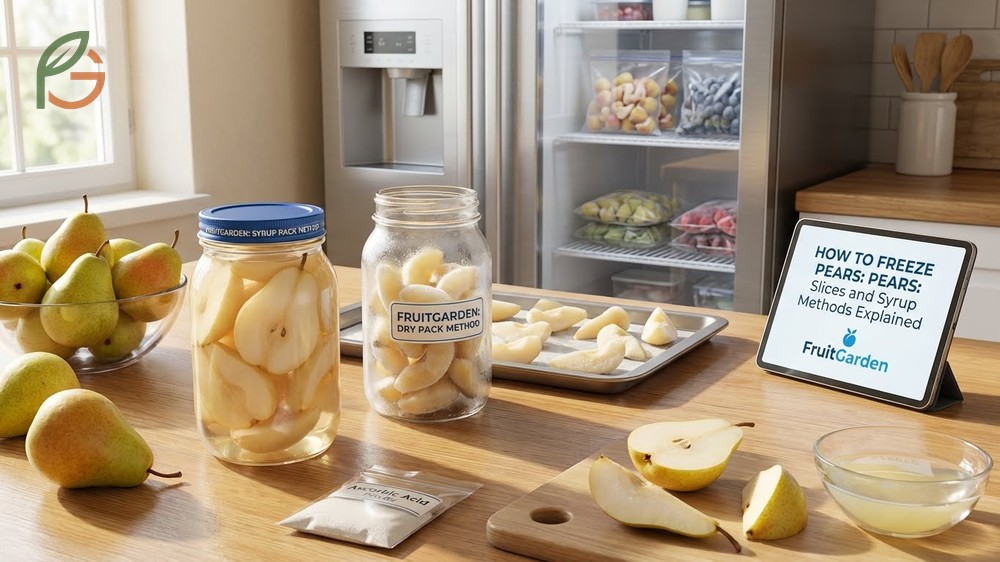
How to freeze pears properly extends their shelf life to 8-12 months while preserving flavor and texture. Research shows that using either syrup pack or dry pack methods with ascorbic acid treatment prevents browning and maintains fruit quality.[1] Most people don’t realize that pear variety and ripeness matter more than the freezing method itself. FruitGarden compiles current preservation research to help you maximize your harvest.
Quick Answer
- Frozen pears last 8-12 months when stored at -1°C (30°F) or below[2]
- Add ¾ teaspoon (2,250 mg) ascorbic acid per quart of syrup to prevent discoloration[3]
- Use 40% sugar syrup (3 cups sugar + 4 cups water) for syrup pack method[4]
- Flash-freeze slices for 1-2 hours before bagging to prevent clumping[5]
How to Freeze Pears
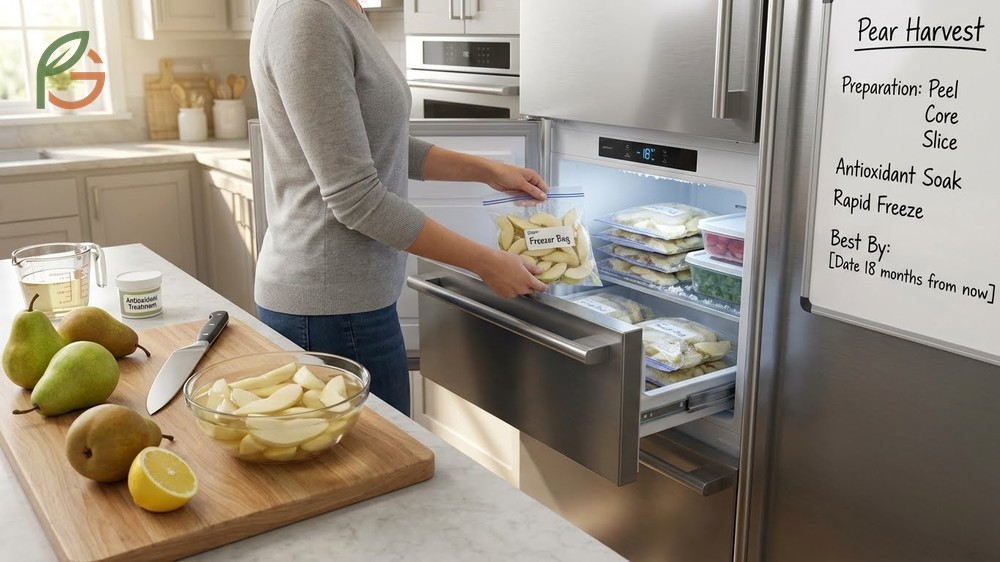
Freezing pears preserves harvest-season fruit for year-round use when you follow tested preservation methods. Current guidance emphasizes proper preparation steps—peeling, coring, slicing, and treating with antioxidants—to maintain fruit quality during frozen storage.[1] Well-packaged frozen pears retain their nutritional value and texture for up to 18 months.[4]
Studies demonstrate that rapid freezing creates smaller ice crystals, which minimizes cellular damage and preserves the fruit’s original texture better than slow freezing. Flash-freezing technology operates with up to 30% greater energy efficiency than older systems, making it practical for home use.[6]
The best pears for freezing are firm-ripe fruits harvested at peak maturity. Bartlett and d’Anjou varieties freeze particularly well due to their texture and moisture content.[7] You’ll get better results when you process pears immediately after harvesting rather than storing them first.
Choosing the Right Pears
Research shows that pear variety affects freezing success rates significantly. Bartlett pears change color from green to yellow as they ripen, making it easy to identify peak harvest time.[7] D’Anjou pears maintain their green color when ripe, so check neck firmness instead.
Select firm-ripe pears that yield slightly to gentle pressure near the stem end. Overripe fruit becomes mushy when frozen, while underripe pears lack flavor development. Commercial storage facilities keep d’Anjou pears at -1°C (30°F) for up to 6 months before processing.[8]
- Bartlett: Bell-shaped, changes to yellow when ripe, main variety for canning and freezing
- D’Anjou: Egg-shaped, stays green, firmer texture, excellent for long-term storage
- Bosc: Russeted skin, holds shape well, ideal for baking applications after freezing
- Comice: Sweet and juicy, requires careful handling, best for syrup pack method
- Asian pears: Crisp texture, can store 3 months refrigerated before freezing
Preventing Browning with Ascorbic Acid
Ascorbic acid (Vitamin C) is the gold standard for preventing enzymatic browning in cut pears. It works by halting the oxidation reaction that causes discoloration and is completely safe for home use.[9] Studies on pear juice showed that 0.20% ascorbic acid concentration provided the highest browning reduction.[10]
Dissolve 1 teaspoon pure ascorbic acid crystals in 1 gallon cold water to create an effective treatment solution. Place peeled or sliced pears into the solution immediately after cutting and soak for 10 minutes before draining.[9]
Important Note: Citric acid and lemon juice are less effective than ascorbic acid for preventing browning. While they add flavor and some protection, they don’t match ascorbic acid’s antioxidant power for long-term frozen storage.
Freezing Fresh Pears
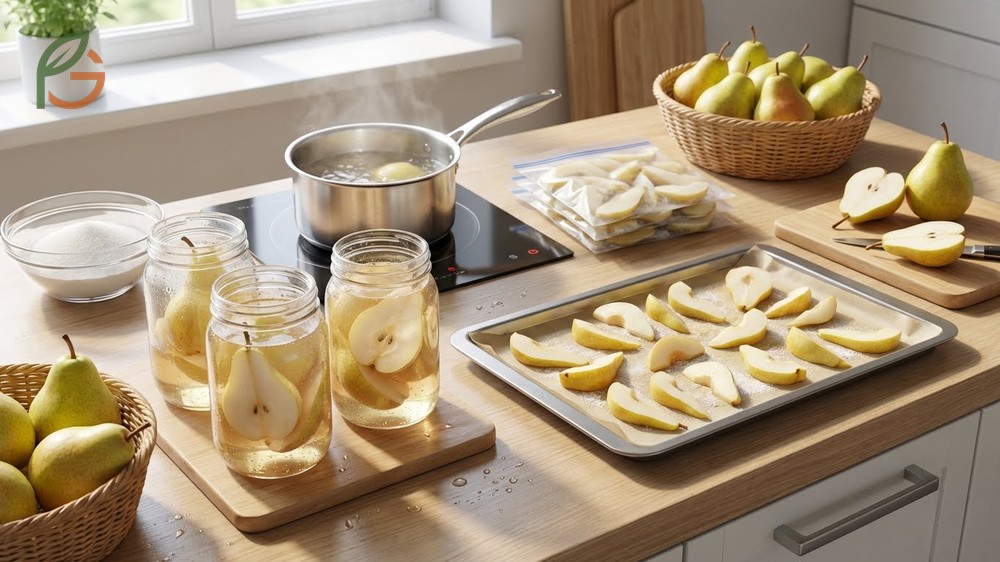
Two primary methods dominate home pear freezing: syrup pack and dry pack. Agricultural data shows both methods preserve fruit quality effectively when you follow proper protocols.[1] Syrup pack adds sweetness and provides extra protection against freezer burn, while dry pack offers convenience and faster processing.
Evidence suggests that heating pears briefly in boiling syrup before freezing improves texture retention during frozen storage. This blanching step denatures enzymes that can degrade fruit quality over time.[4]
Syrup Pack Method
The syrup pack method uses a 40% sugar solution that balances sweetness with preservation effectiveness. Mix 3 cups granulated sugar with 4 cups water in a large pot and bring to a boil until sugar dissolves completely.[4] Let the syrup cool before using it to pack pears.
Add prepared pear slices to boiling syrup and simmer for 1-2 minutes depending on slice thickness. Drain the pears and let them cool completely before packing.[1] For better results, add ¾ teaspoon (2,250 mg) ascorbic acid to each quart of cooled syrup.[3]
- Wash, peel, core, and slice pears into quarters or smaller pieces
- Soak slices in ascorbic acid solution (1 tsp per gallon water) for 10 minutes
- Prepare 40% syrup (3 cups sugar + 4 cups water), boil until dissolved, then cool
- Heat pear slices in boiling syrup for 1-2 minutes, drain, and cool completely
- Pack pears in freezer containers, cover with cold syrup leaving ½-inch headspace
- Place crumpled water-resistant paper on top to keep fruit submerged
- Seal, label with date, and freeze at -1°C (30°F) or below
Dry Pack Method
Dry packing, also called flash-freezing, is faster and doesn’t require syrup preparation. Arrange treated pear slices in a single layer on parchment-lined cookie sheets with pieces not touching.[5] Freeze for 1-2 hours until firm before transferring to freezer bags.
Research shows that flash-freezing preserves original flavor and texture by creating smaller ice crystals that minimize cellular damage. This rapid freezing process locks in nutrients more effectively than slow freezing.[11] Pat pear slices completely dry before freezing to prevent ice crystal formation on the fruit surface.
- Rinse fresh pears in cool water and pat completely dry
- Peel, core, and slice into quarters or preferred thickness
- Soak in ascorbic acid solution for 10 minutes to prevent browning
- Remove from solution and pat each slice thoroughly dry with paper towels
- Arrange slices on parchment-lined baking sheets in single layer, not touching
- Flash-freeze for 1-2 hours until solid throughout
- Transfer frozen slices to freezer-safe bags, remove excess air, label, and store
Pro Tip: Don’t skip the drying step before flash-freezing. Water remaining on pear surfaces creates excess ice crystals that damage fruit texture and make slices stick together in storage.
Frozen Pear Storage
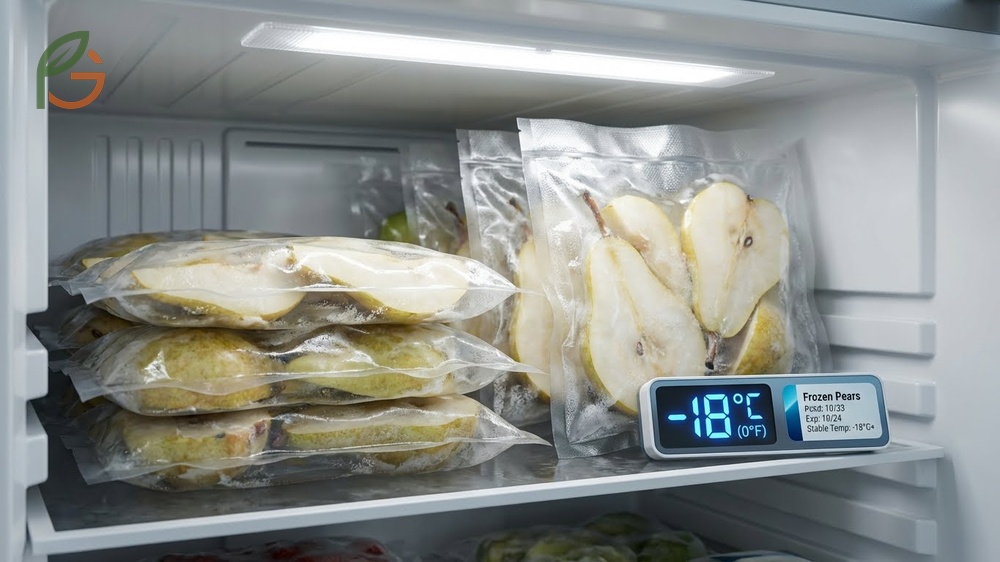
Properly packaged frozen pears maintain optimal quality for 8-12 months at -18°C (0°F) or below.[2] Storage duration depends on three critical factors: temperature stability, packaging quality, and initial fruit condition. Well-packaged pears can extend to 18 months under ideal conditions.[4]
Temperature fluctuations damage frozen fruit quality by causing ice crystals to grow larger and rupture cell walls. Modern freezers with stable temperatures preserve texture better than units with frequent door openings or defrost cycles. Remove only the amount you’ll use immediately to prevent partial thawing.
Packaging choices significantly impact freezer burn prevention. Freezer-safe containers with airtight seals or heavy-duty freezer bags with air removed provide the best protection. Glass or rigid plastic containers work well for syrup pack pears, while vacuum-sealed bags excel for dry pack slices.
This table compares storage duration and quality retention across three freezing methods for pears at -18 degrees Celsius
| Method | Optimal Duration | Maximum Duration | Quality Retention |
|---|---|---|---|
| Syrup Pack | 8-10 months[12] | 12 months | Excellent texture and flavor |
| Dry Pack (Flash-Frozen) | 6-9 months[13] | 12 months | Good texture, may brown slightly |
| Sugar Pack | 8-10 months | 12 months | Very good, slightly sweeter |
- Maintain freezer temperature at -18°C (0°F) or below for optimal preservation
- Use freezer-safe containers with ½-inch headspace for syrup pack to allow expansion
- Remove excess air from freezer bags to minimize freezer burn risk
- Label containers with contents and freezing date for inventory tracking
- Store pears toward the back of the freezer where temperature remains most stable
- Avoid refreezing thawed pears as texture degradation accelerates significantly
Preserve Pears Freezing
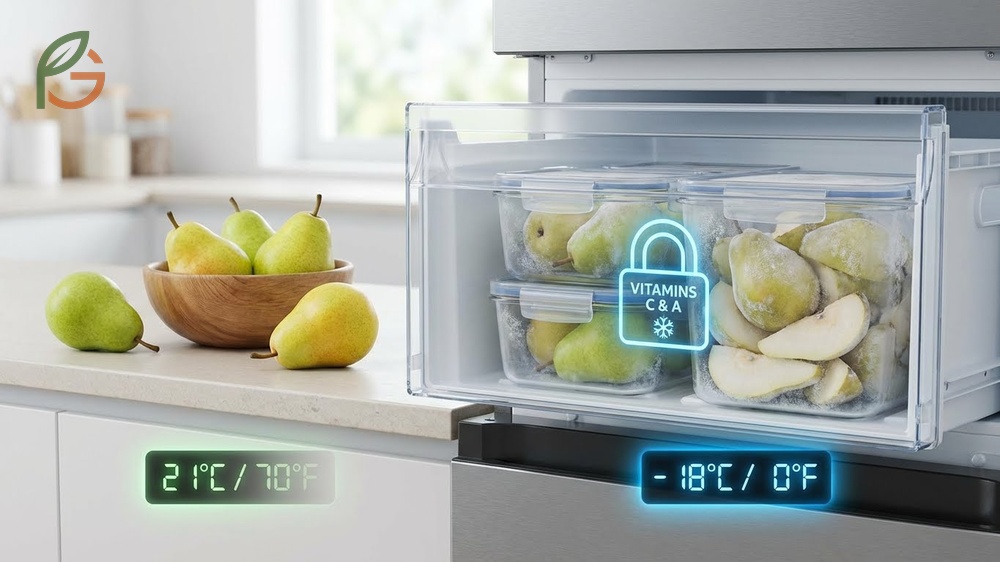
Preservation through freezing offers advantages over canning and drying for home fruit processing. Frozen pears retain higher levels of vitamins C and A compared to fresh pears stored at room temperature for several days.[11] This matters when you’re processing large harvests and want maximum nutritional value.
Current guidance emphasizes freezing pears immediately after harvest to lock in peak flavor and nutrients. Fresh pears stored at room temperature (21°C/70°F) maintain quality for only 3-4 days, while refrigerated pears last 5-12 days before quality declines.[13] Freezing extends this dramatically to 8-12 months.
The antioxidant treatment step is critical for long-term preservation success. Pears contain polyphenol oxidase enzymes that cause rapid browning when exposed to oxygen. Adding ascorbic acid to freezing syrup provides ongoing protection throughout frozen storage, not just during initial preparation.[10]
- Freezing preserves more vitamins and minerals than canning or dehydrating
- Frozen pears work well for smoothies, baking, and cooked applications year-round
- No special equipment needed beyond freezer-safe containers and standard kitchen tools
- Processing time is faster than water bath or pressure canning methods
- Freezing allows harvest-season preservation that reduces carbon footprint from imports
Storage Tip: Fresh pears stored in refrigerator BioFresh compartments at just above 0°C (32°F) with high humidity can last up to 55 days before freezing, giving you flexibility in processing timing.[2]
Pear Freezing Method
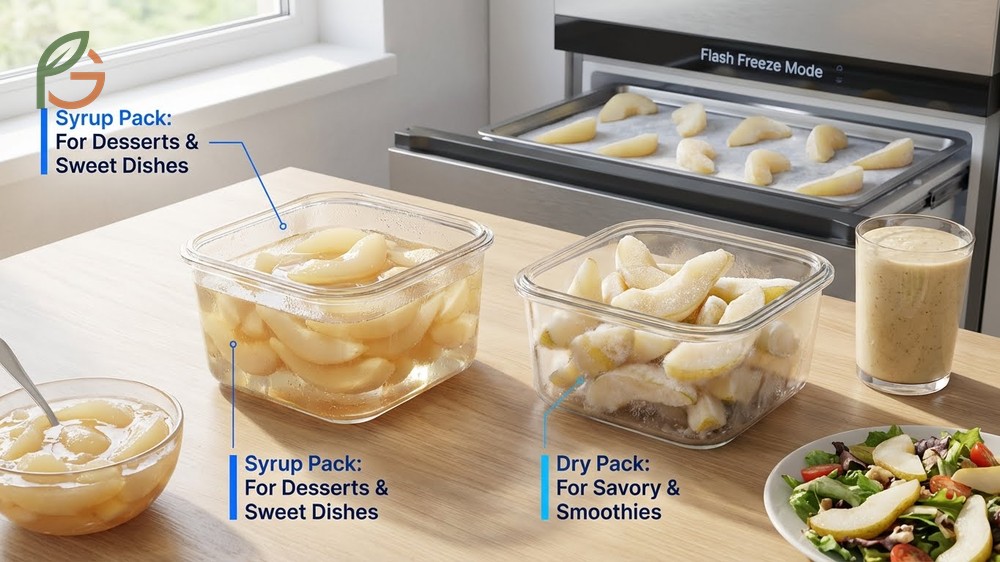
Selecting the right freezing method depends on your intended use for the frozen pears. Syrup pack works best when you’ll use pears for desserts, compotes, or serving as a sweet side dish. The sugar solution penetrates fruit tissues and provides extra protection against texture breakdown during storage.
Dry pack method suits savory applications, smoothies, and recipes where you’ll control sweetness separately. Flash-frozen individual slices won’t clump together, making it easy to remove exactly the amount you need without thawing the entire batch. This convenience reduces food waste significantly.
Sugar pack (not syrup pack) represents a middle option where you sprinkle pear slices with granulated sugar and let them sit 10-15 minutes until sugar dissolves and forms a light syrup. Use ¼ cup sugar per pound of cut, treated pears.[5] Pack the pears with their juice in containers leaving ½-inch headspace.
For breakfast smoothie preparation, freeze pear chunks on cookie sheets first, then blend with Greek yogurt, spinach, and a splash of apple juice. This timing kickstarts metabolism and provides sustained energy for 4-5 hours. The frozen fruit creates a thick, creamy texture without added ice.
When using frozen pears for baking applications like pies or crisps, don’t thaw them completely. Partially frozen pears release less juice during baking, preventing soggy crusts. Add 5-10 minutes to normal baking time to account for the fruit’s lower starting temperature.
- Syrup pack: Compotes, dessert toppings, serving alongside roasted meats, poaching
- Dry pack: Smoothies, oatmeal toppings, yogurt mix-ins, quick snacks
- Sugar pack: Pies, crisps, cobblers, breakfast parfaits
- Juice pack: Baby food, purées, sauces, low-sugar applications
Conclusion
The evidence is clear: how to freeze pears successfully depends on choosing ripe fruit, treating with ascorbic acid to prevent browning, and using either syrup pack or dry pack methods based on your intended use. Frozen pears maintain excellent quality for 8-12 months when stored at -18°C (0°F) or below in airtight containers.
Current agricultural guidance emphasizes processing pears at peak ripeness immediately after harvest for maximum flavor and nutrient retention. Whether you’re preserving a backyard harvest or taking advantage of seasonal pricing, these tested methods ensure you’ll enjoy quality pears year-round. FruitGarden synthesizes preservation research to help home gardeners make the most of their fruit harvests.
Frequently Asked Questions
Can you freeze pears without blanching them first?
Yes, you can freeze pears without blanching using the dry pack method. However, blanching pear slices in boiling syrup for 1-2 minutes improves texture retention during frozen storage by denaturing enzymes that degrade fruit quality. For best results, always treat pears with ascorbic acid solution regardless of blanching choice to prevent browning.
What’s the difference between 40% syrup and light syrup for freezing pears?
A 40% syrup uses 3 cups sugar mixed with 4 cups water, which is considered a medium syrup concentration. Light syrup uses less sugar (about 2 cups sugar to 4 cups water), while heavy syrup uses more (4+ cups sugar). The 40% concentration balances sweetness with preservation effectiveness for most pear varieties and is recommended by USDA guidelines.
How long do frozen pears last compared to canned pears?
Frozen pears maintain optimal quality for 8-12 months at -18°C (0°F), while canned pears stored at room temperature retain quality for 15-40 months depending on storage temperature. However, frozen pears preserve more vitamins and maintain better texture than canned pears, making them preferable for applications where fresh-like quality matters.
Why do my frozen pears turn brown even with lemon juice?
Lemon juice is less effective than ascorbic acid for preventing pear browning during long-term frozen storage. Research shows that ascorbic acid halts the enzymatic oxidation reaction more completely. Use pure ascorbic acid powder (1 tsp per gallon water) or add ¾ teaspoon ascorbic acid to each quart of freezing syrup for better results.
Can I freeze whole pears or do they need to be sliced?
You must slice pears before freezing for best results. Whole pears don’t freeze well because their high water content creates large ice crystals that rupture cell walls, resulting in mushy texture when thawed. Peel, core, and slice pears into quarters or smaller pieces, then treat with ascorbic acid before freezing using syrup pack or dry pack methods.
What are the best pear varieties for freezing?
Bartlett and d’Anjou pears are the best varieties for freezing due to their firm texture and moisture content. Bartlett pears are the main variety used commercially for canning and freezing. Bosc pears also freeze well and hold their shape particularly well for baking applications. Avoid overripe or soft pear varieties that become mushy when frozen.
Do frozen pears lose their nutritional value?
Frozen pears retain higher levels of vitamins C and A compared to fresh pears stored at room temperature for several days. Flash-freezing at peak ripeness locks in nutrients more effectively than slow freezing or extended refrigeration. Studies show that frozen fruits often preserve more nutrients than their fresh counterparts after a few days of storage.





