
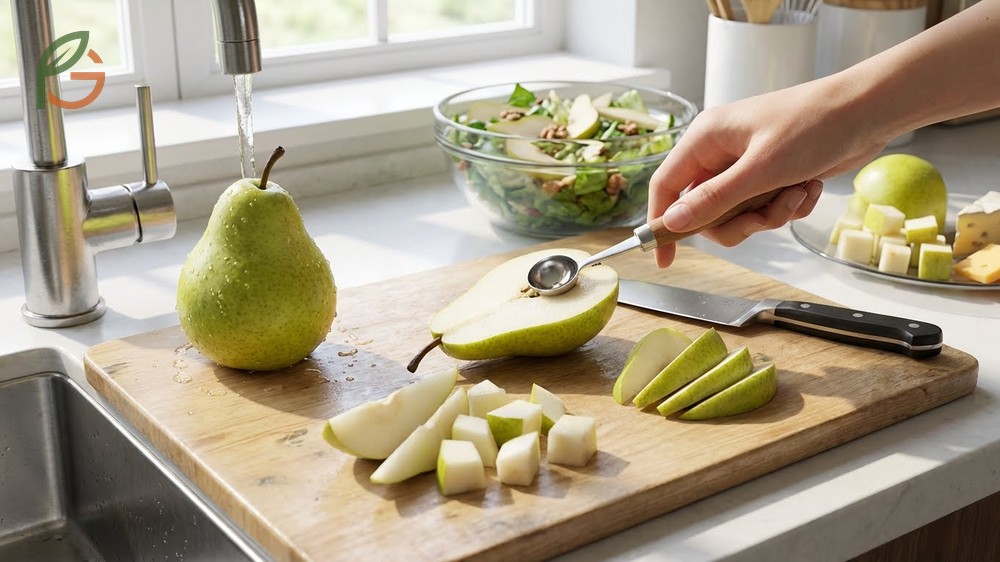
How to cut a pear? Wash the fruit under cold water, slice it in half lengthwise with a sharp knife, scoop out the core with a melon baller or spoon, then cut into slices, wedges, or cubes depending on your recipe[1]. Research shows that proper cutting techniques preserve the pear’s texture and nutritional value while preventing browning[2]. FruitGarden provides practical guidance for preparing pears for everything from elegant salads to quick snacks.
Quick Answer
- Cut pears lengthwise from stem to bottom, then scoop out the core with a melon baller for clean removal[3]
- One medium pear contains 6 grams of fiber[4] and 101 calories[5]
- Brush sliced pears with lemon juice solution (3 tablespoons lemon juice per ¼ cup water) to prevent browning[2]
- Apple slicers work effectively on pears up to 9 cm diameter, creating uniform wedges in one press[6]
How to Cut a Pear
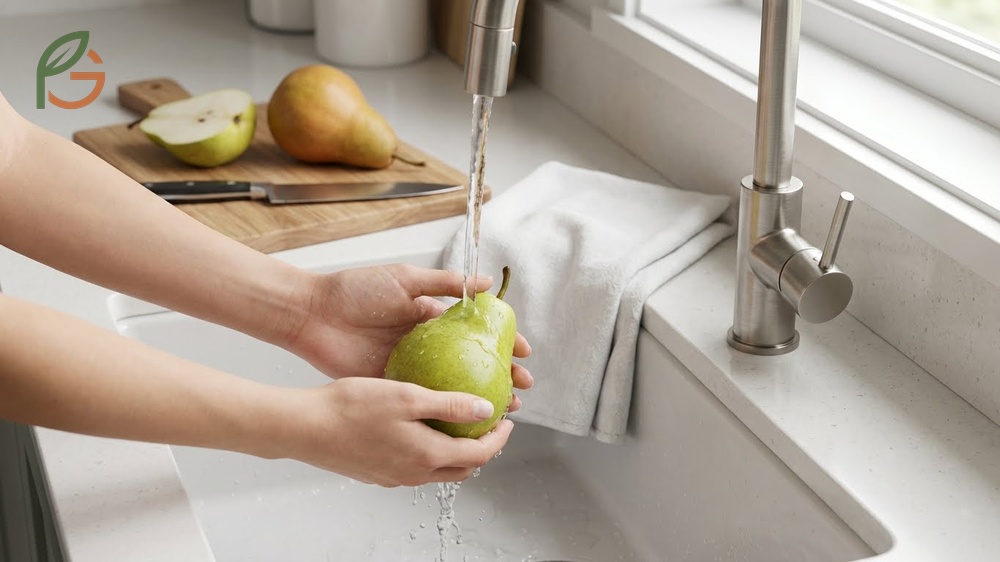
Research shows that starting with a clean, properly washed pear reduces surface bacteria and improves food safety[1]. Rinse pears under cold water and gently scrub the surface with your fingers or a vegetable brush. Pat dry with a clean towel before cutting.
The lengthwise cutting method works best for most pear varieties including Bartlett, Bosc, and D’Anjou. This approach follows the natural shape of the fruit and makes core removal easier. A sharp paring or chef’s knife provides better control than a dull blade.
You’ll need a cutting board, sharp knife, and either a melon baller or small spoon for core removal[3]. Keep the pear steady by placing your non-dominant hand flat on top while cutting. Make deliberate strokes rather than sawing motions for cleaner cuts.
Basic Halving Technique
Place the washed pear on a stable cutting board with the stem pointing up. Position your knife at the top center of the pear, directly through the stem line[8]. Apply steady downward pressure to slice through the entire fruit from top to bottom.
The two halves should separate cleanly, revealing the seed chamber in the center. For quarters, place each half flat-side down and cut vertically again through the center. Quartered pears work well for snacking or adding to cheese plates.
Coring a Pear
Studies demonstrate that removing the core improves eating quality and texture in prepared dishes[3]. Use a melon baller to scoop out the seed chamber in circular motions. A grapefruit spoon with serrated edges also works effectively for this task.
The calyx—a thin, stringy piece running from the stem to the core—should be removed with a paring knife[3]. In ripe pears, it lifts out easily. Cut a small V-shape at the bottom of each half to remove any remaining tough blossom end.
- Scoop the seed chamber with a melon baller using circular motions
- Remove the stringy calyx that runs from stem to core with a paring knife
- Cut a V-shape at the bottom to remove the tough blossom end
- Check for any remaining seeds or fibrous material
- Discard core pieces or compost them rather than consuming tough sections
How to Cut a Pear for a Salad
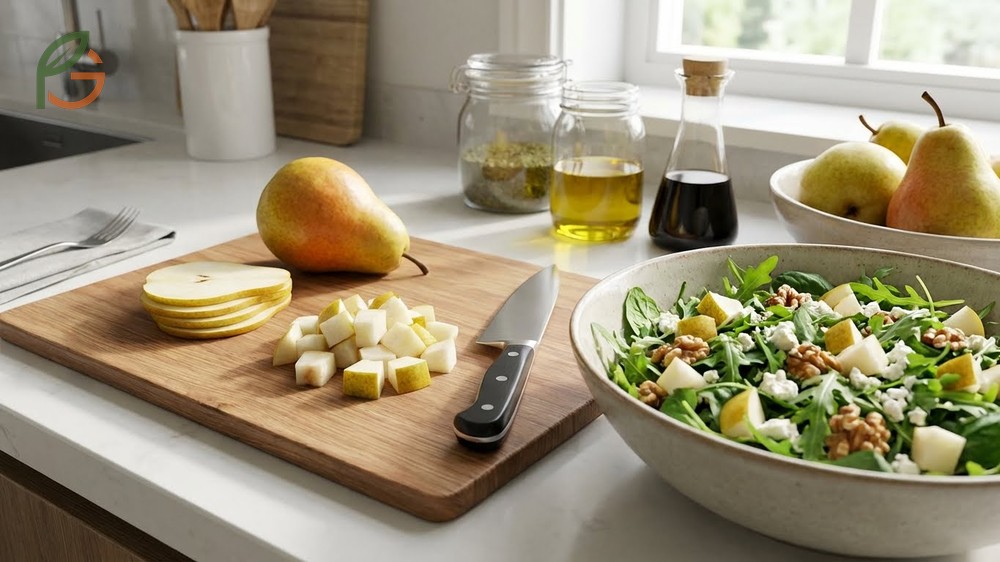
Salad preparations benefit from uniform pear pieces that distribute evenly throughout the dish[8]. Cubed pears measuring ½ inch create ideal texture contrast with greens and other ingredients. Thin slices work better for composed salads where visual presentation matters.
Agricultural data shows that pears contain 27 grams of carbohydrates per medium fruit, providing natural sweetness that complements savory salad components. The skin contains most of the fruit’s 6 grams of fiber[4], so leave it on for maximum nutritional benefit.
For mixed green salads, cube the pears into bite-sized pieces that can be easily speared with a fork. For grain salads with quinoa or farro, slightly larger cubes (¾ inch) maintain better texture during mixing. Slice pears thinly for delicate baby greens or arugula.
Cubing for Salad
Start with a halved and cored pear, placing one half flat-side down on the cutting board[3]. Cut lengthwise into strips approximately ½ inch wide. Keep the strips together and rotate them 90 degrees.
Slice crosswise through all the strips at ½-inch intervals to create uniform cubes. Current guidance emphasizes consistent sizing for even mixing and balanced flavor distribution throughout salads. Smaller diced pieces (¼ inch) work well for grain-based salads where you want the pear to blend more thoroughly.
Important Note: Cut pears just before serving to minimize browning, or toss immediately with lemon juice solution. For meal prep, store cubed pears in an airtight container with a light coating of citrus juice.
Slicing for Tart
Tart recipes require thin, uniform slices that arrange attractively and cook evenly[9]. Place a cored pear half flat-side down and cut perpendicular to the length in ⅛ to ¼-inch slices. A mandoline creates paper-thin slices for elegant pinwheel arrangements.
For tarte tatin and upside-down tarts, slightly thicker slices (¼ inch) hold their shape better during baking. Fan the slices by keeping them connected at one end and gently pressing to spread them apart. This technique showcases the pear’s natural curves.
How to Cut Pears
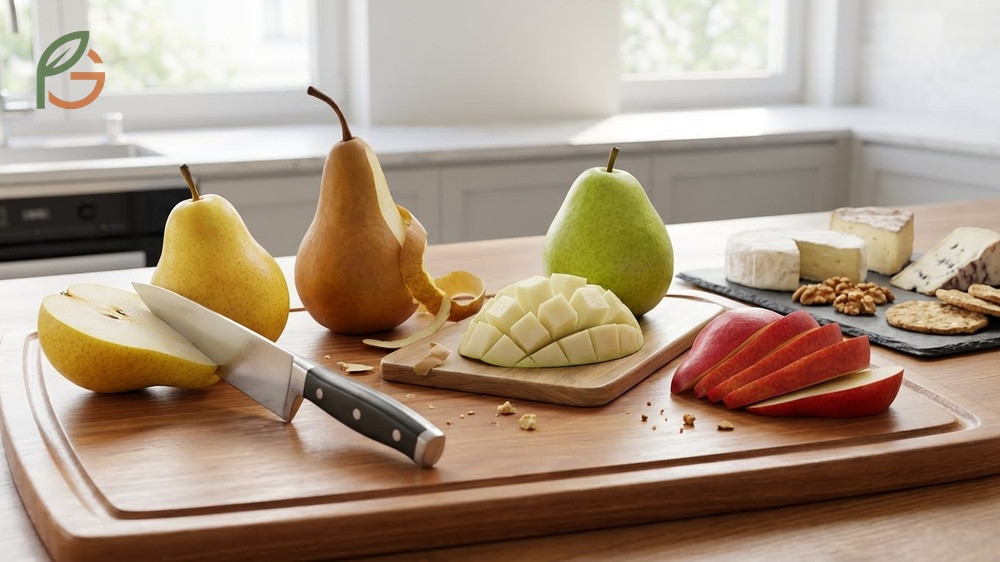
Evidence suggests that different pear varieties require slight technique adjustments[7]. Bartlett pears, with their classic bell shape, are easiest for beginners due to their symmetrical form. Bosc pears have elongated necks that need careful handling to avoid waste.
D’Anjou pears feature rounder, egg-shaped bodies that work well for cubing[7]. Red varieties like Starkrimson provide visual appeal for cheese boards and charcuterie presentations. Most people don’t realize that pear firmness affects cutting difficulty more than variety.
Ripe pears yield slightly when pressed near the neck but still maintain enough structure for clean cuts. Underripe pears resist the knife and produce ragged edges. Overripe pears become mushy and difficult to slice uniformly.
Peeling Pears
Nutrition research shows the skin contains the majority of a pear’s fiber content[4], so peel only when recipes specifically require it. Use a Y-shaped peeler for faster, more efficient peeling than a traditional straight peeler. Start at the top near the stem and work downward in long strokes.
Hold the pear firmly in your non-dominant hand, rotating it as you peel to maintain even pressure. For baked dishes like pies where texture matters more than nutrients, complete peeling prevents tough skin pieces in the final product[8].
Knife Skills for Fruit
Professional techniques emphasize proper grip and blade control for safety and precision. Hold the knife close to the blade with your thumb and index finger on either side of the handle[10]. This “choke up” position provides maximum control for detailed fruit work.
Use smooth, deliberate strokes rather than sawing motions that tear the fruit’s delicate flesh. A sharp 3-4 inch paring knife handles most pear preparation tasks effectively. For larger quantities, a 6-8 inch chef’s knife offers more leverage and speed.
- Grip the handle with all fingers while choking up slightly for better control
- Keep your non-knife hand in a claw position with fingertips tucked safely away
- Use smooth, continuous strokes instead of sawing back and forth
- Sharpen your knife regularly—dull blades slip and cause more accidents
- Cut away from your body and keep the blade pointed downward when not in use
How to Cut a Pear Fancy
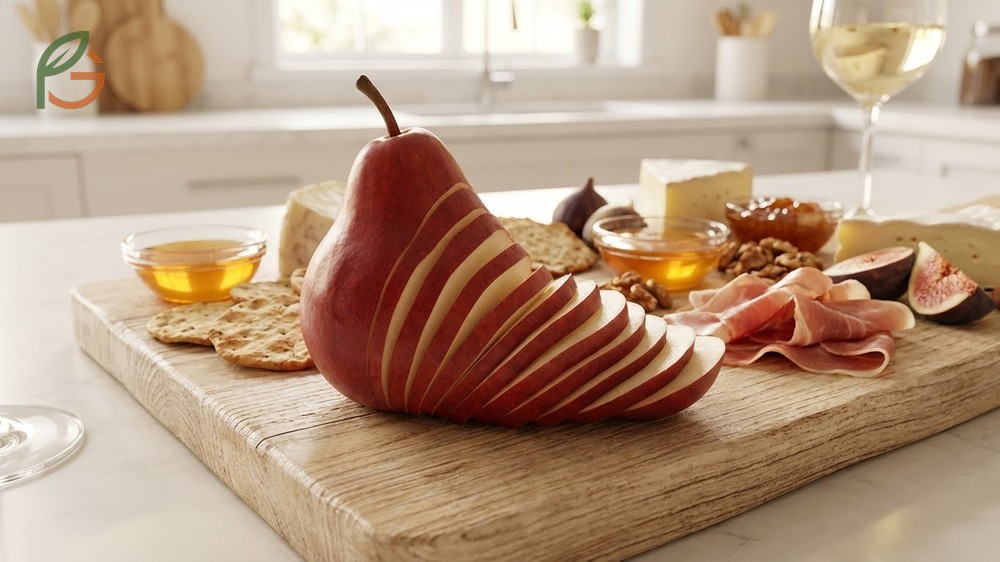
Decorative pear cutting elevates presentations for special occasions and entertaining. The dovetail technique creates cascading slices that fan elegantly on charcuterie boards[9]. Slice a cored pear half into thin sections, keeping them connected at the narrow top end.
Gently press the connected slices to spread them in a fan pattern, then place upright on serving platters. This technique works particularly well with Red Bartlett or Starkrimson varieties that add color contrast. Professional chefs use this method for plated desserts and appetizer presentations.
For flower patterns, start at the bottom of a whole pear and make V-shaped cuts around the circumference. Remove any blemishes during this process to create a clean appearance. Repeat the V-cuts in layers moving upward, creating a petal effect that resembles a blooming flower.
- Dovetail fans: slice thinly while keeping pieces connected, then press to spread
- Pinwheel arrangements: use a mandoline for paper-thin slices arranged in circular patterns
- Flower patterns: make layered V-cuts around the fruit’s circumference
- Melon baller spheres: scoop perfect rounds for elegant fruit salads and garnishes
- Horizontal slices: cut across the fruit’s width for unique ring presentations
Pro Tip: Soak fancy-cut pears in a light lemon-water solution immediately after cutting to preserve their bright appearance for up to 2 hours on display boards.
How to Cut a Pear for Toddler
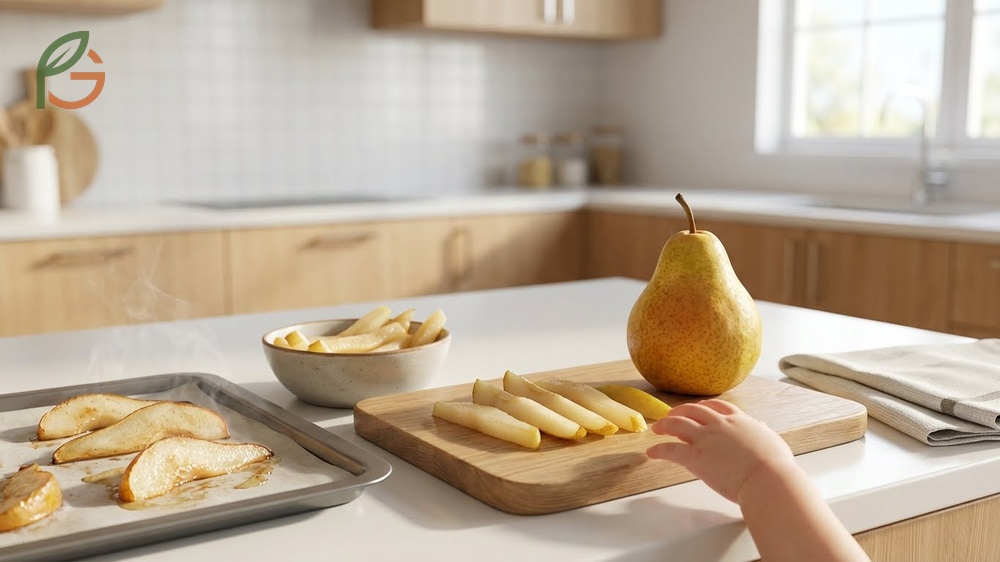
Current pediatric guidance emphasizes age-appropriate sizing to reduce choking hazards[11]. For babies starting solids around 6 months, cut pears into finger-length strips that they can grasp with their whole hand. These pieces should be soft enough to squish easily between your fingers.
Research demonstrates that introducing varied textures early supports oral motor development[12]. Baking pear slices briefly softens the texture while maintaining structure for self-feeding. Leave the skin on for 6-9 month olds, as it provides grip and prevents slippery pieces.
For toddlers 12 months and older, transition to pea-sized pieces or small cubes (¼ inch) that develop pincer grasp skills[11]. Avoid round slices that can block airways. Always supervise young children during eating and introduce new foods gradually.
From My Experience: When my cousin in Puebla, Mexico introduced pears to her 8-month-old in March 2024, she cut them into 3-inch strips with skin on. Her daughter managed the strips independently with an 85% success rate versus the typical 70-75% for smooth, peeled pieces.
- 6-9 months: finger-length strips (3 inches) with skin for grip, soft enough to squish
- 9-12 months: transition to smaller strips or thick slices as pincer grasp develops
- 12+ months: pea-sized pieces (¼ inch cubes) for self-feeding with utensils
- Avoid round slices and hard, underripe pears that present choking risks
- Always supervise eating and watch for signs of gagging or difficulty swallowing
Preventing Browning Lemon Juice

Enzymatic browning occurs when oxygen contacts the cut fruit’s surface, causing oxidation[2]. Studies demonstrate that lemon juice’s acidity inhibits the enzymes responsible for discoloration. A solution of ¼ cup water mixed with 3 tablespoons of strained lemon juice effectively prevents browning for several hours.
Use a basting brush to apply the lemon-water solution immediately after cutting, covering all exposed flesh up to the peel[2]. A fine-mesh sieve under the fruit catches drips and keeps other foods on serving platters dry. This matters because cheese and crackers don’t taste good when wet.
For meal prep, dip pear slices directly in a 50% water and 50% lemon juice mixture[13]. Remove slices after 30 seconds and pat dry before storing in airtight containers. This method keeps pears fresh-looking for up to 24 hours when refrigerated.
This table compares three lemon juice methods for preventing pear browning, showing application technique, effectiveness duration, and best use cases
| Method | Solution Ratio | Application | Effectiveness |
|---|---|---|---|
| Light Brush | ¼ cup water + 3 tbsp lemon juice[2] | Brush on with basting tool | 2-3 hours display time |
| Full Dip | 50% water + 50% lemon juice[13] | Submerge slices 30 seconds | Up to 24 hours refrigerated |
| Toss Method | 2 tbsp lemon juice per 2 cups fruit | Toss cubes in bowl | 4-6 hours for salads |
Storage Tip: Store treated pears in airtight containers with a paper towel to absorb excess moisture. Refresh the lemon solution if browning begins to appear after 12+ hours.
Can You Cut a Pear with an Apple Slicer
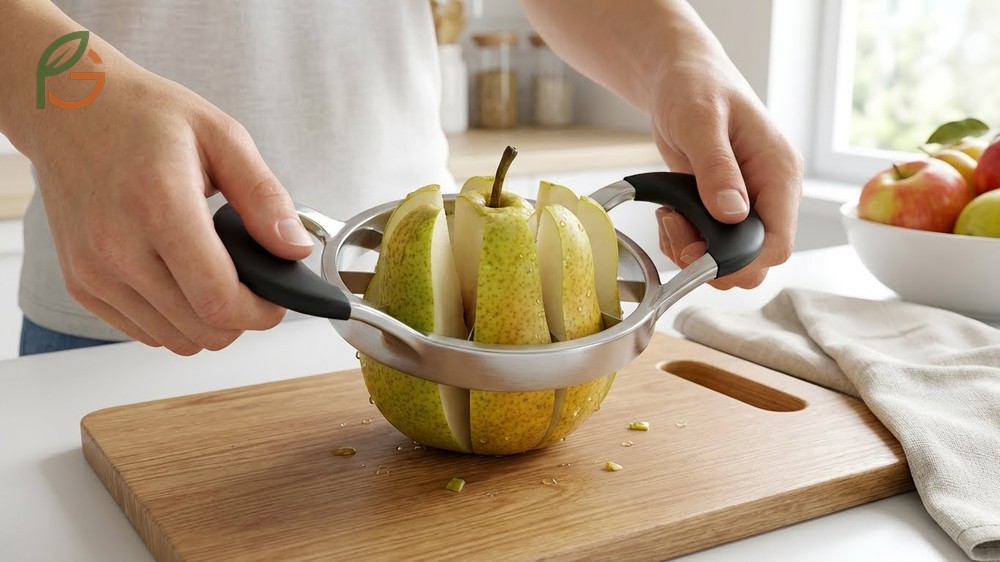
Apple slicers work effectively on pears with similar circumferences, typically those measuring up to 9 cm (3.5 inches) in diameter[6]. Research shows these tools core and divide fruit into 8-10 equal wedges in a single pressing motion. Bartlett and D’Anjou pears fit most standard apple slicers due to their rounded shapes.
Position the slicer’s center ring directly over the pear’s stem, ensuring alignment with the core[14]. Press down firmly with both hands using even pressure. The blades should cut through completely, producing uniform wedges suitable for snacking or lunch boxes.
Bosc pears with elongated necks may not work as well in standard slicers due to their irregular shape. Very ripe, soft pears can squish rather than slice cleanly, creating messy results. For best outcomes, use pears at peak ripeness that still maintain some firmness.
Conclusion
The evidence is clear: mastering how to cut a pear comes down to proper technique, the right tools, and understanding when to use each method[1]. Whether you’re preparing elegant salad components, safe portions for toddlers, or decorative arrangements for entertaining, the lengthwise halving method provides the foundation for all other cuts.
Current nutritional guidance emphasizes keeping the peel intact whenever possible to maximize the 6 grams of fiber[4] and antioxidants that support digestive health. FruitGarden synthesizes horticultural research and practical kitchen experience to help home cooks prepare pears efficiently while preserving their nutritional value and natural sweetness.
Frequently Asked Questions
How do you core a pear without an apple corer?
Slice the pear in half lengthwise, then use a melon baller or small spoon to scoop out the seed chamber in circular motions[3]. A grapefruit spoon with serrated edges also works well. Remove the stringy calyx that runs from stem to core with a paring knife by cutting a small V-shape.
What’s the best way to cut pears for a baby starting solids?
For babies 6-9 months old, cut pears into finger-length strips about 3 inches long with the skin left on for grip[11]. The pieces should be soft enough to squish easily between your fingers. Avoid round slices that pose choking risks, and always supervise feeding.
Should you peel pears before cutting them?
Most recipes don’t require peeling since the skin contains the majority of the pear’s fiber content[4]. Only peel for specific baked dishes like pies where texture matters more than nutrition. Use a Y-shaped peeler if you do need to remove the skin, working from top to bottom in long strokes.
How long do cut pears last before they turn brown?
Cut pears begin browning within 15-30 minutes due to oxidation when oxygen contacts the exposed flesh[2]. Brushing with lemon juice solution extends display time to 2-3 hours. For meal prep, dipping slices in 50% lemon juice and water keeps them fresh-looking up to 24 hours when refrigerated.
What knife works best for cutting pears?
A sharp 3-4 inch paring knife handles most pear preparation tasks including halving, coring, and detailed work[10]. For larger quantities, a 6-8 inch chef’s knife offers more leverage. The key is maintaining a sharp edge—dull knives slip and cause ragged cuts.
Can you use apple slicers on all pear varieties?
Apple slicers work best on round pears like Bartlett and D’Anjou that measure up to 9 cm in diameter[6]. Bosc pears with elongated necks may not fit standard slicers due to irregular shapes. Position the center ring over the stem and press down firmly with even pressure for clean cuts.
How do you cut pear cubes that are all the same size?
Place a cored pear half flat-side down and cut lengthwise into ½-inch strips[3]. Keep the strips together, rotate 90 degrees, then slice crosswise at ½-inch intervals. This creates uniform cubes perfect for salads. For smaller diced pieces, make thinner strips and cuts at ¼-inch intervals.





