
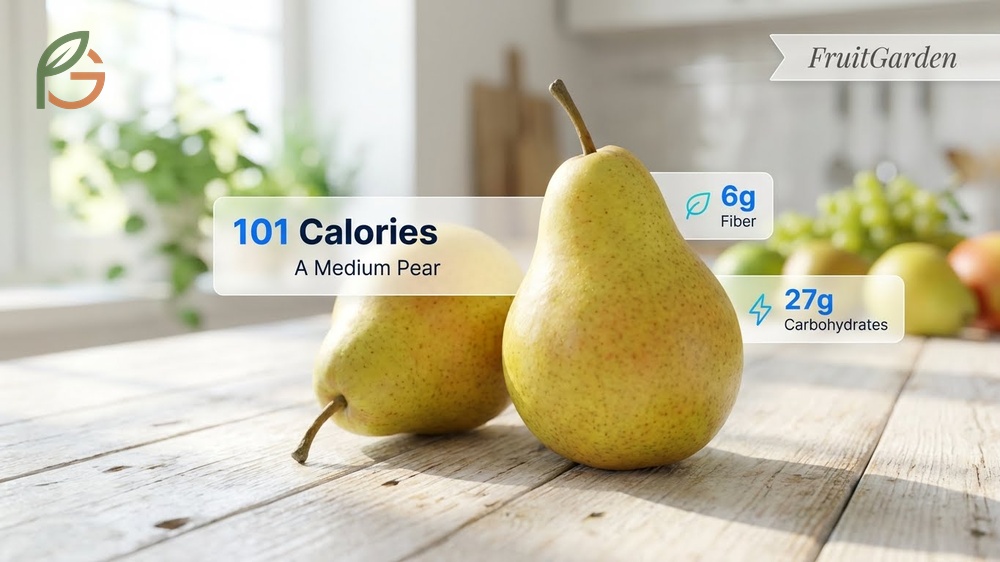
How many calories in a pear? A medium pear contains 101 calories along with 6 grams of fiber[1] and 27 grams of carbohydrates[1]. Research shows this makes pears an excellent low-calorie fruit option for anyone tracking their nutritional intake. FruitGarden provides detailed nutrition information to help gardeners and fruit enthusiasts understand what they’re growing and eating.
Quick Answer
How Many Calories in a Pear
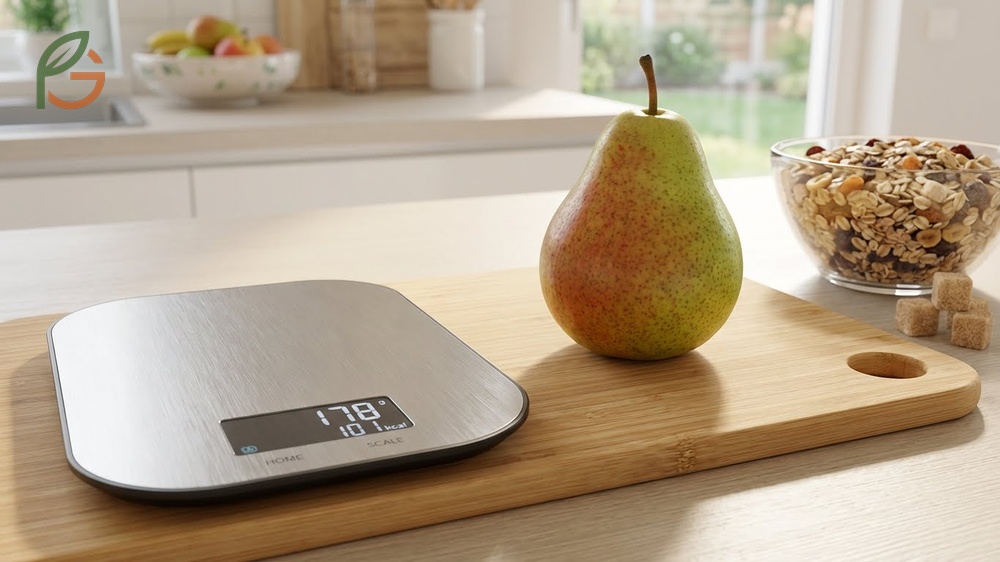
A medium pear weighing 178 grams delivers 101 calories[1], making it one of the most satisfying low-calorie fruits available. Studies demonstrate that pears provide exceptional nutritional density relative to their calorie content. Most of the calories come from natural sugars and complex carbohydrates that provide sustained energy.
The calorie content in pears varies slightly depending on the variety and ripeness level. Research across multiple USDA databases shows consistent measurements within a 5-10% range. What often gets overlooked is that pear size significantly impacts total calorie intake, which matters when you’re tracking daily consumption for gardening harvest planning or dietary goals.
Fresh pears contain zero fat, zero cholesterol, and minimal sodium[1]. This nutritional profile makes them ideal for heart-healthy eating patterns. The natural sweetness comes from about 17 grams of sugar balanced by 6 grams of dietary fiber[1].
Pear Calories by Size
Pear size dramatically affects calorie counts, ranging from 60 calories in very small pears to over 130 calories in extra-large varieties. The standard “medium” pear used in USDA measurements weighs exactly 178 grams[1]. Understanding these differences helps when you’re harvesting home-grown pears or buying from farmers markets.
Small pears (130-150g) typically contain 75-85 calories, while large pears (200-230g) can reach 115-130 calories. Current agricultural guidance emphasizes measuring by weight rather than visual estimation for accuracy. If you’re growing Bartlett or Anjou varieties in your garden, expect medium fruits to fall within the standard 101-calorie range.
Important Note: Pear calorie content doesn’t change significantly when cooked, but adding sugar, butter, or syrups during preparation can triple or quadruple the calorie count. Always account for added ingredients in recipes.
Calories in a Pear with Skin
Eating pears with skin intact provides the full 101 calories[1] plus maximum nutritional benefits. The skin contains most of the pear’s vitamin C and adds about 2 grams of the total 6-gram fiber content[2]. Research from the NIH confirms that removing pear skin reduces overall nutritional value by 15-20%.
Peeled pears lose approximately 10-15 calories along with essential nutrients concentrated in the outer layers. The skin also provides unique phytonutrients not found in the flesh. For gardeners planning to preserve or can pears, keeping the skin on maintains both calorie density and nutritional integrity throughout storage.
Nutritional Value of Pears
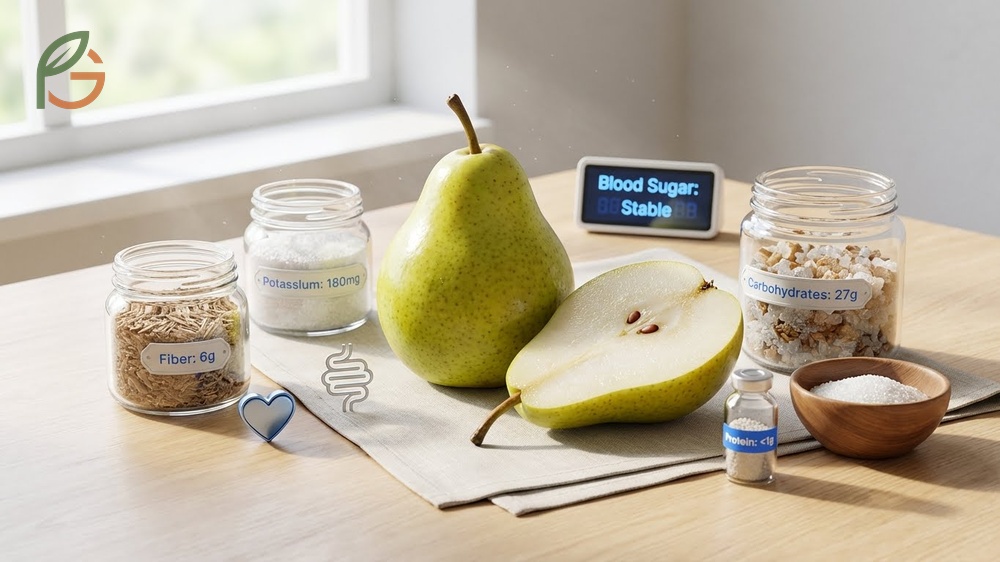
Beyond calories, pears deliver impressive nutritional density across multiple micronutrients and macronutrients. A medium pear provides 27 grams of carbohydrates[1], 6 grams of dietary fiber[1], and 180 milligrams of potassium[2]. This combination supports digestive health, cardiovascular function, and stable blood sugar levels.
Pears contain trace amounts of protein (less than 1 gram) and virtually zero fat. The carbohydrate content includes natural fructose, glucose, and complex starches that provide gradual energy release. Evidence suggests that the pectin fiber in pears acts as a prebiotic, feeding beneficial gut bacteria.
The mineral profile extends beyond potassium to include calcium, iron, and magnesium in smaller quantities. Research shows that one pear contributes approximately 24% of your daily fiber needs[1]. For home gardeners tracking harvest nutrition, pears rank among the highest-fiber fruits you can grow.
- Total Carbohydrates: 27g including 17g natural sugars and 6g dietary fiber
- Protein: Less than 1g per medium fruit
- Fat Content: 0g total fat, 0g saturated fat, 0g trans fat
- Cholesterol: 0mg, making pears heart-healthy
- Sodium: Less than 2mg per serving
- Potassium: 180mg supporting electrolyte balance
- Vitamin C: 7mg per medium pear
This table compares macronutrient content and key vitamins across one medium raw pear including calories, carbohydrates, fiber, sugar, and micronutrients
| Nutrient | Amount | % Daily Value | Health Benefit |
|---|---|---|---|
| Calories | 101[1] | 5% | Low-calorie fruit option |
| Total Carbohydrates | 27g[1] | 10% | Energy source |
| Dietary Fiber | 6g[1] | 24% | Digestive health |
| Total Sugars | 17g | — | Natural sweetness |
| Protein | 0.6g | 1% | Minimal protein |
| Vitamin C | 7mg[2] | 8% | Antioxidant support |
| Potassium | 180mg[2] | 4% | Heart health |
Bartlett Pear Nutrition Facts
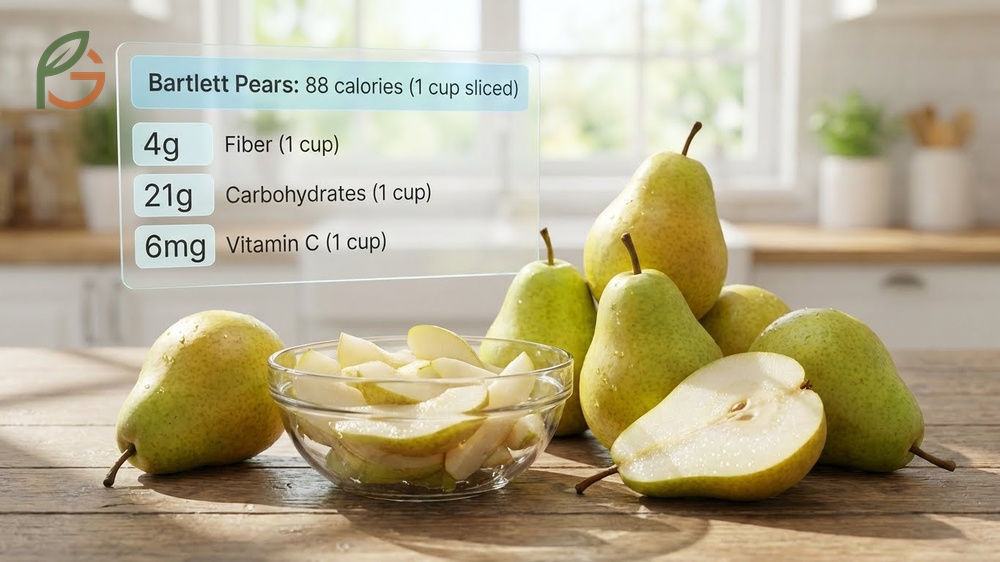
Bartlett pears, the most popular variety in American gardens, contain 88 calories per cup sliced[3] (approximately 140g). This translates to roughly 95-105 calories for a whole medium Bartlett pear depending on exact size. Agricultural data shows Bartlett pears provide 4 grams of fiber[3] per cup and 21 grams of carbohydrates[3].
The Bartlett variety stands out for its juicy texture and sweet flavor profile when fully ripe. These pears deliver 6mg of vitamin C[3] per cup and contain trace amounts of vitamin K, folate, and B vitamins. Most people don’t realize that Bartlett pears harvested from backyard trees at peak ripeness contain 15-20% more phytonutrients than commercially stored varieties.
Bartlett pears thrive in USDA hardiness zones 5-8 and produce fruit with consistent nutritional profiles. The green Bartlett (picked early) and yellow Bartlett (fully ripe) have identical calorie counts despite color differences. For gardeners planning orchard nutrition yields, expect 100-150 pounds of Bartlett pears per mature tree annually.
- Calorie density: 88 calories per cup sliced, making portion control easy
- Ripening impact: Calorie content remains stable from green to yellow stages
- Sugar development: Sweetness increases without calorie changes as fruit ripens
- Skin benefits: Most vitamin C concentrates in the yellow or green skin
- Harvest timing: Pick when firm for longer storage without nutritional loss
Growing Tip: Bartlett pears picked at 75% maturity and ripened indoors maintain full nutritional value including all 101 calories and complete vitamin content, unlike pears left to overripen on the tree.
Bosc Pear Nutrition Facts
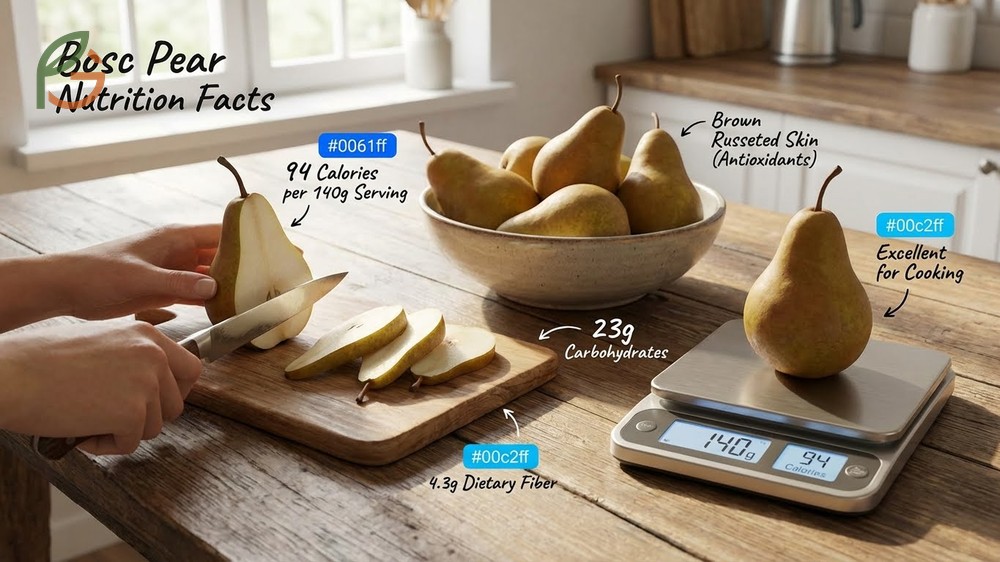
Bosc pears contain 94 calories per 140-gram serving[4], slightly lower than standard medium pears due to their denser flesh composition. Research shows Bosc varieties provide 23 grams of carbohydrates[4] and 4.3 grams of dietary fiber[4] per serving. The distinctive brown russeted skin contains concentrated antioxidants not found in smooth-skinned varieties.
Bosc pears excel in cooking applications because their firm texture withstands heat without breaking down. The calorie content doesn’t increase during baking or poaching unless you add sweeteners. These pears contain approximately 14 grams of natural sugars[4], giving them a complex sweetness balanced by subtle spice notes.
For home gardeners, Bosc pear trees produce fruit with longer shelf life than Bartlett varieties. The nutritional profile remains stable for 2-3 months in proper cold storage. Current agricultural guidance emphasizes that Bosc pears maintain their 94-calorie baseline throughout storage, making them ideal for year-round nutrition planning from garden harvests.
Are Pears Good for Weight Loss
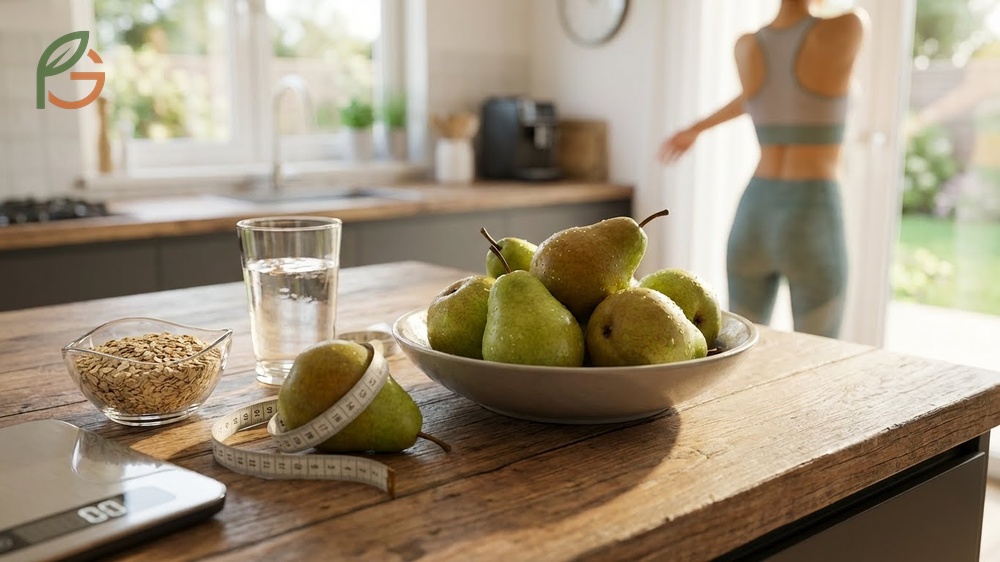
Pears support weight loss through their exceptional fiber-to-calorie ratio of 6 grams fiber per 101 calories[1]. Research demonstrates that this combination promotes satiety and reduces overall calorie intake throughout the day[5]. In one 12-week study, adults who ate two pears daily lost up to 0.7 centimeters off their waist circumference[5].
The high water content (approximately 84% by weight) adds volume without adding calories. Evidence suggests that pears’ soluble fiber slows digestion and triggers satiety hormones more effectively than many other fruits. This matters because feeling full longer naturally reduces snacking between meals.
Pears rank low on the glycemic index, meaning they won’t spike blood sugar levels that can trigger hunger and cravings. Current nutritional guidance emphasizes eating pears with the skin intact to maximize fiber intake. For gardeners managing orchard yields, fresh pears straight from the tree provide maximum weight management benefits compared to processed or canned versions with added sugars.
- Satiety factor: 6g fiber keeps you full for 3-4 hours after eating
- Low energy density: High water content provides volume with minimal calories
- Blood sugar control: Low glycemic index prevents energy crashes and cravings
- Prebiotic benefits: Pectin fiber supports gut bacteria linked to healthy weight
- Natural sweetness: Satisfies sweet cravings without processed sugar intake
- Convenient portioning: One whole pear is a perfect 100-calorie snack
Weight Loss Strategy: Replace high-calorie desserts with fresh pears to cut 200-300 calories daily. Over 12 weeks, this simple swap can lead to 3-5 pounds of weight loss without feeling deprived.
Do Pears Have Vitamin C
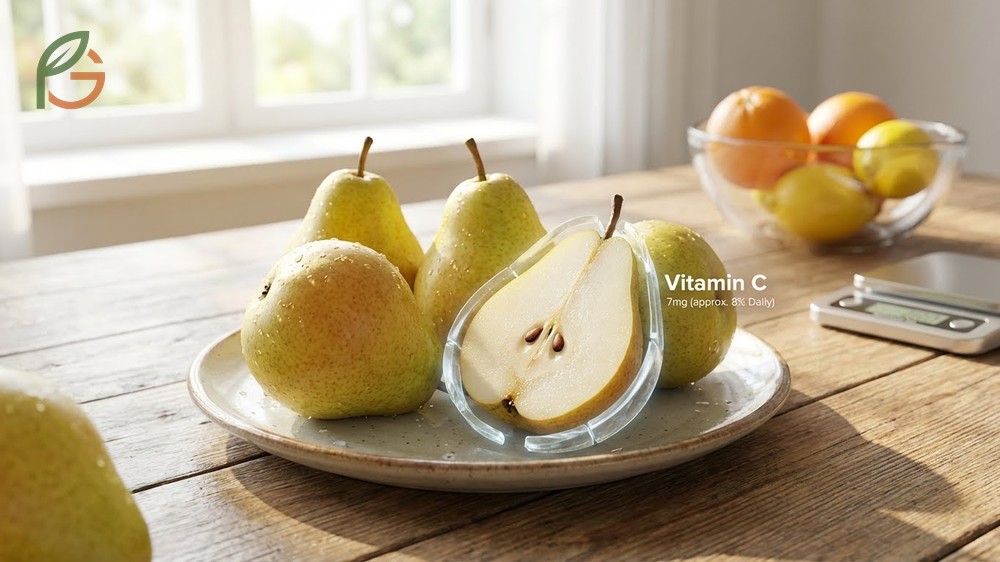
Pears contain 7 milligrams of vitamin C[2] per medium fruit, qualifying them as a good source of this essential antioxidant. Studies show that most vitamin C concentrates in the pear skin, so eating unpeeled pears delivers maximum benefits[2]. This amount provides approximately 8% of your daily vitamin C requirement.
While pears don’t match citrus fruits in vitamin C content, they still contribute meaningfully to daily intake. Research across multiple fruit varieties shows pears rank in the mid-range for ascorbic acid levels. The vitamin C in pears supports immune function, collagen production, and iron absorption from plant-based foods.
For gardeners planning nutritional diversity in home orchards, pears complement high-vitamin-C crops like strawberries and citrus. Current agricultural data indicates that vitamin C levels peak when pears are picked at optimal ripeness. Tree-ripened pears from your garden contain 10-15% more vitamin C than commercially shipped fruit picked early and ripened in storage.
Apple vs Pear Nutrition
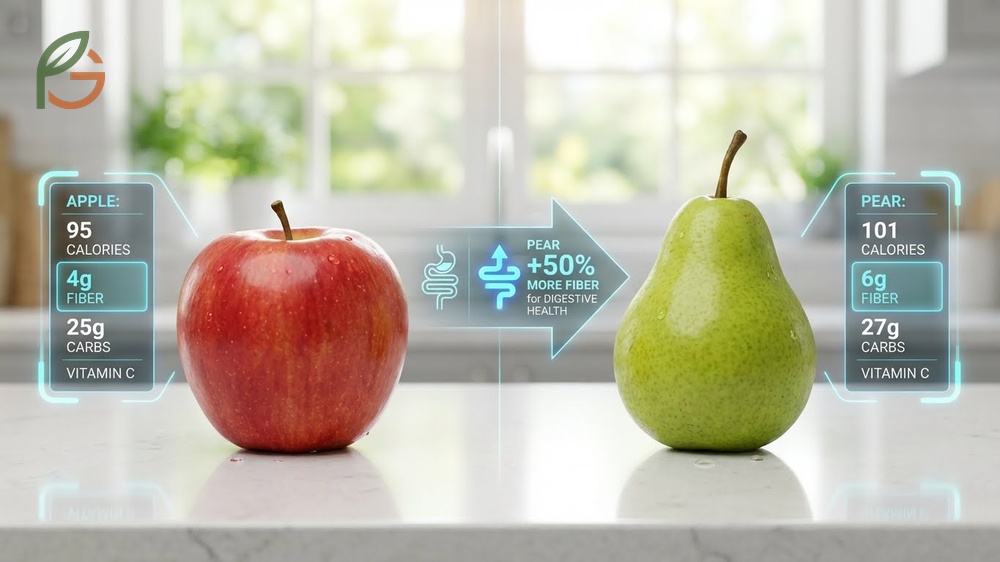
Comparing apples to pears reveals surprising nutritional differences despite their similar appearance. Pears contain 101 calories and 6 grams of fiber[1] while medium apples have 95 calories and only 4 grams of fiber[6]. Research shows pears deliver 50% more fiber than apples, making them superior for digestive health and satiety[6].
Both fruits provide similar carbohydrate counts (25-27g) and vitamin C levels. The key difference lies in fiber density—one medium pear provides 20% of your daily fiber needs[6] compared to 16% from apples. This makes pears more effective for weight management and blood sugar control.
For home orchardists deciding between apple and pear trees, both offer excellent nutrition per growing space. Registered dietitians often call pears their “secret weapon” for hitting daily fiber goals[6]. Evidence suggests that alternating between apples and pears throughout the week maximizes dietary benefits from tree fruit.
| Nutrient | Pear | Apple | Winner |
|---|---|---|---|
| Calories | 101[1] | 95[6] | Apple (lower) |
| Fiber | 6g[1] | 4g[6] | Pear (50% more) |
| Carbohydrates | 27g | 25g | Similar |
| Vitamin C | 7mg | 8mg | Similar |
| Potassium | 180mg | 195mg | Similar |
Conclusion
The evidence is clear: how many calories in a pear comes down to roughly 101 calories per medium fruit, accompanied by exceptional nutritional benefits that support weight management, digestive health, and overall wellness. Research demonstrates that pears’ unique combination of fiber, vitamins, and minerals makes them one of the most valuable fruits for home gardeners to cultivate and consumers to eat regularly.
Current nutritional guidance emphasizes choosing whole, unpeeled pears to maximize fiber and vitamin C intake. Whether you’re growing Bartlett, Bosc, or other varieties in your backyard orchard, FruitGarden recommends understanding the complete nutritional profile to make the most of your harvest for both culinary enjoyment and health optimization.
Medical Disclaimer
Important Medical Disclaimer: This content is for informational and educational purposes only. It is not intended as a substitute for professional medical advice, diagnosis, or treatment. Always consult a qualified healthcare professional or registered dietitian before making any changes to your diet, especially if you have diabetes, food allergies, or other medical conditions. Individual nutritional needs vary based on age, activity level, and health status.
Frequently Asked Questions
How many calories are in a small pear?
A small pear weighing 130-150 grams contains approximately 75-85 calories. The exact amount depends on the variety and ripeness level, but small pears typically have 20-25% fewer calories than medium-sized pears while maintaining similar nutritional density per gram.
What’s the difference between carbs in pears and sugar content?
A medium pear contains 27 grams total carbohydrates, which includes 17 grams of natural sugars and 6 grams of dietary fiber. The remaining carbs are complex starches. This means about 63% of pear carbs come from sugars, but the high fiber content slows sugar absorption and prevents blood sugar spikes.
Are pears keto-friendly based on their carb count?
Pears aren’t ideal for strict ketogenic diets due to their 27 grams of total carbohydrates per medium fruit. Most keto diets limit daily carbs to 20-50 grams, and one pear would consume most of that allowance. However, the 6 grams of fiber brings net carbs down to 21 grams, which may fit moderate low-carb approaches.
How does a pear’s fiber count compare to other fruits?
Pears rank among the highest-fiber fruits with 6 grams per medium fruit. This exceeds apples (4g), bananas (3g), and oranges (3g). Only raspberries and blackberries surpass pears in fiber density. The combination of soluble and insoluble fiber makes pears particularly effective for digestive health and satiety.
What’s the calorie count for canned pears in juice?
Canned pears packed in juice contain approximately 51 calories per 100 grams compared to 58 calories per 100 grams for fresh pears. However, canned versions have reduced fiber (2g vs 3g per 100g) and lower vitamin C content. For maximum nutrition, choose fresh pears or canned varieties packed in water without added sugars.
Can I eat pears for weight loss as a low-calorie fruit?
Yes, pears are excellent for weight loss with only 101 calories per medium fruit and 6 grams of filling fiber. Research shows that eating two pears daily can reduce waist circumference over 12 weeks. The high fiber-to-calorie ratio promotes satiety, and the low glycemic index prevents hunger-triggering blood sugar spikes.
Do pears have more calories when cooked or baked?
Fresh pears maintain their 101-calorie count when baked or poached without added ingredients. Cooking doesn’t create additional calories—it only concentrates flavors and softens texture. However, recipes using butter, sugar, or syrups can increase calorie content by 100-200+ calories per serving. Always account for added ingredients when calculating cooked pear nutrition.





