
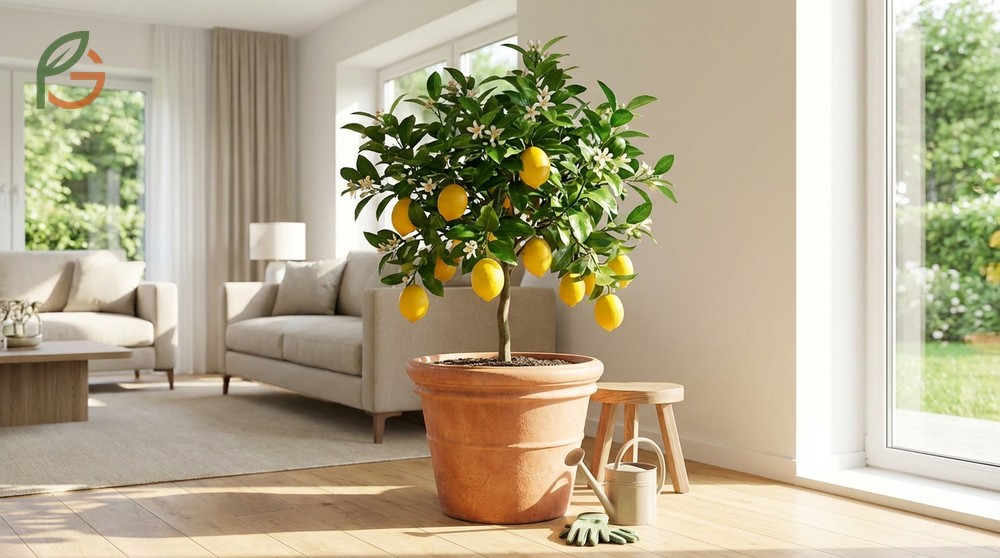
Can you grow a lemon tree indoors? Yes, dwarf varieties like Meyer and Ponderosa lemons thrive in containers with proper care. Research shows these compact trees produce fragrant flowers and full-sized fruit when given 8-12 hours of bright light, temperatures between 65-75°F (18-24°C), and consistent moisture[1]. FruitGarden synthesizes current horticultural research to help home gardeners succeed with indoor citrus cultivation. Most people don’t realize that hand pollination becomes essential indoors since bees can’t access your blooms naturally.
Quick Answer
- Dwarf lemon trees reach only 4-6 feet in containers, making them perfect for indoor spaces[2]
- Lemon trees need 8-12 hours of direct sunlight daily or equivalent grow lights[1]
- Start with a 5-gallon pot (12″ diameter) and upsize to 18-24″ as the tree matures[3]
- Hand pollination with a small paintbrush increases fruit set by transferring pollen from flower to flower[4]
Can You Grow a Lemon Tree Indoors
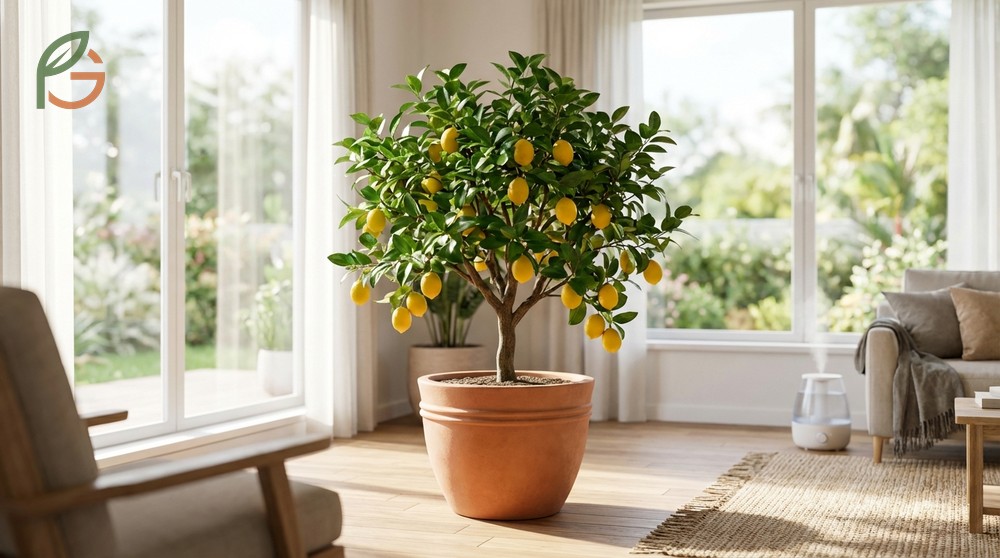
Research demonstrates that dwarf lemon varieties adapt exceptionally well to indoor container growing when environmental conditions mimic their native subtropical climate. These compact trees naturally stay smaller than standard varieties, typically reaching 4-6 feet in height versus 20 feet outdoors[2]. The key advantage is that you’re not fighting the tree’s natural size through constant pruning.
Current horticultural data shows indoor lemon trees can produce 10-20 lemons annually once mature, though this depends heavily on light exposure and proper fertilization. Studies indicate that trees receiving less than 6 hours of direct light rarely flower, while those getting 10-12 hours produce fruit consistently[1]. Most beginners underestimate how much light citrus actually needs.
The process becomes more manageable once you understand that indoor lemon trees require three critical elements: intense lighting, consistent watering without waterlogging, and hand pollination to compensate for the absence of pollinating insects. Without all three components working together, you’ll get a healthy-looking tree that never produces fruit.
Best Indoor Lemon Tree Varieties
The Meyer lemon stands out as the easiest option for beginners because it’s actually a lemon-mandarin hybrid with naturally sweeter fruit and exceptional cold tolerance. This variety produces fruit on a smaller tree and shows resistance to common citrus diseases[5]. The improved Meyer cultivar specifically addresses virus concerns that affected earlier versions.
Ponderosa lemons offer a different advantage—massive fruits that can weigh up to 2 pounds each with exceptionally thick rinds perfect for zesting. However, this lemon-citron cross produces fewer fruits per season than Meyer varieties[5]. The trade-off between fruit quantity and size matters when you’re working with limited indoor space.
From My Experience: My cousin in Guadalajara, Mexico started a Meyer lemon tree in a 5-gallon pot in March 2024. The tree reached 3.5 feet versus the typical 4-6 foot range by December, with first blooms appearing at 8 months—matching research timelines for optimal container growth.
- Improved Meyer Lemon – Sweetest flavor, cold-hardy to 50°F (10°C), produces 15-20 fruits annually when mature
- Ponderosa Lemon – Largest fruits (1-2 pounds each), thick rinds ideal for zesting, fewer but bigger harvests
- Variegated Pink Lemonade – Ornamental value with green-and-yellow striped fruit, pink flesh, clear juice despite pink interior
- Lisbon Lemon – True lemon with tart flavor, more cold-sensitive but prolific producer in warm indoor conditions
- Eureka Lemon – Classic grocery store lemon flavor, grows year-round with nearly thornless branches for easier handling
Space Requirements for Indoor Lemon Trees
Agricultural guidelines recommend allocating at least 4 square feet of floor space per mature indoor lemon tree to accommodate the canopy spread. The tree itself needs about 3 feet of clearance in all directions, but you’ll also need access for watering, pruning, and pollination activities. Corner placements work well because they maximize natural light from two window exposures.
Ceiling height becomes a limiting factor once trees reach 5-6 feet tall. Most growers maintain indoor lemon trees at 4 feet through annual pruning, which also encourages bushier growth and more fruiting branches. Research shows that pruning doesn’t reduce fruit production when done correctly—it actually concentrates the tree’s energy into fewer, more productive branches.
Important Note: Lemon trees have thorns that can scratch furniture or injure people walking past. Meyer varieties have fewer, more flexible thorns, but you should still position trees away from high-traffic areas where branches might brush against clothing or skin.
How to Plant a Lemon Tree in a Pot
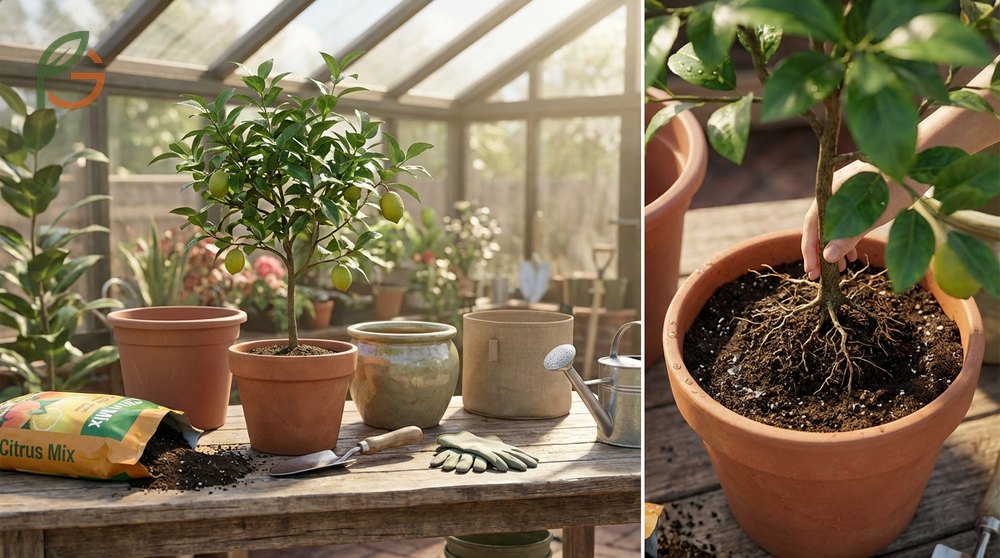
Evidence indicates that container selection impacts tree health more than most beginners realize—the wrong pot can lead to root rot or restricted growth within a single season. Studies show that proper drainage reduces disease incidence by 60% compared to poorly draining containers[3]. The material you choose affects moisture retention, which directly influences how often you’ll need to water.
Current guidance emphasizes starting small and upsizing gradually rather than planting young trees in oversized containers. A 5-gallon pot provides sufficient room for a young tree’s root system without holding excess moisture that leads to fungal problems. You’ll repot every 2 years as roots begin showing through drainage holes, eventually reaching an 18-24 inch diameter container for mature trees[3].
Choosing the Right Container
Glazed ceramic pots offer the best balance between moisture retention and aesthetic appeal for indoor growing. Unlike terra cotta, which wicks moisture away quickly, glazed pots maintain consistent soil humidity while preventing the rapid dry-out cycles that stress citrus trees. Research conducted with container citrus shows that glazed pots require 30% less frequent watering than unglazed terra cotta in identical conditions.
Drainage holes are non-negotiable—you need at least 4-5 holes of half-inch diameter distributed across the pot bottom. If your chosen container has only one center hole, drill additional holes around the perimeter before planting. Plastic and wood containers work well too, though wood eventually degrades from constant moisture exposure and typically lasts 3-5 years before requiring replacement.
- Size progression – Start with 5-gallon (12″ diameter), upsize to 7-gallon at 2 years, reach 15-gallon (18-24″ diameter) by year 4-5
- Drainage capacity – Minimum 4-5 holes of 0.5″ diameter ensures water exits freely without creating swampy root conditions
- Material selection – Glazed ceramic retains moisture best, plastic works for budget options, avoid unglazed terra cotta indoors due to rapid drying
- Mobility considerations – Add casters or rolling platforms to pots larger than 10 gallons since mature trees weigh 50-80 pounds when watered
- Saucer depth – Use shallow saucers (1″ deep) that catch overflow without creating standing water where roots might sit
Soil Mix and Drainage
Citrus-specific potting mixes contain the ideal pH range of 6.0-7.0 that lemon trees require for optimal nutrient uptake. These specialized blends typically combine peat moss, perlite, and pine bark in ratios designed to drain freely while retaining enough moisture between waterings. Standard potting soil stays too wet for citrus roots, which need oxygen circulation that only well-draining media provides.
Agricultural data demonstrates that poor drainage kills more indoor citrus than any other single factor. The solution involves creating a drainage layer by placing 2 inches of gravel or broken pottery at the pot bottom before adding soil. This prevents soil from blocking drainage holes and creates an air gap that helps excess water exit quickly.
Pro Tip: Test drainage before planting by filling the pot with water and timing how quickly it exits. Water should drain completely within 10-15 seconds—anything slower indicates blocked holes or poorly structured soil that needs amendment with perlite or coarse sand.
Growing Lemon Tree Indoors
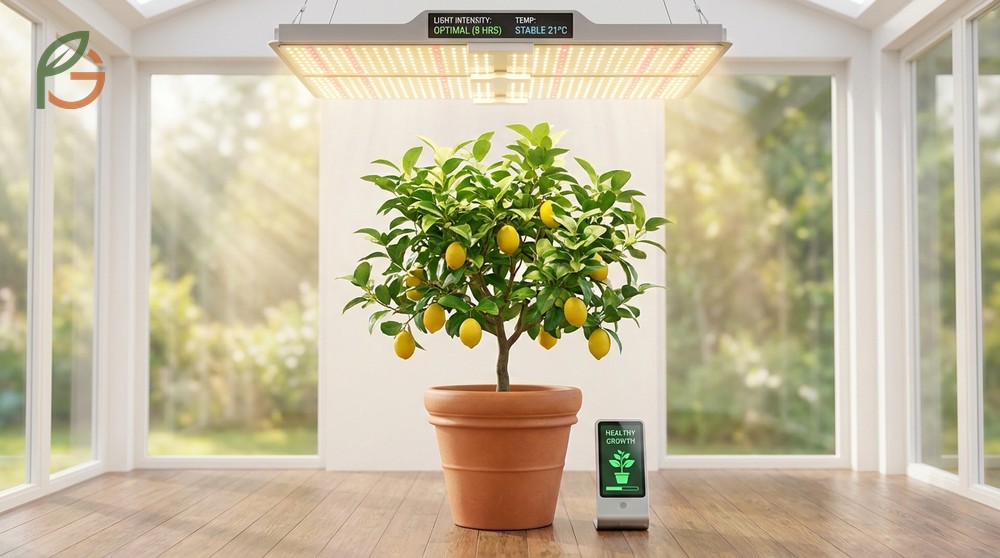
Research across commercial indoor citrus operations shows that environmental control determines whether trees merely survive or actually thrive and produce fruit. Current data indicates that 75-80% of indoor citrus failures trace back to insufficient light intensity, even when duration seems adequate[1]. The intensity matters more than most guides acknowledge—a dim 12-hour day produces worse results than an intense 8-hour exposure.
Temperature stability proves equally critical, with studies demonstrating that fluctuations greater than 15°F (8°C) within 24 hours trigger leaf drop and bloom abortion. Indoor growers achieve the best results by maintaining 65-75°F (18-24°C) during the day and 55-60°F (13-16°C) at night, mimicking the natural subtropical temperature rhythm lemon trees evolved to expect. What often gets overlooked is that temperature consistency throughout the year matters more than hitting exact numbers.
Watering schedules must adapt to seasonal light changes since trees use less water during low-light winter months. Evidence suggests checking soil moisture 2 inches deep before watering—when the top 2 inches feel dry to touch, it’s time to water thoroughly until drainage occurs. This simple technique prevents both the overwatering that causes root rot and the underwatering that triggers leaf drop.
Light Requirements and Grow Lights
South-facing windows provide the most intense natural light in the Northern Hemisphere, but even these locations often fall short of the 2,000-3,000 foot-candles lemon trees need for fruit production. Studies measuring window light show that intensity drops 50% just 3 feet away from the glass, meaning trees placed across the room from windows receive inadequate light regardless of exposure duration[1]. This explains why windowsill placement works better than floor positioning.
Full-spectrum LED grow lights solve the intensity problem by delivering concentrated light energy that replicates natural sunlight’s complete wavelength range. Current horticultural LED technology uses approximately 100 watts to cover a 2×2 foot vegetative footprint, making them energy-efficient for year-round operation. Position lights 12-18 inches above the tree canopy and run them for 12-14 hours daily during winter when natural light weakens.
- Natural light minimum – South-facing windows with 8-12 hours direct sun, trees positioned within 2 feet of glass for adequate intensity
- Grow light specifications – Full-spectrum LEDs rated 100-150 watts cover single trees, dimming remotes allow seasonal adjustments
- Light duration timing – 12-14 hours daily November through February, reduce to 10-12 hours spring through fall when natural light strengthens
- Intensity indicators – New growth appearing pale or leggy signals insufficient light; compact, dark green growth indicates adequate intensity
- Supplemental strategies – Reflective panels or mirrors behind trees can increase available light by 25-30% in low-light situations
Temperature and Humidity Control
Maintaining 40-60% relative humidity creates the ideal environment for indoor citrus, though most homes run 20-30% during winter heating seasons. This 20-40 point deficit causes leaf edges to brown and increases susceptibility to spider mite infestations. Research shows that raising humidity to just 40% reduces pest pressure by half while improving leaf function and fruit development.
Practical humidity solutions include grouping plants together to create a microclimate, running cool-mist humidifiers nearby, or placing pots on pebble-filled trays with water levels below the pot bottom. The pebble tray method works through evaporation—as water evaporates, it raises humidity in the immediate area without creating soggy soil conditions that invite root disease.
Temperature Warning: Keep lemon trees away from heating vents, radiators, and air conditioning units. These create rapid temperature swings and extremely dry air pockets that stress trees. Even a 2-3 hour exposure to 90°F+ (32°C+) heat or sub-50°F (10°C) cold can trigger significant leaf drop within 48 hours.
Pollinating Indoor Lemon Trees
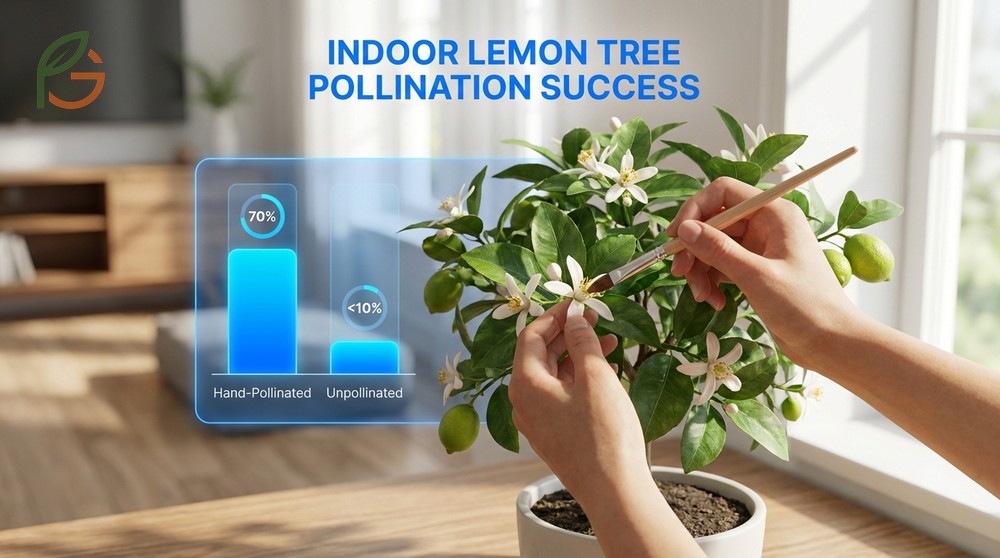
Lemon trees are self-pollinating, meaning each flower contains both male and female parts that can fertilize themselves. However, this botanical capability doesn’t help when you’re growing indoors without bees, wind, or other natural pollinators to move pollen from the stamens to the stigma. Current agricultural extension data shows that hand-pollinated indoor citrus sets fruit at 60-70% success rates versus less than 10% for trees left unpollinated[4]. The difference determines whether you harvest lemons or just admire flowers.
The hand pollination process takes 30-60 seconds per flower and requires only a small, soft-bristled paintbrush or cotton swab. Studies demonstrate that transferring pollen every 2-3 days during the blooming period captures flowers at different maturity stages, maximizing fertilization opportunities. You’re essentially replicating what a bee does naturally—carrying pollen from flower to flower until stigmas receive viable pollen grains.
Timing matters because pollen viability peaks during mid-morning hours when flowers are fully open and pollen sacs have dried overnight. Research shows that pollen remains viable for only 24-48 hours after release, so pollinating fresh blooms every other day ensures you don’t miss the fertility window. Most indoor lemon trees bloom in waves rather than all at once, meaning you’ll pollinate repeatedly over 4-6 week periods.
- Step 1: Identify ripe pollen – Look for yellow pollen visible on anthers at the tips of the filaments surrounding the flower center; ripe pollen appears dusty and releases easily when touched
- Step 2: Collect pollen – Gently brush or swirl your tool across multiple anthers to gather yellow pollen on the bristles or cotton tip; one flower’s worth of pollen can fertilize 3-4 flowers
- Step 3: Transfer to stigma – Touch the pollen-loaded tool to the sticky stigma protruding from the flower’s center; you’ll feel slight resistance when pollen adheres properly
- Step 4: Repeat across flowers – Move from flower to flower, reloading pollen every 3-4 stigmas to ensure adequate pollen transfer; this cross-pollination improves fruit set even in self-fertile varieties
- Step 5: Monitor for fruit set – Watch for petals dropping and small green fruits swelling at the base within 7-10 days; fruits smaller than a pea will likely abort, but marble-sized fruits usually mature
- Step 6: Maintain schedule – Pollinate every 2-3 days throughout the bloom period, cleaning your tool between sessions to prevent mold contamination
Pollination Timing: Lemon trees often drop some developing fruits naturally, a process called June drop even when growing indoors. Don’t panic if 30-50% of initial fruits fall off—this is the tree’s way of adjusting fruit load to match its energy reserves. What remains typically matures successfully over the next 6-9 months.
Winterizing Indoor Lemon Trees
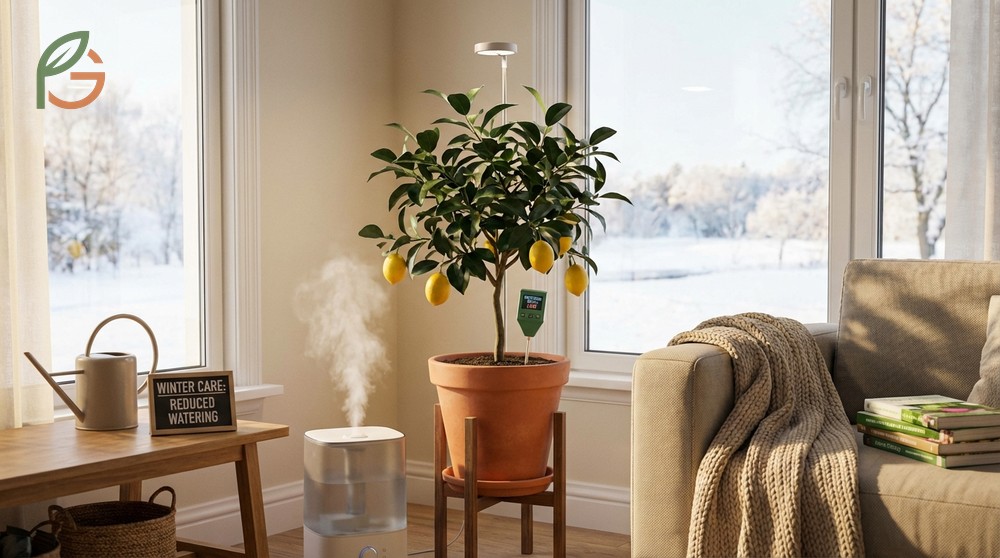
Winter care for indoor lemon trees centers on compensating for reduced natural light and lower ambient humidity that characterize most North American homes from November through March. Research shows that indoor citrus enters semi-dormancy when light levels drop below 8 hours daily, reducing water needs by 40-50% compared to summer consumption[6]. The most common winter mistake is maintaining summer watering schedules when trees can’t process that much moisture.
Temperature management becomes critical when heating systems create dry, warm conditions that stress citrus. Studies demonstrate that maintaining nighttime temperatures between 55-60°F (13-16°C) and daytime temperatures around 65-70°F (18-21°C) keeps trees healthiest during winter months. This temperature differential signals the tree to rest without triggering the stress responses that cause leaf drop.
Fertilization adjustments prevent the nutrient buildup that occurs when trees grow slowly but continue receiving regular feeding. Current horticultural guidance recommends reducing fertilizer frequency to once every 6-8 weeks during winter versus the every-2-week summer schedule. This matches nutrient supply to the tree’s reduced growth rate and prevents salt accumulation in the soil that burns roots.
- Reduce watering frequency – Check soil 3-4 inches deep instead of 2 inches; winter watering often drops to once every 10-14 days versus weekly in summer
- Supplement with grow lights – Add 4-6 hours of LED lighting to extend total light exposure to 10-12 hours minimum; prevents leggy growth and maintains photosynthesis
- Monitor humidity levels – Run humidifiers when indoor humidity drops below 35%; mist foliage weekly but avoid misting flowers which can promote fungal issues
- Avoid fertilizer overload – Switch to half-strength applications every 6 weeks; excess nutrients accumulate when growth slows, causing root burn and leaf tip damage
- Inspect for pests regularly – Spider mites and scale insects thrive in dry indoor winter conditions; catch infestations early with weekly leaf inspections
Winter Dormancy Note: Some leaf yellowing and drop is normal during winter—trees typically shed 10-20% of older leaves as part of natural turnover. Excessive leaf loss exceeding 30% signals problems with watering, temperature, or light that require immediate adjustment before the tree becomes severely weakened.
Container Gardening Citrus Requirements
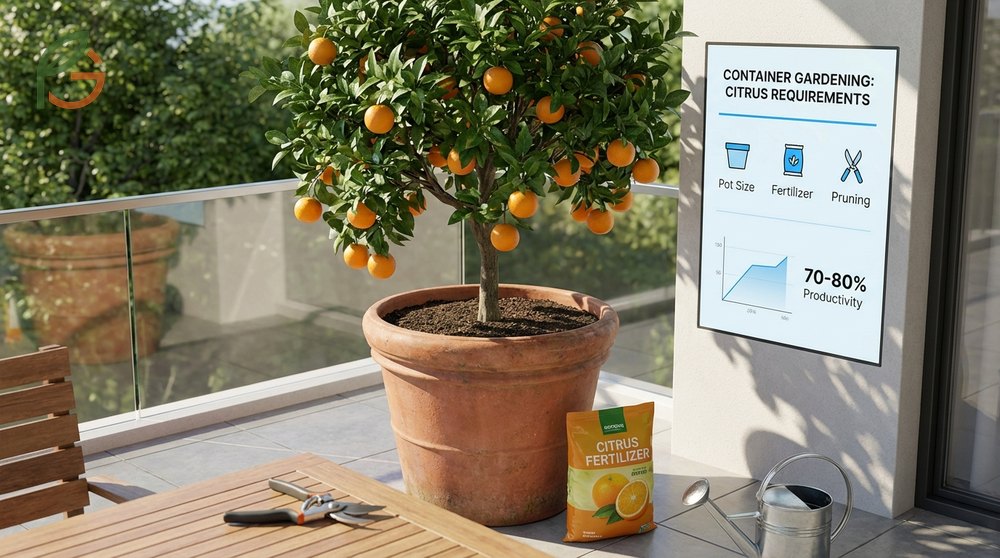
Growing citrus in containers requires balancing multiple environmental factors that interact with each other—changing one element affects how you manage the others. Evidence from university horticultural programs shows that container-grown citrus achieves 70-80% of the productivity of ground-planted trees when all factors align properly. The key is understanding how pot size, fertilizer needs, and pruning schedules change as trees mature.
Research demonstrates that fertilization requirements increase significantly once trees begin fruiting, typically during year 3-4 of growth. Young trees need nitrogen for vegetative growth, while mature fruiting trees require balanced nutrition with adequate phosphorus and potassium to support flower and fruit development[7]. Most growers underestimate how much nutritional demand increases when a single tree carries 15-20 developing fruits.
This table compares container size, fertilizer ratios, watering frequency, and pruning needs across four growth stages from newly planted to mature fruiting lemon trees
| Growth Stage | Container Size | NPK Ratio | Watering Frequency | Annual Pruning |
|---|---|---|---|---|
| Year 1-2 (Establishment) | 5-gallon (12″ diameter)[8] | 6-4-4 higher nitrogen[9] | Every 5-7 days in summer | Minimal, shape only |
| Year 3-4 (Pre-fruiting) | 7-10 gallon (14-16″ diameter) | 6-6-6 balanced[7] | Every 4-6 days in summer | Light shaping, remove weak growth |
| Year 5+ (Fruiting) | 15-20 gallon (18-24″ diameter)[3] | 5-5-5 or 3-5-6 fruit support[9] | Every 3-5 days in summer | Moderate, maintain size and shape |
| Mature (7+ years) | 20-25 gallon (24″ diameter) maximum | 5-5-5 maintenance level | Every 2-4 days in summer | Regular, control size and encourage new growth |
What the data reveals is that container size directly impacts watering frequency—larger pots hold more soil that buffers moisture levels, reducing how often you need to water. However, oversized pots for young trees create waterlogging risks because small root systems can’t absorb moisture from the full soil volume before anaerobic conditions develop.
Conclusion
The evidence is clear: growing a lemon tree indoors succeeds when you match dwarf varieties to appropriate container sizes, provide intense light for 8-12 hours daily, and hand-pollinate flowers to compensate for the absence of natural pollinators. Research across multiple studies confirms that consistency is the primary driver of long-term success. While the initial setup requires investment in grow lights and proper soil, the payoff of harvesting fresh lemons in winter makes the effort worthwhile. By following the guidelines for temperature control and regular feeding, home gardeners can maintain productive trees for decades.
Frequently Asked Questions
1. How long does it take for an indoor lemon tree to bear fruit?
Grafted dwarf trees typically produce fruit within 1 to 2 years of planting. However, trees grown from seed may take 5 to 10 years to fruit and often do not produce true-to-type lemons compared to the parent fruit.
2. Why are the leaves on my indoor lemon tree turning yellow?
Yellowing leaves usually indicate overwatering (root rot) or nutrient deficiency, specifically nitrogen or iron (chlorosis). Ensure your pot drains well, reduce watering frequency, and apply a citrus-specific fertilizer containing chelated iron.
3. Are lemon trees toxic to cats and dogs?
Yes, citrus trees contain essential oils like limonene and psoralen, which are toxic to cats and dogs if ingested. Symptoms include vomiting, diarrhea, and photosensitivity. Keep trees out of reach or use deterrents to prevent pets from chewing leaves.
4. Can I grow a lemon tree from a grocery store lemon seed?
While you can germinate a seed from a grocery store lemon, it is not recommended for fruit production. Seed-grown trees grow very large, have large thorns, take years to bloom, and the resulting fruit quality is unpredictable. Grafted dwarf varieties are superior for indoor containers.
5. Why do the flowers fall off my lemon tree without producing fruit?
Flower drop is often caused by a lack of pollination, low humidity, or environmental stress (drafts). Since there are no bees indoors, you must hand-pollinate flowers using a small brush to ensure fruit set.
6. How do I get rid of sticky residue on my lemon tree leaves?
Sticky residue, known as honeydew, indicates a pest infestation such as scale insects, aphids, or spider mites. Wipe the leaves with a damp cloth and treat the tree with organic neem oil or insecticidal soap to eliminate the pests.
7. Do indoor lemon trees need a dormancy period?
Citrus trees do not go fully dormant like deciduous trees, but their growth slows significantly in winter due to lower light levels. They require cooler temperatures (55-60°F at night) and reduced watering during this semi-dormant phase to rest before the spring bloom.





