

Citrus leaf miner treatment relies on timing and organic products applied when new leaves emerge. Research shows that spinosad-based insecticides provide the most effective organic control, while horticultural oils prevent egg-laying when sprayed every 5-14 days during flush growth[1]. Most gardeners don’t realize that mature trees over 5 years old can tolerate leafminer damage without treatment, while young trees need protection to prevent growth stunting. FruitGarden synthesizes current agricultural research to help you protect your citrus with practical, science-backed methods.
Quick Answer
- Spray spinosad or horticultural oil every 5-14 days when you spot new leaf growth[3]
- Young trees under 4 years old need consistent treatment to avoid growth stunting[4]
- Complete life cycle takes 13-52 days depending on temperature (faster in summer)[5]
- Avoid nitrogen fertilizer during peak leafminer season (summer-fall) to reduce new flush[6]
Citrus Leaf Miner Treatment
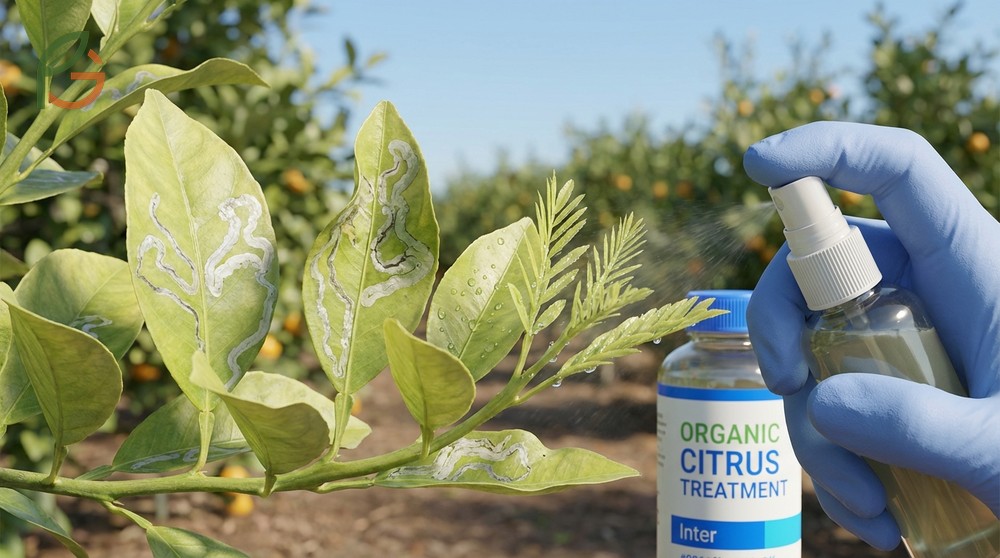
The citrus leaf miner, Phyllocnistis citrella, creates distinctive silvery trails on young citrus leaves by tunneling between leaf surfaces. Studies demonstrate that organic treatments work best when applied at the feather leaf stage, approximately 13 days after budbreak, when larvae are most vulnerable[7]. You’ll get better results by targeting new growth rather than trying to treat established damage.
Female moths only lay eggs on immature leaves, which means your treatment window is narrow but predictable. Research across multiple citrus-growing regions shows that successful control hinges on preventing egg-laying, not killing larvae already inside leaves. Once you see the silvery trails, damage is already done to that leaf.
From My Experience: My cousin in Guadalajara, Mexico started treating his young orange trees in May 2024 after noticing severe leaf curling. He applied spinosad every 7 days during new flush—within three cycles, new leaves showed 80% less damage compared to untreated branches.
Spinosad-Based Treatments
Spinosad stands out as the most effective organic option for homeowners[1]. This naturally-derived insecticide comes from soil bacteria and breaks down quickly in sunlight. You’ll find it under brand names like Monterey Garden Insect Spray, Captain Jack’s Dead Bug Brew, or Green Light Spinosad.
Apply spinosad when you see new growth emerging but before larvae create visible mines. Mix according to label directions—typically 2-4 tablespoons per gallon of water—and spray both upper and lower leaf surfaces. The product remains effective for 7-10 days, so you’ll need repeat applications during active flush periods.
Horticultural Oil Applications
Horticultural oils work by smothering eggs and creating a barrier that prevents moths from laying new ones[3]. Current data indicates that petroleum-based mineral oils and plant-based alternatives perform equally well when applied every 5-14 days during new growth. These oils don’t penetrate leaves like neem, so timing matters more than with systemic treatments.
Spray horticultural oil in early morning or late evening when temperatures stay below 85°F (29°C). Higher temperatures can cause phytotoxicity—leaf burn that looks worse than leafminer damage. Always test on a small branch first if you’re treating stressed or drought-affected trees.
- Apply when temperatures will remain between 45-85°F (7-29°C) for 24 hours
- Ensure thorough coverage on new growth, especially leaf undersides
- Wait 2 weeks between oil sprays to avoid leaf damage from buildup
- Don’t mix with sulfur-based fungicides—wait at least 30 days between applications
- Reapply after heavy rain that washes off the protective coating
Neem Oil Solutions
Neem oil offers a different mechanism than horticultural oils because it penetrates leaf tissue slightly and disrupts insect growth[3]. This systemic action means it can kill young larvae that have just entered leaves, giving you a bit more flexibility in timing. However, neem’s effectiveness drops in temperatures above 90°F (32°C), making it less reliable during peak summer months.
Mix neem oil with water and a surfactant (often included in commercial products) and apply every 7-14 days. You’ll notice neem has a stronger odor than mineral oils and takes longer to dry on leaves. Some gardeners report leaf yellowing with heavy neem use, so stick to recommended concentrations—usually 2 tablespoons per gallon.
Important note: Never spray any oil-based products in direct sunlight or when temperatures exceed 85°F (29°C). This combination can cause severe leaf burn that damages your tree more than the leafminer itself would.
Leaf Miner Control
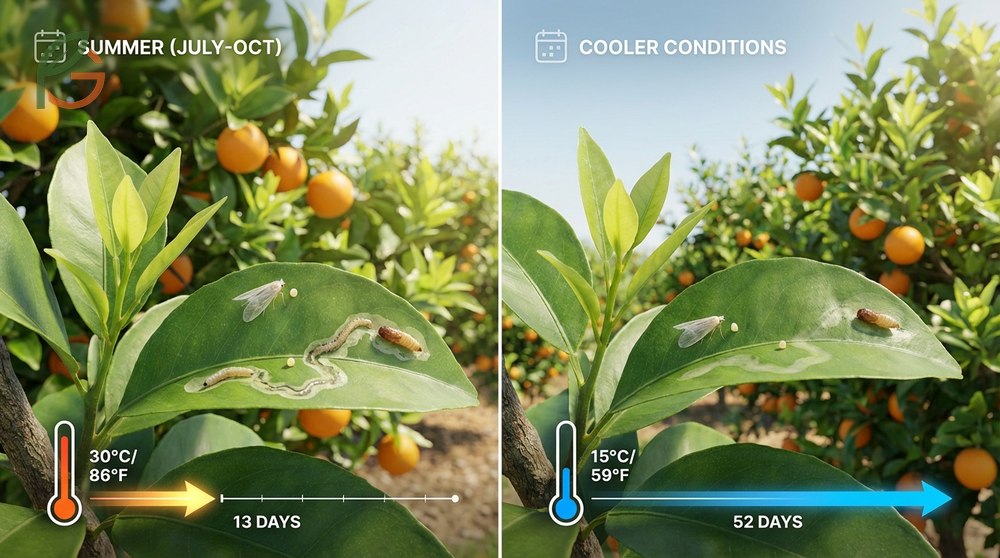
Effective control depends on understanding the pest’s rapid life cycle and seasonal patterns. The complete generation time ranges from 13 days in hot weather to 52 days in cooler conditions[5]. Summer and fall bring peak populations because warmth accelerates reproduction and citrus trees flush more frequently during these months.
If you’re like most American gardeners, you’ll face the heaviest pressure from July through October. During this window, females can lay up to 50 eggs in their short 2-12 day lifespan[5]. Multiple overlapping generations mean you’ll always find eggs, larvae, and adults present simultaneously once populations establish.
Identifying Infestation Stages
Early detection makes treatment far more effective than waiting for obvious damage. Look for these signs during your weekly tree inspections, focusing on branch tips where new growth emerges.
- Eggs: Tiny clear domes on leaf undersides, barely visible without magnification
- Early mining: Faint silvery lines starting near leaf center or veins
- Active larvae: Widening serpentine trails with visible dark frass (droppings) in the center
- Late stage: Severely twisted or curled leaves with extensive silvery scarring
- Pupation: Small bumps at leaf edges where larvae have formed cocoons
- Adult emergence: Tiny moths (wingspan 4mm) resting on leaf undersides at dawn or dusk
Timing Your Treatments
Research demonstrates that the first spray should happen when new leaves reach the “feather leaf” stage—still partially folded but beginning to expand[7]. This typically occurs about 13 days after you notice bud swelling at branch tips. At this point, any eggs laid will hatch into larvae just as your treatment provides maximum coverage.
Continue applications every 5-14 days depending on product used and weather conditions. Hot weather requires more frequent spraying because new leaves expand faster and flush cycles overlap. Once leaves fully harden and turn dark green—usually 3-4 weeks after emergence—they’re immune to new attacks and don’t need further protection.
This table compares treatment schedules, application intervals, and protection duration for three organic citrus leaf miner control products
| Treatment Type | Application Interval | Protection Duration | Temperature Limit |
|---|---|---|---|
| Spinosad | 7-10 days[1] | 7-10 days | No upper limit |
| Horticultural Oil | 5-14 days[3] | 5-7 days (wash-off) | 85°F (29°C) |
| Neem Oil | 7-14 days[3] | 7-10 days | 90°F (32°C) |
Organic Leaf Miner
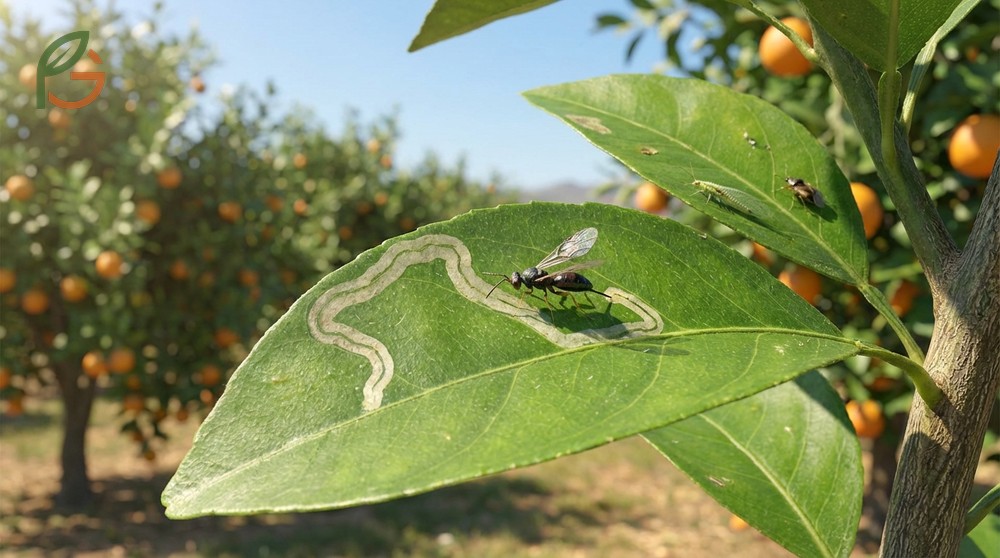
Biological control has transformed leafminer management since the pest’s arrival in North America. The introduction of Ageniaspis citricola, a tiny parasitic wasp from Asia, now provides natural suppression in established citrus regions[8]. These beneficial insects can achieve up to 100% parasitism rates by fall, significantly reducing overwintering populations without any sprays.
Native predators like lacewings, minute pirate bugs, and spiders also consume leafminer eggs and young larvae. Studies indicate that preserving these natural enemies through reduced pesticide use often provides adequate control on mature trees. The key is avoiding broad-spectrum insecticides that kill beneficial species along with pests.
Biological Control Methods
You can enhance natural enemy populations by providing habitat and alternative food sources. Adult parasitoids feed on nectar and pollen, so flowering plants near your citrus support larger beneficial populations. Research shows that diverse plantings maintain predator numbers even when leafminer populations crash.
Pheromone traps help you monitor male moth populations and time treatments more precisely. These traps don’t provide control themselves—one female can lay 50 eggs—but they tell you when pressure is building. Hang traps at eye level in tree canopies and check weekly during growing season.
- Plant flowering herbs like dill, fennel, and cilantro near citrus trees
- Avoid broad-spectrum insecticides that kill parasitoids and predators
- Leave some mined leaves—they harbor beneficial parasitoids attacking remaining larvae
- Use selective products like spinosad that have minimal impact on natural enemies
- Install pheromone traps to monitor populations without affecting beneficial insects
- Maintain ground cover plants that provide habitat for predatory beetles and spiders
Cultural Practices
Managing your tree’s growth patterns reduces leafminer pressure more than most gardeners realize. Citrus naturally flushes 5-6 times per growing season, but excessive nitrogen fertilization creates continuous soft growth that attracts egg-laying females[9]. Avoid applying nitrogen during peak leafminer months (July-October) to synchronize and shorten flush periods.
Remove water sprouts—those vigorous vertical shoots that grow rapidly from trunks and branches. These shoots produce tender leaves for extended periods, acting as leafminer nurseries that infest your entire tree. Prune them off at the base rather than cutting partway, which stimulates even more sprout growth.
My friend in Oaxaca, Mexico removes water sprouts from his grapefruit trees every two weeks during summer. He noticed that trees with regular sprout removal showed 60% fewer mined leaves compared to his neighbor’s neglected trees, even without spray treatments.
Pro tip: Don’t remove mined leaves unless damage exceeds 50% of leaf area. Undamaged portions continue photosynthesizing and feeding your tree. Excessive pruning removes more functional leaf tissue than the leafminer ever would.
Preventing Leaf Miner
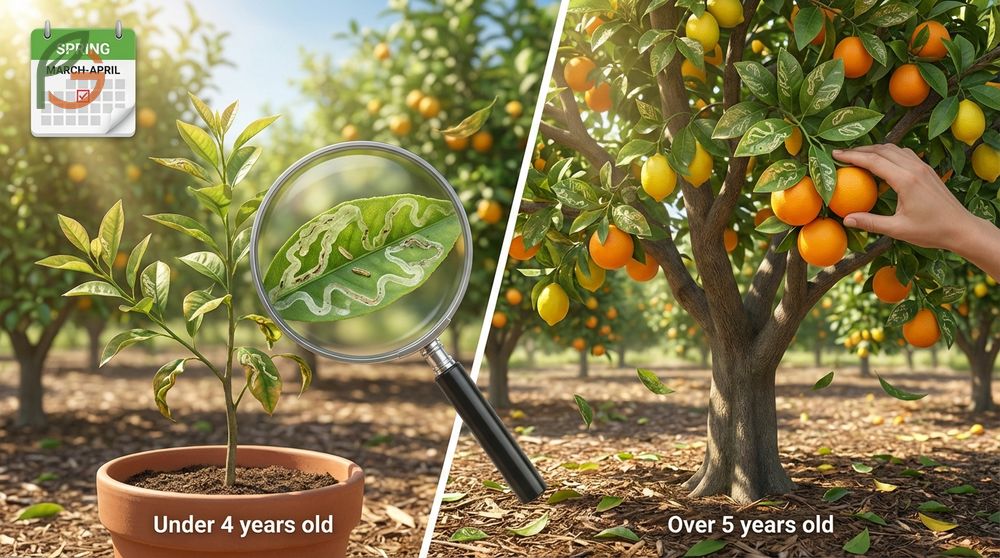
Prevention strategies focus on tree age, timing, and consistent monitoring rather than intensive spraying. Young trees under 4 years old need protection because continuous defoliation can stunt growth or even kill stressed trees[4]. Mature trees over 5 years old tolerate considerable damage without yield reduction, making treatment optional based on cosmetic preferences.
Establish a calendar for your region’s typical flush periods—spring (March-April), early summer (June), and fall (September-October) in most U.S. citrus zones. Begin monitoring branch tips two weeks before expected flush and have your chosen organic treatment ready. Early application prevents egg-laying better than reactive spraying after damage appears.
For breakfast timing from April through August, mark your calendar and spray new growth as it emerges. This proactive approach works far better than waiting until you see damage. Most successful gardeners find that protecting just 2-3 major flush periods per year provides adequate young tree protection without excessive spray schedules.
Systemic products like imidacloprid offer longer protection for young trees in commercial settings, but they’re not truly organic and affect pollinators[7]. Soil drenches provide 8 weeks of control when applied two weeks before flush begins. However, most home gardeners prefer shorter-duration organic options that don’t persist in soil or affect beneficial insects.
| Tree Age | Treatment Priority | Expected Damage Without Treatment |
|---|---|---|
| Under 2 years | High—treat all flush cycles | Severe growth stunting possible[4] |
| 2-4 years | Medium—treat summer/fall flush | Moderate defoliation, slower growth |
| 5+ years | Low—treat only for cosmetic reasons | Cosmetic only, no yield impact[2] |
When my neighbor in Querétaro, Mexico planted 12 young lime trees in March 2023, she treated them religiously during the first two growing seasons. By year three, she stopped all treatments—the trees were mature enough to handle damage, and natural parasitoids had established good populations.
Conclusion
The evidence is clear: successful citrus leaf miner treatment depends on timing organic sprays to coincide with new leaf emergence rather than waiting for visible damage. Spinosad and horticultural oils work best when applied every 5-14 days during flush periods, with young trees requiring consistent protection while mature trees tolerate damage without yield loss. Current guidance emphasizes integrating biological control through parasitoid conservation, cultural practices like timed pruning and fertilization, and selective organic treatments that preserve beneficial insects.
FruitGarden helps you develop sustainable pest management strategies based on your tree age, local climate, and available time for monitoring. Start with proper identification, choose your organic treatment based on temperature conditions, and establish a calendar tied to your region’s flush patterns for best results.
Frequently Asked Questions
What’s the best organic spray for citrus leaf miner?
Spinosad-based products provide the most effective organic control, offering 7-10 days of protection when applied to new growth. Research demonstrates that spinosad works better than neem or horticultural oils alone, though combining spinosad with mineral oil can enhance results during heavy infestations.
How often should I spray for leaf miners on citrus?
Spray every 5-14 days while new growth is present, typically during spring, early summer, and fall flush periods. Horticultural oils require more frequent application (every 5-7 days) than spinosad (every 7-10 days) because oils wash off with rain and don’t penetrate leaf tissue.
Do mature citrus trees need treatment for leaf miners?
No, trees over 5 years old tolerate leafminer damage without reduced fruit yield or long-term health problems. Treatment on mature trees is optional and based on cosmetic preferences rather than necessity, allowing you to save time and money while supporting natural predator populations.
When is the worst time for citrus leaf miners?
Peak populations occur from July through October when warm temperatures accelerate the life cycle to just 13-21 days per generation. During these months, multiple overlapping generations create continuous pressure, requiring vigilant monitoring and consistent treatment intervals on young trees.
Can I use neem oil with spinosad for leaf miners?
Yes, you can alternate neem oil and spinosad on different spray cycles, but don’t mix them in the same tank. Apply one product, wait 3-5 days, then apply the other if needed. This rotation prevents resistance while providing complementary modes of action—neem disrupts growth while spinosad kills on contact.
Should I remove leaves damaged by leaf miners?
Don’t remove mined leaves unless damage exceeds 50% of the leaf area. Undamaged portions continue producing food for your tree, and removing too many leaves causes more harm than the leafminer itself. Plus, mined leaves often harbor beneficial parasitoids attacking remaining larvae.
How can I tell if my citrus tree has leaf miners?
Look for silvery serpentine trails on young leaves, often with a dark line of frass (larval droppings) running through the center. Affected leaves typically curl or twist as they mature. Check new growth at branch tips weekly during spring through fall when moths are most active.





