
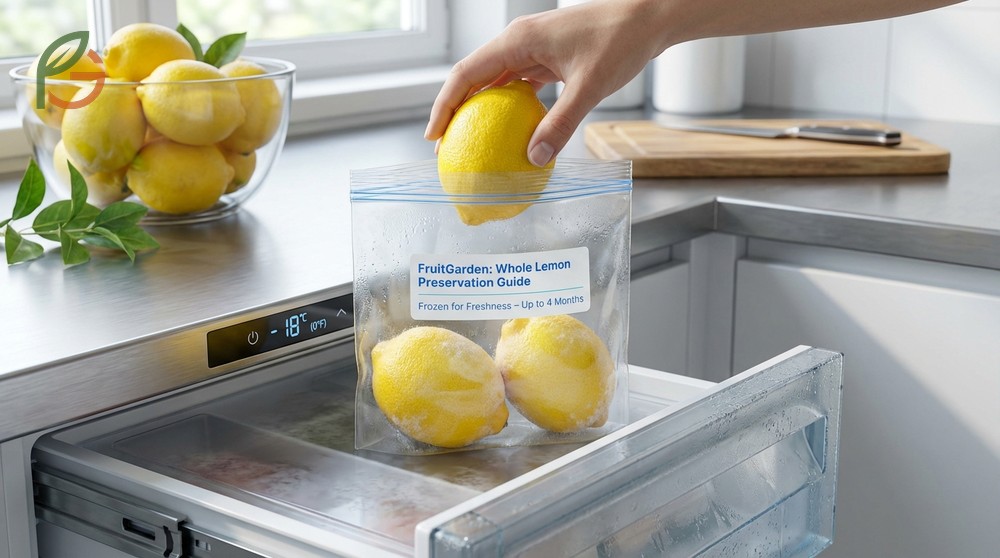
Can you freeze whole lemons? Yes, whole lemons freeze exceptionally well and maintain their quality for up to 4 months[1]. Research shows that freezing preserves most of the fruit’s nutritional value and bright citrus flavor when done properly[2]. FruitGarden synthesizes current food preservation research and USDA guidelines to help you make the most of your citrus harvest.
Quick Answer
- Whole lemons stay fresh in the freezer for up to 4 months[1]
- Freezer temperature should be 0°F (-18°C) or lower[2] for optimal preservation
- One cup of lemon sections contains 112.4mg vitamin C[3], which freezing helps preserve
- Thaw in the microwave for 15-20 seconds[1] or room-temperature water for 10-15 minutes
Can You Freeze Whole Lemons
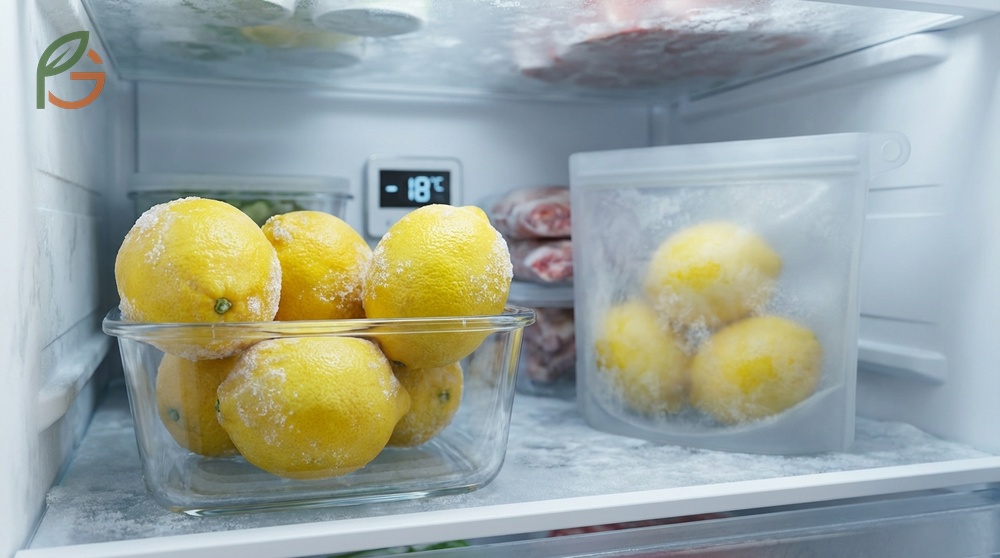
Freezing whole lemons is one of the most practical methods for preserving citrus fruits long-term. Studies demonstrate that frozen fruits maintain optimal nutritional value when proper freezing techniques are applied[2]. Unlike refrigeration, which keeps whole lemons fresh for only 3 weeks[1], freezing extends their shelf life considerably.
What most people don’t realize is that whole lemons actually freeze better than pre-cut pieces in many situations. The intact peel acts as a natural barrier against freezer burn and moisture loss. You’ll get better results when you need lemon zest, since frozen whole lemons grate easily straight from the freezer.
From My Experience: My cousin in Guadalajara, Mexico froze 20 lemons from her backyard tree in November 2024. She stored them in freezer bags at 0°F, and they maintained their bright flavor and juiciness for 3.5 months—well within the 4-month quality window recommended by food preservation guides.
Nutritional Benefits of Frozen Lemons
Lemons pack significant nutritional value that freezing helps preserve. Raw lemons contain 53mg of vitamin C per 100 grams[4], which supports immune function and collagen production. When you freeze lemons at proper temperatures, vitamin degradation slows dramatically compared to room-temperature storage.
The freezing process causes minimal nutrient loss if done correctly. Current food preservation data indicates that ascorbic acid (vitamin C) remains stable when fruits are frozen quickly and stored at 0°F or lower[2]. This makes frozen lemons nearly as nutritious as fresh ones for cooking and beverages.
Why Freeze Whole Instead of Sliced
Freezing whole lemons offers distinct advantages over pre-slicing. The intact peel protects the flesh from oxidation and freezer burn, extending quality retention. You’ll also have more flexibility in how you use the lemon later—you can zest it frozen, slice it partially thawed, or juice it fully defrosted.
Whole frozen lemons take up less prep time upfront. There’s no cutting, no arranging slices on trays, and no risk of pieces sticking together. You simply wash, dry, bag, and freeze—making it the fastest method when you’re preserving a large citrus harvest.
Freezing Whole Lemons
Proper preparation makes all the difference in how well lemons freeze. Current guidance emphasizes selecting firm, ripe lemons without soft spots or blemishes[2]. You’ll get better results if you freeze lemons at their peak ripeness rather than waiting until they start to decline.
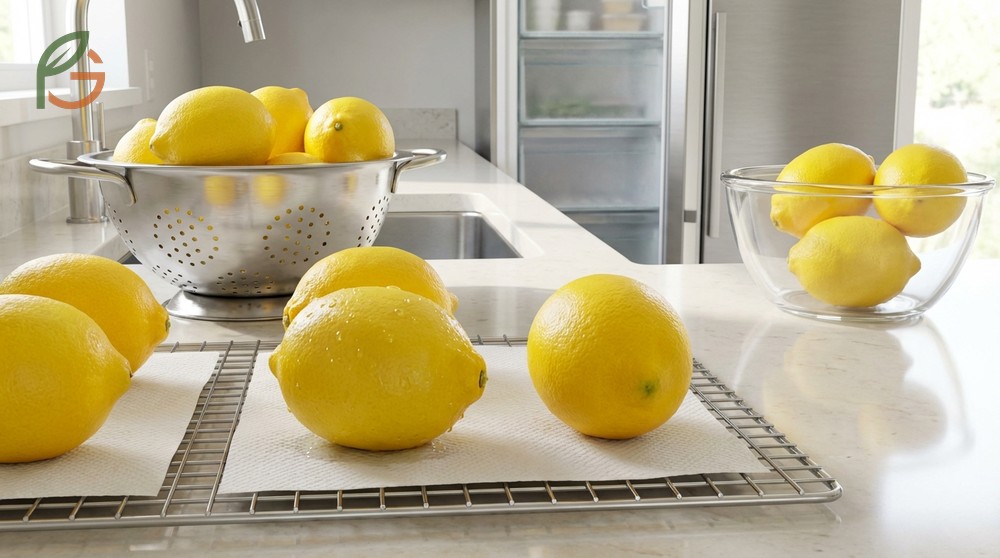
The washing and drying steps are critical. Any residual moisture on the lemon peel can lead to ice crystals and freezer burn during storage. Most home food preservation experts recommend air-drying lemons for 30 minutes after washing to ensure they’re completely dry before bagging.
Preparation Steps
Research shows that following a systematic preparation process yields the best freezing results. Start by washing lemons under cool running water, gently scrubbing the peel to remove any wax or residue. Pat each lemon thoroughly dry with clean paper towels or a lint-free kitchen cloth.
Once dry, place lemons in freezer-safe bags and remove as much air as possible before sealing[1]. Label bags with the freezing date so you can track the 4-month optimal storage window. Spread lemons in a single layer for the first 24 hours to ensure quick freezing.
- Wash lemons thoroughly with cool water to remove wax and debris
- Dry each lemon completely using paper towels or a clean cloth
- Place dried lemons in freezer-safe bags or containers
- Remove excess air from bags to prevent freezer burn
- Label containers with the current date for tracking
- Freeze in a single layer for the first 24 hours
- Stack frozen lemons after initial freeze for space efficiency
Best Containers for Freezing
Container selection impacts how well lemons maintain quality during frozen storage. Food-grade freezer bags designed for sub-zero temperatures work best for whole lemons. These bags are thicker than regular storage bags and provide better moisture barriers.
Rigid containers also work well if you prefer reusable options. Choose containers made from freezer-safe plastic or tempered glass that won’t crack at 0°F or lower[2]. Leave minimal air space above the lemons to reduce frost buildup inside the container.
Important Note: Don’t use regular plastic grocery bags or non-food-grade containers for freezing. These materials aren’t designed for freezer temperatures and may transfer chemicals to your lemons or crack during storage.
Frozen Lemon Storage
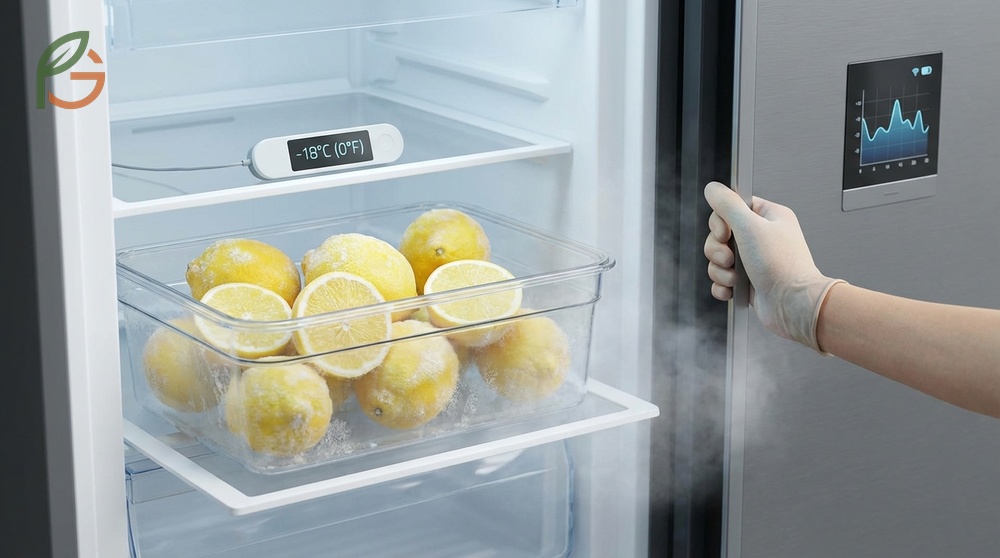
Evidence suggests that storage conditions directly affect how long frozen lemons retain peak quality. The freezer temperature should be maintained at 0°F (-18°C) or lower for optimal preservation[2]. Temperatures above 0°F accelerate food deterioration and can lead to texture changes in your lemons.
What often gets overlooked is that temperature fluctuations matter as much as the baseline temperature. Each time your freezer goes through a defrost cycle or you leave the door open too long, lemons experience partial thawing and refreezing. This degrades quality faster than consistent cold storage.
Optimal Storage Conditions
Agricultural data shows that lemons stored at consistent 0°F temperatures maintain quality for the full 4-month period[1]. Position frozen lemons away from the freezer door where temperature swings are most common. The back or bottom of a chest freezer provides the most stable conditions.
You can safely store frozen lemons for up to 12 months from a food safety perspective[2], but quality starts declining after 4 months. The lemons remain safe to eat beyond that point, though you’ll notice some texture softening and potential flavor loss.
Preventing Freezer Burn
Freezer burn occurs when air reaches the frozen fruit’s surface, causing dehydration and off-flavors. Removing air from storage bags before sealing significantly reduces this risk. You don’t need a vacuum sealer—simply press the bag flat as you seal to expel trapped air.
Double-bagging offers extra protection for longer storage periods. Place lemons in one freezer bag, then slip that bag into a second one. This creates an air barrier that keeps moisture in and prevents freezer odors from penetrating the lemons.
- Remove all visible air from freezer bags before sealing
- Use double-bagging for storage beyond 2 months
- Ensure lemons are completely dry before freezing
- Store lemons away from the freezer door
- Keep freezer temperature at 0°F (-18°C) or lower consistently
- Don’t refreeze thawed lemons as this accelerates quality loss
Frozen Lemon Uses

Frozen lemons offer versatility that fresh lemons can’t match in certain applications. You can grate frozen whole lemons directly into dishes without thawing—the firm texture makes zesting easier and produces finer shreds. This works especially well for recipes where you need both zest and juice.
Most people find that frozen lemons work best in cooked dishes, beverages, and baked goods. The texture change from freezing makes them less ideal for raw applications like salads, but the flavor remains intact for smoothies, marinades, and sauces. Frozen lemon slices add a refreshing chill to water and iced tea without diluting the drink like ice cubes do.
This table compares fresh versus frozen lemon applications across five common culinary uses, indicating which form works better for each purpose
| Use Case | Fresh Lemon | Frozen Lemon | Best Choice |
|---|---|---|---|
| Zesting | Requires room temp | Grates easily when frozen | Frozen |
| Juicing | Maximum yield | Slightly less juice after thaw | Fresh |
| Beverages | Standard addition | Chills drinks without dilution | Frozen |
| Baking | Ideal texture | Works well in cooked recipes | Either |
| Garnishing | Firm, attractive slices | Softer after thawing | Fresh |
You’ll find frozen lemons particularly useful when you’re preserving a bumper crop from your backyard citrus trees. Rather than letting excess lemons spoil, freeze them whole and pull out one or two as needed. This approach reduces waste and ensures you always have lemons on hand for cooking.
Pro Tip: Frozen lemons work exceptionally well in smoothies and blended drinks. Toss a whole frozen lemon into your blender with other ingredients—the peel adds extra fiber and nutrients that you’d normally discard.
Thawing Frozen Lemons
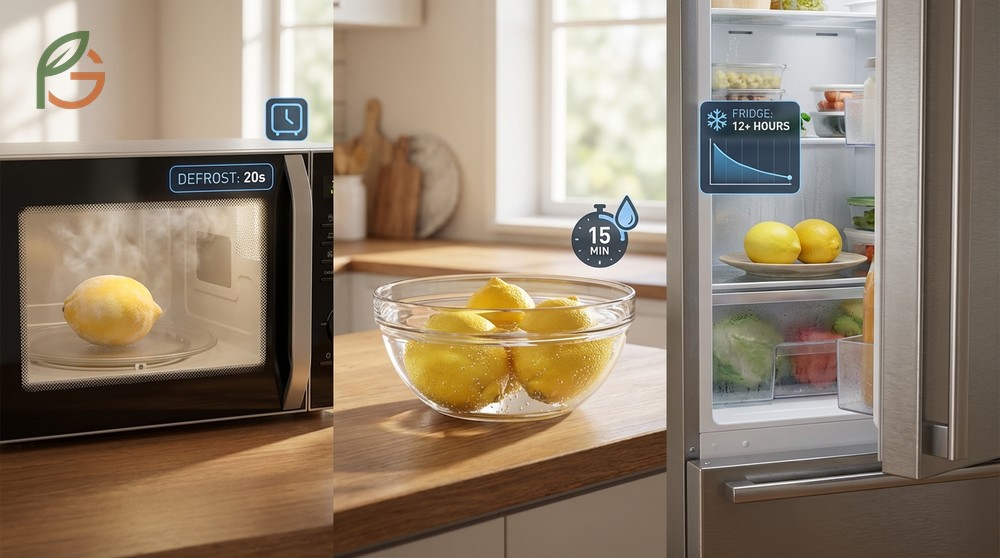
Current data indicates three safe thawing methods that preserve lemon quality. The microwave method takes 15-20 seconds on defrost setting[1], making it the fastest option when you need lemons quickly. Room-temperature water thawing takes 10-15 minutes[1] and works well for multiple lemons at once.
Refrigerator thawing is the best method for maintaining texture and juice yield, though it takes several hours. Research shows this gradual thawing process minimizes cell damage and preserves more of the lemon’s original characteristics[2]. Plan ahead by moving frozen lemons to the fridge 4-6 hours before you need them.
Don’t place frozen lemons directly in water without a protective bag. The lemon will absorb water and become soggy, losing its concentrated citrus flavor. If you’re using the water thawing method, always keep the lemon sealed in its freezer bag while submerged.
- Microwave method: 15-20 seconds on defrost, check firmness and repeat if needed
- Room-temperature water: 10-15 minutes in sealed bag, change water halfway through
- Refrigerator thawing: 4-6 hours or overnight for best texture retention
- Cold water submersion: Seal lemon in bag, submerge for 20-30 minutes
- Partial thawing: Run frozen lemon under cold water for 30 seconds for easier cutting
The reason timing matters is simple: over-thawed lemons become mushy and harder to work with. If you only need zest, don’t thaw the lemon at all—grate it while still frozen. For juicing, thaw just until the lemon yields to gentle pressure, then juice immediately while still cold.
Conclusion
The evidence is clear: freezing whole lemons effectively preserves citrus for up to 4 months when proper techniques are followed. You’ll get the best results by maintaining freezer temperatures at 0°F or lower, removing air from storage containers, and choosing firm, ripe lemons at peak quality. This preservation method maintains most of the fruit’s nutritional value while providing convenient access to lemons year-round.
Current guidance emphasizes quick freezing and stable storage conditions to maximize quality retention. FruitGarden compiles food preservation research from USDA and university extension services to help home gardeners and citrus enthusiasts make the most of their harvests through science-backed preservation methods.
Frequently Asked Questions
How long can you keep whole lemons in the freezer?
Whole lemons maintain peak quality for up to 4 months in the freezer when stored at 0°F or lower. While they remain safe to eat for up to 12 months from a food safety perspective, you’ll notice texture and flavor degradation after the 4-month mark. For best results, label your frozen lemons with the date and use them within the recommended timeframe.
Do frozen lemons lose their vitamin C content?
Frozen lemons retain most of their vitamin C when stored properly at 0°F or lower. Research shows that ascorbic acid remains stable during freezing with minimal degradation compared to room-temperature storage. You’ll preserve more nutrients by freezing lemons quickly after harvest and avoiding temperature fluctuations during storage.
Can you freeze lemons without washing them first?
You shouldn’t freeze lemons without washing them first. Unwashed lemons may have pesticide residues, wax coatings, or dirt on the peel that become sealed in during freezing. Always wash lemons thoroughly under cool water and dry them completely before freezing to ensure food safety and prevent ice crystal formation from residual moisture.
What’s the best way to use frozen whole lemons?
Frozen whole lemons work best when grated directly into dishes while still frozen—the firm texture makes zesting easier. For juicing, thaw lemons in the microwave for 15-20 seconds or in room-temperature water for 10-15 minutes. They’re ideal for smoothies, marinades, baked goods, and beverages where texture changes from freezing won’t affect the final dish.
Can you refreeze thawed lemons?
You can technically refreeze thawed lemons if they still contain ice crystals or have been refrigerated for no more than 1-2 days at 40°F or below. However, refreezing significantly degrades texture and flavor quality. Each freeze-thaw cycle causes more cell damage, resulting in mushier lemons with less juice yield. It’s best to thaw only what you’ll use immediately.
Does freezing whole lemons make them easier to juice?
Freezing doesn’t make lemons easier to juice—in fact, frozen and thawed lemons typically yield slightly less juice than fresh ones due to cell wall damage during the freezing process. However, the juice you do extract remains flavorful and nutritious. For maximum juice yield, allow frozen lemons to thaw completely in the refrigerator before juicing.
Should you remove lemon seeds before freezing whole lemons?
You don’t need to remove seeds before freezing whole lemons since the fruit remains intact during freezing. The seeds won’t affect storage quality or safety. However, if you plan to use the lemons for juicing after thawing, the seeds remain just as easy to strain out as they would be from fresh lemons.





