
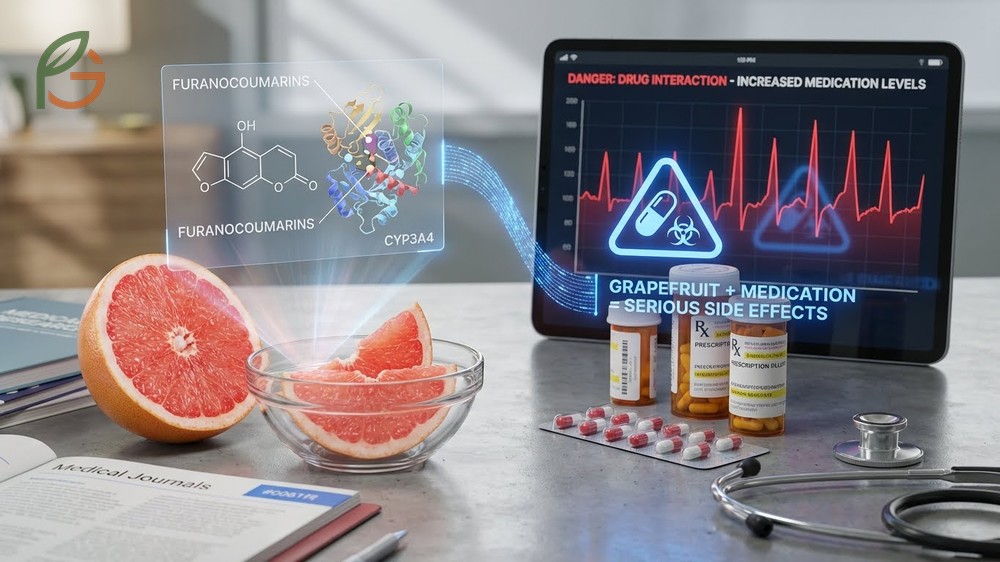
Why is grapefruit dangerous? Grapefruit contains furanocoumarins that irreversibly block the CYP3A4 enzyme in your intestines, causing up to 260% higher blood levels of certain medications and potentially life-threatening side effects[1]. Research shows more than 85 medications interact with grapefruit, with 43 causing serious adverse effects like organ damage, irregular heartbeat, and muscle breakdown[2]. FruitGarden compiles current pharmaceutical research and FDA guidance to help fruit enthusiasts understand which medications don’t mix with their favorite citrus.
Quick Answer
- Grapefruit blocks CYP3A4 enzyme for up to 72 hours[2], causing dangerous drug buildup
- Just one grapefruit or 200mL juice can trigger drug overdose toxicity[2]
- 85+ medications interact with grapefruit, including statins, blood pressure drugs, and antidepressants
- Effects persist even when spacing grapefruit and medication 12 hours apart[3]
Why Is Grapefruit Dangerous
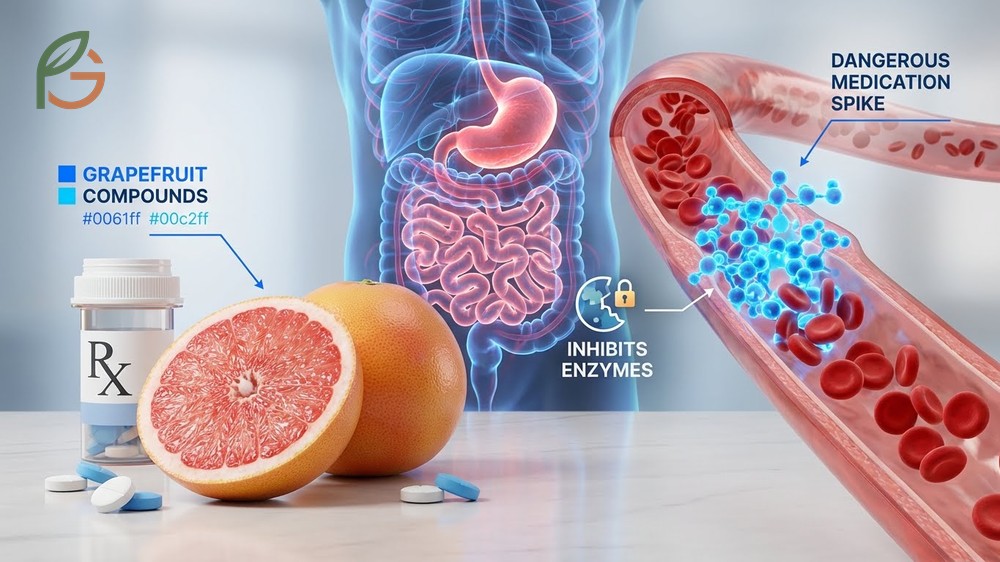
Grapefruit poses serious health risks when combined with many common medications because it interferes with drug metabolism in your digestive system. The fruit contains compounds that permanently shut down a critical enzyme responsible for breaking down medications before they enter your bloodstream. This mechanism causes drug levels in your blood to spike far beyond intended therapeutic doses.
The danger lies in grapefruit’s ability to turn normal medication doses into accidental overdoses. Studies demonstrate that a single serving can reduce intestinal CYP3A4 levels by 47% within just 4 hours[2]. The U.S. Food and Drug Administration mandates grapefruit warnings on many prescription labels due to this interaction’s severity[1].
Current data indicates the number of medications with potential for serious grapefruit interactions increased from 17 to 43 between 2008 and 2012[2]. This trend reflects both new drug approvals and improved understanding of interaction mechanisms. Older patients face the greatest risk since they’re more likely to take multiple medications while regularly consuming grapefruit products.
CYP3A4 Enzyme Mechanism
The CYP3A4 enzyme acts as your body’s frontline defense against high drug concentrations in the intestinal wall. This enzyme metabolizes approximately 50% of all prescription medications before they reach systemic circulation. When grapefruit compounds bind to CYP3A4, they create permanent damage that requires your body to synthesize entirely new enzyme proteins.
Research shows grapefruit’s effect operates through mechanism-based inactivation rather than simple competitive inhibition. The furanocoumarins in grapefruit are metabolized by CYP3A4 into reactive intermediates that form stable covalent bonds with the enzyme’s active site. This irreversible binding means the enzyme cannot recover function, explaining why effects persist for days after grapefruit consumption.
Critical Warning: The enzyme damage from grapefruit isn’t dose-dependent for severity—even small amounts trigger complete enzyme shutdown. Your body requires 3 days to produce enough new CYP3A4 to restore normal drug metabolism.
Furanocoumarins in Grapefruit
Furanocoumarins are natural compounds found in grapefruit that serve as the fruit’s primary mechanism for drug interactions. The most potent furanocoumarin, 6’7′-dihydroxybergamottin, appears in all grapefruit juice varieties at concentrations consistently exceeding the threshold needed to reduce CYP3A4 activity. Evidence suggests this compound alone accounts for the majority of grapefruit’s interference with medication metabolism.
Different grapefruit products contain varying furanocoumarin levels, but all types can trigger interactions. White grapefruit, pink grapefruit, and red grapefruit all contain sufficient amounts to cause problems. Even grapefruit segments, whole fruit, and frozen concentrate carry these compounds since they’re distributed throughout the fruit’s flesh and peel.
- Fresh grapefruit juice (highest concentration of active compounds)
- Frozen grapefruit juice concentrate reconstituted with water
- Whole grapefruit sections and segments consumed as fresh fruit
- Grapefruit zest and peel used in cooking or baking
- Commercially bottled grapefruit juice drinks and blends
- Candied or dried grapefruit peel products
Grapefruit Juice and Medications
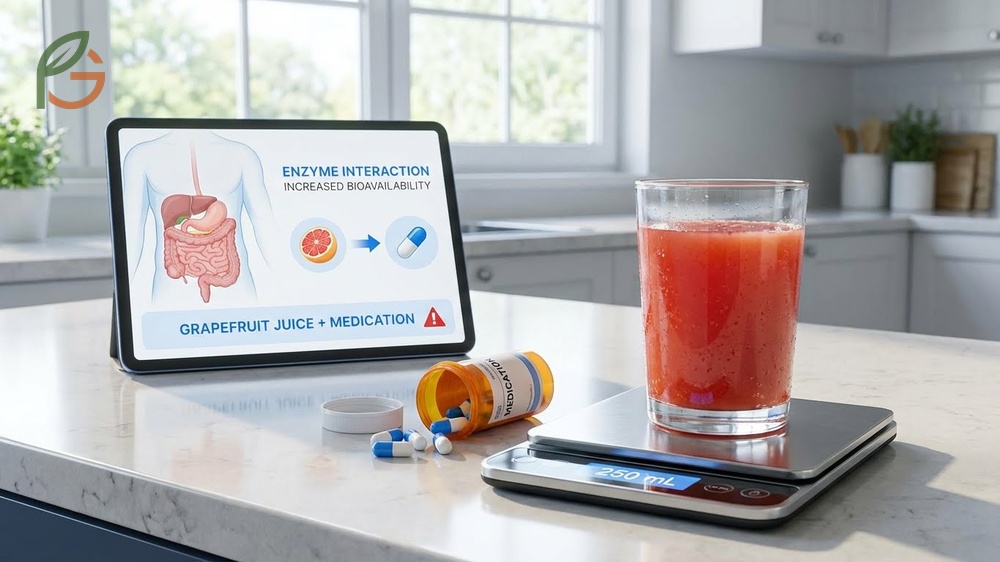
Grapefruit juice creates more consistent and predictable interactions than whole fruit because liquid form ensures direct contact with intestinal enzymes. Studies demonstrate that 200-250mL of grapefruit juice produces measurable increases in drug bioavailability for most susceptible medications. The juice’s effect begins within hours and compounds with repeated consumption over several days.
Current pharmaceutical guidance emphasizes that grapefruit juice interactions aren’t limited to simultaneous consumption. Drinking juice in the morning affects medications taken that evening because the enzyme damage persists throughout the day. This extended window means patients can’t safely work around interactions by timing their juice and pills several hours apart.
The interaction’s unpredictability poses additional challenges since individual responses vary dramatically. Research shows that people with higher baseline CYP3A4 levels experience more severe interactions because they have more enzyme available for grapefruit to inhibit[2]. This paradox means healthier metabolizers face greater risk from grapefruit consumption.
Which Drugs Interact
Medications that interact with grapefruit share three characteristics: oral administration, low to intermediate bioavailability, and CYP3A4-mediated metabolism. These criteria identify drugs whose absorption depends heavily on intestinal enzyme activity. When grapefruit blocks this enzyme, drug levels can increase anywhere from 30% to over 800% depending on the specific medication.
The Mayo Clinic identifies several major drug categories affected by grapefruit interactions[4]. These include cholesterol-lowering statins, blood pressure medications, immunosuppressants, anti-anxiety drugs, antihistamines, and erectile dysfunction treatments. Within each category, only specific drugs interact—not all medications in the class face equal risk.
- Cholesterol medications (statins like atorvastatin, simvastatin, and lovastatin)
- Blood pressure drugs (calcium channel blockers including felodipine and nifedipine)
- Immunosuppressants for organ transplant recipients (cyclosporine and tacrolimus)
- Anti-anxiety medications (buspirone, diazepam, and triazolam)
- Antihistamines for allergies (fexofenadine specifically)
- Erectile dysfunction treatments (sildenafil and tadalafil)
- Antidepressants and mood stabilizers (quetiapine, lurasidone, ziprasidone)
- Certain antibiotics and antivirals (erythromycin and some HIV medications)
Severity Levels
Grapefruit interactions range from minor increases in side effect risk to life-threatening toxicity depending on the medication involved. The most dangerous interactions involve drugs with narrow therapeutic windows where small concentration increases cause serious harm. These critical medications include immunosuppressants, certain heart rhythm drugs, and some cancer treatments.
Moderate severity interactions typically involve statins where muscle damage risk increases substantially. Data shows simvastatin and lovastatin levels increase by 260% when taken with grapefruit juice[3]. This dramatic elevation raises rhabdomyolysis risk—a potentially fatal condition causing muscle breakdown and kidney damage.
Important Note: Severity depends on both the drug and individual patient factors. What causes mild side effects in one person might trigger serious complications in another, especially in older adults or those taking multiple medications.
What Medications Should Not Be Taken with Grapefruit
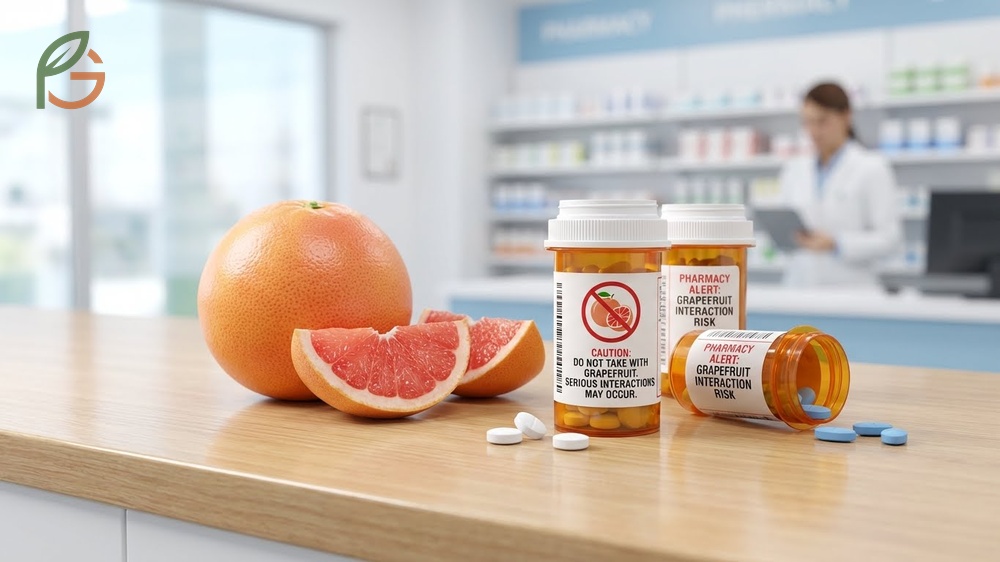
The FDA requires grapefruit warnings on medications where the interaction can cause clinically significant adverse effects[1]. These warnings appear on prescription labels and patient information sheets distributed by pharmacies. Healthcare providers recommend complete grapefruit avoidance for patients taking drugs with serious interaction potential rather than attempting dose adjustments.
Research indicates 43 medications can cause serious adverse effects when combined with grapefruit[2]. This subset represents drugs where interactions may trigger torsade de pointes (dangerous heart rhythm), rhabdomyolysis (muscle breakdown), myelotoxicity (bone marrow damage), respiratory depression, gastrointestinal bleeding, or nephrotoxicity (kidney damage). The remaining 40+ interacting drugs cause less severe but still clinically important effects.
Most patients should discuss grapefruit consumption with their pharmacist when starting any new oral medication. Pharmacists can check drug databases to identify interaction potential and recommend alternatives when available. This conversation matters most for people taking medications in high-risk categories or those consuming grapefruit products daily.
Statins and Cholesterol Drugs
Three statins show particularly strong grapefruit interactions: atorvastatin (Lipitor), simvastatin (Zocor), and lovastatin (Mevacor). Clinical studies demonstrate these drugs reach dangerously elevated blood levels when combined with even modest grapefruit consumption. Simvastatin requires complete grapefruit avoidance due to its especially strong interaction profile.
Alternative statins like rosuvastatin (Crestor), pravastatin (Pravachol), fluvastatin (Lescol), and pitavastatin (Livalo) don’t interact with grapefruit. These medications use different metabolic pathways that bypass CYP3A4 enzyme inhibition. Patients who want to continue eating grapefruit can ask their doctor about switching to one of these non-interacting statin options.
This table compares five common statin medications showing their interaction severity with grapefruit, recommended actions, and safe alternative options for patients who consume grapefruit regularly
| Statin Name | Brand Name | Interaction Severity | Blood Level Increase | Recommendation |
|---|---|---|---|---|
| Simvastatin | Zocor | Severe | 260%[3] | Avoid grapefruit completely |
| Lovastatin | Mevacor | Severe | 260%[3] | Avoid grapefruit completely |
| Atorvastatin | Lipitor | Moderate | 83% | Limit intake, discuss with doctor |
| Rosuvastatin | Crestor | None | No increase | Safe with grapefruit |
| Pravastatin | Pravachol | None | No increase | Safe with grapefruit |
Blood Pressure Medications
Calcium channel blockers represent the blood pressure medication class most affected by grapefruit interactions. Felodipine, nifedipine, and nicardipine show the strongest interactions, with individual responses ranging from zero to 8-fold increases in drug levels after consuming just 250mL of juice[2]. This wide variability makes predicting safe consumption levels impossible for individual patients.
Other blood pressure medications including ACE inhibitors, ARBs, and beta-blockers don’t interact with grapefruit. These drug classes use different metabolic pathways unaffected by CYP3A4 inhibition. Patients taking calcium channel blockers who regularly consume grapefruit should discuss switching to alternative blood pressure medication classes with their healthcare provider.
- Felodipine (one of the strongest interactions, highly variable response between individuals)
- Nifedipine (Procardia) – moderate to strong interaction depending on formulation
- Nicardipine (strong interaction with unpredictable blood level increases)
- Nimodipine (Nymalize) – used for brain conditions, strong interaction potential
- Verapamil (moderate interaction but less severe than felodipine)
- Amlodipine (Norvasc) – minimal interaction, generally considered safer option
How Long After Eating Grapefruit Can I Take Medication
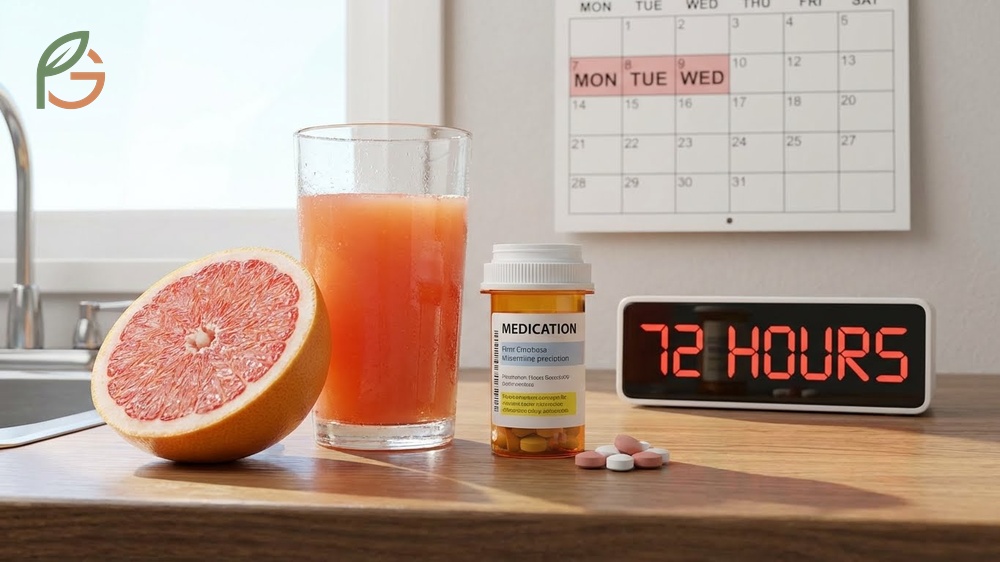
The timing question reveals a common misconception about grapefruit interactions—spacing consumption and medication doesn’t eliminate risk. Evidence shows grapefruit effects persist up to 72 hours because the enzyme damage is permanent until your body synthesizes new CYP3A4 proteins. Drinking grapefruit juice Monday morning still affects medications taken Wednesday afternoon.
Studies demonstrate that waiting 12 hours between grapefruit and statin medication still nearly doubles drug blood levels[3]. This persistent effect occurs because your intestinal cells need days to produce replacement enzyme proteins. The damaged CYP3A4 molecules remain inactive regardless of how much time passes between grapefruit and medication doses.
Research indicates the grapefruit effect reduces to about 10% of maximum intensity 24 hours after consumption. However, this partial recovery still represents significant enzyme inhibition for medications with narrow safety margins. Current medical guidance recommends complete grapefruit avoidance rather than attempting strategic timing for patients on interacting medications.
For occasional grapefruit consumers taking atorvastatin specifically, some experts suggest limiting intake to small amounts (less than 200mL juice) separated from medication by at least 4 hours. This approach carries residual risk but may be acceptable for patients unwilling to eliminate grapefruit entirely. Simvastatin and lovastatin require stricter avoidance due to their stronger interaction profiles.
Timing Reality Check: The “wait a few hours” strategy doesn’t work for most grapefruit interactions. Your body needs 3 full days to restore normal enzyme function after grapefruit consumption, making true separation impossible during regular treatment.
- Within 4 hours: CYP3A4 levels drop 47% in intestinal cells after one serving
- At 12 hours: Enzyme inhibition remains strong enough to nearly double drug levels
- At 24 hours: Effect reduced to 10% of maximum but still clinically significant
- At 48 hours: Partial enzyme recovery but interactions persist for sensitive drugs
- At 72 hours: Most people regain normal enzyme function and medication metabolism
- Beyond 3 days: Complete restoration of CYP3A4 activity in intestinal epithelial cells
Grapefruit Interaction Side Effects
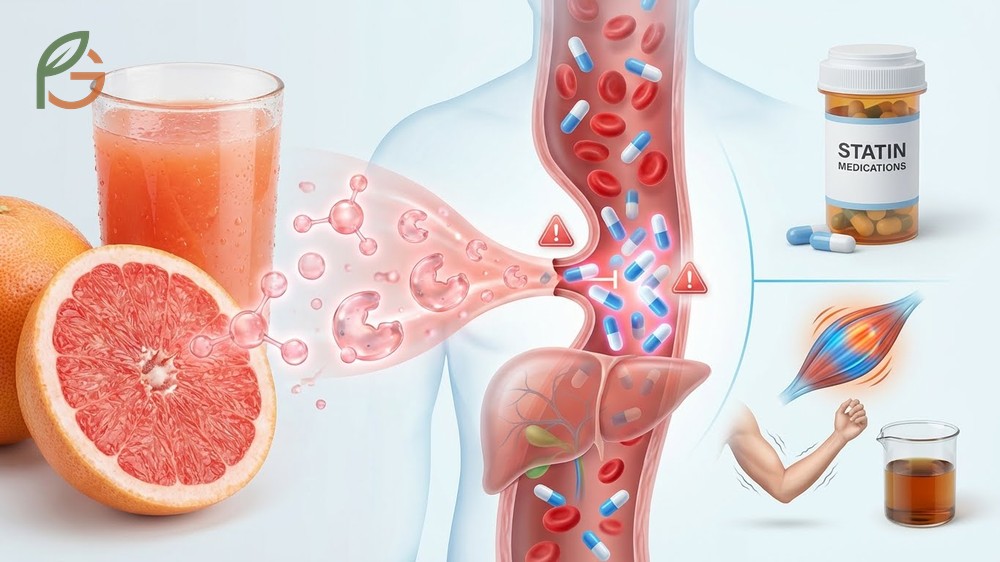
Side effects from grapefruit interactions mirror drug overdose symptoms because the mechanism involves excessive medication in your bloodstream. Patients may experience intensified versions of their medication’s known side effects or develop entirely new symptoms indicating toxicity. The specific effects depend on which drug class is affected and how much medication accumulates.
Statin interactions commonly cause muscle pain, weakness, and dark urine indicating rhabdomyolysis development. Blood pressure medication interactions produce dizziness, dangerously low blood pressure, rapid heartbeat, and fainting episodes. Immunosuppressant interactions may trigger kidney damage, tremors, and increased infection susceptibility due to excessive immune suppression.
Some grapefruit interactions cause paradoxical effects where increased drug levels produce opposite therapeutic results. Birth control pills may cause breakthrough bleeding, nausea, and hormonal imbalance when estrogen levels spike too high. Antihistamine interactions can lead to drowsiness, irregular heartbeat, and potentially fatal cardiac arrhythmias despite these drugs treating allergies.
Emergency symptoms requiring immediate medical attention include chest pain, difficulty breathing, severe muscle pain or weakness, irregular heartbeat, extreme dizziness, and signs of bleeding. These serious reactions indicate potentially life-threatening drug toxicity from grapefruit interaction. Don’t wait to see if symptoms resolve—seek medical care immediately if you experience concerning effects after consuming grapefruit while on medication.
- Muscle pain, tenderness, or weakness (rhabdomyolysis from statin interactions)
- Severe dizziness, lightheadedness, or fainting (blood pressure medication interactions)
- Irregular, rapid, or slow heartbeat (cardiac medication or antihistamine interactions)
- Excessive drowsiness or sedation (anti-anxiety medication or sleep aid interactions)
- Stomach pain, nausea, or gastrointestinal bleeding (various medication interactions)
- Dark-colored urine or decreased urination (kidney damage from immunosuppressant interactions)
- Tremors, confusion, or neurological symptoms (various medication toxicity signs)
- Breathing difficulties or respiratory depression (sedative medication interactions)
Conclusion
The evidence is clear: why is grapefruit dangerous comes down to its irreversible blocking of the CYP3A4 enzyme that protects you from medication overdoses. With 85+ interacting drugs and effects lasting up to 72 hours, timing strategies don’t work—complete avoidance remains the safest approach for patients on affected medications. Your healthcare provider can identify safe grapefruit-free alternatives or non-interacting drugs within the same therapeutic class.
Current pharmaceutical guidance emphasizes proactive discussion about grapefruit consumption during medication counseling sessions. FruitGarden recommends checking with your pharmacist about interaction potential whenever starting new oral medications, especially if you’re among the many Americans who enjoy this citrus fruit regularly as part of their gardening harvest or daily routine.
Medical Disclaimer
Important Medical Disclaimer: This content is for informational and educational purposes only. It is not intended as a substitute for professional medical advice, diagnosis, or treatment. Always consult a qualified healthcare professional or pharmacist before making any changes to your diet, medication regimen, or health routine, especially regarding drug interactions with foods like grapefruit. Never stop taking prescribed medications without medical supervision. Individual medication interactions vary based on personal health factors, and only your healthcare provider can assess your specific risk profile and provide personalized guidance.
Frequently Asked Questions
Can I eat grapefruit if I take my medication at a different time of day?
No, timing doesn’t eliminate grapefruit interaction risks because the enzyme damage persists for 72 hours. Research shows that separating grapefruit and medication by 12 hours still nearly doubles drug blood levels for many medications. Your body requires 3 full days to produce new CYP3A4 enzymes and restore normal medication metabolism, making it impossible to safely time consumption around interacting drugs.
Are there other citrus fruits that interact with medications like grapefruit does?
Yes, pomelos, Seville oranges, and tangelos contain similar furanocoumarins that inhibit CYP3A4 enzyme activity. These fruits should be avoided when taking grapefruit-interacting medications. However, sweet oranges, lemons, limes, and tangerines don’t contain significant amounts of these compounds and are generally safe alternatives for patients on affected medications.
How much grapefruit causes dangerous drug interactions?
Just one whole grapefruit or a small 200mL glass of juice can cause drug overdose toxicity for susceptible medications. The interaction isn’t dose-dependent for severity—even small amounts trigger complete enzyme shutdown. Consuming more grapefruit doesn’t make interactions worse, but regular daily consumption prevents enzyme recovery between doses.
What should I do if I accidentally ate grapefruit while taking an interacting medication?
Contact your healthcare provider or pharmacist immediately to discuss your specific medication and risk level. Monitor for side effects like muscle pain, dizziness, irregular heartbeat, or unusual symptoms over the next 72 hours. Seek emergency medical attention if you develop severe symptoms like chest pain, difficulty breathing, extreme weakness, or signs of an allergic reaction.
Do grapefruit supplements and essential oils cause the same medication interactions?
Grapefruit seed extract supplements may cause interactions since they contain furanocoumarins, though concentration varies by product. Grapefruit essential oil used topically on skin is unlikely to cause systemic interactions. However, ingesting grapefruit oil or using large topical amounts could potentially affect medication metabolism. Consult your pharmacist about specific products you use.
Are all statins affected by grapefruit equally?
No, statin interactions vary significantly by specific drug. Simvastatin and lovastatin show severe interactions requiring complete grapefruit avoidance, while atorvastatin has moderate interaction potential. Rosuvastatin, pravastatin, fluvastatin, and pitavastatin don’t interact with grapefruit at all because they use different metabolic pathways. Patients who want to eat grapefruit can ask their doctor about switching to non-interacting statin alternatives.
Does cooking or processing grapefruit reduce its ability to interact with medications?
No, cooking, freezing, or processing grapefruit doesn’t eliminate furanocoumarins or reduce interaction potential. These compounds remain stable through food preparation methods. Frozen juice concentrate, cooked grapefruit in recipes, candied peel, and even grapefruit zest used for flavoring all contain sufficient amounts to cause medication interactions. All forms of grapefruit should be avoided when taking interacting drugs.





