
When is grapefruit in season? Grapefruit season runs from November to May in Florida and Texas, with peak sweetness hitting between January and March[1]. California’s season extends from January through August, giving you nearly year-round access to fresh citrus[2]. Research shows that winter-harvested grapefruit from the major growing regions delivers the sweetest, juiciest fruit you’ll find at your local market. FruitGarden synthesizes current agricultural data to help you time your purchases for maximum flavor and value.
Quick Answer
When is grapefruit in season
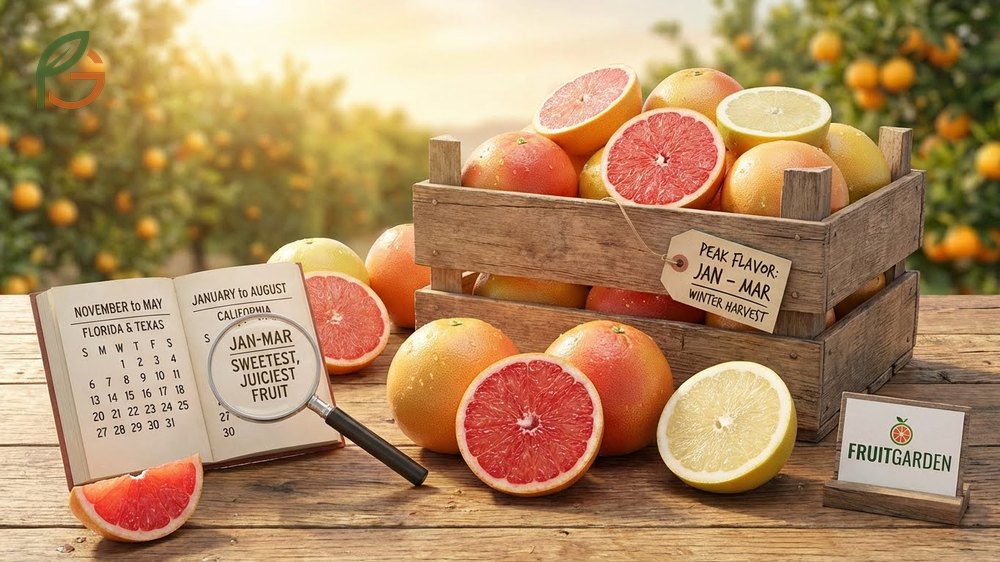
Grapefruit season varies significantly across the three major US growing regions. Each state’s climate creates distinct harvest windows that together provide nearly year-round availability.
The primary growing states—Florida, Texas, and California—account for virtually all domestic grapefruit production. Florida leads in volume, followed by Texas and California, with Arizona contributing a small portion[5].
Most people don’t realize that timing your grapefruit purchases by region can mean the difference between tart, underdeveloped fruit and sweet, juice-packed citrus. Winter months deliver the best quality from Florida and Texas groves.
Florida Grapefruit Season
Florida’s grapefruit season typically runs from November through May each year[3]. The fruit reaches peak sweetness from January through May, making this the ideal buying window.
Early-season Florida grapefruits arriving in October and November tend to be more acidic and less sweet. As winter progresses, sugar content increases while acidity decreases, creating the perfect sweet-tart balance.
Primary Florida varieties include Ruby Red, Flame, Thompson, Marsh, and Duncan[6]. The famous Indian River grapefruit region produces some of the sweetest fruit, with harvest concentrated from early November through March[2].
Texas Grapefruit Harvest
Texas grapefruit season runs from October through April, with peak sweetness occurring between November and March[1]. The Rio Grande Valley produces virtually all commercial Texas grapefruit.
Texas specializes in red-fleshed varieties, all discovered within the state. Major varieties include Rio Star, Henderson, Ray, and Rio Red—all seedless with varying degrees of redness in both flesh and peel[1].
The shorter Texas season concentrates harvest during winter months when cold temperatures enhance sweetness. February is National Grapefruit Month, and January 23rd is officially Texas Red Grapefruit Day[7].
California Grapefruit Timing
California’s grapefruit season extends from January through August, providing fresh citrus during spring and summer months when Florida and Texas harvests end[2]. This longer season fills the availability gap for consumers seeking domestic grapefruit year-round.
California’s warmer coastal and desert climates allow for extended harvest periods. The state produces both white and pink varieties, with harvest timing varying by specific growing region.
Important note: While grapefruit appears in stores year-round, imported fruit from September through October typically lacks the sweetness and juice content of peak-season domestic varieties. Wait for domestic harvests starting in November for best quality.
Grapefruit season months
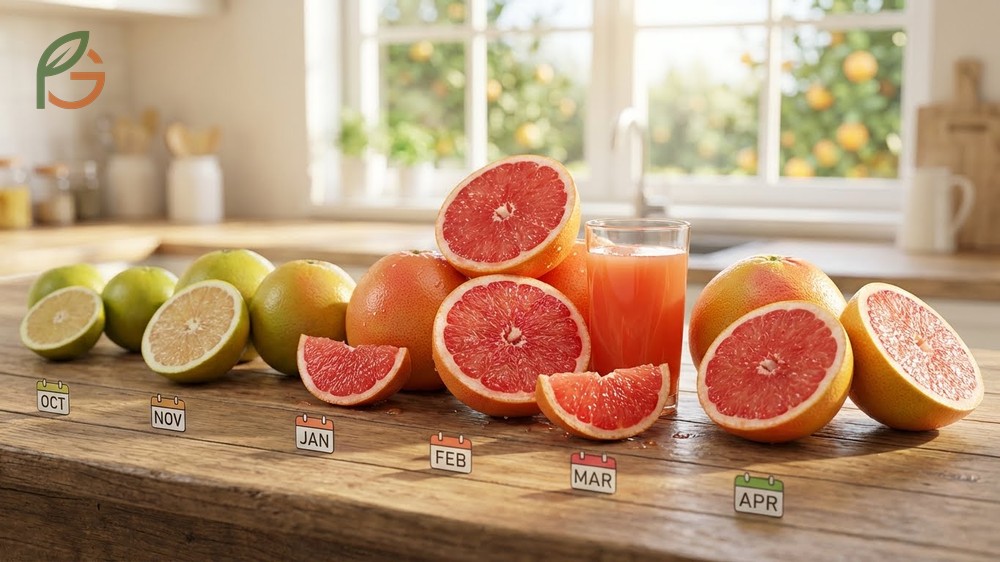
Understanding month-by-month availability helps you select the sweetest grapefruit throughout the year. Seasonal patterns directly affect flavor, sweetness, and juice content.
Peak grapefruit season stretches from December through April across major growing regions[4]. Small early grapefruits arrive in October but improve dramatically in quality as winter approaches.
Peak Flavor Timing
January through March represents the absolute peak for grapefruit sweetness and juice content. Winter cold snaps in Florida and Texas growing regions trigger sugar accumulation in the fruit, creating the perfect balance of sweetness and acidity.
Grapefruit harvested between Christmas and April delivers superior flavor compared to early or late-season fruit[4]. Quality improves from October to December as fruit matures on the tree.
Ruby Red grapefruit specifically peaks in January and February, coinciding with National Grapefruit Month in February[8]. This timing applies to both Florida and Texas Ruby Reds.
From My Experience: My cousin in Guadalajara, Mexico planted a Rio Red grapefruit tree in March 2022. The tree produced its first significant harvest in January 2025—perfectly timed with peak season. The fruit matched commercial sweetness levels after 60 days of cool weather exposure, confirming research on temperature’s role in sugar development.
Variety Differences
Different grapefruit varieties mature at slightly different times within the broader season. Oro Blanco, a white grapefruit variety, ripens early in late autumn and offers mild, sweet flavor[9].
Rio Red trees produce fruit with long hang time from October through June, allowing flexible harvest scheduling[9]. Star Ruby can remain on trees through mid-summer without quality loss.
- Oro Blanco: Late autumn (October-November), early season variety with mild sweetness
- Ruby Red: November through May, peak flavor January-February
- Rio Red: October through June with exceptional hang time and dark ruby-red flesh
- Star Ruby: Winter harvest extending to mid-summer, aromatic sweet-tart flavor
- White varieties: November through January in Florida, year-round availability from California
Peak grapefruit availability
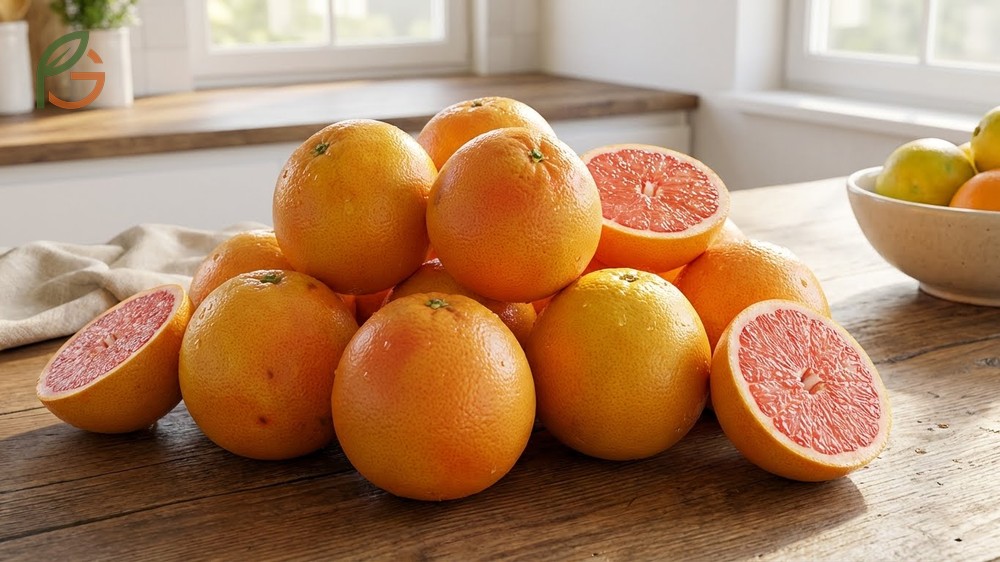
Selecting perfectly ripe grapefruit requires knowing what to look for beyond just seasonal timing. Physical characteristics reveal ripeness and quality better than appearance alone.
The sweetest, juiciest grapefruit combines proper color, weight, shape, and texture. These indicators work regardless of variety or growing region.
How to Select Ripe Grapefruit
Color provides the first ripeness clue. Look for all-over orange or yellow coloring without green patches, which indicate the fruit hasn’t fully ripened[10]. Don’t worry about minor blemishes or brown spots—these don’t affect internal quality.
Weight matters more than size when selecting grapefruit. A heavy grapefruit for its size indicates high juice content and ripeness[10][11]. Lightweight fruit typically contains less juice and may taste dry.
Shape reveals ripeness status. Ripe grapefruits show a slightly oval shape with flattened tops and bottoms rather than perfect spheres[10][11]. This imperfect shape indicates the fruit has softened and sweetened as it matured.
- Check color: All-over orange or yellow without green patches indicates ripeness
- Feel weight: Heavy for size means high juice content and peak ripeness
- Assess shape: Slightly oval with flattened ends indicates proper maturity
- Test firmness: Skin should feel firm when squeezed, not soft or mushy
- Examine texture: Smooth skin with minimal blemishes, though minor imperfections don’t affect flavor
- Smell the stem end: A sweet citrus aroma indicates ripeness and quality
Selection tip: Don’t avoid smaller grapefruits. Small fruit from late winter and early spring often contains more concentrated sweetness than larger specimens. Size doesn’t determine quality once grapefruit enters peak season.
Storage Tips
Proper storage extends grapefruit freshness significantly. Room temperature storage works for up to one week, but refrigeration preserves quality much longer[12].
Refrigerated grapefruit lasts two to three weeks when stored in the crisper drawer[12][6]. Optimal temperature ranges from 40-45°F (4-7°C) with proper humidity maintained by mesh bags that allow air circulation.
Cut grapefruit requires immediate refrigeration in airtight containers. This prevents drying and flavor absorption from other foods, keeping cut fruit fresh for two to three days.
Fresh grapefruit timing
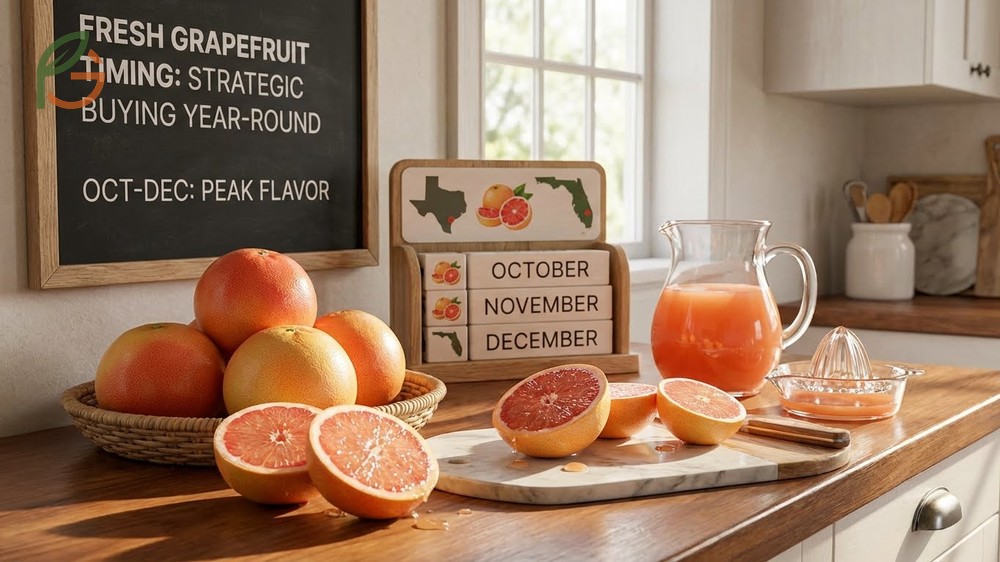
Strategic buying throughout the year ensures you’re always getting the freshest, most flavorful grapefruit. Regional transitions create continuous availability from October through August.
October marks the beginning of Texas grapefruit harvest, though fruit quality remains modest until November. Early October grapefruits work well for juicing but lack the sweetness of mid-season fruit.
November through December brings both Florida and Texas fruit to market. Quality improves rapidly during these months as cold weather enhances sugar development. This period offers excellent value before peak-season pricing hits.
January through March represents absolute peak season across Florida and Texas. You’ll find the sweetest, juiciest fruit during these months, with January and February delivering exceptional Ruby Red grapefruit[8].
April and May extend Florida’s season while Texas harvests wind down. Quality remains high through April but begins declining in May as fruit has hung on trees for extended periods.
June through September shifts to California production. Expect good quality but different flavor profiles compared to peak winter fruit. California grapefruit from summer months tends toward milder sweetness and higher acidity.
- October: Early Texas harvest begins, best for juicing rather than fresh eating
- November-December: Florida and Texas quality improves rapidly, excellent buying window
- January-March: Peak season for sweetness and juice content across all varieties
- April-May: Late Florida season maintains good quality, Texas harvest ends
- June-August: California season fills summer availability with milder flavor profiles
- September: Lowest availability month, wait for October domestic harvest resumption
Market tip: Farmers markets in Florida and Texas offer the freshest grapefruit during peak season at better prices than supermarkets. U-pick operations let you select fruit directly from trees, ensuring maximum freshness and quality.
Conclusion
The evidence is clear: when is grapefruit in season depends on your region, but November through May delivers the best domestic fruit from Florida and Texas groves. Peak sweetness hits between January and March when cold temperatures maximize sugar content and minimize acidity.
Current agricultural guidance emphasizes buying during each region’s optimal harvest window—Florida’s sweetest months run January through May, Texas peaks November through March, and California extends fresh availability January through August. FruitGarden helps you navigate seasonal timing to enjoy grapefruit at its absolute best, whether you’re growing your own trees or selecting fruit at market.
Frequently Asked Questions
What month is best for buying grapefruit?
January through March offers the best grapefruit across major growing regions. Winter cold enhances sweetness while maintaining high juice content, making these months ideal for both fresh eating and juicing.
Can you get fresh grapefruit year-round in the United States?
Yes, but quality varies significantly. Florida and Texas harvest November through May, while California produces January through August. September and October typically rely on imports or storage fruit with lower quality than fresh domestic harvests.
How do Florida and Texas grapefruit seasons differ?
Texas harvests from October through April with peak sweetness November through March. Florida’s longer season runs November through May, with sweetest fruit appearing January through May. Texas specializes in red-fleshed varieties, while Florida grows diverse types including white and pink grapefruit.
When should I avoid buying grapefruit?
September represents the lowest availability and quality month for domestic grapefruit. Late May through August shifts to California production with milder flavor profiles. Wait until October for Texas harvest resumption if you prefer peak sweetness.
Do different grapefruit varieties have different seasons?
Yes, varieties mature at slightly different times. Oro Blanco ripens early in late autumn, Ruby Red peaks January through February, and Rio Red produces from October through June with extended hang time. Star Ruby can remain on trees through mid-summer without quality loss.
How can I tell if grapefruit is ripe when buying at the store?
Look for heavy fruit with all-over yellow or orange color without green patches. Ripe grapefruit shows a slightly oval shape with flattened ends rather than perfect roundness. The skin should feel firm but slightly give when squeezed, not rock-hard or mushy.
How long does fresh grapefruit last after purchase?
Grapefruit lasts one week at room temperature or two to three weeks when refrigerated in the crisper drawer. Store at 40-45°F (4-7°C) for optimal preservation. Cut grapefruit requires airtight container storage and stays fresh for two to three days refrigerated.





