
What does grapefruit taste like? Grapefruit delivers a complex flavor profile that balances bright citrus tartness with distinctive bitterness and subtle sweetness[1]. The bitterness comes from naringin, a flavonoid compound that varies dramatically between varieties—with red grapefruits tasting significantly sweeter than white types[1]. FruitGarden synthesizes current horticultural research and growing data to help you understand grapefruit varieties and cultivation methods for your backyard garden.
Quick Answer
- Grapefruit combines citrus tartness, mild sweetness, and clean bitterness in a refreshing flavor experience
- Red varieties like Ruby Red contain half the bitterness of white grapefruits with berry-like sweetness[1]
- Growing from seed takes 10-15 days germination at 70-75°F (21-24°C)[2]
- Grapefruit season runs September through June with peak ripeness December to April[3]
What Does Grapefruit Taste Like
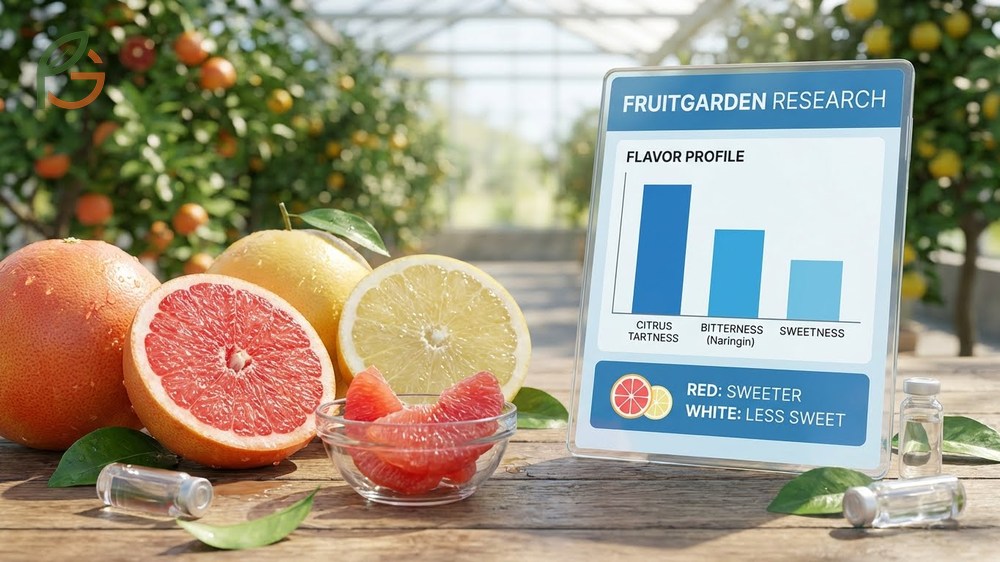
Research shows that grapefruit’s taste unfolds in distinct stages—starting with sharp citrus acidity that wakes up your taste buds, then transitioning into a complex interplay of sweet and bitter notes[1]. This isn’t the unpleasant bitterness of spoiled food. It’s a clean, refreshing bitterness that many people grow to appreciate over time.
The flavor profile varies dramatically depending on whether you’re eating white, pink, or red varieties. Red grapefruits offer berry-like undertones with minimal bitterness, while white grapefruits deliver pronounced bitter finish with clean citrus notes[1].
Most people find that grapefruit contains about half the sweetness of navel oranges but with significantly more bitterness and higher acidity[1]. This unique balance makes it stand out among citrus fruits.
Why Is Grapefruit Bitter
The primary compound responsible for grapefruit’s signature bitter note is naringin, a flavonoid that’s also found in smaller amounts in other citrus fruits[1]. This same compound interacts with certain medications, which is why you’ll see “do not consume with grapefruit” warnings on some prescriptions.
The concentration of naringin varies dramatically between grapefruit varieties. White grapefruits maintain higher concentrations of bitter compounds and generally taste more tart with less complex flavor notes[1].
Important Note: A small pinch of salt effectively reduces perceived bitterness by interfering with bitter taste receptors. You can also pair grapefruit with complementary flavors like mint or basil to balance the bitterness while preserving its refreshing character.
Grapefruit vs Orange Taste
Evidence suggests that grapefruit’s bold flavor is an acquired delight, appreciated by those who savor citrus intricacies[4]. Unlike oranges that deliver straightforward sweetness, grapefruit challenges your palate with its white bitter pith and tartness.
This bitterness plays a crucial role in balancing the overall flavor, uniquely enhancing the sweetness in ways that orange can’t match. While oranges are universally sweet and mild, grapefruit offers a more sophisticated taste experience that develops with repeated exposure.
Different Types of Grapefruit
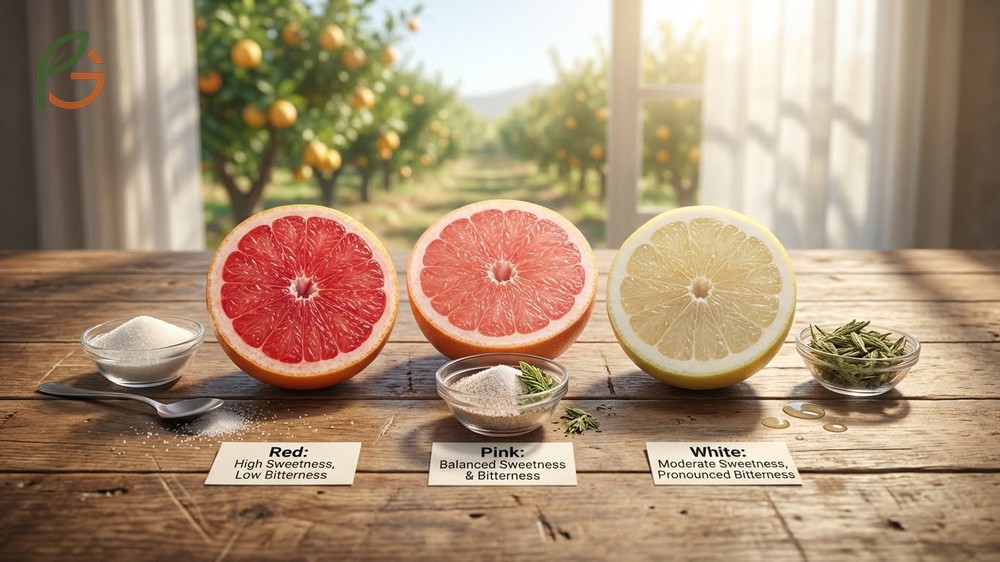
Current agricultural data shows that grapefruit varieties fall into distinct categories based on flesh color and sweetness levels. The color strongly correlates with taste profile—red and pink varieties contain lycopene and other pigments that develop alongside increased sugar content and decreased bitterness[1].
White grapefruits deliver moderate sweetness with high bitterness and clean citrus notes with pronounced bitter finish. Pink grapefruits strike a balance between sweet Ruby Red and tangier white varieties, offering delicately sweet flavor with noticeable bitter finish[5].
This table compares sweetness levels, bitterness intensity, and distinctive flavor characteristics across four major grapefruit varieties
| Grapefruit Variety | Sweetness Level | Bitterness Level | Distinct Flavor Notes |
|---|---|---|---|
| White Grapefruit | Moderate | High | Clean citrus, pronounced bitter finish[1] |
| Pink Grapefruit | Moderately Sweet | Moderate | Berry undertones, balanced tartness[1] |
| Ruby Red | Sweet | Low-Moderate | Raspberry hints, minimal bitterness[1] |
| Star Ruby | Very Sweet | Low | Nearly seedless, honey-like sweetness[1] |
Star Ruby Red Grapefruit
Star Ruby stands as the darkest red grapefruit variety, revered for its vibrant red and seedless flesh[6]. The pulp is darker, sweeter, and tarter than Ruby Red, with the redder flesh indicating higher levels of lycopene for greater nutritional punch.
Texas A&I University released this variety in 1970, originating from irradiated seed of Hudson grapefruit. Its primary attributes include intensely red flesh, good color retention even in late season, and a fairly uniform red blush on the rind[7].
Rio Red Grapefruit Tree
Rio Red represents the most commonly grown grapefruit in Texas, California, and Arizona. Texas A&M University made this variety available in 1984 as a natural mutation of Ruby Red—meaning it happened spontaneously without scientific intervention[6].
The flesh is even darker than Ruby Red, about seven to ten times deeper in color[6]. Rio Red trees are heavy bearers with slight tendency to alternation—exceptionally large crops are often followed by average-sized crops.
From My Experience: My cousin in Guadalajara, Mexico planted a Rio Red grapefruit tree in March 2023. The tree reached 4 feet versus the typical 3-5 foot range in its first year, thriving in their warm climate with minimal frost protection.
Texas Ruby Red Grapefruit
Ruby Red made history as the first grapefruit to receive a patent. Since the mutation was discovered in Texas, most of today’s Ruby Red grapefruits come from the state[6].
This variety falls within the Ruby-Sweet category, one of three trademarked groups of grapefruits. Also known as the redblush grapefruit, Ruby Red has seedless red flesh that might vary between pink and light red depending on the time of growing season[6].
How to Grow Grapefruit from Seed
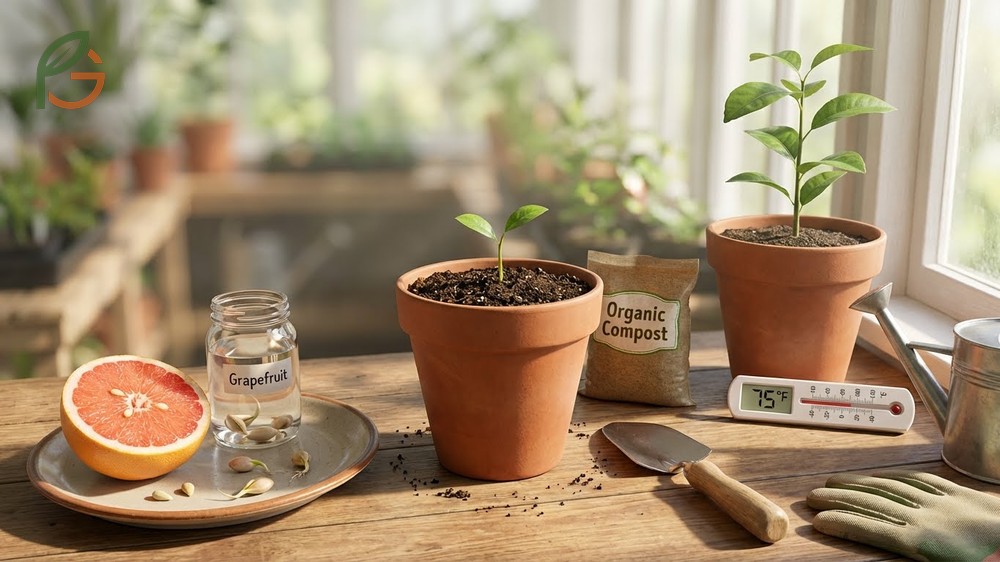
Studies demonstrate that growing grapefruit from seed is definitely doable, though it can be tricky for beginners[2]. You’ll want to grow grapefruits from seeds of fruits grown locally—this ensures that the fruits you’ll grow are well-adapted in your area.
The germination process typically takes 10 to 15 days when you keep seeds at 70-75°F (21-24°C)[2]. After germination, seedlings need rich potting soil or garden soil improved with organic compost.
Current guidance emphasizes that grapefruit trees thrive in USDA plant hardiness zones nine and up[3]. These are temperate or tropical-like regions that provide the warmth grapefruit trees need.
Growing Grapefruit from Seed Requirements
Grapefruit trees prefer warm, subtropical to tropical climates. They grow best in temperatures between 65°F and 85°F (18°C and 29°C)[8]. You’ll need to protect them from frost and temperatures below 41°F (5°C), as cold weather can damage the trees and affect fruit yield.
These trees are sun-loving and grow best where they’re sun-kissed all day. Site your location in an area where the soil is sandy loam with lots of organic matter[2].
- Temperature range: 65°F to 85°F (18°C to 29°C) with protection from frost below 41°F (5°C)
- Humidity levels: 40-60% for optimal growth and fruit development
- Planting zones: USDA 9 and up, with careful attention in zones 7-8
- Sunlight needs: Full sun exposure throughout the day in warm, sunny locations
- Soil type: Sandy loam enriched with organic matter for proper drainage and nutrition
- Spacing: Adequate space for trees to grow to full size without crowding
How to Plant Grapefruit Seeds
Pick a fruit that’s clean and free of blemishes. Cut the fruit in half and scoop out the middle part, then collect the viable, undamaged grapefruit seeds[2].
Set the seeds on a paper towel, then fold it to wrap the seeds. Spray the seeds and paper towel to thoroughly moisten it, then place them in a ziplock bag or plastic container with a cover[2]. Label the bag and place it in a warm, dark place.
Once seeds germinate after 10-15 days, you can prepare your planters or containers. Poke four 1-inch holes in the container with equal distance to each other, then drop the seeds with the roots down[2]. Water the container until moist but not soggy.
Important Tip: If you recycle containers for planting, make sure to drill holes in the bottom for proper drainage. Use rich potting soil or garden soil improved with organic compost to give your seedlings the best start.
Harvesting Grapefruit Time
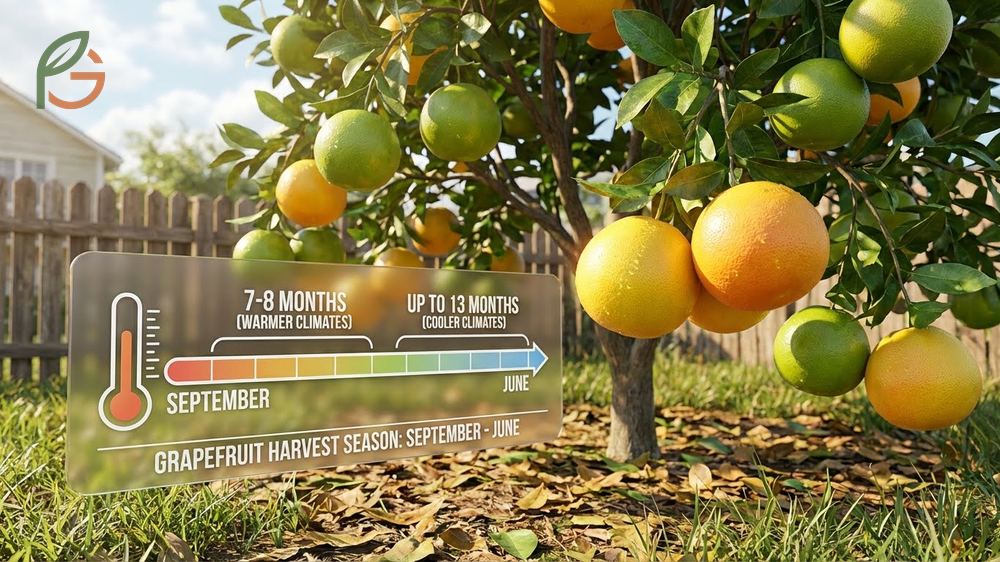
Research shows that grapefruit harvest timing varies significantly based on temperature differences. Harvest time may take place in seven to eight months in one area and up to thirteen months in another area due to temperature fluxes[9].
The fruit starts growing during summer months and ripens in fall and winter. Grapefruit season typically runs from September through June[3]. This extended season makes grapefruit one of the most reliable citrus crops for home gardeners.
Agricultural data shows that grapefruit is sweeter in regions of hot days and warm to hot nights, and more acidic in cooler areas[9]. This explains why Texas and Florida produce the sweetest grapefruits.
How to Tell If Grapefruit Is Ripe
An ideal grapefruit will display yellow skin with possible hints of red or pink. You’ll want to steer clear of fruits that exhibit green patches, as they may not be fully ripe[10]. Avoid those with soft brown spots, since these could indicate overripeness or damage.
The skin should feel firm and smooth when you gently squeeze the grapefruit—it should give slightly before returning to its original shape. A ripe grapefruit will have flat ends, referred to as poles, which are the top and bottom sections marked by dimples[10].
You’ll want a fruit that feels unexpectedly heavy for its size, as this suggests high juice content, ensuring it’ll be succulent[10]. Choose fruit that’s slightly oval with flat sides instead of those that are perfectly round.
- Peel color: Yellow with possible red or pink hints, no green patches visible
- Skin texture: Firm and smooth, gives slightly when squeezed then returns to shape
- Shape: Slightly oval with flat ends (poles) and dimples, not perfectly round
- Weight: Feels heavy for its size, indicating high juice content inside
- Surface: No soft brown spots or wrinkled, excessively lumpy exterior
Grapefruit Season Months
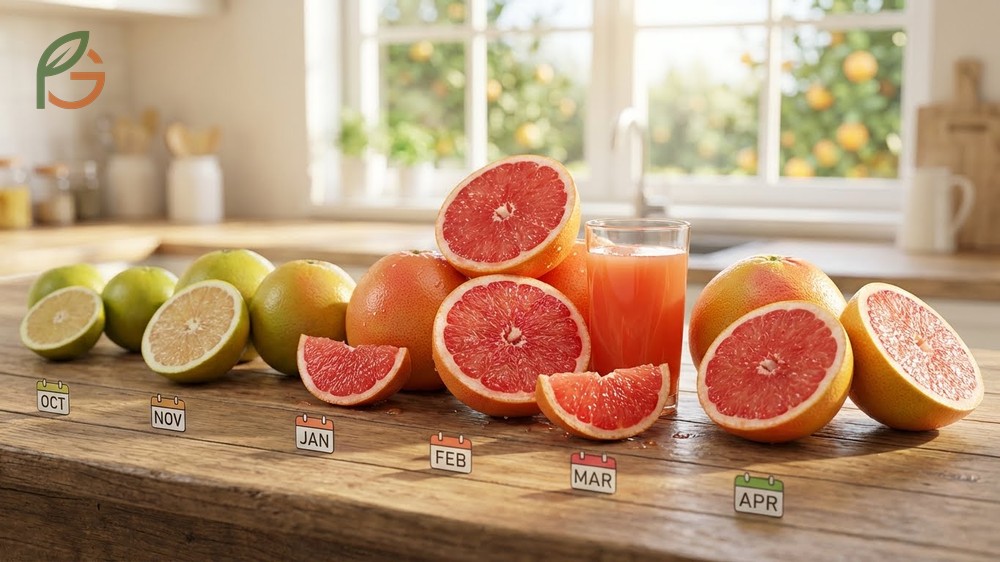
Florida grapefruit is in season from mid-September to early June, with the best fruit hailing from Florida and Texas found between November and June[11]. The peak starts around Christmas and continues through April.
Small early golden and pink grapefruits are the first to show up on the market in October. They’re very juicy, but not as sweet as they are later in the season[11]. Texas red grapefruits reach peak season for ripeness in December, with the Texas grapefruit season generally lasting from October to April.
The harvest must be done in the absence of fog or dew and when the fruit has fully matured. Once collected, the maturation doesn’t continue as it happens with other fruits, so timing is crucial for optimal sweetness.
Conclusion
The evidence is clear: what does grapefruit taste like depends heavily on which variety you choose—from the intense bitterness of white grapefruits to the honey-like sweetness of Star Ruby. Red varieties offer the most approachable flavor profile for beginners, balancing citrus tartness with berry-like sweetness and minimal bitterness.
Current guidance emphasizes that home gardeners in USDA zones 9 and up can successfully grow grapefruit from seed with proper temperature control between 65-85°F and patience for the 10-15 day germination period. FruitGarden provides comprehensive research-based insights to help you select the right variety and master cultivation techniques for your backyard orchard.
Frequently Asked Questions
What Is the Sweetest Grapefruit Variety?
Star Ruby is the sweetest grapefruit variety, offering very sweet flavor with low bitterness and honey-like sweetness. Rio Red comes in second with its darker flesh that’s seven to ten times deeper in color than Ruby Red, providing excellent sweetness with minimal bitter notes.
What Does Spoiled Grapefruit Taste Like?
Spoiled grapefruit tastes fermented or sour in an unpleasant way, completely different from the clean, refreshing bitterness of fresh fruit. You’ll notice soft brown spots on the skin, excessive softness when squeezed, and off-putting odors that signal the fruit has gone bad and shouldn’t be consumed.
How Do You Make Grapefruit Taste Sweet?
A small pinch of salt effectively reduces perceived bitterness by interfering with bitter taste receptors without adding sweetness. You can also pair grapefruit with complementary flavors like mint, basil, or a touch of honey to balance the bitterness while preserving the fruit’s refreshing character naturally.
How Long Does It Take to Grow Grapefruit from Seed?
Grapefruit seeds take 10 to 15 days to germinate when kept at 70-75°F in a warm, dark place. After planting germinated seeds, you’ll need several years before the tree produces fruit—typically 6-8 years for seed-grown trees compared to 3-4 years for grafted trees from nurseries.
What’s the Difference Between Grapefruit and Pomelo Taste?
Pomelo, grapefruit’s parent fruit, shares similar flavor components but with milder bitterness and sweeter profile overall. Pomelo delivers citrus taste that reminds one of lime with less sourness and bitterness than grapefruit, making it more approachable for those who find grapefruit too intense.
When Is the Best Time to Harvest Grapefruit?
The best time to harvest grapefruit is from December through April when fruits reach peak sweetness and ripeness. Harvest timing varies by region—taking seven to eight months in hot areas and up to thirteen months in cooler regions due to temperature differences affecting fruit development.
Can You Grow Grapefruit Trees in Containers?
Yes, you can grow grapefruit trees in containers with proper drainage holes and rich potting soil mixed with organic compost. Container-grown trees need full sun exposure, temperatures between 65-85°F, and protection from frost below 41°F, making them suitable for patios in USDA zones 9 and up.





