
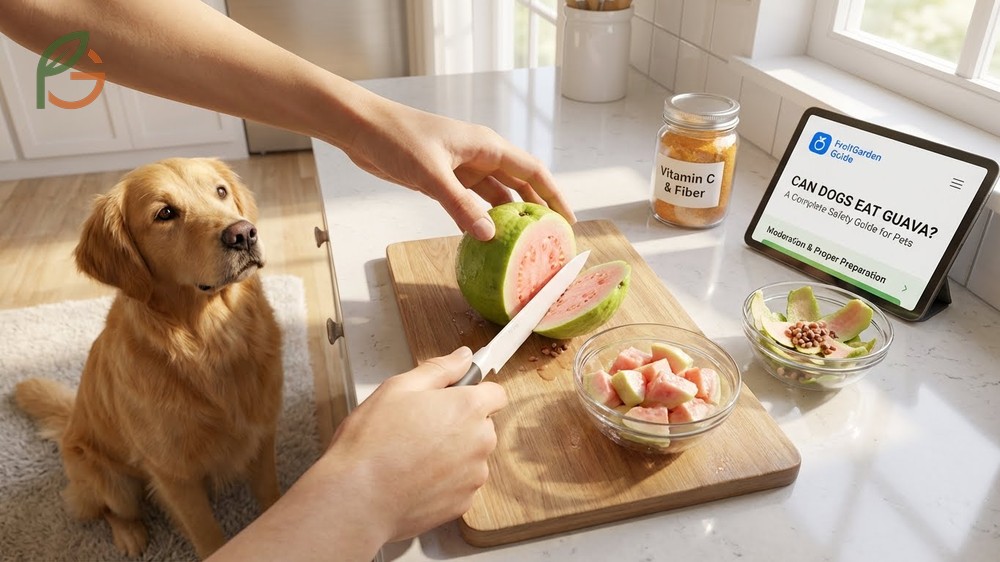
Can dogs eat guava? Yes, dogs can eat guava in moderation when properly prepared. Research shows that guava provides beneficial nutrients like vitamin C and fiber, but you must remove seeds and rind before feeding.[1] Studies demonstrate that while guava’s 228mg of vitamin C per 100g[2] supports immune health, the seeds contain trace cyanide that poses risks in large quantities.[3] FruitGarden synthesizes current veterinary guidance to help pet owners make informed feeding decisions.
Quick Answer
- Guava is safe for dogs when given in small amounts with seeds and rind completely removed[1]
- One 100g serving contains 68 calories[2], 5.4g fiber[2], and 417mg potassium[2]
- Seeds contain trace cyanide compounds that can be toxic in large quantities[3]
- Guava paste isn’t recommended due to excessive sugar content and preservatives[4]
Can Dogs Eat Guava
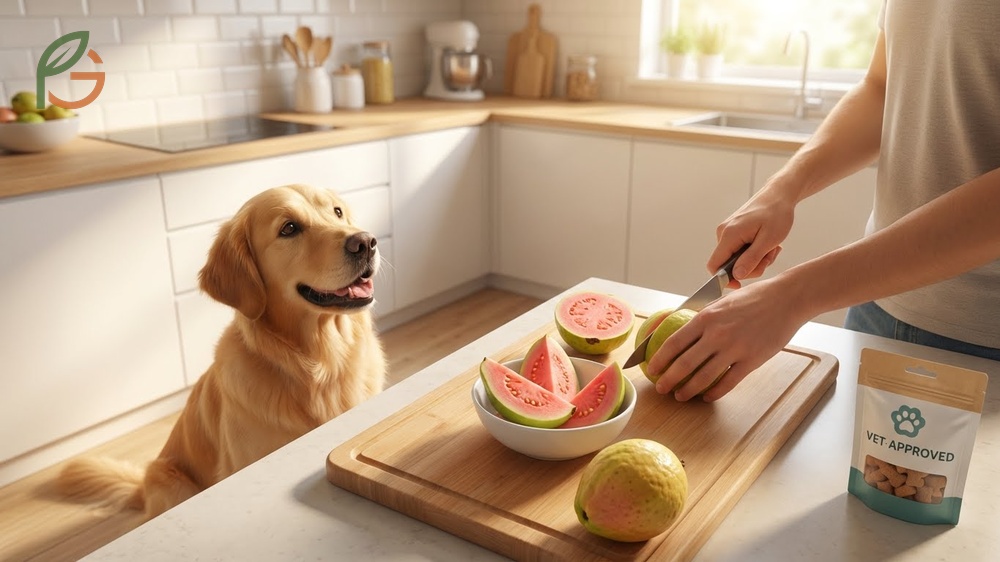
Dogs can safely consume guava fruit when you prepare it correctly. Current veterinary guidance emphasizes removing all seeds and rind before offering this tropical fruit to your pet.[5] The flesh provides vitamins and minerals that support canine health, but improper preparation creates choking hazards and digestive issues.
Evidence indicates that guava works best as an occasional treat rather than a dietary staple. Veterinary studies show that excessive consumption leads to gastrointestinal upset in most dogs due to the fruit’s high fiber content.[6] Most pet owners find success by limiting portions to small, bite-sized pieces offered 1-2 times per week.
The rind poses particular risks because it’s difficult for dogs to chew and digest properly. Research demonstrates that tough outer skins can cause intestinal blockages in smaller breeds or dogs who gulp food without chewing.[7] Slicing the flesh into small pieces reduces these risks significantly.
Nutritional Benefits of Guava for Dogs
Guava delivers exceptional nutritional value compared to many common fruits. The 228mg of vitamin C per 100g[2] is roughly four times the amount found in oranges, providing powerful antioxidant support for your dog’s immune system. This vitamin helps neutralize harmful free radicals that can damage cells over time.
The fiber content supports digestive health when given in appropriate amounts. Agricultural data shows that 5.4g of dietary fiber per 100g[2] aids regular bowel movements and helps prevent both constipation and diarrhea.[1] Dogs with sensitive stomachs benefit from gradual introduction to avoid overwhelming their system.
Potassium and magnesium content supports vital organ functions. The 417mg of potassium per 100g[2] helps maintain healthy heart rhythm and muscle function, while 22mg of magnesium[2] aids nutrient absorption and keeps dogs calm and relaxed.
Important Note: Don’t rely on guava as a primary vitamin C source for your dog. Unlike humans, dogs naturally produce their own vitamin C, so supplementation is only beneficial in specific health conditions diagnosed by your veterinarian.
Guava Seeds Dog Safety
Guava seeds contain cyanogenic glycosides that release trace amounts of cyanide when digested. Research confirms these compounds exist in low concentrations, but accumulation from repeated exposure or large quantities poses genuine toxicity risks.[3] Small dogs face higher risk because their body weight means toxic thresholds are reached faster.
The seeds also create physical hazards beyond chemical concerns. Veterinary reports document cases where seeds caused intestinal blockages or became lodged in the throat, requiring emergency intervention.[7] The hard texture means dogs can’t break them down through chewing like softer fruit components.
Complete seed removal before feeding eliminates these risks entirely. Cut the guava in half, scoop out the seed cavity with a spoon, and inspect the remaining flesh carefully for any stray seeds before offering it to your dog.
Is Guava Good for Dogs
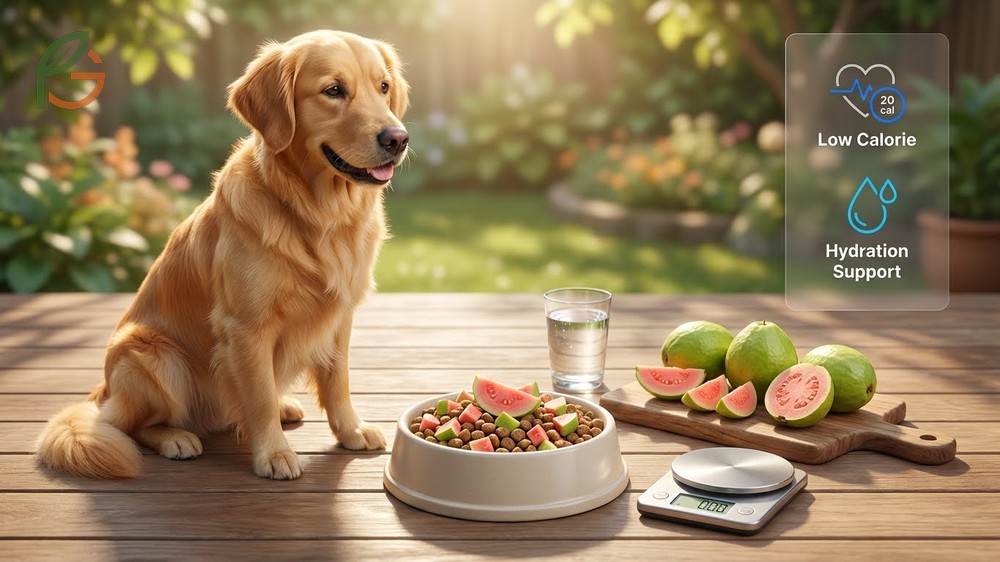
Guava offers genuine health benefits when incorporated thoughtfully into a balanced diet. The low calorie density makes it suitable for weight management, with only 68 calories per 100g[2] compared to many commercial dog treats that contain 300-400 calories per 100g. This makes guava an excellent choice for dogs who need to lose weight or maintain a healthy body condition.
The high water content contributes to hydration, particularly during warm weather. Studies indicate that fruits with elevated moisture levels help dogs meet their daily fluid requirements when fresh water intake is insufficient.[8] This becomes especially valuable for senior dogs who may not drink adequate amounts on their own.
However, the natural sugar content requires monitoring. While 8.9g of sugar per 100g[2] is relatively modest, dogs with diabetes or insulin resistance need restricted intake. What works for a healthy adult dog may cause blood sugar spikes in metabolically compromised pets.
Vitamin and Mineral Content
Guava provides a comprehensive micronutrient profile beyond just vitamin C. The 31µg of vitamin A per 100g[2] supports eye health and vision function, particularly important for aging dogs experiencing sight deterioration. Vitamin K content of 2.6µg per 100g[2] aids blood clotting and bone metabolism.
B-complex vitamins present in smaller amounts contribute to energy metabolism. The fruit contains folate, thiamin, riboflavin, niacin, and vitamin B6 that work together to convert food into usable energy.[2] Dogs with active lifestyles may benefit from these compounds during recovery periods.
Copper content of 0.23mg per 100g[2] plays a role in red blood cell formation and iron absorption. This trace mineral becomes particularly relevant for dogs recovering from anemia or those with poor nutrient absorption due to gastrointestinal conditions.
- Vitamin C for immune system support and antioxidant protection
- Dietary fiber for digestive health and regular bowel movements
- Potassium for heart health and proper muscle function
- Magnesium for nutrient absorption and nervous system regulation
- Low calorie content suitable for weight management programs
- High water content contributing to daily hydration needs
How Much Guava for Dogs
Portion size depends entirely on your dog’s weight and overall caloric needs. Veterinary nutritionists recommend that treats comprise no more than 10% of daily calorie intake.[9] For a 20-pound dog eating 500 calories daily, this means limiting guava to approximately 50 calories or 70-75 grams maximum.
Start with minimal amounts when introducing guava for the first time. Offer 1-2 small pieces and observe your dog for 24-48 hours before increasing the portion. This gradual approach identifies potential sensitivities or allergic reactions before they become serious problems.
Frequency matters as much as quantity. Most veterinarians suggest offering guava no more than 2-3 times per week to prevent digestive upset from excessive fiber intake. Daily feeding increases the risk of loose stools or gastrointestinal discomfort.
This table shows recommended guava serving sizes for dogs of different weights, listing maximum grams per serving and weekly frequency limits
| Dog Weight | Maximum Per Serving | Weekly Frequency | Preparation Method |
|---|---|---|---|
| 5-10 lbs | 15-20g (1-2 small pieces) | 1-2 times | Finely diced, seeds removed |
| 10-25 lbs | 25-40g (2-3 pieces) | 2 times | Small cubes, seeds removed |
| 25-50 lbs | 40-60g (3-4 pieces) | 2-3 times | Medium chunks, seeds removed |
| 50-75 lbs | 60-75g (4-5 pieces) | 3 times | Larger pieces, seeds removed |
| 75+ lbs | 75-90g (5-6 pieces) | 3 times | Substantial chunks, seeds removed |
Is Guava Paste Safe for Dogs
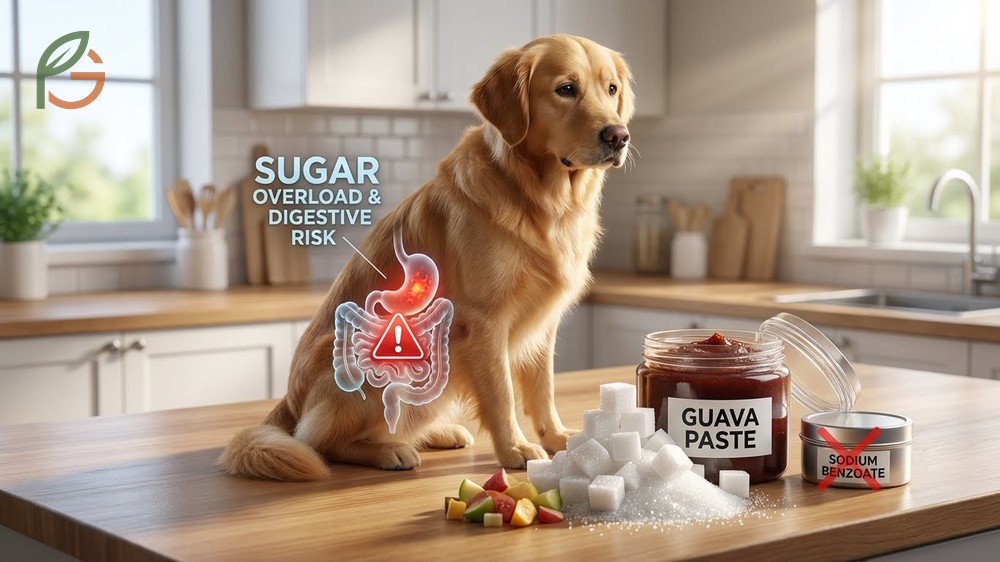
Guava paste isn’t recommended for dogs under any circumstances. The concentrated sugar content in commercial guava paste products typically ranges from 60-70% of total weight, far exceeding what dogs can safely process.[4] This extreme sweetness overwhelms canine digestive systems and creates immediate health risks.
Manufacturing processes introduce additional hazards beyond natural fruit sugars. Many guava paste products contain preservatives like sodium benzoate, artificial flavors, and stabilizers that aren’t tested for canine safety.[10] These additives can trigger allergic reactions or toxicity in sensitive dogs.
The condensed nature of paste means dogs consume massive quantities of fruit in tiny volumes. A single tablespoon of guava paste contains the equivalent sugar of 3-4 whole guavas, making portion control nearly impossible and blood sugar spikes inevitable.
Warning: Avoid all processed guava products including jams, jellies, sauces, and baked goods. These contain added sugars, artificial sweeteners like xylitol (extremely toxic to dogs), and other ingredients harmful to canine health. Stick to fresh guava flesh only.
Symptoms of Guava Allergy in Dogs

Allergic reactions to guava in dogs are uncommon but require immediate recognition. The most frequent symptoms include facial swelling around the muzzle, eyes, or ears that develops within 15-30 minutes of consumption. This swelling indicates histamine release and can progress to difficulty breathing if left untreated.
Skin reactions manifest as intense itching, hives, or red patches across the body. Dogs experiencing allergic responses often scratch excessively, bite at their paws, or rub their face against furniture to relieve discomfort.[6] These dermatological signs may appear 1-4 hours after eating guava.
Gastrointestinal symptoms differ from typical overconsumption effects. While excessive guava causes mild diarrhea from fiber overload, true allergies produce more severe reactions including projectile vomiting, bloody diarrhea, and significant abdominal pain evidenced by hunched posture or reluctance to move.
- Facial swelling particularly around eyes, muzzle, or throat
- Difficulty breathing, wheezing, or labored respiration
- Hives or raised welts appearing on skin surface
- Excessive scratching, licking, or biting at skin
- Vomiting within 30 minutes to 2 hours of consumption
- Severe diarrhea with blood or mucus present
- Lethargy, weakness, or collapse indicating anaphylaxis
Anaphylactic shock represents the most serious allergic complication. This life-threatening condition causes sudden cardiovascular collapse, loss of consciousness, and can result in death without emergency treatment. If your dog shows any combination of the symptoms above, contact your veterinarian or emergency clinic immediately.
Fruits Dogs Cannot Eat

Grapes and raisins top the list of toxic fruits for dogs. Even small quantities can cause acute kidney injury, with some dogs developing complete kidney failure after eating just a few grapes.[11] The toxic mechanism remains unknown, making it impossible to predict which dogs will react severely versus those who tolerate exposure.
Current data indicates no safe threshold exists for grape consumption. Cornell University veterinary research confirms that toxicity can occur from amounts as small as 0.32 ounces of grapes per kilogram of body weight, though some dogs react to even smaller quantities.[12] This unpredictability means complete avoidance is the only safe approach.
Currants, sultanas, and any grape-derived products carry identical risks. This includes grape juice, grape jelly, trail mix containing raisins, and baked goods with grape ingredients.[13] Dogs who consume these products require immediate veterinary evaluation regardless of whether symptoms appear.
Cherries, plums, peaches, and apricots contain cyanogenic glycosides in their pits, stems, and leaves. While the flesh itself is safe, accidental consumption of pits creates cyanide poisoning risks similar to guava seeds but at much higher concentrations. Always remove pits completely and monitor dogs around fruit trees bearing these stone fruits.
Unripe tomatoes and their green parts contain solanine, a glycoalkaloid toxin. Ripe red tomatoes in small amounts are generally safe, but green tomatoes, stems, and leaves cause gastrointestinal upset, neurological symptoms, and cardiac effects. Dogs who access garden tomato plants face genuine poisoning risks.
- Grapes (all varieties including red, green, and seedless)
- Raisins, currants, and sultanas (dried grapes)
- Cherry, plum, peach, and apricot pits (cyanide compounds)
- Unripe tomatoes and all green tomato plant parts
- Avocado (persin toxin in pit, skin, and leaves)
Emergency Action: If your dog eats grapes, raisins, or other toxic fruits, contact Pet Poison Helpline (855-764-7661) or ASPCA Animal Poison Control (888-426-4435) immediately. Don’t wait for symptoms to appear—early intervention significantly improves survival rates for toxic ingestions.
Healthy Fruit Treats for Dogs
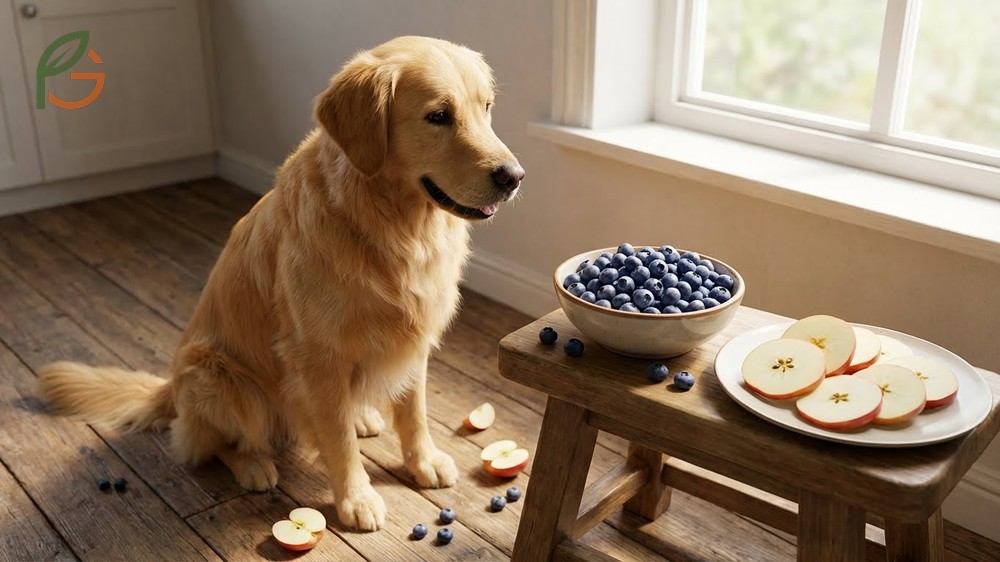
Several fruits offer excellent nutritional profiles without significant toxicity risks. Blueberries stand out as one of the safest options, packed with antioxidants and small enough to serve without choking concerns. The low sugar content relative to other fruits makes them ideal for diabetic dogs or those managing weight issues.
Apples provide satisfying crunch and dental benefits when served in slices with core and seeds removed. The fiber content aids digestion similarly to guava but with lower sugar concentrations.[14] Most dogs enjoy the crisp texture and natural sweetness without experiencing digestive upset.
Watermelon offers exceptional hydration during summer months. The 92% water content helps dogs stay hydrated while the lycopene provides antioxidant benefits. Remove all seeds and rind before serving, as these parts cause the same choking and digestive issues as guava seeds.
Strawberries contain enzymes that naturally whiten teeth while providing vitamin C and fiber. The small size makes portion control easy, though you should slice larger strawberries for small breeds to prevent choking. Fresh strawberries work better than frozen, which can be too hard for some dogs to chew safely.
Cantaloupe delivers beta-carotene that converts to vitamin A in your dog’s body. This supports eye health, immune function, and skin condition. However, the higher sugar content means you should offer cantaloupe less frequently than lower-sugar options like berries.
| Fruit | Primary Benefits | Preparation Required |
|---|---|---|
| Blueberries | High antioxidants, low sugar, brain health | Rinse, serve whole |
| Apples | Fiber, dental health, vitamins A and C | Remove core/seeds, slice |
| Watermelon | Hydration, lycopene, low calorie | Remove seeds/rind, cube |
| Strawberries | Vitamin C, teeth whitening enzymes | Remove stems, slice |
| Cantaloupe | Beta-carotene, vitamins A and C | Remove rind/seeds, cube |
| Pineapple | Bromelain enzyme, immune support | Remove core/skin, small pieces |
When introducing any new fruit, follow the same gradual approach recommended for guava. Start with one small piece and wait 24-48 hours to observe for adverse reactions before increasing portion sizes or frequency.
Conclusion
The evidence confirms that dogs can eat guava safely when you take proper precautions. Fresh guava flesh offers valuable nutrients including vitamin C, fiber, and potassium that support immune function and digestive health. However, you must remove all seeds and rind before serving to eliminate choking hazards and trace cyanide exposure.
Current veterinary guidance emphasizes moderation over frequency. Treat guava as an occasional snack rather than a dietary staple, limiting portions based on your dog’s weight and restricting servings to 2-3 times weekly maximum. FruitGarden recommends consulting your veterinarian before introducing guava to dogs with existing health conditions, particularly diabetes, obesity, or chronic gastrointestinal issues.
Medical Disclaimer
Important Medical Disclaimer: This content is for informational and educational purposes only. It’s not intended as a substitute for professional veterinary advice, diagnosis, or treatment. Always consult a qualified veterinarian before making any changes to your dog’s diet, medication, or health routine, especially if your pet has diabetes, allergies, or other medical conditions. Individual dogs may react differently to foods, and what’s safe for one dog may not be appropriate for another.
Frequently Asked Questions
Can Dogs Have Guava Every Day?
No, dogs shouldn’t eat guava daily. The high fiber content can cause digestive upset including diarrhea and stomach cramps when consumed too frequently. Veterinarians recommend limiting guava to 2-3 times per week as an occasional treat, not a daily food item.
Are Guava Leaves Safe for Dogs?
Guava leaves aren’t recommended for dogs and can be toxic in large quantities. While some cultures use guava leaf tea for medicinal purposes in humans, dogs process plant compounds differently and may experience adverse reactions. Stick to fresh guava flesh only and avoid all leaves, stems, and bark.
Can Cats Eat Guava?
Cats can technically eat small amounts of guava flesh, but they derive minimal benefit. As obligate carnivores, cats lack taste receptors for sweetness and don’t process fruit nutrients efficiently. Most cats show little interest in guava, and their dietary needs are better met through meat-based proteins.
What Happens If My Dog Eats Guava Seeds?
If your dog eats a few guava seeds, monitor for symptoms of cyanide poisoning including weakness, dilated pupils, difficulty breathing, or excessive drooling. Large quantities of seeds pose greater risks. Contact your veterinarian immediately if symptoms develop or if a small dog consumed numerous seeds.
Can Puppies Eat Guava?
Puppies can eat tiny amounts of prepared guava after 12 weeks of age, but it’s not necessary for their development. Puppy digestive systems are more sensitive than adults, making them prone to upset from new foods. If you offer guava, use portions smaller than adult recommendations and watch carefully for diarrhea or vomiting.
Does Guava Help With Dog Diarrhea?
No, guava doesn’t help treat diarrhea in dogs and may worsen the condition. The high fiber content can actually increase digestive upset in dogs already experiencing loose stools. For diarrhea treatment, veterinarians typically recommend a bland diet of boiled chicken and rice, not fruits.
Can Dogs Eat Pink or White Guava?
Dogs can eat both pink and white guava varieties safely when properly prepared. The nutritional differences between varieties are minimal, with both offering similar vitamin C, fiber, and potassium levels. Choose whichever variety is fresh and ripe, and always remove seeds and rind regardless of color.





