

The grapefruit diet plan is a short-term, low-calorie eating approach that claims you can lose up to 10 pounds in 12 days by eating grapefruit with every meal. Research shows this diet can produce modest weight loss, with participants losing 1.6 kg over 12 weeks when eating fresh grapefruit before meals, though it’s not a magic solution. FruitGarden examines current clinical evidence to help you understand what this diet actually delivers and whether it fits your health goals.
Quick Answer
- Fresh grapefruit consumption led to 1.6 kg weight loss over 12 weeks in clinical trials[1]
- One-half grapefruit contains only 41-60 calories and 1.4g fiber[2]
- The diet restricts calories to 800-1,200 per day, creating a significant caloric deficit
- Over 85 medications interact dangerously with grapefruit, including statins and blood pressure drugs
Grapefruit Diet Plan

The grapefruit diet plan is a restrictive eating pattern that’s been around since the 1930s, resurfacing every few decades with new variations. Studies demonstrate that participants eat half a grapefruit or drink grapefruit juice before each meal while following a low-calorie protocol[1]. The plan typically lasts 10-12 days and limits daily intake to 800-1,200 calories.
Research shows the diet emphasizes high-protein foods like eggs, lean meats, and fish combined with grapefruit at every meal. Current data indicates this approach works primarily through severe calorie restriction rather than any special fat-burning properties. Most people don’t realize that the low calorie count, not grapefruit itself, drives the majority of weight loss.
Evidence suggests the diet’s popularity stems from anecdotal reports of rapid weight loss. However, nutritionists warn that such restrictive eating patterns can’t be sustained long-term. The extreme calorie deficit often leads to muscle loss, nutrient deficiencies, and rapid weight regain once normal eating resumes.
How the Diet Works
The diet requires consuming half a grapefruit or 8 ounces of unsweetened grapefruit juice before each main meal. This preloading strategy is combined with specific food guidelines that severely restrict carbohydrates and total calories. Clinical trials show participants must eliminate sugar, most starches, and many common foods.
Research demonstrates that the diet operates on three key principles: calorie restriction, high protein intake, and grapefruit consumption. The protocol demands black coffee or tea without sweeteners, minimal vegetables, and no snacking between meals. Studies indicate compliance requires significant willpower due to hunger and food monotony.
- Consume half a fresh grapefruit or 8 oz grapefruit juice before breakfast, lunch, and dinner
- Limit daily calories to 800-1,200, with most coming from protein sources
- Eliminate all sugar, bread, pasta, rice, and starchy vegetables
- Drink at least 8 glasses of water daily to support metabolism
- Follow the plan for exactly 12 days, then take 2 days off before repeating
- Avoid all snacks between meals to maintain the caloric deficit
Scientific Basis
The diet’s claims about “fat-burning enzymes” in grapefruit lack scientific support. Studies published in peer-reviewed journals found no evidence of special enzymes that metabolize fat[4]. What research does show is that grapefruit’s high water content and fiber help with satiety.
Current evidence indicates grapefruit affects weight through simple volume displacement. One medium grapefruit provides 1.4g fiber and fills stomach space with only 60 calories[2]. This creates fullness before meals, naturally reducing food intake. The mechanism isn’t magical—it’s basic physics of stomach capacity.
Important Note: Any diet restricting calories to 800-1,200 per day will produce rapid weight loss, regardless of whether grapefruit is included. The extreme deficit, not the fruit, drives results.
Grapefruit Weight Loss Diet

The grapefruit weight loss diet produces measurable but modest results according to controlled studies. Research conducted at the Scripps Clinic with 91 obese participants showed fresh grapefruit eaters lost an average of 1.6 kg (3.5 pounds) over 12 weeks, compared to 0.3 kg in the placebo group[1]. These results are significant but far less dramatic than the diet’s 10-pound claims.
Studies demonstrate that grapefruit juice produced similar outcomes, with participants losing 1.5 kg over the same period[1]. Evidence suggests the benefit comes from pre-meal fruit consumption as a low-calorie preload strategy. A separate NIH-funded trial confirmed that any low-energy-dense food eaten before meals enhances weight loss on calorie-restricted diets[4].
Current data indicates participants in grapefruit studies also improved insulin resistance markers. The fresh grapefruit group showed significantly better 2-hour post-glucose insulin levels compared to controls[1]. However, researchers note that weight loss itself improves insulin sensitivity, making it difficult to separate grapefruit’s direct metabolic effects from general weight reduction benefits.
Clinical Evidence
Multiple clinical trials examined grapefruit’s weight loss effects between 2004 and 2013. The Scripps Clinic study remains the most cited, involving 91 participants who consumed either fresh grapefruit, grapefruit juice, grapefruit capsules, or placebo before three daily meals. All participants followed exercise guidelines of 30-minute walks three times weekly.
Research shows participants with metabolic syndrome experienced greater benefits. Those consuming any form of grapefruit lost significantly more weight than the placebo group across all measurements. Scientists observed an interesting pattern: the more “natural” the grapefruit form, the better the results—fresh fruit outperformed juice, which outperformed capsules.
- Fresh grapefruit group: 1.6 kg average weight loss over 12 weeks
- Grapefruit juice group: 1.5 kg average loss with comparable results to fresh fruit
- Grapefruit capsule group: 1.1 kg average loss showing some benefit from compounds
- Placebo group: 0.3 kg average loss demonstrating minimal change without intervention
- Metabolic syndrome subgroup: 2+ kg losses in all grapefruit groups versus placebo
- No participants reported serious adverse effects from grapefruit consumption itself
Weight Loss Mechanisms
Studies demonstrate grapefruit works through satiety enhancement rather than metabolic magic. The fruit’s 90% water content and soluble fiber create stomach fullness with minimal calories. Research indicates this preload effect reduces meal calorie intake by 20-29% when consumed 15 minutes before eating.
Evidence suggests grapefruit’s low glycemic index (25) helps stabilize blood sugar levels between meals. This prevents the energy crashes that trigger snack cravings. Current data shows participants who ate grapefruit before meals reported feeling fuller and more satisfied despite consuming fewer total calories throughout the day.
Reality Check: While grapefruit can support weight loss, studies show it works best as part of a balanced, calorie-controlled diet—not as the sole focus of an extreme 800-calorie plan.
12 Day Grapefruit Diet

The 12 day grapefruit diet follows a strict cycle: 12 days on the restrictive plan, followed by 2 days off, then repeating as desired. Supporters claim you can lose 10 pounds in the initial 12-day period, though scientific evidence doesn’t support such dramatic results. Research shows realistic expectations should be 3-5 pounds for most people, with much of that being water weight.
The plan operates on an extremely low calorie budget of 800-1,000 calories daily. Studies indicate this creates a deficit of 1,000-1,500 calories below most people’s maintenance needs. While this produces rapid initial weight loss, evidence demonstrates that such severe restriction triggers metabolic adaptations that slow fat loss over time.
Current data reveals the 2-day break serves two purposes: it prevents complete metabolic shutdown and makes the diet psychologically bearable. However, nutrition experts warn that this on-off pattern can establish unhealthy relationships with food. Most people regain lost weight quickly during break days, creating a frustrating yo-yo effect that undermines long-term success.
This table compares calorie intake, expected weight loss, and key characteristics across the three phases of the 12-day grapefruit diet cycle
| Phase | Duration | Daily Calories | Expected Weight Loss | Key Characteristics |
|---|---|---|---|---|
| Active Diet | 12 days | 800-1,000 | 3-5 lbs | Grapefruit before every meal, high protein, no carbs |
| Break Period | 2 days | 1,500-2,000 | 0-2 lbs gain | Normal eating, no grapefruit requirement |
| Repeat Cycle | Variable | 800-1,000 | 2-4 lbs per cycle | Diminishing returns with each repetition |
Research shows the diet’s rigid structure leaves little room for individual preferences or lifestyle factors. Breakfast typically consists of two eggs, two slices of bacon, and half a grapefruit—totaling around 300 calories. Lunch and dinner follow similar patterns with lean protein, minimal vegetables, and mandatory grapefruit. This monotony causes most people to quit before completing even one 12-day cycle.
- Severe hunger and low energy levels, especially during days 3-7
- Difficulty maintaining social activities that involve food
- Intense cravings for restricted foods like bread, pasta, and sweets
- Potential nutrient deficiencies from limited food variety
- Digestive issues from sudden diet changes and high protein intake
- Irritability and difficulty concentrating due to low calorie consumption
Warning: Repeatedly cycling between extreme restriction and normal eating can disrupt your metabolism and hunger signals. Studies show this pattern often leads to higher body weight long-term compared to steady, moderate calorie reduction.
Grapefruit Diet Menu

The grapefruit diet menu follows a repetitive pattern designed to maximize protein while minimizing carbohydrates and calories. Each day begins with half a grapefruit, two eggs (any style), and two strips of bacon for breakfast—providing approximately 300 calories. Black coffee or unsweetened tea is unlimited throughout the day.
Lunch typically includes half a grapefruit, a serving of lean protein (4-6 oz chicken, fish, or lean beef), and a small green salad with vinegar-based dressing—totaling around 350 calories. Dinner mirrors lunch with another half grapefruit, protein portion, and vegetables. The daily total rarely exceeds 1,000 calories, creating the deficit that drives rapid weight loss.
For breakfast on a typical day, you’d eat your half grapefruit 15 minutes before the eggs and bacon. This timing supposedly enhances the fat-burning effect, though studies show it simply increases fullness. Mid-morning and afternoon snacks aren’t allowed, forcing your body to run on minimal fuel for 4-5 hours between meals. By evening, most dieters feel exhausted and irritable from the severe energy deficit.
Lunch options rotate between grilled chicken breast, tuna packed in water, or broiled white fish. You can have unlimited lettuce, cucumber, celery, and tomatoes, but starchy vegetables like potatoes, corn, and carrots are forbidden. The half grapefruit must be eaten first, then the protein, then vegetables. This sequencing is part of the diet’s methodology, though evidence doesn’t support different absorption based on eating order.
Dinner provides slightly larger protein portions—up to 8 oz if you’re particularly hungry. Popular choices include grilled salmon, lean steak, or chicken thighs. You can add one cup of steamed broccoli, green beans, or spinach. The final half grapefruit of the day caps off your evening meal. No eating is permitted after 7 PM regardless of hunger levels, which can make evenings challenging for late-day exercisers or those with demanding schedules.
- Day 1 Breakfast: ½ grapefruit, 2 scrambled eggs, 2 bacon strips, black coffee (300 cal)
- Day 1 Lunch: ½ grapefruit, 5 oz grilled chicken breast, mixed green salad with lemon juice (320 cal)
- Day 1 Dinner: ½ grapefruit, 6 oz broiled salmon, 1 cup steamed broccoli (380 cal)
- Day 2 Breakfast: ½ grapefruit, 2 boiled eggs, 1 slice ham, unsweetened tea (280 cal)
- Day 2 Lunch: ½ grapefruit, 5 oz tuna (water-packed), cucumber and tomato salad (300 cal)
- Day 2 Dinner: ½ grapefruit, 7 oz lean ground beef patty, 1 cup green beans (420 cal)
Practical Tip: If you can’t tolerate grapefruit three times daily, some diet versions allow substituting grapefruit juice at one meal. However, whole fruit provides more fiber and satiety than juice, making hunger management easier.
Grapefruit Diet Effectiveness
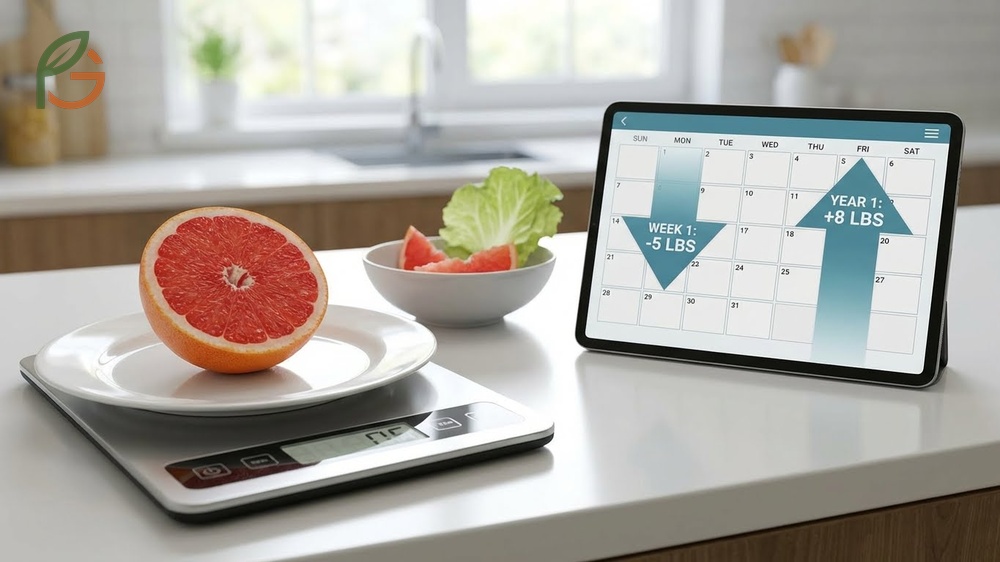
The grapefruit diet’s effectiveness depends on how you define success. Research shows short-term weight loss is virtually guaranteed due to severe calorie restriction—you can’t eat only 800-1,000 calories daily without dropping pounds. However, studies demonstrate that 95% of people who lose weight on very low-calorie diets regain it within one to five years. The real question isn’t whether it works temporarily, but whether those results last.
Current evidence indicates the diet’s extreme nature makes long-term adherence nearly impossible. Clinical trials that tracked participants beyond the initial intervention period found rapid weight regain once normal eating resumed. Evidence suggests the body adapts to severe restriction by lowering metabolic rate by 10-15%, making it harder to maintain weight loss even with careful eating afterward.
Studies comparing grapefruit-based diets to conventional calorie-restricted plans show no significant advantage for grapefruit at equivalent calorie levels. A 2011 NIH study found that eating any low-calorie food before meals—apples, carrots, or grapefruit—produced similar weight loss results[4]. The benefit comes from volume and fiber, not unique grapefruit compounds.
What often gets overlooked is the diet’s severe nutritional inadequacy. At 800-1,000 calories, you can’t meet daily requirements for essential vitamins, minerals, and nutrients. Research shows prolonged use risks deficiencies in calcium, iron, B vitamins, and healthy fats necessary for hormone production. Most health organizations recommend diets provide at least 1,200 calories for women and 1,500 for men to prevent metabolic damage.
The diet’s drug interaction risk presents serious safety concerns. Studies document that grapefruit contains compounds called furanocoumarins that inhibit the CYP3A4 enzyme in your intestines[3]. This enzyme metabolizes over 85 common medications, including statins, blood pressure drugs, antidepressants, and antihistamines. Eating grapefruit while taking these medications can increase drug levels in your bloodstream by 200-800%, potentially causing dangerous side effects like muscle breakdown, organ damage, or irregular heart rhythms.
- Pro: Produces rapid initial weight loss of 3-5 pounds in the first week
- Pro: Simple rules that don’t require calorie counting or meal planning
- Pro: Short duration (12 days) feels manageable compared to long-term diets
- Con: Extremely low calories risk metabolic slowdown and muscle loss
- Con: Severe restriction leads to rebound weight gain in most people
- Con: Dangerous drug interactions affect millions of Americans on medications[3]
- Con: Nutritionally inadequate for essential vitamins and minerals
- Con: Creates unhealthy relationship with food through extreme restriction
Critical Consideration: If you’re taking ANY daily medication, consult your doctor before starting this diet. The drug interaction risk isn’t theoretical—it has caused hospitalizations and deaths documented in medical literature.
Conclusion
The evidence is clear: the grapefruit diet plan produces short-term weight loss through severe calorie restriction, not magical fat-burning properties. Research consistently shows you’ll lose weight on any diet providing only 800-1,000 calories daily, with or without grapefruit. While studies confirm modest benefits from eating grapefruit before meals—about 1.6 kg over 12 weeks[1]—this doesn’t justify the diet’s extreme restrictions or safety risks.
Current nutritional guidance emphasizes sustainable eating patterns that you can maintain for life, not 12-day crash diets that set you up for rebound weight gain. If you want to incorporate grapefruit’s benefits without the risks, simply eat half a grapefruit before meals as part of a balanced 1,500-2,000 calorie diet. This approach gives you grapefruit’s satiety benefits while providing adequate nutrition—and it won’t interact dangerously with your medications or tank your metabolism. FruitGarden supports evidence-based approaches that nourish your body while achieving your weight goals safely.
Medical Disclaimer
Important Medical Disclaimer: This content is for informational and educational purposes only. It’s not intended as a substitute for professional medical advice, diagnosis, or treatment. Always consult a qualified healthcare professional before starting any diet program, especially if you have existing health conditions, take medications, or have a history of eating disorders. The grapefruit diet’s extreme calorie restriction and potential drug interactions can be dangerous. Never make changes to your medication regimen without direct supervision from your prescribing physician. If you experience dizziness, extreme fatigue, or other concerning symptoms while dieting, seek medical attention immediately.
Frequently Asked Questions
Does the grapefruit diet actually burn fat?
No, grapefruit doesn’t contain special fat-burning enzymes despite popular claims. Research shows weight loss occurs because the diet restricts calories to 800-1,000 daily, creating a large deficit. Studies found that eating grapefruit before meals helps with satiety due to its high water and fiber content, which reduces overall food intake, but this isn’t the same as burning fat through special compounds.
How much weight can you realistically lose in 12 days?
Research indicates realistic weight loss is 3-5 pounds during the first 12-day cycle, with much of that being water weight and muscle rather than pure fat. Clinical trials showed participants lost 1.6 kg over 12 weeks with grapefruit consumption[1], which contradicts claims of 10-pound losses in 12 days. Rapid weight loss typically returns quickly once normal eating resumes.
Is it safe to eat grapefruit three times a day?
For most healthy people not taking medications, eating grapefruit three times daily is physically safe but may cause digestive discomfort. However, studies show grapefruit interacts with over 85 common medications[3], including statins, blood pressure drugs, and antidepressants. These interactions can increase drug levels by 200-800%, causing serious side effects. Always check with your doctor before increasing grapefruit consumption if you take any prescription medications.
Can you drink grapefruit juice instead of eating whole grapefruit?
Yes, clinical trials showed grapefruit juice produced similar weight loss results to fresh fruit, with participants losing 1.5 kg compared to 1.6 kg for fresh grapefruit[1]. However, whole fruit provides more fiber and creates better satiety with fewer calories per volume. Juice also has the same drug interaction risks as fresh grapefruit, so medication considerations still apply.
What medications can’t you take with grapefruit?
Research documents over 85 medications that interact with grapefruit, with 43 causing potentially serious effects[3]. Common categories include statins (atorvastatin, simvastatin), blood pressure drugs (felodipine, nifedipine), immunosuppressants (cyclosporine), certain antidepressants (sertraline), and antihistamines. Grapefruit inhibits the CYP3A4 enzyme that metabolizes these drugs, causing dangerously high blood levels. Always verify safety with your pharmacist before consuming grapefruit if you take any prescription medications.
Why do you regain weight after the grapefruit diet?
Studies show extreme calorie restriction triggers metabolic adaptations that reduce your metabolic rate by 10-15%, making weight maintenance difficult. Your body also loses significant muscle mass on very low-calorie diets, which further lowers calorie burning. Evidence indicates that when you return to normal eating, your slower metabolism combined with increased hunger hormones leads to rapid regain. Most research shows 95% of people regain weight lost on crash diets within 1-5 years.
What’s a healthier alternative to the grapefruit diet?
Research supports incorporating grapefruit into a balanced 1,500-2,000 calorie diet rather than following the extreme plan. Studies show eating half a grapefruit before one or two meals daily can support weight loss through satiety without risks of severe restriction[4]. This approach provides adequate nutrition, maintains muscle mass, and creates sustainable habits. Aim for 500-750 calorie daily deficit combined with regular physical activity for steady 1-2 pound weekly loss that you can maintain long-term.





