
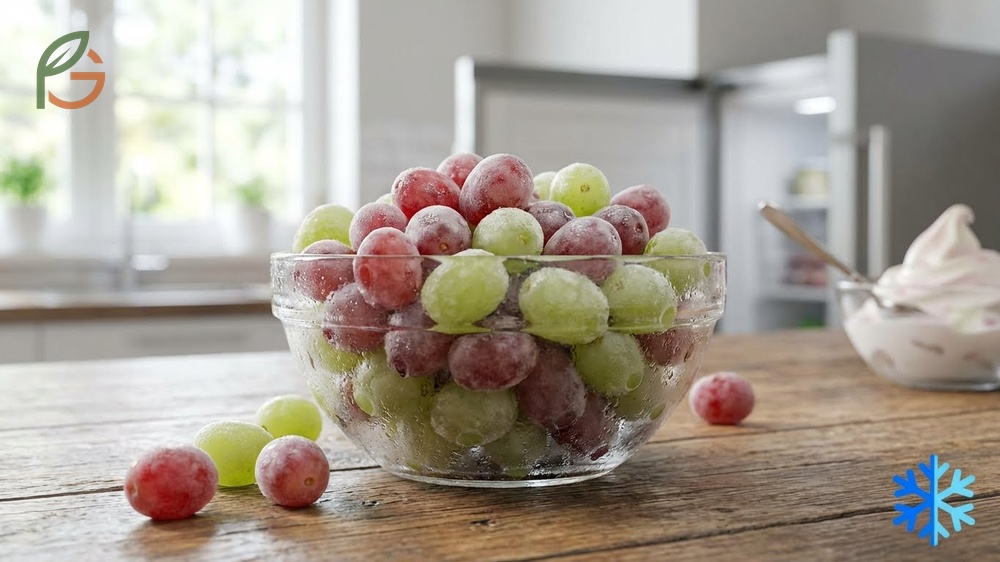
Can you freeze grapes? Yes, and they’re one of the easiest fruits to freeze successfully. Research shows that frozen grapes retain their nutritional value while transforming into a naturally sweet, refreshing treat that lasts 8-12 months in your freezer[1]. What often gets overlooked is that freezing doesn’t diminish the antioxidants or vitamins in grapes—you’re simply changing their texture to create a healthy alternative to ice cream or popsicles. FruitGarden brings you evidence-based guidance on selecting, freezing, and enjoying grapes as convenient frozen snacks for the whole family.
Quick Answer
Can You Freeze Grapes
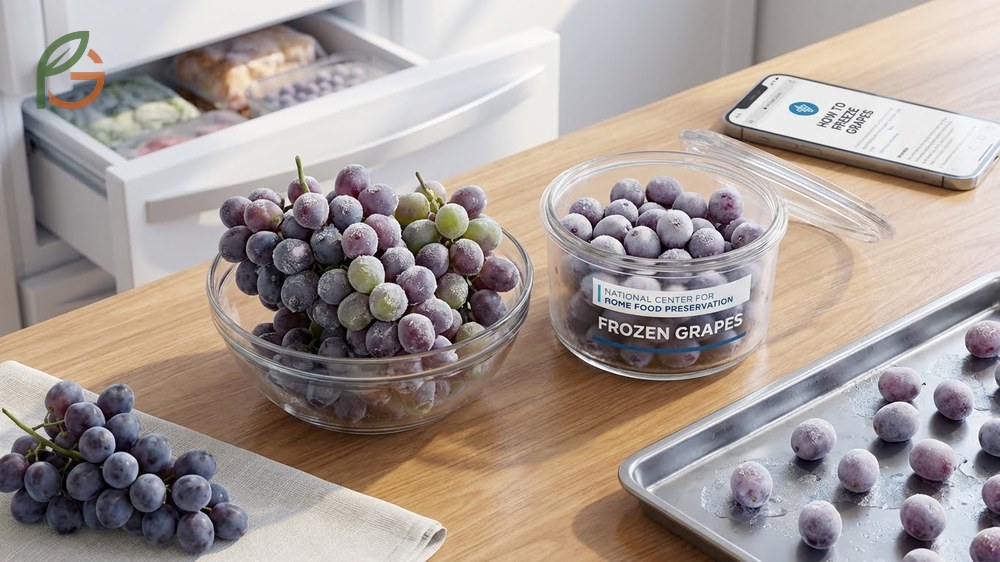
Freezing grapes is one of the simplest food preservation methods you’ll ever try. Unlike many fruits that turn mushy when frozen, grapes maintain their structure because of their natural water content and skin thickness. The National Center for Home Food Preservation confirms that grapes freeze exceptionally well using either a simple loose-pack method or a traditional syrup pack for long-term storage[4].
Most people don’t realize that frozen grapes actually taste sweeter than fresh ones. This happens because freezing concentrates the natural sugars while reducing the grapes’ water activity. The texture transforms into something similar to sorbet or mini popsicles—crisp on the outside with a slightly creamy interior.
Current data from university extension programs shows you can freeze grapes with or without stems, though removing stems prevents freezer burn and saves storage space[5]. The process works for all grape varieties, from red and green seedless to specialty types like Cotton Candy or Moon Drop grapes.
Why Freezing Works
Grapes have a unique cellular structure that handles freezing better than softer berries. Their thick skins act as natural barriers, protecting the fruit’s interior from ice crystal damage. When you freeze grapes rapidly, small ice crystals form instead of large ones, which helps maintain texture when you’re ready to eat them.
The USDA recognizes grapes as suitable for freezing both with and without added sugar syrup[6]. This versatility means you can choose the method that fits your needs—whether you’re making quick snacks or preparing grapes for smoothies and recipes.
Nutritional Benefits
Research demonstrates that freezing doesn’t significantly alter the nutritional content of grapes. They retain their vitamin C, vitamin K, potassium, and powerful antioxidants like resveratrol even after months in the freezer. A one-cup serving of frozen grapes provides the same 62 calories and 16g carbohydrates as fresh grapes[3].
Studies show that antioxidants in grapes support heart health and reduce inflammation throughout the body. The freezing process actually helps preserve these compounds by stopping enzymatic activity that would otherwise degrade them over time.
Important Note: Don’t wash grapes until you’re ready to freeze them. Excess moisture speeds up decay, so it’s best to wash right before the freezing process begins.
How to Freeze Grapes
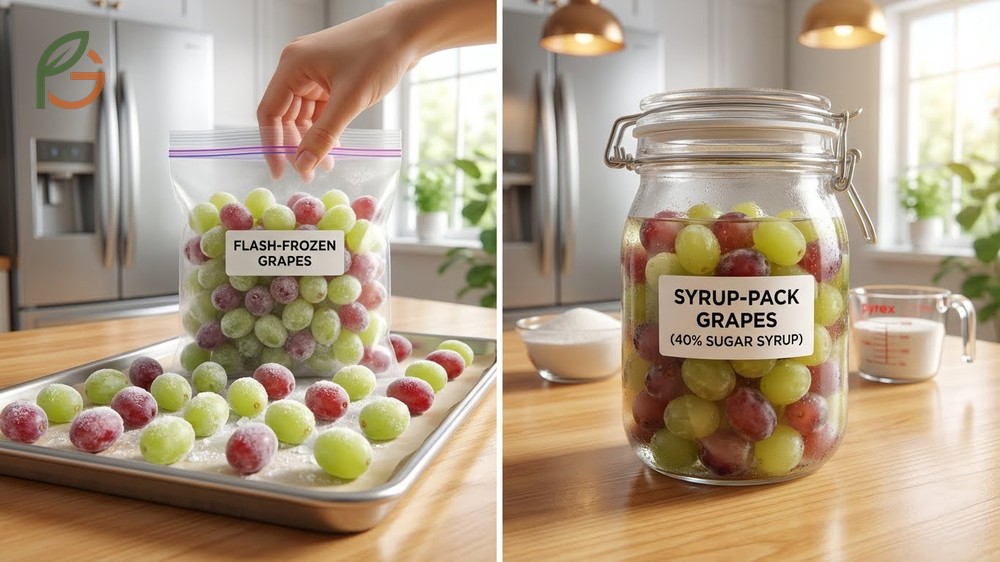
The most popular method for freezing grapes is the flash-freeze technique, which prevents clumping and lets you grab individual grapes whenever you want a snack. This approach takes minimal effort and doesn’t require any special equipment beyond a baking sheet and freezer bags.
For long-term storage beyond six months, the syrup-pack method offers better protection against freezer burn. University extension programs recommend a 40 percent sugar syrup (which is 3 cups sugar dissolved in 4 cups water) for covering grapes in airtight containers[4].
Washing and Preparation
Start by selecting firm, ripe grapes with vibrant color and no soft spots. Rinse them under cool running water to remove any residue or debris. Pat them completely dry with paper towels or a clean kitchen cloth—this step is crucial because water left on the skins will create excess ice crystals.
Remove all stems using kitchen scissors or simply pull the grapes off by hand. If you’re freezing grapes with seeds, cut them in half and scoop out the seeds with a small spoon before proceeding.
- Choose fully ripe grapes with firm texture and sweet flavor
- Wash thoroughly under cool running water to remove pesticide residue
- Dry completely with paper towels—moisture causes ice buildup
- Remove all stems and check for any damaged or moldy grapes
- For seeded varieties, halve grapes and remove seeds before freezing
- Sort grapes by size if you want even freezing times
Flash Freezing Method
Spread your prepared grapes in a single layer on a baking sheet lined with parchment paper. Make sure they don’t touch each other—this prevents them from freezing together in clusters. Place the baking sheet in your freezer on a flat surface.
Leave the grapes undisturbed for 2-4 hours until they’re completely solid[2]. You’ll know they’re ready when they feel as hard as ice cubes with no give when squeezed. For extra-firm grapes that hold up better in drinks, freeze them overnight (6-8 hours).
Long-Term Storage
Once frozen solid, quickly transfer the grapes to freezer-safe containers or resealable bags. Remove as much air as possible before sealing—a vacuum sealer works great here, but you can also press out air manually. Label each container with the date and grape variety.
Store frozen grapes at 0°F (-18°C) or below for optimal quality. They’ll maintain their best flavor and texture for 8-12 months, though they remain safe to eat indefinitely as long as they stay frozen[1].
Storage Tip: Don’t refreeze grapes once they’ve thawed. The texture will become mushy and unappetizing. Only take out what you plan to eat within the next few hours.
How Long Does It Take for Grapes to Freeze
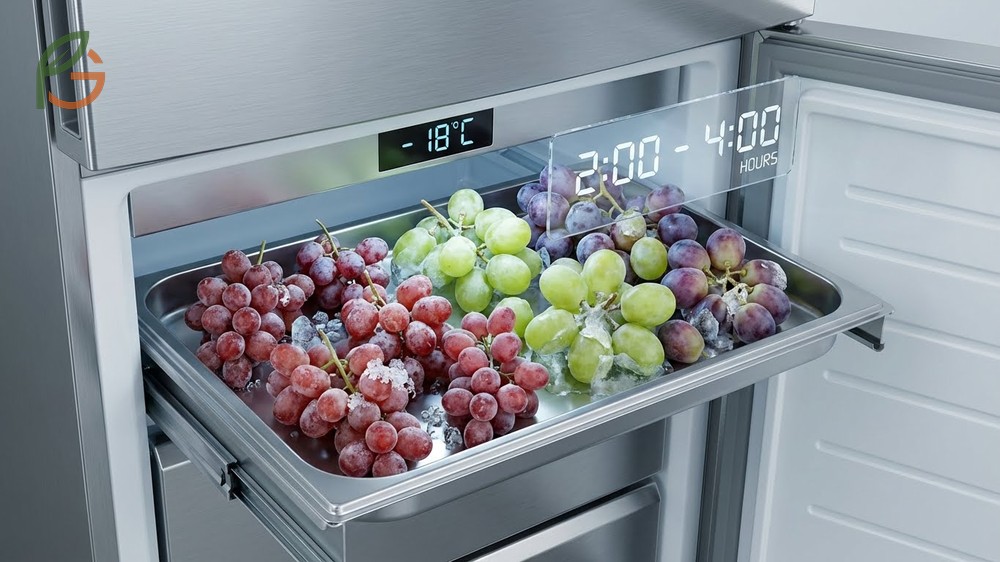
The freezing timeline depends on three main factors: your freezer’s temperature, the size of your grapes, and how many you’re freezing at once. Standard home freezers set at 0°F (-18°C) will freeze grapes in 2-4 hours on average[2].
Smaller grapes like champagne or Thomcord varieties freeze faster—sometimes in as little as 90 minutes. Larger globe grapes might need the full four hours or slightly more to freeze completely through to the center. You’ll get the best results if you don’t overcrowd your baking sheet.
For snacking purposes, most folks prefer grapes frozen for at least 2 hours, which gives them that perfect crispy-on-the-outside, slightly-soft-inside texture. If you’re using frozen grapes as ice cubes for drinks, freeze them overnight (6-8 hours) so they won’t melt too quickly and dilute your beverage.
From My Experience: My cousin in Guadalajara, Mexico freezes batches of grapes every Sunday for her kids’ lunchboxes. She noticed that grapes frozen for exactly 3 hours stay firmer in lunch containers for 4-5 hours without getting too soft—matching the typical school day timeline.
Temperature matters more than you might think. If your freezer runs slightly warmer than 0°F, add an extra hour to the freezing time. Check your freezer thermometer to make sure it’s maintaining the proper temperature for food safety.
- Freezer temperature: Colder settings (below 0°F) freeze grapes faster
- Grape size: Small champagne grapes freeze in 90 minutes; large globe grapes need 4+ hours
- Quantity: Single layer freezes faster than stacked or touching grapes
- Moisture content: Completely dry grapes freeze more evenly than wet ones
- Baking sheet material: Metal sheets conduct cold better than plastic trays
Best Grapes to Freeze
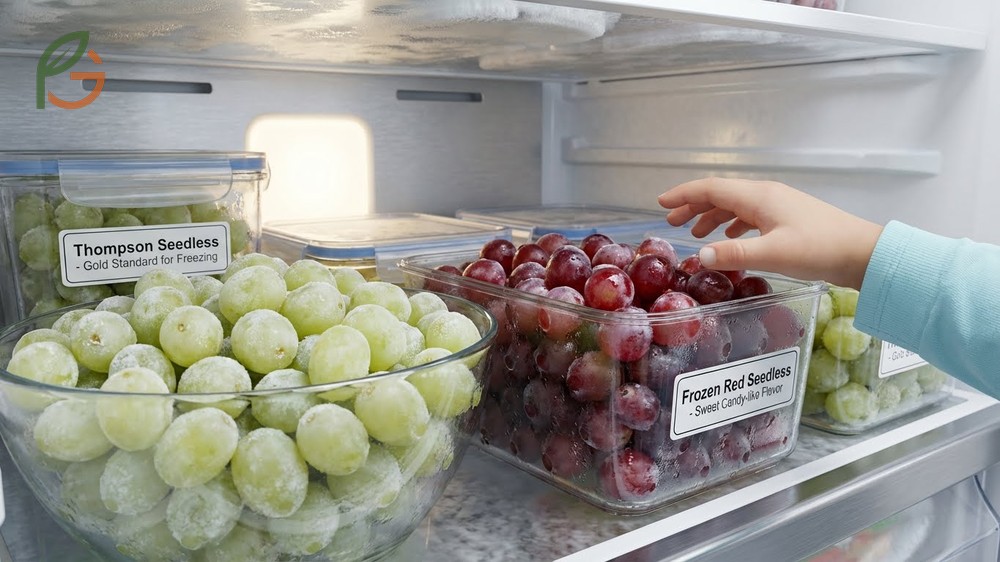
Seedless varieties work best for freezing because you can pop them straight into your mouth without any prep. Thompson Seedless remains the gold standard—it’s the most widely available variety and freezes beautifully with its medium-sized berries and neutral flavor[7].
Red seedless grapes tend to taste sweeter when frozen compared to green varieties. Varieties like Flame Seedless, Crimson Seedless, and Red Globe develop an almost candy-like sweetness that kids absolutely love. Green grapes like Thompson or Autumn Crisp offer a more tart, refreshing flavor that works great in smoothies or as cocktail garnishes.
Specialty grapes have exploded in popularity recently. Cotton Candy grapes live up to their name with an intense sweetness that intensifies when frozen. Moon Drop grapes with their elongated shape and firm snap make elegant additions to wine glasses or party platters.
This table compares freezing characteristics, sweetness levels, best uses, and availability windows for five popular grape varieties suitable for freezing
| Variety | Color | Sweetness Level | Best Use When Frozen | Peak Season |
|---|---|---|---|---|
| Thompson Seedless | Green | Mild-sweet | Smoothies, snacking | July-November |
| Flame Seedless | Red | Sweet | Kids’ snacks, party treats | June-September |
| Cotton Candy | Green-pink | Very sweet | Dessert substitute | August-September |
| Crimson Seedless | Red | Sweet-tart | Wine chillers, cocktails | August-January |
| Moon Drop | Dark purple | Sweet-crisp | Elegant garnishes | August-October |
If you’re working with seeded grapes from your garden, they’re absolutely worth freezing despite the extra prep work. Concord grapes make incredible smoothie additions with their intense flavor. Just remember to halve them and remove seeds before freezing.
- Choose firm grapes with no soft spots or wrinkled skin
- Look for grapes with full color development—pale grapes lack sweetness
- Test firmness by gently squeezing—they should bounce back
- Avoid grapes with brown stems, which indicate age
- Buy extra when your favorite varieties are in season and freeze the surplus
Frozen Grapes Calories
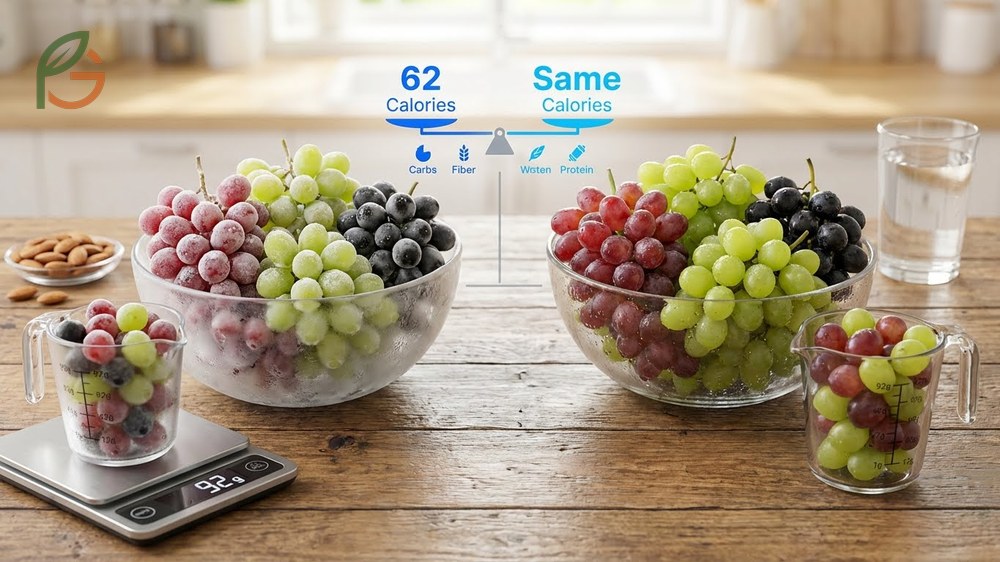
Frozen grapes contain exactly the same calories as fresh grapes—freezing doesn’t add or remove any nutritional content. One cup of frozen grapes (approximately 92g) provides just 62 calories, making them one of the lowest-calorie snacks you can reach for when cravings hit[3].
That same one-cup serving delivers 16g carbohydrates (all from natural fruit sugars), 1g fiber, and 1g protein[3]. Grapes contain virtually no fat and provide small amounts of vitamin C, vitamin K, and potassium. The natural sugars in grapes give you quick energy without the crash you’d get from processed sweets.
Compared to typical frozen desserts, frozen grapes are a nutritional powerhouse. A half-cup of premium ice cream packs 200-300 calories with added sugars and saturated fat. Frozen grapes satisfy the same sweet tooth for a fraction of the calories while adding beneficial antioxidants to your diet.
If you’re watching carbs for blood sugar management, frozen grapes aren’t ideal for a strict keto diet with their 16g carbs per cup. However, they work well for moderate low-carb approaches—just stick to a smaller portion like half a cup (8g carbs) and pair them with some protein or healthy fat.
Portion Control Tip: Pre-portion frozen grapes into small containers or snack bags. This prevents mindless eating straight from the freezer bag and helps you track calories accurately.
Frozen Grapes Recipe Ideas
Frozen grapes aren’t just for snacking straight from the freezer—they’re incredibly versatile in the kitchen. Their natural sweetness and icy texture make them perfect for smoothies, mocktails, and even as a wine substitute in recipes that call for a subtle fruity note.
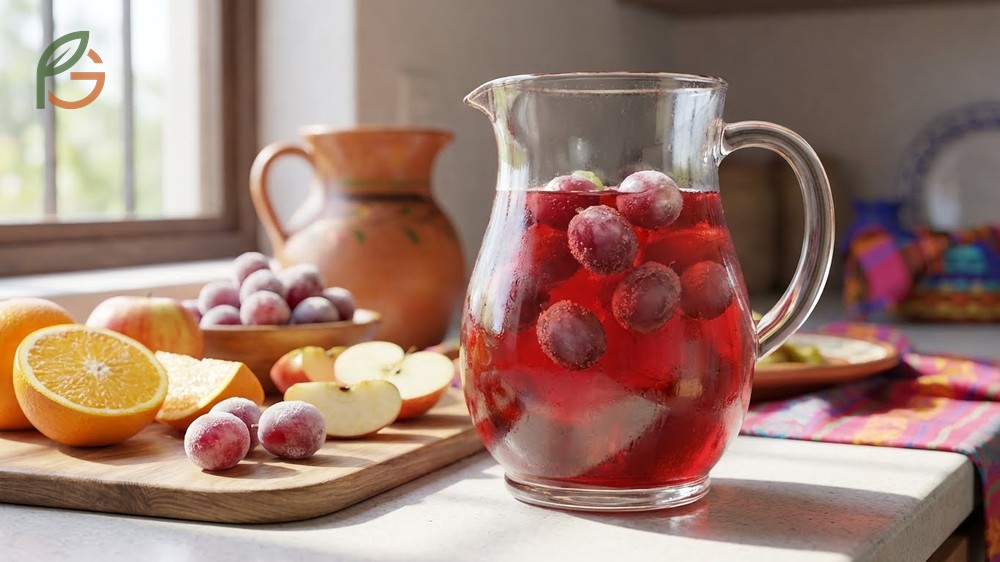
My neighbor in Querétaro, Mexico uses frozen grapes instead of ice cubes in her sangria. The grapes chill the drink without watering it down, and guests love eating the wine-soaked grapes at the end. She freezes about 200 grapes every Friday before weekend gatherings.
As cocktail garnishes, frozen grapes add visual appeal and keep drinks cold longer than regular ice. Drop a few into white wine, sparkling water, or lemonade. They work especially well in kids’ drinks—frozen grapes in apple juice or grape juice create a fun, festive effect.
Frozen Grapes Smoothie
Frozen grapes create thick, creamy smoothies without needing ice that dilutes the flavor. Blend 2 cups frozen red grapes with 1 banana, ½ cup Greek yogurt, and ½ cup milk for a protein-packed breakfast that takes 3 minutes to make[8].
The grapes need to freeze for at least 2 hours before blending, though overnight works even better. You’ll get the best results using a high-powered blender that can handle frozen fruit without adding extra liquid. If your smoothie seems too thick, add milk one tablespoon at a time.
For a kid-friendly version, swap the Greek yogurt for vanilla ice cream and add a tablespoon of peanut butter. The combination tastes like a grape peanut butter and jelly sandwich in drinkable form. You can also throw in a handful of spinach—the grape flavor completely masks the vegetable taste.
- Berry blast: Add frozen strawberries and blueberries for antioxidant power
- Tropical twist: Blend with frozen mango and coconut milk
- Green machine: Add spinach or kale plus a squeeze of lime
- Protein boost: Include a scoop of vanilla protein powder for post-workout recovery
- Dessert smoothie: Add cocoa powder and a frozen banana for a healthy shake
Kids Healthy Snacks
Frozen grapes rank among the top healthy snacks for kids because they’re naturally portion-controlled, require no preparation, and feel like a special treat. Kids love the cool, crispy texture that’s similar to candy but without any added sugar or artificial ingredients.
Pack frozen grapes in insulated lunch containers with an ice pack—they’ll stay semi-frozen until lunchtime and help keep other foods cool. By the time lunch rolls around, they’ll have the perfect texture: slightly thawed on the outside with a frozen center.
My friend who teaches elementary school in Oaxaca, Mexico started a “Frozen Grape Friday” tradition in her classroom. Parents send grapes on Thursday nights, she freezes them, and kids get a healthy snack during Friday afternoon activities. Attendance went up on Fridays by about 15% after she started this routine.
For picky eaters, try making “grape kabobs” by threading frozen grapes onto popsicle sticks with chunks of cheese or strawberries. The presentation makes healthy food more appealing, and kids enjoy the interactive eating experience. You can also roll frozen grapes in a tiny bit of lime juice and chili powder for older kids who like bold flavors.
- Freeze different colored grapes separately for a rainbow snack mix
- Use as “ice pops” by inserting a toothpick before freezing
- Create a “grape treasure hunt” by hiding different colored frozen grapes
- Make grape “slushies” by partially thawing and mashing in a bowl
- Add to yogurt parfaits as a crunchy, cold topping
- Serve alongside cheese cubes for a balanced snack with protein
Thawing Frozen Grapes
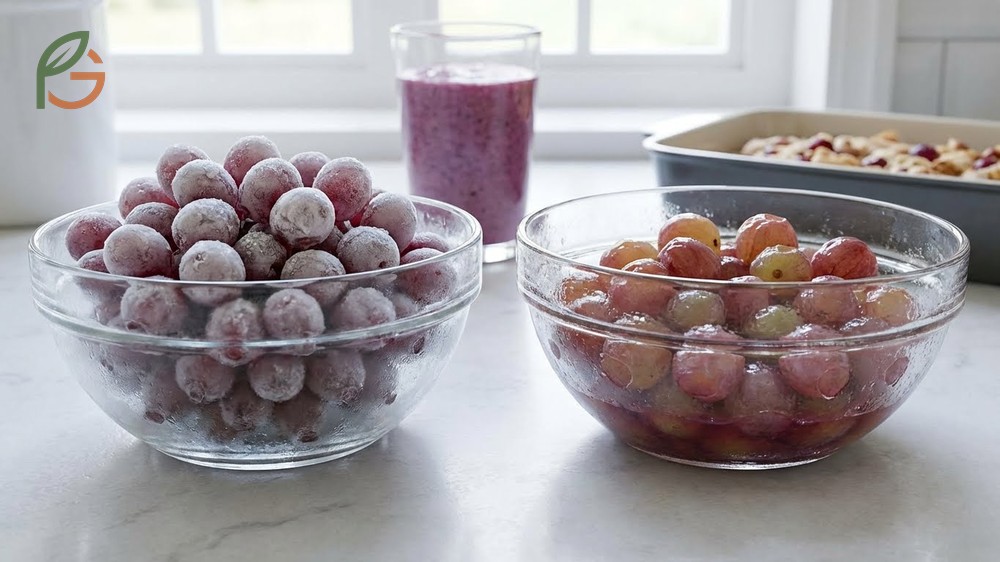
Most people eat frozen grapes while they’re still completely frozen—that’s the whole point of the snack. However, if you need thawed grapes for baking or recipes, the process takes about 30-45 minutes at room temperature or 2-3 hours in the refrigerator.
Keep in mind that thawed grapes won’t have the same crisp texture as fresh ones. The freezing process breaks down cell walls slightly, so thawed grapes end up softer and release more juice. This makes them perfect for smoothies, sauces, or jam-making but less ideal for fresh fruit salads.
For recipes that call for grape juice, you can actually use frozen grapes directly. Crush them while still frozen and let them thaw in a strainer over a bowl. The juice that drains off is incredibly concentrated and flavorful—perfect for making homemade jelly or adding to salad dressings.
Important Reminder: Never refreeze grapes after they’ve fully thawed. The texture becomes unpleasantly mushy and they lose their visual appeal. Only thaw the amount you plan to use immediately.
Conclusion
The evidence is clear: freezing grapes transforms an already healthy fruit into a versatile ingredient and convenient snack that lasts up to 12 months. You’ll get the best results by choosing firm, seedless varieties, washing and drying them thoroughly, and flash-freezing on a baking sheet before transferring to airtight containers.
Current guidance emphasizes frozen grapes as an excellent alternative to processed frozen desserts, delivering just 62 calories per cup with valuable antioxidants and vitamins intact. Whether you’re packing school lunches, creating smoothies, or looking for a refreshing summer treat, FruitGarden recommends keeping a steady supply of frozen grapes in your freezer year-round.
Frequently Asked Questions
How do you freeze grapes for snacking?
Wash and dry grapes completely, remove stems, spread in a single layer on a parchment-lined baking sheet, and freeze for 2-4 hours until solid. Transfer to freezer bags and store for up to 12 months.
Can I freeze grapes with stems on?
Yes, but removing stems before freezing saves storage space and prevents freezer burn. Grapes frozen with stems also take slightly longer to freeze completely and can develop ice crystals around the stem area.
Do frozen grapes get mushy when thawed?
Yes, frozen grapes become softer when fully thawed because freezing breaks down cell walls. That’s why they’re best eaten while still frozen as a snack or used in smoothies where texture doesn’t matter.
Are frozen grapes good for weight loss?
Frozen grapes make an excellent low-calorie snack for weight management at just 62 calories per cup with natural sweetness that satisfies cravings. They take longer to eat than other snacks, which can help prevent overeating.
What’s the best way to use frozen grapes?
Eat them straight from the freezer as a healthy snack alternative to ice cream, add to smoothies for thickness, use as ice cubes in wine or cocktails, or blend partially thawed grapes into slushies for kids.
Can you freeze grapes for smoothies?
Absolutely—frozen grapes are perfect for smoothies because they add sweetness and create a thick, creamy texture without diluting the flavor like ice does. Freeze them in 2-cup portions for easy smoothie prep.
How long do frozen grapes stay good?
Frozen grapes maintain optimal flavor and texture for 8-12 months when stored in airtight containers at 0°F or below. They remain safe to eat indefinitely while frozen, though quality gradually declines after a year.





