
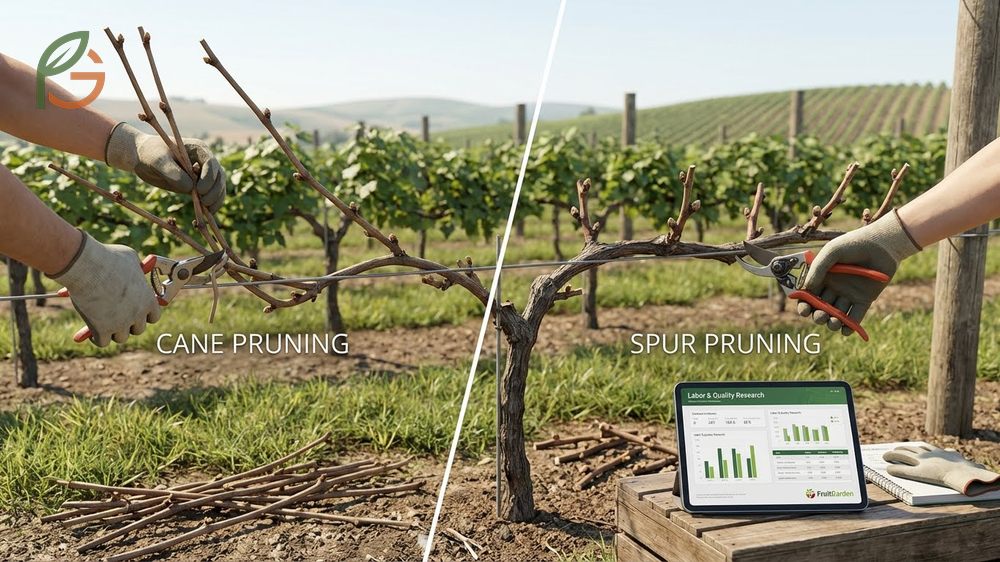
Cane pruning vs spur pruning determines how your grapevines produce fruit each season—and which method you choose affects everything from labor needs to grape quality. Research from university viticulture programs shows that spur pruning retains short sections with 1-3 buds[1], while cane pruning keeps longer sections with more buds for next year’s crop. FruitGarden synthesizes current viticulture research and regional data to help you select the pruning technique that matches your vineyard’s needs.
Quick Answer
- Spur pruning leaves 1-3 buds on short stubs along permanent cordons[1]
- Cane pruning retains entire canes with multiple buds, tied annually to fruiting wires[1]
- Spur pruning dominates Eastern U.S. vineyards, while cane pruning is standard in Oregon Pinot noir operations[2]
- Choose cane pruning for varieties with low basal bud fertility like Sauvignon blanc and Nebbiolo[2]
Cane Pruning vs Spur Pruning
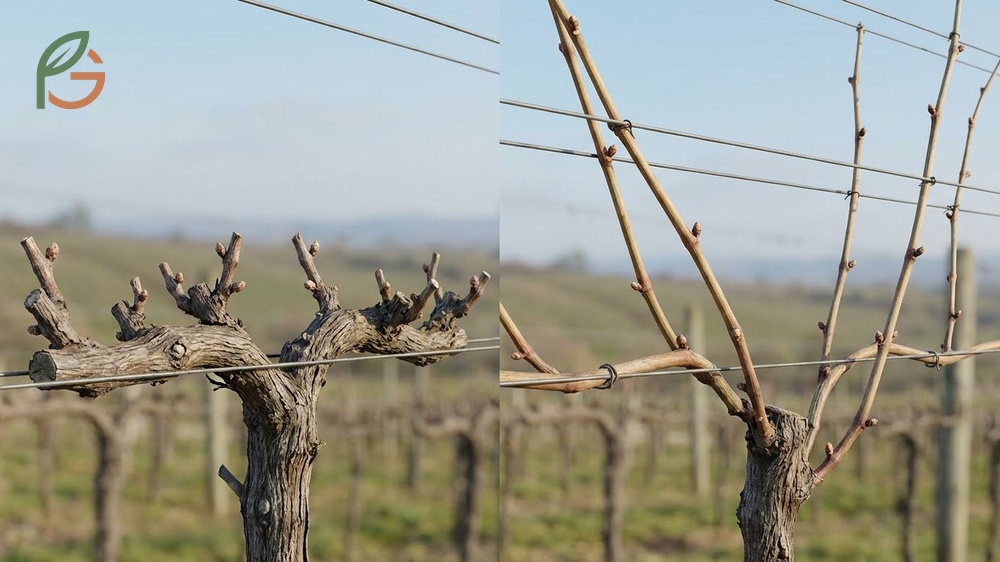
The fundamental difference between these methods lies in what you retain during dormant pruning. Spur pruning cuts back most of last year’s growth, leaving only short stubs along permanent cordons[1]. Cane pruning removes nearly all previous wood and lays down new, year-old canes tied to fruiting wires[1].
Both methods aim for the same goal: retaining fruitful buds that’ll produce next season’s crop. What differs is the structure you’re working with and how much wood you keep. Spur pruning makes multiple small decisions across each cordon, while cane pruning involves fewer but more critical decisions about which canes to retain.
Most growers don’t realize that the choice affects more than just pruning time. It influences your spring shoot thinning workload, frost protection strategies, and how you manage vineyard diseases. Your training system and vine spacing largely determine which method works best.
What Is Spur Pruning
Spur pruning works with cordon-trained vines where permanent horizontal arms extend from the trunk. You’re cutting back each cane to just 1-3 buds, creating short “spurs” that give this method its name[1]. These spurs stay positioned along the cordon length, producing shoots that bear fruit.
The cordon itself is permanent structure you’ll maintain for 7-10 years before replacement. Spurs positioned close to the cordon work best—they keep fruit zones confined and make spray applications more efficient. You’ll repeat this pattern each winter: cut back green shoots (now woody canes) to short spurs with just a few count buds.
From My Experience: My cousin in Guadalajara, Mexico trained his backyard Cabernet vines to bilateral cordons in 2023. After the first spur pruning season, he counted 18 retained spurs per vine versus his initial 25—matching the 3-4 shoots per foot recommendation from extension guides.
What Is Cane Pruning
Cane pruning uses head-trained vines where fruiting wood originates from the “head region”—where the trunk splits into horizontal growth[2]. You’re selecting one or two healthy canes from last year’s growth, laying them horizontally along the fruiting wire, and tying them in place. This tied cane becomes your entire fruiting zone for the season.
Each bud along that retained cane can produce a fruitful shoot. The head region should start 6-8 inches below the fruiting wire so canes tie easily[2]. You’ll also retain short renewal spurs near the head—these produce canes you’ll select next year.
Think of it as a complete reset each season. You’re removing the cane you tied down last winter (now almost 2 years old) plus most wood that grew from it. Then you’re choosing fresh year-old canes to become this season’s producers.
Cane Spur Pruning Difference
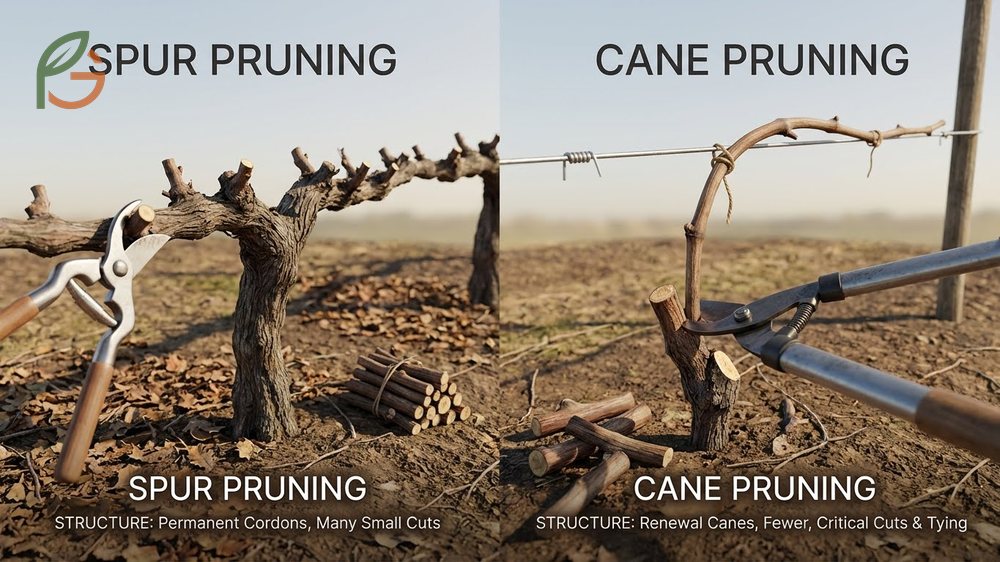
The methods diverge most clearly in structure and labor patterns. Spur pruning requires many small cuts per vine—you’re trimming back dozens of positions along each cordon. Cane pruning needs fewer total cuts, but each decision carries more weight since removing the wrong cane can eliminate an entire fruiting section[2].
Spur pruning doesn’t require tying canes to wires—spurs are short enough to support themselves. Cane pruning adds a perennial tying task each dormant season. This shifts more labor into winter months, which can be advantageous if you’re short-handed during spring growth.
Shoot density differences emerge in spring. Cane-pruned vines typically need less shoot thinning than spur-pruned ones, though this varies by spacing and vigor. Many growers find spur pruning faster per vine, but the total labor picture depends on your follow-up management needs.
Structural Differences
Cordon training versus head training defines the structural split. Cordons are horizontal trunk extensions that remain for years—you’re building on permanent framework. Head training keeps just the vertical trunk permanent, with all horizontal fruiting wood renewed annually.
Bud positioning differs significantly. Spurs distribute buds evenly along the cordon length, typically yielding uniform shoot spacing. Canes concentrate buds along tied sections, which can create gaps in the canopy middle with wider vine spacing (>5 feet between vines)[2].
Labor Requirements
Spur pruning involves repetitive, similar cuts across each vine. You’re making the same decision repeatedly—trim back to 2-3 buds, keep low-positioned spurs. This consistency makes training new workers easier.
Cane pruning demands more skill and judgment. You’re evaluating which canes are best—looking for pencil-diameter thickness (3/8 inch), 3-5 feet length, good sun exposure, and proper positioning[2]. One wrong choice impacts the entire vine’s production.
Important Note: Tying canes adds 15-25% more dormant season labor compared to spur pruning. Factor this into your labor budget if you’re considering switching methods on established vineyards.
Grape Pruning Methods
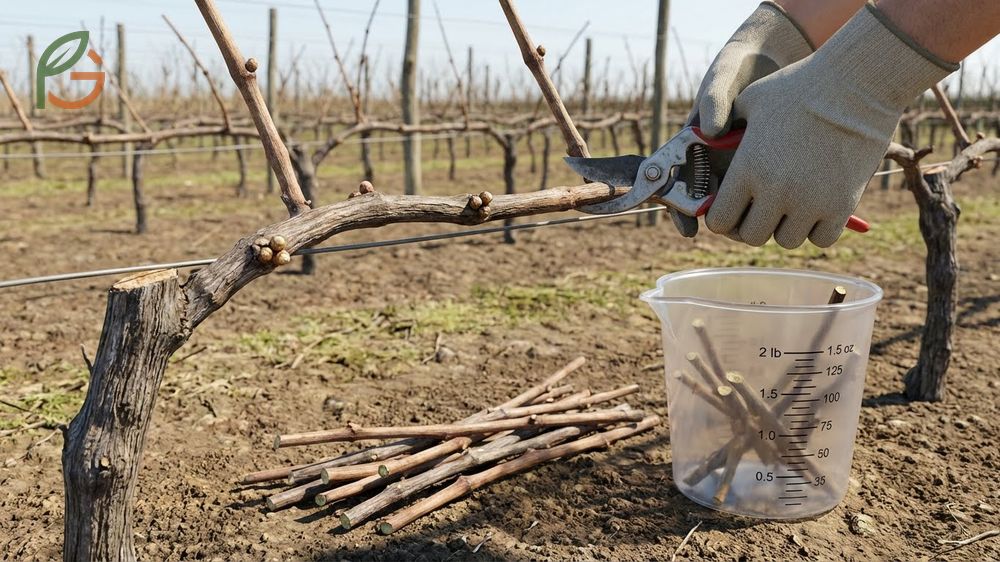
Your pruning approach should match your target shoot density: 3-5 shoots per linear foot of canopy[2]. This translates directly to how many count buds you retain. For a vine with 5 feet of canopy space, you’d target 15-25 retained buds depending on desired density.
Optimal dormant pruning weights range from 0.2-0.4 pounds per linear foot of cordon[2]. A single-cordon vine at 5-foot spacing should yield 1-2 pounds of prunings in a balanced, healthy vineyard. Lower weights signal stress or decline—adjust by retaining fewer buds next season.
Regional patterns show clear preferences. Spur pruning dominates Eastern U.S. commercial vineyards, while cane pruning is nearly universal in Oregon Pinot noir operations and increasingly common in tighter-spaced East Coast plantings[2].
Best Varieties for Each Method
Basal bud fertility determines which method works better. Varieties with fruitful basal buds (nodes 1-3 on canes) handle spur pruning well—these include most hybrid varieties, Shiraz, and Cabernet Sauvignon. The short spurs keep those productive basal buds.
Low basal bud fertility varieties need cane pruning. Sauvignon blanc and Nebbiolo produce fruitful buds farther out on canes (nodes 4 and up)[2]. Spur pruning would remove most productive buds, severely limiting yield.
- Cabernet Sauvignon—consistent basal bud fruitfulness, vigorous cordon establishment
- Shiraz—handles bilateral cordon systems well, maintains production on short spurs
- Merlot—adaptable to either method, though traditionally spur-pruned in warmer regions
- Chardonnay—versatile variety, responds well to spur pruning in most climates
- Most hybrid varieties—fruitful noncount buds make spur pruning efficient
- Pinot Noir—low basal bud fertility, standard in Oregon cane-pruned vineyards
- Sauvignon blanc—produces fruitful buds at nodes 4+, yield increases with cane pruning
- Nebbiolo—poor basal node productivity demands longer cane retention
- Riesling—performs better with cane pruning in cooler climates
- Gewürztraminer—benefits from cane selection despite moderate basal fertility
Vineyard Spacing Considerations
Vine spacing directly influences method choice. Vineyards with more than 5 feet between vines typically use spur pruning and cordon training[2]. The even bud distribution along cordons fills canopy space better at wider spacings.
Cane pruning works better in closer plantings—less than 5 feet between vines. The cane’s concentrated bud placement doesn’t create problematic gaps when vines are spaced tighter. You’ll see midcane shoot depression with cane pruning at wide spacings, leaving unproductive zones.
Which Pruning Technique
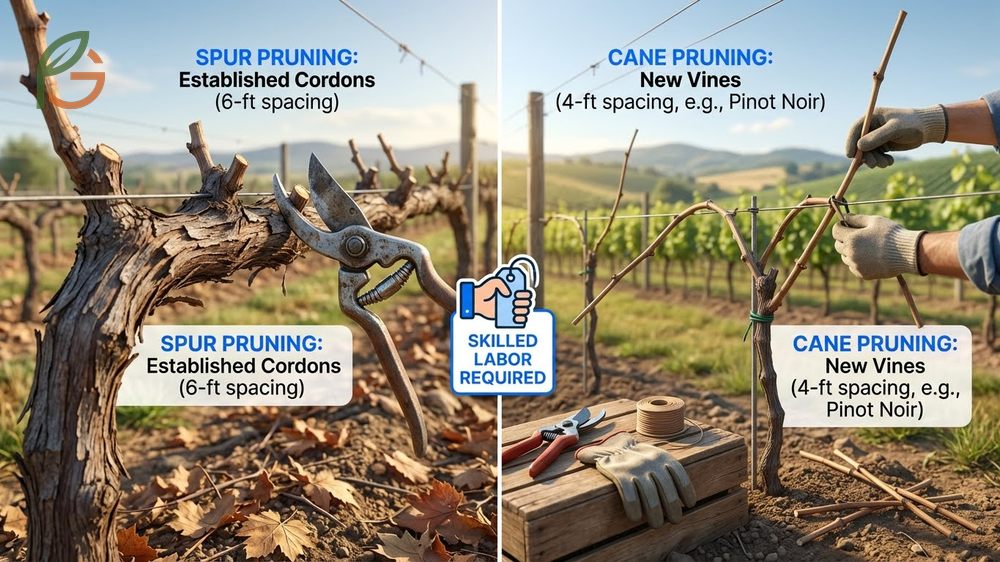
Start with your existing vineyard design. If you’ve got established bilateral cordons at 6-foot spacing, switching to cane pruning means removing those cordons and retraining—a multi-year conversion. Spur pruning fits your current structure. Conversely, if you’re planting new vines at 4-foot spacing with varieties like Pinot Noir, plan for head training and cane pruning from establishment.
Your labor situation matters significantly. Can you access skilled pruners who understand cane selection? Do you have enough winter labor to handle the added tying work? Or would you benefit from spur pruning’s simpler, repetitive approach that’s easier to teach seasonal workers?
Disease pressure influences the decision too. Cane pruning removes cordons prone to trunk diseases, giving you a built-in cordon renewal strategy. Spur pruning requires deliberate cordon replacement every 7-10 years when infections or blind wood accumulate.
Decision Factors
Cultivar traits should drive your primary decision. Check whether your variety’s basal buds are fruitful—extension services publish cultivar-specific tables. Low basal fertility makes cane pruning essential for economic yields, regardless of other factors.
Consider your frost risk and mitigation options. Spur pruning enables delayed and double pruning strategies more easily—you can preprune to excess buds, then final-prune after frost danger passes[2]. Cane pruning’s comparable strategy involves retaining 3-4 canes initially and cutting extras after frost threat.
- Existing training system—cordon-trained vineyards favor spur pruning without major retrofitting
- Between-vine spacing—greater than 5 feet suggests spur pruning, less than 5 feet suits cane pruning
- Variety characteristics—basal bud fertility determines which method yields better
- Available labor skills—cane pruning requires more judgment and training than repetitive spur cuts
- Disease management—cane pruning naturally renews fruiting wood, reducing trunk disease impact
- Mechanization plans—spur pruning adapts better to mechanical pre-pruning equipment
Regional Preferences
Eastern U.S. commercial vineyards overwhelmingly use spur pruning, though adoption of cane pruning is growing in newer, tighter-spaced plantings[2]. The region’s wider traditional spacings (6-8 feet) and hybrid varieties with fruitful basal buds favor spur pruning’s even distribution.
Oregon’s Willamette Valley runs almost exclusively on cane pruning for Pinot Noir—the variety’s low basal fertility makes it essential. Eastern Washington takes the opposite approach, with spur pruning dominating across most varieties. Climate, spacing, and historical practices all reinforce these regional patterns.
Regional Tip: If you’re new to commercial viticulture, match your region’s standard method initially. Local pruning crews will have the right skills, and you can draw on established best practices before experimenting with alternatives.
Vineyard Pruning Systems
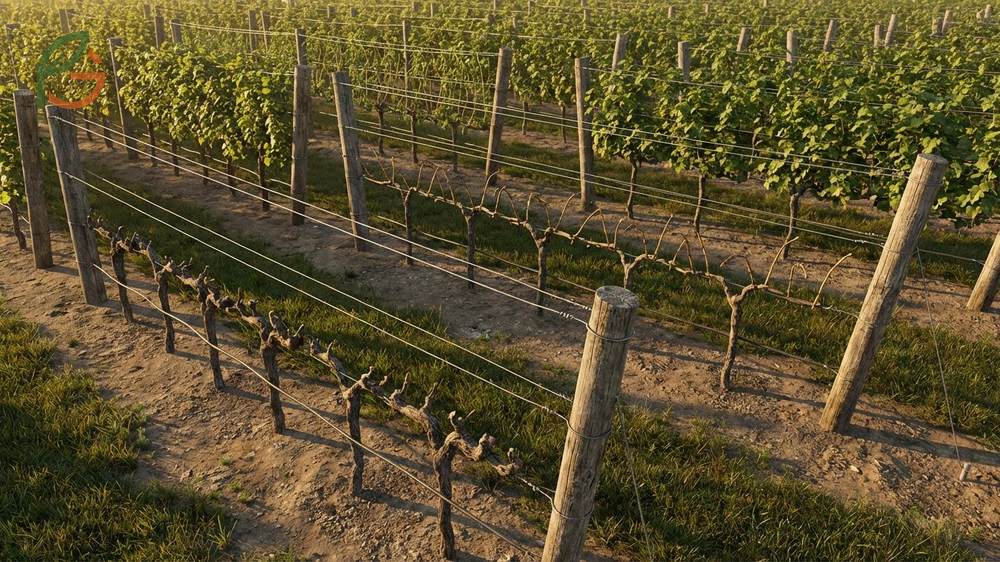
Training systems and pruning methods pair logically. Vertical shoot positioning (VSP) with bilateral cordons uses spur pruning—the permanent cordons align with the low fruiting wire. Guyot systems (single or double) employ cane pruning, with one or two canes tied horizontally from head-trained vines[3].
High-wire trailing systems adapt to either method. Geneva double curtain often uses spur pruning with divided cordons. Some growers use cane pruning on trailing systems, particularly in cooler regions where limiting lignified growth protects against frost damage[4].
What often gets overlooked is that training system capacity affects bud targets. Systems with divided canopies (like lyre or GDC) accommodate double the bud density of single-canopy systems because they provide more fruit zone space and light exposure.
Training System Compatibility
VSP (vertical shoot positioning) remains the most common single-canopy system. With bilateral cordons, you’re spur pruning along two permanent arms extending from the trunk. The system works for moderate-vigor sites—excessive vigor leads to canopy shading and disease pressure.
Guyot training (named after Dr. Jules Guyot in late 1800s France) was designed specifically for low to moderate vigor vineyards[3]. The system accommodates fewer buds per linear foot than cordon systems. It’s favored in cooler areas—Oregon, Washington, parts of California, Europe, and Australia all use Guyot extensively.
This table compares pruning compatibility, bud retention, and management characteristics across four common vineyard training systems.
| Training System | Pruning Method | Canopy Type | Best Use Case |
|---|---|---|---|
| VSP Bilateral Cordon | Spur pruning | Single, vertical | Moderate vigor, wider spacing (5-6 feet) |
| Single Guyot | Cane pruning | Single, vertical | Low vigor, cooler climates, Pinot Noir |
| Double Guyot | Cane pruning | Single, vertical | Moderate vigor, closer spacing (4-5 feet) |
| Geneva Double Curtain | Spur pruning (typically) | Divided, trailing | High vigor, hybrids, better light exposure |
Bud Density Targets
Calculate retained bud numbers by multiplying desired shoot density (3-5 per foot) by each vine’s canopy length[2]. A vine at 5-foot spacing targeting 4 shoots per foot needs 20 count buds retained. With spur pruning at 2 buds per spur, that’s 10 spurs per vine across both cordons.
Cane-pruned calculations work similarly. If you’re retaining a single 8-foot cane on a bilateral system (4 feet each direction), you want roughly 32 buds at 4 per foot density. Count the nodes on your selected canes to hit targets—most pencil-diameter canes have 10-15 count buds.
- 4-foot spacing, single canopy—12-20 count buds per vine (3-5 buds per foot target)
- 5-foot spacing, single canopy—15-25 count buds per vine (standard commercial range)
- 6-foot spacing, single canopy—18-30 count buds per vine (adjust based on vigor)
- Divided canopies—double the single-canopy targets due to increased fruit zone space
- Low vigor sites—target lower end of range (3 buds per foot) to maintain balance
- High vigor sites—target higher end (5 buds per foot) or consider divided canopy systems
Conclusion
The evidence is clear: cane pruning vs spur pruning isn’t about one method being universally better—it’s about matching technique to your specific situation. Varieties with low basal bud fertility require cane pruning for economic yields, while those with fruitful basal buds perform well with spur pruning’s simpler approach. Vine spacing, training systems, labor availability, and regional climate all factor into which method maximizes your vineyard’s productivity.
Current viticulture guidance emphasizes aligning pruning decisions with cultivar characteristics and site conditions rather than following tradition alone. FruitGarden continues tracking regional pruning innovations and university research to help growers optimize their vineyard management strategies for both quality and sustainability.
Frequently Asked Questions
What’s the main difference between cane and spur pruning?
Spur pruning cuts canes back to short stubs (spurs) with 1-3 buds along permanent cordons, while cane pruning retains entire year-old canes with multiple buds that are tied to fruiting wires annually. Spur pruning maintains permanent horizontal structure; cane pruning renews fruiting wood completely each season.
Which grape varieties need cane pruning instead of spur pruning?
Varieties with low basal bud fertility like Pinot Noir, Sauvignon blanc, Nebbiolo, Riesling, and Gewürztraminer require cane pruning because their fruitful buds occur farther out on canes (nodes 4 and up). Spur pruning would remove most productive buds on these varieties, severely reducing yields.
Does cane pruning take more labor than spur pruning?
Cane pruning requires 15-25% more dormant season labor due to the annual tying task. However, it typically needs less spring shoot thinning than spur pruning. The total labor balance depends on your vineyard’s spacing, vigor, and follow-up management practices throughout the growing season.
Can I switch from spur pruning to cane pruning on established vines?
Yes, but it requires retraining vines from cordon structure to head training over 1-2 seasons. You’ll remove cordons, select shoots from the trunk to become the new head region, and establish the cane selection pattern. This works well when cordons are diseased or void of productive wood.
What vine spacing works best for each pruning method?
Spur pruning suits vineyards with more than 5 feet between vines because even bud distribution along cordons fills wider canopy spaces better. Cane pruning performs better at closer spacings (less than 5 feet) where concentrated bud placement doesn’t create problematic canopy gaps.
How many buds should I retain when pruning grapevines?
Target 3-5 shoots per linear foot of canopy, which translates to retaining 3-5 count buds per foot. For a vine at 5-foot spacing, retain 15-25 count buds total. Calculate by multiplying your desired shoot density by each vine’s canopy length in feet.
Which pruning method helps prevent trunk diseases better?
Cane pruning provides natural disease management by removing fruiting wood annually, which eliminates infected cordons before diseases establish deeply. Spur pruning requires deliberate cordon replacement every 7-10 years when trunk diseases accumulate. Both methods benefit from delayed pruning to avoid wet conditions that spread pathogens.





