
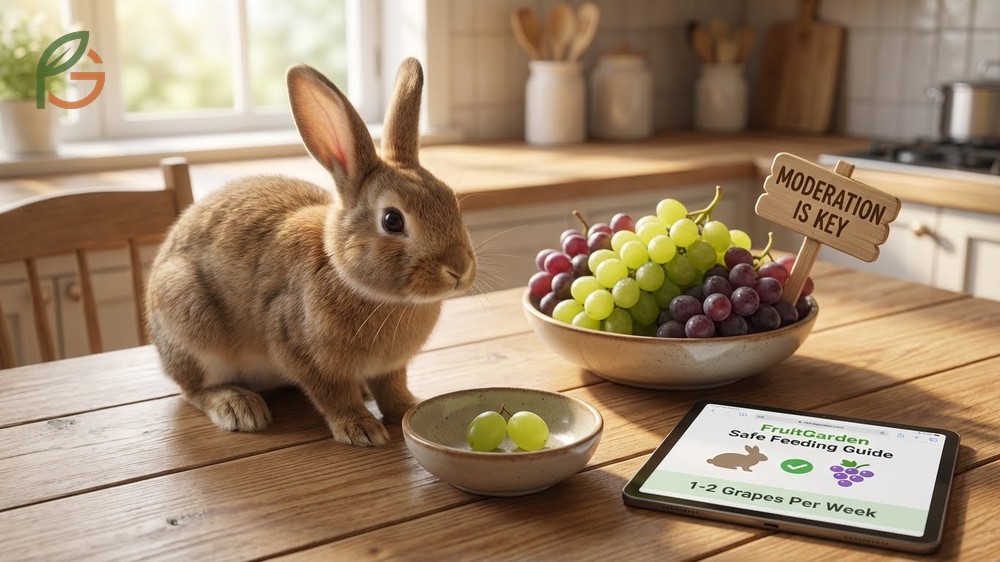
Can rabbits eat grapes? Yes, rabbits can safely eat grapes, but only in moderation—1 to 2 grapes per week is the recommended maximum due to their high sugar content[1]. Research shows that grapes contain 16g of sugar per 100g[2], which can lead to digestive issues, obesity, and dental problems if overfed. FruitGarden synthesizes current veterinary guidance to help pet owners make informed decisions about treating their rabbits, hamsters, and birds with fresh fruits.
Quick Answer
- Rabbits can have 1-2 grapes weekly[1] as occasional treats, not daily snacks
- Hamsters should eat no more than ¼ grape per week[3]; dwarf breeds need to avoid grapes entirely
- Birds can safely enjoy grapes in moderation—always use seedless varieties cut into small pieces[4]
- An ideal rabbit diet is 80% hay, 15% vegetables, and only 1-2% treats[5]
Can Rabbits Eat Grapes
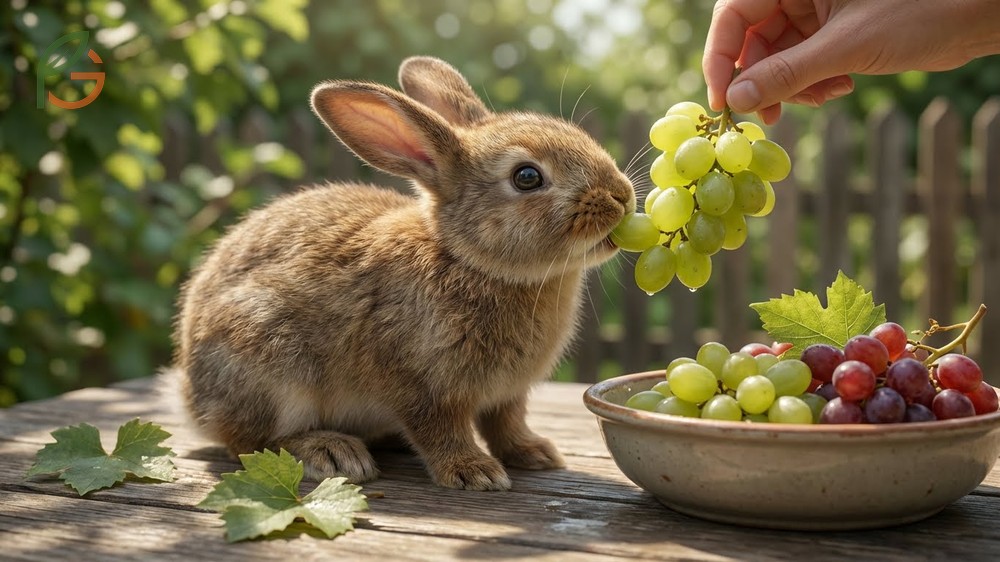
Research confirms that rabbits can safely consume grapes without toxicity risk, unlike dogs for whom grapes can cause kidney failure. Rabbits tolerate tannins—plant compounds found in grape skins—because they’re herbivores with digestive systems adapted to process plant materials. The flesh, skin, and even grape leaves are safe for rabbits to eat.
However, frequency matters more than quantity. Current veterinary guidance emphasizes that grapes should make up less than 2% of a rabbit’s total diet[5]. Most people don’t realize that timing matters—offering grapes immediately after hay-heavy meals helps slow sugar absorption.
What often gets overlooked is portion control relative to body size. A standard grape weighs about 5 grams, containing roughly 0.8g of sugar. For a 4-pound rabbit, two grapes weekly provides adequate variety without overwhelming their digestive system.
Sugar Content Concerns
Grapes contain approximately 16g of sugar per 100g[2], making them one of the higher-sugar fruits available. When rabbits consume excessive sugar, they’re at risk for three primary health issues: digestive upset, obesity, and dental decay. Evidence suggests that rabbits’ gut bacteria can become imbalanced when sugar intake spikes suddenly.
The glycemic impact is significant. Grapes have a glycemic index of 49[2], considered medium on the GI scale. Unlike hay, which provides slow-release energy, grapes cause faster blood sugar elevation.
- Soft or watery droppings appearing within 12-24 hours after feeding
- Decreased appetite for regular hay and vegetables
- Lethargy or reduced activity levels compared to baseline behavior
- Increased thirst and more frequent urination
- Abdominal bloating or signs of discomfort when touched
Important Note: If you’re introducing grapes for the first time, start with just one-quarter of a grape. Wait 48 hours to monitor for any digestive changes before offering a full grape portion.
Proper Serving Sizes
The standard recommendation is 1-2 grapes per week for an average-sized rabbit weighing 4-6 pounds[1]. Smaller rabbits under 3 pounds should receive half a grape, while larger breeds over 8 pounds can safely have up to 3 grapes weekly. Always choose seedless varieties to prevent choking hazards, particularly for smaller breeds.
Preparation is simple but important. Wash grapes thoroughly under running water to remove pesticide residues. Cut each grape in half lengthwise for rabbits under 3 pounds—this prevents choking while making the treat last longer.
- Offer grapes as a training reward or bonding treat, not as a meal replacement
- Feed grapes after your rabbit has eaten their daily hay portion
- Don’t combine grapes with other sugary fruits on the same day
- Remove any uneaten grape pieces after 2 hours to prevent bacterial growth
- Space grape treats at least 3-4 days apart to maintain dietary balance
Can Hamsters Eat Grapes
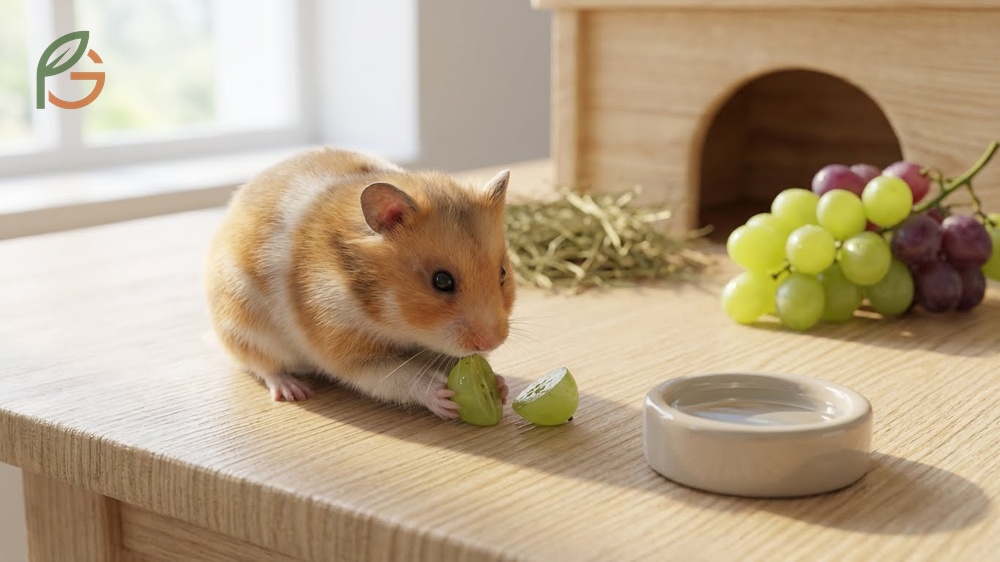
Studies demonstrate that hamsters can safely eat grapes without the toxic reactions seen in dogs[3]. Syrian, Roborovski, and other standard hamster breeds tolerate small amounts of grape flesh and skin. The high water content—approximately 81% of a grape’s weight—helps with hydration, particularly for hamsters that don’t drink much water independently.
However, portion size is critical. A healthy adult hamster should eat no more than one-quarter of a grape weekly[3]. This equates to roughly 1.25 grams of fruit containing about 0.2g of sugar. Unlike rabbits, hamsters store food in their cheek pouches, which means uneaten grape pieces can rot if left too long.
What’s crucial to understand is breed-specific metabolism. Not all hamsters process sugars equally. The two dwarf breeds—Chinese and Campbell’s—have significantly different dietary needs than their larger cousins.
Dwarf Hamster Restrictions
Chinese dwarf hamsters and Campbell’s dwarf hamsters shouldn’t eat grapes or other high-sugar fruits at all[3]. Current veterinary research shows these breeds are genetically predisposed to developing diabetes mellitus. Even small amounts of sugar can trigger metabolic problems that lead to long-term health complications.
The reason lies in their pancreatic function. Studies indicate that dwarf hamsters produce insulin less efficiently than Syrian hamsters. When blood sugar spikes from grape consumption, their bodies struggle to regulate glucose levels back to normal ranges.
- Small pieces of cucumber (very low sugar, high water content)
- Tiny amounts of blueberries—only one berry weekly at most
- Shredded carrot (use sparingly, about 1 teaspoon weekly)
- Bell pepper strips (red or yellow, remove seeds completely)
- Small broccoli florets as an occasional vegetable treat
Warning for Dwarf Owners: If you’re uncertain about your hamster’s breed, it’s safest to avoid grapes entirely. Misidentification between breeds is common, and the diabetes risk isn’t worth the gamble.
Preparation and Serving
Always select seedless grapes to eliminate choking hazards[3]. Grape seeds can cause intestinal blockages in hamsters, potentially requiring surgical intervention. Cut the quarter-grape portion into 2-3 smaller pieces to make handling easier for your hamster’s tiny paws.
Monitor your hamster after feeding grapes. Check their cage 2-3 hours later to remove any pouched or stored pieces—grape flesh ferments quickly at room temperature. Signs of overconsumption include watery droppings, reduced pellet intake, and unusual lethargy.
- Wash the grape thoroughly under cold running water for 30 seconds
- Cut one-quarter section from a medium-sized seedless grape
- Dice that quarter into 2-3 smaller pieces (about pea-sized chunks)
- Offer one piece at a time and watch your hamster’s reaction
- Inspect bedding and hideouts later to remove any cached pieces
Can Birds Eat Grapes
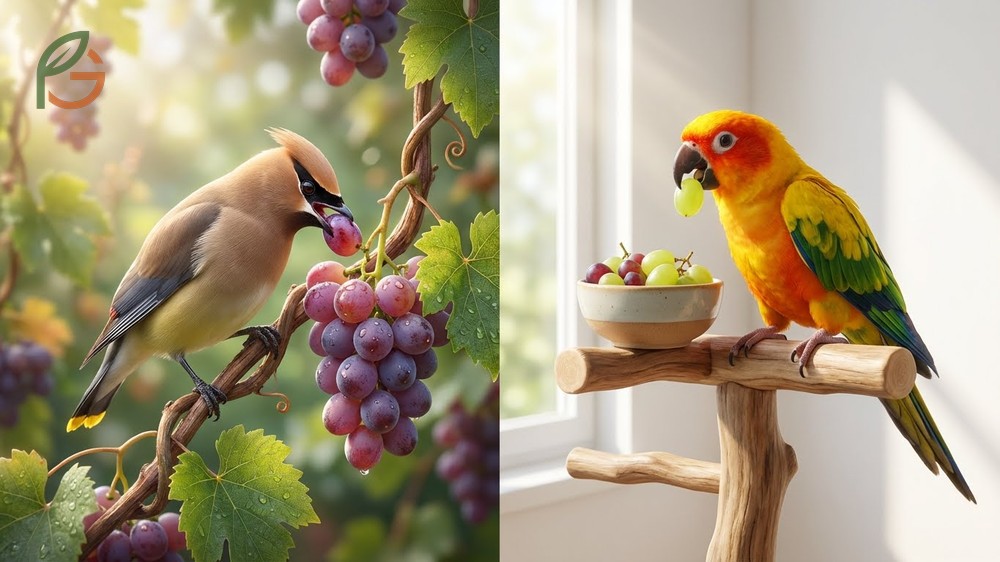
Evidence shows that most bird species can safely eat grapes without toxicity concerns[4]. Unlike the grape-related kidney failure seen in dogs, birds metabolize these fruits through completely different digestive pathways. Popular backyard species like robins, waxwings, thrushes, and cedar waxwings actively seek out grapes in the wild.
For pet birds, grapes provide hydration, natural sugars for energy, and small amounts of vitamins C and K[2]. Parrots, cockatiels, budgerigars, and finches particularly enjoy grapes as enrichment treats. The key is keeping grape consumption to 5-10% of a bird’s daily intake, with formulated pellets and fresh vegetables making up the bulk of their nutrition.
Current avian research emphasizes preparation over prohibition. The main concerns aren’t about toxicity—they’re about pesticides, choking hazards, and overconsumption of sugar.
Safe Bird Species
Most common pet and wild bird species tolerate grapes well. Parrots (including African greys, macaws, and Amazon parrots), finches, canaries, cockatiels, and budgies can all safely eat small grape portions. Backyard birds like cardinals, blue jays, orioles, and mockingbirds will readily consume halved grapes from platform feeders.
However, some species should avoid grapes entirely. Turkeys and certain raptors may experience digestive problems from grape consumption[7]. Their digestive systems process fruits differently than seed-eating or omnivorous birds.
- Parrots (all species including African greys, cockatoos, and conures)
- Finches and canaries (cut grapes into very small pieces)
- Cockatiels and budgerigars (quarter or half grapes work well)
- Robins, thrushes, and waxwings (common wild grape consumers)
- Cardinals, blue jays, and orioles (backyard feeder favorites)
Feeding Guidelines
Always choose seedless grape varieties, as grape seeds pose choking hazards for smaller birds[4]. Cut grapes into halves for medium birds like cockatiels and into quarters for smaller species like finches. Larger parrots can handle whole grapes, but halving them prevents waste and allows you to monitor consumption.
Wash grapes thoroughly before serving. Commercial grapes often carry pesticide residues that can be harmful to birds’ sensitive respiratory systems. Organic grapes reduce this risk significantly.
- Remove uneaten grape pieces daily—they ferment quickly and can produce ethanol vapors
- Offer grapes in the morning when birds are most active and hungry
- Avoid feeding grapes in hot weather where fruit ferments within 2-3 hours
- Don’t provide raisins as substitutes—they’re concentrated sugar and choking hazards
- Space grape treats 2-3 days apart to maintain balanced nutrition
Important Tip: If you’re feeding backyard birds, secure grape halves on platform feeders or use specialized fruit feeders. Don’t leave grapes on the ground where they attract rodents and predators.
Nutritional Comparison
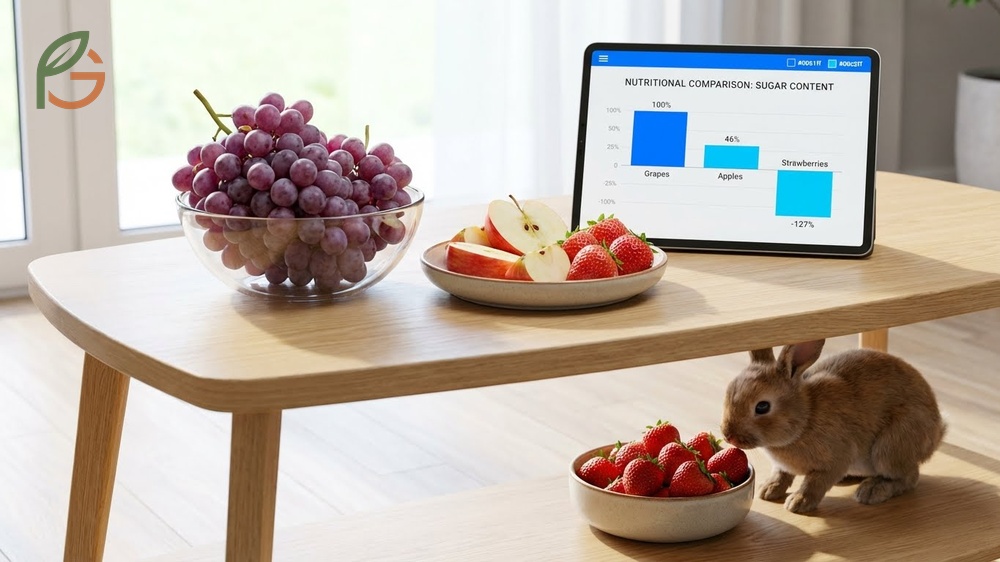
Understanding how grapes stack up against other common pet treats helps you make informed feeding decisions. While grapes aren’t inherently unhealthy, their sugar concentration exceeds many safer alternatives. The table below compares key nutritional values per 100g of various pet-safe fruits.
This table compares sugar content, calories, fiber, and water content across five common pet fruits including grapes, apples, blueberries, strawberries, and bananas
| Fruit | Sugar (g) | Calories | Fiber (g) | Water (%) |
|---|---|---|---|---|
| Grapes | 16[2] | 67[2] | 0.9[2] | 81 |
| Apple | 10.4 | 52 | 2.4 | 86 |
| Blueberries | 10 | 57 | 2.4 | 84 |
| Strawberries | 4.9 | 32 | 2.0 | 91 |
| Banana | 12.2 | 89 | 2.6 | 75 |
The data reveals why grapes should be limited. Their sugar concentration exceeds apples by 54% and strawberries by 227%. For rabbits that need low-sugar diets, strawberries or small apple pieces offer better alternatives with similar hydration benefits.
However, grapes do provide advantages. Their high water content makes them particularly useful for hamsters that under-drink. The natural sugars provide quick energy for active birds without the artificial additives found in commercial treats.
Conclusion
The evidence is clear: can rabbits eat grapes, hamsters, and birds? Yes, but moderation is everything. Current veterinary guidance emphasizes that grapes work best as weekly treats—not daily staples. Rabbits thrive on 1-2 grapes weekly, hamsters need just ¼ grape, and birds can enjoy small portions 2-3 times weekly when prepared safely.
What matters most isn’t whether you feed grapes, but how you incorporate them into a balanced diet. The 80-15-5 rule for rabbits (hay-vegetables-treats), careful breed selection for hamsters, and the 5-10% fruit guideline for birds provide frameworks that work. FruitGarden encourages pet owners to prioritize species-appropriate nutrition while using grapes strategically for training, bonding, and enrichment rather than convenience feeding.
Medical Disclaimer
Important Veterinary Disclaimer: This content is for informational and educational purposes only. It is not intended as a substitute for professional veterinary advice, diagnosis, or treatment. Always consult a qualified veterinarian before making any changes to your pet’s diet, especially if your animal has pre-existing health conditions such as diabetes, obesity, or digestive disorders. Individual pets may have unique dietary needs or allergies that require professional assessment.
Frequently Asked Questions
Can Rabbits Have Green Grapes?
Yes, rabbits can have green grapes in the same quantities as red or black grapes—1 to 2 per week. All grape colors contain similar sugar levels (approximately 16g per 100g), so color doesn’t affect safety or nutritional value. The main difference is that red and black grapes contain slightly higher antioxidant levels, but for the small portions rabbits eat, this difference is negligible.
Do Birds Like Grapes?
Most birds love grapes due to their sweetness and high water content. Species like cedar waxwings, robins, orioles, and parrots actively seek out grapes both in the wild and at feeders. Research shows that birds are attracted to the natural sugars, which provide quick energy, especially during migration periods or cold weather when caloric needs increase.
Can Hamsters Have Grapes Daily?
No, hamsters shouldn’t eat grapes daily. The recommended maximum is one-quarter of a grape per week for Syrian and Roborovski hamsters. Daily grape consumption would provide excessive sugar, leading to obesity, diabetes risk, and nutritional imbalances. Dwarf hamster breeds (Chinese and Campbell’s) shouldn’t have grapes at all due to their genetic predisposition to diabetes.
Are Grape Leaves Safe for Rabbits?
Yes, grape leaves and stems are completely safe for rabbits to eat and actually make better regular additions to their diet than the fruit itself. Grape leaves contain less sugar than the fruit and provide additional fiber, which supports healthy digestion. You can offer fresh grape leaves 2-3 times weekly as part of the 15% vegetable portion of a rabbit’s diet.
Will Birds Eat Frozen Grapes?
Yes, many birds will eat thawed grapes, and some larger species like parrots enjoy frozen grapes as cooling treats in hot weather. However, don’t offer frozen grapes to wild birds during cold months, as the extra energy required to warm them internally isn’t worth the nutritional benefit. Always cut frozen grapes into smaller pieces, as they’re harder and pose increased choking risks.
Can Baby Rabbits Eat Grapes?
No, baby rabbits under 12 weeks old shouldn’t eat grapes or any other fruits. Young rabbits have sensitive digestive systems that need time to establish healthy gut bacteria. Their diet should consist exclusively of mother’s milk (or formula) until 3 weeks, then gradually introduce hay and pellets. Only introduce fruits after 12 weeks of age, starting with tiny portions to test tolerance.
What Happens if a Hamster Eats Too Many Grapes?
If a hamster consumes too many grapes, watch for watery or soft droppings within 12-24 hours, which indicates digestive upset. Other signs include reduced appetite for regular pellets, lethargy, and increased thirst. Most cases resolve within 48 hours by returning to a normal diet, but if symptoms persist beyond 24 hours or worsen, consult a veterinarian immediately as dehydration can become dangerous quickly in small animals.





