

Are grapes good for diabetics? Yes, when eaten in moderation. Research shows that grapes have a low to moderate glycemic index (43-59) and a low glycemic load (8-12), making them suitable for people with diabetes[1]. The American Diabetes Association recommends including whole fruits like grapes in diabetic meal plans[2]. FruitGarden synthesizes current nutritional research to help you make informed choices about incorporating grapes into your diabetic-friendly diet.
Quick Answer
- Grapes have a glycemic index of 43-59, placing them in the low to moderate range[3]
- One cup of grapes contains 62 calories and 17g carbohydrates[4]
- Red grapes contain polyphenols that may improve insulin resistance and blood sugar control[5]
- Recommended serving size for diabetics is 15-20 grapes (1/2 cup), containing 15g carbs[6]
Are Grapes Good for Diabetics

Research demonstrates that grapes can be a healthy fruit choice for people with diabetes when consumed in appropriate portions. Studies published in the Journal of Nutrition found that grapes have a low mean glycemic index and glycemic load, making them suitable for diabetic diets[1]. What’s often overlooked is that the fiber content in grape skins and beneficial polyphenols actually help moderate the blood sugar response.
The American Diabetes Association specifically recommends that people with diabetes include whole fruits in their diet, and grapes are no exception[2]. Unlike processed snacks with refined sugars, grapes provide essential vitamins, minerals, and disease-fighting phytochemicals that benefit overall health. The key is understanding portion control and how to incorporate them strategically into your meal plan.
Evidence from clinical studies suggests that grape consumption, particularly red grapes, may offer specific benefits for insulin function. A 2020 study found that a Mediterranean diet including red grapes helped reduce insulin resistance in participants[5]. This contradicts the common misconception that all sweet fruits should be avoided by diabetics.
Glycemic Index and Glycemic Load
Grapes have a glycemic index ranging from 43 to 59, depending on the variety and ripeness[3]. Green and red grapes typically have a GI around 45-53, while black grapes can reach up to 59. Foods with a GI below 55 are considered low-glycemic, meaning they cause a slower, more gradual rise in blood sugar rather than a sharp spike.
The glycemic load (GL) tells an even more complete story about how grapes affect blood sugar. Most grapes have a GL between 8 and 12 per standard serving, which falls in the low range[7]. GL accounts for both the quality of carbohydrates (measured by GI) and the quantity in a typical serving, making it a more practical tool for meal planning.
Nutritional Benefits
Beyond their favorable glycemic response, grapes pack important nutrients. One cup of grapes provides 62 calories, 17g carbohydrates, 0.9g fiber, 191mg potassium, and 4mg vitamin C[4]. The manganese content is particularly notable, with grapes providing 31% of the daily value per 100g serving.
Red and purple grapes contain higher concentrations of polyphenols, including resveratrol, quercetin, catechins, and anthocyanins. Research shows these compounds may improve beta-cell function and protect against beta-cell loss in diabetics[1]. These antioxidants also support heart health, which is especially important for diabetics who face higher cardiovascular disease risk.
Sugar Content in Grapes
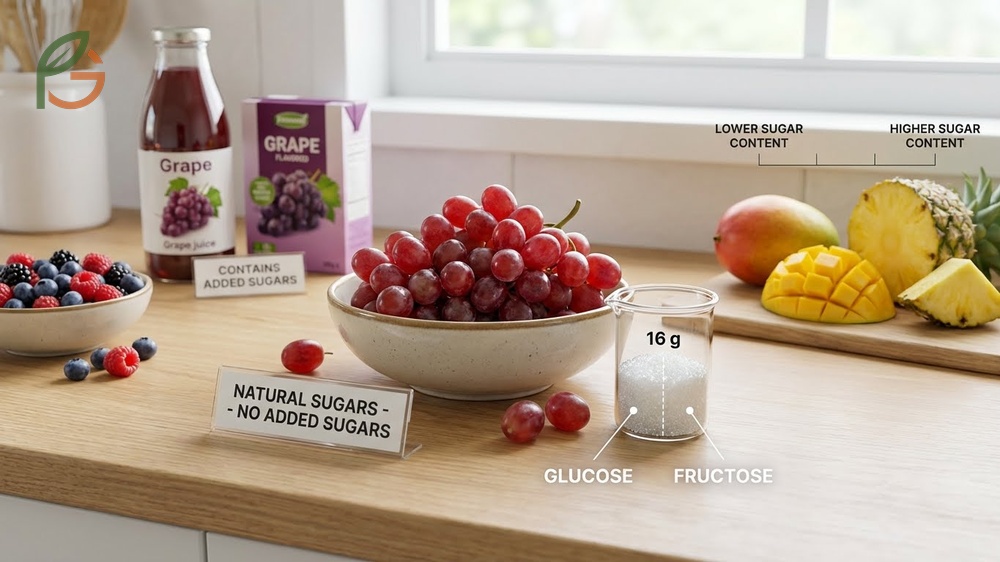
Grapes contain approximately 16g of natural sugars per 100g serving, consisting of roughly equal proportions of glucose and fructose. A half-cup serving of red seedless grapes provides 13.67g of total carbohydrates[8]. This natural sugar content is higher than some fruits like berries but lower than tropical fruits like mango or pineapple.
The important distinction is that grapes contain no added sugars, unlike grape juice drinks or grape-flavored products. Current evidence shows that consuming too many added sugars contributes to weight gain, obesity, type 2 diabetes, and heart disease[9]. Whole grapes provide fiber and water content that slow sugar absorption, unlike processed grape products.
Natural Sugars vs Added Sugars
Natural sugars in whole grapes come packaged with fiber, water, vitamins, and phytochemicals that moderate their impact on blood sugar. The 0.7-0.9g of dietary fiber per serving helps slow digestion and glucose absorption[8]. This fiber content, while modest compared to apples or pears, still provides meaningful benefits for blood sugar management.
Grape juice and grape-flavored drinks present a different story. Studies found that while whole grape consumption showed neutral effects on diabetes risk, grape juice consumption was associated with increased diabetes risk[10]. The juicing process removes fiber and concentrates sugars, leading to faster blood sugar spikes.
Important Note: Always choose fresh, whole grapes over grape juice or dried raisins. The fiber in grape skins is essential for moderating blood sugar response, and it’s lost during processing.
Red vs Green Grapes
Green grapes have a slightly lower glycemic index of approximately 45 compared to red grapes at 45-53[3]. However, the difference is modest and both fall within the low-GI category. Red and purple varieties offer nutritional advantages that may outweigh this small GI difference.
Red grapes contain significantly higher levels of anthocyanins and other polyphenols that give them their dark color. These compounds have been shown to improve insulin sensitivity and reduce oxidative stress in diabetic individuals[5]. Research on dealcoholized muscadine grape wine showed reduced fasting blood insulin levels and improved glucose-to-insulin ratios in type 2 diabetic subjects over 28 days.
How Many Grapes Can a Diabetic Eat

The American Diabetes Association recommends one diabetic fruit exchange, which equals 15-20 individual grapes or approximately half a cup[6]. This portion contains 15g of carbohydrates and 60 calories, fitting neatly into most diabetic meal plans. Most people find that 2-3 fruit servings spread throughout the day work well for blood sugar management.
A practical way to visualize this serving is comparing it to the size of a smartphone. Half a cup of seedless grapes provides 52 calories and 13.67g carbohydrates[8]. If you’re tracking carbs carefully, you can adjust this amount based on your daily carbohydrate budget and blood glucose targets.
Timing matters as much as quantity. Eating grapes as part of a balanced meal rather than as a standalone snack helps minimize blood sugar spikes. Studies demonstrate that pairing fruit with protein or unsaturated fats significantly improves glycemic control[2]. For example, combining grapes with a handful of almonds or a tablespoon of nut butter creates a more balanced snack.
This table compares serving sizes, carbohydrate content, calorie counts, and glycemic load across different grape portions to help diabetics plan appropriate servings
| Serving Size | Carbohydrates | Calories | Glycemic Load |
|---|---|---|---|
| 15-20 grapes (1/2 cup) | 15g[6] | 52-60 cal[8] | 6-8[3] |
| 1 cup (92g) | 17g[4] | 62 cal[4] | 9-10[7] |
| 3/4 cup (126g) | 23g | 90 cal | 11-12[7] |
- Pre-portion grapes into half-cup containers for easy grab-and-go snacks
- Use frozen grapes as a naturally sweet, slower-to-eat dessert alternative
- Track carb content if you’re counting carbohydrates for insulin dosing
- Monitor your personal blood glucose response 2 hours after eating grapes
- Adjust portions based on your activity level and overall daily carb budget
Best Ways to Eat Grapes for Blood Sugar Control

Pairing grapes with protein sources creates a more balanced snack that minimizes blood sugar spikes. Research shows that combining carbohydrates with protein or healthy fats slows digestion and glucose absorption[2]. Try eating 15-20 grapes with a tablespoon of almond butter, a handful of walnuts, or an ounce of cheese.
Eating grapes as part of a meal rather than alone on an empty stomach produces better glycemic outcomes. For breakfast, add grapes to Greek yogurt with a sprinkle of chia seeds. At lunch, toss them into a salad with grilled chicken and olive oil dressing. The fiber, protein, and healthy fats in these combinations help moderate your blood sugar response.
Frozen grapes make an excellent diabetic-friendly dessert that encourages slower consumption. The freezing process doesn’t change the nutritional content, but eating them frozen extends the time it takes to finish a serving. This slower pace gives your body more time to process the sugars gradually rather than experiencing a rapid influx.
Pro Tip: Choose red or purple grapes over green varieties when possible. The darker colors indicate higher polyphenol content, which research suggests may improve insulin sensitivity and reduce inflammation.
- Add grapes to protein-rich breakfast bowls with nuts and seeds
- Include them in savory salads with lean proteins and vinaigrette dressings
- Pair with cheese for a balanced afternoon snack
- Avoid grape juice and choose whole fruits to retain beneficial fiber
- Spread fruit intake throughout the day rather than consuming multiple servings at once
- Keep the skins on for maximum fiber and polyphenol content
Are Grapes Good for Prediabetes

Grapes can be beneficial for people with prediabetes when incorporated into a balanced diet focused on whole foods and portion control. Prediabetes means your blood sugar levels are elevated but not yet high enough for a diabetes diagnosis, making this a critical window for dietary intervention. Studies show that diets rich in low-GI fruits like grapes, combined with overall healthy eating patterns, can help prevent progression to type 2 diabetes[1].
The polyphenols in grapes offer particular promise for prediabetic individuals. Research demonstrates that grape polyphenols may help improve insulin sensitivity and reduce insulin resistance before full diabetes develops[5]. A Mediterranean-style diet that includes moderate amounts of red grapes has been associated with better glucose metabolism and reduced diabetes risk.
Portion awareness becomes especially important during the prediabetic stage. Stick to the recommended half-cup serving (15-20 grapes) and always pair them with protein or healthy fats. Focus on overall dietary patterns that emphasize vegetables, lean proteins, whole grains, and healthy fats, with fruits like grapes serving as nutrient-dense additions rather than dietary staples.
- Limit total fruit intake to 2-3 servings daily, spacing them throughout the day
- Combine grape servings with nuts, seeds, or Greek yogurt for protein balance
- Choose whole grapes over dried raisins, which have concentrated sugars
- Monitor your fasting blood glucose and HbA1c levels regularly with your healthcare provider
- Incorporate regular physical activity, which improves insulin sensitivity and glucose uptake
Conclusion
The evidence is clear: grapes can be a healthy part of a diabetic diet when consumed mindfully and in appropriate portions. With a low glycemic index of 43-59 and beneficial polyphenols that may improve insulin function, grapes offer nutritional value beyond just their natural sweetness. Stick to 15-20 grapes per serving, pair them with protein sources, and choose red or purple varieties for maximum health benefits.
Current guidance from the American Diabetes Association emphasizes that fruit restriction isn’t necessary for diabetics—what matters is understanding portion sizes and how different foods affect your individual blood glucose response. FruitGarden encourages you to work with your healthcare team to determine the best meal plan for your specific needs, using whole fruits like grapes as part of a balanced, nutrient-rich approach to managing diabetes.
Medical Disclaimer
Important Medical Disclaimer: This content is for informational and educational purposes only. It’s not intended as a substitute for professional medical advice, diagnosis, or treatment. Always consult a qualified healthcare professional before making any changes to your diet, medication, or health routine, especially if you have diabetes or other medical conditions. Individual responses to foods vary, and what works for one person may not work for another.
Frequently Asked Questions
Are Grapes High in Sugar Compared to Other Fruits?
Grapes contain about 16g of natural sugar per 100g, which is moderate compared to other fruits. They have more sugar than berries but less than mangoes or bananas. The key difference is their low glycemic index (43-59), which means the sugar is absorbed more slowly than in many other sweet foods, producing a more gradual blood sugar rise.
Can Diabetics Eat Red Grapes Daily?
Yes, diabetics can eat red grapes daily in appropriate portions, typically 15-20 grapes (half a cup) as part of their daily fruit allowance. Red grapes contain beneficial polyphenols that research suggests may improve insulin sensitivity. Monitor your blood glucose response and work with your healthcare provider to determine what fits your individual meal plan.
Is Grape Juice Safe for Diabetics?
Grape juice isn’t recommended for diabetics because it lacks the fiber found in whole grapes and contains concentrated sugars that cause rapid blood sugar spikes. Studies show that grape juice consumption is associated with increased diabetes risk, while whole grape consumption shows neutral or beneficial effects. Always choose whole, fresh grapes over juice.
What’s the Best Time to Eat Grapes for Diabetics?
The best time to eat grapes is as part of a balanced meal or paired with protein-rich snacks rather than on an empty stomach. Having grapes with breakfast alongside Greek yogurt and nuts, or as part of lunch with a salad and lean protein, helps slow sugar absorption. Avoid eating them late at night when physical activity is lowest.
Do Green Grapes or Red Grapes Have Lower Sugar?
Green and red grapes have similar sugar content, with minimal differences in total carbohydrates. Green grapes have a slightly lower glycemic index around 45 compared to red grapes at 45-53, but both fall in the low-GI category. Red grapes offer higher levels of beneficial polyphenols and antioxidants, which may provide advantages for blood sugar management.
Can Eating Too Many Grapes Cause Blood Sugar Spikes?
Yes, eating too many grapes at once can cause blood sugar spikes despite their low glycemic index. Portion control is essential—stick to 15-20 grapes (half a cup) per serving. The glycemic load increases with larger portions, so even low-GI foods can raise blood sugar significantly if you eat excessive amounts.
Are Frozen Grapes Better for Diabetics Than Fresh?
Frozen and fresh grapes have identical nutritional content and glycemic impact. However, frozen grapes offer a practical advantage—they take longer to eat, which naturally slows consumption and may help with portion control. They also make a satisfying dessert alternative to ice cream, providing natural sweetness without added sugars.





