
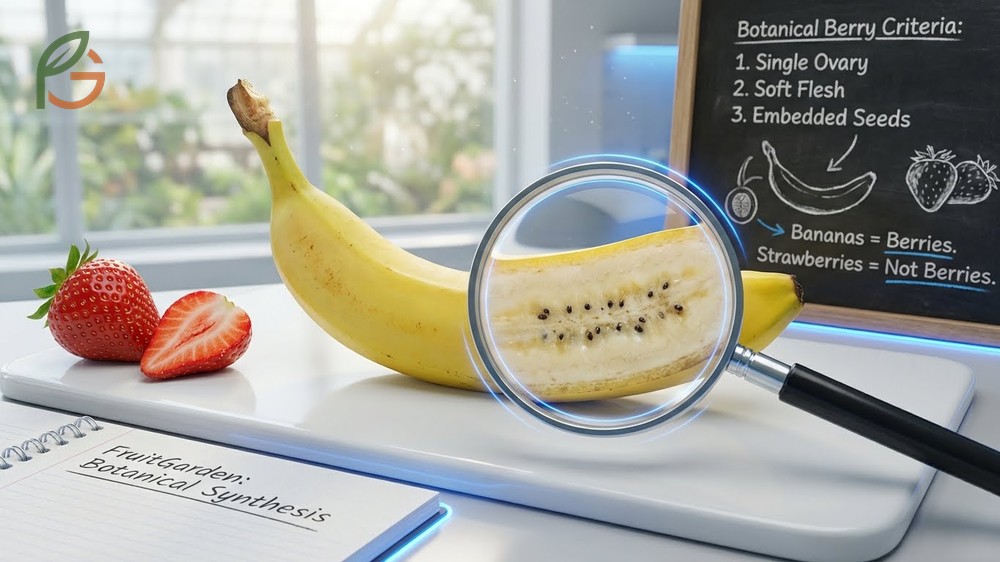
Is a banana a berry? Yes, botanically speaking. Bananas develop from a single ovary, have soft flesh, and contain seeds embedded inside—meeting all scientific criteria for true berries[1]. What’s more surprising is that strawberries don’t qualify as berries at all. FruitGarden synthesizes current botanical research to reveal the fascinating truth behind fruit classification and why those tiny black dots in your banana matter more than you’d think.
Quick Answer
- Bananas are true berries because they develop from flowers with one ovary and have seeds embedded in soft flesh[2]
- Modern bananas contain tiny 5-6mm seeds[3] that were bred to be almost invisible
- Strawberries are not berries—they’re aggregate fruits with seeds on the outside[4]
- Humans share approximately 60% of genes with bananas for basic cellular functions[5]
Is a Banana a Berry
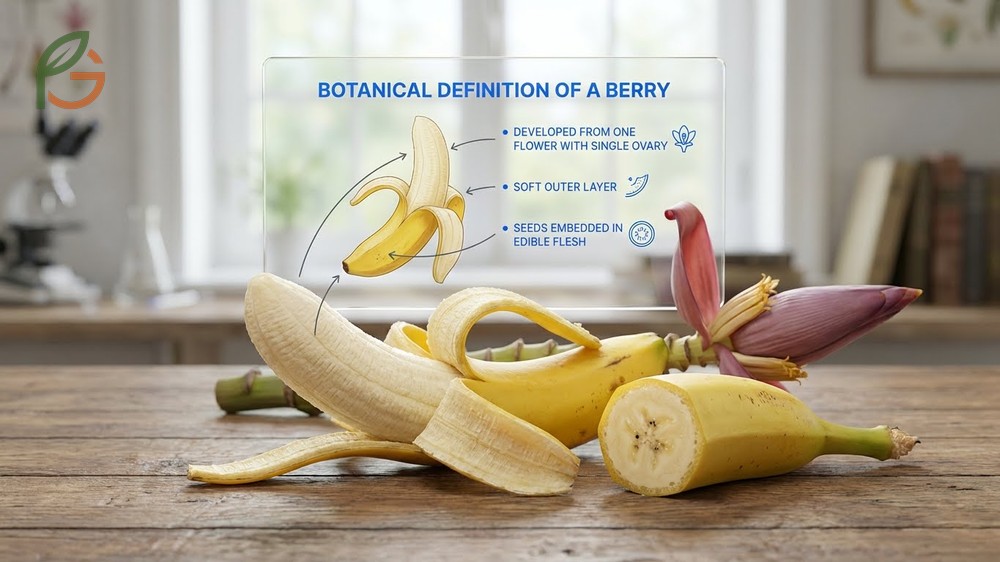
Bananas qualify as berries under strict botanical classification. The scientific definition requires a fruit to develop from a flower with one single ovary, possess a soft outer layer, and contain seeds embedded within edible flesh[1].
Research shows bananas meet every criterion. Each banana develops from one flower containing a single ovary. The entire ovary wall ripens into the soft, fleshy fruit you eat[2].
Those tiny black specks inside aren’t defects—they’re the seeds. Modern cultivation bred bananas to have nearly invisible seeds, but they’re still there. Wild banana ancestors produced seeds measuring 5-6mm in diameter, hard as bullets and inedible.
Botanical Definition of Berry
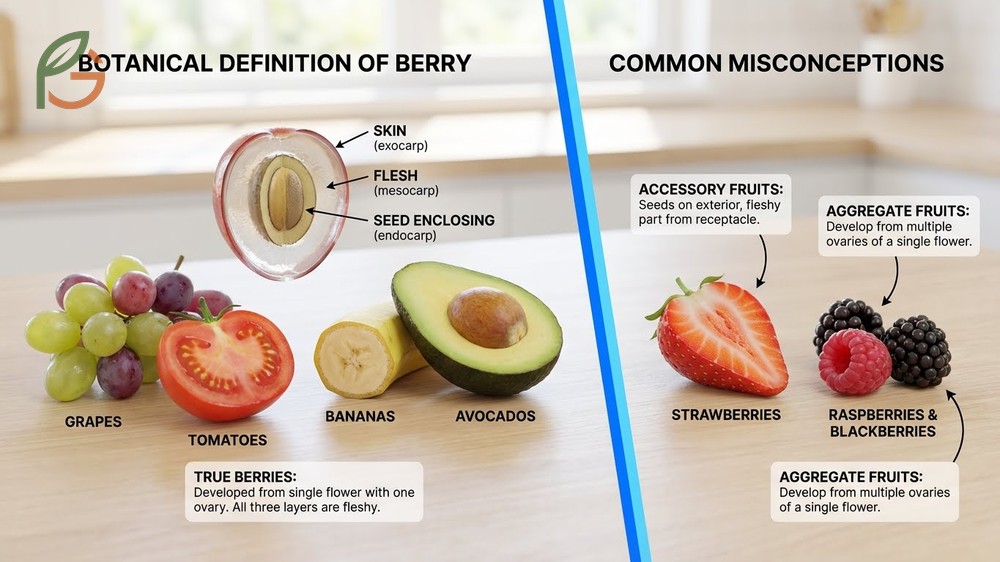
Botanists classify berries using three essential layers called the pericarp. The exocarp forms the outer skin, the mesocarp creates the fleshy middle, and the endocarp surrounds the seeds[4].
True berries have thin endocarps and fleshy pericarps throughout. This distinguishes them from drupes like cherries, which have hard stone-like endocarps. The seeds must sit inside the edible portion—not outside like you’d see on strawberries.
- Tomatoes—develop from single ovary flowers with seeds suspended in gel
- Grapes—thin skin, fleshy interior, multiple seeds embedded in pulp
- Eggplants—single ovary origin with numerous small seeds throughout
- Cucumbers—classified as berries despite being eaten as vegetables
- Kiwis—hundreds of tiny seeds surrounded by soft green flesh
Important Note: Culinary definitions differ completely from botanical ones. What you call a berry in cooking might not meet scientific standards, and vice versa.
Why Strawberries Are Not Berries
Strawberries fail the berry test on multiple counts. Current botanical data shows strawberries form from flowers with multiple ovaries rather than one[4]. This makes them aggregate fruits.
The red fleshy part you eat isn’t the fruit at all. It’s the swollen receptacle—the base structure that holds the flower together. Those tiny yellow “seeds” dotting the surface are the actual fruits, called achenes.
Each achene contains one seed inside. Because strawberries develop from multiple ovaries merging together and the edible portion doesn’t come from the ovary, they’re disqualified from berry status. Raspberries and blackberries fall into the same category.
Do Bananas Have Seeds
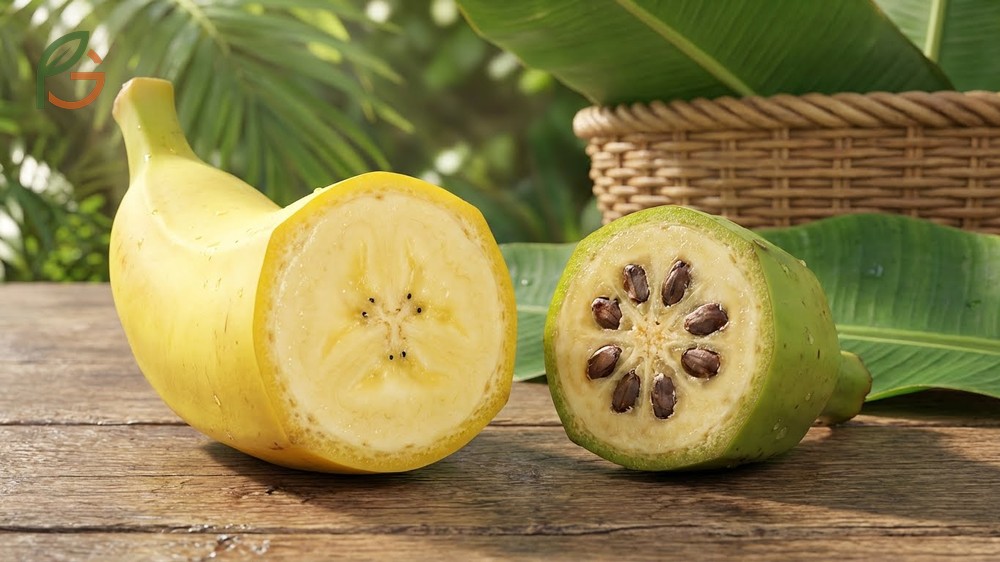
Commercial bananas contain seeds—just extremely small ones. Studies demonstrate modern bananas are cultivated to produce tiny, underdeveloped seeds that appear as black dots in the fruit’s center[6]. You can’t plant these to grow new banana trees.
Around 7,000 years ago in Papua New Guinea, people domesticated wild bananas. The original fruits were packed with large, hard seeds that made them nearly inedible[6]. Early farmers selected plants with genetic mutations that produced smaller seeds and more flesh.
Today’s bananas reproduce through cloning. Farmers cut sections from existing plants rather than planting seeds. This method preserves the seedless trait but creates genetic vulnerability to diseases.
Wild Banana vs Commercial Banana
Wild banana species Musa acuminata and Musa balbisiana still grow in Southeast Asian forests. Their fruits contain seeds measuring 5-6mm in diameter[3]—roughly the size of small peppercorns. These seeds are subglobose, angular, and extremely hard.
Each seed produces approximately four times its volume in edible pulp. Wild bananas taste different from commercial varieties—more starchy and astringent. The flesh-to-seed ratio makes them impractical for eating fresh.
This table compares seed size, edibility, reproduction method, and genetic diversity between wild and commercial bananas across five key characteristics
| Characteristic | Wild Banana | Commercial Banana |
|---|---|---|
| Seed Size | 5-6mm diameter[3], hard and angular | Tiny black specks, underdeveloped[6] |
| Edibility | Nearly inedible, minimal flesh | Soft, sweet, fleshy throughout |
| Reproduction | Sexual via seeds | Cloning from cuttings[7] |
| Genetic Diversity | High variability | Extremely low, identical clones[7] |
| Species | Musa acuminata, Musa balbisiana[8] | Hybrid cultivars (Cavendish dominant) |
Parthenocarpy in Bananas
Parthenocarpy means fruit development without fertilization. Commercial bananas are parthenocarpic—they develop flesh without pollination occurring[7]. This explains why the seeds never fully develop.
When banana flowers open, no viable pollen exists to fertilize the ovules. The plant’s genetics trigger fruit growth anyway. The ovules begin developing into seeds but abort partway through, leaving those tiny black specks.
This trait emerged through natural mutations that early farmers recognized and propagated. Today, it’s the defining feature of edible bananas. Without parthenocarpy, you’d be crunching through hard seeds with every bite.
Critical Limitation: Parthenocarpy makes bananas vulnerable to extinction. Without genetic diversity from sexual reproduction, a single disease can wipe out entire crops.
Classification of Fruits Botany
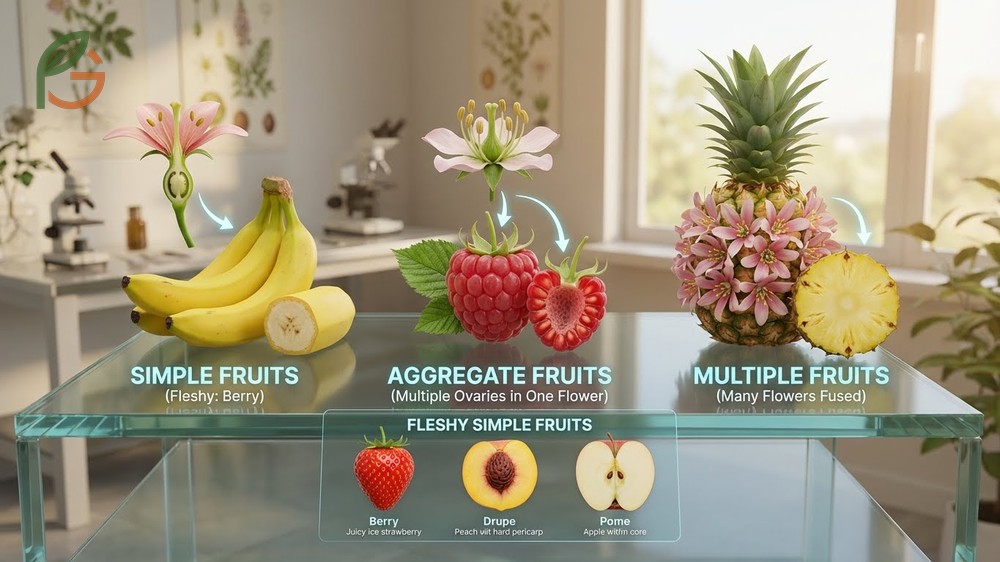
Botanical classification divides fruits based on ovary structure and development patterns. Simple fruits develop from one ovary, aggregate fruits from multiple ovaries in one flower, and multiple fruits from many flowers fused together[4].
Simple fruits split further into fleshy and dry categories. Fleshy simple fruits include berries, drupes, and pomes. Bananas fall into the berry subcategory because their entire pericarp is soft and edible.
Drupes have hard endocarps forming stones around seeds—think peaches or almonds. Pomes have a core structure where the endocarp forms a papery layer around seeds, as seen in apples and pears.
- Berries: bananas, tomatoes, grapes, blueberries, kiwis, eggplants
- Drupes: peaches, cherries, mangoes, olives, coconuts, almonds
- Pomes: apples, pears, quinces, hawthorns, loquats
- Aggregate fruits: strawberries, raspberries, blackberries
- Multiple fruits: pineapples, figs, mulberries
- Accessory fruits: strawberries (receptacle-based)
Most confusion comes from culinary versus botanical terminology. Cucumbers and pumpkins are berries botanically but vegetables in cooking. Strawberries are berries culinarily but aggregate fruits scientifically.
Cavendish Banana History
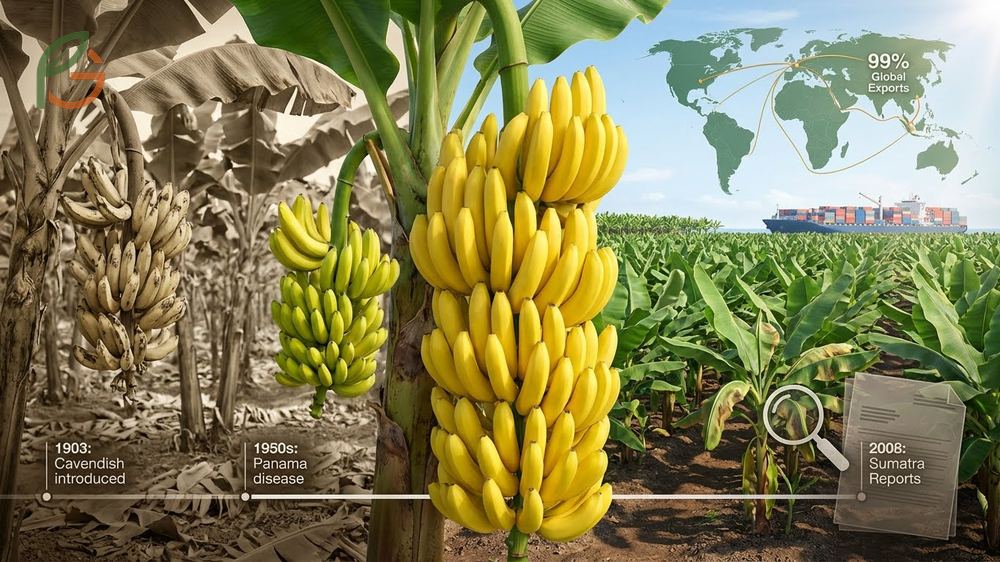
Cavendish bananas entered mass commercial production in 1903[7]. They remained a minor variety until the 1950s when Panama disease devastated Gros Michel bananas, the previously dominant export variety.
Growers switched to Cavendish because it could grow in soils contaminated by the disease. Agricultural data shows Cavendish now accounts for 99% of banana exports to developed countries[7]. This monoculture creates serious vulnerabilities.
By 2008, reports from Sumatra and Malaysia confirmed Panama disease had evolved to attack Cavendish cultivars[7]. Because all Cavendish plants are genetically identical clones, disease resistance can’t evolve through natural selection. Mutations must occur spontaneously in vegetative tissue—a much slower process than seed-based evolution.
From My Experience: My cousin in Guadalajara, Mexico grows fruit trees commercially. In 2023, he noticed banana plants from a specialty nursery showed unusual leaf patterns compared to standard Cavendish. The nursery confirmed these were experimental disease-resistant hybrids—matching research on developing Panama disease-tolerant varieties.
- Zero genetic diversity across all commercial Cavendish plants worldwide
- Inability to sexually reproduce or create new genetic combinations
- Disease spreads rapidly through identical monoculture plantations
- Mutations occur slowly in clonal propagation versus seed reproduction
- Risk of commercial extinction similar to Gros Michel predecessor
Industry Response: Researchers are developing genetically modified bananas and searching for wild species with disease resistance that can be hybridized into commercial varieties.
DNA Banana vs Human
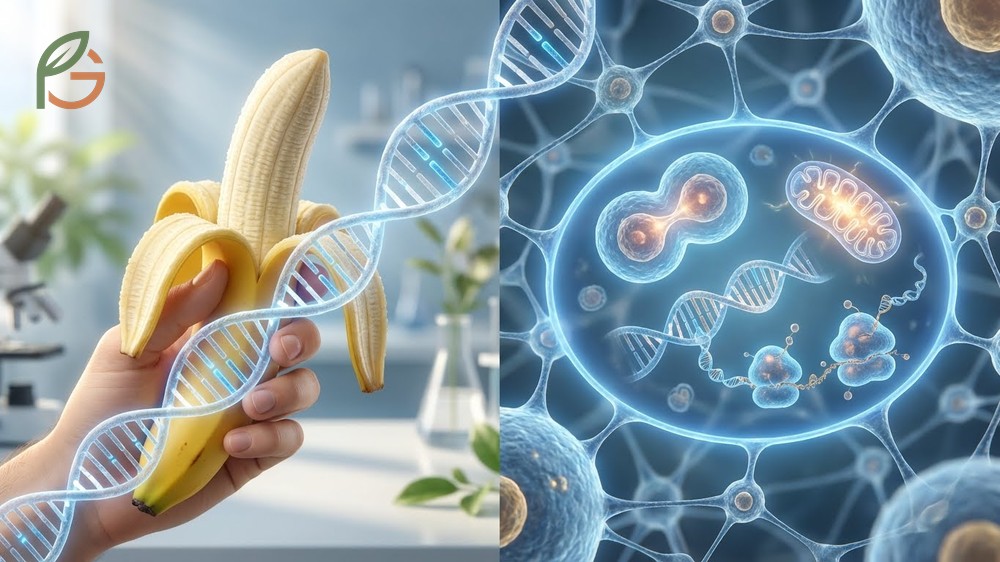
Humans share approximately 60% of their genes with bananas[5]. This refers to gene homologs—genes that perform similar functions across species. The overlap reflects shared ancestry from billions of years ago when all life evolved from common single-celled organisms.
These shared genes control fundamental cellular processes. Both humans and bananas need genes for cell division, energy production through mitochondria, DNA replication, and protein synthesis. Evolution preserved these essential “housekeeping” genes across virtually all living organisms.
The remaining 40% of human DNA contains genes for complex traits like brain function, immune responses, and developmental patterns. Research examining amino acid sequences found the proteins produced by shared genes are approximately 40% identical between humans and bananas[5]. This means the genes exist in both species but have diverged significantly over evolutionary time.
- Cell division and mitosis regulated by conserved genetic pathways
- Energy production through cellular respiration in mitochondria
- DNA replication using polymerase enzymes and similar mechanisms
- Protein synthesis via ribosomes and transfer RNA molecules
- Basic metabolic processes for converting nutrients into usable energy
The 60% figure represents gene presence, not DNA sequence identity. If you compared the actual DNA letter-by-letter, the similarity would be much lower. It’s like saying two books share 60% of their chapters but the words in those chapters differ substantially.
Conclusion
The evidence is clear: is a banana a berry? Absolutely. Bananas meet every botanical requirement—single ovary origin, soft flesh throughout, and seeds embedded inside. This classification matters because it reveals how scientific terminology differs from everyday language and highlights the remarkable genetic engineering our ancestors achieved through selective breeding.
Current agricultural guidance emphasizes developing disease-resistant banana varieties to prevent commercial extinction. Understanding why bananas are berries connects you to broader questions about plant biology, evolution, and food security. FruitGarden continues tracking research on banana genetics and sustainable cultivation methods as scientists work to preserve this essential crop for future generations.
Frequently Asked Questions
Is a Banana a Berry or Fruit?
A banana is both a fruit and a berry. All berries are fruits, but not all fruits are berries. Botanically, bananas qualify as true berries because they develop from a single ovary flower and have soft flesh with seeds embedded inside.
Why Is a Banana a Berry but Not a Strawberry?
Bananas develop from one ovary and have seeds inside the flesh, meeting berry criteria. Strawberries form from flowers with multiple ovaries, and their seeds sit on the outside. The red part you eat is actually a swollen receptacle, not the fruit itself, making strawberries aggregate fruits rather than berries.
Did Bananas Originally Have Seeds?
Yes, wild banana ancestors produced large hard seeds measuring 5-6mm in diameter. Around 7,000 years ago in Papua New Guinea, people domesticated bananas by selecting plants with genetic mutations that produced smaller seeds and more edible flesh, eventually creating today’s nearly seedless varieties.
What Do Real Banana Seeds Look Like?
Wild banana seeds are subglobose or angular, roughly the size of small peppercorns, and extremely hard. Modern commercial bananas still contain seeds—those tiny black specks in the center—but they’re underdeveloped and non-viable due to parthenocarpy, where fruit develops without fertilization.
How Are Modern Bananas Genetically Modified?
Commercial bananas aren’t genetically modified in the laboratory sense—they’re the result of thousands of years of selective breeding. Ancient farmers chose naturally occurring mutations that produced seedless fruit. Today’s Cavendish bananas are propagated through cloning rather than genetic engineering, though researchers are developing GM varieties for disease resistance.
What Type of Fruit Is a Banana Botanically?
Botanically, bananas are classified as simple fleshy fruits in the berry category. More specifically, they’re parthenocarpic berries—fruits that develop without fertilization. This places them in the same category as tomatoes, grapes, and kiwis, despite their very different appearances.
Why Do Humans Share 60% of DNA With Bananas?
The 60% DNA overlap represents shared housekeeping genes for basic cellular functions like cell division, energy production, and protein synthesis. All life evolved from common ancestors billions of years ago, preserving these essential genes across species. The similarity shows how fundamental biological processes work the same way in both plants and animals.





