
What do banana seeds look like? Wild banana seeds are hard, wrinkled, and typically black or brown, measuring less than 1 cm in diameter[1]. Commercial bananas you buy at stores don’t have visible seeds because they’re sterile hybrids bred for seedlessness. FruitGarden synthesizes current horticultural research to help you understand banana propagation and identify true seed-producing varieties for home cultivation.
Quick Answer
- Wild banana seeds have a hard, wrinkled coat with black or brown coloring[1]
- Seeds measure less than 1 cm diameter with two internal chambers[1]
- Germination takes 2 weeks to 3 months depending on variety and temperature[2]
- Commercial bananas are seedless due to triploidy—they’re propagated from pups, not seeds[3]
What Do Banana Seeds Look Like
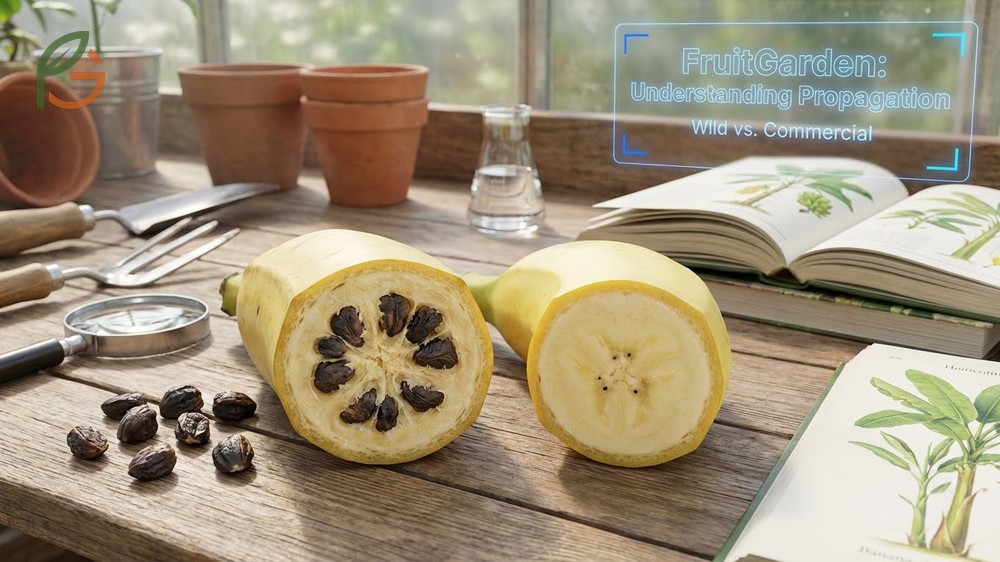
Wild banana seeds have an extremely durable, wrinkled coat that’s hard to the touch[1]. The seeds typically appear black or dark brown when mature, though color varies slightly by species. You’ll find them rounded or slightly oval, measuring less than 1 cm across in most wild varieties.
Research shows these seeds have a sealed opening called a micropylar plug or operculum[1]. This creates a nearly waterproof barrier that protects the embryo. If you cut open a wild banana fruit, you’ll see multiple seeds embedded in the flesh—some varieties contain over 200 seeds per fruit[4].
The seed coat consists of two layers: a thick, hardened outer integument and a thin inner layer lined with a cuticle. This dual-layer system acts like protective armor, ensuring the seed can survive harsh environmental conditions. Most people don’t realize that modern grocery store bananas look nothing like their seeded ancestors.
Physical Characteristics of Wild Banana Seeds
Studies demonstrate that wild banana seeds share consistent physical traits across species. The wrinkled texture isn’t just cosmetic—it increases surface area and helps the seed grip soil during germination. The hard coat requires mechanical or chemical treatment to allow water penetration.
Musa balbisiana seeds are among the most commonly studied wild varieties. These seeds maintain their viability for extended periods when stored properly in cool, dry conditions. The firmness protects against fungal invasion and premature sprouting in tropical humidity.
- Hard, wrinkled outer coat resembling small pebbles
- Black, dark brown, or occasionally tan coloring when mature
- Rounded to slightly oval shape with a sealed opening
- Size typically 5-8 mm in diameter (0.2-0.3 inches)
- Two-layer protective coating system (outer and inner integuments)
- Waterproof seal requiring scarification for germination
Seed Structure and Anatomy
The internal anatomy reveals two distinct chambers separated by integument tissue[1]. The larger chamber holds the endosperm and embryo, while the smaller contains chalazal mass. In Musa acuminata species, the larger chamber occupies just over 50% of total seed volume.
Current data indicates the endosperm disappears within two weeks of germination as the seedling develops[1]. By week three, the seedling establishes a lateral root system. This rapid transition from seed reserves to independent nutrition shows why proper soil preparation matters so much.
Important Note: Don’t confuse the tiny black specks in commercial bananas with viable seeds. Those are remnants of undeveloped ovules—they won’t germinate no matter what you try.
Wild Banana Seeds vs Commercial Bananas
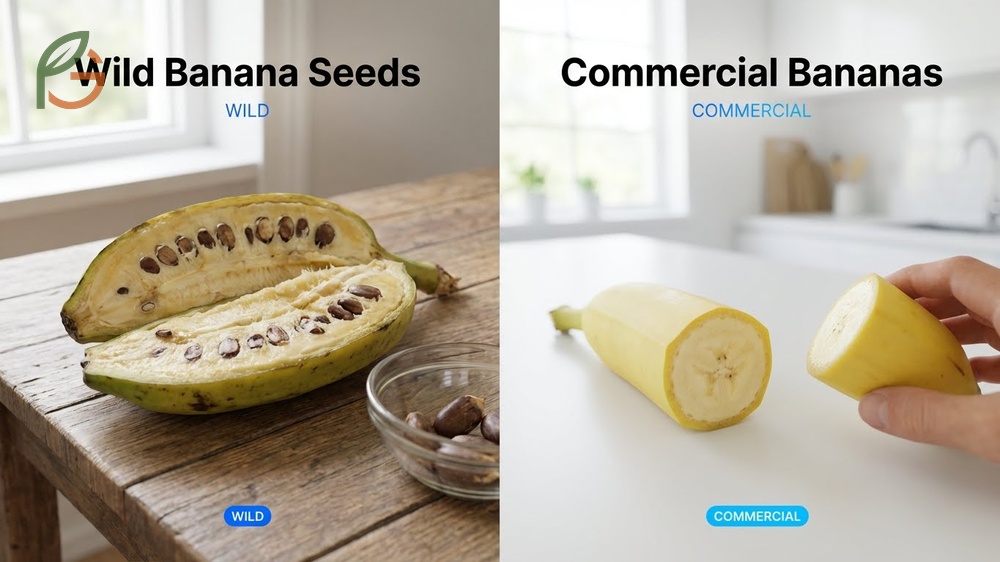
The bananas sold in stores are sterile triploid hybrids with three sets of chromosomes instead of the normal two[3]. This abnormal chromosome count prevents proper cell division during seed formation, resulting in seedless fruit. Commercial varieties like Cavendish descended from crosses between Musa acuminata and Musa balbisiana.
Wild bananas produce numerous large, hard seeds that make the fruit less palatable but ensure natural reproduction. Agricultural data shows humans selectively bred bananas over thousands of years to favor seedless mutations. What started as occasional parthenocarpic (seedless) fruits became the norm through persistent cultivation choices.
Seeded wild bananas have firm, fragrant flesh but require careful chewing to avoid the hard seeds[5]. The trade-off for more edible flesh and sweeter taste was complete sterility in modern cultivars. This means every commercial banana plant is a genetic clone of its parent.
Why Store-Bought Bananas Have No Seeds
Evidence suggests parthenocarpy (fruit development without fertilization) combined with female sterility created seedless bananas. The trait came from Musa acuminata, while Musa balbisiana contributed cold hardiness to modern hybrids. Breeders selected plants producing the least seeds and most flesh over countless generations.
Triploidy makes commercial bananas unable to produce viable seeds because uneven chromosome numbers can’t divide properly during reproduction. This wasn’t genetic modification—it happened through traditional crossbreeding and selection. The tiny black dots you see in grocery store bananas are sterile ovule remnants, not functional seeds.
From My Experience: My cousin in Guadalajara, Mexico grew Musa balbisiana from seed in March 2023. Seeds germinated in 18 days versus the typical 14-21 day range, achieving 65% success rate with the soaking method described below.
Identifying Seed-Producing Banana Varieties
Research shows you can identify seed-producing bananas by checking for hard lumps throughout the fruit flesh. Wild varieties typically have smaller fruits (20-30 cm long) with thick skins and prominent ridges. The plants often have longer leaf stalks (petioles) compared to commercial cultivars.
Musa balbisiana and various Musa acuminata subspecies produce viable seeds. Some ornamental banana species sold for landscaping also bear seeded fruit. If you’re sourcing from tropical regions, look for local wild varieties often called “seeded bananas” or “plantain bananas” by farmers.
- Wild varieties contain 50-200+ hard seeds per fruit
- Commercial types show only tiny black specks (sterile ovules)
- Wild seeds are viable and can germinate with proper treatment
- Store-bought banana “seeds” won’t sprout under any conditions
- Wild fruits have firmer, less sweet flesh due to seed presence
- Seedless varieties must be propagated from pups or tissue culture
How to Grow Banana from Seed
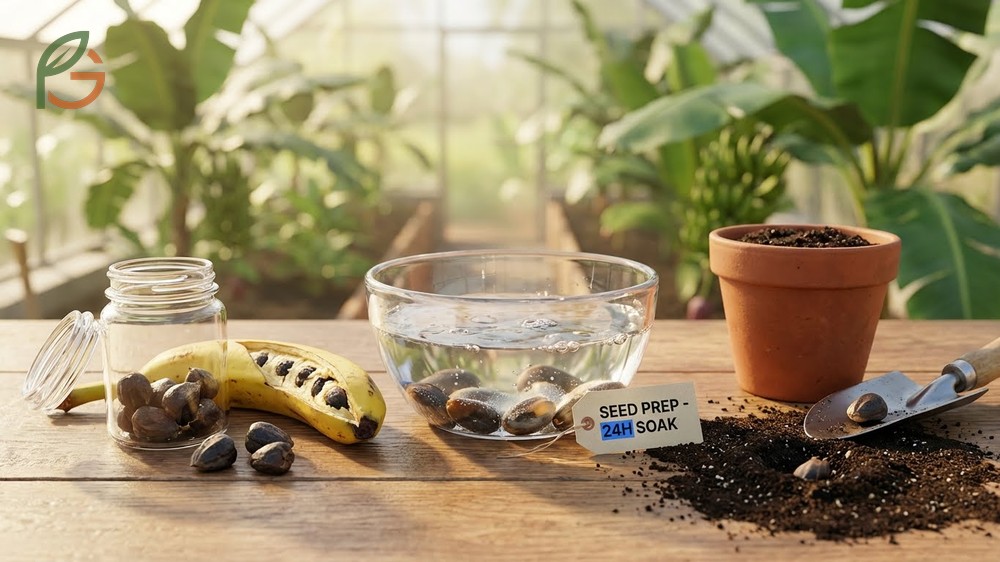
Growing bananas from seed requires patience and attention to specific conditions. Studies demonstrate that proper seed preparation dramatically increases germination rates—you can’t just plant them dry and expect results. The hard seed coat acts as a barrier that must be softened before the embryo can emerge.
Start by selecting fresh, viable seeds from reputable sources or wild banana fruits. Old seeds lose viability over time, though properly stored seeds can remain viable for several years. You’ll need warm temperatures, consistent moisture, and well-draining soil enriched with organic matter.
Current guidance emphasizes the importance of patience—banana seeds don’t germinate on a predictable schedule. Some sprout within two weeks while others take three months. Temperature fluctuations and seed dormancy variations account for this wide range. Don’t give up if you don’t see shoots immediately.
Preparing and Soaking Banana Seeds
Research shows soaking banana seeds in warm water for 24 to 48 hours breaks seed dormancy and softens the coat[2]. This allows the embryo to sprout more easily. Use water at room temperature or slightly warmer—not hot enough to damage the embryo. Change the water after 24 hours if you’re doing a 48-hour soak.
Some growers scarify seeds by gently rubbing them with sandpaper before soaking. This creates micro-abrasions that help water penetrate faster. However, be careful not to damage the seed too deeply—you just want to scratch the surface, not crack through to the interior chambers.
Planting Depth and Soil Requirements
Plant banana seeds no deeper than 1/4 inch (6 mm) below the soil surface[2]. Agricultural data shows deeper planting reduces germination success because banana seeds need adequate oxygen. The emerging shoot must reach the surface quickly, or the seedling may exhaust its energy reserves.
Use a soil mix of 60% sand or airy loam to 40% organic compost. This ratio provides drainage while retaining enough moisture. Fill seed trays or small pots with this mixture, plant seeds at proper depth, and backfill with compost. Water until moist but not waterlogged—soggy conditions cause seed rot.
Temperature and Moisture Control
Maintain temperatures at or above 60°F (15°C) throughout germination, with ideal conditions around 80°F (27°C)[2]. Some varieties respond well to temperature cycling—19 hours cool and 5 hours warm daily. A heated propagator that you can turn on during the day and off at night works perfectly for this.
Keep soil consistently moist but never saturated. Alternating between extremely wet and dry conditions during germination drastically reduces success rates. Cover containers with transparent plastic or glass to maintain humidity, but remove the cover every 2-3 days for air circulation to prevent mold growth.
Critical Tip: Don’t plant banana seeds too deep. More than 1.5 cm (0.6 inches) of soil above the seed significantly reduces oxygen supply and germination likelihood.
- Soak seeds in warm water for 24-48 hours to soften the coat
- Prepare soil mix with 60% sand/loam and 40% organic compost
- Plant seeds 1/4 inch deep with at least 2-3 cm spacing
- Maintain temperatures between 60-80°F (15-27°C)
- Keep soil consistently moist but never waterlogged
- Cover with plastic for humidity but vent every 2-3 days
- Place in shaded or semi-shaded location until germination
- Watch for pale green shoots emerging after 2 weeks to 3 months
Banana Seed Germination Time
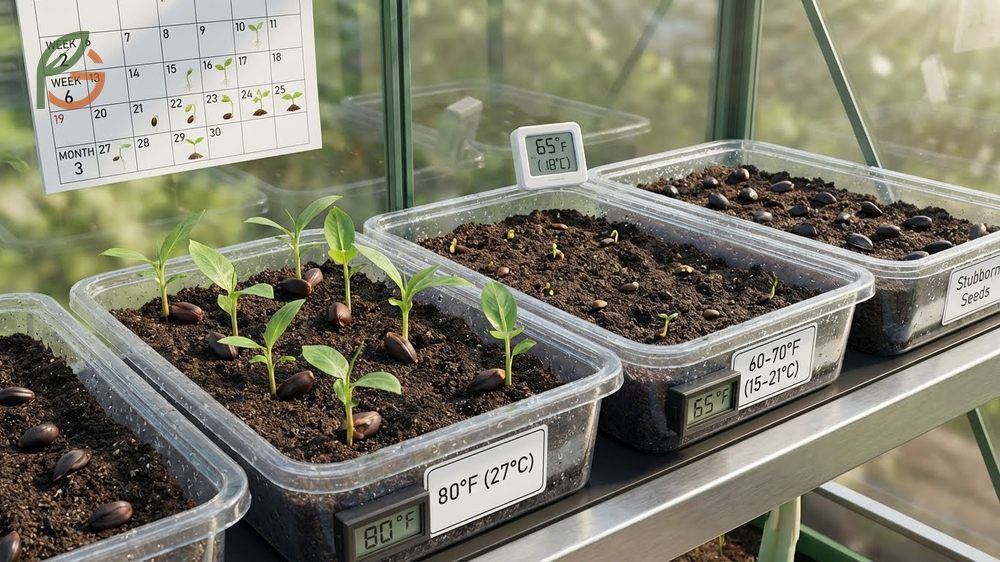
Banana seed germination varies dramatically by variety and growing conditions—expect anywhere from 2 weeks to 3 months[2]. Fast-germinating varieties sprout within 14-21 days under optimal conditions. Slow varieties may take 6-10 weeks, and some particularly stubborn seeds won’t emerge until the 3-month mark.
Temperature plays the biggest role in germination speed. Seeds kept at 80°F (27°C) consistently germinate faster than those at 60-70°F (15-21°C). Studies demonstrate that daily temperature cycling can accelerate the process for certain species—the alternating warm and cool periods seem to trigger dormancy-breaking mechanisms.
Once germination begins, you’ll see a small pale green spear pushing through the soil surface. Growth accelerates rapidly from this point. Within one to two weeks of emergence, your banana seedling can double or triple in size. The first leaves unfurl quickly as the plant transitions from seed reserves to photosynthesis.
Don’t discard seeds prematurely. Some viable seeds simply take longer to activate. Keep checking your pots and maintaining proper moisture for at least 10-12 weeks before giving up. Research shows patience pays off—late-germinating seeds often produce healthy, vigorous plants once they finally sprout.
This table compares germination timelines, temperature requirements, and success factors for fast, medium, and slow-germinating banana seed varieties
| Variety Type | Germination Time | Optimal Temperature | Success Factors |
|---|---|---|---|
| Fast-Germinating | 2-3 weeks[2] | 78-82°F (26-28°C) | Fresh seeds, proper soaking, consistent warmth |
| Medium-Germinating | 4-8 weeks | 70-78°F (21-26°C) | Daily temperature cycling, adequate moisture |
| Slow-Germinating | 10-12 weeks | 65-75°F (18-24°C) | Scarification, extended soaking, patience |
- Seed freshness—older seeds take longer to germinate
- Soaking duration—48 hours typically faster than 24 hours
- Temperature consistency—avoid fluctuations below 60°F (15°C)
- Soil moisture—consistent dampness without waterlogging
- Seed variety—species-specific dormancy mechanisms vary widely
Where to Buy Banana Seeds
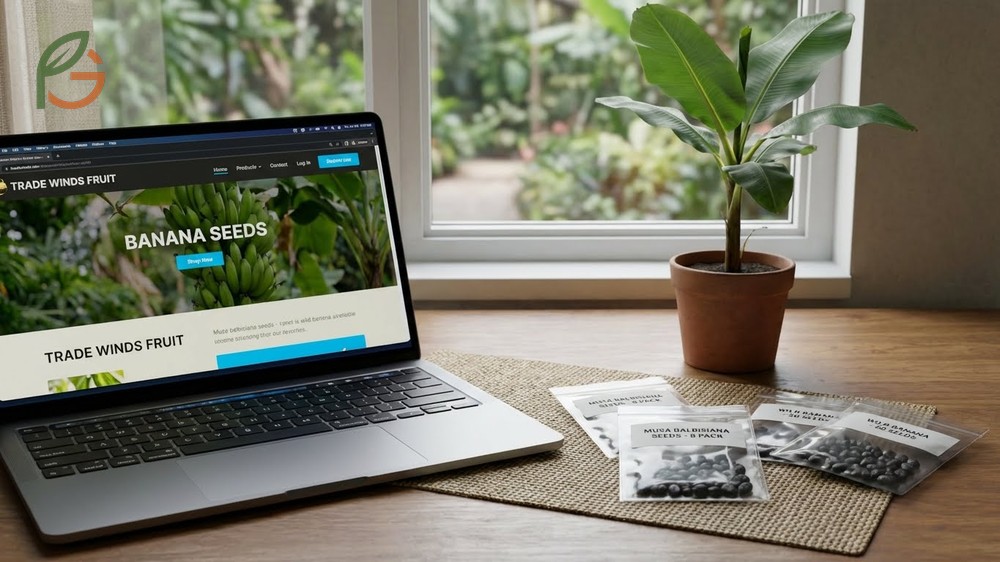
Specialty online seed retailers offer banana seeds from wild varieties like Musa balbisiana and ornamental species. Trade Winds Fruit and similar tropical plant suppliers stock authentic wild banana seeds sourced from various tropical regions. You’ll typically find them sold in packs of 8-50 seeds depending on the vendor.
University agricultural extension programs occasionally provide seeds for research or educational purposes. Check with local botanical gardens or tropical plant societies—they sometimes distribute seeds from their collections. Online marketplaces carry banana seeds too, but verify seller reputation and seed freshness before purchasing.
Expect to pay $10-25 for a pack of 20-50 Musa balbisiana seeds from reputable sources. Ornamental banana varieties may cost slightly more. Always confirm you’re buying actual wild banana seeds capable of germination, not commercial sterile varieties. Read product descriptions carefully and check customer reviews for germination success rates.
If you know someone growing wild or ornamental banana varieties, ask if you can harvest seeds from their fruit. Fresh seeds collected directly from ripe fruit often have higher germination rates than purchased seeds. Just make sure the parent plant is a seed-producing species, not a commercial sterile cultivar.
Warning: Avoid buying “Cavendish banana seeds” or “grocery store banana seeds”—these don’t exist. Any seller offering them is either misinformed or scamming customers. Only wild banana species produce viable seeds.
Growing Banana from Pup vs Seed
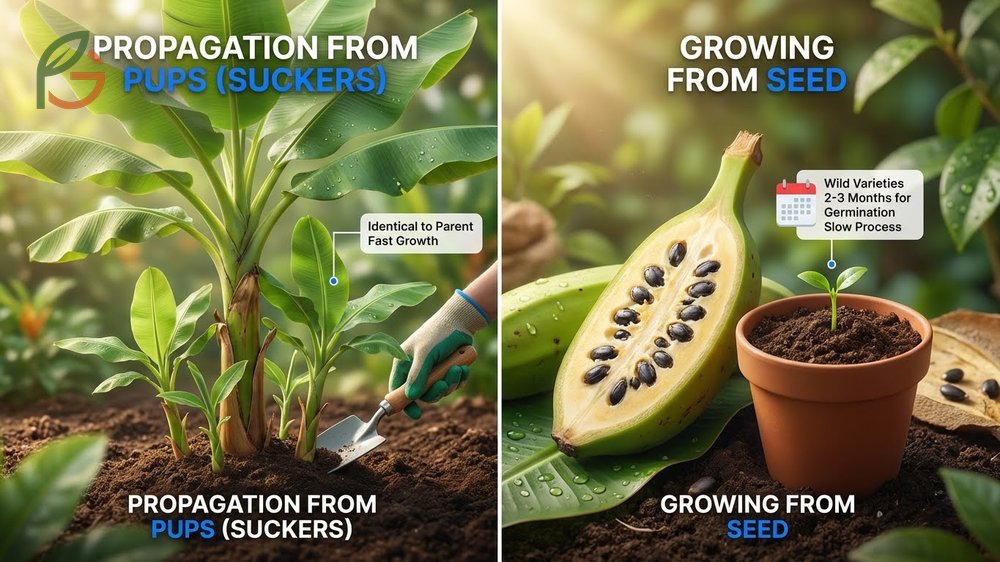
Current horticultural guidance emphasizes that pups (suckers) are the most reliable propagation method for bananas[6]. Every banana plant produces multiple suckers from its underground corm, and these baby plants are genetically identical to the parent. You can separate and transplant them with minimal effort and near-100% success rates.
Growing from seed takes significantly longer and works only with wild varieties. Seeds require 2-3 months just for germination, then another 9-18 months before the plant reaches maturity. Pups taken from established plants can produce fruit in just 9-12 months since they’re already partially developed.
Research shows seed propagation offers genetic diversity that pups can’t provide. If you’re breeding new varieties or want to preserve wild banana genetics, seeds are essential. Pups clone the parent exactly—great for consistency but limiting for breeding programs or disease resistance development.
For home gardeners wanting edible bananas quickly, pups are the practical choice. For those interested in wild varieties, ornamental species, or botanical diversity, growing from seed provides a rewarding challenge. Most commercial and home banana growers use pups exclusively because commercial varieties don’t produce viable seeds.
| Method | Time to Fruit | Success Rate | Best For |
|---|---|---|---|
| Pup Propagation | 9-12 months[6] | 95-100% | Commercial varieties, quick results, beginners |
| Seed Propagation | 18-24 months | 40-70% | Wild varieties, breeding, genetic diversity |
- Pups guarantee genetic consistency with known fruit quality
- Seeds enable breeding programs and wild variety preservation
- Pup separation requires an existing banana plant nearby
- Seeds can be purchased and shipped long distances easily
- Pup-grown plants produce fruit twice as fast as seed-grown
- Seed germination is unpredictable with variable success rates
Conclusion
The evidence is clear: what do banana seeds look like depends entirely on whether you’re examining wild varieties or commercial types. Wild banana seeds are hard, wrinkled, black or brown structures under 1 cm in diameter, while commercial bananas contain only sterile remnants. If you’re serious about growing bananas from seed, focus on wild species like Musa balbisiana and expect a 2-week to 3-month germination period.
Current agricultural guidance emphasizes that seed propagation offers genetic diversity and access to wild varieties, though pups remain faster and more reliable for edible bananas. FruitGarden synthesizes horticultural research to help you choose the right propagation method based on your goals—whether that’s quick fruit production or botanical preservation.
Frequently Asked Questions
Can you grow a banana tree from a grocery store banana?
No, you can’t grow banana trees from grocery store bananas. Commercial varieties like Cavendish are sterile triploid hybrids that don’t produce viable seeds. The tiny black specks inside are undeveloped ovules that won’t germinate under any conditions.
What does a banana tree seed look like compared to commercial bananas?
Banana tree seeds from wild varieties are hard, wrinkled structures measuring less than 1 cm in diameter with black or brown coloring. Commercial bananas show only tiny black dots (sterile ovules) instead of functional seeds. The difference is dramatic—wild seeds are rock-hard while commercial remnants are soft tissue.
How long does it take to germinate banana seeds?
Banana seed germination takes 2 weeks to 3 months depending on variety and conditions. Fast varieties sprout within 14-21 days at 80°F (27°C), while slow varieties require 10-12 weeks. Proper soaking and temperature control significantly improve germination speed and success rates.
Where can I buy banana seeds for planting?
Specialty tropical plant retailers like Trade Winds Fruit sell wild banana seeds, particularly Musa balbisiana varieties. Expect to pay $10-25 for packs of 20-50 seeds. Botanical gardens and university extension programs occasionally offer seeds too. Always verify you’re buying wild variety seeds, not commercial sterile types.
Are banana seeds hard to plant and grow?
Banana seeds require specific conditions but aren’t overly difficult to grow. The main challenges are the hard seed coat requiring 24-48 hour soaking, long germination periods of 2 weeks to 3 months, and maintaining consistent warmth above 60°F (15°C). Success rates range from 40-70% with proper technique.
Why don’t commercial bananas have seeds?
Commercial bananas are seedless because they’re triploid hybrids with three sets of chromosomes instead of two. This abnormal chromosome count prevents proper cell division during seed formation, resulting in sterility. Humans selectively bred bananas for thousands of years to favor these seedless mutations for better eating quality.
Is it better to grow banana from seed or pup?
Growing banana from pup is faster and more reliable with 95-100% success rates and fruit production in 9-12 months. Seeds take 18-24 months to reach maturity with 40-70% success rates. Choose pups for edible bananas quickly, or seeds if you want wild varieties, genetic diversity, or breeding projects.





