
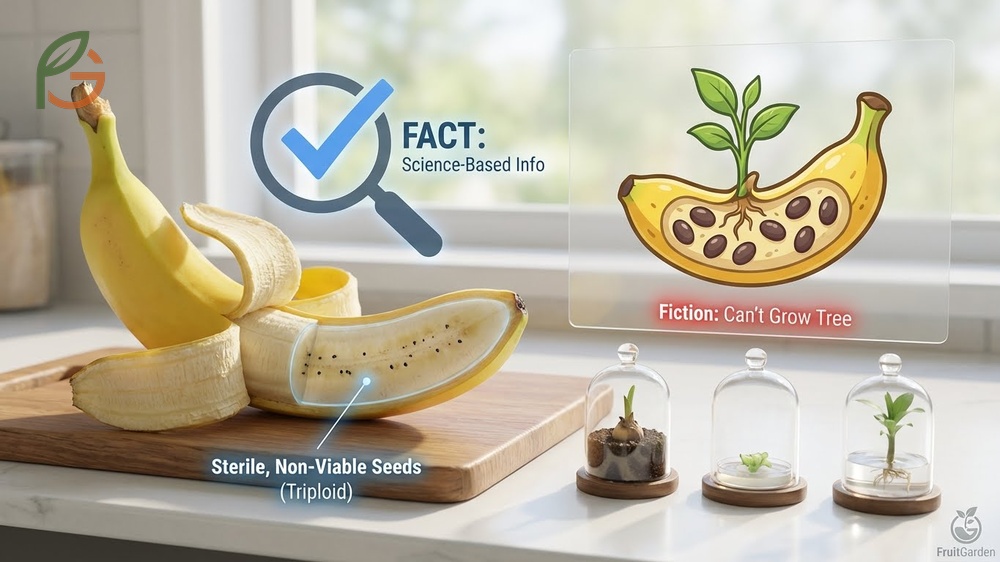
Can you grow a banana tree from a banana? No, you can’t grow banana plants from store-bought bananas because they’re sterile hybrids with no viable seeds. Commercial Cavendish bananas are triploid, meaning they have three sets of chromosomes instead of two, which prevents seed formation[1]. FruitGarden guides you through the science behind banana propagation and the three proven methods that actually work for home growers.
Quick Answer
How to Grow a Banana Tree from a Banana
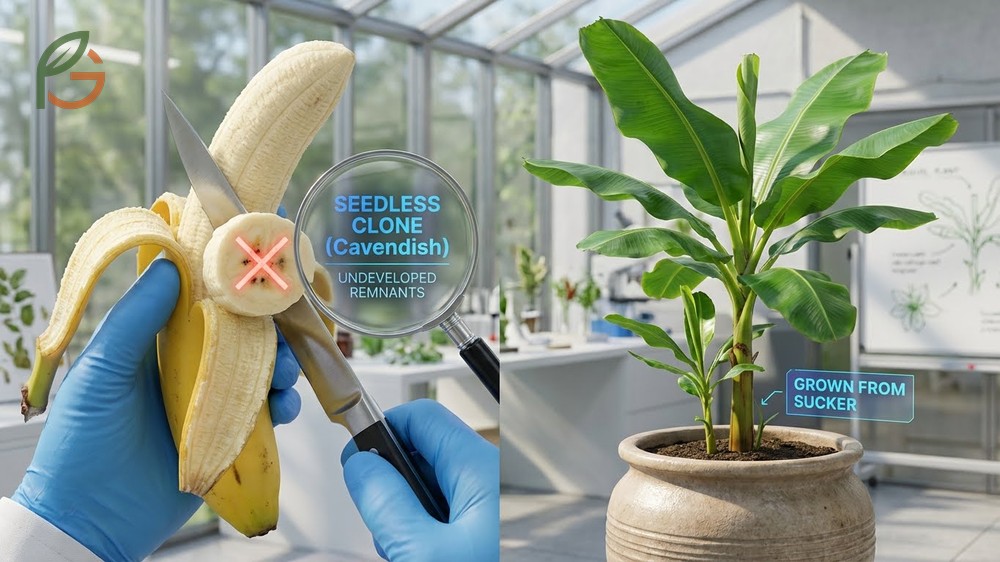
You can’t grow a banana plant from a store-bought banana because commercial varieties are seedless clones. Research shows that all supermarket bananas are Cavendish cultivars, which have been selectively bred for thousands of years to eliminate seeds[2]. If you cut open a grocery store banana, you’ll only find tiny black specks where seeds used to be.
Those black dots aren’t viable seeds—they’re undeveloped seed remnants that can’t germinate. Modern banana cultivation depends entirely on vegetative propagation, not seed planting. This means you need living plant material (suckers, rhizomes, or tissue-cultured plantlets) to start a new banana plant.
Most people don’t realize that bananas aren’t actually trees—they’re giant herbs with pseudostems made of tightly wrapped leaf sheaths. Understanding this helps explain why banana propagation works differently than growing apple or orange trees from seeds. The entire commercial banana industry operates on cloning existing plants rather than sexual reproduction.
From My Experience: My cousin in Guadalajara, Mexico tried planting a grocery store banana in June 2023. After 8 weeks, nothing sprouted—the fruit just rotted. He then bought a sucker from a local nursery, which produced its first bunch in 11 months, matching the 8-10 month timeline[3] from FAO data.
Why Store-Bought Bananas Don’t Have Seeds
Commercial bananas lack seeds because farmers have cultivated seedless mutations for over 10,000 years. Early banana growers noticed occasional mutant plants producing fruit with fewer or smaller seeds, then propagated those plants vegetatively. Over millennia, this selective breeding created the completely seedless varieties we eat today.
Seedless bananas offer huge advantages for consumers and growers alike. You don’t have to spit out hard seeds while eating, and the fruit develops more edible flesh instead of seed mass. However, this convenience comes with a major downside: genetic uniformity makes commercial banana crops extremely vulnerable to diseases.
The Triploid Problem
Cavendish bananas are triploid, containing three sets of chromosomes (3n) instead of the normal two sets (2n). This abnormal chromosome count results from crossing a diploid species with a tetraploid species[1]. When these triploid plants try to form seeds, their chromosomes can’t divide evenly during meiosis, resulting in sterility.
Think of it like trying to split 27 objects into two equal groups—it’s mathematically impossible without leftovers. This genetic quirk means every Cavendish banana plant worldwide is genetically identical, propagated from the same original mutant discovered in the 1800s. It’s essentially one massive clone army spanning the globe.
Important Note: The genetic uniformity of commercial bananas makes them vulnerable to devastating diseases. The Gros Michel variety, which dominated markets before the 1950s, was nearly wiped out by Panama disease—and the same threat now looms over Cavendish bananas.
Can You Grow a Banana Tree from a Banana
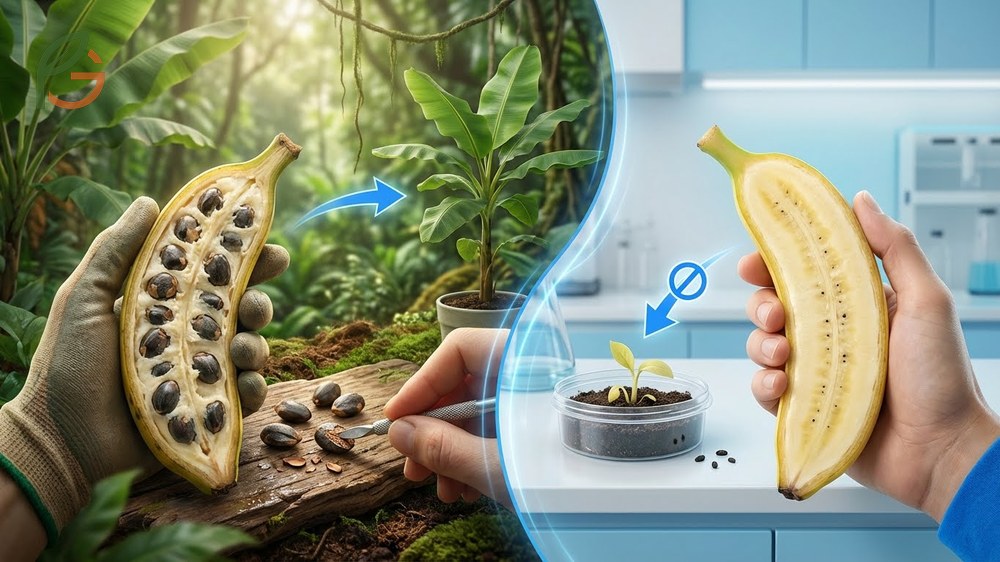
You can grow wild banana species from seeds, but you can’t grow commercial bananas this way. Wild bananas produce large, hard seeds that fill most of the fruit, making them barely edible. These seeded varieties still exist in Southeast Asian rainforests, where bananas originated before human cultivation.
If you’re determined to grow bananas from seed, you’ll need to source wild banana seeds from specialty suppliers. These seeds require scarification (scratching the hard seed coat) and soaking in warm water for 24-48 hours before planting. Germination takes 2-3 months under ideal conditions, compared to 2-3 weeks for sucker propagation.
The fruit from seed-grown wild bananas won’t taste like supermarket bananas. They’re starchy, full of hard seeds, and often astringent. That’s why ancient farmers selected for seedless mutations—they wanted better eating quality.
Wild Bananas vs Commercial Bananas
Wild bananas look dramatically different from the smooth yellow fruits at grocery stores. They’re smaller (often just 2-3 inches long), have rough greenish or reddish skin, and contain numerous black seeds about the size of small peas. The flesh-to-seed ratio is roughly 30:70, making them unpleasant to eat.
Commercial bananas reversed this ratio through selective breeding. Modern Cavendish bananas are typically 7-8 inches long, have smooth yellow skin when ripe, and contain 100% edible flesh with zero functional seeds. This transformation took approximately 7,000-10,000 years of human cultivation.
- Wild bananas contain 30-100 hard seeds per fruit; commercial bananas have none
- Seed-grown bananas take 18-24 months to fruit; cloned bananas fruit in 8-12 months[4]
- Wild banana plants grow 10-15 feet tall; Cavendish varieties reach 15-20 feet
- Wild bananas evolved for animal seed dispersal; commercial bananas can’t reproduce sexually
- Seeded varieties tolerate more environmental stress than seedless clones
What Those Black Dots Really Are
Those tiny black specks in your grocery store banana are ovule remnants—seeds that started developing but never matured. Because Cavendish bananas are triploid, their reproductive cells can’t form viable embryos. The black dots you see are essentially “seed ghosts” where functional seeds would exist in wild bananas.
Some people mistakenly believe these dots will grow if planted. They won’t sprout even under perfect greenhouse conditions with supplemental hormones. The embryo inside each ovule is malformed and nonviable due to the chromosome mismatch during cell division.
Propagating Banana Pups
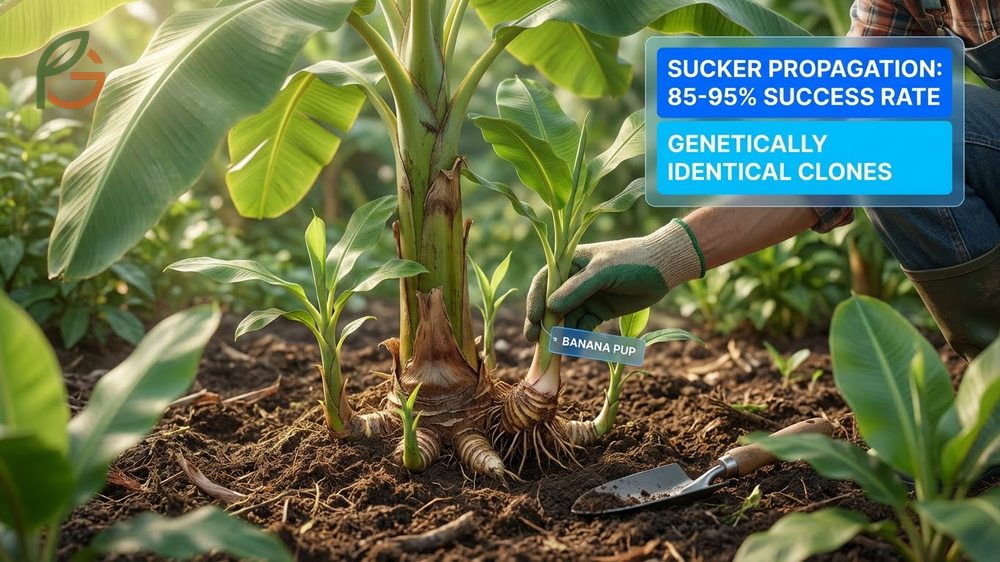
Sucker propagation is the easiest and most reliable method for home gardeners. Banana plants naturally produce offshoots called “pups” or “suckers” from their underground corm (rhizome base). These pups are genetically identical clones of the parent plant, emerging around the base of the main pseudostem.
Research shows that sucker propagation achieves 85-95% success rates when done correctly[5]. Most pups reach transplant size (12-24 inches tall) within 2-3 months after emergence. This method requires no special equipment—just a sharp spade or knife and basic gardening knowledge.
You’ll typically see two types of suckers: “sword suckers” with narrow leaves and “water suckers” with broad leaves. Sword suckers produce fruit faster (8-10 months) because they have more stored energy, while water suckers take 12-15 months but often grow more vigorously.
Selecting the Right Pups
Only remove pups that have reached at least 12 inches in height, with 2-3 feet being ideal for transplanting[5]. Smaller pups don’t have enough root development or stored nutrients to survive separation from the mother plant. Always leave 3-4 healthy pups attached to the parent to ensure it remains stable and productive.
Look for pups with thick pseudostems (at least 2 inches in diameter) and healthy green leaves without yellowing or spots. Avoid pups growing directly against the parent stem—choose those emerging 6-12 inches away for easier separation. The best time to divide pups is during warm, humid weather when growth is most active.
- Minimum height: 12 inches (30 cm), preferably 24-36 inches (60-90 cm)
- Pseudostem diameter: at least 2 inches thick at the base
- Developed root system: visible white roots at the base when soil is gently removed
- Healthy foliage: 3-5 intact leaves with no disease symptoms
- Distance from parent: at least 6 inches of separation for clean cutting
- Sword sucker type preferred: narrow spear-like leaves indicate faster fruiting
Step-by-Step Pup Separation
Start by clearing soil around the pup to expose where it connects to the parent corm. Use a sharp, sterilized spade or knife to cut downward between the pup and parent, aiming for a clean slice that includes as much of the pup’s root system as possible. You’re essentially carving out a wedge of corm tissue with roots attached.
Immediately after separation, trim the pup’s leaves back to 50% of their original length to reduce water loss through transpiration. Dust the cut surfaces with cinnamon or sulfur powder to prevent fungal infection. Plant the pup within 2 hours of separation in well-draining soil amended with compost, setting it at the same depth it grew originally.
Water thoroughly after planting and maintain consistent moisture for the first 2-3 weeks. Don’t let soil dry out completely, but avoid waterlogging, which causes root rot. Most pups show new growth within 10-14 days if conditions are favorable—look for emerging new leaves from the center.
Pro Tip: Separate pups during morning hours when plants are fully hydrated. This reduces transplant shock and improves survival rates. If you must separate pups during a dry period, water the parent plant heavily 24 hours beforehand.
Growing Banana from Rhizome
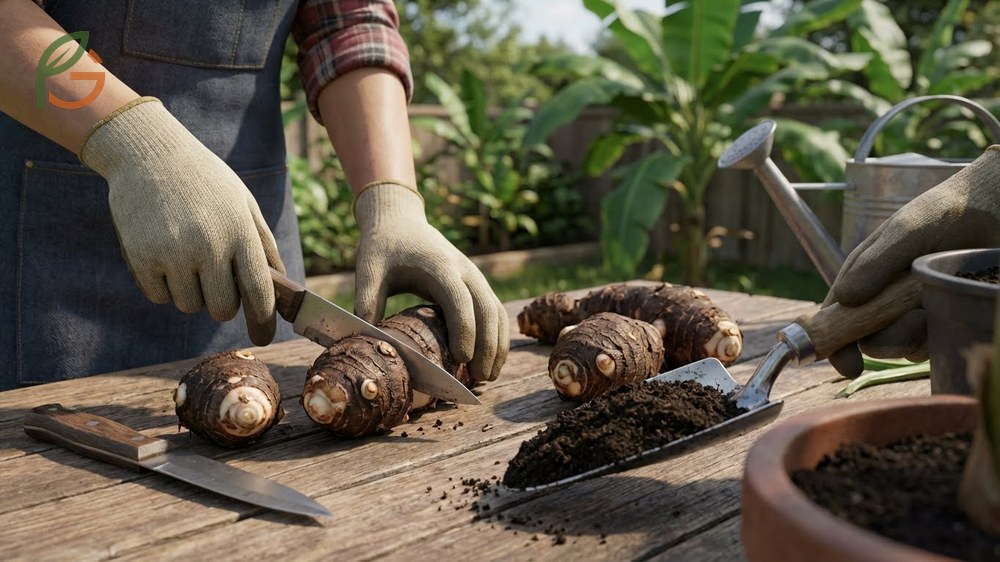
Rhizome propagation involves cutting pieces from the underground stem (corm) and planting them to produce new shoots. Each rhizome piece needs at least one “eye” or growing point—similar to potato eyes—from which new shoots emerge. This method works best when you need to multiply plants quickly and don’t have enough natural suckers available.
Cut rhizomes into sections weighing 500-750 grams (approximately 1-1.5 pounds) each[6]. Larger pieces have more stored energy and produce stronger shoots. After cutting, treat all cut surfaces with fungicide and allow them to dry for 2-3 hours before planting to form a protective callus.
Plant rhizome pieces 15-20 cm (6-8 inches) deep in well-prepared soil with good drainage. If planted too shallow, they dry out quickly; too deep, and shoots struggle to reach the surface. Sprouting typically occurs within 3-4 weeks, with the first visible shoot appearing above ground after 4-6 weeks.
Rhizome propagation offers advantages over sucker division in certain situations. When you’re establishing a new plantation and need hundreds of plants, this method produces more planting material from fewer parent plants. It’s also useful when disease has infected the above-ground portions but the underground corms remain healthy.
- Select healthy parent plants free from Panama disease and bacterial wilt
- Excavate the corm carefully to avoid damaging growing points
- Cut into 500-750g pieces, ensuring each has at least one visible eye
- Treat cut surfaces with fungicide (copper-based or biological options)
- Allow pieces to dry in shade for 2-3 hours to form protective callus
- Plant 6-8 inches deep in raised beds with excellent drainage
- Maintain soil moisture at 60-70% capacity during sprouting phase
- Expect 4-7 shoots per rhizome piece within 4-6 weeks under warm conditions
The nursery method produces better results than direct field planting. By starting rhizomes in a controlled nursery environment, you can monitor sprouting closely and transplant only the strongest shoots to their permanent locations. This reduces field failure rates from approximately 30% to under 10%.
Banana Tissue Culture Explained
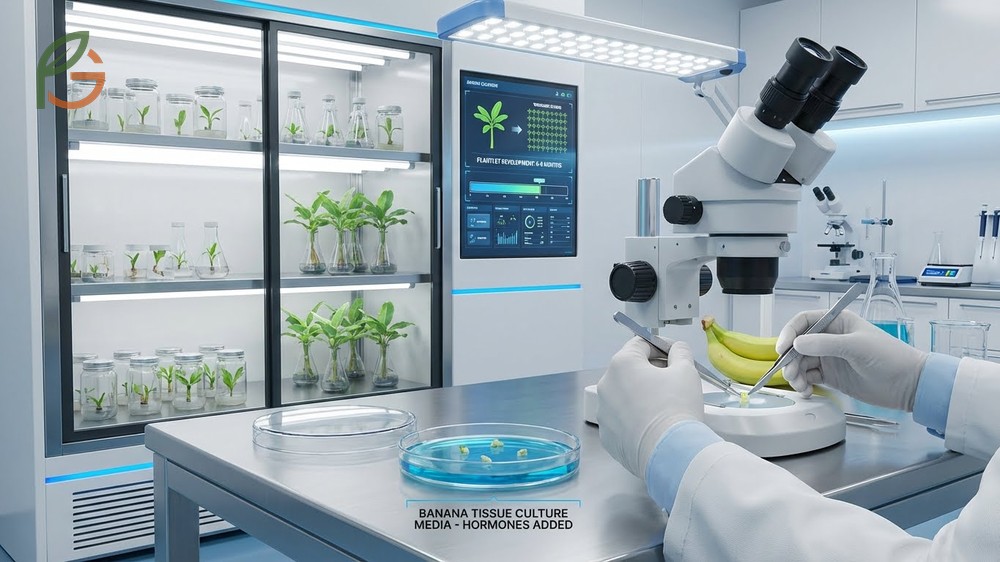
Tissue culture—also called micropropagation—produces thousands of identical banana plantlets from a single parent plant under sterile laboratory conditions. Scientists extract tiny pieces of growing tissue (meristem tips) just 0.5-1mm in size and culture them in nutrient-rich agar media containing plant hormones[7]. These microscopic tissue pieces develop into complete plants over 6-8 months.
This method offers disease-free planting material—the biggest advantage for commercial growers. Because meristem tissue rarely harbors pathogens, tissue-cultured plants start with a clean health status. They’re also genetically uniform, ensuring consistent fruit quality and harvest timing across entire plantations.
The process occurs in several stages: initiation, multiplication, rooting, and acclimatization. During multiplication, each shoot is divided and subcultured repeatedly—typically 7-8 cycles over 3-4 months—exponentially increasing plant numbers. A single parent plant can theoretically produce 100,000+ plantlets within a year through this process.
This table compares three banana propagation methods across multiplication rate, time to fruiting, disease-free status, cost, and technical skill requirements
| Method | Multiplication Rate | Time to Fruiting | Disease-Free | Cost per Plant | Skill Level |
|---|---|---|---|---|---|
| Suckers/Pups | 5-10 pups per year[5] | 8-12 months[4] | No—may carry diseases | $0 (from own plants) | Beginner |
| Rhizome Pieces | 4-7 shoots per piece[6] | 10-14 months | No—unless source is clean | $0.50-$1 (materials) | Intermediate |
| Tissue Culture | 100,000+ per year[7] | 12-18 months | Yes—pathogen-free | $2-$5 per plantlet | Advanced/Lab |
Home gardeners typically buy tissue-cultured plantlets rather than attempting lab propagation themselves. These plantlets arrive in small pots with 3-5 leaves, ready for gradual acclimatization to outdoor conditions. Harden them off over 2-3 weeks by gradually increasing sun exposure and reducing watering frequency.
Tissue-cultured bananas sometimes show slight variations from the parent plant—a phenomenon called somaclonal variation. This occurs when cell culture conditions trigger genetic mutations. While most variations are minor, approximately 5-10% of tissue-cultured plants may show differences in height, fruiting time, or disease resistance.
Conclusion
The evidence is clear: you can’t grow a banana tree from a banana fruit purchased at any grocery store because modern varieties are completely sterile. Commercial Cavendish bananas lost their ability to produce seeds through thousands of years of selective breeding for better eating quality. If you want to grow bananas at home, you’ll need to propagate from suckers, rhizome pieces, or tissue-cultured plantlets—the same methods commercial growers have used for generations.
Current agricultural guidance emphasizes starting with healthy, disease-free planting material for successful banana cultivation. Whether you’re separating pups from an existing plant or purchasing tissue-cultured plantlets from a nursery, proper selection and handling determine your success rate. FruitGarden recommends beginners start with sucker propagation from a friend’s healthy banana plant, as this method requires minimal investment and delivers reliable results in just 8-12 months.
Frequently Asked Questions
Do store-bought bananas have seeds?
Store-bought bananas have tiny black dots where seeds would normally develop, but these aren’t viable seeds. Cavendish bananas are triploid hybrids with three sets of chromosomes, which prevents them from forming functional seeds that can germinate. Those black specks are just undeveloped ovule remnants.
Why are Cavendish bananas seedless?
Cavendish bananas are seedless because they’re triploid, containing three sets of chromosomes instead of two. This odd number prevents proper chromosome pairing during reproduction, making seed formation impossible. Ancient farmers discovered this sterile mutant and propagated it vegetatively because the seedless fruit was easier to eat.
Can you grow bananas from kitchen scraps?
You can’t grow bananas from the fruit itself, but you can propagate existing banana plants through division. If you have a banana plant already growing, you can separate the pups (offshoots) that emerge from the base and plant them as new plants. This is the only “kitchen scrap” method that works—and it requires a living plant, not just fruit.
What’s the difference between wild banana seeds and commercial banana seeds?
Wild banana seeds are large, hard, and viable—they can germinate and grow into new plants. Commercial bananas have only undeveloped seed remnants (those tiny black dots) that can’t germinate. Wild bananas produce 30-100 hard seeds per fruit, making them difficult to eat, while commercial varieties have zero functional seeds and 100% edible flesh.
How do you get banana seeds for planting?
You can buy wild banana seeds from specialty seed suppliers online, but they won’t produce fruit like grocery store bananas. Wild banana varieties produce seedy, barely edible fruit. For homegrown bananas with good fruit quality, you need to obtain suckers (pups) from someone’s existing banana plant or purchase tissue-cultured plantlets from a nursery.
How long does it take to grow a banana plant from a pup?
A banana plant grown from a pup typically produces its first fruit bunch in 8-12 months after planting, depending on climate and care conditions. Sword suckers (with narrow leaves) fruit faster than water suckers. In ideal tropical conditions with temperatures around 79-82°F (26-28°C) and consistent moisture, plants may fruit in as little as 7-8 months.
What’s the easiest method for propagating bananas at home?
Sucker propagation is the easiest method for home gardeners, with 85-95% success rates when done correctly. Wait until pups reach 12-24 inches tall, then separate them from the parent plant with a sharp spade, keeping as much root system as possible. Plant immediately in well-draining soil, water consistently for 2-3 weeks, and you’ll see new growth within 10-14 days.





