
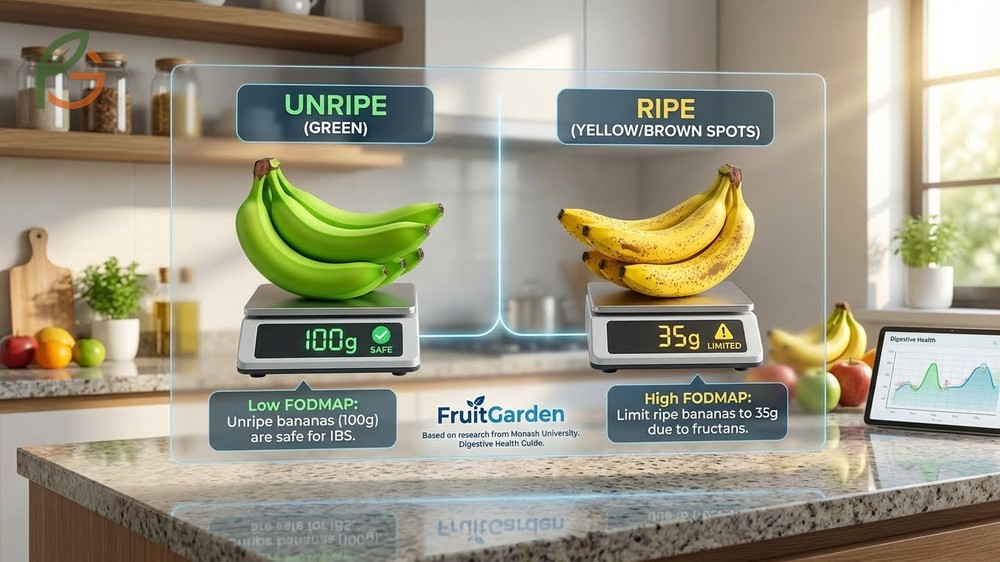
Low FODMAP banana selection depends on ripeness—unripe bananas at 100g are safe for IBS sufferers, while ripe bananas must be limited to just 35g due to increased fructan content[1]. Research from Monash University shows that as bananas ripen, their resistant starch breaks down into fermentable carbohydrates that trigger digestive symptoms[2]. FruitGarden synthesizes current digestive health research to help you make informed fruit choices for your low FODMAP journey.
Quick Answer
- Unripe firm bananas: 1 medium banana (100g) is low FODMAP and safe for daily consumption[1]
- Ripe bananas with brown spots: Limit to 1/3 medium banana (35g) to avoid fructan overload[1]
- Green bananas contain ~18g resistant starch per 100g, acting as a prebiotic for gut health[2]
- Best practice: Choose firm yellow or slightly green bananas without brown spots for maximum IBS tolerance
Low FODMAP Banana
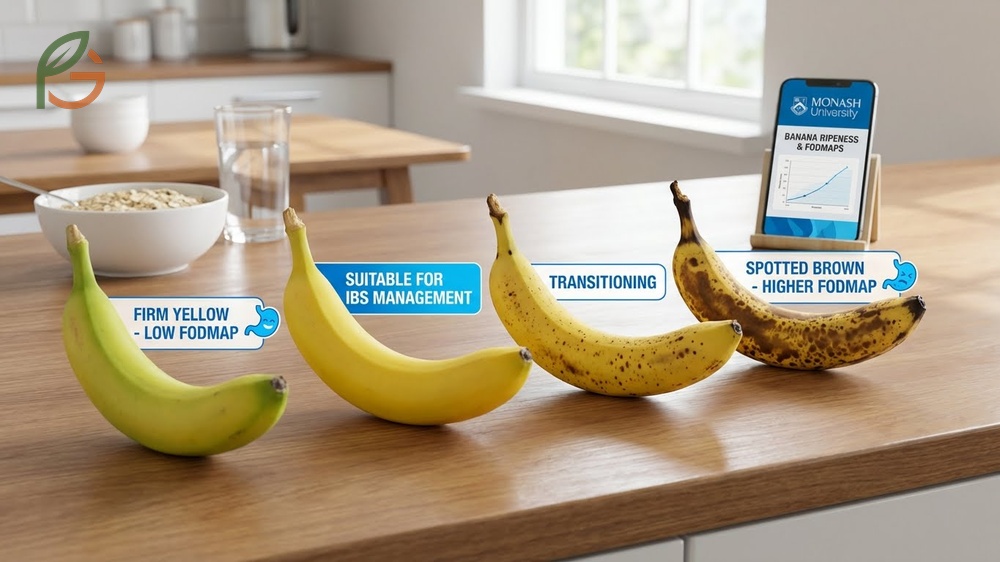
Studies demonstrate that banana ripeness directly impacts FODMAP content and digestive tolerance. Firm yellow bananas without brown spots contain lower levels of fermentable carbohydrates, making them suitable for IBS management[3]. What many people don’t realize is that the transformation from green to spotted brown isn’t just about sweetness—it’s a complete chemical shift that affects gut fermentation.
Current data from Monash University indicates unripe bananas maintain their low FODMAP status at servings up to 100g. This serving size provides approximately 100 calories and 25g of carbohydrates[4]. The resistant starch in these bananas acts as a prebiotic fiber, feeding beneficial gut bacteria without triggering fermentation symptoms.
Research shows that individuals following a low FODMAP diet can incorporate bananas strategically based on ripeness level. The key difference lies in oligofructans—a type of fructan that increases as the fruit ripens[5]. Most people find that switching from ripe to firm bananas eliminates bloating and gas within 2-3 days.
What Are FODMAPs
FODMAPs are fermentable carbohydrates that resist digestion in the small intestine. When these compounds reach the colon, gut bacteria ferment them rapidly, producing gas and drawing water into the intestinal tract. This process triggers the classic IBS symptoms of bloating, cramping, and altered bowel movements.
The acronym stands for Fermentable Oligosaccharides, Disaccharides, Monosaccharides, And Polyols. In bananas, the primary FODMAP culprits are oligofructans (fructans), which accumulate as the fruit ripens. Understanding this connection helps you make better fruit choices based on your symptom patterns.
Why Ripeness Matters
Evidence suggests that banana ripeness determines the balance between resistant starch and fermentable sugars. Unripe bananas contain up to 18g of resistant starch per 100g, which decreases to 4-5g in ripe bananas and just 2g in overripe fruit[2]. As resistant starch breaks down, fructan levels climb, creating a trade-off between digestibility and FODMAP load.
The visual cues are straightforward—green or firm yellow skin signals low FODMAP content. Brown spots indicate increased fructans and reduced resistant starch. For those managing IBS, this means checking banana ripeness before purchase matters more than most realize.
Important Note: If you currently tolerate ripe bananas without symptoms, there’s no need to restrict them. Your diet only needs to be as strict as your symptoms require[1].
Banana FODMAP Levels
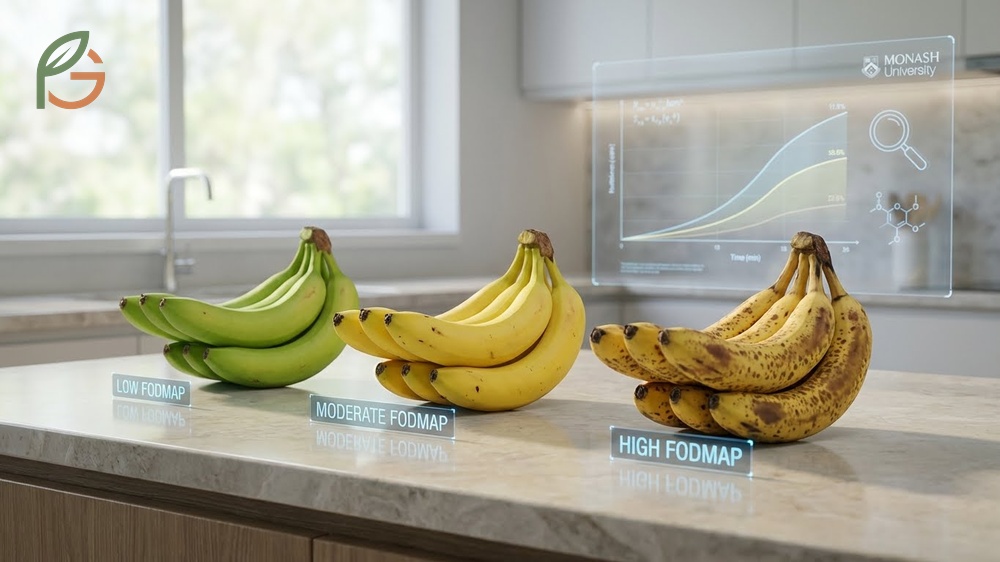
Agricultural data shows that FODMAP content in bananas varies significantly based on ripeness stage. Testing by Monash University—the pioneer of the low FODMAP diet—reveals specific thresholds where bananas transition from low to moderate or high FODMAP status[3]. These measurements provide clear guidelines for portion control.
The distinction matters because consuming high FODMAP amounts can trigger symptoms within 1-4 hours. Most people experience relief when they align banana choices with tested serving sizes. Current guidance emphasizes measuring bananas by weight rather than visual estimation, as size varies considerably.
Unripe Banana FODMAP Content
Unripe bananas with green or firm yellow skin contain minimal fructans. One medium unripe banana at 100g is classified as low FODMAP and safe for daily consumption[1]. At 110g, the serving reaches moderate fructan levels, so sticking to standard medium-sized fruit works best.
These bananas are rich in resistant starch, which behaves like soluble fiber. Unlike regular starch, resistant starch passes through the small intestine undigested, feeding beneficial gut bacteria in the colon[6]. This prebiotic effect supports gut health without the fermentation issues that trigger IBS symptoms.
- One medium unripe banana (100g) provides approximately 100 calories without triggering symptoms
- High resistant starch content (18g per 100g) acts as prebiotic fiber for gut bacteria
- Lower natural sugar content compared to ripe bananas reduces overall fermentation potential
- Firm texture makes them ideal for slicing into oatmeal or yogurt parfaits
- Longer shelf life allows for better meal planning on a low FODMAP diet
- Can be consumed daily without accumulating FODMAP load across meals
Ripe Banana FODMAP Content
Ripe bananas with yellow skin and brown spots contain elevated fructan levels. Research indicates that only 1/3 of a medium ripe banana (approximately 35g) qualifies as low FODMAP[1]. At 45g, the serving contains moderate fructans, and at 100g it reaches high FODMAP status.
The transformation occurs as enzymes break down resistant starch into simpler sugars. This process makes ripe bananas sweeter but more fermentable for sensitive digestive systems[7]. Most IBS sufferers notice symptoms like bloating, gas, or cramping within a few hours of consuming a full ripe banana.
Portion Control Tip: If you prefer ripe bananas, slice them and use only 1/3 per serving. Save the rest in the freezer for smoothies where you can blend with low FODMAP ingredients to dilute the FODMAP load per portion.
Green Banana Benefits
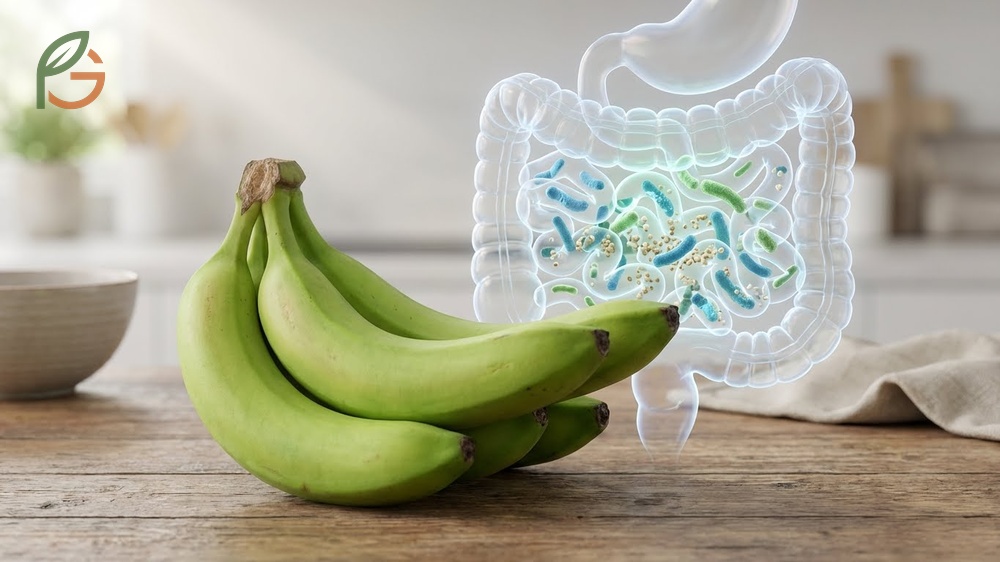
Current nutritional research highlights green bananas as functional foods with unique digestive benefits. The high resistant starch content positions them as both a low FODMAP fruit choice and a prebiotic supplement in one package. Studies demonstrate that resistant starch in green bananas may help reduce IBS symptoms, improve bowel regularity, and support beneficial gut bacteria populations[8].
The prebiotic effect occurs because resistant starch resists digestion in the small intestine. When it reaches the colon, gut bacteria ferment it slowly, producing short-chain fatty acids like butyrate. These compounds reduce inflammation, strengthen the intestinal barrier, and improve overall gut health without the rapid fermentation that triggers IBS symptoms.
Evidence indicates green bananas may also help manage blood sugar levels. The resistant starch slows carbohydrate absorption, resulting in a more gradual rise in blood glucose compared to ripe bananas. This makes them a better choice for individuals managing both IBS and blood sugar concerns.
- Resistant starch content supports production of butyrate, a compound that reduces colon inflammation
- Prebiotic fiber feeds beneficial Bifidobacteria and Lactobacilli species in the gut microbiome
- Slower digestion rate helps maintain stable blood sugar levels for 3-4 hours after eating
- Higher fiber content (up to 18g per 100g) promotes regular bowel movements without irritation
- Lower glycemic index compared to ripe bananas reduces insulin response spikes
- Pectin content in green bananas may help relieve symptoms of diarrhea-predominant IBS
- Antioxidant compounds in green banana skin and flesh support immune function
Most people find that incorporating green bananas 4-5 times per week provides consistent digestive benefits. The key is allowing your gut bacteria time to adapt to the resistant starch—start with half a banana daily for the first week if you’re new to this approach. Pairing green bananas with protein sources like almond butter or Greek yogurt can further stabilize blood sugar and enhance satiety.
FODMAP Serving Size
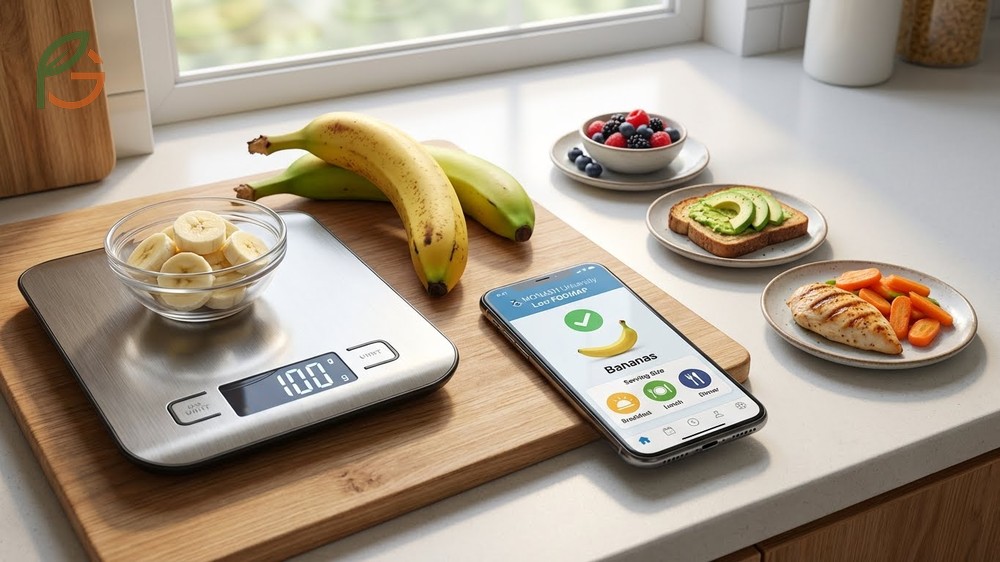
Understanding serving sizes is critical for low FODMAP success. Research from Monash University provides specific weight-based guidelines that remove the guesswork from portion control. These measurements account for natural variation in banana size and ripeness, giving you precise targets for symptom-free consumption[3].
The serving size approach recognizes that FODMAPs accumulate across meals. Eating a low FODMAP portion of bananas at breakfast, then adding other moderate FODMAP fruits at lunch, can still trigger symptoms. Tracking your total FODMAP load throughout the day matters as much as individual serving sizes.
This table compares serving size limits, FODMAP content, and recommendations across three banana ripeness stages from unripe to fully ripe
| Banana Type | Low FODMAP Serving | Moderate FODMAP At | Primary FODMAP | IBS Recommendation |
|---|---|---|---|---|
| Unripe/Green (firm) | 100g (1 medium)[1] | 110g+ | Minimal fructans | Safe for daily use |
| Firm Yellow (just ripe) | 100g (1 medium)[5] | 110g+ | Low fructans | Safe for daily use |
| Ripe (brown spots) | 35g (1/3 medium)[1] | 45g+ | High fructans | Limit portions strictly |
For breakfast timing, pair your banana with protein and healthy fats to slow digestion further. A firm banana with 2 tablespoons of peanut butter and a handful of walnuts creates a balanced meal that extends satiety for 4-5 hours. This combination also helps prevent the mid-morning energy crash that can occur with fruit eaten alone.
When shopping, look for bananas with minimal to no brown spots if you want maximum FODMAP flexibility. Store them at room temperature away from other ripening fruit to slow the ripening process. Once bananas reach your preferred firmness, refrigeration halts further ripening—the peel will darken, but the flesh inside maintains its lower FODMAP status.
Measurement Matters: Kitchen scales provide the most accurate serving size tracking. Visual estimates often underestimate banana weight by 20-30g, which can push you into moderate FODMAP territory without realizing it.
IBS Friendly Bananas
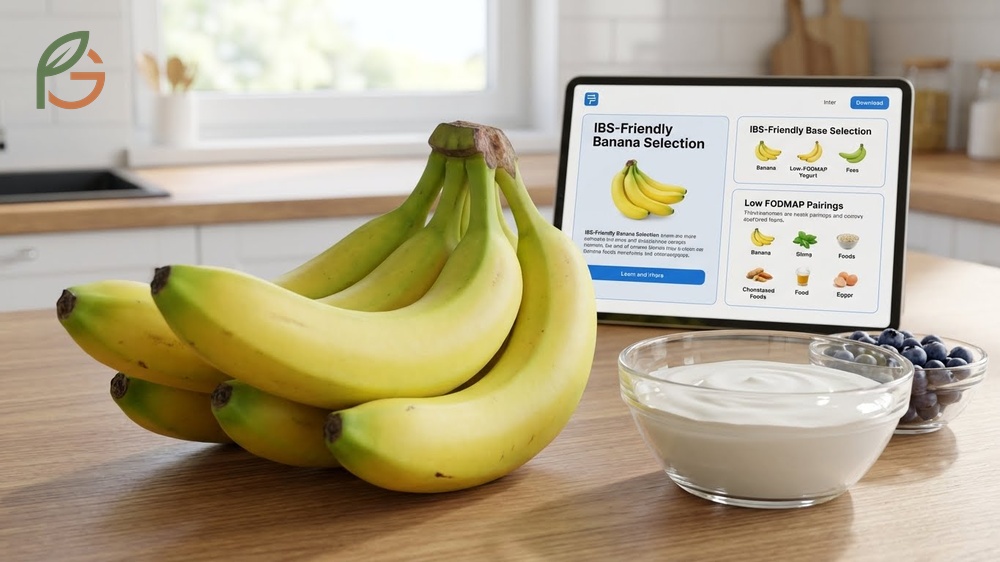
Selecting IBS-friendly bananas involves more than just checking ripeness. Current guidance emphasizes choosing bananas at the right firmness stage, storing them properly, and combining them with complementary low FODMAP foods. These strategies maximize digestive tolerance while maintaining nutritional benefits[7].
Most people with IBS find that firm yellow or slightly green bananas work best. The visual markers are simple—green tips or fully green skin signal high resistant starch and minimal fructans. Uniform yellow color without brown spots indicates just-ripe fruit that’s still low FODMAP. Once brown speckling appears, fructan content climbs rapidly.
Preparation methods also affect tolerance. Slicing bananas into Greek yogurt or oatmeal dilutes the FODMAP concentration per bite. Mashing firm bananas into smoothies with lactose-free milk and low FODMAP protein powder creates a filling breakfast that supports gut health. Avoid overripe bananas in baking, as recipes often call for 2-3 bananas, which multiplies the FODMAP load beyond safe levels.
- Purchase bananas with green tips or uniform yellow color for extended low FODMAP window
- Separate bananas from the bunch to slow ripening—ethylene gas from clustered fruit accelerates the process
- Refrigerate bananas once they reach your preferred firmness to halt ripening for 5-7 days
- Pair bananas with protein sources like almond butter or hard cheese to stabilize blood sugar
- Slice firm bananas into overnight oats with chia seeds for a fiber-rich, IBS-friendly breakfast
- Freeze overripe bananas in 35g portions for smoothies where you can control serving size precisely
- Choose smaller banana varieties if you prefer eating whole fruit—they’re naturally closer to low FODMAP portions
- Test your personal tolerance during the FODMAP reintroduction phase to identify your specific threshold
The reintroduction phase of the low FODMAP diet helps determine your individual banana tolerance. After completing the elimination phase (typically 2-6 weeks), test firm bananas first at 100g servings. If you tolerate these well, you can occasionally test ripe bananas at 35g to see if symptoms occur. Some individuals discover they can handle slightly larger portions of ripe bananas without issues—your diet only needs restriction where symptoms actually appear.
Timing your banana consumption can also affect tolerance. Evidence suggests eating bananas earlier in the day, when digestive motility is naturally higher, may reduce fermentation and gas production. Most people report better tolerance when consuming bananas at breakfast or mid-morning snack time rather than after dinner when digestive activity slows.
Conclusion
The evidence is clear: low FODMAP banana consumption depends entirely on ripeness stage and portion control. Choosing firm yellow or green bananas at 100g servings provides safe, nutrient-dense fruit intake for IBS management, while ripe bananas require strict limitation to 35g portions. This distinction makes the difference between symptom-free eating and digestive distress for most IBS sufferers.
Current nutritional guidance emphasizes resistant starch benefits in unripe bananas alongside their low FODMAP status. FruitGarden encourages you to experiment during the reintroduction phase to discover your personal tolerance levels—sustainable dietary changes come from understanding your unique digestive responses rather than following overly restrictive rules.
Medical Disclaimer
Important Medical Disclaimer: This content is for informational and educational purposes only. It is not intended as a substitute for professional medical advice, diagnosis, or treatment. Always consult a qualified healthcare professional or registered dietitian before making any changes to your diet, especially if you have IBS, digestive disorders, or other medical conditions. The low FODMAP diet should be implemented under professional guidance to ensure nutritional adequacy and proper reintroduction protocols.
Frequently Asked Questions
Can I eat bananas every day on a low FODMAP diet?
Yes, you can eat one medium unripe or firm yellow banana (100g) daily without exceeding low FODMAP limits. Studies confirm that firm bananas contain minimal fructans and don’t trigger symptoms when consumed at this portion size[1]. Avoid eating ripe bananas daily, as their 35g limit is too restrictive for satisfying servings.
Do green bananas cause constipation?
Green bananas don’t typically cause constipation—in fact, their high resistant starch content often improves bowel regularity. Research shows resistant starch acts as prebiotic fiber, promoting beneficial gut bacteria and regular movements[6]. However, some individuals may experience initial bloating as gut bacteria adapt to increased resistant starch—this resolves within 3-5 days for most people.
Are plantains low FODMAP?
Unripe green plantains are low FODMAP in servings up to 100g, similar to unripe common bananas. As plantains ripen and yellow, their FODMAP content increases just like regular bananas. Most IBS sufferers tolerate cooked green plantains well as a starchy side dish. Always check current Monash University app data for the most updated plantain serving sizes.
What happens if I accidentally eat a ripe banana on low FODMAP?
Eating a full ripe banana may trigger IBS symptoms within 1-4 hours, including bloating, gas, cramping, or altered bowel movements. The severity depends on your individual sensitivity to fructans. If symptoms occur, return to your baseline low FODMAP diet and stay well-hydrated. Symptoms typically resolve within 24-48 hours. Don’t let one mistake derail your progress—simply continue with compliant food choices at your next meal.
Can I use frozen bananas in smoothies on low FODMAP?
Yes, frozen bananas work well in smoothies if they were frozen at the correct ripeness stage. Freeze firm yellow or green bananas in pre-measured 100g portions to maintain low FODMAP compliance. If you froze ripe bananas before starting the diet, use only 35g per smoothie and combine with low FODMAP liquids like almond milk, lactose-free yogurt, and compliant protein powder to dilute the FODMAP concentration.
Are there banana varieties that are better for IBS?
Sugar bananas (also called lady finger bananas) have different FODMAP profiles than common bananas. Firm sugar bananas are low FODMAP at 112g, offering more flexibility. However, ripe sugar bananas are high in fructose at 112g, so stick to half a ripe sugar banana (56g) if you prefer that variety[3]. Common bananas remain the most predictable choice for consistent IBS management.
How do I know if my banana is too ripe for low FODMAP?
Visual inspection provides clear guidance—any brown spots or speckles indicate increased fructan content that requires portion restriction to 35g. Fully yellow bananas without spots are generally safe at 100g servings. If the peel shows more brown than yellow, or if the fruit feels very soft when gently squeezed, it’s too ripe for full low FODMAP servings. When in doubt, choose the greenest or firmest banana available.





