
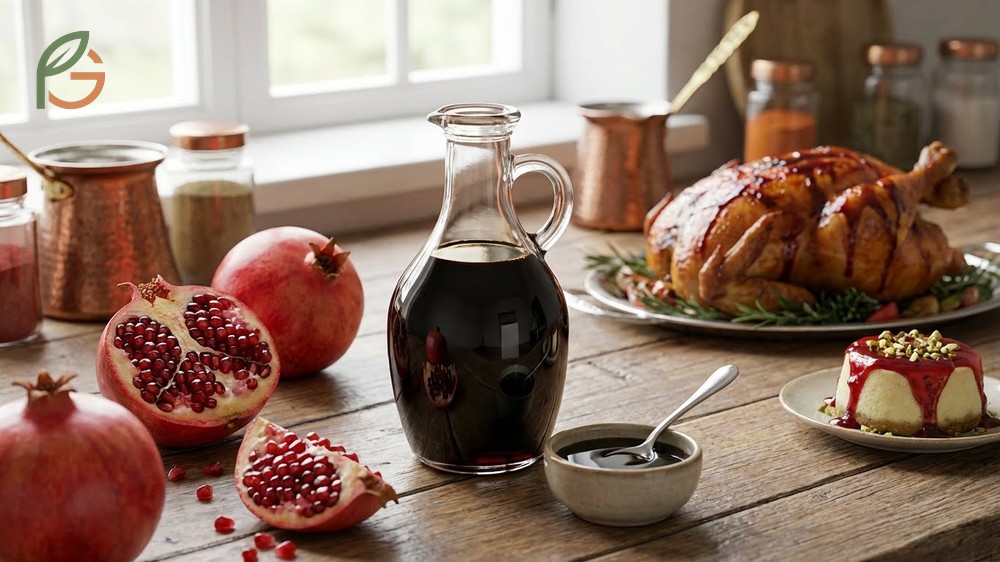
What Is Pomegranate Molasses? It’s a thick, tangy syrup made by reducing pomegranate juice down to about one-quarter of its original volume[1]. This Middle Eastern condiment adds a sweet-tart flavor to everything from roasted meats to desserts. Research shows it’s been a staple in Lebanese, Turkish, and Iranian cuisines for centuries[2]. FruitGarden brings you this comprehensive guide to understanding, making, and using this versatile ingredient in your kitchen.
Quick Answer
- Made from concentrated pomegranate juice reduced to 25% of original volume[3]
- Contains 40 calories and 9g carbohydrates per tablespoon with zero fat[4]
- Store opened bottles for 6-8 months at room temperature or 10-12 months refrigerated[5]
- Works as marinade, salad dressing, dip ingredient, or dessert drizzle across cuisines
What Is Pomegranate Molasses
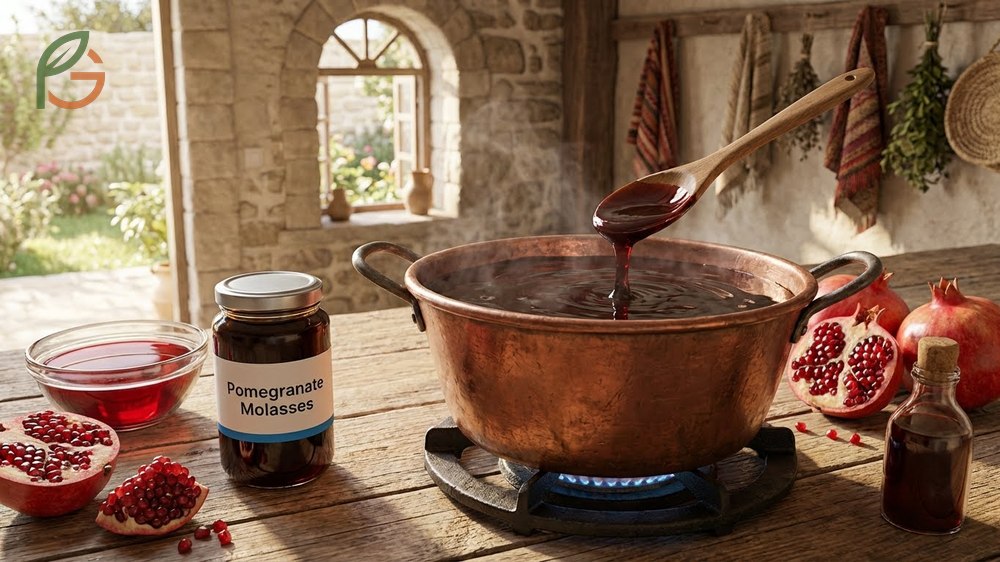
Pomegranate molasses is a concentrated pomegranate juice reduction that transforms into a thick, syrupy condiment[6]. Despite its name, it doesn’t contain actual molasses—the term refers to its dark color and viscous texture. The reduction process intensifies the fruit’s natural tartness while concentrating its sugars.
Current culinary data shows it’s used most commonly in Middle Eastern, Caucasian, and Balkan cooking traditions[1]. The reduction ratio typically reaches 4:1, meaning four cups of juice become one cup of molasses[3]. This concentration creates a balance between sour and sweet that’s hard to replicate with other ingredients.
Studies of traditional recipes demonstrate that authentic versions use only pomegranate juice without added sugar[3]. However, modern commercial varieties often include sugar and lemon juice to standardize flavor. The best bottles list pomegranate juice as the first and primary ingredient.
From My Experience: My cousin in Oaxaca, Mexico discovered pomegranate molasses at a Mediterranean market in 2023. She used it to glaze chicken tacos—the sweet-tart profile worked perfectly with chipotle peppers, creating fusion flavors her family requests weekly now.
Traditional Origins
Evidence from culinary historians shows pomegranate molasses originated in ancient Persia and spread throughout the Middle East. Turkish cuisine calls it “nar ekşisi” (pomegranate sour), while Armenian cooks know it as “նարշարապ” (pomegranate wine)[1]. Each culture developed unique applications over centuries.
Lebanese and Syrian kitchens traditionally use it in kibbeh, fattoush salad, and muhammara dip. Iranian cooks add it to fesenjan, a walnut-pomegranate stew that showcases the ingredient’s ability to balance rich, fatty meats. Turkish recipes feature it in köfte and grain salads.
Flavor Profile
The taste combines concentrated tartness with subtle sweetness, creating what chefs describe as “agrodolce” (sweet-sour). It’s more complex than balsamic vinegar but less sweet than honey. The acidity level sits between lemon juice and red wine vinegar.
Research on pomegranate varieties shows that traditional recipes used tarter fruit types specifically cultivated for molasses production[2]. Modern versions often adjust the flavor with added sugar to appeal to Western palates. The intensity means you’ll need only 1-2 tablespoons in most dishes.
Pomegranate Molasses Definition
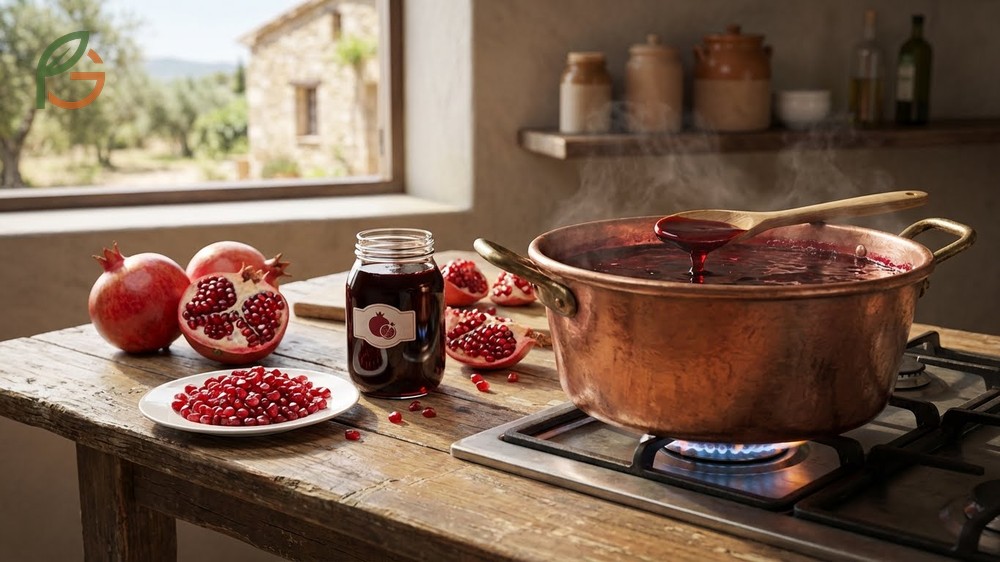
The formal definition describes pomegranate molasses as pomegranate juice that’s been gently reduced through simmering, with or without added sugar, to create a syrup consistency[6]. It’s categorized as a condiment rather than a sweetener or sauce. Food standards recognize it as a traditional ingredient with protected cultural significance in several Mediterranean countries.
Commercial production typically starts with juice extracted from tart pomegranate varieties. Manufacturers simmer this juice in large copper pots or stainless steel tanks until the volume reduces by 75-80%. Some producers add minimal sugar (typically 10-15% by weight) and lemon juice for preservation and flavor balance.
What distinguishes it from pomegranate syrup is concentration level. Syrup remains thinner and sweeter, suitable for cocktails and beverages[7]. Molasses achieves a viscosity similar to maple syrup or honey, with a more pronounced tart edge that works in savory applications.
Ingredients Breakdown
Authentic pomegranate molasses contains just one ingredient: pomegranate juice[3]. The reduction process naturally concentrates sugars, acids, and tannins without requiring additives. This simplicity makes it suitable for various dietary preferences including vegan, gluten-free, and paleo diets.
Store-bought versions often include three core components: pomegranate juice (80-90%), sugar (5-15%), and lemon juice (2-5%). The sugar helps prevent crystallization during storage while lemon juice adds brightness and acts as a natural preservative. Always check labels—quality brands list pomegranate juice first with minimal other ingredients.
Important Note: Avoid bottles listing high fructose corn syrup, artificial colors, or “pomegranate flavor” rather than actual juice. These indicate lower-quality products that won’t deliver authentic taste or nutritional benefits.
Texture Characteristics
The texture resembles thick maple syrup or honey at room temperature, coating the back of a spoon without dripping quickly[7]. When refrigerated, it thickens further but returns to pourable consistency after sitting at room temperature for 5-10 minutes. This viscosity creates a glossy coating on foods—perfect for glazing roasted vegetables or grilled proteins.
Unlike thin syrups, pomegranate molasses clings to ingredients rather than running off. This property makes it ideal for marinades that need to adhere to meat surfaces. The syrupy consistency also allows it to blend seamlessly into salad dressings and sauces without separating.
How to Use Pomegranate Molasses
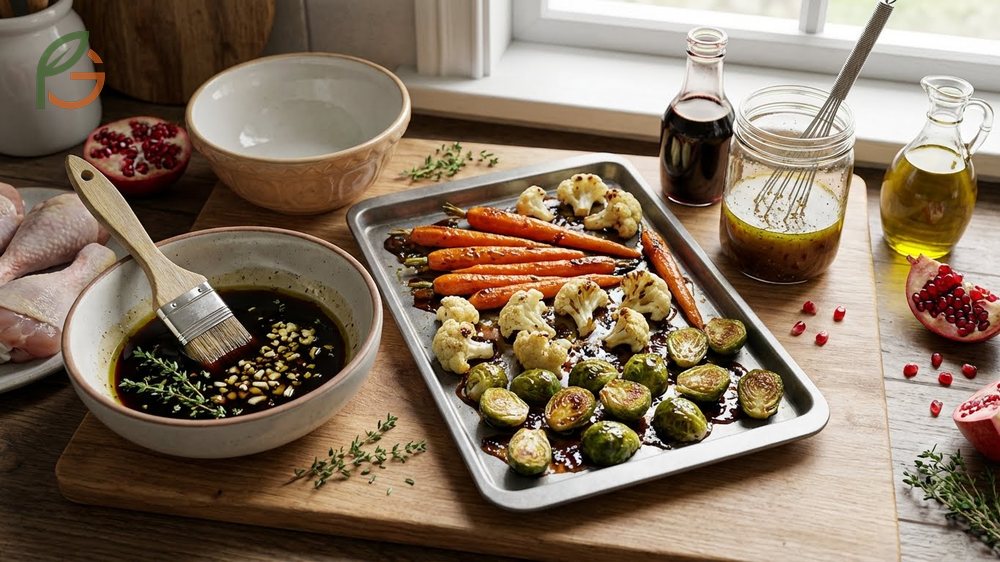
Pomegranate molasses shines brightest as a marinade for chicken, lamb, beef, or fish—typically mixed with olive oil, garlic, and herbs at a 2:1 oil-to-molasses ratio. Brush it on during the last few minutes of grilling to create a caramelized glaze. For roasted vegetables like carrots, cauliflower, or Brussels sprouts, toss them with 1-2 tablespoons before cooking.
Salad dressings benefit from its sweet-tart complexity. Mix 1 tablespoon molasses with 3 tablespoons olive oil, a squeeze of lemon, and salt for a basic vinaigrette that works with bitter greens or grain salads. Turkish kisir (bulgur salad) traditionally features it alongside tomato paste and fresh herbs.
For dips like baba ghanoush or muhammara, add 1-2 tablespoons to roasted eggplant or red pepper mixtures. The molasses balances richness from tahini or nuts while adding depth. Stir it into yogurt with crushed garlic and mint for a quick Middle Eastern sauce that complements kebabs or falafel.
From My Experience: A friend in Guadalajara, Mexico added pomegranate molasses to her mole sauce recipe last fall. The 2 tablespoons she used (versus her usual tamarind paste) brightened the chocolate-chile flavors without overwhelming the traditional taste—her dinner guests couldn’t identify the secret ingredient.
- Grain dishes: Stir into cooked quinoa, couscous, or rice with olive oil, chopped herbs, and toasted nuts for instant flavor
- Meat glazes: Brush on pork chops, duck breast, or lamb during the final 5 minutes of roasting for caramelized finish
- Breakfast applications: Drizzle over Greek yogurt, oatmeal, or pancakes as an alternative to maple syrup
- Cocktail ingredient: Add 1/2 tablespoon to whiskey sours, gin fizzes, or sparkling water for tart complexity
- Dessert topping: Pour over vanilla ice cream, cheesecake, or pavlova to cut through sweetness
- Soup enhancement: Swirl into lentil, butternut squash, or tomato soups just before serving for acidity
- Pizza drizzle: Finish flatbreads or pizzas with a light drizzle after baking, especially those with goat cheese or arugula
Pro Tip: Start with less than you think you need—pomegranate molasses is highly concentrated. You can always add more, but you can’t remove excess tartness once it’s in the dish.
Pomegranate Molasses Recipe
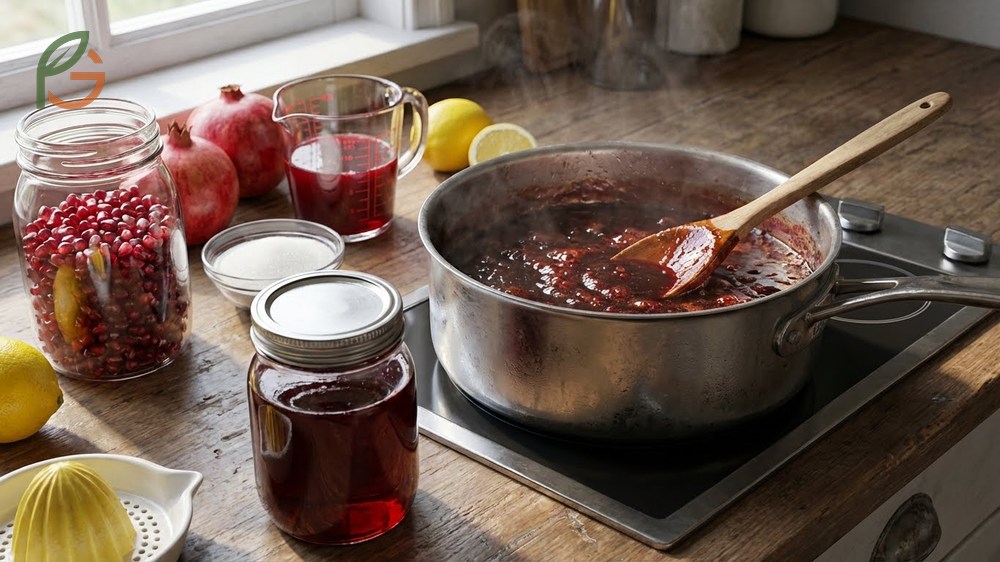
Making pomegranate molasses at home requires just three ingredients and about 60-75 minutes of simmering time. You’ll get about 1 cup of molasses from 4 cups of juice—a 4:1 reduction ratio that concentrates both flavor and nutrients. Use 100% pure pomegranate juice without added sugars or preservatives for best results.
The process involves bringing juice to a boil, then reducing heat to maintain a gentle simmer. Rapid boiling creates burnt flavors and bitter notes, so patience matters here. Stir occasionally to prevent sugars from sticking to the pan bottom. The molasses is ready when it coats the back of a spoon and has reduced to about one-quarter of its starting volume[3].
- 4 cups pure pomegranate juice (look for brands without added sweeteners)
- 1/4 cup granulated sugar (adjust to 1/2 cup if you prefer sweeter molasses)
- 2 tablespoons fresh lemon juice (approximately one large lemon)
- Step 1: Combine all ingredients in a medium saucepan (at least 3-quart capacity to prevent boil-over)
- Step 2: Bring mixture to a boil over medium-high heat, stirring to dissolve sugar completely
- Step 3: Reduce heat to medium-low, maintaining a gentle simmer with small bubbles around the edges
- Step 4: Simmer uncovered for 50-70 minutes, stirring every 10 minutes to prevent scorching
- Step 5: Test consistency by dipping a metal spoon—molasses should coat it thickly and drip slowly
- Step 6: Remove from heat when reduced to approximately 1 cup (it thickens more as it cools)
- Step 7: Cool completely before transferring to a clean glass jar or airtight container
The cooling process takes 2-3 hours at room temperature. Don’t rush it by refrigerating while still hot—this can cause condensation that dilutes the molasses. Store homemade versions in the refrigerator where they’ll keep for 3-4 months. The flavor deepens over the first week as the acids mellow and sugars integrate.
Recipe Variation: For sugar-free molasses, omit the sugar entirely and simmer juice with lemon alone. The result will be more tart and less sweet—ideal for savory applications like marinades and meat glazes. You may need to reduce it slightly more to achieve proper thickness.
Storage and Shelf Life
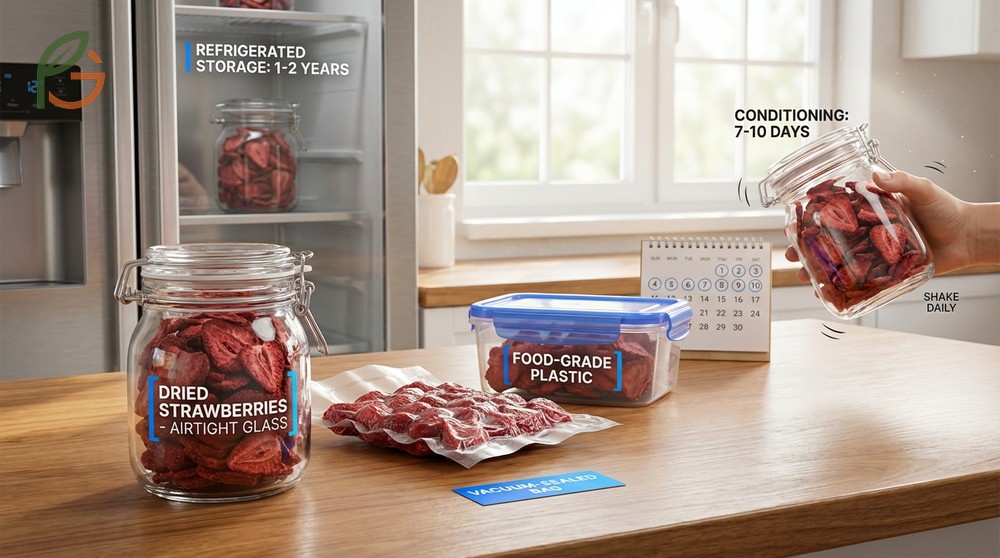
Unopened commercial pomegranate molasses stays fresh for 1-2 years past the printed date when stored in a cool, dark pantry away from heat sources[5]. Once opened, it remains usable for 6-8 months at room temperature or 10-12 months when refrigerated. The high sugar and acid content acts as natural preservatives, preventing bacterial growth.
Store bottles in pantry spaces that stay below 75°F (24°C) to prevent crystallization. If crystals form, they’re just concentrated sugars and don’t indicate spoilage—simply warm the bottle in hot water for 5 minutes to redissolve them. Refrigeration extends shelf life but thickens the molasses, so let refrigerated bottles sit at room temperature before use.
Check for spoilage by smelling the molasses before each use. Fresh molasses has a fruity, tangy aroma. If you detect sour or fermented odors, or see mold growth on the bottle rim or surface, discard it immediately[5]. Homemade versions without preservatives should always be refrigerated and used within 3-4 months.
This table compares shelf life durations for unopened and opened pomegranate molasses under three storage conditions with temperature and limitation notes
| Storage Location | Unopened Shelf Life | Opened Shelf Life | Temperature Limit |
|---|---|---|---|
| Pantry (cool, dark) | 1-2 years past date[5] | 6-8 months[5] | Below 75°F (24°C) |
| Refrigerator | No significant gain | 10-12 months[5] | 35-40°F (2-4°C) |
| Freezer (not recommended) | N/A | 18+ months (texture changes) | 0°F (-18°C) |
| Homemade (refrigerated) | N/A | 3-4 months maximum | 35-40°F (2-4°C) |
- Mold growth: White or green fuzzy patches on the bottle rim or molasses surface indicate contamination—discard immediately
- Off odors: Sour, fermented, or alcoholic smells signal that sugars have begun fermenting despite preservatives
- Separation: Liquid pooling on top with thick sediment below isn’t necessarily spoilage—shake well and smell before using
- Color changes: Darkening over time is normal oxidation; extremely light color suggests dilution or poor-quality product
- Clean utensils: Always use a clean, dry spoon to prevent introducing moisture or bacteria into the bottle
- Tight sealing: Ensure the cap is screwed on completely after each use to minimize air exposure and oxidation
Conclusion
The evidence is clear: What Is Pomegranate Molasses comes down to a versatile ingredient that bridges sweet and savory cooking with minimal effort. Its concentrated tartness, nutritional profile with just 40 calories per tablespoon[4], and remarkable shelf stability make it worth keeping in your pantry. Whether you’re glazing roasted vegetables, creating Middle Eastern dips, or experimenting with fusion flavors, pomegranate molasses delivers complexity that’s hard to achieve with other condiments.
Current culinary guidance emphasizes quality over quantity—look for bottles listing pomegranate juice as the primary ingredient, and start with small amounts until you understand its intensity. FruitGarden encourages home cooks to experiment with both store-bought and homemade versions to discover which applications work best for their cooking style.
Frequently Asked Questions
Can I substitute pomegranate molasses with balsamic vinegar?
You can use balsamic vinegar in a pinch, but the flavor won’t match exactly. Mix 3 tablespoons balsamic with 1 tablespoon honey or maple syrup to approximate the sweet-tart profile. The result will be less fruity and more wine-like than authentic pomegranate molasses.
Is pomegranate molasses the same as grenadine syrup?
No, they’re different products. Pomegranate molasses is concentrated juice with tart flavor, while grenadine is a sweet cocktail syrup traditionally made from pomegranates but now often produced with artificial flavors and high fructose corn syrup. Grenadine contains much more sugar and lacks the complex tartness of molasses.
How much pomegranate molasses equals one tablespoon of lemon juice?
Use about 1.5 teaspoons of pomegranate molasses to replace 1 tablespoon of lemon juice in recipes. The molasses provides similar acidity but adds sweetness and fruity notes that lemon doesn’t have. Adjust based on the specific dish—start with less and taste as you go.
Where can I buy pomegranate molasses in stores?
Look for it in the international aisle of well-stocked supermarkets, particularly near Middle Eastern ingredients. Specialty stores, Mediterranean markets, and health food stores typically carry multiple brands. Online retailers like Amazon offer dozens of options with customer reviews to guide your selection.
Does pomegranate molasses need to be refrigerated after opening?
Commercial pomegranate molasses doesn’t require refrigeration after opening—it stays fresh for 6-8 months at room temperature due to high sugar and acid content. However, refrigeration extends shelf life to 10-12 months and is necessary for homemade versions without commercial preservatives.
What’s the nutritional difference between pomegranate juice and molasses?
Pomegranate molasses contains about 4 times the calories and carbohydrates of regular juice because it’s concentrated at a 4:1 ratio. One tablespoon of molasses has approximately 40 calories and 9g carbohydrates, compared to 10 calories and 2.5g carbs in the same amount of juice. The concentration process also intensifies antioxidants and vitamins.
Can diabetics use pomegranate molasses?
People with diabetes should use pomegranate molasses sparingly due to its concentrated sugars—9g carbohydrates per tablespoon affects blood glucose levels. However, the small quantities used in most recipes (1-2 tablespoons for 4-6 servings) mean individual portions contain only 1.5-4.5g carbs. Always count it toward daily carbohydrate totals and consult your healthcare provider about incorporating it into your meal plan.





