
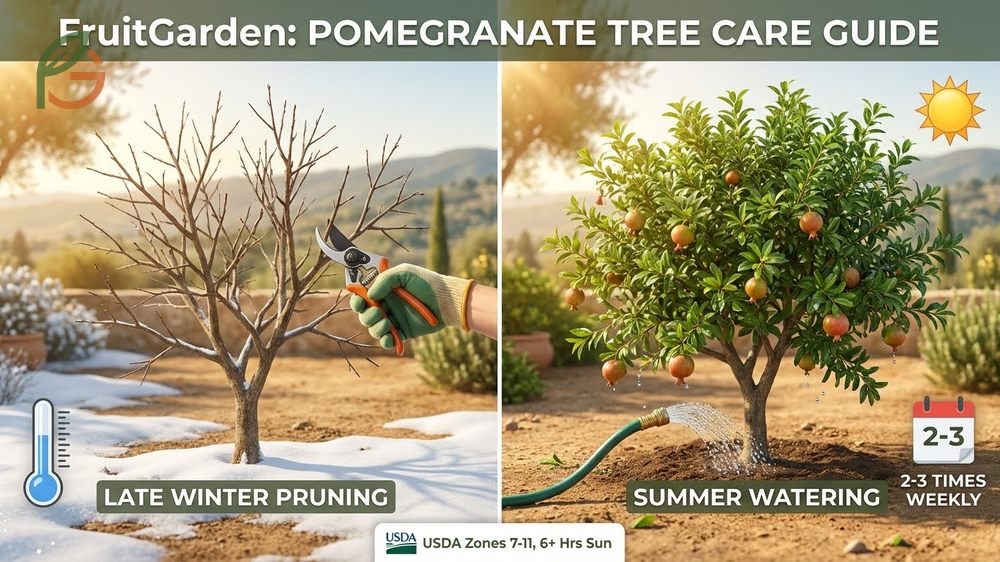
Pomegranate Tree Care centers on two critical practices: pruning in late winter to shape the tree and watering 2-3 times weekly during summer months[1]. Research shows that pomegranates thrive in USDA zones 7-11 with at least 6 hours of direct sunlight daily[2][3]. FruitGarden synthesizes current horticultural research and climate data to help you grow healthy, productive pomegranate trees.
Quick Answer
- Prune pomegranates in late dormancy after frost risk passes, cutting branches by 1/3 and leaving 3-5 shoots per branch[4]
- Water 2-3 times per week in spring and summer, reducing to once weekly in fall and winter[1]
- Provide at least 6 hours of direct sun daily, with ideal temperatures above 85°F (29°C) for 120 days annually[3]
- Use balanced fertilizer with 8-8-8 NPK ratio or 1:1 nitrogen to potassium ratio for optimal fruit production[5][6]
Pomegranate Tree Care
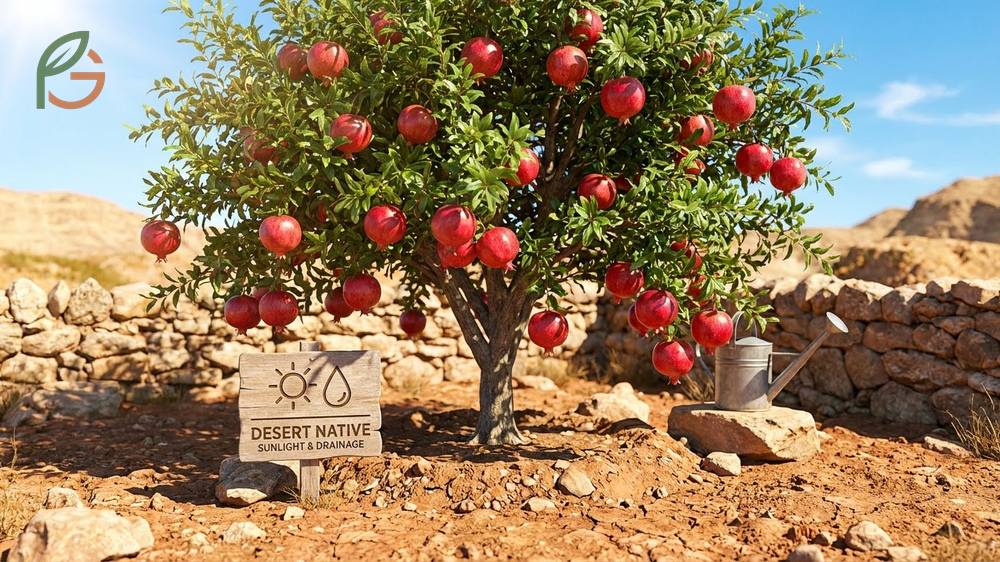
Studies demonstrate that successful pomegranate cultivation depends on three foundational elements: adequate sunlight exposure, well-drained soil, and appropriate climate conditions. Most people don’t realize that pomegranates need significantly more sun than typical fruit trees—they’re desert natives that evolved to handle intense heat.
Current horticultural data shows pomegranates adapt to various soil types but produce the best yields when planted in organically rich, well-drained ground[7]. These trees tolerate drought once established, making them ideal for water-conscious gardeners.
You’ll get the most from your pomegranate by understanding its specific needs. What often gets overlooked is that timing matters as much as technique—when you prune and water directly affects fruit quality and quantity.
Sunlight Requirements
Research indicates pomegranates need at least 6 hours of direct sunlight daily, though they perform best with 10 hours of full sun[3]. This high light requirement stems from their Mediterranean and Middle Eastern origins where summer days are long and intense.
Place your pomegranate in the sunniest spot available—south-facing locations work best in the Northern Hemisphere. Insufficient light leads to fewer flowers and smaller fruit, even if you’re doing everything else right.
Soil Conditions
Agricultural data shows pomegranates thrive in soil with pH levels between 5.5 and 7.2[3]. The trees aren’t particularly fussy about soil composition—they’ll grow in sandy, loamy, or even slightly clay soils as long as drainage is adequate.
What matters most isn’t soil richness but drainage. Standing water around the roots causes fungal diseases and root rot faster than any other problem you’ll encounter.
Climate Zones
Evidence indicates pomegranates grow best in USDA hardiness zones 7-11, surviving temperatures down to approximately 10-18°F (-12 to -8°C) when properly hardened off[2][8]. Plants suffer damage below 12°F (-11°C), particularly when cold snaps occur suddenly without gradual acclimation.
For optimal fruit production, you need at least 120 days annually with temperatures above 85°F (29°C)[3]. This explains why pomegranates excel in the southwestern United States—Arizona, California, New Mexico, and Nevada provide ideal conditions.
From My Experience: My cousin in Guadalajara, Mexico planted a Wonderful variety pomegranate in March 2023. Despite temperatures hitting 95°F (35°C) for extended periods that summer, the tree thrived with consistent watering—matching the heat tolerance described in research studies.
Pruning Pomegranate Trees
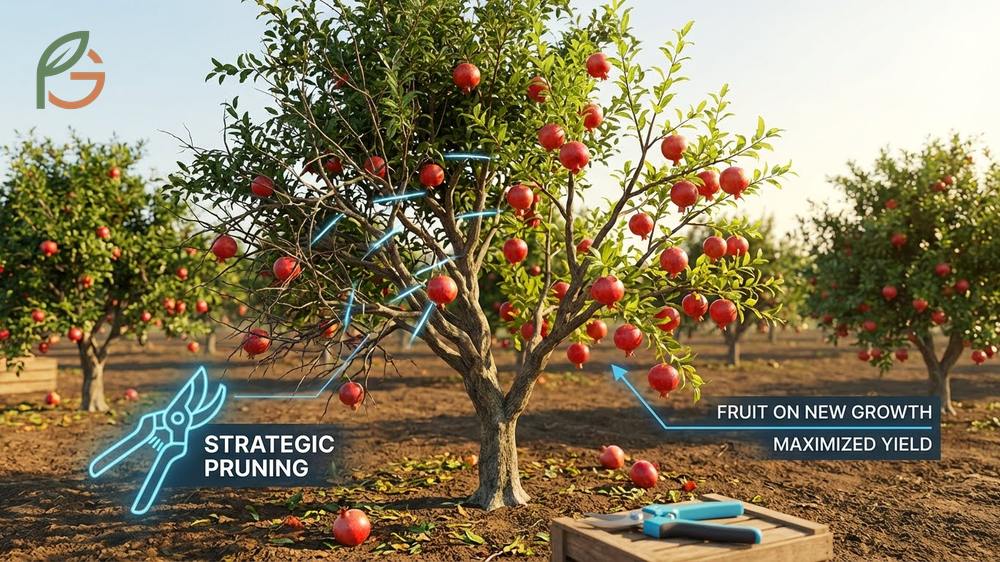
Current guidance emphasizes strategic pruning to maintain tree health, improve air circulation, and maximize fruit production. Unlike some fruit trees that produce on old wood, pomegranates fruit on new growth, which changes how you approach pruning.
Research shows that proper pruning increases yield by redirecting energy toward productive branches rather than dense, tangled growth. You’re essentially giving the tree a roadmap for where to focus its resources.
The technique you use depends on whether you want a tree form or bush shape. Tree forms feature a single trunk with 3-6 main branches, while bush forms maintain multiple trunks from ground level.
When to Prune
Studies demonstrate that late winter to early spring—after frost risk passes but before full bloom—provides the optimal pruning window[4][7]. This timing allows you to see the tree’s structure clearly while avoiding damage to emerging flowers.
Don’t prune in fall or early winter when the tree is preparing for dormancy. Cuts made during this period won’t heal properly and create entry points for disease.
Pruning Techniques
After planting, cut your pomegranate to 24-30 inches (60-75 cm) from the ground to encourage branching[4]. In the year following planting, prune branches by 1/3, remove crossing branches, and leave 3-5 shoots per branch[4].
Focus on removing whippy interior growth that clutters the canopy while keeping main structural branches intact. You’ll want to eliminate dead wood, crossing branches, and anything growing toward the tree’s center.
- Remove root and trunk suckers annually after establishing 3-6 primary trunks
- Cut crossing branches that rub against each other, which creates wounds and disease entry points
- Thin interior growth to improve air circulation and sunlight penetration throughout the canopy
- Maintain 3-5 shoots per main branch to balance fruiting potential with tree vigor
- Make cuts at 45-degree angles to prevent water accumulation and promote faster healing
- Target a height of 80-90 cm (31-35 inches) for main branches to facilitate harvesting
Important Pruning Note: Always disinfect your tools between cuts using hydrogen peroxide or denatured alcohol. This simple step prevents spreading diseases from infected branches to healthy ones.
Tools and Methods
Evidence suggests that clean, sharp cuts heal faster and resist disease better than torn or ragged edges[9]. Use hand shears for branches under 1/2 inch diameter, loppers for branches up to 1.5 inches, and pruning saws for anything thicker.
Battery-operated or pneumatic tools speed up the work if you’re maintaining multiple trees, but manual tools work perfectly fine for home gardeners. What matters is blade quality—invest in high-quality steel that holds an edge.
Watering Fertilizing Pomegranate
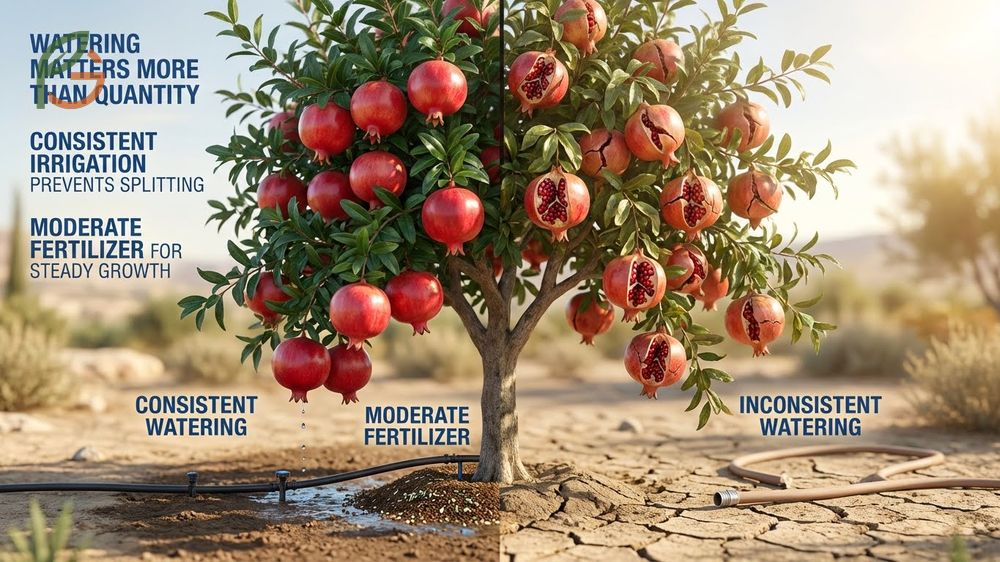
Current research emphasizes that consistent watering matters more than quantity when growing pomegranates. These trees tolerate drought once established, but inconsistent irrigation during fruit development causes splitting—one of the most common problems home growers face.
Fertilization requirements are moderate compared to other fruit trees. You’re looking to support steady growth without forcing excessive vegetative development at the expense of fruiting.
The reason timing matters is simple: pomegranates set fruit on current-season growth, so you want to encourage spring vigor when flowering begins.
Seasonal Watering
Agricultural guidance shows distinct watering patterns across seasons for optimal pomegranate health. During spring and summer’s active growth phase, water 2-3 times per week as higher temperatures increase evaporation and transpiration rates[1].
In fall and winter, reduce watering to once weekly even during dormancy[1]. Maintaining minimal soil moisture through winter makes spring recovery faster—completely dry soil takes too long to rehydrate when growth resumes.
For container-grown pomegranates, check the top 2 inches (5 cm) of potting mix before watering. If you detect any moisture, wait another day or two.
- Provide approximately 1.6 gallons (6 liters) per watering session during peak summer heat
- Water at the tree base rather than overhead to keep foliage dry and prevent fungal diseases
- Reduce irrigation as fruit approaches maturity to prevent splitting while maintaining consistency
- Adjust frequency based on rainfall—don’t water on a fixed schedule regardless of weather
- Apply 2-3 inches of mulch around the base to retain moisture and regulate soil temperature
- Monitor for wilting during extreme heat, which indicates the need for additional water
Watering Tip: Fruit splitting occurs when trees receive heavy irrigation after extended dry periods. Keep watering consistent through late fruit development rather than alternating between drought and flood.
Fertilizer Schedule
Research indicates that nitrogen and potassium are the most important nutrients for pomegranate trees, with a recommended 1:1 N to K₂O ratio[6]. Balanced formulas with 8-8-8 NPK ratios work well for general maintenance[5].
Apply fertilizer in early spring before new growth emerges, or use monthly doses from May through August. Young trees benefit from regular fertilization during their first 2-3 years to establish strong root systems and framework branches.
Mature trees produce adequately without fertilization if planted in decent soil, though adding nutrients improves fruit size and quantity. For high-pH or calcareous soils, increase the ratio to 1:1.25 favoring potassium[6].
This table compares fertilizer application timing, NPK ratios, and specific recommendations across different pomegranate growth stages from young to mature trees
| Tree Age | NPK Ratio | Application Timing | Frequency |
|---|---|---|---|
| Year 1-2 | 8-8-8 or 4-4-4[5] | Early spring through summer | Every 2-4 weeks |
| Year 3-5 | 5-10-5 or 15-30-15[5] | March-April (before flowering) | Every 2 weeks during growing season |
| Mature (5+ years) | 1:1 N:K₂O[6] | Early spring (single application) | Annual or as needed |
| High-pH soils | 1:1.25 N:K₂O[6] | Early spring | Monthly (May-August) |
Pest Disease Management
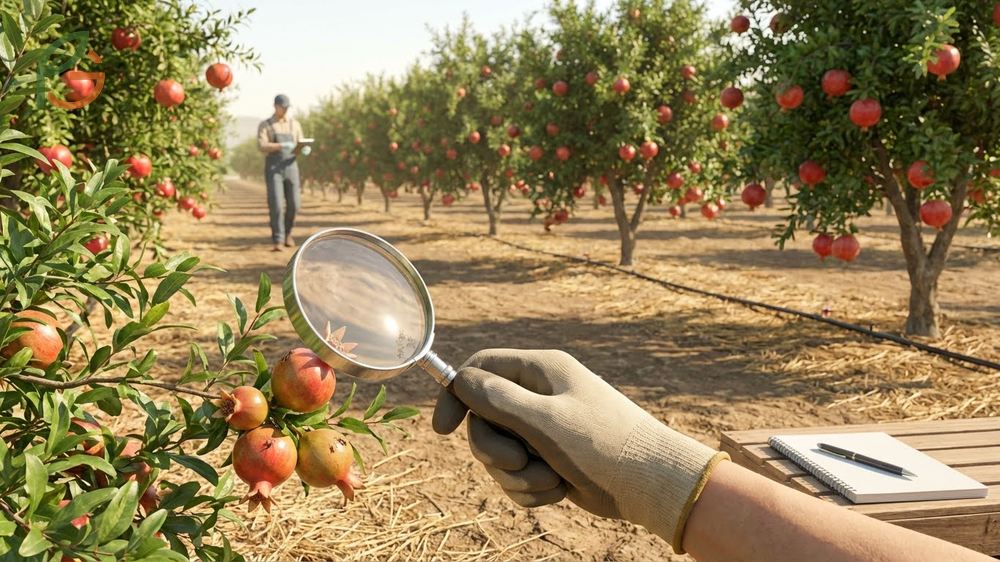
Studies show pomegranates face relatively few serious pest and disease problems compared to other fruit trees. Most issues are preventable through proper cultural practices—adequate spacing, appropriate watering, and regular monitoring.
What often gets overlooked is that prevention costs less time and money than treatment. Catching problems early, when populations are low or infections are localized, makes control much easier.
The key is integrating multiple approaches rather than relying solely on chemical interventions. This Integrated Pest Management (IPM) strategy minimizes environmental impact while effectively managing threats.
Common Pests
Research identifies aphids, whiteflies, thrips, and pomegranate butterfly (pyralid) as the primary insect pests affecting pomegranate cultivation. Aphids cluster on new growth, sucking sap and potentially transmitting viral diseases.
Encourage natural predators like ladybugs, lacewings, and parasitic wasps—these beneficial insects control pest populations without chemical intervention[10]. For active infestations, neem oil spray disrupts pest life cycles and acts as a repellent.
- Apply horticultural oils during dormant season to smother overwintering pest eggs and larvae
- Use insecticidal soaps for soft-bodied pests like aphids, following product label instructions carefully
- Install yellow sticky traps to monitor and capture flying insects before populations explode
- Remove and destroy damaged plant parts that harbor pests or their eggs
- Maintain proper irrigation to avoid stress that makes trees more susceptible to pest damage
- Inspect trees weekly during growing season, checking undersides of leaves where pests often hide
Disease Prevention
Evidence indicates that fungal diseases—including Alternaria fruit rot, gray mold (Botrytis), and stem canker—pose the greatest disease threats to pomegranates. These pathogens thrive in humid conditions with poor air circulation.
Proper pruning improves airflow through the canopy, reducing humidity levels that favor fungal growth[10]. Water at the tree base rather than overhead to keep foliage dry—wet leaves provide ideal conditions for disease establishment.
Apply copper-based fungicides preventively during periods of high humidity or when disease pressure is prevalent. Remove infected branches promptly, cutting back to healthy wood and disposing of prunings away from the orchard.
Disease Prevention Strategy: Clean up fallen leaves and fruit debris regularly. These materials harbor fungal spores and pest eggs that reinfect trees the following season.
Pomegranate Tree Maintenance
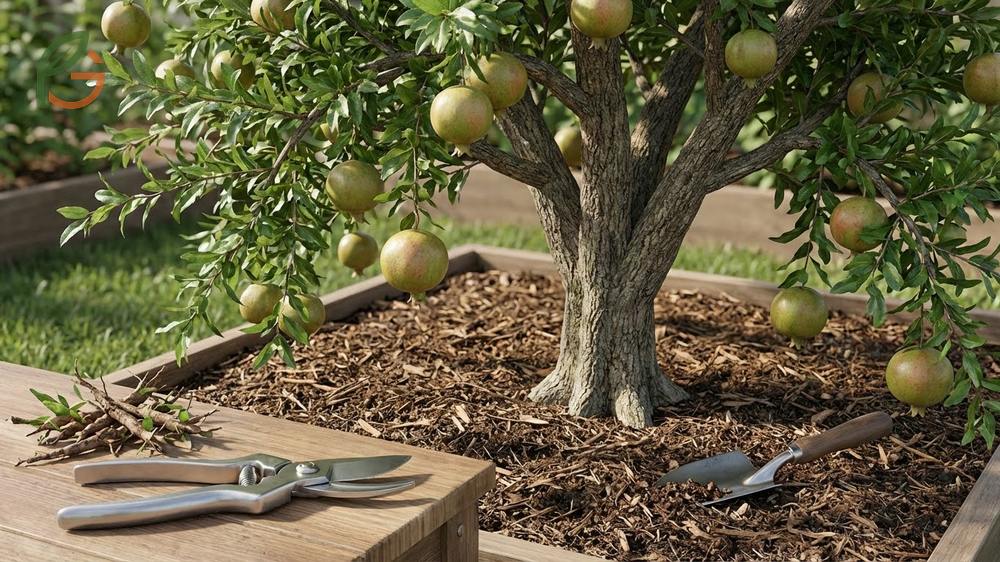
Current horticultural guidance emphasizes that successful pomegranate cultivation relies on consistent maintenance rather than intensive intervention. You’re establishing routines that support the tree’s natural growth patterns.
Annual tasks include sucker removal, mulch replenishment, and monitoring for nutrient deficiencies. Pomegranates send up numerous suckers from roots and trunk bases—remove these promptly to direct energy toward fruit production.
Apply 2-3 inches of organic mulch around the tree base each spring, keeping it several inches away from the trunk. Mulch regulates soil temperature, retains moisture, and suppresses weeds that compete for nutrients.
Monitor leaves for yellowing or unusual spotting, which may indicate nutrient deficiencies or disease. Nitrogen deficiency shows as overall leaf yellowing, while potassium deficiency causes browning along leaf margins.
From My Experience: When my friend in Oaxaca, Mexico removed neglected pomegranate suckers in February 2024, she counted over 20 shoots sapping energy from the main tree. After cleanup, fruit production increased noticeably that summer—matching research predictions about resource allocation.
For container-grown pomegranates, repot every 2-3 years using fresh potting mix. Root-bound trees show stunted growth and require more frequent watering as compacted roots can’t access moisture efficiently.
Check irrigation systems monthly to ensure emitters aren’t clogged and water reaches all parts of the root zone. Uneven watering creates stress that reduces fruit quality and increases susceptibility to pests.
Conclusion
The evidence is clear: successful Pomegranate Tree Care hinges on mastering two core practices—strategic pruning in late winter and consistent watering adjusted to seasonal needs. When you combine these fundamentals with adequate sunlight, balanced fertilization, and proactive pest management, you’ll grow healthy trees that produce abundant fruit for years.
Current guidance emphasizes working with the tree’s natural rhythms rather than forcing growth through excessive inputs. FruitGarden provides research-backed strategies that help you achieve professional results in your home orchard, transforming pomegranate cultivation from challenging to straightforward.
Frequently Asked Questions
How often should I water my pomegranate tree?
Water pomegranate trees 2-3 times per week during spring and summer, reducing to once weekly in fall and winter. During extreme heat, monitor soil moisture and increase frequency if needed—trees require approximately 1.6 gallons (6 liters) per watering session in peak summer.
When is the best time to prune pomegranate trees?
Prune pomegranates in late winter to early spring after frost risk passes but before full bloom begins. This timing allows clear visibility of tree structure while avoiding damage to emerging flowers that develop into fruit.
What fertilizer works best for pomegranates?
Use balanced fertilizers with 8-8-8 NPK ratios for general maintenance, or formulas with 1:1 nitrogen to potassium ratio for established trees. Young trees benefit from 5-10-5 or 15-30-15 ratios applied every 2 weeks during the growing season, while mature trees need only annual spring applications.
How much sunlight do pomegranate trees need?
Pomegranates require at least 6 hours of direct sunlight daily, though they perform best with 10 hours of full sun. Insufficient light reduces flowering and fruit production—plant in south-facing locations for maximum sun exposure in the Northern Hemisphere.
What causes pomegranate fruit to split?
Fruit splitting occurs from inconsistent watering during late fruit development—heavy irrigation after extended dry periods causes rapid fruit expansion that cracks the skin. Maintain consistent moisture as fruit matures, reducing quantity slightly while staying regular with timing.
Can pomegranates grow in cold climates?
Pomegranates thrive in USDA zones 7-11, tolerating temperatures down to 10-18°F (-12 to -8°C) when properly hardened off. Trees suffer damage below 12°F (-11°C), especially during sudden cold snaps—some Russian varieties extend growing range to zones 5-6.
How do I control pests on pomegranate trees naturally?
Encourage beneficial insects like ladybugs and lacewings to control aphids, whiteflies, and thrips naturally. Use neem oil spray for active infestations, apply horticultural oils during dormancy, and maintain proper watering to reduce tree stress that attracts pests.





