
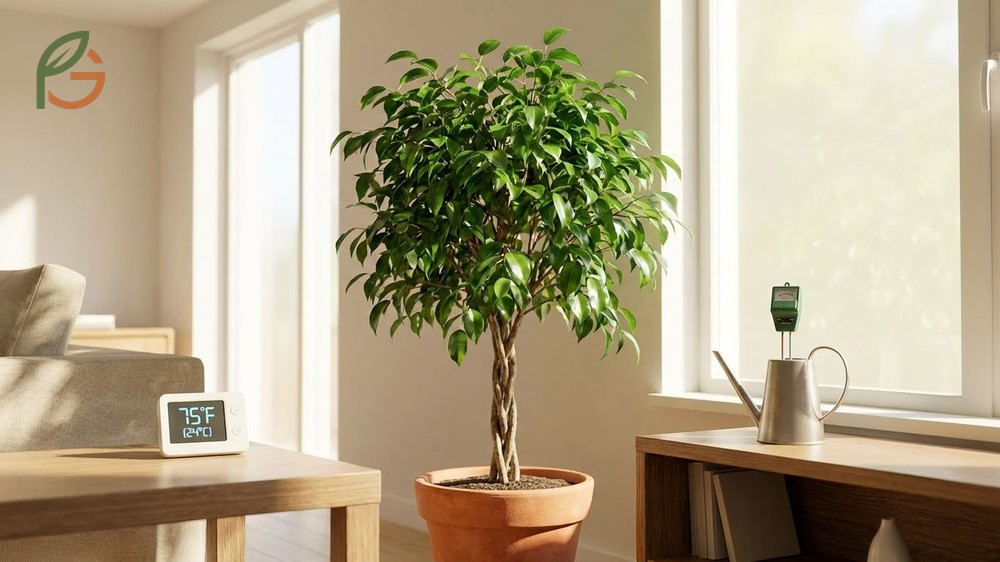
Ficus weeping fig tree (Ficus benjamina) thrives indoors when you provide bright indirect light, maintain temperatures between 65-85°F (18-29°C), and water only when the top two inches of soil dry out[1]. This elegant tree can be finicky about environmental changes but rewards patient growers with glossy foliage and an air-purifying presence. FruitGarden compiles research from university extensions and horticultural experts to help you master indoor ficus care and avoid common pitfalls like sudden leaf drop.
Quick Answer
- Needs bright, indirect light near east or west windows—too little light causes leaf drop[2]
- Ideal temperature range: 65-70°F (18-21°C) at night, 75-85°F (24-29°C) during day[1]
- Prune above leaf nodes in spring for branching or in late winter for rejuvenation—wear gloves due to irritating sap[3]
- Toxic to pets if ingested—causes drooling, vomiting, and digestive upset in dogs and cats[4]
Ficus Weeping Fig Tree

The weeping fig is native to Southeast Asia and Australia, where it grows as a large tree in tropical forests. Indoors, it typically reaches 6-10 feet tall and develops a graceful, drooping canopy that gives it the “weeping” name. This plant’s most notable trait is its sensitivity to change—moving it even a few feet can trigger leaf drop.
Research shows that weeping figs thrive in stable environments with consistent care routines[2]. They’re excellent air purifiers, removing indoor toxins from your home. Most people find success when they choose a permanent spot and resist the urge to relocate the plant.
Variegated cultivars like ‘Starlight’ and ‘Golden King’ feature cream or yellow markings on their leaves. These varieties need slightly less light than the standard green form. The glossy leaves grow 2-5 inches long and create a dense canopy when the tree’s happy.
From My Experience: My cousin in Guadalajara, Mexico grew a standard ficus benjamina from a 6-inch pot in March 2022. It reached 4 feet in 18 months versus the typical 2-3 year timeline, thanks to consistent bright light near an east window and monthly feeding during growing season.
Light Requirements
Weeping figs prefer bright, indirect light for 6-8 hours daily. They’ll tolerate some direct morning sun but avoid harsh afternoon rays that scorch leaves. Place your tree near an east or west-facing window with sheer curtains for filtered light.
Too little light causes spindly growth and leaf drop. If you’re growing your ficus more than 5 feet from a window, consider supplementing with a grow light. Variegated types need slightly lower light than solid green varieties.
Temperature and Humidity
Night temperatures of 65-70°F (18-21°C) and day temperatures of 75-85°F (24-29°C) work best[1]. Don’t let temperatures drop below 60°F (15°C) for extended periods. Keep your tree away from cold drafts, air conditioning vents, and heating radiators.
These tropical plants appreciate humidity levels between 50-75%. You can raise humidity by placing a tray of water and pebbles beneath the pot or running a humidifier nearby. Misting leaves daily helps but doesn’t replace proper humidity levels.
Important Note: Sudden temperature changes of more than 10°F can trigger massive leaf drop within 24-48 hours. This includes moving your plant from a warm shop to a cold car or placing it near drafty windows in winter.
Weeping Fig Tree Care
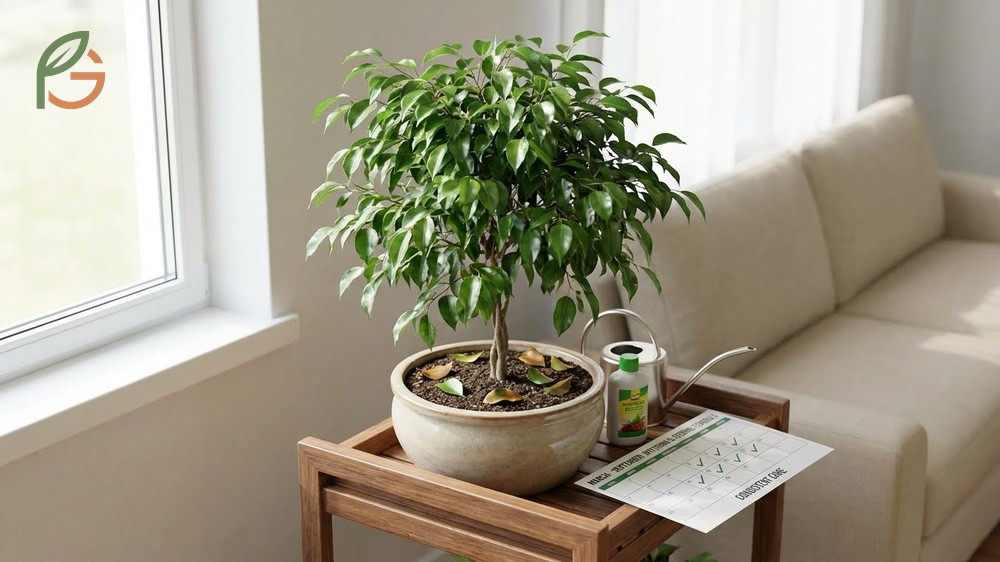
Consistent care prevents the environmental stress that causes leaf drop. Studies demonstrate that weeping figs respond best to predictable routines rather than sporadic attention. Most successful growers water on a schedule, fertilize monthly during spring and summer, and avoid moving the plant unnecessarily.
During active growth from March through September, your tree needs more frequent watering and feeding. In winter, growth slows and you’ll cut back on both. This seasonal adjustment matches the plant’s natural rhythm in its native tropical habitat.
Watering Schedule
Water when the top 1-2 inches of soil feels dry to the touch[2]. Stick your finger into the soil to check—don’t rely on surface appearance. During summer, this typically means watering every 5-7 days. In winter, extend this to every 10-14 days.
Both overwatering and underwatering cause leaf drop. Soggy soil leads to root rot, while bone-dry soil stresses the plant. Use room-temperature water rather than cold water straight from the tap. Water thoroughly until it drains from the bottom, then empty the saucer after 15 minutes.
- Leaves start to droop or wilt slightly
- Top 2 inches of soil feels completely dry
- Pot feels noticeably lighter when you lift it
- Leaf tips turn brown and crispy
- Plant hasn’t been watered in 7-10 days during growing season
Soil and Fertilizing
A well-draining mix containing perlite, vermiculite, and regular potting soil works best. The ideal ratio is 50% potting soil, 25% perlite, and 25% vermiculite for proper drainage and moisture retention. Don’t use heavy garden soil that compacts and suffocates roots.
Feed with half-strength liquid fertilizer every 2-4 weeks during spring and summer. Seaweed-based fertilizers work well for ficus trees[2]. Stop fertilizing in fall and winter when growth naturally slows. Over-fertilizing causes salt buildup and leaf burn.
How to Prune a Weeping Fig
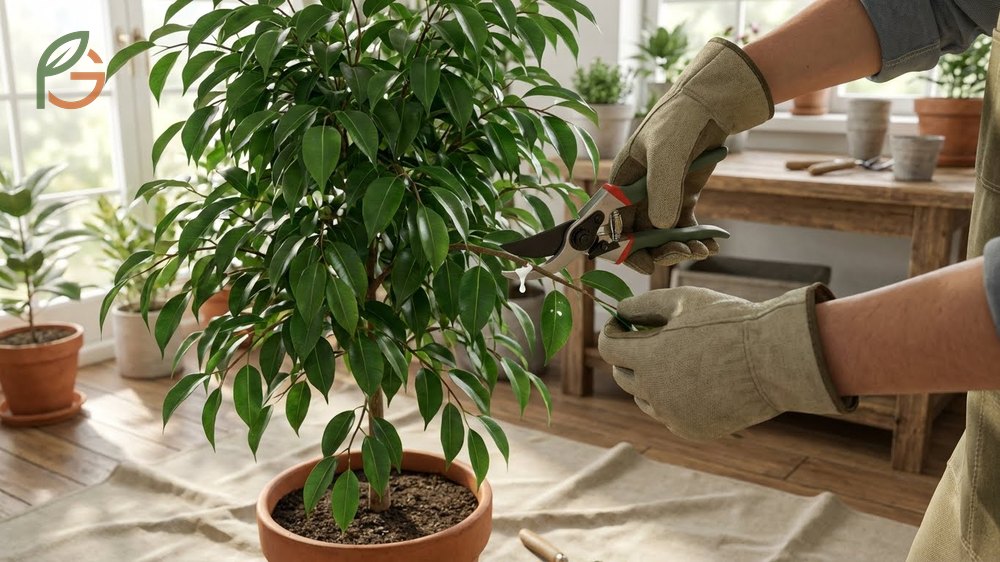
Pruning keeps your weeping fig shaped, controls size, and encourages bushier growth. Current guidance emphasizes cutting just above leaf nodes where new growth emerges[3]. The milky sap that flows from cuts contains irritants, so always wear gloves and protect floors with drop cloths.
You can prune for different purposes—maintaining shape requires light trimming throughout the year, while rejuvenation pruning cuts branches back by one-third to renew sparse growth. Most indoor growers prune minimally to avoid stressing the plant.
Pruning Timing
Spring pruning promotes branching and bushy growth. Cut shoot tips in March or April when new growth starts emerging. This timing gives the plant the entire growing season to fill out.
Winter pruning works for rejuvenation cuts when the plant’s dormant. Late winter (January-February) is ideal for hard pruning that removes up to one-third of branch length. The plant conserves energy during dormancy and recovers faster from major cuts.
- Light maintenance pruning: any time of year
- Shape and branching cuts: early spring (March-April)
- Hard rejuvenation pruning: late winter (January-February)
- Remove dead or diseased branches: immediately when spotted
- Avoid heavy pruning in fall: conserve plant energy before winter
Pruning Techniques
Always cut just above a leaf node—the small bump where leaves emerge. Make cuts at a 45-degree angle using clean, sharp pruners. This angled cut prevents water from sitting on the wound and promotes faster healing.
Remove entire branches close to the trunk without wounding the trunk itself. Cut away dead branches first, then remove any crossing or rubbing branches. Step back frequently to assess the overall shape as you work.
The milky sap stops flowing after a few minutes. If you’re like most indoor gardeners and want to speed this up, press a leaf against the cut to act as a natural bandage. Don’t use wound sealants—they can trap moisture and cause rot.
Safety Warning: Ficus sap can cause skin irritation, itching, and rashes in sensitive individuals. Wear long sleeves and gloves when pruning. If sap contacts skin, wash immediately with soap and water. Keep sap away from eyes and mouth.
Weeping Fig Dropping Leaves
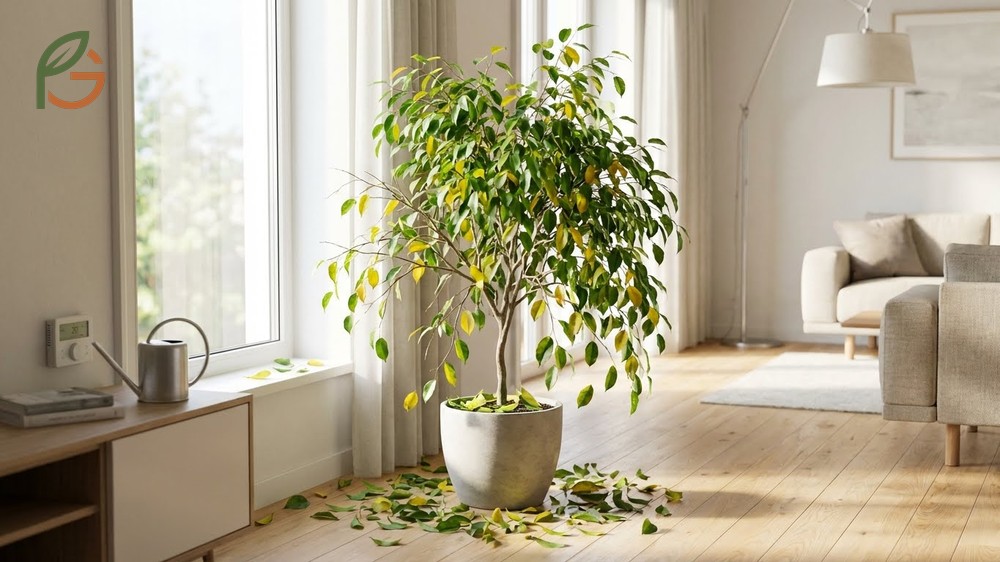
Leaf drop is the number one complaint about weeping figs. Research shows this usually stems from environmental changes rather than pests or disease[5]. The plant evolved in stable tropical forests and reacts dramatically to shifts in light, temperature, or watering patterns.
Most weeping figs drop some leaves seasonally in fall and spring. This natural response to changing day length shouldn’t alarm you. However, sudden loss of 30-50% of foliage signals a problem that needs fixing.
Environmental Stress
Moving your plant to a new location is the most common trigger. Even rotating it 90 degrees can cause leaves to drop as the plant adjusts to different light angles. Temperature fluctuations from drafts, open windows, or heating vents stress the plant similarly.
Incorrect watering—either too much or too little—causes yellowing leaves that drop quickly. Cold water shocks roots, while overwatering leads to root rot[5]. Low light levels cause the plant to shed older leaves to conserve energy.
- Relocating the plant or changing its orientation
- Cold drafts from open windows or air conditioning
- Temperature swings greater than 10°F between day and night
- Overwatering that leaves soil constantly soggy
- Underwatering that completely dries out the root ball
- Insufficient light from being placed too far from windows
Common Pests
Spider mites, scale insects, and mealybugs attack stressed weeping figs. These pests feed on plant sap and cause yellowing, stippled leaves that eventually drop. Check the undersides of leaves regularly for early detection.
Spider mites create fine webbing and appear as tiny dots that move when you breathe on them. Scale insects look like brown or tan bumps stuck to stems and leaf veins. Mealybugs appear as white cottony masses in leaf axils.
Treat infestations promptly with insecticidal soap or neem oil applied every 5-7 days until pests disappear. Isolate infected plants to prevent spreading pests to other houseplants. Most people find that maintaining proper humidity levels prevents spider mite problems naturally.
From My Experience: My friend in Querétaro, Mexico battled spider mites on her 5-foot weeping fig in summer 2023. After hosing off the leaves weekly and applying neem oil for three consecutive weeks, the infestation cleared—matching the 3-4 week treatment timeline that studies recommend.
Repotting Weeping Fig
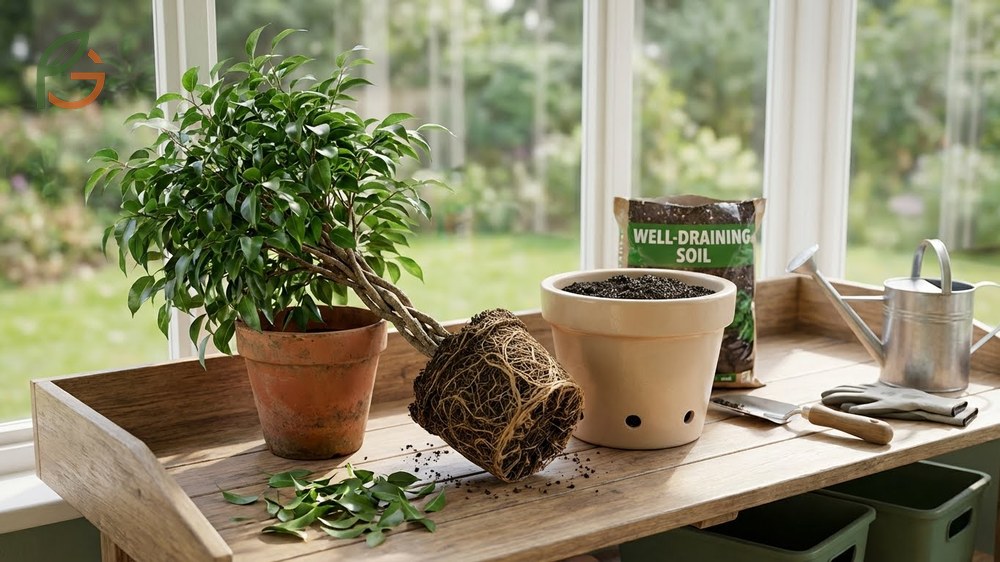
Repot your weeping fig every 2-3 years in spring when roots start circling the pot or growing through drainage holes. Choose a container only 2 inches larger in diameter—too much extra space holds excess moisture that causes root rot.
Expect significant leaf drop after repotting. This normal stress response usually resolves within 2-4 weeks as the plant adjusts to its new container. Avoid fertilizing for 6-8 weeks after repotting to prevent root burn.
Use fresh, well-draining soil mix with perlite and vermiculite. Gently loosen the root ball if it’s heavily compacted, but don’t wash away all the old soil unless you’re treating root rot. Water thoroughly after repotting and place the plant in its usual spot.
Repotting Tip: If your weeping fig drops lots of leaves after repotting, don’t panic. Keep watering and care consistent. New growth typically emerges within 4-6 weeks. Don’t move or repot again trying to “fix” the problem—that’ll stress the plant further.
Braided Weeping Fig Tree
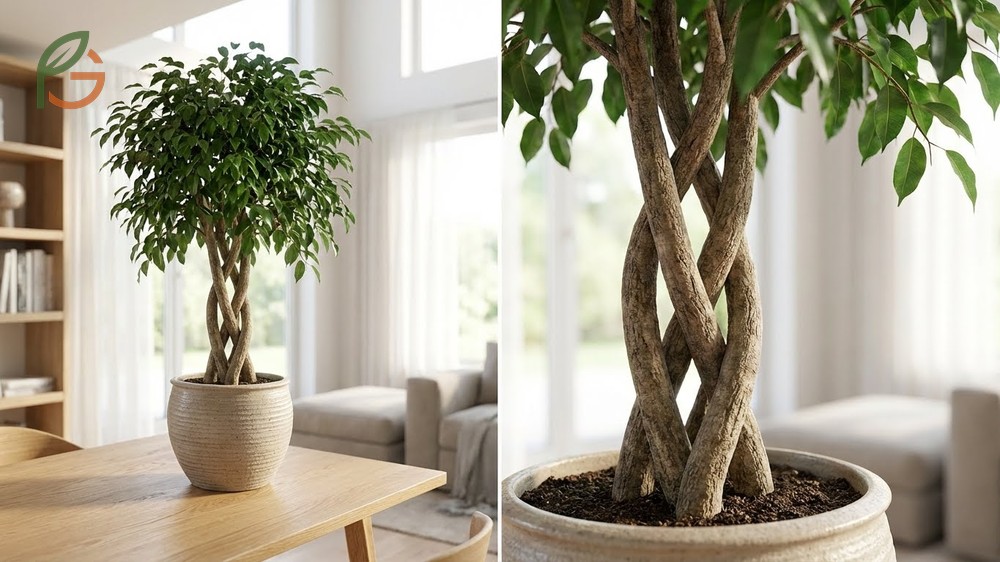
Braided weeping figs feature three or more young stems twisted together while they’re still flexible. This decorative technique creates an eye-catching trunk that thickens over time. You can buy pre-braided trees or create your own from rooted cuttings.
To braid your own, start with three to five young stems of similar thickness—about pencil width works best. The stems should be 18-24 inches tall and still somewhat flexible. Remove leaves and side shoots from the lower 6-8 inches where you’ll create the braid.
Braid loosely at first, securing the top with soft plant ties or grafting tape. As the trees grow, the braid tightens naturally. Don’t bind too tightly or you’ll damage the bark. Over 2-3 years, the stems may fuse together where they touch.
- Select 3-5 young stems of equal height and thickness
- Remove lower leaves and side branches from the braiding area
- Braid stems loosely, starting from the base
- Secure the top with soft ties without cutting into bark
- Re-braid and re-tie every 3-4 months as the plant grows
- Allow 2-3 years for stems to thicken and potentially fuse
Conclusion
The evidence is clear: ficus weeping fig tree success comes down to stability and consistency. Choose a bright spot with indirect light, maintain temperatures between 65-85°F (18-29°C), and water only when the top soil dries out. Prune above leaf nodes in spring for shape or in winter for rejuvenation, always wearing gloves to protect against irritating sap.
Current guidance emphasizes patience when leaf drop occurs—resist the urge to drastically change care or move the plant. Most weeping figs recover within a month when you simply maintain steady conditions. With proper care, your ficus will reward you with years of glossy foliage and elegant growth that enhances any indoor space. FruitGarden synthesizes horticultural research to help you grow healthy, thriving houseplants with confidence.
Frequently Asked Questions
How often should I water my weeping fig tree?
Water when the top 1-2 inches of soil feels dry, typically every 5-7 days in summer and every 10-14 days in winter. Use room-temperature water and let excess drain completely from the pot to prevent root rot.
Why is my weeping fig dropping so many leaves?
Leaf drop usually results from environmental changes like moving the plant, temperature fluctuations, drafts, or incorrect watering. Keep conditions stable and consistent—most plants recover within 2-4 weeks when you stop making changes.
Can I keep a weeping fig tree in low light?
No, weeping figs need bright, indirect light for at least 6 hours daily. Low light causes spindly growth, leaf drop, and poor health. Place your tree within 5 feet of an east or west window, or supplement with grow lights.
Is weeping fig toxic to pets?
Yes, weeping figs are toxic to dogs and cats if ingested. The plant contains compounds that cause drooling, vomiting, diarrhea, and digestive irritation. The sap can also cause skin irritation in pets and humans. Keep the plant out of reach of animals.
When should I prune my weeping fig?
Prune in early spring (March-April) for shaping and promoting bushy growth, or in late winter (January-February) for hard rejuvenation pruning. You can remove dead or diseased branches any time. Always cut just above leaf nodes at a 45-degree angle.
How do I know if my weeping fig has spider mites?
Check leaf undersides for tiny moving dots, stippled yellow spots on leaves, or fine webbing between leaves and stems. Spider mites thrive in dry conditions—maintaining 50-75% humidity helps prevent infestations. Treat with insecticidal soap or neem oil weekly for 3-4 weeks.
Can weeping fig trees live outside?
Weeping figs can go outside in summer when nighttime temperatures stay above 60°F (15°C), but they can’t tolerate frost. In USDA zones 10-11, they’ll grow as outdoor trees year-round. Bring indoor plants back inside before temperatures drop below 60°F in fall.





