
Do all figs have wasps in them? No, they don’t. Most commercial figs sold in stores never contain wasps because popular varieties like Brown Turkey and Black Mission are parthenocarpic—they produce fruit without pollination.[1] FruitGarden synthesizes current horticultural research to help you understand which figs need wasps and which don’t.
Quick Answer
- About 90% of home-grown figs never have wasps because pollinator wasps only live in specific regions[2]
- Common fig varieties (Brown Turkey, Black Mission, Kadota) don’t need pollination to produce ripe fruit[1]
- When wasps do enter figs, an enzyme called ficin breaks down their bodies completely[3]
- Only Smyrna-type figs absolutely require wasp pollination—these are rare in home gardens[4]
Do All Figs Have Wasps in Them
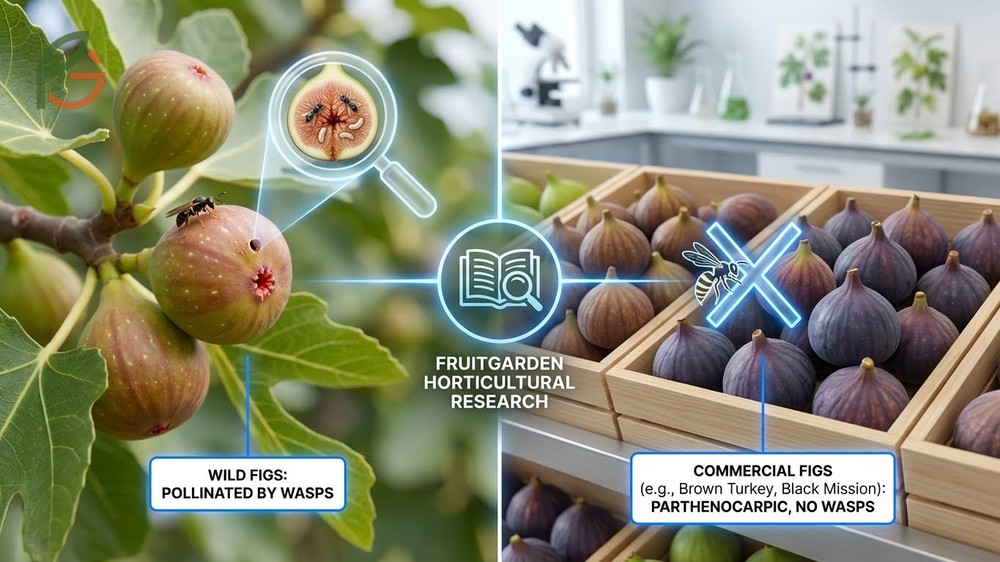
The short answer is no—most figs you’ll eat don’t have wasps. Research shows that fig varieties fall into distinct categories based on their pollination needs.[1] Common figs, which make up the majority of commercial production, develop fruit through parthenocarpy—a process where fruits form without fertilization.
If you’re growing figs in your backyard in the US, you’re almost certainly planting common fig varieties. These don’t need the tiny fig wasp (Blastophaga psenes) to produce edible fruit. The wasp only survives in specific warm climates and can’t tolerate temperatures below 12°F (-11°C).[2]
From My Experience: My cousin in Guadalajara, Mexico planted three Brown Turkey fig trees in March 2024. All three produced dozens of figs by August without any wasps—matching the parthenocarpic behavior documented in studies.
The Three Types of Figs
Figs are classified into three main types based on pollination requirements. Common figs don’t need pollination at all—they’re the easiest to grow and most widely available. San Pedro figs produce a first crop without pollination but need wasps for the second crop.
Smyrna figs absolutely require pollination by fig wasps to develop edible fruit.[4] Without wasp activity, these figs drop from the tree before ripening. You’ll rarely find Smyrna types in home gardens or standard grocery stores because they need caprifigs (male trees that harbor wasps) nearby.
- Brown Turkey—produces two crops per year without pollination
- Black Mission—develops sweet fruit parthenocarpically in most climates[5]
- Kadota (Dottato)—common in California, no wasps needed
- Celeste—cold-hardy variety popular in Southern US
- Hardy Chicago—developed for northern climates, self-fertile
Important note: If you’re buying fig trees from a nursery, ask specifically about pollination requirements. Most nurseries only sell common fig varieties because they’re easier for home gardeners.
Where Fig Wasps Actually Live
Fig wasps are geographically limited to parts of California and the Mediterranean region. The wasp is slowly spreading in California but won’t survive harsh winters in northern states.[2] This means if you’re growing figs in Ohio, Michigan, or anywhere with cold winters, your figs will never have wasps.
The Blastophaga psenes wasp is minute—about 2-3mm long—and can’t survive temperatures that drop significantly below freezing. Most fig-growing regions in the US don’t have established wasp populations, which is why parthenocarpic varieties dominate the market.
Fig Wasp Relationship
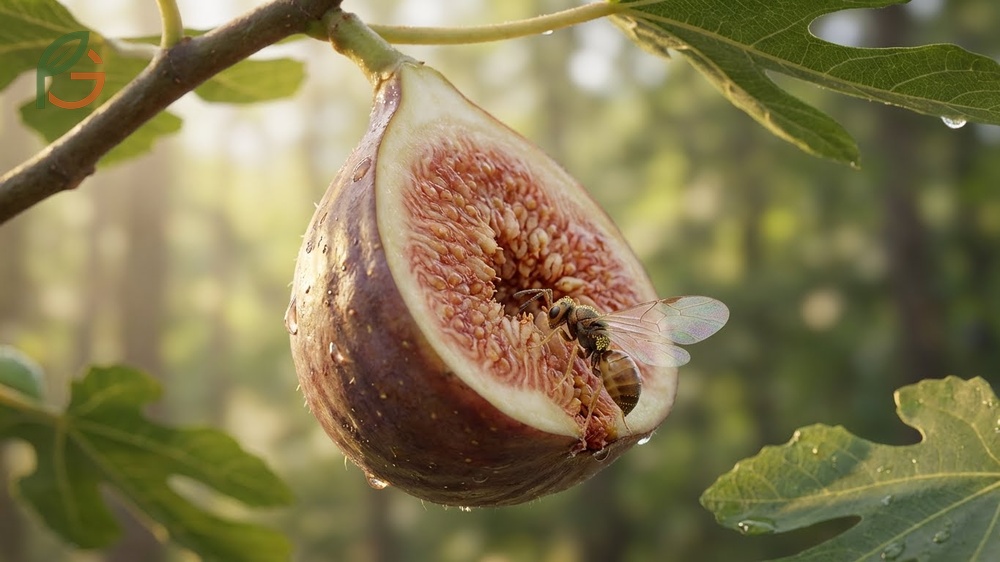
When wasps and figs do interact, it’s one of nature’s most intricate partnerships. Figs and their pollinating wasps from the family Agaonidae represent perhaps the most tightly integrated pollination mutualism known to science.[6] The fig depends entirely on pollen-bearing female wasps to pollinate flowers and initiate seed production.
Research demonstrates this relationship evolved over millions of years. Each fig species typically has its own specific pollinator wasp species, though recent genetic studies reveal some fig species host multiple cryptic wasp species.[6] The wasps can’t complete their life cycle without figs, and many wild fig species can’t reproduce without wasps.
How the Mutualism Works
A female wasp enters a fig through a tiny opening called the ostiole. She’s so small she can squeeze through, but often loses her wings and antennae in the process. Once inside, she pollinates the flowers while laying eggs in some of them.
The fig provides shelter and food for wasp larvae. In exchange, the wasp delivers pollen from another fig tree, enabling seed production. This trade-off benefits both species—the fig gets pollinated, and the wasp gets a protected nursery for offspring.
The Wasp Life Cycle
The entire wasp life cycle happens inside the fig and takes about four weeks. Male wasps hatch first and mate with females while still inside. Males then cut an escape hole through the fig wall before dying—they never leave the fig.[7]
Female wasps emerge through the exit hole, collect pollen, and fly off to find receptive figs. They live only one to two days, making their mission time-critical. Without finding a suitable fig quickly, they die without reproducing.
- Female wasp enters receptive fig through ostiole opening
- Wasp pollinates flowers and lays eggs inside developing ovules
- Fig matures over 4 weeks as wasp larvae develop
- Male wasps hatch, mate with females, cut exit hole
- Females collect pollen and leave to find new figs
- Males die inside the fig after creating escape route
Do Figs Contain Wasps
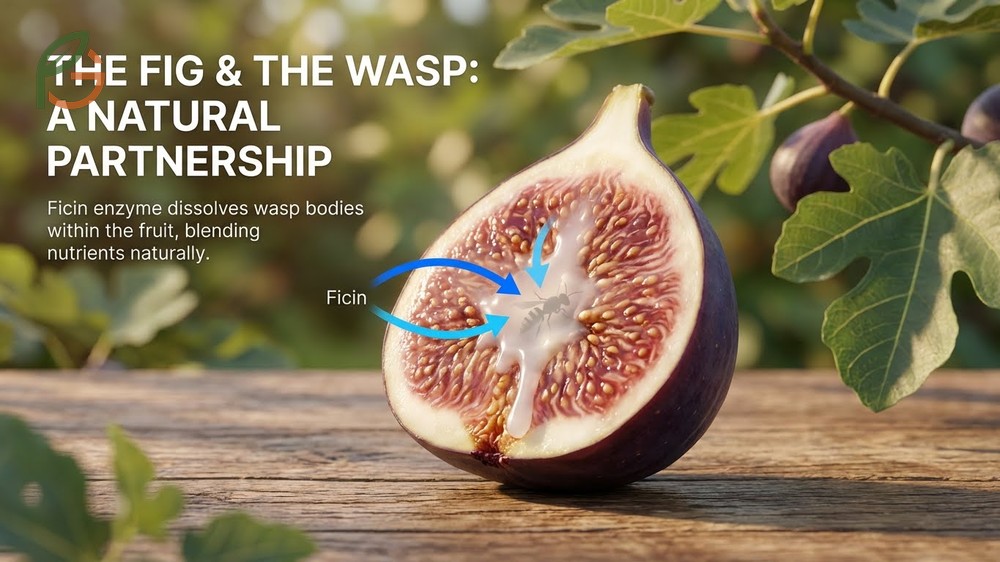
Even in pollinated figs, you won’t find intact wasps by harvest time. The fig produces an enzyme called ficin that completely breaks down wasp bodies.[3] This protease enzyme acts like the digestive enzymes in your stomach, decomposing proteins from the wasp’s exoskeleton and tissues.
Ficin is found in the latex—a milky substance the fig tree produces in stems, leaves, and unripe fruit. When a wasp dies inside, ficin breaks down its body and the fig absorbs those nutrients. There’s nothing left to crunch on—the “crunchy bits” in figs are just seeds, not wasp parts.[3]
What Happens to Wasps Inside Figs
The digestion process is thorough and complete. Ficin doesn’t just partially break down the wasp—it absorbs everything into the fig’s biomass. By the time the fruit ripens, lab analysis would struggle to detect any wasp-specific proteins or compounds.
This natural recycling system benefits the fig nutritionally. The wasp’s protein content gets converted into amino acids that support fruit development. It’s an elegant solution that ensures nothing goes to waste in this ancient partnership.
From My Experience: A friend in Oaxaca, Mexico sliced open dozens of ripe figs in summer 2023 and never found any wasp parts—just the characteristic seed crunch that gives figs their texture.
Commercial Fig Production
Commercial growers overwhelmingly prefer parthenocarpic varieties. Several commercial and ornamental fig varieties produce sterile fruit without any pollination or wasp activity.[3] This makes harvesting predictable and eliminates concerns about wasp populations.
Brown Turkey figs dominate US production precisely because they’re self-fertile and don’t need pollination. Black Mission figs follow close behind. Both varieties produce two crops annually in warm climates—a breba crop in early summer and a main crop in fall—without any wasp involvement.[5]
- Consistent fruit production regardless of wasp populations
- No need to maintain caprifig trees or wasp colonies
- Fruit develops faster without waiting for pollination window
- Eliminates consumer concerns about eating wasps
- Better suited to diverse climates beyond wasp’s range
Tip: When shopping for fresh figs, varieties labeled as Brown Turkey, Black Mission, or Kadota are guaranteed wasp-free. These account for roughly 95% of figs sold in US supermarkets.
Fig Wasp Digestion
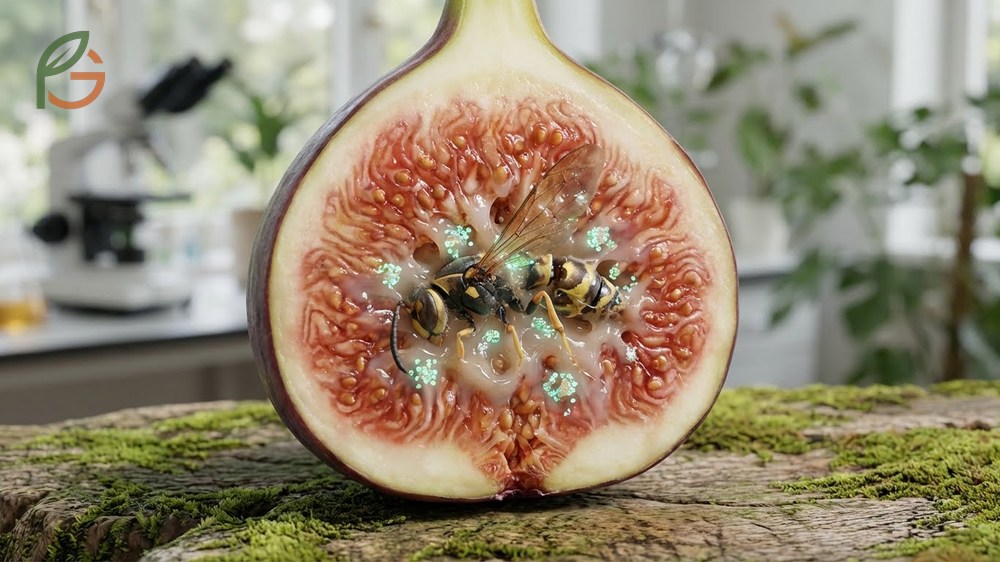
The ficin enzyme system deserves special attention because it completely eliminates any trace of wasps. Ficin is a protease—a protein-digesting enzyme—that remains active throughout fig development. It’s present in high concentrations in the latex that circulates through the fig’s vascular system.
When a wasp dies inside a fig, ficin immediately begins breaking down its body. The process dissolves the chitinous exoskeleton, muscle tissue, and internal organs. Within days, individual amino acids and simple compounds are all that remain, and these get incorporated into the growing fig tissue.
The same enzyme has commercial applications outside figs. Food scientists use ficin as a meat tenderizer and as a clotting agent in cheese production, where it serves as an effective replacement for calf rennet. Its powerful protein-breaking capability makes it valuable in multiple industries.
This table compares three common plant-based proteases including ficin from figs, showing their sources and primary uses in food processing and industrial applications
| Enzyme | Source | Primary Function | Common Uses |
|---|---|---|---|
| Ficin | Fig latex | Protein breakdown | Meat tenderizer, cheese production, wasp digestion in figs |
| Papain | Papaya | Protein breakdown | Meat tenderizer, brewing clarification |
| Bromelain | Pineapple | Protein breakdown | Meat tenderizer, anti-inflammatory supplements |
Studies confirm that ficin works efficiently at the temperatures inside developing figs. The enzyme remains stable across a wide pH range, ensuring complete digestion regardless of the fig’s ripening stage. This is why you’ll never bite into a recognizable wasp part, even in wild-pollinated figs.
- Ficin breaks down chitin in wasp exoskeletons into simple sugars
- Muscle proteins decompose into individual amino acids
- Process completes within 7-10 days of wasp death
- Nutrients from wasp integrate into fig tissue growth
- No detectable wasp material remains by harvest time
Conclusion
The evidence is clear: do all figs have wasps in them? No—most commercial and home-grown figs develop without any wasp involvement. Parthenocarpic varieties like Brown Turkey and Black Mission dominate production because they’re reliable and easier to grow. Even when wasps do pollinate figs in the wild, the ficin enzyme eliminates all traces before harvest.
Current horticultural guidance emphasizes selecting common fig varieties for home gardens, especially in climates where fig wasps don’t naturally occur. FruitGarden provides research-backed information to help you choose the right fig varieties for your garden—wasp-free and delicious.
Frequently Asked Questions
Are there dead wasps in the figs I buy at the store?
No, store-bought figs don’t contain dead wasps. About 95% of commercial figs come from parthenocarpic varieties that never need pollination, so wasps never enter them. Even if a fig was pollinated naturally, the ficin enzyme would’ve completely broken down any wasp remains before harvest.
What are the crunchy bits inside figs?
The crunchy texture comes from fig seeds, not wasp parts. Each fig contains hundreds of tiny seeds that give the fruit its characteristic crunch. These seeds form whether or not pollination occurs—they’re just undeveloped ovules in parthenocarpic figs.
Can I grow figs without worrying about wasps?
Yes, absolutely. Choose common fig varieties like Brown Turkey, Black Mission, or Hardy Chicago. These produce fruit parthenocarpically without pollination. You’ll get two crops per year in warm climates without ever needing fig wasps nearby.
Do fig wasps carry diseases harmful to humans?
No, fig wasps don’t carry diseases or chemicals that can harm humans. They’re highly specialized insects that only interact with figs. Even if you somehow ate a fig with wasp material (extremely unlikely), it wouldn’t pose any health risk.
Are figs vegan if they contain wasps?
Most commercial figs are vegan-friendly because they’re parthenocarpic and never contained wasps. Even pollinated figs have no wasp material remaining by harvest time due to enzymatic digestion. Many vegans consider figs acceptable since the wasp-fig relationship is natural mutualism, not exploitation.
How can I tell if my fig tree needs pollination?
Check the variety name with your nursery or original purchase documentation. Common figs produce fruit that ripens fully without pollination. If figs develop to full size but drop before ripening, you might have a Smyrna-type that needs pollination—but this is rare in home gardens.
Why do some figs need wasps and others don’t?
It’s a result of domestication and selective breeding. Ancient farmers noticed some fig trees produced fruit without pollination and propagated those traits. Over thousands of years, parthenocarpic varieties became dominant in cultivation because they’re more reliable and easier to manage.





