
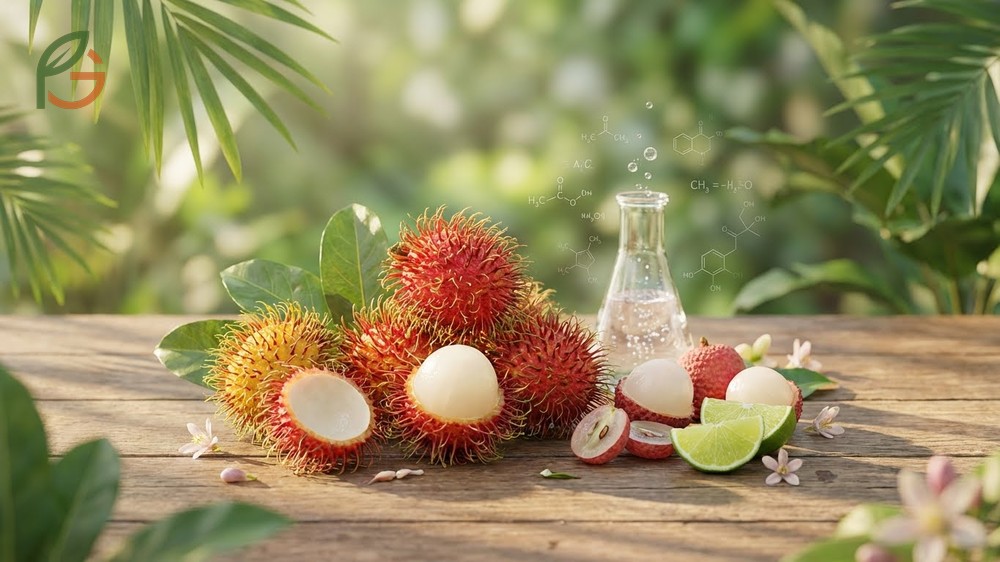
What does rambutan taste like? It’s a sweet, floral blend with grape and lychee notes plus subtle citrus undertones—refreshing without being cloying. Research shows this Southeast Asian fruit contains volatile compounds like linalool and limonene that create its distinctive aroma and balanced sweetness-acidity profile. FruitGarden synthesizes current horticultural research to help you understand this exotic fruit’s unique characteristics and growing requirements.
Quick Answer
- Flavor profile: Sweet-tart with floral notes, similar to lychee but with more citrus and less rosewater[1]
- Texture: Firm, gelatinous flesh that’s juicier than longan but less delicate than lychee[2]
- Sweetness level: 14-18° Brix, providing moderate-to-high sweetness balanced by mild acidity[1]
- Origin: Native to Malaysia and Indonesia in Southeast Asia, now cultivated across tropical regions 71-86°F (21-30°C)[2]
What Does Rambutan Taste Like
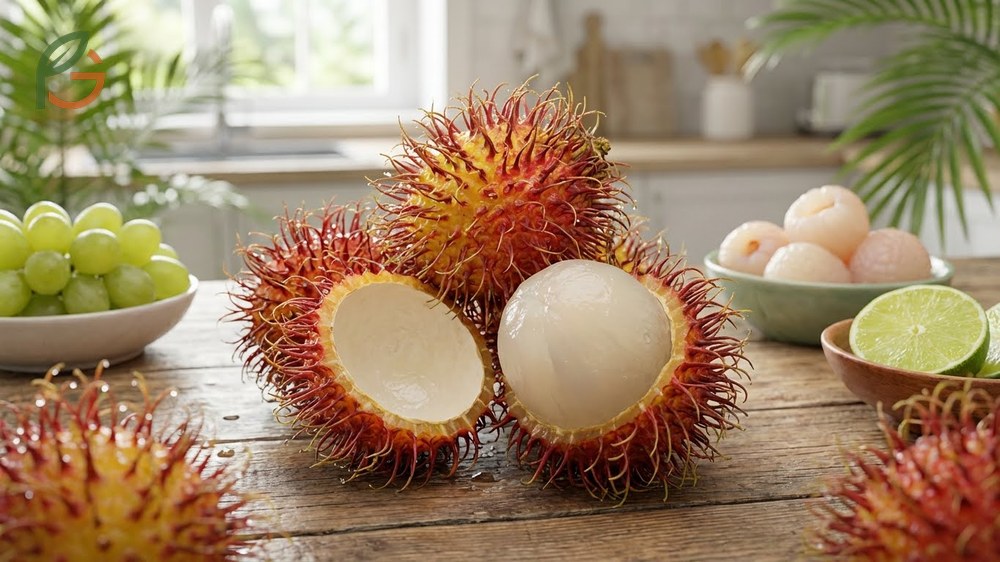
When you crack open a ripe rambutan, you’ll encounter translucent white flesh with a flavor that’s distinctly tropical yet familiar. Studies demonstrate that rambutans taste like a sweet blend of grapes and lychee, with subtle citrus undertones that keep the experience refreshing rather than overly sweet[1]. The flesh is described as translucent, whitish or pale pink, with a sweet yet mildly acidic character[2].
Most people find the flavor profile more complex than other tropical fruits. The high vitamin C content contributes to that bright, refreshing quality—eating 100g provides 36% of your daily vitamin C needs[3]. It’s not just about sweetness—the fruit delivers a clean finish without lingering bitterness or cloying aftertaste.
What often gets overlooked is how ripeness dramatically affects taste. Research shows rambutans harvested too early lack sweetness development, while overripe specimens develop off-flavors from enzymatic browning[1]. The ideal flavor window lasts only 2-3 days after harvest, making freshness critical for the best experience.
Sweetness and Acidity Balance
The sweetness level in rambutan ranges from 14-18° Brix, which places it in the moderate-to-high category[1]. This Brix measurement tells you it’s sweeter than apples but less intense than very ripe mangoes. The mild acidity cuts through that sweetness perfectly, creating what most tasters describe as a refreshing balance.
Unlike artificially sweetened products, rambutan’s natural sugars come packaged with fiber and nutrients that affect how your body processes them. Each 100g serving delivers about 1.3-2 grams of fiber—similar to apples or pears—which moderates the sugar impact[4]. That’s why it satisfies your sweet tooth without the sugar crash you’d get from candy.
Floral and Aromatic Notes
Current research identifies specific volatile compounds responsible for rambutan’s distinctive aroma. Linalool and limonene create subtle hints of rosewater and elderflower that distinguish it from similar fruits[1]. These floral notes are less pronounced than in lychee but more complex than you’ll find in longan.
The aroma changes as the fruit ripens. A fresh rambutan has a sweet, tropical scent with hints of mango and vanilla, making it pleasant and inviting before you even take a bite. What makes this work is the gentle nature of the floral components—they enhance rather than overpower the primary grape-like flavor.
What Is Rambutan Fruit
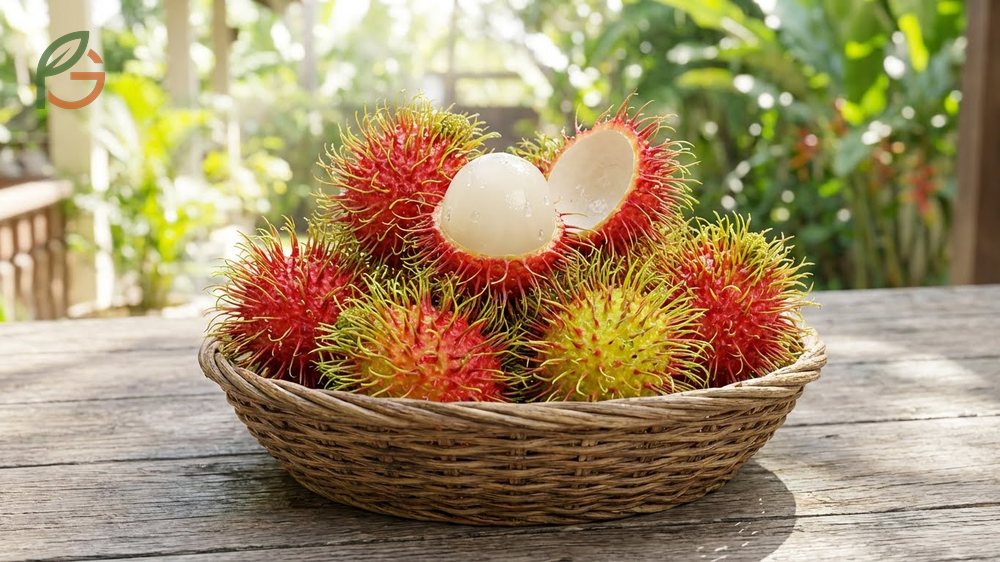
Rambutan is a tropical fruit about the size of a golf ball with a distinctive hairy exterior that ranges from bright red to yellow-green. The name comes from the Malay word “rambut,” meaning hair—a reference to those soft, spiney protrusions covering the shell[2]. Despite its unusual appearance, the edible portion inside is smooth, translucent, and incredibly juicy.
You’ll find a single brown seed at the center surrounded by that gelatinous white flesh. Current data indicates each medium fruit contains about 75 calories with less than 1 gram each of protein and fat, making it primarily a carbohydrate source[3]. The fruit delivers essential minerals including potassium, calcium, iron, manganese, and zinc.
What’s interesting is how the fruit tree itself grows. Rambutans develop on medium-sized evergreen trees that can reach 50-80 feet in ideal conditions, requiring humid tropical climates to thrive. The trees start fruiting 4-5 years after planting from seed, with harvest seasons varying by region.
Botanical Classification
Scientifically known as Nephelium lappaceum, rambutan belongs to the Sapindaceae family[2]. This places it in the same botanical family as lychee, longan, and pulasan—explaining why these fruits share similar characteristics. The family connection means they all have that translucent flesh and central seed structure.
The genetic diversity center for rambutans is the Malaysian-Indonesian region, where wild and cultivated varieties have evolved for centuries. This origin point explains why Southeast Asian cultivars often display the most robust flavor profiles and adaptation to local growing conditions.
Rambutan Fruit in Spanish
In Spanish-speaking countries, rambutan goes by several names depending on the region. The most common translations are “achotillo,” “mamón chino,” and “rambután”[5]. Ecuador particularly favors “achotillo” because the fruit’s appearance resembles achiote (annatto), another tropical plant with red-orange coloring.
The term “mamón chino” literally means “Chinese sucker,” referencing both the fruit’s Asian origins and the sucking motion you’d use to separate the flesh from the seed. These regional naming variations reflect how the fruit spread through Spanish-speaking Latin American countries during colonial trade routes in the 19th and 20th centuries[2].
Language Tip: If you’re shopping for rambutan in Latin American markets, asking for “achotillo” in Ecuador or “mamón chino” in other regions will get you better results than using the English name.
Rambutan Texture
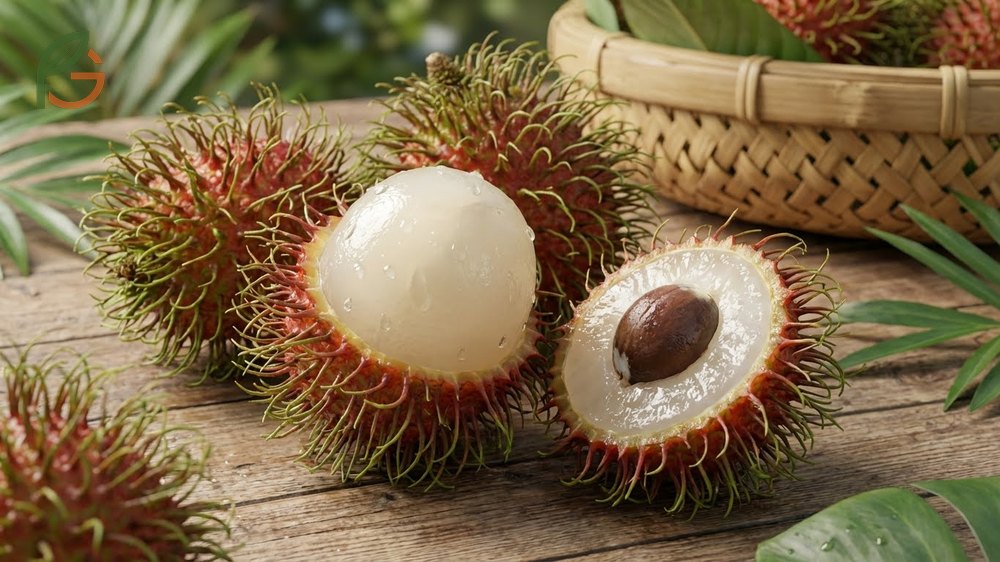
The texture is what surprises most first-time tasters—it’s gelatinous and juicy with a slight resistance when you bite down. Evidence suggests rambutan flesh is firmer than lychee but softer than longan, creating a unique mouthfeel in the tropical fruit spectrum[1]. It’s not crisp like an apple or mushy like an overripe banana—think somewhere between a peeled grape and jelly.
When fully ripe, the flesh should peel away from the seed cleanly without sticking or tearing. That smooth, slippery quality comes from the fruit’s high water content combined with natural pectin compounds. If you’ve ever eaten canned lychees, rambutan has a similar consistency but with more body and less artificial sweetness.
Agricultural data shows texture varies by variety and growing conditions. Thai varieties tend toward softer, creamier flesh with pinkish coloring, while Malaysian selections maintain a firmer bite with more pronounced acidity[2]. Vietnamese types typically deliver that balanced profile most Western consumers find appealing.
- Firmness: Should yield slightly to gentle pressure without feeling mushy or hard
- Juiciness: Releases sweet liquid when bitten but isn’t drippy or watery
- Seed separation: Flesh cleanly detaches from the central seed when ripe
- Mouthfeel: Smooth and slippery without being slimy or grainy
- Consistency: Uniform throughout without tough or fibrous sections
From My Experience: My cousin in Puerto Vallarta, Mexico tried growing rambutans in her tropical microclimate in 2023. The fruits she harvested had that perfect gelatinous texture after 72 days from flowering—matching the 68-78 day range from cultivation studies.
Fruits Similar to Rambutan
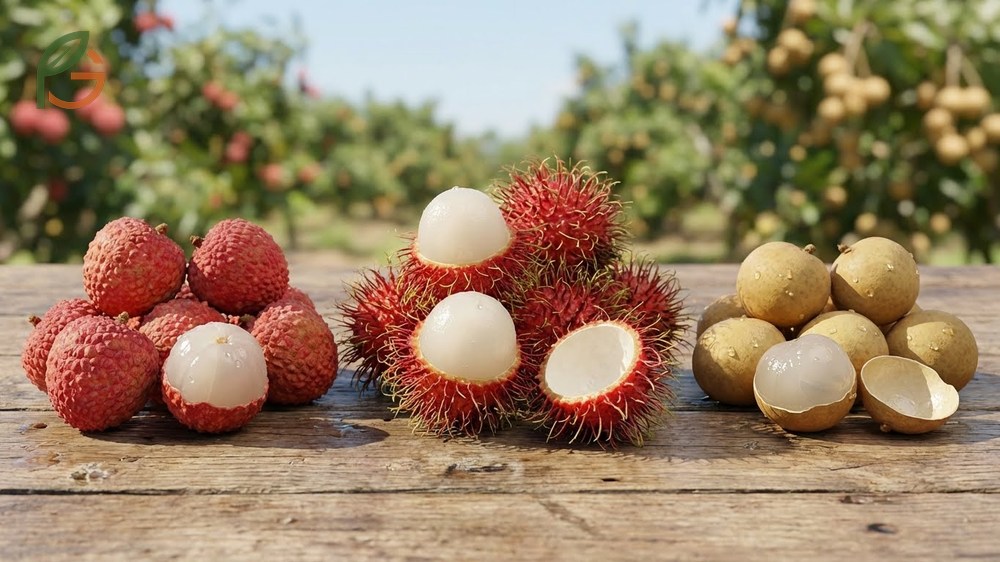
If you’re trying to imagine what rambutan tastes like, comparing it to related fruits helps. Lychee is the closest match—both share that sweet-floral profile and translucent white flesh[2]. The main difference? Lychee tends toward more pronounced rosewater notes and a softer, more delicate texture.
Longan offers another comparison point with its honey-like sweetness and muskier aroma. Current guidance shows longan is less sweet (14-16° Brix) and has a firmer, drier texture than rambutan’s 16-18° Brix range[1]. All three fruits belong to the same botanical family, explaining their structural similarities.
Less commonly known relatives include pulasan and quenepa, which share the Sapindaceae family connection. Pulasan looks almost identical to rambutan but typically delivers a sweeter, less acidic profile. These fruits occupy overlapping but distinct niches in tropical fruit markets worldwide.
This table compares sweetness levels, texture characteristics, and flavor profiles of rambutan against three similar tropical fruits from the same botanical family
| Fruit | Sweetness Level (° Brix) | Texture | Dominant Flavor Notes |
|---|---|---|---|
| Rambutan | 16-18°[1] | Gelatinous, juicy with moderate firmness | Lychee-grape blend with citrus undertones |
| Lychee | 18-20°[1] | Softer, more delicate flesh | Rosewater dominant with less citrus |
| Longan | 14-16°[1] | Firmer, drier consistency | Honey-like with musky notes |
| Pulasan | 16-19° | Similar to rambutan, slightly creamier | Sweeter than rambutan, less acidic |
- Lychee vs. Rambutan: Lychee has a bumpy red shell instead of hairy spines and tastes slightly sweeter
- Longan vs. Rambutan: Longan features smooth brown skin and delivers more musky, honey-forward flavor
- Pulasan vs. Rambutan: Pulasan has darker, more pliant spines and sweeter, less tart flesh
- Quenepa vs. Rambutan: Quenepa (Spanish lime) has a tougher shell and more tart, less sweet profile
- Mangosteen comparison: While not related botanically, mangosteen shares tropical sweetness but with purple shell and segmented interior
Buying Tip: If your local market doesn’t carry rambutan, lychee makes the closest substitute in recipes calling for tropical fruit sweetness and gelatinous texture. Adjust sugar levels down slightly since lychee is sweeter.
Where Does Rambutan Grow
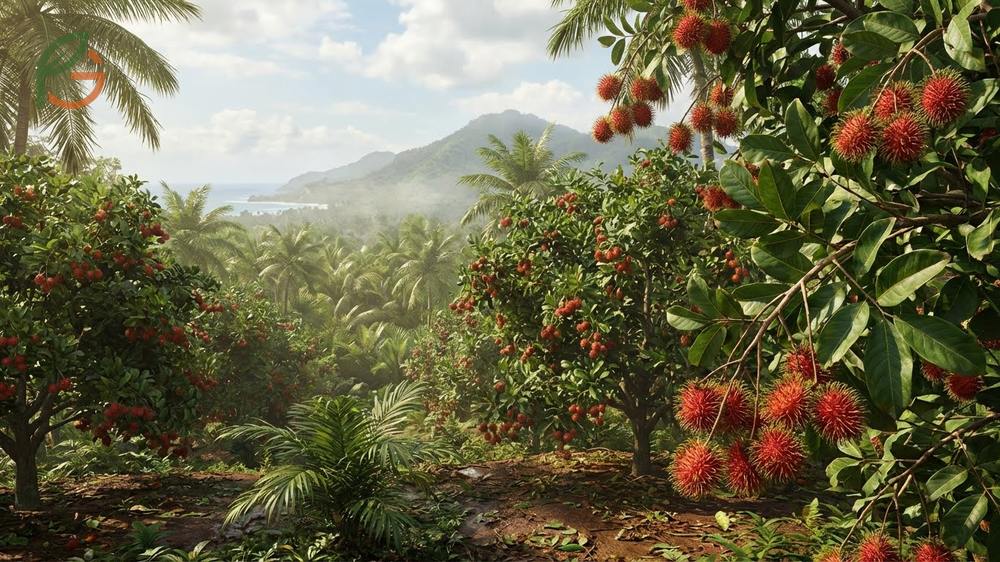
Rambutans thrive in humid tropical regions where temperatures stay consistently warm year-round. Research shows the trees require temperatures between 71-86°F (21-30°C) with relative humidity around 75-80% for optimal fruit production[6]. They can’t tolerate cold—temperatures below 50°F (10°C) cause damage, and frost at 39°F (4°C) will severely harm or kill the tree.
Today you’ll find commercial rambutan cultivation across Southeast Asia, Central America, the Caribbean, parts of Africa, and tropical Australia. The trees need USDA hardiness zones 10 or higher, limiting outdoor growing to Florida’s southern regions and similar tropical climates in the United States[6]. Puerto Rico represents the most successful U.S. cultivation area outside Hawaii.
When my friend in Mérida, Mexico planted three rambutan seedlings in 2021, only one survived the occasional temperature dips to 55°F during winter months. That survivor took nearly five years to produce its first fruits—matching the typical 4-5 year timeline from cultivation research.
The trees perform best in well-draining loamy soil with pH between 5.5-6.5 and require at least 13 hours of sunlight or partial shade daily. Adequate spacing matters too—mature specimens can reach 50-80 feet in height with extensive root systems requiring 30-40 feet between trees in commercial orchards.
Rambutan Origin Country
The center of genetic diversity for rambutans is the Malaysian-Indonesian region, where the species originated and evolved over centuries[2]. Wild and semi-cultivated varieties still grow throughout Malaysia, Indonesia, and neighboring areas of Thailand and the Philippines. This Southeast Asian homeland provided the ideal conditions for the species to develop its distinctive characteristics.
From this origin point, rambutans spread throughout tropical Asia via traditional trade routes. Historical records show Arab traders introduced the fruit to Zanzibar and Pemba in East Africa between the 13th-15th centuries during the height of Indian Ocean maritime commerce[2]. The Dutch later brought specimens from Indonesia to Suriname in South America during the 19th century.
The Philippines received formal introductions in 1912 from Indonesia, followed by additional plantings from Malaya in 1920 and 1930[2]. An attempt to establish rambutans in the southeastern United States using Java seeds in 1906 failed due to unsuitable climate, though Puerto Rico’s tropical conditions supported successful cultivation.
Climate Requirements
Current horticultural data emphasizes that temperature consistency matters more than extreme heat for rambutan cultivation. The ideal range of 71-86°F (21-30°C) needs to be maintained year-round without significant drops[6]. Even brief exposure to 50°F (10°C) can stress the tree and reduce fruit set for the following season.
Rainfall patterns significantly affect fruit quality and yield. Rambutans need consistent moisture—about 2,000-3,000mm annually—distributed throughout the year rather than concentrated in a single monsoon season. Dry periods longer than 3-4 weeks during flowering or fruit development dramatically reduce harvest quality.
- Temperature range: 71-86°F (21-30°C) year-round without frost exposure
- Humidity requirements: 75-80% relative humidity for optimal fruit development
- Sunlight needs: Minimum 13 hours daily, full sun or partial shade acceptable
- Rainfall: 2,000-3,000mm annually, evenly distributed throughout growing season
- USDA zones: Zone 10 or higher for outdoor cultivation; greenhouse possible in Zone 9
- Soil drainage: Well-draining loamy soil prevents root rot in high-rainfall areas
- Wind protection: Shelter from strong winds prevents flower and young fruit drop
Conclusion
The evidence is clear: what does rambutan taste like comes down to that unique sweet-tart balance with floral undertones that sets it apart from similar tropical fruits. You’re getting a lychee-grape fusion with citrus brightness, wrapped in firm yet juicy gelatinous flesh that delivers 36% of your daily vitamin C in just 100 grams[3]. Whether you encounter it as “achotillo” in Latin American markets or by its Malay name referencing those distinctive hairy spines, you’re experiencing a fruit that’s thrived in Southeast Asian cultivation for centuries.
Current horticultural guidance emphasizes proper growing conditions—71-86°F (21-30°C) with high humidity—for home gardeners interested in cultivation. FruitGarden provides research-based insights to help you understand tropical fruit characteristics, whether you’re tasting your first rambutan or planning to grow your own in USDA zone 10 or higher.
Frequently Asked Questions
Is Rambutan Sour or Sweet?
Rambutan is primarily sweet with mild acidity—not sour like citrus fruits. The sweetness level ranges from 14-18° Brix, placing it in the moderate-to-high category[1]. That slight tartness balances the sugars, creating a refreshing taste rather than cloying sweetness. Unripe rambutans can taste more sour, so choose fruits with vibrant red or yellow skin and flexible spines for optimal sweetness.
What Does Rambutan Smell Like?
Rambutan has a sweet, tropical aroma with subtle hints of mango and vanilla. Research identifies volatile compounds like linalool and limonene that create floral notes reminiscent of rosewater and elderflower[1]. The scent is pleasant and inviting but less intense than durian or passion fruit, making it approachable for first-time tasters.
Can You Eat Rambutan Seeds?
You shouldn’t eat rambutan seeds raw as they contain toxic compounds that can cause digestive distress. The edible portion is only the translucent white flesh surrounding the seed. Always remove the brown seed before eating or discard it after consuming the flesh. Some traditional preparations roast the seeds, but current guidance recommends avoiding seed consumption altogether for safety.
How Do You Know When Rambutan Is Ripe?
Look for vibrant red or yellow skin color (depending on variety), flexible and supple spines that aren’t brittle or dry, and slight give when gently squeezed. The stem should show fresh green color rather than brown or dried appearance. Studies demonstrate rambutans harvested too early lack sweetness, while overripe specimens develop off-flavors[1]. Peak flavor lasts only 2-3 days after harvest, so freshness matters significantly.
Is Rambutan the Same as Lychee?
No, rambutan and lychee are different fruits, though they’re closely related in the Sapindaceae family[2]. Rambutan has hairy spines on its red shell, while lychee features a bumpy, scaly exterior. Flavor-wise, rambutan delivers more citrus undertones and a firmer texture, while lychee is sweeter (18-20° Brix) with pronounced rosewater notes and softer flesh. Both share that translucent white interior and similar nutritional profiles.
Where Can I Buy Fresh Rambutan in the United States?
Fresh rambutan appears in Asian grocery stores, specialty produce markets, and some larger supermarket chains with international sections, typically from June through September. Look for imported specimens from Thailand, Vietnam, or Central American sources. Florida and Puerto Rico grow limited domestic supplies. Online tropical fruit retailers ship fresh rambutans during peak season, though prices run higher than local market purchases due to the fruit’s short shelf life.
What Are the Health Benefits of Eating Rambutan?
Rambutan provides 36% of daily vitamin C needs per 100g serving, supporting immune function and iron absorption[3]. The fruit delivers essential minerals including potassium (324.9mg per 100g), copper, and manganese. At just 75 calories per medium fruit with fiber content similar to apples, it supports healthy digestion without excessive calorie intake. The high vitamin C content acts as an antioxidant, protecting cells from oxidative damage.





