
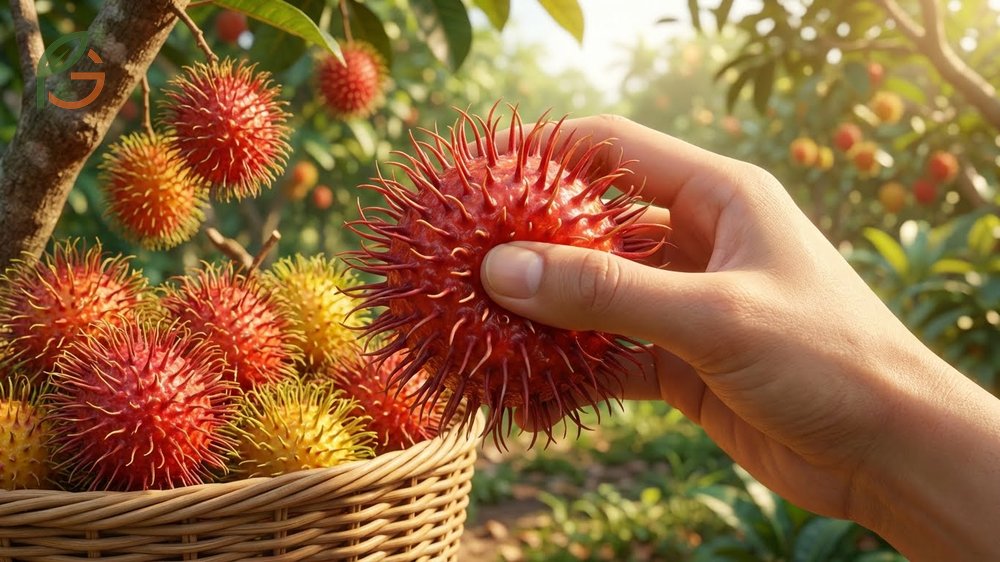
How to tell if rambutan is ripe? A ripe rambutan shows vibrant red or yellow skin, firm yet flexible spines, and gives slightly when gently squeezed[1]. Research shows these visual and tactile cues are your most reliable indicators for selecting sweet, juicy fruit at peak freshness. FruitGarden combines agricultural data from Southeast Asian growing regions to help you master rambutan selection every time.
Quick Answer
How To Tell If Rambutan Is Ripe
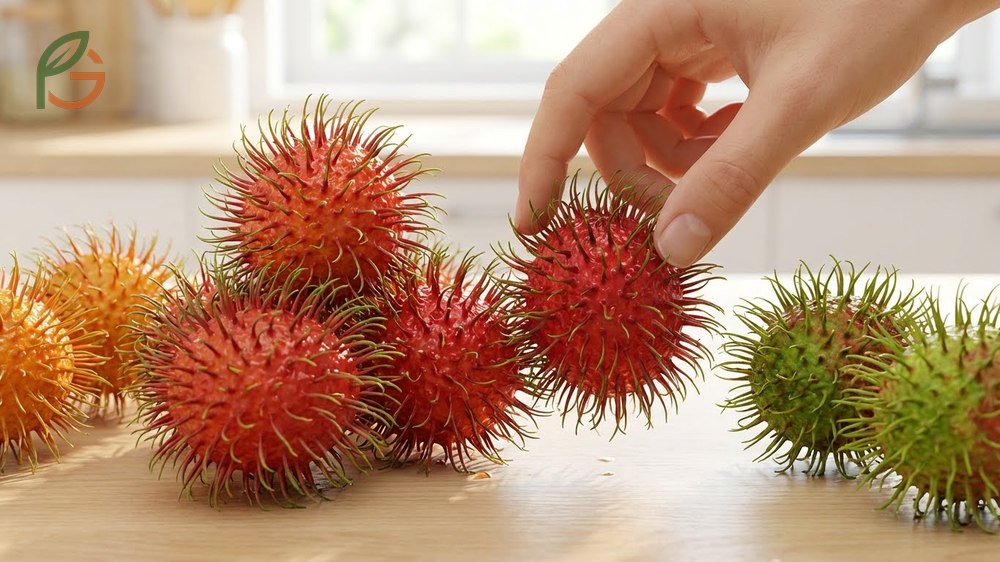
Color change is your most reliable indicator when selecting rambutan. A ripe fruit displays vibrant, uniform coloring across its entire surface—typically bright red, though some varieties ripen to yellow or orange[1]. Any green patches signal the fruit’s still unripe and will taste sour.
The spiky outer layer, called spinterns, provides your second key ripeness sign. These hair-like protrusions should feel plump and flexible when you run your fingers over them[2]. If they’re brittle and break off easily, the fruit’s past its prime.
Studies on tropical fruit maturity show rambutan doesn’t ripen further once picked[2]. That’s why choosing fruit at peak ripeness matters more than with bananas or avocados.
Color: Your First Indicator
The quality of color matters more than the specific shade. Whether you’re examining red, yellow, or orange varieties, you want deep, vibrant hues with consistent coverage. Dull, muddy colors or dark patches indicate overripe fruit that may have started fermenting[1].
Most people encounter red rambutan in U.S. markets, but don’t pass up yellow varieties if you spot them. Both types deliver similar sweetness when fully ripe—the difference is mainly aesthetic.
From My Experience: My cousin in Guadalajara, Mexico grew rambutan trees in her backyard starting in 2022. She noticed fruits that showed even slight green tinting never developed full sweetness, even after waiting several extra days—matching the research that confirms rambutan won’t ripen off the tree.
Spine Texture Reveals Freshness
Fresh rambutan spines feel soft and fleshy to the touch. When you brush your hand over them, they should bend slightly without resistance. Green or yellow tips on the spines are actually positive signs of recent harvest[1].
Avoid fruit with wilted, soft spines that lie flat against the skin. This signals moisture loss from extended storage.
Firmness Test
Hold the rambutan in your palm and apply light thumb pressure. You’re looking for a subtle give—similar to testing a ripe peach. The fruit shouldn’t feel rock-hard, which indicates it’s underripe[1].
If your thumb sinks deeply or the fruit feels mushy, it’s overripe. After checking a few rambutans, you’ll develop a feel for the ideal firmness level.
Aroma Check
Bring the fruit close to your nose. A ripe rambutan emits a faint, sweet, floral scent—it’s delicate, not overpowering. No smell at all suggests the fruit’s underripe, while a sour or fermented odor means it’s gone bad[1].
Trust your nose on this one. An off smell is your clearest warning to skip that particular fruit.
Storage Tip: Don’t refrigerate rambutan unless absolutely necessary. The fruit doesn’t tolerate cold well and can develop off-flavors. Keep at room temperature and eat within 3-5 days[3].
Ripe Rambutan Characteristics
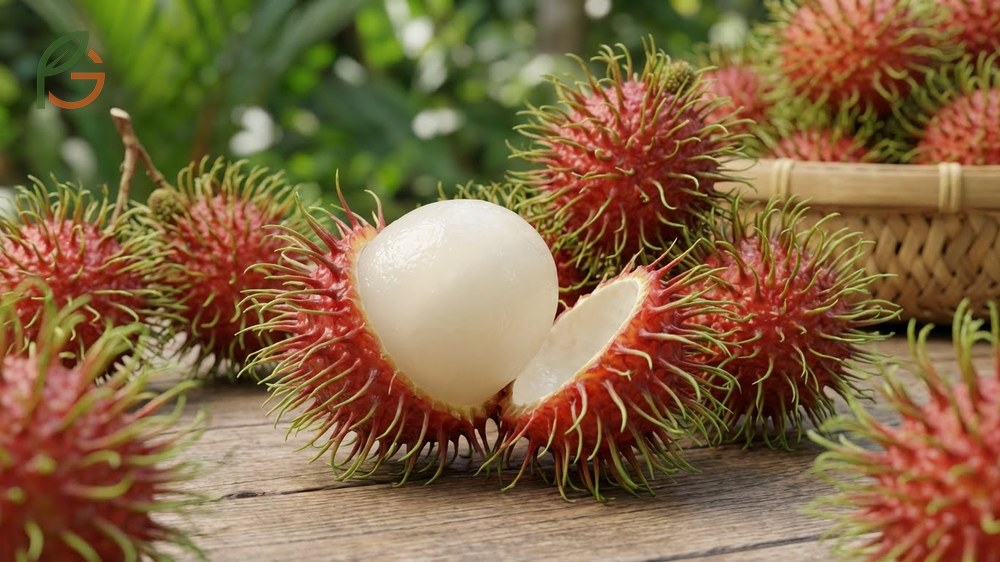
A perfectly ripe rambutan displays specific physical traits that set it apart from unripe or overripe fruit. The skin should be relatively smooth beneath the spines, without major blemishes, soft spots, or brown discoloration[2]. These imperfections often indicate bruising or early spoilage.
The translucent white flesh inside should separate cleanly from the leathery skin when you twist the fruit open. If it’s difficult to peel or the flesh sticks to the skin, the rambutan likely wasn’t fully ripe at harvest.
Variety Differences
Red varieties like Queen Zaida, Princess Caroline, and Roxas dominate commercial production. These medium-sized fruits ripen in September or October with white, sweet, dry flesh[4]. When selecting red types, look for deep crimson coloring.
Yellow varieties including Quezon, Zamora, and Quirino are somewhat smaller and ripen slightly later in October. Their flesh tends to be juicier than red types[4]. The ripeness indicators remain the same—just substitute bright yellow or orange for red when assessing color.
Nutritional Profile
Research shows rambutan provides 82 calories and 20 grams of carbohydrates per 100-gram serving[5]. The fruit delivers 5 milligrams of vitamin C—about 5% of your daily requirement[5]. Eating 5-6 fruits meets roughly 50% of your daily vitamin C needs[6].
The fiber content ranges from 1.3 to 2 grams per 100 grams—comparable to apples or oranges[6]. This makes rambutan a decent choice if you’re looking to increase your fiber intake through fresh fruit.
Checking Rambutan Ripeness
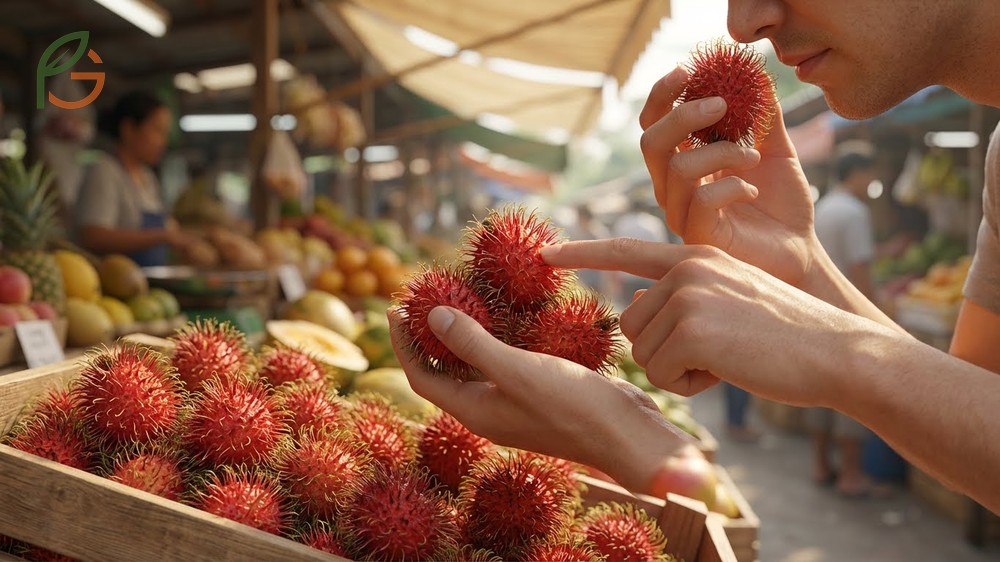
Create a simple four-point inspection routine when shopping for rambutan. Start with a visual scan for uniform color and absence of green patches. Next, run your fingers over the spines to assess texture. Then apply gentle pressure to test firmness, and finish with a quick smell check[1].
This systematic approach takes about 10 seconds per fruit once you’re familiar with the process. It’s worth the extra moment because there’s no fixing an underripe rambutan at home.
Agricultural research on tropical fruit handling shows proper selection at purchase determines 80% of your eating satisfaction. The remaining 20% comes from proper storage and timely consumption.
This table compares visual appearance, spine texture, firmness, and aroma characteristics across perfectly ripe, underripe, and overripe rambutan fruit
| Sign | Perfectly Ripe | Underripe | Overripe |
|---|---|---|---|
| Color | Vibrant red, yellow, or orange[1] | Green patches, pale tone | Dull, dark spots, black areas |
| Spines | Firm, flexible, soft touch[2] | Very firm, upright | Dry, brittle, breaking easily |
| Feel | Slight give under pressure[1] | Rock-hard | Mushy, soft spots |
| Smell | Faintly sweet, floral[1] | No smell | Sour, fermented odor |
- Choosing fruit based solely on size—larger doesn’t mean riper or sweeter
- Ignoring spine condition and focusing only on color
- Refrigerating immediately after purchase, which damages flavor and texture
- Buying more than you can eat in 3-5 days, leading to waste
- Assuming all green-tinged fruit will ripen at home like bananas do
- Skipping the smell test, which reveals spoilage issues not visible externally
Selecting Ripe Rambutan
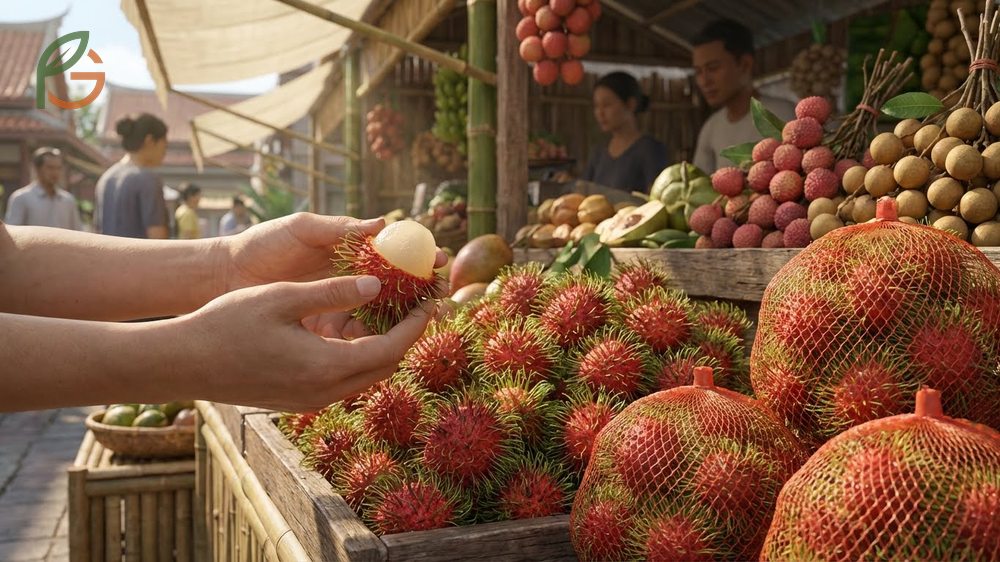
When shopping at Asian markets or specialty stores, you’ll often find rambutan sold in mesh bags or loose. Loose fruit gives you better selection control since you can inspect each piece individually. If buying pre-bagged fruit, check multiple rambutans through the mesh to ensure consistent ripeness across the batch[1].
Peak season for imported rambutan in the U.S. runs from late summer through early fall. You’ll find the best selection and prices during these months when Southeast Asian harvests arrive.
Don’t be afraid to ask produce managers when their rambutan shipments arrive. Buying within 1-2 days of delivery gives you maximum freshness and the full 3-5 day storage window at home.
- Shop at stores with high produce turnover to ensure fresh inventory
- Select fruit with stems still attached when possible—this extends shelf life
- Choose rambutans that feel heavy for their size, indicating good juice content
- Buy from refrigerated displays only if you’re eating the same day
- Inspect the bottom of containers for crushed or leaking fruit
- Compare prices between Asian markets and mainstream grocers—quality often beats convenience
Opening Technique: Score a shallow line around the fruit’s equator with your thumbnail, then twist the halves in opposite directions. The rambutan pops open cleanly when ripe, revealing the translucent flesh. If it’s difficult to open, the fruit probably wasn’t fully mature at harvest[1].
Commercial storage research shows rambutan maintains quality for 15-25 days at 50-54°F (10-12°C) under controlled conditions[7]. However, home refrigerators typically run colder, which can damage the fruit. Room temperature storage works better for the short periods you’ll keep fresh rambutan.
If you can’t eat your rambutan within the 3-5 day window, consider freezing the peeled flesh. While texture changes upon thawing, frozen rambutan works well in smoothies or desserts.
Conclusion
The evidence is clear: how to tell if rambutan is ripe comes down to four simple checks—vibrant color without green patches, firm flexible spines, slight give when squeezed, and a faint sweet aroma. These indicators work across all varieties and ensure you’re selecting fruit at peak sweetness and juiciness.
Current agricultural guidance emphasizes buying only what you’ll consume within 3-5 days and storing at room temperature rather than refrigerating. FruitGarden combines tropical fruit research with practical growing knowledge to help you make confident selections every time you shop.
Frequently Asked Questions
Can Rambutan Ripen After Picking?
No, rambutan doesn’t ripen further once harvested from the tree[2]. This makes selecting ripe fruit at purchase critical. Unlike bananas or avocados that continue ripening at home, what you see is what you get with rambutan.
What Does Underripe Rambutan Taste Like?
Underripe rambutan tastes sour and astringent with an unpleasant mouth-puckering quality. The flesh feels firmer and less juicy than properly ripened fruit. Green patches on the skin are your clearest visual warning of underdevelopment[1].
How Long Does Fresh Rambutan Last?
Fresh rambutan lasts 3-5 days at room temperature before spoiling[3]. The fruit bruises easily and doesn’t tolerate refrigeration well, so buy only what you’ll eat within this window. Watch for darkening skin or fermented smells as signs of spoilage.
Should Ripe Rambutan Spines Be Green or Brown?
Ripe rambutan spines can have green or yellow tips, which actually indicates freshness and recent harvest[1]. Avoid brown, dry, or brittle spines that break off easily—these signal old fruit that’s lost moisture. The spines should feel soft and flexible regardless of tip color.
What’s the Difference Between Red and Yellow Rambutan?
Red varieties like Queen Zaida ripen in September with drier, sweet flesh, while yellow varieties like Quezon ripen in October with juicier flesh[4]. Both types deliver similar sweetness when fully ripe. The ripeness indicators remain identical—just look for vibrant yellow or orange instead of red coloring.
Can You Eat Rambutan Skin or Seeds?
No, don’t eat the leathery skin or the seed. Only the translucent white flesh is edible. The skin is too tough and fibrous, while the seed contains compounds that aren’t safe for consumption. Peel away the skin completely and eat around or remove the seed before enjoying the flesh.
Why Does My Rambutan Smell Fermented?
A fermented or alcoholic smell indicates overripe fruit that’s begun spoiling[1]. This happens when rambutan sits too long at warm temperatures, causing natural sugars to ferment. Discard any fruit with sour or off odors rather than consuming it.





