
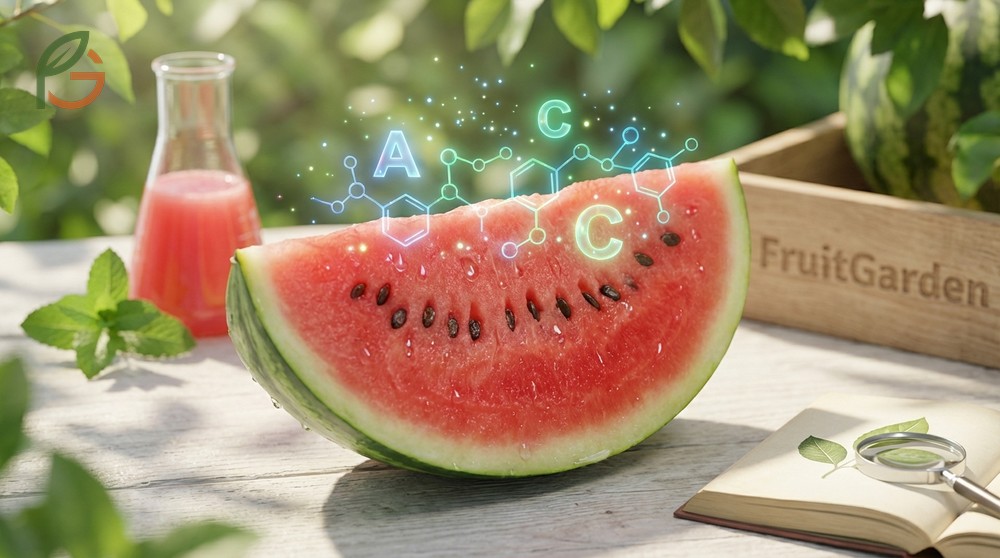
Watermelon benefits for skin go beyond refreshment—research shows this fruit delivers serious hydration and protection. Studies demonstrate that topical watermelon juice increases skin moisture levels significantly[1], while its 92% water content[2] combined with vitamins A and C supports collagen production and cellular repair[3]. FruitGarden synthesizes current agricultural and dermatological research to help you understand how this summer fruit can become part of your skincare strategy.
Quick Answer
- Watermelon contains 92% water[2], delivering deep hydration that improves skin moisture levels
- Provides 25% daily value of vitamin C[3] per serving, supporting collagen synthesis for firm, elastic skin
- Contains lycopene that protects against UV damage and reduces inflammatory responses[4]
- Topical application increases skin moisture significantly compared to control treatments[1]
Watermelon Benefits for Skin
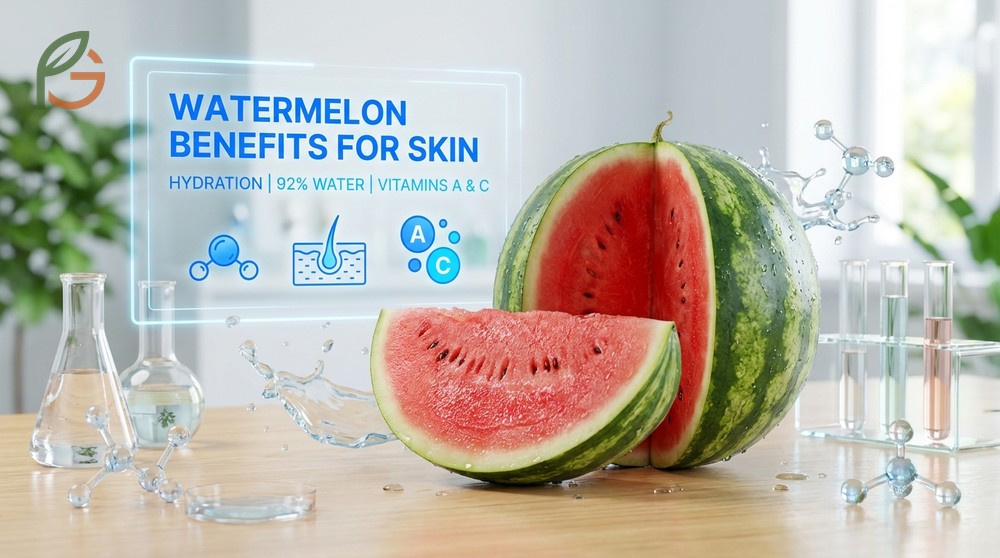
Research demonstrates that watermelon delivers multiple skin benefits through its unique combination of water, vitamins, and antioxidants. The fruit’s composition makes it particularly effective for hydration and cellular protection.
Current data indicates that watermelon contains 92% water by weight, making it one of the most hydrating fruits available. This high water content works with vitamins A and C to support skin health from multiple angles.
Studies show that both dietary consumption and topical application can improve skin parameters. One clinical trial found that topical watermelon juice application significantly increased skin moisture levels compared to control treatments[1].
The Hydration Power of 92% Water Content
Watermelon’s exceptional water content sets it apart from other fruits in the produce aisle. At 92% water[2], it ranks among strawberries as the most water-rich fruit available.
This hydration translates directly to skin benefits when consumed regularly. Adequate hydration helps maintain skin elasticity, supports nutrient delivery to cells, and assists in toxin removal through natural processes.
Vitamin and Antioxidant Content
Watermelon provides 25% of the daily value for vitamin C[3] and 8% for vitamin A[3] per serving. These vitamins work together to support collagen synthesis and cellular repair mechanisms.
The fruit also contains lycopene, a powerful antioxidant that gives watermelon its red color. Research shows lycopene protects skin cells from oxidative stress and may reduce UV-induced damage[4].
- Vitamin C: Supports collagen production and acts as an antioxidant
- Vitamin A: Essential for skin cell creation and repair processes
- Lycopene: Protects against UV damage and reduces inflammation
- Citrulline: An amino acid that supports blood flow and nutrient delivery
- Beta-carotene: Converts to vitamin A and supports skin barrier function
Hydration Benefits Skin
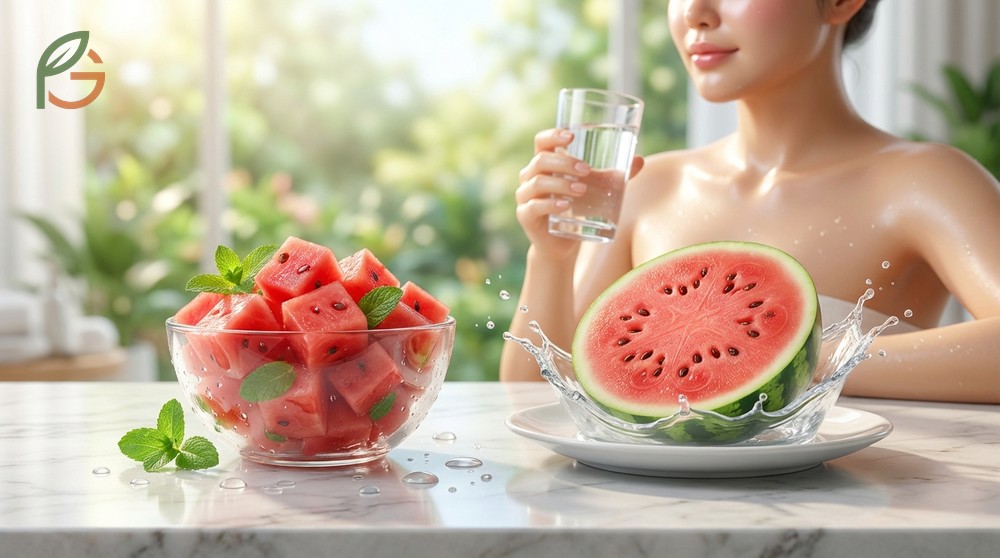
Evidence suggests that proper hydration forms the foundation of healthy skin appearance and function. Watermelon’s high water content offers a natural way to support this critical aspect of skin health.
When you’re well-hydrated, your skin maintains better elasticity, appears more plump, and functions more effectively as a protective barrier. The combination of water and electrolytes in watermelon helps support these processes.
How Water Content Improves Moisture Retention
Skin moisture depends on both water intake and the skin’s ability to retain that moisture. Watermelon contributes to both aspects through its hydration and nutrient profile.
The vitamins in watermelon support the skin’s natural barrier function, which helps prevent moisture loss. This creates a positive cycle where hydration improves barrier function, and better barrier function maintains hydration levels.
Important Note: While watermelon supports hydration, it works best as part of a complete skincare approach that includes proper cleansing, moisturizing, and sun protection.
Topical Application Results
Research on topical watermelon application shows promising results for direct skin benefits. A clinical study found that applying watermelon juice to skin significantly increased moisture levels compared to control treatments[1].
The study measured skin parameters before and after application, demonstrating measurable improvements in hydration markers. This suggests that watermelon’s benefits extend beyond dietary consumption to topical use.
- Apply fresh watermelon juice directly to clean skin for 10-15 minutes
- Blend watermelon flesh and use as a refreshing face mask
- Look for skincare products that contain watermelon extract
- Consume watermelon regularly as part of a skin-healthy diet
- Combine with other hydrating ingredients like cucumber or aloe
Vitamin C Skin
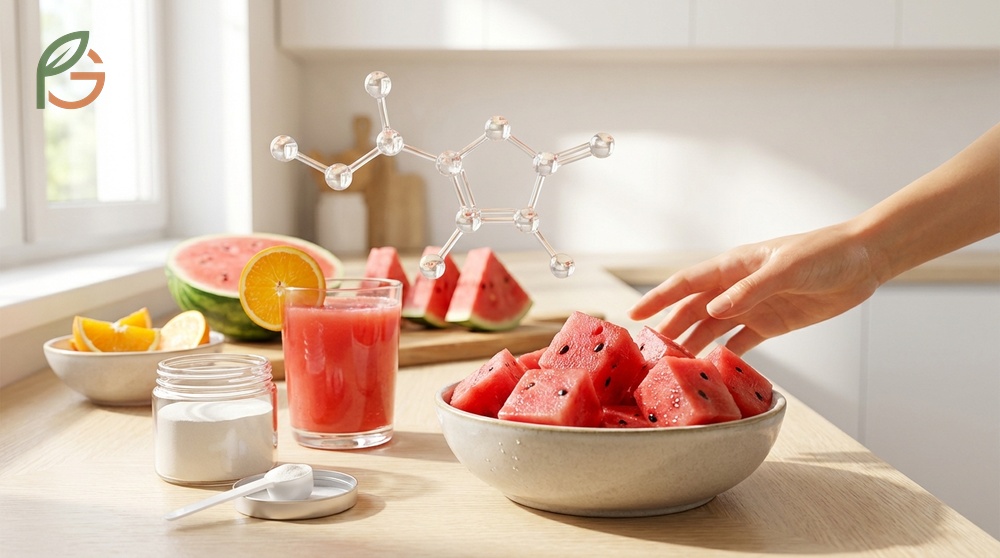
Vitamin C plays a central role in skin health through its effects on collagen production and antioxidant protection. Watermelon provides a significant portion of your daily vitamin C needs in each serving.
One cup of watermelon delivers approximately 25% of the recommended daily value for vitamin C[3]. This water-soluble vitamin can’t be stored in the body, so regular intake through foods like watermelon helps maintain consistent levels.
Collagen Production and Elasticity
Collagen is the primary structural protein in skin, providing firmness and elasticity. Vitamin C serves as a cofactor in collagen synthesis, meaning the body needs it to produce collagen effectively[5].
Without adequate vitamin C, collagen production slows down, potentially leading to decreased skin firmness over time. Regular consumption of vitamin C-rich fruits like watermelon supports the body’s ongoing collagen synthesis needs.
Antioxidant Protection
Beyond collagen support, vitamin C functions as a potent antioxidant that neutralizes free radicals. These unstable molecules form through normal metabolism and environmental exposures like UV radiation.
Research indicates that antioxidants help protect skin cells from oxidative damage that can accelerate aging signs. The vitamin C in watermelon contributes to your body’s overall antioxidant defense system.
This table compares vitamin C and vitamin A content in watermelon with their respective daily value percentages and primary skin benefits
| Nutrient | Amount per Serving | Daily Value % | Primary Skin Benefit |
|---|---|---|---|
| Vitamin C | 12.5 mg | 25%[3] | Collagen synthesis and antioxidant protection |
| Vitamin A | 876 IU | 8%[3] | Cell creation and repair processes |
| Lycopene | 6.9 mg | N/A | UV protection and anti-inflammatory effects |
Lycopene Skin Benefits
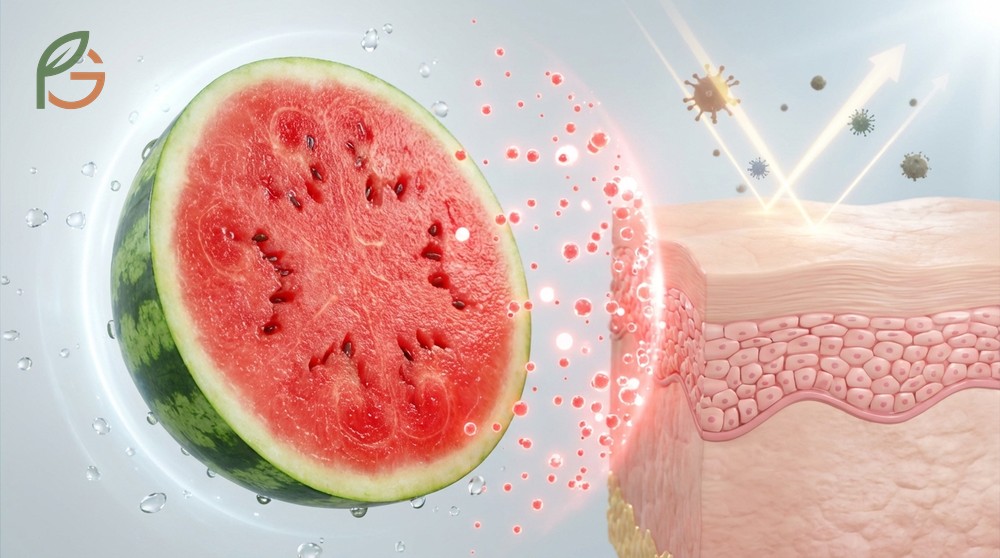
Lycopene is the carotenoid pigment that gives watermelon its characteristic red color. Research demonstrates this compound offers specific protective benefits for skin exposed to environmental stressors.
Studies on topical lycopene application show it can inhibit UV-induced damage markers and reduce inflammatory responses in skin tissue[4]. The research found dose-dependent protective effects, meaning higher concentrations provided greater protection.
Watermelon contains higher lycopene levels than most other fresh fruits. This makes it an accessible dietary source of this protective compound for people looking to support skin health through nutrition.
Clinical trials show that lycopene application before UV exposure can reduce skin thickness associated with inflammation and help maintain normal cell proliferation patterns[4]. While lycopene doesn’t replace sunscreen, it may complement sun protection strategies.
- Reduces oxidative stress from UV radiation exposure
- Decreases inflammatory marker expression in skin tissue
- Helps maintain normal cell proliferation after UV exposure
- May prevent DNA damage associated with sun exposure
- Supports skin’s natural defense mechanisms against environmental stress
Sun Protection Reminder: Lycopene from watermelon supports skin health but doesn’t replace proper sun protection. Always use broad-spectrum sunscreen with SPF 30 or higher when spending time outdoors.
Watermelon Skin Care

Incorporating watermelon into your skincare routine can happen through both dietary intake and topical application. Each approach offers distinct advantages for supporting skin health.
For dietary benefits, aim to consume watermelon regularly during its peak season when nutrient content is highest. Fresh watermelon provides the most nutrients, though frozen options retain most vitamins and antioxidants.
When using watermelon topically, freshness matters. Apply fresh juice or blended flesh to clean skin and leave it on for 10-15 minutes before rinsing with cool water.
- Fresh juice toner: Blend watermelon and strain, apply with cotton pad to clean face
- Hydrating mask: Mash watermelon flesh and apply directly for a cooling, moisturizing treatment
- Refrigerated cubes: Freeze watermelon juice in ice cube trays, rub gently on skin to tighten pores
- Mixed masks: Combine watermelon with yogurt or honey for added benefits
- Daily consumption: Eat 1-2 cups of fresh watermelon to support skin from within
- Watermelon water: Blend watermelon with mint and lime for a hydrating beverage
Commercial skincare products increasingly feature watermelon extract. Look for products that list watermelon or Citrullus lanatus extract in the first five ingredients for meaningful concentrations.
The amino acid citrulline, found naturally in watermelon, supports blood circulation. Better circulation means improved nutrient delivery to skin cells, which can contribute to a healthier appearance over time.
Conclusion
The evidence is clear: watermelon benefits for skin stem from its unique combination of high water content, vitamins C and A, and the antioxidant lycopene. Research confirms that both consuming watermelon and applying it topically can improve skin hydration and provide protective effects against environmental stressors[1].
Current guidance emphasizes that watermelon works best as part of a comprehensive approach to skin health that includes proper hydration, balanced nutrition, and appropriate skincare practices. FruitGarden encourages readers to explore how this accessible summer fruit can fit into their wellness and skincare routines.
Medical Disclaimer
Important Medical Disclaimer: This content is for informational and educational purposes only. It isn’t intended as a substitute for professional medical advice, diagnosis, or treatment. Always consult a qualified healthcare professional or dermatologist before making significant changes to your diet or skincare routine, especially if you have existing skin conditions, allergies, or medical concerns. Individual results may vary, and what works for one person may not work for another.
Frequently Asked Questions
How Does Watermelon Hydrate Skin?
Watermelon hydrates skin through its 92% water content combined with electrolytes and vitamins that support moisture retention[2]. Research shows that topical application significantly increases skin moisture levels, while dietary consumption supports hydration from within[1]. The vitamins in watermelon also strengthen the skin barrier, helping it retain moisture more effectively.
Can I Apply Watermelon Directly to My Face?
Yes, you can apply fresh watermelon juice or mashed flesh directly to clean facial skin. Clinical studies confirm that topical watermelon application increases skin moisture significantly[1]. Leave it on for 10-15 minutes, then rinse with cool water. Always patch test on a small area first to check for sensitivity, and avoid the eye area.
What Vitamins in Watermelon Help Skin?
Watermelon provides 25% of the daily value for vitamin C and 8% for vitamin A per serving[3]. Vitamin C supports collagen production and acts as an antioxidant, while vitamin A is essential for skin cell creation and repair[5]. These vitamins work together to maintain skin firmness, elasticity, and overall health.
Does Lycopene in Watermelon Protect Skin From Sun?
Research shows that lycopene provides protective effects against UV-induced skin damage, reducing inflammatory responses and helping maintain normal cell proliferation[4]. However, lycopene doesn’t replace sunscreen and shouldn’t be used as your sole sun protection. It works best as a complementary strategy alongside broad-spectrum SPF 30 or higher sunscreen.
How Often Should I Eat Watermelon for Skin Benefits?
Eating 1-2 cups of fresh watermelon 3-5 times weekly during peak season provides consistent intake of skin-supporting nutrients. Since vitamin C can’t be stored in the body, regular consumption helps maintain steady levels for collagen production and antioxidant protection. Combine watermelon with other vitamin C and A-rich fruits and vegetables for optimal skin health support.
Can Watermelon Reduce Wrinkles and Fine Lines?
Watermelon’s vitamin C supports collagen synthesis, which helps maintain skin firmness and elasticity[5]. While it can’t eliminate existing wrinkles, regular consumption may help slow the formation of new lines by supporting your skin’s structural protein network. The antioxidants in watermelon also protect against oxidative stress that contributes to premature aging.
Is Watermelon Good for All Skin Types?
Watermelon’s gentle, hydrating properties generally work well for most skin types, including sensitive skin. Its high water content makes it particularly beneficial for dry skin, while its natural acids can help balance oily skin. However, people with fruit allergies or very sensitive skin should patch test before applying watermelon topically. If you experience redness or irritation, discontinue use and consult a dermatologist.





