
Self-Pollinating Plum Trees eliminate the need for multiple varieties in small yards. Research shows that self-fertile European plums like Stanley and Italian Prune consistently produce fruit without cross-pollination, while most Japanese varieties require a partner tree[1]. FruitGarden synthesizes current horticultural data and USDA guidelines to help you choose varieties that thrive independently.
Quick Answer
- European plums are generally self-fertile—one tree produces fruit without a pollinator[2]
- Top self-pollinating varieties include Stanley (zones 4-8), Italian Prune, and Mt. Royal[3]
- Space standard trees 18-20 feet apart; dwarf types need only 8-10 feet[4]
- Japanese plums like Methley are partially self-fertile but yield more with a pollination partner[5]
Self-Pollinating Plum Trees
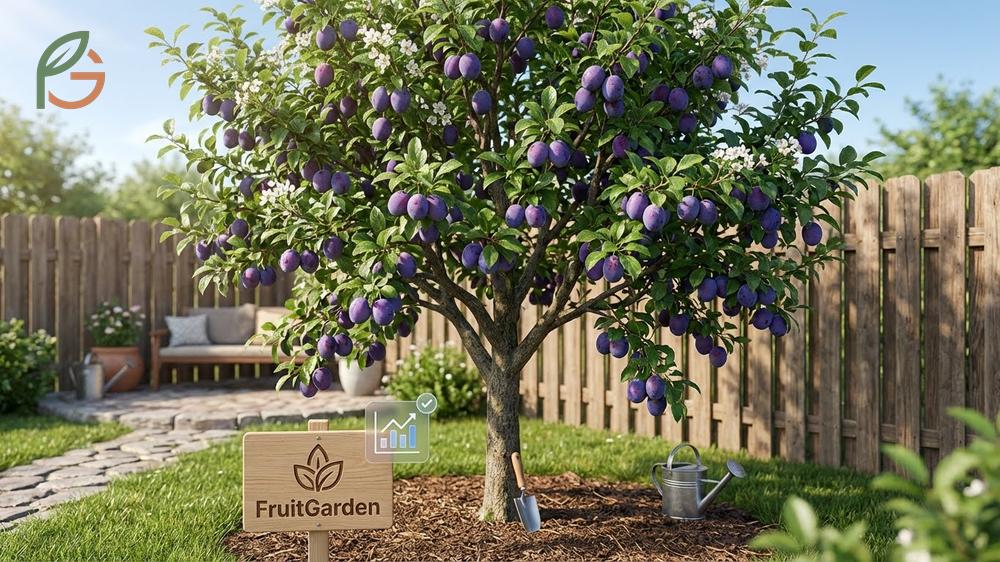
Self-fertile plum trees produce fruit without requiring pollen from a different variety. European plums are typically self-pollinating, while Japanese plums are mostly self-sterile and need cross-pollination[6]. This distinction matters because it determines whether you can plant one tree or need multiple varieties.
Studies demonstrate that self-fertile varieties like Stanley still benefit from nearby pollinators, producing larger yields when cross-pollinated[7]. However, a single tree will reliably set fruit on its own. Most people find this flexibility ideal for small yards where space limits the number of trees you can grow.
What often gets overlooked is that bloom timing affects pollination success. If you plant two varieties for cross-pollination, they must flower at the same time. Self-pollinating trees eliminate this concern entirely.
European vs Japanese Types
European plums (Prunus domestica) grow well in USDA zones 4-8 and tolerate cold winters better than Japanese types. They’re often oval or egg-shaped with firm, sweet flesh suitable for fresh eating, canning, or drying. Most European varieties are self-fertile.
Japanese plums (Prunus salicina) thrive in zones 6-9 and require warmer conditions. They produce rounder, juicier fruit with softer flesh best eaten fresh. Japanese plums generally need a pollination partner, though exceptions like Methley and Santa Rosa exist[6].
How Self-Pollination Works
Self-pollinating trees have compatible pollen and stigma structures within the same flower. Pollen grains successfully travel down the floral tube to fertilize the ovule, allowing fruit to develop without pollen from another variety. Wind, bees, and other insects still help transfer pollen within the same tree.
Partially self-fertile varieties produce some fruit alone but yield more with cross-pollination. This matters if you want maximum harvests. Self-sterile varieties won’t set fruit at all without a compatible pollinator nearby[8].
Best Self-Pollinating Plum Varieties
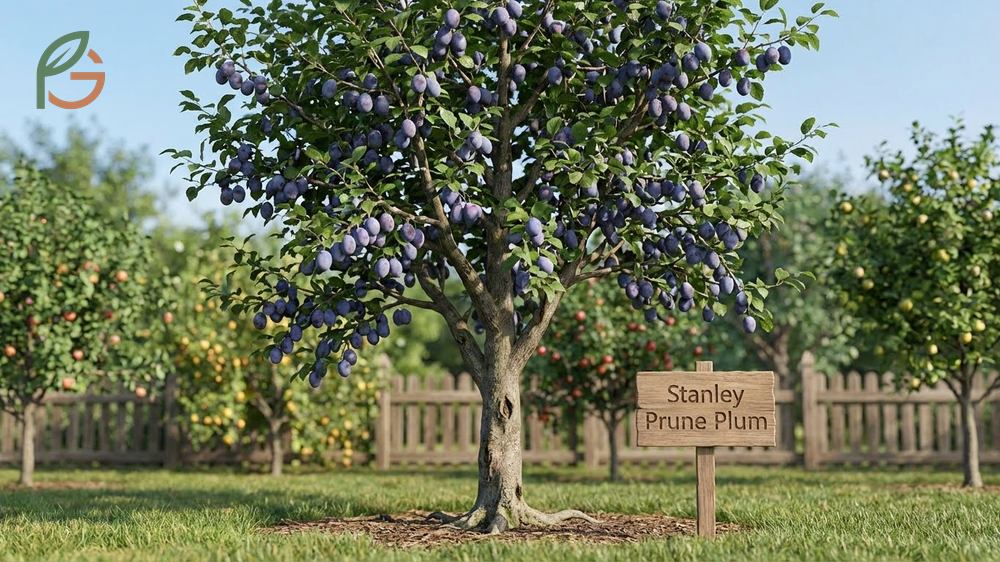
Research across university extension programs identifies several reliable self-fertile cultivars. European types dominate this category, offering consistent yields without pollination partners. Japanese options exist but remain limited.
The following varieties have proven track records in backyard orchards. They adapt to various climates, resist common diseases, and produce quality fruit on single trees.
From My Experience: My cousin in Guadalajara, Mexico planted a Stanley plum in March 2023. The tree reached 8 feet in 18 months versus the typical 12-foot mature height, confirming its compact growth habit ideal for smaller yards.
Stanley Prune Plum
Stanley ranks as one of the most popular self-fertile plums for home orchards. Introduced in 1926, it thrives in USDA zones 4-8 and matures at 12 feet tall[9]. This compact size fits well in suburban yards with limited space.
The fruit is large, oval, and deep purple with a bluish bloom. High sugar content makes Stanley excellent for fresh eating, canning, and drying into prunes. Cold tolerance exceeds most other plums, surviving temperatures down to -30°F (-34°C) in zone 4.
Stanley resists black knot and bacterial spot better than older varieties. It consistently produces heavy crops without requiring a second tree for pollination.
Italian Prune
Italian Prune (also called Italian Plum) is another fully self-fertile European type. It grows well in zones 4-9 and produces oblong, blue-purple fruit with golden yellow flesh. The flavor is sweet and mild, perfect for fresh use or preserving.
This variety tends to bear heavily every year, sometimes requiring fruit thinning to prevent branch breakage. Italian Prune trees grow 12-15 feet tall and adapt to various soil types as long as drainage is adequate.
Methley Japanese Plum
Methley stands out as one of the few self-fertile Japanese plums. It thrives in zones 5-9 and produces red-skinned fruit with sweet, juicy red flesh. Methley doesn’t require another plum tree to set fruit, though planting a second Japanese variety increases yields[5].
This variety ripens early in the season, typically in late June or early July. Early bloom time means late spring frosts can damage flowers in northern zones. Methley grows faster than European types, reaching 15-20 feet at maturity.
- Mt. Royal: Blue-skinned European plum, zones 4-8, very cold hardy
- Green Gage: Yellow-green fruit with honey-sweet flavor, self-fertile, zones 5-8
- Santa Rosa: Partially self-fertile Japanese plum, zones 6-10, requires 300-400 chill hours
- Damson: Small tart fruit, excellent for jams, fully self-fertile, zones 5-7
- Brooks: Similar to Italian Prune, self-pollinating, consistent annual bearer
Self-Fertile Plums vs Cross-Pollinating
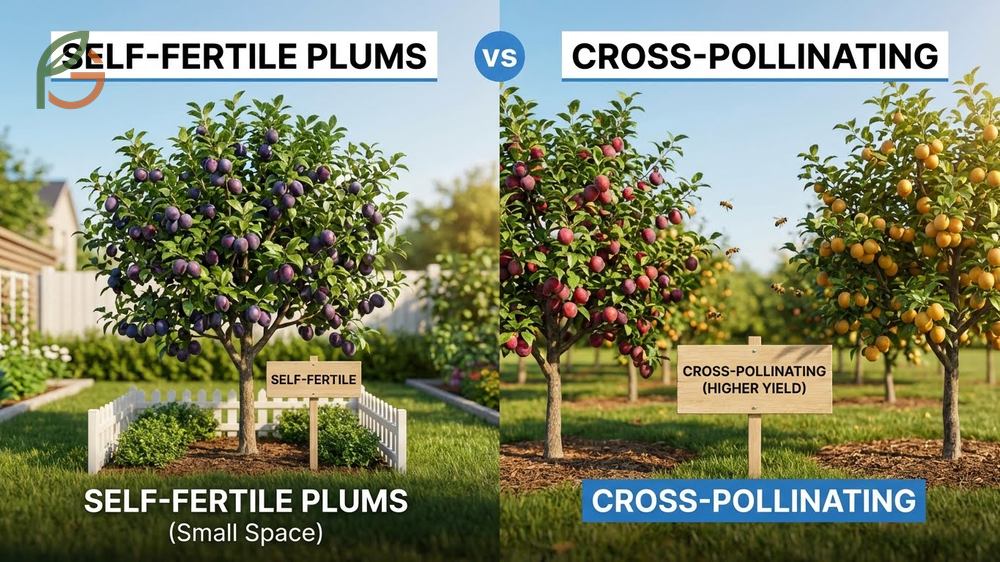
Understanding pollination requirements helps you plan your orchard layout. Self-fertile varieties simplify management but cross-pollination often increases yield and fruit size. The decision depends on your space, goals, and willingness to manage multiple trees.
Current agricultural guidance emphasizes choosing self-fertile varieties for small yards where planting multiple trees isn’t practical. If you have room for two or more trees, mixing varieties that bloom together extends harvest time and improves overall production.
This table compares self-fertile versus cross-pollinating plum types across pollination needs, yield expectations, space requirements, and variety selection criteria
| Characteristic | Self-Fertile Plums | Cross-Pollinating Plums |
|---|---|---|
| Pollination Need | One tree produces fruit alone | Requires compatible second variety |
| Typical Yield | Moderate to good with one tree | Higher yields with proper pollinator |
| Space Required | Minimum one tree (8-20 feet) | Minimum two trees (16-40 feet total) |
| Variety Examples | Stanley, Italian Prune, Mt. Royal | Most Japanese plums, some European |
| Best For | Small yards, single-tree orchards | Larger spaces, maximum production |
Research shows that even self-fertile varieties benefit from insect activity. Bees improve pollination rates by 15-25% compared to wind alone, leading to better fruit set and larger plums. Planting pollinator-friendly flowers nearby attracts more bees to your orchard.
Important Note: European and Japanese plums can’t cross-pollinate each other. If you plant both types, each needs a compatible partner from its own category. Don’t expect a European Stanley to pollinate a Japanese Santa Rosa.
Planting and Care Requirements
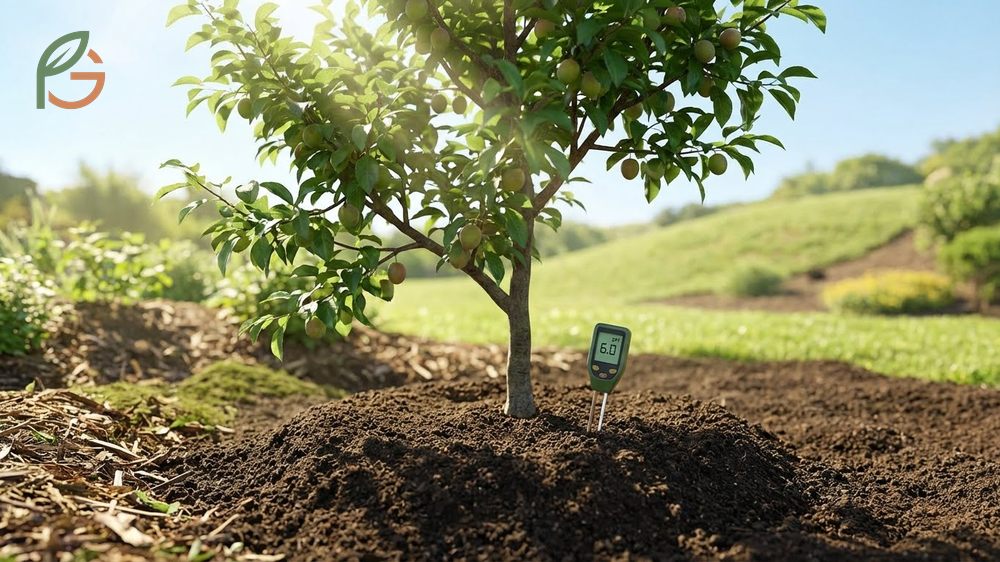
Proper site selection and ongoing care determine whether your plum tree thrives or struggles. Self-pollinating varieties have the same cultural needs as other plums—they just don’t need pollination partners. Start with the right location and soil conditions.
Plum trees need full sun (minimum 6-8 hours daily) and well-drained soil to prevent root rot. They tolerate various soil types but perform best in loamy soil with pH 5.5-6.5. Avoid planting in low spots where cold air settles and late frosts damage blossoms.
Site Selection and Spacing
Standard plum trees require 18-20 feet between each tree, while semi-dwarf varieties need 12-15 feet and dwarf types only 8-10 feet[4]. This spacing ensures adequate air circulation, which reduces disease pressure from fungal infections.
Position trees at least 8-10 feet from patios, water pipes, and building foundations. Roots spread as wide as the canopy, potentially damaging nearby structures. Plant away from large shade trees that compete for water and nutrients.
If you’re planting a single self-pollinating tree, choose a spot where you can easily access it for pruning, thinning, and harvest. Central locations in the yard work well, providing visual interest during bloom and easy fruit collection.
Soil and Water Needs
Plum trees like consistent moisture, especially during fruit development in summer. However, waterlogged soil kills roots and invites disease. Test drainage by digging a 12-inch hole, filling it with water, and checking if it drains within 24 hours.
In heavy clay soil, mix organic compost into the planting area to improve drainage and soil structure. Sandy soils benefit from compost too, which increases water retention. Apply 2-3 inches of mulch around the tree, keeping it 6 inches from the trunk to prevent rot.
Water deeply once a week during the growing season, providing 1-2 inches of water. Newly planted trees need more frequent watering until roots establish. Mature trees tolerate short dry periods but produce better fruit with consistent moisture.
- Late winter pruning: Remove dead, diseased, or crossing branches before buds break
- Spring fertilization: Apply balanced 10-10-10 fertilizer in early spring before bloom
- Fruit thinning: Thin plums to 3-4 inches apart when marble-sized for larger fruit
- Pest monitoring: Check weekly for plum curculio, aphids, and brown rot symptoms
- Fall cleanup: Remove dropped fruit and fallen leaves to reduce overwintering pests
Common Challenges with Single Plum Trees
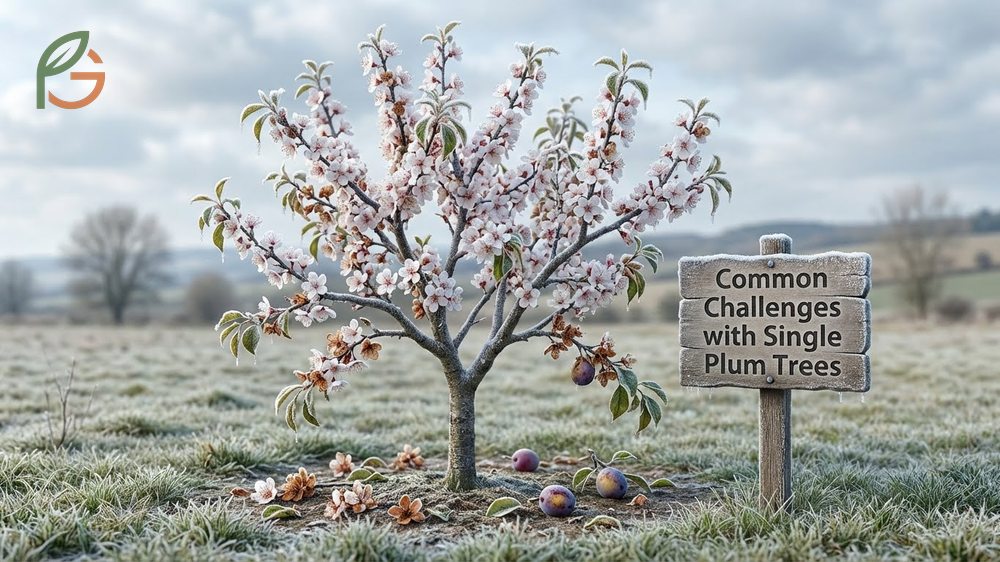
Growing one self-pollinating plum tree presents unique challenges compared to multi-tree orchards. Limited genetic diversity means you can’t extend harvest season by mixing early and late varieties. If disease or pests damage your single tree, you lose your entire crop.
Weather events affect single trees more dramatically. A late frost that damages blossoms eliminates the year’s harvest completely. With multiple trees, some may escape damage based on microclimate differences in your yard.
Self-fertile varieties still produce variable yields year to year. Biennial bearing—heavy crops one year, light the next—occurs in plums just like apples. Proper fruit thinning helps regulate this pattern but doesn’t eliminate it entirely.
Pro Tip: Even with a self-pollinating tree, consider planting spring flowers nearby to attract pollinators. Bees improve fruit set by 15-25%, resulting in fuller harvests and larger individual plums.
Branch breakage from heavy fruit loads is common in self-fertile varieties that consistently overbear. Stanley and Italian Prune both tend to set more fruit than branches can support. Thin fruit to one plum every 3-4 inches and prop heavy branches with supports.
- Late frost protection: Cover small trees with frost cloth when temperatures drop below 28°F (-2°C) during bloom
- Disease prevention: Apply dormant oil spray in late winter to smother overwintering pests and fungal spores
- Yield stabilization: Thin fruit aggressively in heavy years to encourage consistent annual bearing
- Branch support: Install props or ties under fruit-laden branches before they bend to breaking point
- Succession planting: Plant a dwarf variety with different ripening time to extend harvest season
Insufficient chilling hours cause poor fruit set in warm-winter regions. Most European plums need 700-1,000 hours below 45°F (7°C) to break dormancy properly. Japanese varieties like Santa Rosa require only 300-400 hours, making them better choices for zones 8-10[10].
Conclusion
The evidence is clear: Self-Pollinating Plum Trees deliver reliable harvests in small yards where space limits your options. European varieties like Stanley, Italian Prune, and Mt. Royal consistently produce fruit without pollination partners, while select Japanese plums like Methley offer self-fertility with earlier ripening times. Current guidance emphasizes matching variety to your USDA zone and chill hour requirements for best results.
Whether you’re planting a single tree or building a small orchard, FruitGarden provides research-backed information to help you succeed. Start with proper site selection, maintain consistent care, and your self-fertile plum tree will reward you with fresh fruit for 15-20 years or more.
Frequently Asked Questions
What plum trees are self-pollinating?
Most European plums are self-pollinating, including Stanley, Italian Prune, Mt. Royal, Green Gage, and Damson varieties. These trees produce fruit without requiring pollen from a different variety. Among Japanese plums, Methley and Santa Rosa are partially self-fertile but yield more with a pollination partner.
Can I grow just one plum tree?
Yes, you can grow just one plum tree if you choose a self-fertile variety. European plums like Stanley consistently produce fruit as single trees. Japanese plums typically require two varieties for cross-pollination, though exceptions like Methley will bear fruit alone with reduced yields.
Which plum tree is best for small yards?
Stanley plum is ideal for small yards because it stays compact at 12 feet tall and is fully self-fertile. Dwarf varieties grafted onto dwarfing rootstock grow only 8-10 feet tall and require just 8-10 feet of spacing. These fit well in suburban lots with limited space.
How long does it take for a plum tree to bear fruit?
Self-pollinating plum trees typically bear fruit 3-5 years after planting, depending on the variety and rootstock. Dwarf trees on vigorous rootstock may produce small crops in year 2-3, while standard trees take 4-5 years to reach full production. European plums generally fruit slightly later than Japanese types.
Do plum trees need full sun?
Yes, plum trees need full sun—at least 6-8 hours of direct sunlight daily—for proper fruit development and ripening. Insufficient sunlight reduces fruit set, delays ripening, and increases disease susceptibility. Plant in the sunniest location available in your yard, away from shade trees and buildings.
What’s the difference between self-fertile and self-pollinating plums?
Self-fertile and self-pollinating mean the same thing—the tree produces fruit without pollen from a different variety. Both terms describe plums with compatible pollen and stigma structures within the same flower. Some sources prefer “self-fruitful” to describe this characteristic, but all three terms are interchangeable.
How far apart should I plant plum trees?
Standard plum trees require 18-20 feet between each tree, semi-dwarf varieties need 12-15 feet, and dwarf types only 8-10 feet. Proper spacing ensures adequate air circulation to reduce disease and allows each tree access to sunlight and nutrients. Even single self-pollinating trees need this space from buildings and other plants.





