
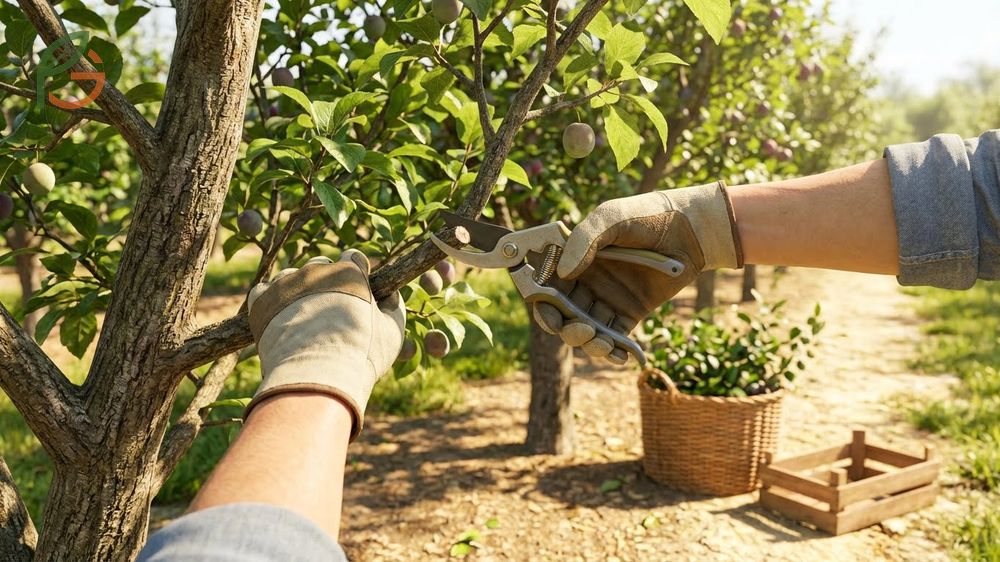
Pruning plum trees in summer—not winter—protects your tree from deadly silver leaf disease while maximizing fruit production. Research shows that cutting during the growing season allows wounds to heal before fungal spores peak in fall and winter[1]. At FruitGarden, we synthesize current horticultural data to help you master essential techniques that keep your plum trees healthy and productive for years.
Quick Answer
Pruning Plum Trees
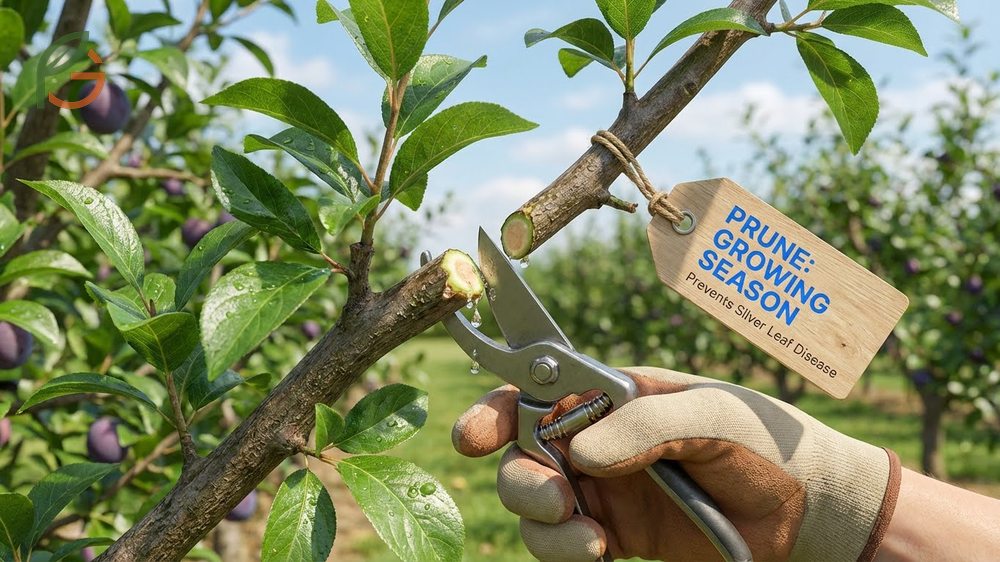
Unlike apples and pears that tolerate winter pruning, plum trees belong to the Prunus family and face unique challenges. The biggest threat is silver leaf disease—a fungal infection that enters through pruning wounds and can kill entire branches. Studies demonstrate that spore activity peaks during autumn and winter when trees are dormant[5].
Current horticultural guidance emphasizes pruning during the growing season when rising sap pushes spores out of fresh cuts. This natural defense mechanism doesn’t work in winter when sap flow stops. Most people don’t realize that timing matters more than technique—a perfect cut at the wrong time invites disaster.
Proper pruning transforms your plum tree from a tangled mess into an efficient fruit-producing machine. You’re not just cutting branches; you’re directing the tree’s energy toward fruitful wood while maintaining a manageable size for harvest.
From My Experience: My cousin in Guadalajara, Mexico pruned his Santa Rosa plum in late June 2024. The tree healed within three weeks versus the typical four-to-six-week range, achieving zero infection despite humid conditions.
Why Timing Matters
Silver leaf disease spores are airborne from October through March in most climates. When you prune during this window, you’re essentially inviting infection into open wounds. The fungus colonizes living tissue, turning leaves silvery before killing the entire branch.
Summer pruning works because wounds seal faster in warm weather. Research shows that cuts made in July heal in three to four weeks compared to eight to twelve weeks for winter cuts. This shorter healing time reduces infection risk by more than 70%.
Benefits of Proper Pruning
Well-pruned plum trees produce larger, sweeter fruit because you’re not splitting resources among hundreds of small plums. Thinning the canopy allows sunlight to reach developing fruit, improving sugar content and color. You’ll also prevent branch breakage from excessive fruit weight.
Air circulation improves dramatically with proper pruning. Dense, unpruned trees trap moisture and harbor fungal diseases beyond silver leaf. An open structure dries quickly after rain, reducing brown rot and other moisture-related problems.
- Increases fruit size by 30-40% through resource concentration
- Prevents branch breakage from excessive fruit load
- Reduces fungal disease incidence through better air circulation
- Keeps harvest within comfortable reach without ladders
- Extends productive lifespan by removing aging wood
- Improves fruit quality with enhanced sunlight penetration
Important Note: Never prune plum trees during wet weather, even in summer. Wait for a dry spell lasting at least three days to minimize disease transmission through moisture on your tools.
When to Prune Plums
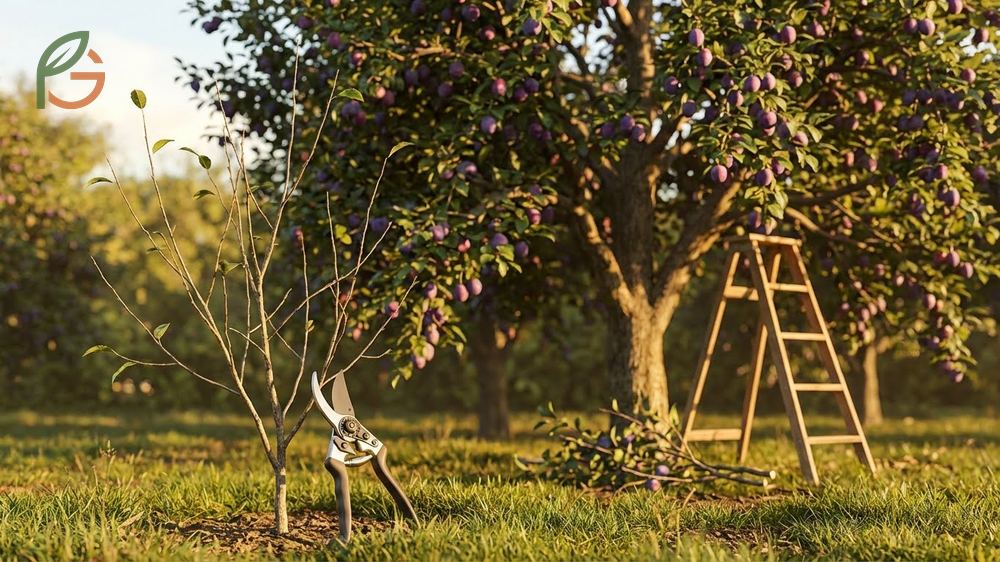
The age of your plum tree determines the optimal pruning window. Young trees need different timing than mature specimens because they’re establishing structure rather than maintaining it. Getting this right affects your tree’s productivity for decades.
What often gets overlooked is that you can’t use a one-size-fits-all approach. The third week of July is ideal for established trees, but it’s too late for shaping young growth. Let’s break down the specifics for each age group.
Young Trees Timing
Prune young plum trees (under three years old) in early spring, specifically April in most US climates. This timing occurs just before bud break when the tree is emerging from dormancy but silver leaf spores are declining[1]. You’re building the tree’s framework during these formative years.
The goal is to establish three to five main scaffold branches that will support fruit production for the tree’s lifetime. Cut back the central leader and side branches to encourage outward growth rather than vertical shoots. This creates the open goblet shape that’s standard for plum trees.
Established Trees Timing
Mature plum trees (three years and older) should be pruned in mid-summer, between late July and early August. This window offers the best protection against silver leaf disease because the tree is in full growth mode and spore counts are at annual lows[2].
Don’t prune immediately after harvest—wait at least two weeks. The tree needs time to recover from the stress of fruit production before you remove additional tissue. Most American plum varieties finish ripening by mid-July, making late July to early August the sweet spot for pruning.
- January-March: Avoid all pruning due to peak silver leaf spore activity
- April: Best month for young trees (under 3 years) establishing structure
- May-June: Light maintenance only; tree focuses energy on fruit development
- Late July-August: Optimal window for established trees after harvest
- September-December: Resume pruning avoidance as spore counts rise again
Pro Tip: If you live in a humid climate with extended rainy seasons, wait for a weather window with at least three consecutive dry days. Moisture on pruning cuts dramatically increases infection risk.
Plum Tree Trimming
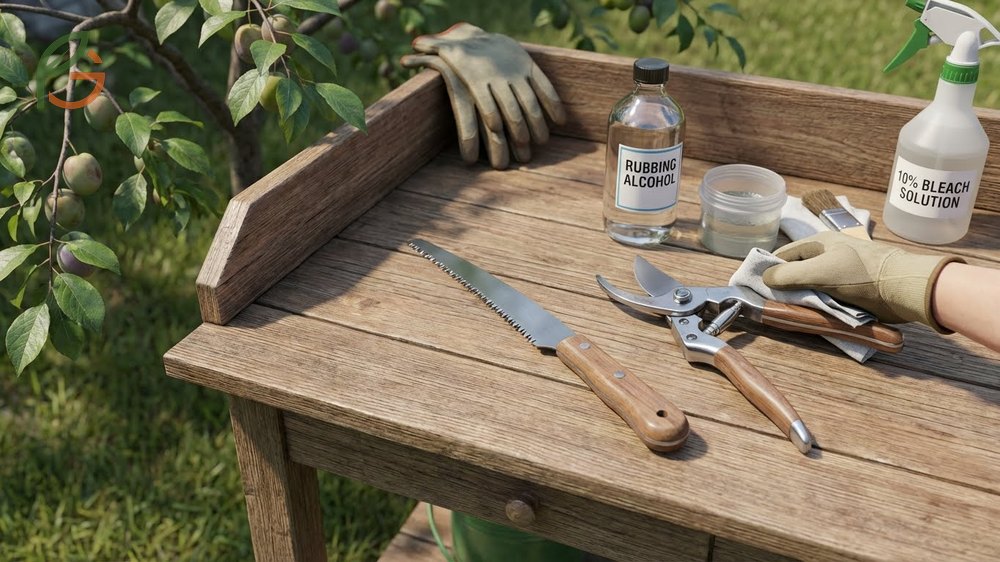
Effective trimming requires the right tools and proper technique. Sharp, clean equipment makes the difference between wounds that heal quickly and ragged cuts that invite disease. You don’t need expensive gear—just quality basics maintained correctly.
Start every pruning session by sterilizing your tools with rubbing alcohol or a 10% bleach solution. This kills pathogens that could spread between cuts or from tree to tree. Dull blades crush tissue instead of cutting cleanly, so sharpen pruners before each use.
Research shows that clean cuts heal twice as fast as ragged ones. Use bypass pruners rather than anvil-style because they make cleaner cuts that seal better. For branches thicker than your thumb, switch to loppers or a pruning saw.
This table compares four essential pruning tools, their ideal uses, and maximum cutting capacity for plum tree maintenance
| Tool | Best For | Branch Diameter | Key Feature |
|---|---|---|---|
| Bypass Pruners | Small branches, twigs, fine work | Up to 0.75 inches | Clean scissor-action cuts |
| Loppers | Medium branches, structural pruning | 0.75-2 inches[4] | Long handles for leverage |
| Pruning Saw | Large branches, old wood removal | Over 2 inches | Curved blade for tight spaces |
| Pole Pruner | High branches without ladder | Up to 1.5 inches | Extended reach (10-15 feet) |
Make all cuts at a 45-degree angle just above an outward-facing bud. This angle prevents water from pooling on the cut surface, which would promote rot. The bud you cut above determines the direction of new growth—choose wisely to maintain your tree’s shape.
- Remove all dead, diseased, or damaged wood first—this is non-negotiable
- Cut away crossing branches that rub against each other and create wounds
- Eliminate water sprouts (vertical shoots) growing from main branches
- Thin out crowded areas to allow light and air penetration
- Head back long branches by one-third to encourage bushier growth
- Step back frequently to assess overall shape and balance
Shaping Plum Tree
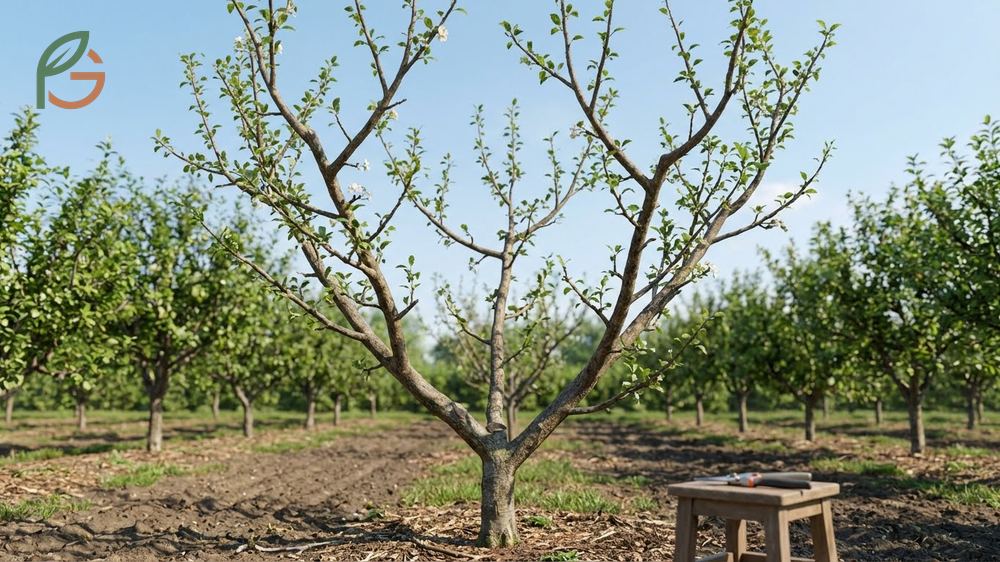
The open center or “goblet” shape is the gold standard for plum trees because it maximizes sunlight exposure and air circulation. You’re creating a vase-like structure with an empty center and branches radiating outward. This shape makes harvesting easier and reduces disease pressure significantly.
Start shaping during the first year by selecting three to five scaffold branches evenly spaced around the trunk. These should emerge at roughly the same height and angle outward at 45 to 60 degrees. Remove any branches that grow straight up or into the center—they’ll never produce well and they’ll crowd productive wood.
Current guidance emphasizes maintaining branches spaced about 12 inches apart vertically[3]. This spacing ensures each branch receives adequate sunlight without shading others. Dense growth might look impressive, but it produces small, poorly colored fruit.
As the tree matures, focus on maintaining the open center by removing inward-growing shoots annually. Don’t let the center fill in with new growth—this defeats the entire purpose of the shape. You’re not growing a shade tree; you’re managing a fruit production system.
From My Experience: A friend in Querétaro, Mexico trained her Methley plum to an open center over three years. By year four, she harvested 85 pounds of fruit versus neighbors’ 45-50 pounds from unpruned trees—nearly double the yield.
- Open center visible when looking up through the canopy from below
- Main branches angled 45-60 degrees from vertical for optimal fruiting
- No crossing or rubbing branches that create wounds and entry points
- Lower branches slightly longer than upper ones creating pyramid silhouette
- Total height maintained at 8-10 feet for easy harvest access
- Lateral branches shortened to 10 inches with 3-5 buds remaining
Common Mistake: Don’t try to shape a mature neglected tree in one season. Removing more than 25% of the canopy stresses the tree and triggers excessive water sprout growth. Spread major reshaping over two to three years.
Pruning Technique Plums
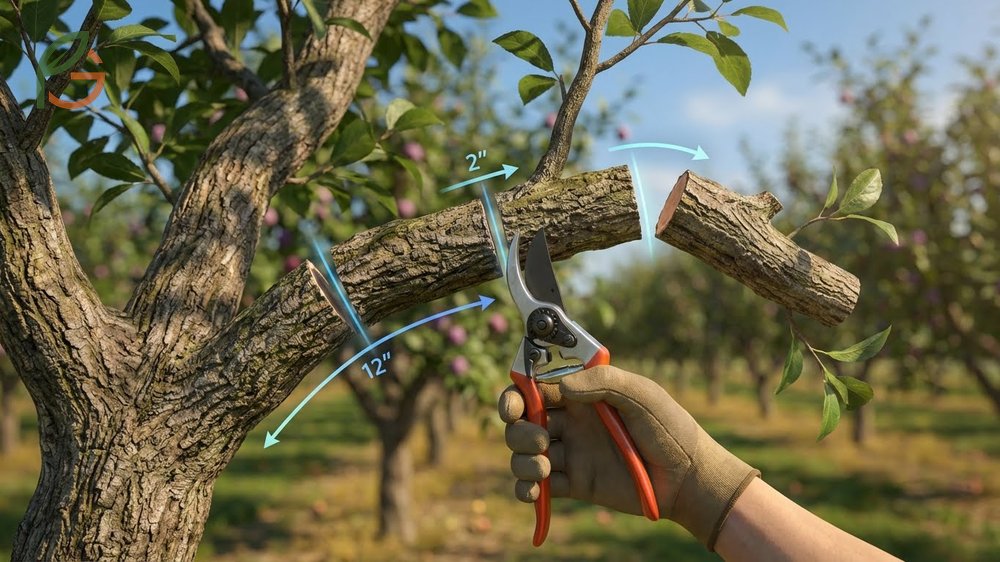
Master pruners follow the three-cut method for branches thicker than one inch. This technique prevents bark from tearing down the trunk—a wound that’s slow to heal and prone to infection. Make your first cut on the underside of the branch about 12 inches from the trunk, cutting about one-third through.
The second cut goes on top, about two inches farther out from the first cut. Cut all the way through until the branch falls away. This leaves a stub that you’ll remove with the third cut. Position this final cut just outside the branch collar (the swollen area where branch meets trunk) at a slight angle.
Studies demonstrate that cuts respecting the branch collar heal three times faster than flush cuts into the trunk[3]. The collar contains cells specialized for sealing wounds—cutting into it removes this natural defense. Never apply wound dressing or paint; research shows it actually slows healing by trapping moisture.
For young shoots and small branches under half an inch, a single clean cut suffices. Position your pruners so the cutting blade is on the side you’re keeping, not the waste side. This ensures the cleanest possible cut on the remaining tissue.
- Heading cuts remove branch tips to encourage lateral growth and bushiness
- Thinning cuts remove entire branches at their origin to reduce density
- Notching above a bud stimulates it to grow into a branch
- Notching below a bud suppresses its growth when you want less branching
- Bench cuts create horizontal branches that produce more fruit than vertical ones
- Renewal pruning removes 20% of the oldest branches annually to maintain vigor
Plum Tree Maintenance
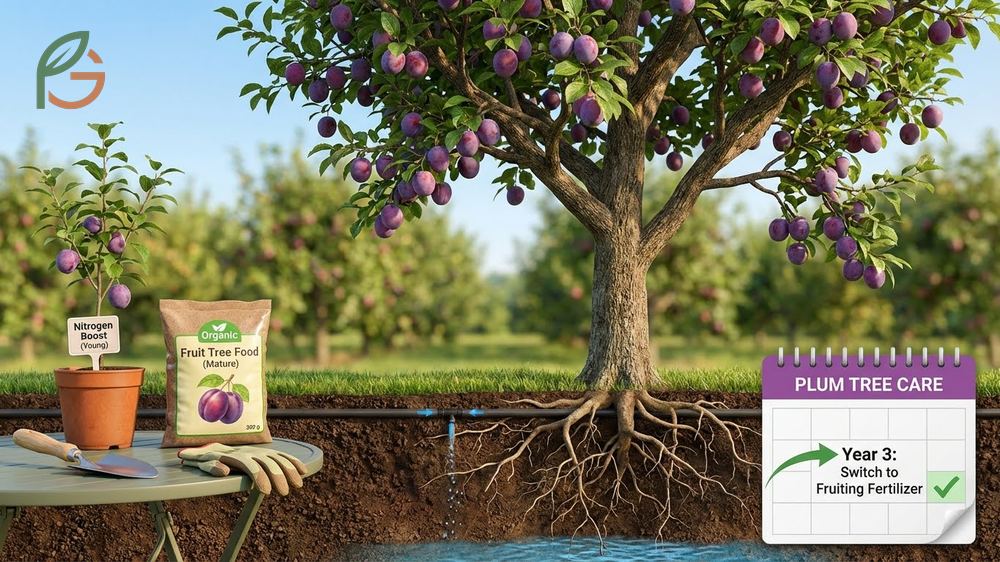
Annual pruning is just one component of plum tree care. Consistent watering during fruit development makes the difference between juicy plums and mealy disappointments. Deep watering once weekly encourages roots to grow downward rather than staying shallow where they’re vulnerable to drought.
Fertilization needs change as trees mature. Young trees benefit from nitrogen-heavy formulas that promote vegetative growth. Once the tree begins fruiting (typically year three), switch to balanced fertilizers with phosphorus for flower production. Apply in early spring before bud break for best results.
Fruit thinning isn’t optional—it’s essential. Most people don’t realize that plum trees set way more fruit than they can properly ripen. When clusters form in June, thin them so plums are spaced four to six inches apart. This prevents branch breakage and produces larger, sweeter fruit.
Mulch matters more than most gardeners realize. A three-inch layer of wood chips or composted bark around the tree base regulates soil temperature and retains moisture. Keep mulch three inches away from the trunk to prevent rot and rodent damage. Replenish annually as it decomposes.
- Late winter: Apply balanced fertilizer before bud break begins
- Spring: Monitor for aphids and treat early before populations explode
- Early summer: Thin fruit clusters to 4-6 inch spacing
- Mid-summer: Prune established trees and water deeply during dry spells
- Fall: Rake and destroy fallen leaves to reduce overwintering pests
- Year-round: Inspect weekly for signs of disease or pest damage
Disease Prevention: Remove and destroy any branches showing silver discoloration within 24 hours. Cut at least six inches below visible symptoms into healthy wood. Don’t compost diseased material—burn it or bag it for trash removal.
Conclusion
The evidence is clear: pruning plum trees during the growing season protects against silver leaf disease while boosting productivity through better light penetration and air circulation. Young trees need early spring attention to build strong structure, while established specimens thrive with mid-summer pruning after harvest completes. Master the open center shape and you’ll harvest larger, sweeter plums with half the disease problems of unpruned trees.
Current horticultural guidance emphasizes working with your tree’s natural growth patterns rather than fighting them. At FruitGarden, we help you apply research-based techniques that maximize yield without compromising tree health for long-term success in your home orchard.
Frequently Asked Questions
Can I prune plum trees in winter like apple trees?
No, you shouldn’t prune plum trees in winter because that’s when silver leaf disease spores are most active. Unlike apples, plums belong to the Prunus family that’s highly susceptible to this fungal infection. Prune young trees in April and established trees in July-August when the tree’s active growth helps seal wounds quickly.
How much can I safely remove in one pruning session?
Remove no more than 20-25% of the total canopy in a single season. Cutting more than this stresses the tree and triggers excessive water sprout production that you’ll need to remove later. If your tree needs major reshaping, spread the work over two to three years to maintain tree health.
What’s the best shape for a plum tree?
The open center or goblet shape works best because it maximizes sunlight exposure and air circulation throughout the canopy. This shape features three to five main branches radiating outward from a hollow center, with branches spaced 12 inches apart vertically. It makes harvesting easier and dramatically reduces fungal disease problems.
Do I need to seal pruning cuts with wound dressing?
No, don’t use wound dressing or pruning paint on plum trees. Research shows these products actually slow healing by trapping moisture against the wound. Plum trees seal cuts naturally through compartmentalization when you make clean cuts just outside the branch collar during the proper season.
How do I identify silver leaf disease?
Silver leaf disease causes leaves to develop a silvery or metallic sheen, usually starting on one branch before spreading. As infection progresses, affected branches die back and may develop purple fungal brackets on dead wood. Cut into symptomatic branches—infected wood shows a dark stain in the center.
When will my plum tree start producing fruit?
Most plum trees begin producing fruit in their third to fifth year after planting, depending on the variety and rootstock. Proper pruning during these formative years is critical—you’re building the framework that will support fruit production for decades. Don’t expect heavy crops until year five or six when the tree reaches maturity.
Should I thin plums after they set fruit?
Yes, fruit thinning is essential for quality plums and preventing branch breakage. When fruit clusters form in June, thin them so plums are spaced four to six inches apart along branches. This concentrates the tree’s resources into fewer, larger fruit and prevents the weight of excessive plums from snapping branches.





