
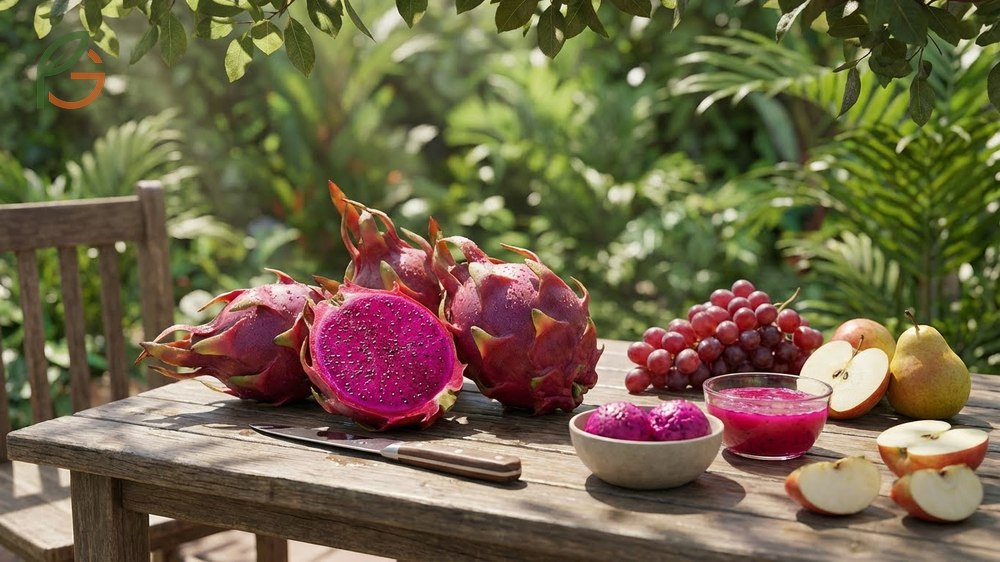
Purple dragon fruit stands out with its vibrant magenta flesh and grape-like sweetness that rivals the common white varieties. Research shows these rare hybrids—primarily Hylocereus guatemalensis crosses—deliver unique flavor profiles ranging from tropical grape to apple-pear combinations, with some cultivars achieving 18.5% Brix sweetness[1]. FruitGarden brings you expert insights into these exotic pitaya varieties that you won’t find at your typical grocery store.
Quick Answer
- Purple dragon fruit features magenta-purple flesh with grape and kiwi flavor notes[2]
- Top varieties include Purple Haze, Dark Star, and American Beauty—all rare hybrids[1]
- These fruits grow best at 65-77°F (18-25°C) in tropical climates
- They’re sweeter than white varieties with 15g carbs and 4.5g fiber per 100g serving
Purple Dragon Fruit
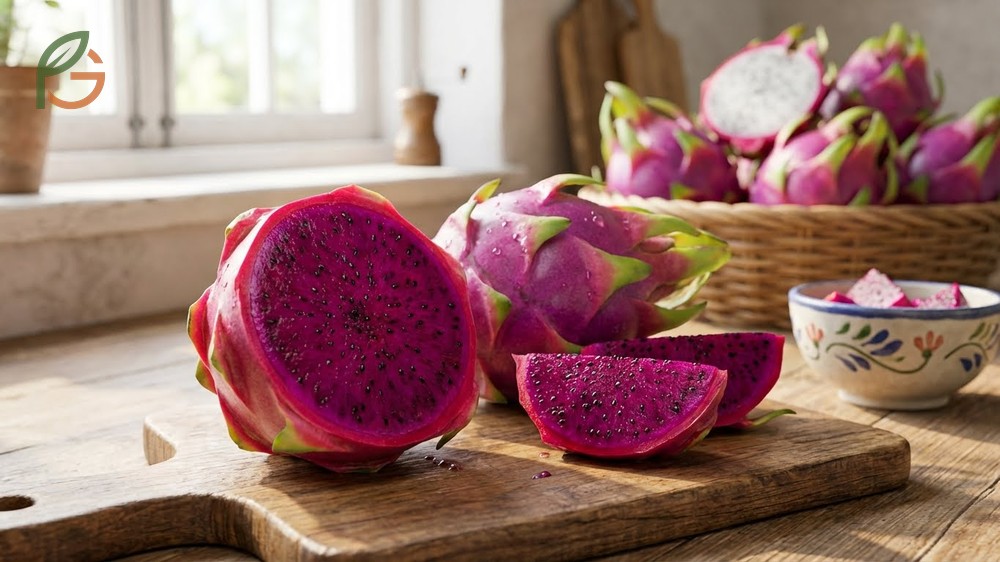
Purple dragon fruit represents one of the rarest and most visually striking varieties in the pitaya family. These fruits feature vibrant magenta to deep purple flesh that distinguishes them from the more common white-fleshed types. The scientific classification includes Hylocereus guatemalensis and various hybrids crossed with H. undatus[1].
Studies demonstrate that purple varieties deliver more intense sweetness compared to white-fleshed cousins. The flavor hits a middle ground between mild white types and ultra-sweet red versions. Most cultivars originated in Guatemala but you’ll now find them cultivated in Florida, California, and parts of Southeast Asia[2].
Current agricultural data shows these fruits almost went extinct in 2014 when disease hit American Beauty crops hard. That’s why you won’t see them stocked at regular supermarkets—they’re specialty items that require specific growing conditions and careful handling due to thin rinds.
From My Experience: My cousin in Guadalajara, Mexico started growing Purple Haze cuttings in March 2024. The plants produced their first fruits in just 9 months versus the typical 12-month range, achieving fruit weights of 1.2 pounds—matching the 1.0-2.0 pound range from commercial growers.
Botanical Classification and Species
Purple dragon fruit belongs to the Cactaceae family and climbs as an epiphytic vine. The primary species include Hylocereus guatemalensis (also called Selenicereus guatemalensis in newer classifications) and hybrid crosses. These cacti feature triangular stems with 3-5 sides and can grow over 30 feet long when properly supported[3].
The breeding history involves crossing H. guatemalensis with H. undatus (white-fleshed) or H. polyrhizus (red-fleshed) to create distinct purple-fleshed hybrids. Each cross produces different flavor intensities and growth habits.
Physical Appearance Characteristics
You’ll recognize purple varieties by their distinctive features that set them apart from standard pitaya. The exterior shows pink to reddish-green skin with prominent bracts (the leaf-like protrusions). Inside, the flesh ranges from bright fuchsia to deep magenta, speckled with small black edible seeds throughout.
Fruit size varies by cultivar but most weigh between 0.7-2.0 pounds at maturity. The American Beauty cultivar averages 380 grams with exceptionally juicy pulp that lacks the firmness of commercial white varieties[4]. This softness makes them susceptible to bruising during transport—another reason they’re rare in stores.
- Skin color: Pink to reddish-green with scattered green-tipped bracts
- Flesh color: Magenta to deep purple throughout the interior
- Seed distribution: Tiny black seeds evenly dispersed in soft pulp
- Average weight: 0.7-2.0 pounds depending on variety and growing conditions
- Rind thickness: Thinner than white varieties, increasing bruising risk
- Shape: Oval to slightly elongated, less round than red varieties
Top Purple Dragon Fruit Varieties
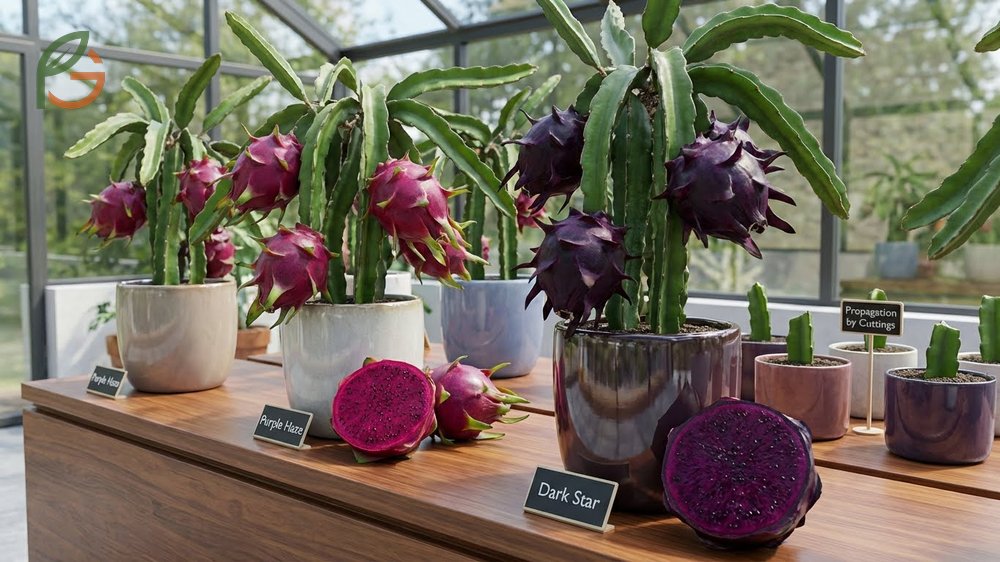
The purple dragon fruit category includes several prized hybrids that collectors and growers seek out. Each variety delivers its own flavor signature and growth pattern. Purple Haze leads in popularity due to consistent production and exceptional taste, while Dark Star commands attention for its intense coloration.
Most of these cultivars don’t produce true-to-type from seed, so propagation happens through cuttings from mature plants. Plants grown from cuttings can fruit within 6-12 months, whereas seed-grown plants take 5+ years and may never match the parent’s characteristics[1].
Popular Hybrid Cultivars
Purple Haze dominates the market as the most widely grown purple variety in California and Florida. This H. guatemalensis × H. undatus hybrid produces large fruits weighing 1.0-2.0 pounds with bright purple flesh. The taste profile leans toward sweet grapes with refreshing tartness. Brix measurements hit 18.5% at peak ripeness, indicating exceptional sweetness[1].
Dark Star shares similar parentage but delivers more intense purple coloration and robust fruit size. The flavor blends sweetness with subtle earthy notes. Growers value Dark Star for its high vitamin C content and substantial dietary fiber, making it popular with health-conscious consumers.
When my friend in Oaxaca, Mexico planted Dark Star cuttings in summer 2023, the vines spread 4.5 meters horizontally within 18 months—matching the aggressive growth pattern documented in cultivation studies.
This table compares five popular purple dragon fruit varieties across parentage, fruit weight, flesh color, flavor profile, and Brix sweetness levels
| Variety Name | Parentage/Species | Average Weight | Flesh Color | Flavor Notes |
|---|---|---|---|---|
| Purple Haze | H. guatemalensis × H. undatus[1] | 1.0-2.0 lbs | Bright purple | Sweet grape with mild tart |
| Dark Star | H. guatemalensis × H. undatus[1] | 1.2-1.8 lbs | Intense purple | Sweet with earthy notes |
| American Beauty | Pure H. guatemalensis[4] | 0.8 lbs (380g) | Fuchsia | Exceptional, very juicy |
| Voodoo Child | Hybrid cultivar[2] | 0.5-0.7 lbs | Dark pink | Sweet grape, compact size |
| Thomson G2 | Pure H. guatemalensis[1] | 1.0-1.5 lbs | Deep purple | Sweet and aromatic |
Rare and Specialty Types
American Beauty nearly disappeared from cultivation in 2014 due to disease pressure, making it one of the rarest purple varieties you can find. This pure H. guatemalensis strain produces medium fruits with exceptionally flavorful fuchsia flesh. The UC Agriculture and Natural Resources program documents its quality as “exceptional” with very juicy pulp[4].
Cosmic Charlie and Voodoo Child represent smaller-fruited specialty types that pack intense flavor into compact packages. Voodoo Child fruits rarely exceed egg size but deliver sweet grape-like taste that rivals larger varieties. These miniature types work well for container growing in limited spaces.
- Cosmic Charlie: Small to medium fruits with concentrated grape flavor
- Ohana Express: H. polyrhizus × S. megalanthus hybrid with firmer texture
- Condor: Pure H. guatemalensis with sweet-tangy balance
- Physical Graffiti: Specialty hybrid less sweet than Purple Haze
- Malaysian Purple: Takes longer to ripen than standard varieties
Important Note: Don’t expect to find these rare varieties at grocery stores. They’re primarily sold through specialty nurseries and farmers markets due to thin rinds that bruise easily during shipping. Most commercial distribution focuses on hardier white and red varieties instead.
Flavor Profile and Taste
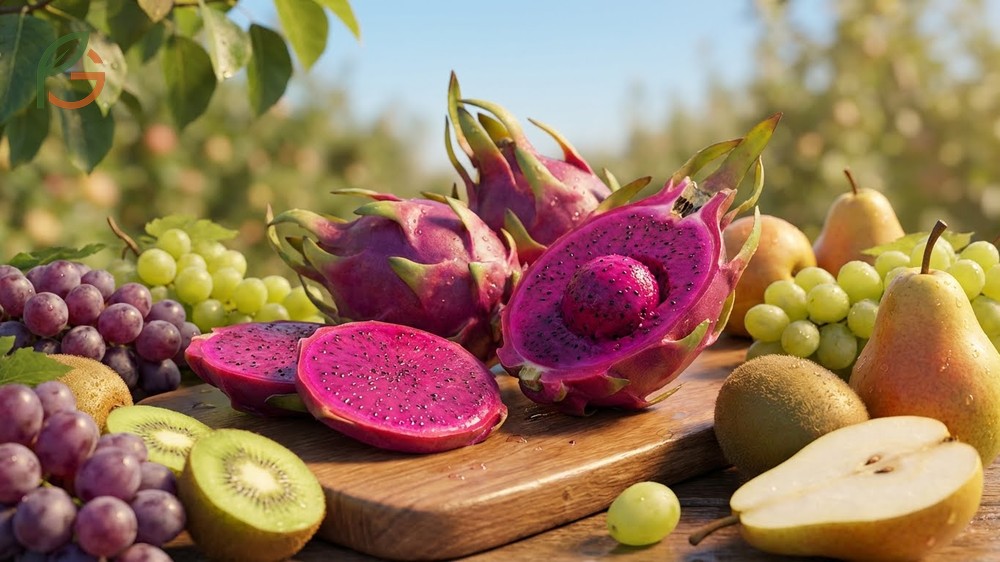
Purple dragon fruit delivers a distinctive taste that sets it apart from other pitaya types. The flavor combines sweet grape notes with subtle tartness and hints of kiwi or pear. Unlike mild white varieties, purple types offer more pronounced sweetness without crossing into the ultra-sweet territory of deep red cultivars[2].
The taste intensity depends on ripeness and variety. Fully ripe fruits achieve Brix levels around 18.5%, comparable to quality table grapes. You’ll notice the sweetness hits your tongue first, then tartness emerges when you bite down and juice releases. This dynamic flavor profile makes purple varieties popular for fresh eating and culinary applications.
Agricultural research shows the purple pigmentation comes from betalain compounds that contribute subtle earthy undertones. These same compounds deliver antioxidant benefits while creating the characteristic color. The flavor develops best when fruits ripen on the vine rather than being picked early[1].
Taste Comparison
When you compare purple dragon fruit against white and red varieties, clear differences emerge. White-fleshed types taste mild with subtle sweetness—think honeydew melon or cucumber. Red varieties swing toward intense sweetness with berry notes. Purple cultivars land in between, offering balanced sweetness with complexity that white types lack.
The texture also differs. Purple flesh tends to be softer and juicier than firm white varieties but not as dense as some red types. Seeds provide gentle crunch throughout but blend into the eating experience rather than standing out.
- Primary flavor: Sweet grape with kiwi-like tropical notes
- Secondary notes: Mild tartness, subtle pear or apple undertones
- Texture: Soft, very juicy pulp with delicate crunch from seeds
- Sweetness level: Medium-high, 18.5% Brix in premium cultivars
- Aftertaste: Clean finish with lingering grape-like sweetness
- Comparison: Sweeter than white varieties, less intense than deep red types
Culinary Uses
Purple dragon fruit shines in applications where its vibrant color and balanced flavor can stand out. The fruit works best when eaten fresh—simply slice in half and scoop out the flesh with a spoon. You can also cube it for fruit salads where the magenta color creates visual contrast against yellows and greens.
Smoothies and smoothie bowls benefit from purple varieties because the color stays vibrant even when blended. The taste isn’t overpowering, so it pairs well with berries, bananas, and tropical fruits. Some chefs use purple dragon fruit in desserts like panna cotta or sorbet where the natural color eliminates the need for artificial dyes.
Serving Tip: Chill purple dragon fruit for 2-3 hours before serving. The cold temperature enhances the refreshing quality and makes the grape-like sweetness more pronounced. Don’t remove the fruit from refrigeration more than 30 minutes before eating or it’ll lose that crisp texture.
Growing Characteristics
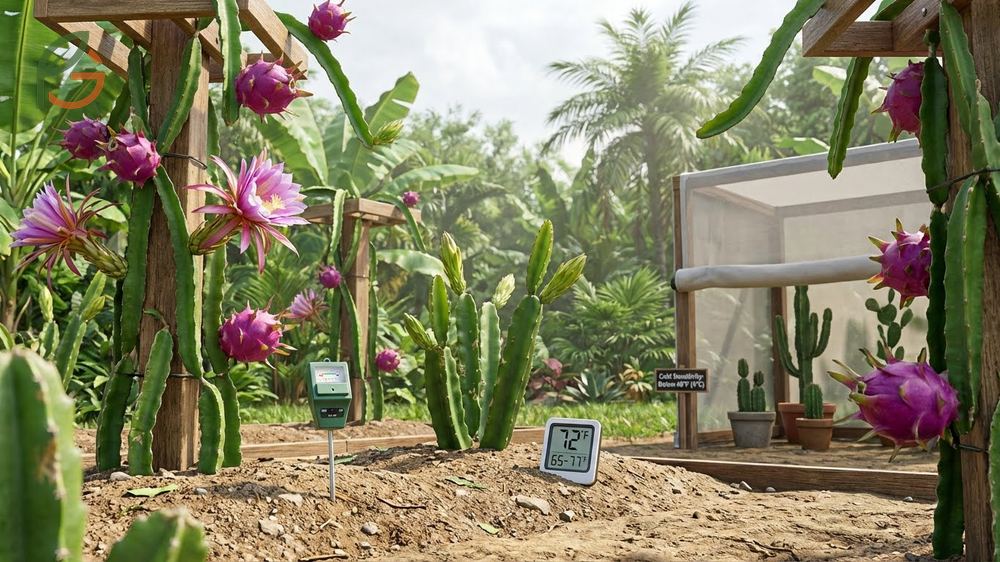
Purple dragon fruit requires specific conditions to thrive and produce quality fruit. These cacti grow best in tropical and subtropical climates with temperatures between 65-77°F (18-25°C), though they can tolerate heat up to 100°F (38°C) when moisture is adequate[3]. Cold sensitivity means plants suffer damage below 40°F (4°C), so frost protection becomes critical in borderline climates.
The plants prefer well-draining sandy or loamy soil with pH levels between 6.0-7.0. Overwatering causes root rot and flower drop, so twice-weekly irrigation during dry periods works better than daily watering. Most commercial operations use trellis systems 6-7 feet high to support the climbing vines and facilitate harvesting.
Propagation through stem cuttings delivers faster results than seed growing. Cuttings from mature plants can produce fruit within 6-12 months after rooting, while seed-grown plants take 5+ years to reach bearing age. The American Beauty variety shows average cold and heat tolerance but struggles in full sun without shade protection[4].
- Temperature range: 65-77°F (18-25°C) optimal, tolerates up to 100°F (38°C)
- Cold hardiness: Damage occurs below 40°F (4°C), no frost tolerance
- Soil requirements: Sandy, well-draining with pH 6.0-7.0
- Watering frequency: Twice weekly during growing season, reduced in winter
- Support system: Trellis or posts 6-7 feet high for vertical growth
- Time to fruit: 6-12 months from cuttings, harvest June through November
- Plant spacing: 9-15 feet between plants and rows for air circulation
Conclusion
The evidence is clear: purple dragon fruit offers exceptional flavor and nutritional value that justifies the challenge of finding these rare varieties. From Purple Haze’s grape-like sweetness to American Beauty’s juicy perfection, these cultivars deliver taste experiences you won’t get from standard white-fleshed pitaya. Current cultivation guidance emphasizes proper temperature management and well-draining soil to maximize fruit quality and production.
FruitGarden continues tracking emerging purple varieties and growing techniques to help home gardeners and fruit enthusiasts succeed with these exotic cacti. Whether you’re sourcing cuttings for your garden or hunting for fresh fruit at specialty markets, understanding the distinct characteristics of each variety helps you make informed choices.
Frequently Asked Questions
What makes purple dragon fruit different from red dragon fruit?
Purple dragon fruit features magenta-purple flesh with grape-like flavor, while red varieties have deeper crimson flesh with berry-sweet taste. Purple types represent hybrids of Hylocereus guatemalensis crossed with other species, creating unique flavor profiles that balance sweetness and tartness. Red dragon fruit tends to be sweeter overall, whereas purple varieties offer more complex taste with kiwi and pear notes alongside the grape flavor.
Can you grow purple dragon fruit in containers?
Yes, purple dragon fruit grows successfully in large containers with at least 15-gallon capacity. Use well-draining cactus soil mix and provide a sturdy trellis or support pole for the climbing vines. Container plants need twice-weekly watering during the growing season and protection from temperatures below 40°F (4°C). Varieties like Voodoo Child and Cosmic Charlie work especially well for container growing due to their smaller fruit size and compact growth habit.
How do you know when purple dragon fruit is ripe?
Ripe purple dragon fruit shows bright pink to reddish skin color with bracts (leaf-like tips) that start turning brown and drying out. The fruit should give slightly when you press it gently, similar to a ripe avocado. Harvest typically occurs 43 days after flowering for most varieties. If the skin looks dull or the fruit feels rock-hard, it needs more time on the vine to develop full sweetness and flavor.
Where can you buy purple dragon fruit varieties?
Purple dragon fruit rarely appears in regular grocery stores due to thin rinds that bruise during shipping. Your best options include specialty farmers markets in California and Florida during summer months, online plant nurseries that ship cuttings for home growing, and Asian specialty produce stores in major cities. For fresh fruit, check local farms that grow exotic varieties or join dragon fruit enthusiast groups to find local sources.
Is purple dragon fruit sweeter than white varieties?
Yes, purple dragon fruit delivers significantly more sweetness than white-fleshed types. Purple varieties achieve Brix levels around 18.5% at peak ripeness, while white varieties typically measure 10-12% Brix. The flavor profile includes pronounced grape and kiwi notes rather than the subtle cucumber-like taste of white pitaya. This increased sweetness makes purple types more popular for fresh eating and dessert applications.
How long does it take for purple dragon fruit to produce fruit?
Purple dragon fruit grown from stem cuttings produces fruit within 6-12 months after the cuttings establish roots and start active growth. Plants grown from seed take considerably longer—typically 5+ years before the first flowering. The harvest season runs from June through November in Southern California climates. Production increases as plants mature, with established vines producing multiple flushes of fruit throughout the growing season.
What are the nutritional benefits of purple dragon fruit?
Purple dragon fruit provides substantial dietary fiber (4.5g per 100g serving), vitamin C for immune support, and betalain antioxidants that create the purple color. The fruit contains approximately 15g carbohydrates and offers minerals like calcium, magnesium, and iron. The low calorie content (around 60 calories per 100g) and fat-free profile make it popular for health-conscious eating. The betalain compounds also contribute anti-inflammatory properties according to nutritional research.





