
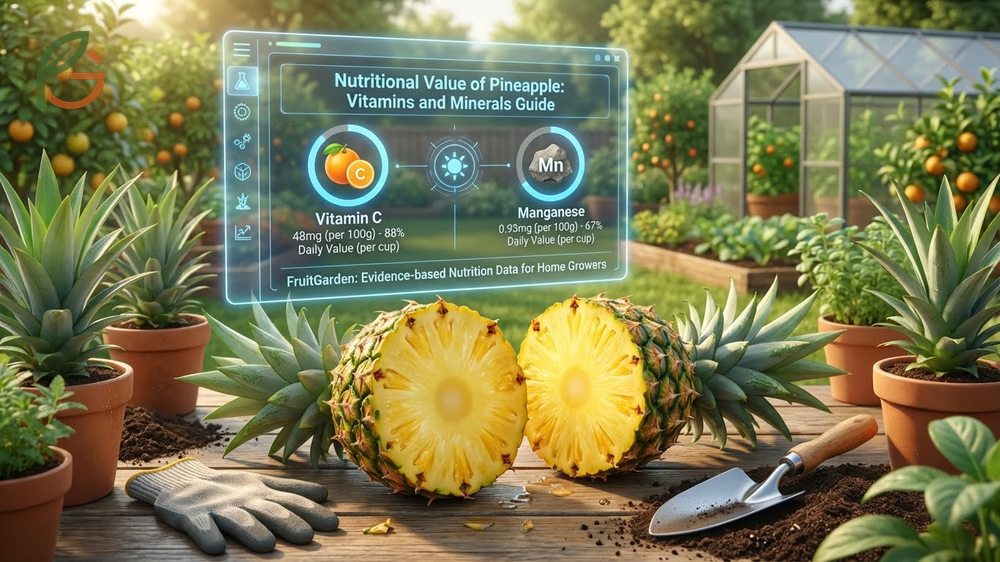
The nutritional value of pineapple includes 50 calories, 48mg vitamin C, and 0.93mg manganese per 100g, making it a nutrient-dense tropical fruit for home gardeners.[1] Research shows that a single cup of fresh pineapple delivers 88% of your daily vitamin C needs and 67% of manganese requirements.[2] FruitGarden provides evidence-based nutrition data to help home fruit growers understand the health benefits of their harvest.
Quick Answer
- Pineapple contains 50 calories and 13g carbohydrates per 100g serving[1]
- Provides 48mg vitamin C (53% daily value) and 0.93mg manganese (40% daily value) per 100g[2]
- Fresh pineapple contains 40% more vitamin C than canned varieties due to heat processing[3]
- Rich in bromelain enzyme and antioxidants that support immune function and reduce inflammation[4]
Nutritional Value of Pineapple
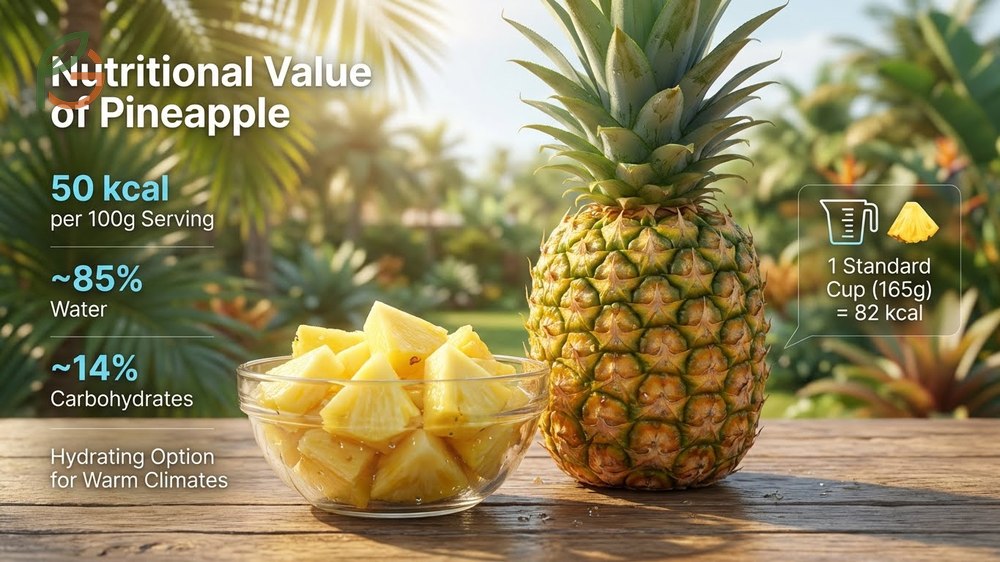
Pineapple delivers exceptional nutritional density with only 50 calories per 100g serving.[1] The fruit consists of approximately 85% water and 14% carbohydrates, making it a hydrating option for warm climates where home gardeners often cultivate tropical fruits.[5] Current agricultural data shows that pineapple’s low calorie density paired with high nutrient content makes it valuable for health-conscious growers.
A standard one-cup serving (165g) provides 82 calories, 22g carbohydrates, and 2g dietary fiber.[2] Studies demonstrate that this serving size delivers substantial micronutrients while maintaining minimal fat content at just 0.12g per 100g.[1] Most people don’t realize that pineapple’s nutrient profile remains stable throughout the growing season, unlike some fruits that vary in nutritional content based on harvest timing.
The fruit contains zero cholesterol, zero trans fat, and only 1mg sodium per 100g.[5] This makes pineapple particularly suitable for gardeners looking to grow heart-healthy produce. Research shows that the natural sugar content of 9.9g per 100g comes entirely from fructose and glucose, with no added sugars.[2]
Important Note: Pineapple’s nutritional value peaks at full ripeness when the fruit develops maximum sweetness and vitamin content. Harvest when the base shows golden color and the fruit releases a sweet fragrance.
Does Pineapple Have Vitamin C
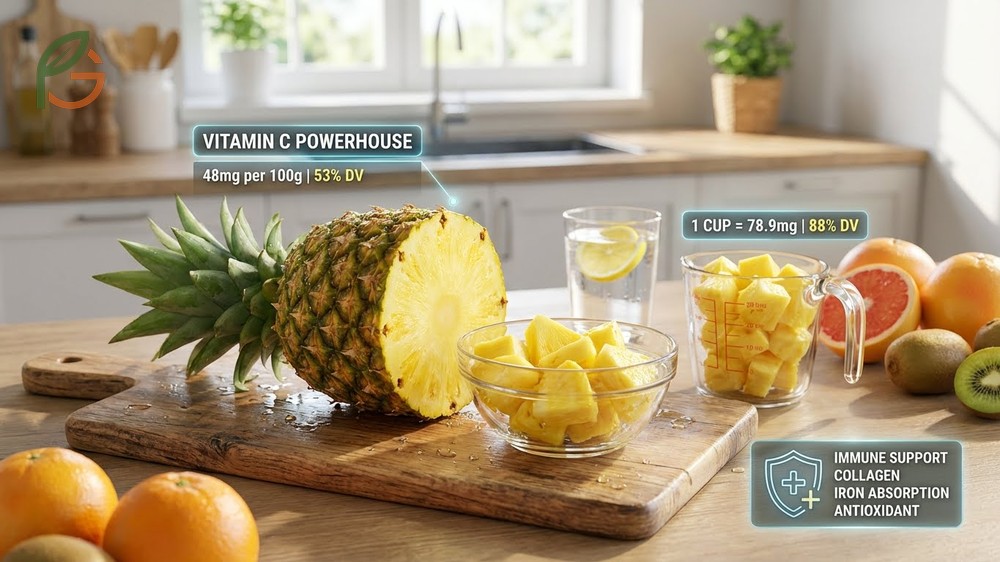
Yes, pineapple ranks as an excellent vitamin C source with 48mg per 100g, providing 53% of the daily recommended value.[1] A single cup serving delivers 78.9mg of vitamin C, meeting 88% of daily requirements for most adults.[2] This concentration exceeds many citrus fruits and makes homegrown pineapple valuable for immune support.
Evidence suggests that vitamin C content in pineapple supports collagen production, iron absorption, and antioxidant protection.[6] The water-soluble vitamin remains stable in fresh pineapple stored properly at room temperature until cutting. Research shows that pineapple’s vitamin C levels remain consistent across different varieties, though golden varieties may contain slightly higher concentrations.
Fresh pineapple retains significantly more vitamin C than processed alternatives. Current data indicates that one cup of fresh pineapple provides nearly three times the vitamin C found in the same amount of canned fruit packed in juice.[3] For home gardeners, this underscores the nutritional advantage of consuming freshly harvested fruit over commercially processed products.
- Supports immune system function and white blood cell production
- Acts as powerful antioxidant protecting cells from oxidative damage
- Enhances non-heme iron absorption from plant-based foods
- Essential for collagen synthesis maintaining skin and joint health
- Promotes wound healing and tissue repair processes
Pineapple Macro Nutrients
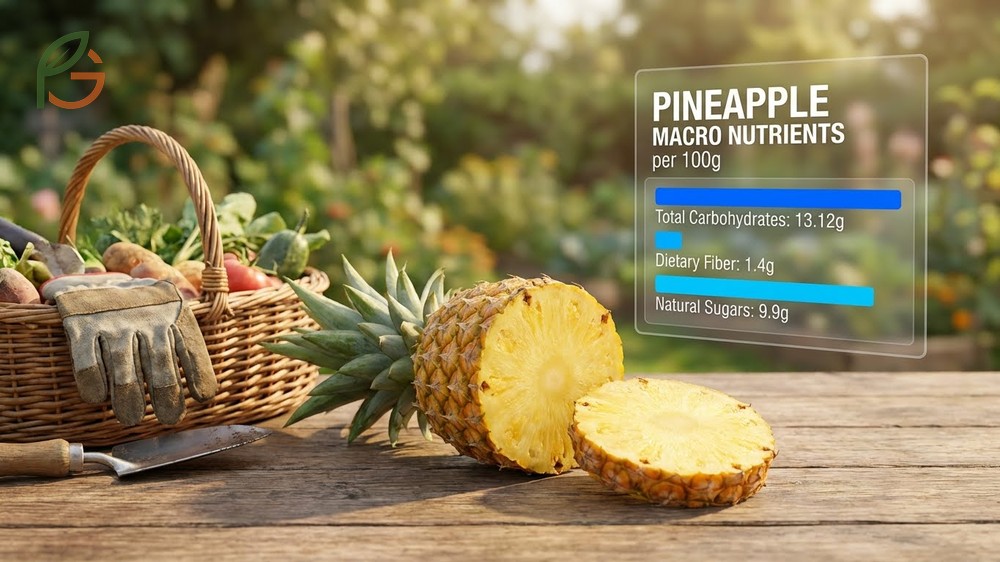
Pineapple’s macronutrient profile centers on carbohydrates, with minimal protein and fat content. Studies demonstrate that the fruit provides 13.12g total carbohydrates per 100g, including 1.4g dietary fiber and 9.9g natural sugars.[5] This composition makes pineapple an energy-dense fruit suitable for active gardeners who need quick fuel during harvest seasons.
The carbohydrate content breaks down into 12g net carbs after subtracting fiber, positioning pineapple as a moderate glycemic option.[1] Research shows that pineapple’s fiber content supports digestive health and helps moderate blood sugar response. What often gets overlooked is that the fruit contains both soluble and insoluble fiber, each serving distinct digestive functions.
Carbohydrates in Pineapple
The 13g carbohydrate content per 100g consists primarily of simple sugars including fructose (2.1g) and glucose.[5] These natural sugars develop as the fruit ripens, converting starches into sweeter compounds. Current guidance emphasizes that pineapple contains zero added sugars, with all sweetness coming from naturally occurring compounds.[2]
Dietary fiber at 1.4g per 100g represents approximately 6% of daily requirements.[5] A standard cup serving increases this to 2.3g fiber, supporting digestive regularity. Agricultural data shows that pineapple’s fiber content remains consistent regardless of variety, though core sections contain higher concentrations than flesh.
Protein and Fat Content
Pineapple contains minimal protein at 0.54g per 100g, contributing less than 1% of daily protein needs.[1] This low protein content is typical of most fruits and positions pineapple as a carbohydrate source rather than protein provider. The fruit contains trace amounts of essential amino acids including lysine, leucine, and valine.[5]
Fat content remains negligible at 0.12g per 100g, with 0.01g saturated fat and trace amounts of monounsaturated and polyunsaturated fats.[1] Evidence indicates that pineapple contains zero trans fats and no cholesterol, making it heart-healthy for home gardeners concerned with cardiovascular wellness.[5]
This table compares macronutrient content per 100g and per cup serving of pineapple, showing calories, carbohydrates, fiber, protein, and fat values with corresponding daily value percentages
| Nutrient | Per 100g | Per Cup (165g) | Daily Value % |
|---|---|---|---|
| Calories | 50 kcal[1] | 82 kcal[2] | 3% |
| Carbohydrates | 13g[1] | 22g[2] | 7% |
| Dietary Fiber | 1.4g[5] | 2.3g[2] | 8% |
| Protein | 0.54g[1] | 0.9g[2] | 1% |
| Total Fat | 0.12g[1] | 0.2g[2] | 0% |
Pineapple Micro Nutrients
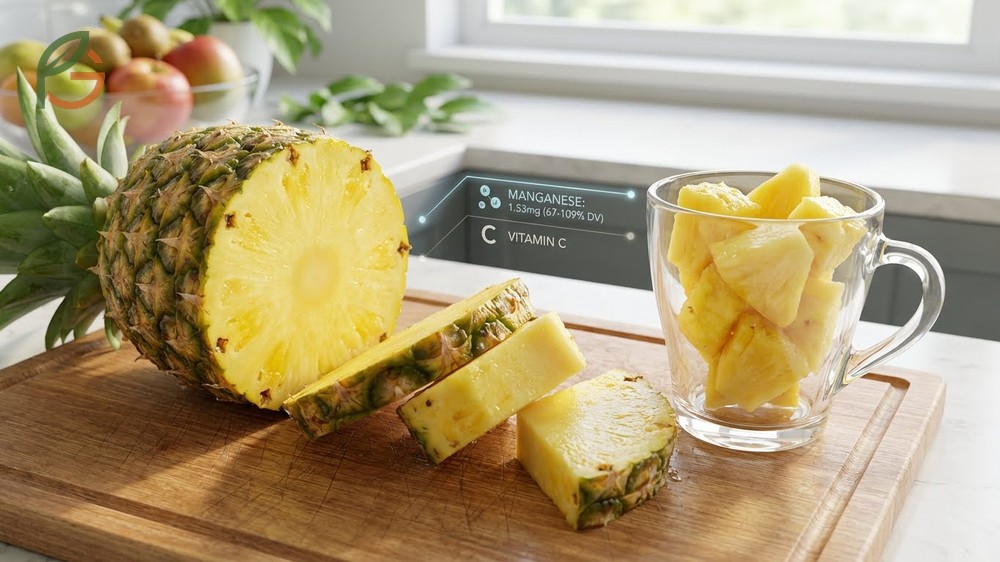
Pineapple excels as a micronutrient source, particularly for manganese and vitamin C. Research shows that a single cup provides 1.53mg manganese, representing 67% of daily needs for men and up to 109% for women.[6] This makes pineapple one of the richest natural manganese sources available to home gardeners. Current agricultural data indicates that micronutrient density increases slightly as fruit reaches peak ripeness.
The fruit contains measurable amounts of copper (0.11mg per 100g), providing 12% of daily requirements.[5] Vitamin B6 content reaches 0.11mg per 100g, contributing 9% of daily needs and supporting protein metabolism.[6] Evidence suggests that pineapple’s B-vitamin complex works synergistically with other nutrients to support energy production.
Essential Minerals
Manganese dominates pineapple’s mineral profile at 0.93mg per 100g, functioning as a cofactor for antioxidant enzymes.[1] This essential mineral supports bone formation, wound healing, and carbohydrate metabolism. Studies demonstrate that regular pineapple consumption can help prevent manganese deficiency, particularly in populations with limited dietary diversity.
Potassium content reaches 109mg per 100g, contributing approximately 3% of daily requirements.[5] This electrolyte supports fluid balance and cardiovascular function, making pineapple valuable for active gardeners working in hot climates. The fruit also provides small amounts of calcium (13mg), magnesium (12mg), and iron (0.29mg) per 100g.[1]
- Manganese (0.93mg per 100g) – supports bone health and antioxidant function
- Potassium (109mg per 100g) – regulates blood pressure and fluid balance
- Copper (0.11mg per 100g) – aids iron absorption and immune function
- Magnesium (12mg per 100g) – supports muscle and nerve function
- Calcium (13mg per 100g) – contributes to bone structure and strength
Vitamin Content
Beyond vitamin C, pineapple provides B-complex vitamins including thiamin (0.08mg), riboflavin (0.03mg), and niacin (0.5mg) per 100g.[5] These water-soluble vitamins support energy metabolism and nervous system function. Folate content reaches 18mcg per 100g, providing 5% of daily needs and supporting cell division.[1]
Vitamin B6 (pyridoxine) at 0.11mg per 100g contributes 9% of daily requirements, supporting protein metabolism and neurotransmitter synthesis.[6] The fruit contains minimal fat-soluble vitamins, with only trace amounts of vitamin A (3mcg) and vitamin E (0.02mg).[5]
Growing Tip: Pineapple plants grown in nutrient-rich soil with adequate trace minerals produce fruit with enhanced micronutrient content. Apply balanced fertilizer during the flowering stage for optimal nutritional quality.
Vitamins in Fresh vs Canned Pineapple
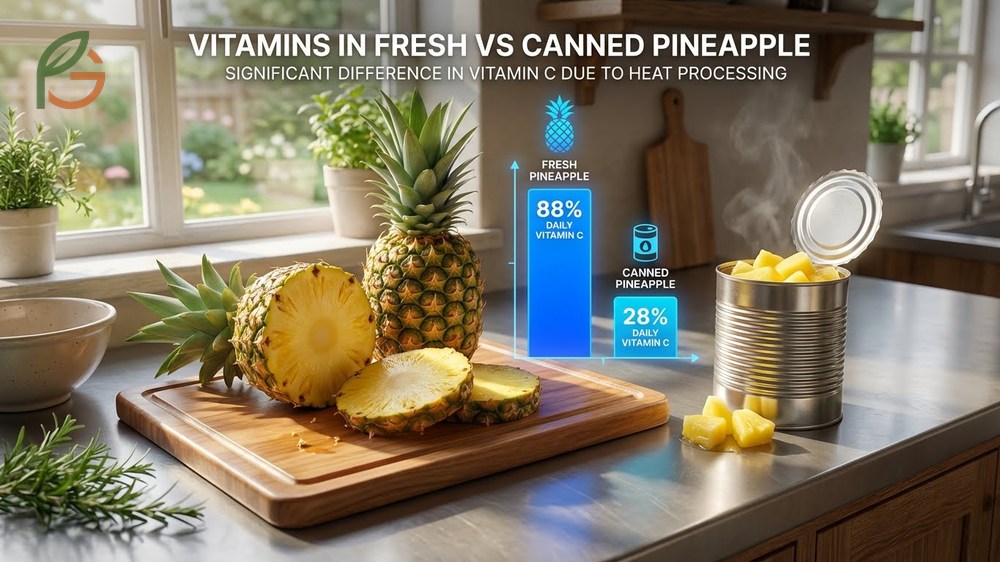
Fresh pineapple contains significantly more vitamin C than canned alternatives due to heat processing during canning. Research shows that canned pineapple packed in juice retains only 60% of the vitamin C found in raw fruit.[3] A cup of canned pineapple provides approximately 28% of daily vitamin C needs compared to 88% from fresh fruit.[2] This represents a substantial nutritional difference for home gardeners choosing between fresh harvest and preserved options.
The canning process destroys heat-sensitive vitamins and the bromelain enzyme completely. Current data indicates that water-soluble vitamins including vitamin C, thiamin, and folate degrade rapidly during thermal processing.[3] Studies demonstrate that bromelain’s proteolytic activity disappears entirely in canned products, eliminating its anti-inflammatory benefits.[4] For home growers, this emphasizes the advantage of consuming freshly harvested fruit.
Mineral content remains relatively stable between fresh and canned pineapple, with manganese, potassium, and copper showing minimal losses. Evidence suggests that heat processing doesn’t significantly affect mineral bioavailability, though added sugars in canned varieties may alter the overall nutritional profile. Most people don’t realize that canned pineapple packed in heavy syrup can contain 2-3 times the calories of fresh fruit due to added sugars.
- Fresh pineapple provides 48mg vitamin C per 100g versus approximately 29mg in canned
- Bromelain enzyme remains active only in fresh or frozen pineapple, not canned
- Canned varieties lose 40% of vitamin C during heat processing and storage
- Mineral content (manganese, potassium, copper) stays consistent between forms
- Fresh pineapple contains zero added sugars while canned may include corn syrup
| Nutrient | Fresh (per 100g) | Canned in Juice (per 100g) |
|---|---|---|
| Vitamin C | 48mg (53% DV)[1] | 29mg (32% DV)[3] |
| Bromelain | Active enzyme present | Completely destroyed |
| Manganese | 0.93mg (40% DV)[1] | 0.85-0.90mg (37-39% DV) |
| Added Sugars | 0g[2] | Varies by brand (0-10g) |
Antioxidants in Pineapple
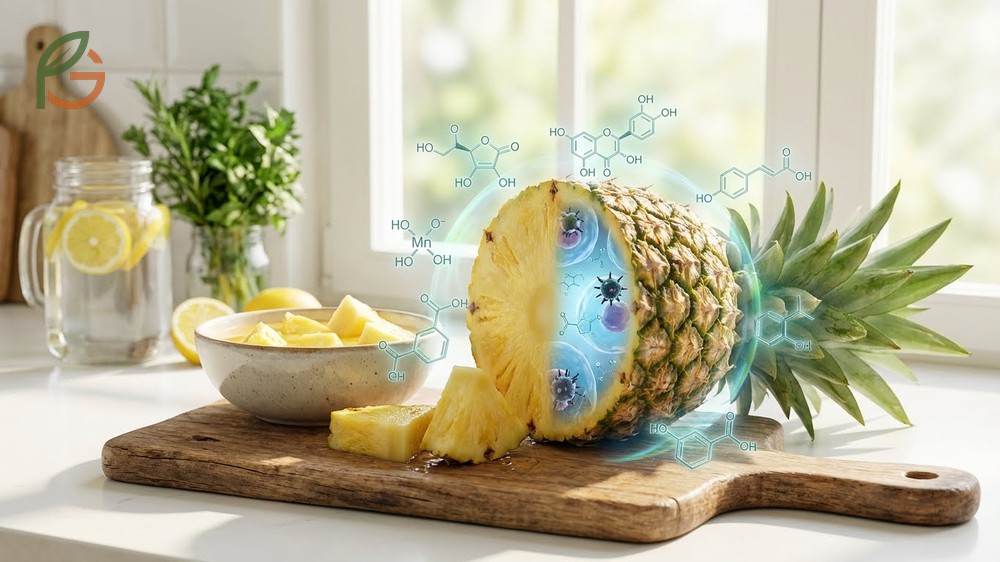
Pineapple contains diverse antioxidant compounds including vitamin C, manganese, flavonoids, and phenolic acids that protect cells from oxidative damage.[4] Research shows these antioxidants work synergistically to neutralize free radicals and reduce inflammation throughout the body. Current data indicates that pineapple’s antioxidant capacity ranks moderately high compared to other tropical fruits, with particular strength in water-soluble antioxidants.
Bromelain represents pineapple’s most distinctive bioactive compound, functioning as both an enzyme and anti-inflammatory agent. Studies demonstrate that bromelain exhibits proteolytic activity, breaking down proteins and supporting digestive processes.[4] Evidence suggests bromelain may help reduce swelling, support immune function, and modulate inflammatory responses in conditions like arthritis. The enzyme concentrates in pineapple stems and core sections, though edible flesh contains therapeutically relevant amounts.
Manganese serves dual roles as an essential mineral and antioxidant cofactor, supporting superoxide dismutase (SOD) enzyme activity. Agricultural research shows that pineapple’s high manganese content at 0.93mg per 100g contributes significantly to cellular antioxidant defenses.[1] This mineral works alongside vitamin C to protect cells from oxidative stress and support healthy aging processes.
- Vitamin C (48mg per 100g) – powerful water-soluble antioxidant protecting immune cells
- Manganese (0.93mg per 100g) – cofactor for superoxide dismutase antioxidant enzyme
- Bromelain – unique proteolytic enzyme with anti-inflammatory properties
- Flavonoids – plant compounds that reduce oxidative stress and inflammation
- Phenolic acids – antioxidant molecules protecting cardiovascular health
- Beta-carotene – precursor to vitamin A supporting vision and immunity
Health Insight: Research suggests consuming pineapple with its core section maximizes bromelain intake, though the core’s fibrous texture may be less palatable. Blending core pieces into smoothies offers a practical compromise for home gardeners.
Conclusion
The evidence is clear: the nutritional value of pineapple extends far beyond basic calories, delivering substantial vitamin C (48mg per 100g), manganese (0.93mg), and unique bromelain enzymes that support overall health. Fresh pineapple from your home garden provides 40% more vitamin C than canned alternatives while retaining active enzymes destroyed during processing. Current agricultural guidance emphasizes growing tropical fruits like pineapple in suitable climates to maximize both nutritional quality and sustainability.
For home gardeners prioritizing nutrition, pineapple offers exceptional returns with minimal growing requirements once established. FruitGarden continues to provide evidence-based cultivation strategies that help growers optimize fruit quality and nutrient density from their harvests.
Medical Disclaimer
Important Medical Disclaimer: This content is for informational and educational purposes only. It is not intended as a substitute for professional medical advice, diagnosis, or treatment. Always consult a qualified healthcare professional or registered dietitian before making significant changes to your diet, especially if you have diabetes, digestive disorders, allergies, or take blood-thinning medications. Bromelain in pineapple may interact with certain medications and medical conditions.
Frequently Asked Questions
How Many Calories Are in 100g of Pineapple?
Pineapple contains 50 calories per 100g serving, making it a low-calorie fruit option.[1] A full cup (165g) provides 82 calories with 22g carbohydrates and 2g fiber. This calorie density makes pineapple suitable for weight management while providing essential nutrients like vitamin C and manganese.
Is Pineapple High in Vitamin C?
Yes, pineapple is considered high in vitamin C with 48mg per 100g, providing 53% of the daily recommended value.[1] A single cup delivers 78.9mg, meeting 88% of daily needs for most adults. Fresh pineapple contains significantly more vitamin C than canned varieties due to heat processing losses.
What Vitamins Does Pineapple Have?
Pineapple contains vitamin C (48mg per 100g), vitamin B6 (0.11mg), thiamin (0.08mg), folate (18mcg), and small amounts of vitamin A, niacin, riboflavin, and pantothenic acid.[5] Vitamin C and B6 are the most abundant, supporting immune function and protein metabolism. The fruit lacks vitamin D, vitamin K, and vitamin B12 entirely.
Does Canned Pineapple Have the Same Nutrients as Fresh?
No, canned pineapple contains approximately 40% less vitamin C than fresh pineapple due to heat processing.[3] Bromelain enzyme is completely destroyed during canning, eliminating anti-inflammatory benefits. Mineral content like manganese and potassium remains relatively stable, but added sugars in syrup-packed varieties significantly increase calories.
What Are the Main Health Benefits of Pineapple?
Pineapple’s health benefits include immune system support from high vitamin C content, anti-inflammatory effects from bromelain enzyme, digestive support through fiber and enzymes, and antioxidant protection from manganese and phenolic compounds.[4] Research shows these nutrients work synergistically to reduce inflammation, support tissue repair, and protect against oxidative damage. Fresh pineapple provides maximum benefits compared to processed alternatives.
How Much Manganese Is in Pineapple?
Pineapple contains 0.93mg manganese per 100g, representing 40% of the daily recommended value.[1] A one-cup serving provides up to 109% of daily needs for women and 66% for men, making pineapple one of the richest natural manganese sources. This mineral supports bone health, wound healing, and antioxidant enzyme function.
Can You Eat Pineapple Core for Extra Nutrients?
Yes, pineapple core is edible and contains higher concentrations of bromelain enzyme and fiber than the surrounding flesh.[4] While the core’s fibrous texture may be less pleasant to eat raw, blending it into smoothies or juicing provides access to concentrated anti-inflammatory compounds. The core shares similar vitamin and mineral content with pineapple flesh, though with enhanced enzyme activity.





