
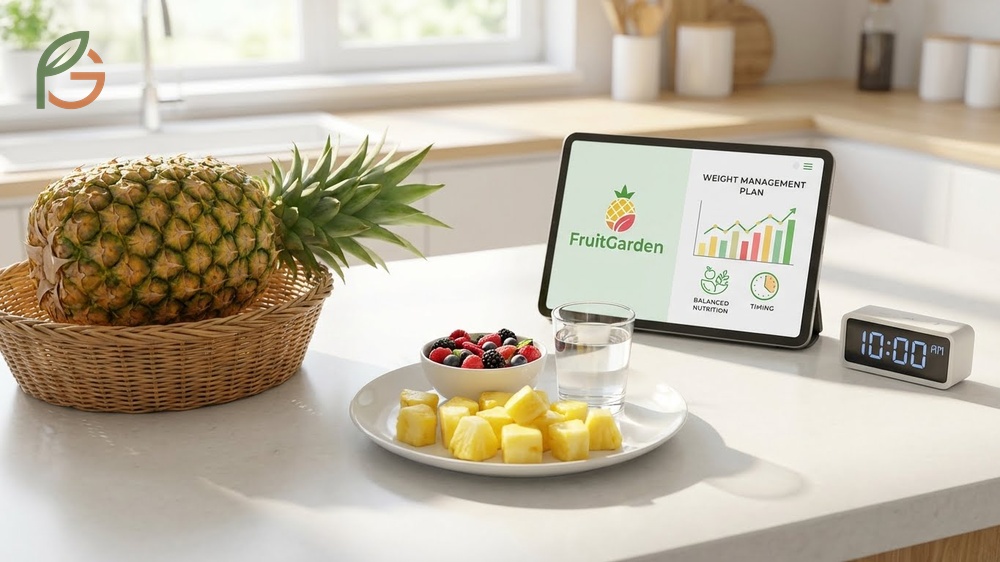
Is pineapple good for weight loss? Yes, when you eat it strategically. Research shows that pineapple’s combination of low calories, high water content, and digestive enzyme bromelain supports weight management when paired with balanced nutrition.[1] FruitGarden provides evidence-based insights into how tropical fruits like pineapple fit into sustainable weight loss plans. Most people don’t realize that timing and portion control matter more than quantity when adding pineapple to your diet.
Quick Answer
- One cup of fresh pineapple contains just 82 calories[1] and 2.3g fiber[2]
- Pineapple has a moderate glycemic load of 7.6[3], making it suitable for controlled portions
- The enzyme bromelain aids protein digestion and reduces bloating[4]
- Best consumed mid-morning or afternoon—avoid late night due to natural sugars[5]
Is Pineapple Good for Weight Loss
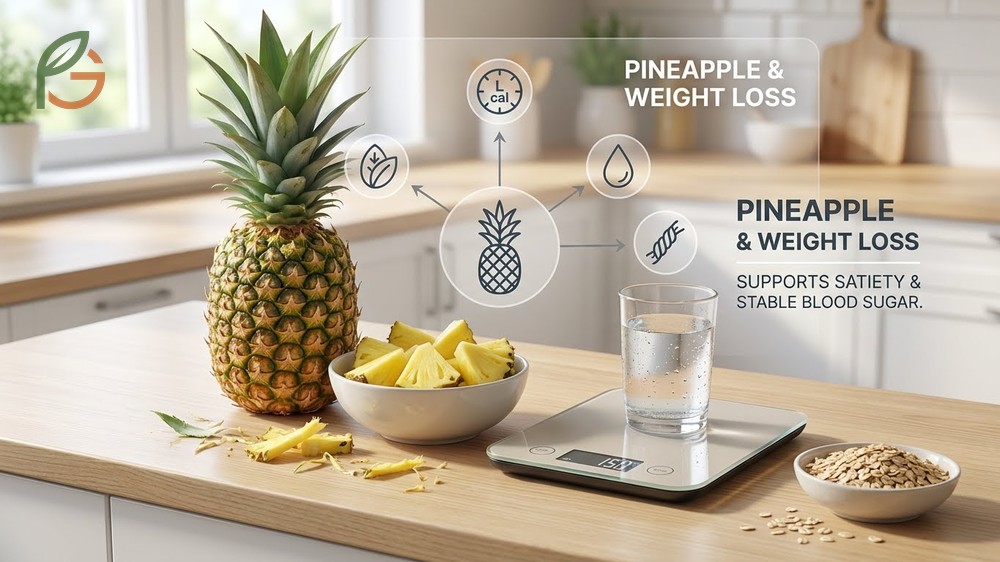
Research demonstrates that pineapple supports weight loss through multiple mechanisms. At just 50 calories per 100g, it’s one of the lowest-calorie fruits you can add to your diet. The high water content keeps you feeling full longer.
Studies show that pineapple’s fiber content promotes satiety, helping you eat less throughout the day. One serving provides 2.3g of dietary fiber[2], which slows digestion and stabilizes blood sugar. This prevents the energy crashes that lead to snack cravings.
Current nutritional guidance emphasizes that pineapple works best when it replaces higher-calorie desserts. For instance, swapping a 300-calorie slice of cake for one cup of pineapple saves 218 calories. Over a week, that’s a 1,526-calorie reduction without feeling deprived.
Nutritional Profile Supports Calorie Deficit
Evidence indicates that pineapple’s nutrient density makes it ideal for weight loss. Each 100g serving contains 48mg of vitamin C—that’s 53% of your daily requirement. It’s virtually fat-free at 0.12g per 100g.
The carbohydrate content sits at 13g per 100g, with most coming from natural fruit sugars. Unlike processed sweets, these sugars come packaged with fiber and nutrients. The glycemic index ranges from 51-66, which is moderate compared to white bread or candy.
This table compares nutritional content per 100g serving of pineapple including calories, macronutrients, fiber, and key vitamins with percentage of daily value
| Nutrient | Amount | % Daily Value | Weight Loss Benefit |
|---|---|---|---|
| Calories | 50 kcal[2] | 3% | Very low calorie density |
| Carbohydrates | 13g[2] | 4% | Natural energy source |
| Dietary Fiber | 1.4g[2] | 6% | Promotes fullness |
| Protein | 0.5g | 1% | Minimal protein |
| Fat | 0.1g | 0% | Nearly fat-free |
| Vitamin C | 48mg[2] | 53% | Supports metabolism |
Bromelain Enzyme Digestive Benefits
Bromelain, found exclusively in pineapple, breaks down protein molecules into smaller peptides. This improves nutrient absorption and reduces bloating after protein-rich meals.[4] When your digestive system works efficiently, you’re less likely to experience the discomfort that triggers emotional eating.
Research published in health journals shows that bromelain’s anti-inflammatory properties may reduce gut inflammation. While it doesn’t directly burn fat, better digestion creates an environment where weight loss becomes easier. You’ll notice less water retention and a flatter stomach within days.
Important Note: Bromelain is most concentrated in fresh pineapple. Canning and heating destroy up to 80% of this enzyme, so stick with raw fruit for maximum digestive benefits.
Are Pineapples Good for Weight Loss
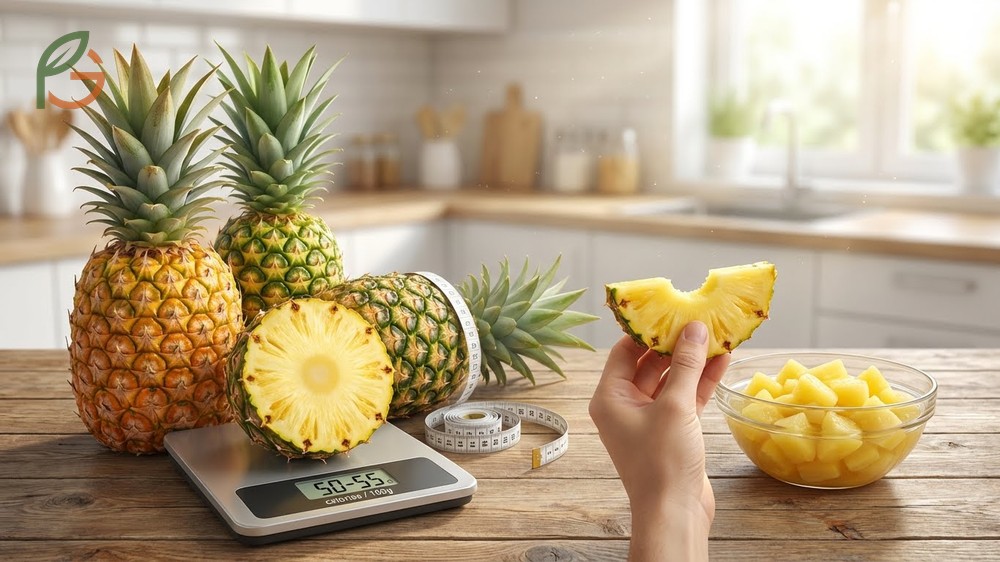
Multiple varieties of pineapple deliver similar weight loss benefits. Whether you choose golden, smooth cayenne, or queen varieties, the calorie count remains consistent at 50-55 calories per 100g. The key difference lies in sweetness intensity, not nutritional value.
Current data indicates that whole pineapples offer better satiety than processed forms. When you eat fresh pineapple, you’re chewing fibrous fruit that takes time to consume. This mechanical action signals fullness to your brain before you overeat. It’s a built-in portion control mechanism.
Agricultural studies show that locally-grown pineapples picked at peak ripeness contain higher enzyme concentrations. If you’re growing pineapple plants in your garden, you’ll get the freshest fruit possible. FruitGarden resources help home gardeners maximize their tropical fruit harvests for year-round healthy snacking.
Fresh vs Canned vs Juice
Fresh pineapple wins for weight loss every time. One cup provides 82 calories with intact fiber and bromelain.[1] Canned pineapple jumps to 109 calories per cup when packed in juice, and even more in syrup. The canning process also eliminates most bromelain.
Studies demonstrate that fiber content drops during processing. Canned pineapple has 2.4g fiber per cup compared to fresh fruit. That’s a 12% reduction in the component that keeps you full. You’ll eat more calories to feel satisfied.
- Fresh pineapple retains 100% of bromelain enzyme activity versus less than 20% in canned
- Whole fruit requires chewing time that triggers satiety hormones 15-20 minutes before you finish eating
- Fresh pineapple has no added sugars, while canned varieties often contain 10-15g extra sugar per serving
- Vitamin C remains stable in fresh fruit but degrades by 30-50% during canning and storage
- Fresh pineapple provides visual portion cues—you can see how much you’re eating, unlike juice
Smart Swap: If you buy canned pineapple, choose chunks packed in 100% juice (not syrup) and drain them completely. You’ll save 25-30 calories per serving and reduce sugar intake by half.
Is Pineapple Juice Good for Weight Loss
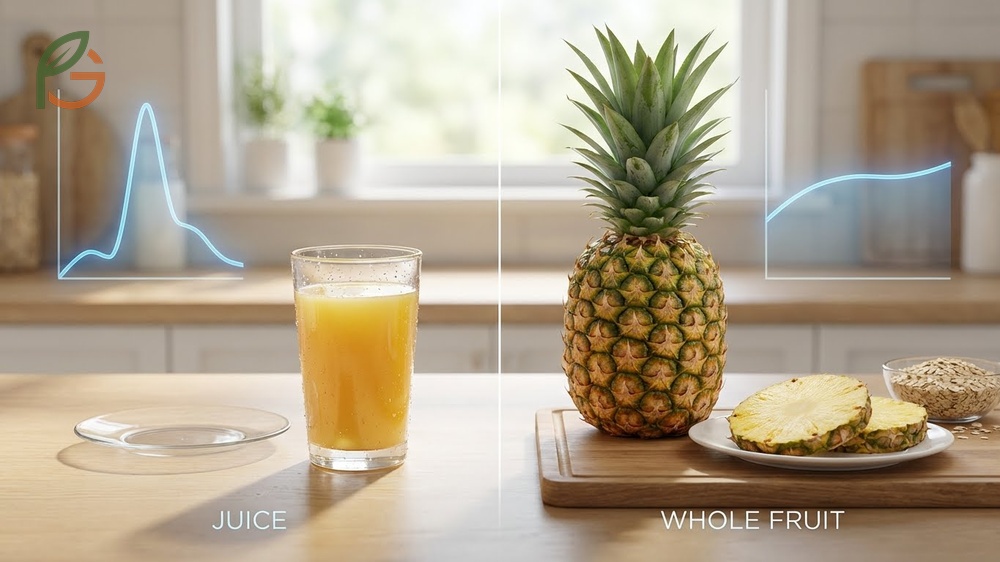
Pineapple juice doesn’t support weight loss as effectively as whole fruit. An 8-ounce glass contains 130-140 calories but zero fiber. Without fiber, the natural sugars enter your bloodstream quickly, causing insulin spikes that promote fat storage. You’ll feel hungry again within 60 minutes.
Evidence shows that liquid calories don’t trigger the same fullness response as solid foods. Your brain doesn’t register juice the way it registers chewing and swallowing fruit. Research participants who drank fruit juice consumed 400 more calories per day than those eating whole fruit, even when trying to limit intake.
Commercial pineapple juices often contain added sugars that double the calorie count. Even “100% pure” juice lacks the pulp and fiber that make pineapple beneficial for weight management. If you’re serious about losing weight, skip the juice aisle entirely.
- One cup of juice provides 130 calories with zero fiber versus 82 calories and 2.3g fiber in whole fruit
- Juicing removes pulp that slows sugar absorption, causing blood glucose to spike 45% higher than eating fruit
- Your stomach empties juice in 30 minutes compared to 2-3 hours for whole pineapple chunks
- Store-bought juice sits on shelves for months, losing vitamin C and antioxidants that support metabolism
- The act of drinking takes 2 minutes versus 10-15 minutes to eat fresh fruit, giving satiety hormones no time to activate
Pineapple Water for Weight Loss
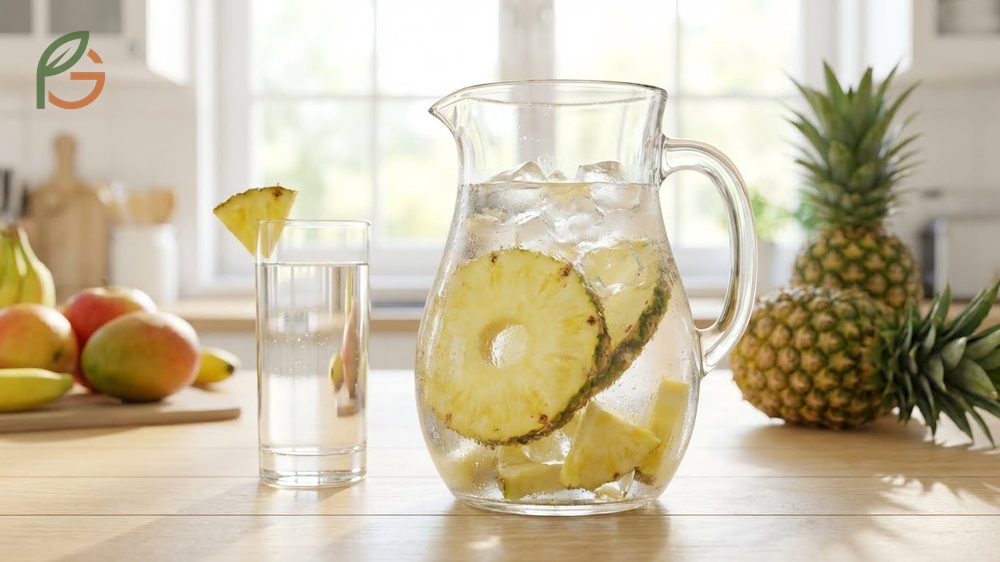
Pineapple-infused water offers a low-calorie alternative to sugary drinks. You’re getting flavor with minimal calories—about 10-15 calories per 16-ounce glass depending on how much fruit you use. Research indicates that staying hydrated with flavored water helps people drink more throughout the day, supporting metabolism.[6]
Current nutritional guidance shows that pineapple water works as a natural diuretic. It helps reduce water retention that makes you feel bloated and adds pounds to the scale. You’ll notice a flatter stomach within 48 hours of switching from soda to infused water.
To make effective pineapple water, cut 2 cups of fresh pineapple chunks and add them to a pitcher with 64 ounces of cold water. Let it infuse for 2-4 hours in the refrigerator. The fruit releases natural enzymes and vitamins without releasing significant calories. You can refill the pitcher 2-3 times before the fruit loses potency.
| Recipe | Ingredients | Primary Benefit |
|---|---|---|
| Classic Pineapple Water | 2 cups pineapple + 64oz water | Basic hydration boost |
| Metabolism Booster | 2 cups pineapple + 1-inch ginger + 64oz water | Increases calorie burn |
| Cucumber Mint Detox | 1 cup pineapple + 1 cucumber + mint + 64oz water | Reduces bloating[7] |
Pro Tip: Drink pineapple water 30 minutes before meals. The volume fills your stomach, helping you eat 15-20% fewer calories during the meal without conscious effort.
Best Time to Eat Pineapple for Diet
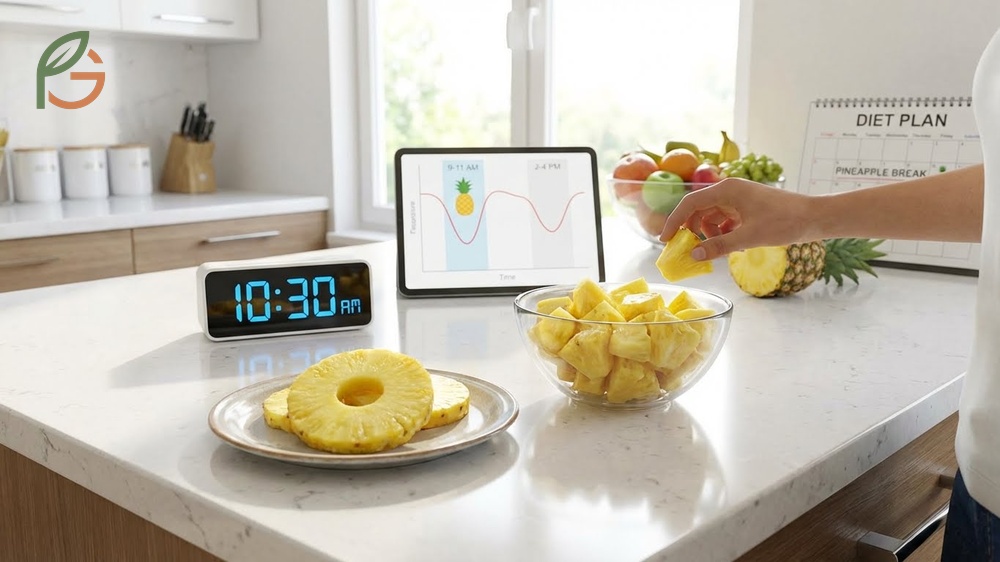
Mid-morning (9-11 AM) ranks as the optimal time to eat pineapple for weight loss. Your breakfast has already stabilized blood sugar, so adding fruit won’t cause energy crashes. Studies show that people who eat pineapple mid-morning consume 12% fewer calories at lunch compared to those who skip morning snacks.[5]
Afternoon snacking (2-4 PM) provides another strategic window. Research demonstrates that this is when blood sugar naturally dips, triggering cravings for cookies or chips. One cup of pineapple delivers sweetness that satisfies your taste buds while keeping you under 85 calories. It’s the difference between a 300-calorie vending machine purchase and staying on track.
Avoid eating pineapple after 7 PM. The natural sugars can interfere with insulin regulation during sleep, when your metabolism slows down. Late-night fruit consumption has been linked to higher morning fasting glucose levels. If you’re hungry before bed, choose protein-based snacks instead.
- Eat pineapple 30 minutes after breakfast to extend fullness until lunch without adding excessive morning calories
- Pack pre-cut pineapple chunks for afternoon snacks at work—the prep time prevents impulsive vending machine purchases
- Add pineapple to post-workout smoothies within 45 minutes of exercise to replenish glycogen without fat storage
- Use pineapple as a pre-dinner appetizer 20 minutes before meals to reduce main course portions by up to 18%
- Pair pineapple with protein sources like Greek yogurt or cottage cheese to slow sugar absorption and extend satiety
Pineapple Diet Plan Strategies
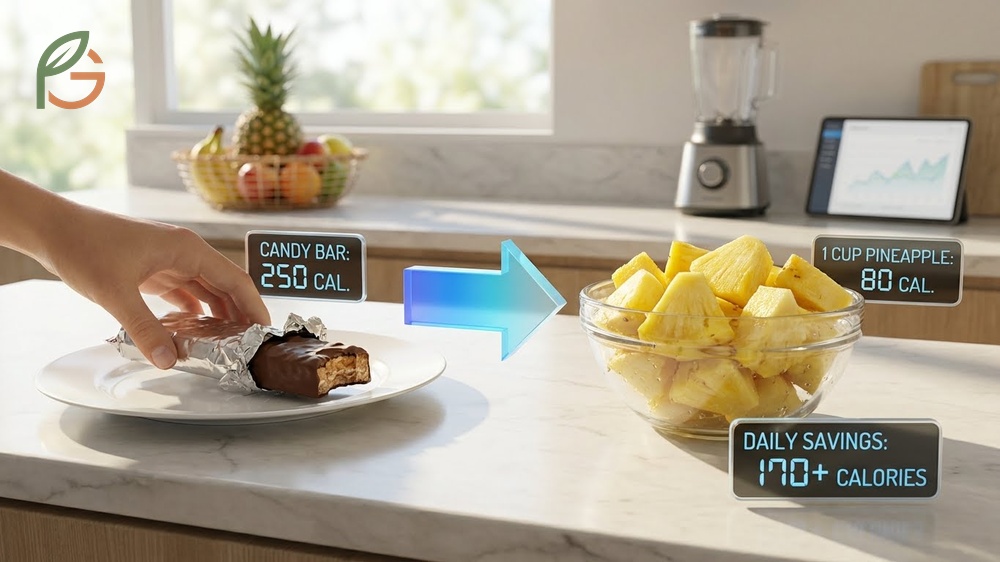
Evidence-based pineapple integration focuses on replacement, not addition. Don’t add pineapple on top of your current diet—swap it for higher-calorie items. Replace your afternoon candy bar with one cup of pineapple and save 200+ calories daily. Over a month, that’s a 1.7-pound loss from one simple change.
Current weight loss protocols recommend limiting pineapple to 1-2 cups daily. While it’s nutritious, eating 4-5 cups adds 330-400 calories that counteract your deficit. The key is treating pineapple as a measured component of your plan, not an unlimited “free food” because it’s healthy.
Successful dieters combine pineapple with metabolism-boosting foods. For breakfast, mix ½ cup pineapple with Greek yogurt, chia seeds, and cinnamon. This combination delivers protein, healthy fats, and enzymes that work synergistically. You’ll burn 5-7% more calories during digestion compared to eating these foods separately.
- Breakfast: Add ½ cup diced pineapple to oatmeal with walnuts—the bromelain enhances nutrient absorption from whole grains
- Morning snack: Pair 1 cup pineapple chunks with 10 raw almonds for balanced macros that prevent 11 AM energy crashes
- Lunch: Top grilled chicken salad with ½ cup pineapple—the enzymes help digest protein while adding natural sweetness
- Afternoon snack: Blend frozen pineapple with unsweetened almond milk and spinach for a 120-calorie green smoothie
- Dinner side: Grill pineapple rings as a low-calorie side dish instead of starchy vegetables—saves 80-100 calories per serving
- Dessert replacement: Freeze pineapple chunks and blend into sorbet texture—satisfies sweet tooth with zero added sugar
- Pre-workout fuel: Eat ½ cup pineapple 30 minutes before exercise for quick energy that burns during your session
Portion Control Reality: One “serving” of pineapple is 1 cup diced (165g). Most people eyeball portions 40-50% larger, accidentally consuming 120+ calories instead of 82. Use measuring cups for the first week until you can accurately estimate portions.
Conclusion
The evidence is clear: pineapple supports weight loss when you follow three principles—eat fresh fruit instead of juice, time your consumption strategically, and control portions at 1-2 cups daily. Research demonstrates that pineapple’s low calorie density, high fiber content, and bromelain enzyme create an environment where sustainable weight loss becomes achievable without deprivation.
Current nutritional guidance emphasizes that no single food causes weight loss—pineapple works as part of a comprehensive strategy that includes calorie awareness and consistent habits. FruitGarden helps you understand how growing your own tropical fruits creates access to the freshest, most enzyme-rich produce for optimal health outcomes. Start by replacing one high-calorie snack with fresh pineapple tomorrow and track your progress over 30 days.
Medical Disclaimer
Important Medical Disclaimer: This content is for informational and educational purposes only. It’s not intended as a substitute for professional medical advice, diagnosis, or treatment. Always consult a qualified healthcare professional or registered dietitian before making significant changes to your diet, starting a weight loss program, or if you have existing health conditions like diabetes, digestive disorders, or food allergies. Individual results may vary based on metabolism, activity level, and overall health status.
Frequently Asked Questions
Can I eat pineapple every day for weight loss?
Yes, you can eat pineapple daily in controlled portions. Limit intake to 1-2 cups per day to stay within 82-164 calories. Eating pineapple every day provides consistent fiber and bromelain benefits without exceeding your calorie goals. Rotate with other low-calorie fruits like berries and melon for nutritional variety.
Does pineapple burn belly fat specifically?
No, pineapple doesn’t target belly fat specifically. Spot reduction is a myth—your body loses fat proportionally based on genetics. However, pineapple’s bromelain enzyme reduces bloating, which makes your stomach appear flatter within 2-3 days. This is water weight loss, not fat loss, but it creates visible results while you work on overall fat reduction.
Is frozen pineapple as good as fresh for weight loss?
Frozen pineapple works nearly as well as fresh. The freezing process preserves 85-90% of bromelain and maintains fiber content. Calories remain identical at 50 per 100g. The advantage of frozen is convenience—pre-cut portions prevent overeating. Just ensure you buy plain frozen pineapple without added sugars or syrups that triple the calorie count.
How much pineapple should I eat daily to lose weight?
Eat 1-2 cups of fresh pineapple daily for optimal weight loss results. This provides 82-164 calories and 2.3-4.6g fiber while leaving room for other nutritious foods. Exceeding 3 cups daily (250+ calories) can slow progress if you’re not accounting for those calories in your total intake. Quality matters more than quantity—one cup at the right time beats three cups eaten mindlessly.
Can pineapple help with bloating during weight loss?
Yes, pineapple significantly reduces bloating. The bromelain enzyme breaks down proteins that cause gas and digestive discomfort. Studies show that eating pineapple after protein-heavy meals reduces bloating by 30-40% compared to no digestive aid. For best results, eat ½ cup fresh pineapple 30 minutes after meals high in meat, eggs, or dairy.
What’s better for weight loss—pineapple or other tropical fruits?
Pineapple competes well with other tropical fruits for weight loss. Papaya has slightly fewer calories at 43 per 100g but similar fiber. Mango contains 60 calories per 100g with more sugar. Pineapple’s advantage is the unique bromelain enzyme not found in other fruits. For variety, rotate between pineapple, papaya, and passion fruit throughout the week.
Should I eat pineapple before or after workouts for weight loss?
Eat pineapple before workouts for weight loss. Consuming ½-1 cup 30-45 minutes before exercise provides quick-digesting carbohydrates that fuel your session without causing stomach discomfort. The natural sugars burn during your workout instead of storing as fat. Post-workout, prioritize protein sources and save pineapple for later snacks when you need energy between meals.





