
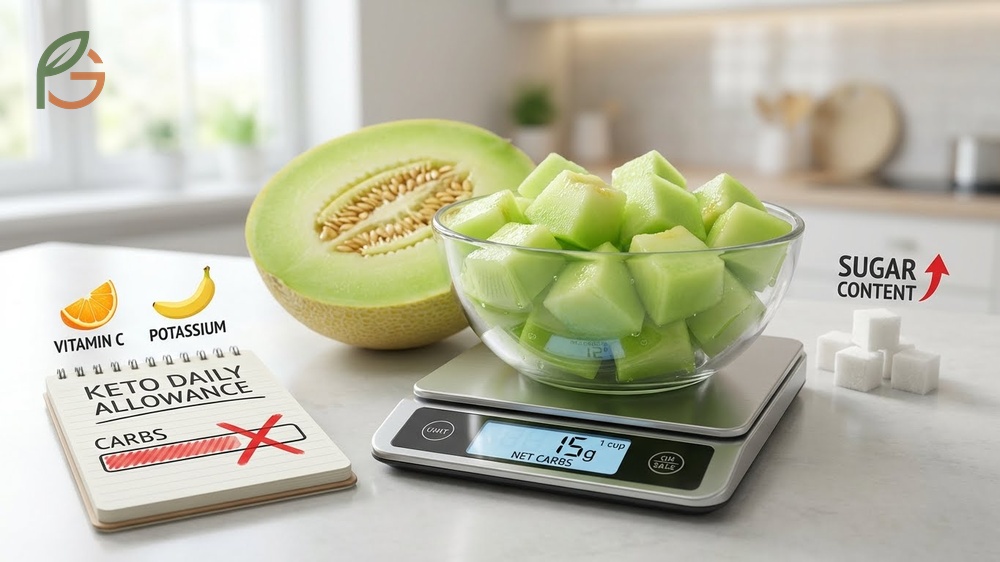
Is honeydew keto friendly? No, honeydew isn’t ideal for strict ketogenic diets. Research shows one cup contains 15g net carbs[1]—that’s 50-75% of your daily keto carb allowance. While honeydew offers vitamin C and potassium, its high sugar content makes it challenging for maintaining ketosis. FruitGarden synthesizes current nutritional data to help you make informed decisions about fruit choices on low-carb diets.
Quick Answer
Is Honeydew Keto Friendly

Honeydew melon doesn’t fit most ketogenic diet plans due to its carbohydrate density. Current nutritional data shows that 100g of honeydew contains 8.3g net carbs[2], which means even small portions consume a significant chunk of your daily carb allowance. Most keto practitioners target 20-30g net carbs daily to maintain ketosis[4].
The melon’s sugar composition presents another challenge. With 14g of natural sugars per cup[1], honeydew can trigger insulin responses that interfere with fat-burning metabolic states. Studies demonstrate that high-sugar fruits disrupt ketone production by shifting your body back toward glucose metabolism.
What often gets overlooked is that honeydew’s low fiber content—just 1g per cup[1]—means you can’t subtract much to calculate net carbs. Unlike berries that offer 8g fiber per cup to offset total carbohydrates, honeydew provides minimal fiber benefit while delivering concentrated sugars.
Understanding Keto Carb Limits
The ketogenic diet operates on strict macronutrient ratios: 70% fat, 20-25% protein, and 5-10% carbohydrates[4]. For most people, this translates to 20-30g net carbs daily. A single cup of honeydew consumes 50-75% of that budget, leaving little room for vegetables, nuts, or other nutrient-dense low-carb foods.
Research shows that exceeding 30g net carbs typically kicks your body out of ketosis within 2-4 hours. This metabolic shift halts fat burning and restarts glucose dependence, negating the primary benefits people seek from ketogenic eating patterns.
Honeydew Macronutrient Breakdown
Beyond carbohydrates, honeydew’s macronutrient profile doesn’t align with keto requirements. The melon contains only 0.14g fat per 100g[2] and minimal protein at 0.54g[2]. Successful keto eating emphasizes high-fat, moderate-protein foods—honeydew delivers neither.
This combination of high carbs and low fats represents the exact opposite of what ketogenic diets require. Unlike avocados that provide 15g fat per 100g alongside only 2g net carbs, honeydew offers no strategic advantage for maintaining ketosis.
Important Note: If you’re transitioning into keto or following a cyclical ketogenic approach, consuming honeydew during carb-loading phases may fit your plan. However, strict daily keto practitioners should avoid it entirely.
Honeydew Carb Content
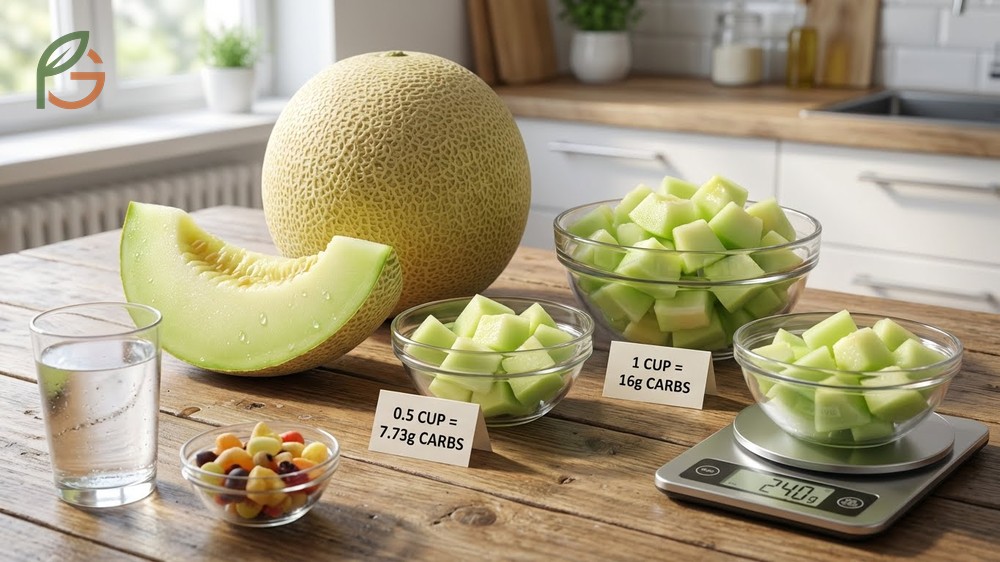
Honeydew’s carbohydrate content varies significantly by serving size, making portion awareness critical. A half-cup serving contains 7.73g total carbohydrates[5], while a full cup jumps to 16g[1]. Most people underestimate serving sizes when eating fresh melon, often consuming 1.5-2 cups in a single sitting.
The melon’s high water content—approximately 90%—creates deceptive volume. What feels like a small snack actually delivers substantial carbohydrates because you can eat larger quantities without feeling full. This differs from dense foods like nuts, where natural satiety signals limit overconsumption.
Serving Size Impact
Different cutting methods produce varying serving sizes with distinct carb loads. A typical wedge (one-tenth of a medium melon) weighs approximately 228g and contains 19.5g carbohydrates[6]—already exceeding most keto practitioners’ daily limits. Even “small” 100g portions deliver 9.1g total carbs[2].
Current guidance emphasizes measuring fruits by weight rather than volume to ensure accuracy. Cup measurements introduce variability depending on cube size and packing density, potentially causing you to exceed carb targets without realizing it.
This table compares serving sizes of honeydew melon showing weight, total carbohydrates, fiber, net carbs, and sugar content across five common portion sizes
| Serving Size | Weight | Total Carbs | Fiber | Net Carbs | Sugars |
|---|---|---|---|---|---|
| 100g portion | 100g | 9.1g[2] | 0.8g | 8.3g | 8.1g |
| 1/2 cup diced | 85g | 7.73g[5] | 0.7g | 7g | 7.2g |
| 1 cup diced | 170g | 16g[1] | 1g | 15g | 14g |
| 1 wedge (1/10 melon) | 228g | 19.5g[6] | 1.8g | 17.7g | 18.6g |
| Whole medium melon | 2,760g | 235g[6] | 22g | 213g | 224g |
Glycemic Response
Honeydew’s glycemic index of 62-65[2] places it in the medium-GI category, meaning it raises blood sugar moderately fast. While not as problematic as white bread (GI 70), it still triggers insulin release that can disrupt ketosis. The glycemic load per serving sits around 5-9, depending on portion size.
Research demonstrates that even moderate-GI foods can impact ketone production when consumed in typical serving sizes. Unlike low-GI berries that cause minimal blood sugar fluctuations, honeydew creates a metabolic response incompatible with sustained fat-burning states.
Net Carbs Honeydew
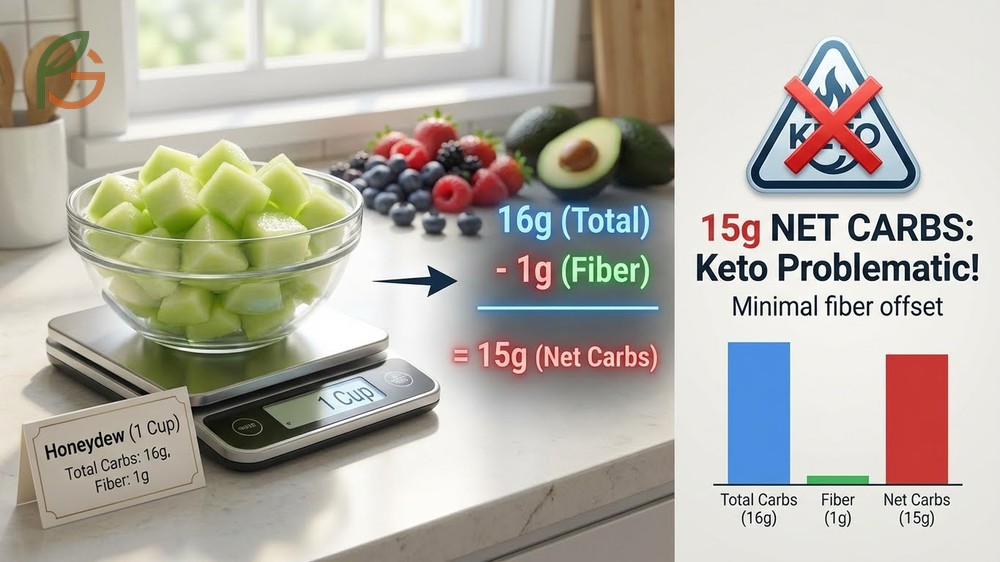
Calculating net carbs for honeydew reveals why it’s problematic for keto diets. The formula subtracts fiber from total carbohydrates: 16g total carbs minus 1g fiber equals 15g net carbs per cup[1]. This minimal fiber content means you can’t offset much through the net carb calculation that helps with other fruits.
The 8.3g net carbs per 100g[2] ratio remains consistently high regardless of serving method. Whether you eat diced pieces, blended in smoothies, or sliced wedges, the net carb density stays problematic for ketogenic goals. Most keto-friendly fruits offer 3-5g net carbs per 100g—honeydew nearly doubles that threshold.
Agricultural data shows honeydew’s carbohydrate composition is approximately 89% simple sugars with only 9% fiber[2]. This ratio means there’s little buffer against blood sugar spikes, making it unsuitable for maintaining stable ketone levels throughout the day.
Keto Calculation Tip: When determining if a food fits keto, aim for less than 5g net carbs per 100g as a general guideline. Honeydew’s 8.3g per 100g exceeds this threshold by 66%, making it a poor choice for strict ketogenic eating.
- Minimal fiber content (only 0.8g per 100g) provides negligible net carb reduction
- High fructose concentration (3g per 100g) bypasses normal satiety mechanisms
- Water content creates false volume, encouraging overconsumption beyond planned portions
- Lack of fat or protein means no macronutrient balance to slow glucose absorption
- Natural sweetness triggers cravings for additional carbohydrates in susceptible individuals
Keto Melon Options
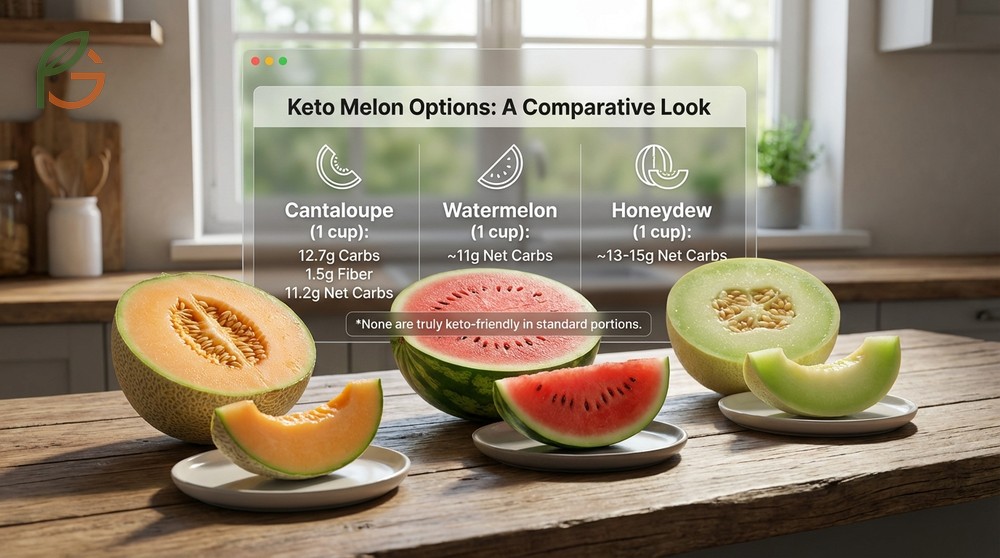
Among melons, watermelon offers the best option for occasional keto consumption with 11g net carbs per cup[7]—approximately 27% fewer carbs than honeydew. Cantaloupe follows with 12.7g net carbs per cup[3], making it slightly better than honeydew but still challenging for strict keto adherence.
Current nutritional guidance emphasizes that no melon truly qualifies as “keto-friendly” in normal serving sizes. The reason is simple: all melons evolved to store energy as sugars, giving them inherently high carbohydrate densities that conflict with ketogenic macronutrient requirements. Most people find it easier to avoid melons entirely rather than practice the extreme portion control necessary to fit them into daily carb limits.
If you choose to include melons on a modified low-carb approach (40-50g carbs daily), watermelon provides the most strategic choice. Its higher water content relative to sugar concentration means you get more volume per carb gram compared to honeydew or cantaloupe.
| Melon Type | Net Carbs (per cup) | Sugar Content | Keto Rating |
|---|---|---|---|
| Watermelon | 11g[7] | 9-10g | Best melon option (still limit portions) |
| Cantaloupe | 12.7g[3] | 12-13g | Moderate (occasional small servings) |
| Honeydew | 15g[1] | 14g | Not recommended for keto |
- Limit portions to 1/2 cup or less (approximately 5-7g net carbs) and count meticulously
- Pair melon with high-fat foods like full-fat Greek yogurt or nuts to slow glucose absorption
- Consume only after intense exercise when muscle glycogen depletion allows for higher carb tolerance
- Reserve melon for weekly “carb cycling” days if following a targeted ketogenic protocol
- Choose watermelon over honeydew or cantaloupe when you do indulge for maximum volume-to-carb ratio
Honeydew Sugar Content
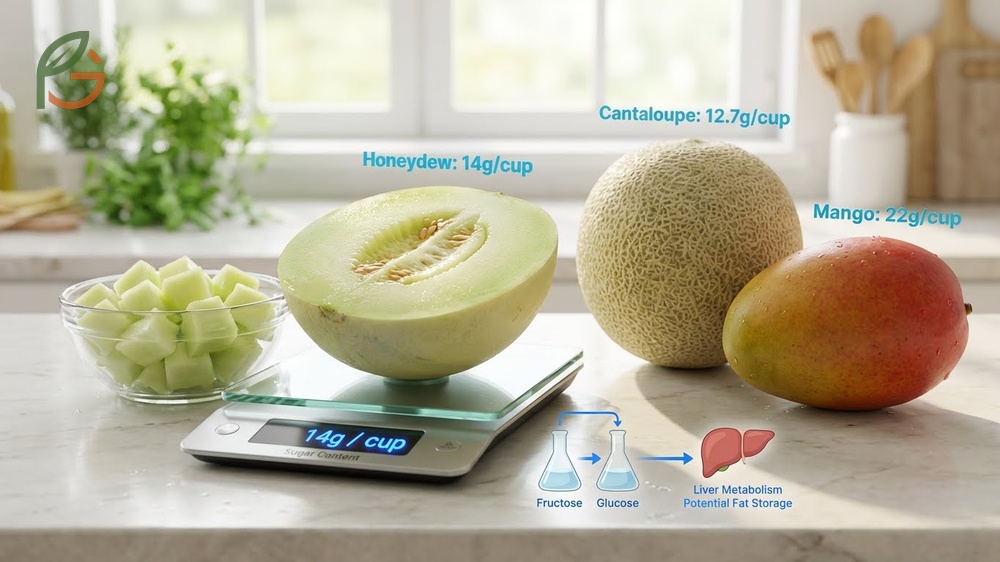
Honeydew contains 14g sugar per cup[1], composed primarily of fructose (3g per 100g) and glucose in roughly equal proportions. This natural sugar concentration ranks honeydew among the sweetest melons—higher than cantaloupe at 12.7g per cup but lower than some tropical fruits like mango (22g per cup).
The sugar composition matters for keto success. Fructose metabolism occurs exclusively in the liver, where it can promote fat storage and interfere with ketone production when consumed in quantities exceeding 20-30g daily. A single cup of honeydew delivers nearly half that threshold, leaving minimal room for other fructose sources in vegetables or condiments.
Evidence suggests that honeydew’s sugar density increases as the fruit ripens. Fully ripe melons may contain 1-2g more sugar per serving compared to underripe versions as starches convert to simple sugars. This ripeness effect makes precise carb counting challenging without laboratory analysis of individual fruits.
- Triggers insulin release that temporarily halts fat burning and ketone production
- Fructose component stimulates liver to produce and store triglycerides rather than oxidize fatty acids
- Sweet taste can reactivate sugar cravings in people transitioning from standard American diets
- Rapid absorption (due to low fiber) causes blood sugar spikes within 15-30 minutes of consumption
- Glycemic response often leads to reactive hypoglycemia 2-3 hours later, triggering additional hunger
- High sugar-to-fiber ratio (14:1) provides no metabolic advantage for maintaining satiety on calorie-restricted keto plans
Low Carb Fruits
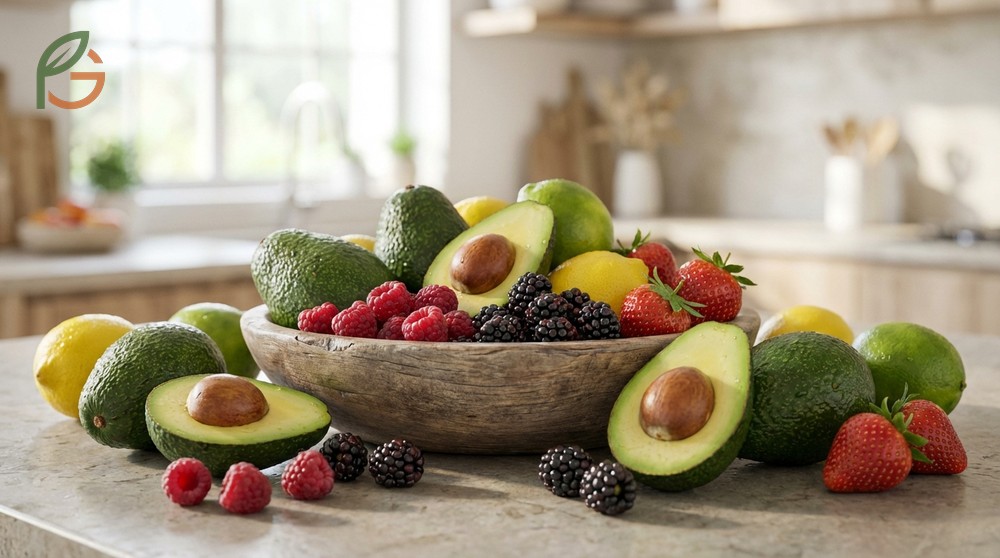
Berries represent your best fruit options for ketogenic eating. Raspberries lead with only 7g net carbs per cup[3] thanks to 8g fiber offsetting 15g total carbohydrates. Blackberries offer similar benefits, while strawberries provide versatility for recipes and snacking with comparable carb profiles.
Research demonstrates that berries deliver antioxidant benefits that support the metabolic stress reduction goals many people pursue through ketogenic diets. Unlike honeydew’s minimal micronutrient density relative to carb cost, berries provide anthocyanins, ellagic acid, and vitamin C in nutritionally significant amounts per carb gram consumed.
Avocados stand as the ultimate keto fruit with only 2g net carbs per 100g alongside 15g beneficial fats. While technically berries in botanical terms, avocados function as savory foods in most diets. Their high fat content makes them ideal for boosting ketone production while adding minimal carbohydrates.
Current dietary guidance for ketogenic eaters emphasizes choosing fruits primarily for micronutrient benefits rather than sweetness or variety. This framework makes berries and avocados clear winners, while relegating melons like honeydew to occasional treats during maintenance phases or cyclical approaches.
- Raspberries: 7g net carbs per cup with 8g fiber providing gut health and antioxidant benefits
- Blackberries: Similar carb profile to raspberries with additional vitamin K for bone health
- Strawberries: 9g net carbs per cup, versatile for desserts and smoothies
- Avocados: 2g net carbs per 100g with 15g healthy fats supporting ketone production
- Tomatoes: 4g net carbs per cup (technically fruit) with lycopene for cardiovascular benefits
- Olives: Negligible carbs with monounsaturated fats ideal for Mediterranean-style keto
- Lemons/Limes: Juice provides flavor with only 2-3g net carbs per whole fruit
Practical Strategy: Replace honeydew cravings with frozen raspberries blended with full-fat coconut cream. You’ll get a similar cold, sweet experience with 70% fewer net carbs and significantly higher fat content to support ketosis.
Conclusion
The evidence is clear: is honeydew keto friendly? No—honeydew’s 15g net carbs per cup makes it incompatible with strict ketogenic protocols requiring 20-30g daily totals. While the melon offers vitamin C and hydration benefits, its high sugar content and minimal fiber create metabolic challenges for maintaining ketosis. Better alternatives like raspberries, blackberries, and avocados deliver superior nutrition-to-carb ratios.
Current nutritional guidance emphasizes prioritizing low-carb fruits that support rather than sabotage ketogenic goals. FruitGarden recommends reserving honeydew for maintenance phases, carb-cycling days, or post-keto transitions rather than including it in daily strict ketogenic meal plans.
Medical Disclaimer
Important Medical Disclaimer: This content is for informational and educational purposes only. It is not intended as a substitute for professional medical advice, diagnosis, or treatment. Always consult a qualified healthcare professional or registered dietitian before making any changes to your diet, especially if you have diabetes, metabolic disorders, or other medical conditions. Individual carbohydrate tolerance varies significantly, and ketogenic diets may not be appropriate for everyone.
Frequently Asked Questions
Can I eat honeydew on a lazy keto diet?
Lazy keto (tracking only carbs, not all macros) still requires staying under 20-30g net carbs daily. One cup of honeydew consumes 15g of that allowance, leaving minimal room for vegetables, sauces, or other incidental carbs throughout your day. Most lazy keto practitioners find it impractical to include honeydew regularly while maintaining ketosis. If you choose to eat it, limit portions to 1/4 cup or less and track carefully.
How much honeydew can I eat without leaving ketosis?
Individual tolerance varies, but most people can handle 5-7g net carbs from fruit sources without disrupting ketosis. This translates to approximately 60-85g of honeydew (roughly 1/3 to 1/2 cup diced). However, this assumes you’re consuming minimal carbs from other sources that day. Many find such small portions unsatisfying, making complete avoidance easier than practicing extreme portion control.
Is honeydew better than bananas for keto?
Yes, honeydew contains fewer carbs than bananas. A medium banana packs 24g net carbs compared to honeydew’s 15g per cup. However, neither fruit fits well into ketogenic diets. If you’re choosing between them for an occasional treat, honeydew provides more volume and hydration for fewer carbs. Still, berries remain vastly superior options for regular fruit consumption on keto.
Does freezing honeydew change its carb content?
No, freezing doesn’t significantly alter carbohydrate content. Frozen honeydew retains the same 15g net carbs per cup as fresh. The freezing process may slightly change texture by rupturing cell walls, but the macronutrient composition remains essentially identical. Some people find frozen melon less satisfying due to texture changes, which may help with portion control.
What’s the best time to eat honeydew on keto if I choose to?
If you decide to include honeydew despite its high carb content, consume it immediately after intense exercise when muscle glycogen depletion creates temporary carb tolerance. Post-workout, your muscles can uptake glucose without significantly impacting ketone production. Pair it with 20-30g protein to support recovery while minimizing blood sugar spikes. Avoid eating honeydew in the evening, as nighttime carb consumption often disrupts ketosis more severely.
Can honeydew kick me out of ketosis?
Yes, a full cup of honeydew (15g net carbs) can temporarily disrupt ketosis for most people, especially when combined with other daily carb sources. Your body typically requires 4-8 hours to return to ketone-producing states after moderate carb intake, assuming you resume strict low-carb eating. If you’re fat-adapted (following keto for 8+ weeks), you may recover faster than keto beginners. However, frequent disruptions prevent full metabolic adaptation.
Are there any keto-friendly melon varieties?
No melon variety qualifies as truly keto-friendly in normal serving sizes. Watermelon offers the lowest net carbs at 11g per cup, followed by cantaloupe at 12.7g and honeydew at 15g. All exceed the 5g-per-serving threshold that most keto practitioners use for evaluating foods. If you’re craving melon flavor, consider using sugar-free melon-flavored water enhancers or extracts in keto-friendly recipes instead of consuming actual melon.





