
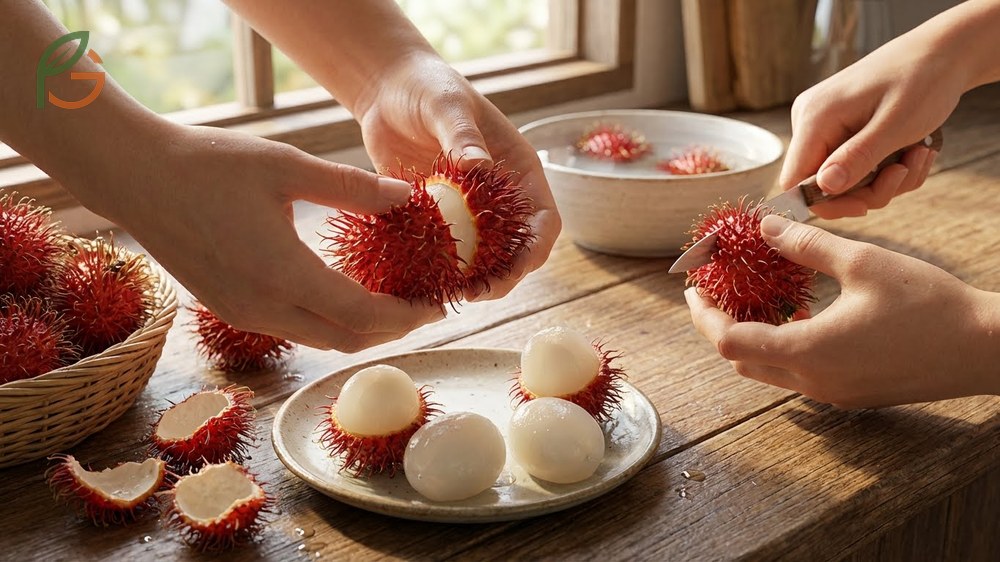
How to Peel Rambutan? Research shows you can use two straightforward methods: gently squeeze the middle until the skin splits, or cut around it with a small knife[1]. Both techniques reveal the translucent white flesh in seconds without damaging the fruit. FruitGarden synthesizes current horticultural research and practical techniques to help fruit enthusiasts master tropical produce preparation.
Quick Answer
How to Peel Rambutan
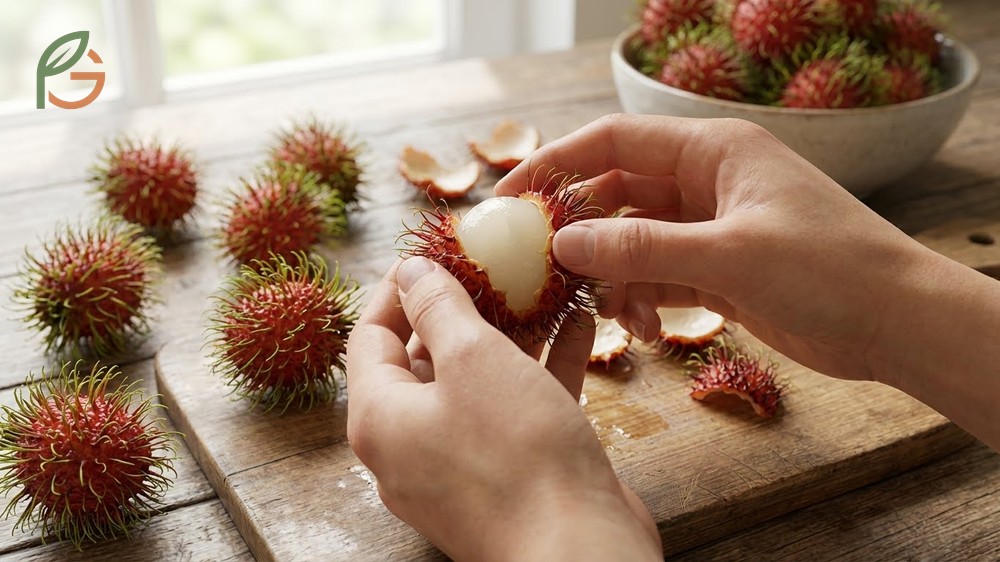
Peeling rambutan doesn’t require special tools or skills. The fruit’s hairy exterior looks intimidating, but those tendrils are soft and move aside easily when you apply pressure[2]. The skin underneath is thin, similar to a grape’s casing, making it one of the easiest tropical fruits to open.
What often gets overlooked is that rambutan’s leathery skin actually protects the delicate flesh better than most soft fruits. This natural packaging keeps the fruit fresh longer and prevents bruising during transport.
Two methods dominate home kitchens and commercial settings worldwide. Both take less than 10 seconds once you’ve practiced the motion twice.
Hand Squeeze Method
This technique requires no tools and works best for ripe fruits. Position your thumb and forefinger on opposite sides of the rambutan’s widest point. Apply steady pressure inward until you feel the skin crack—it’ll make a quiet pop.
The skin splits cleanly down one side, creating a natural opening. Pull the two halves apart like opening a hinged lid[1]. The edible portion slides out intact with minimal mess.
- Hold the rambutan horizontally between thumb and forefinger
- Position your fingers at the fruit’s equator (widest part)
- Squeeze gently until the skin cracks open
- Peel one side back completely like a lid
- Extract the flesh by pushing from the opposite end
Knife Cutting Technique
A paring knife gives you more control, especially with underripe fruits that resist squeezing. Make a shallow cut around the fruit’s circumference, scoring only the outer skin. Don’t press deep enough to pierce the translucent flesh underneath.
Once you’ve completed the circular cut, twist the two halves in opposite directions. They’ll separate cleanly at the score line. This method prevents juice loss and works reliably every time.
Important Note: Keep your knife blade shallow—less than 1/8 inch deep. Cutting too far damages the edible portion and can nick the seed, which releases bitter compounds.
Peeling Rambutan Fruit
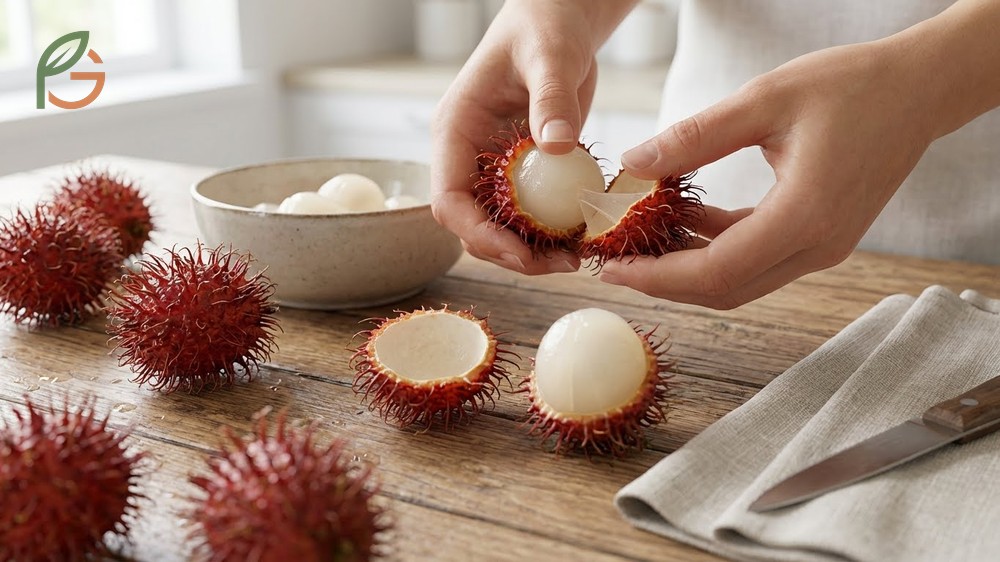
The peeling process reveals rambutan’s unique structure. Unlike citrus fruits with thick pith, rambutan has only a paper-thin membrane between skin and flesh. This membrane is edible and contains fiber, so most people eat it without noticing.
Fresh rambutans yield more easily than refrigerated ones. Cold temperatures firm up the skin, making the squeeze method harder to execute. If you’re working with chilled fruit, let it sit at room temperature for 5-10 minutes first.
Commercial growers in Thailand—which produces over 50% of the world’s supply[3]—recommend checking the stem area before peeling. Dark spots or sandy residue can indicate internal spoilage.
Removing the Seed
Rambutan’s oval seed sits in the center, loosely attached to the flesh by a thin brown membrane. Some varieties have clingstone seeds that stick tightly, while freestone types release easily. You can’t tell which you have until after peeling.
Make a small incision along the fruit’s length if you want the seed out before eating[2]. Scoop it out with a spoon or your fingertip. Most people skip this step and eat around the seed instead.
- Eat the flesh directly and discard the seed like an olive pit
- Cut the fruit lengthwise and pop the seed out with a spoon
- Bite around the seed if it’s a clingstone variety
- Use a paring knife to trace around the seed’s perimeter
- For recipes, remove seeds first to save prep time later
Eating Fresh Rambutan
The translucent flesh tastes mildly sweet with floral notes, similar to lychee or longan. Texture falls between a grape and a peeled lychee—firm enough to hold its shape but juicy when bitten. One cup provides 68 calories and 40% of daily vitamin C needs[5].
Studies demonstrate that consuming rambutan with the thin inner membrane intact increases fiber intake without affecting taste[6]. The membrane contains 0.9-2g dietary fiber per 100g, matching levels found in apples and oranges.
Rambutan Preparation Method
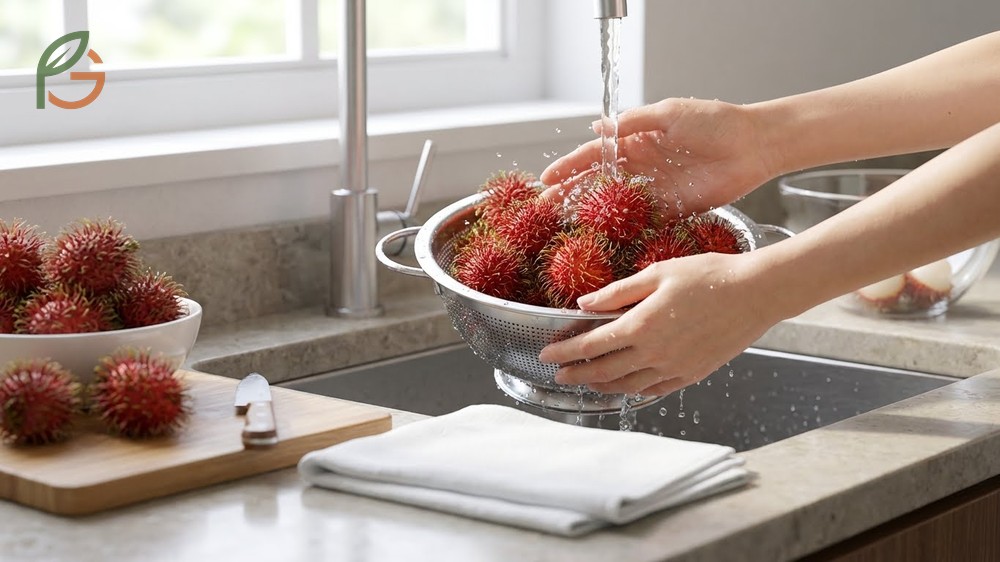
Preparation extends beyond just peeling. Current agricultural guidance emphasizes washing fruits before opening them, even though you don’t eat the skin. Surface bacteria can transfer to the flesh when your knife or fingers breach the exterior.
Rinse rambutans under cool running water for 10-15 seconds. Pat them dry with a clean towel before peeling. This simple step reduces contamination risk significantly.
For batch preparation—if you’re serving a group or meal-prepping—peel all fruits within a 30-minute window. Once exposed to air, the flesh oxidizes slowly, developing slight browning at the edges after 2-3 hours. Store peeled rambutans in an airtight container with a damp paper towel to maintain moisture.
This table compares selection criteria and storage conditions for rambutan at different ripeness stages including visual indicators and recommended storage temperatures
| Ripeness Stage | Visual Indicators | Best Use | Storage Duration |
|---|---|---|---|
| Underripe | Green skin with brown tendril tips | Wait 2-3 days before eating | 7-10 days at room temp |
| Peak Ripe | Bright red/yellow with green tendrils[3] | Eat immediately or within 3 days | 15-25 days at 50-54°F (10-12°C)[4] |
| Overripe | Darkened skin with black tendrils | Use in smoothies or cooking | 1-2 days refrigerated |
| Peeled | Translucent white flesh exposed | Consume within hours for best quality | 6-8 hours in airtight container |
- Wash fruits under running water before peeling to remove surface residue
- Dry rambutans completely to prevent slip during hand-peeling
- Peel only what you’ll eat immediately for maximum freshness
- Keep peeled fruits refrigerated in sealed containers if not eating right away
- Add a squeeze of lime juice to slow oxidation on cut surfaces
Pro Tip: If tendrils pull off easily when touched, the fruit is past its peak. Fresh rambutans have tendrils that resist gentle tugging. This tactile test works better than visual inspection alone.
Open Rambutan Easily
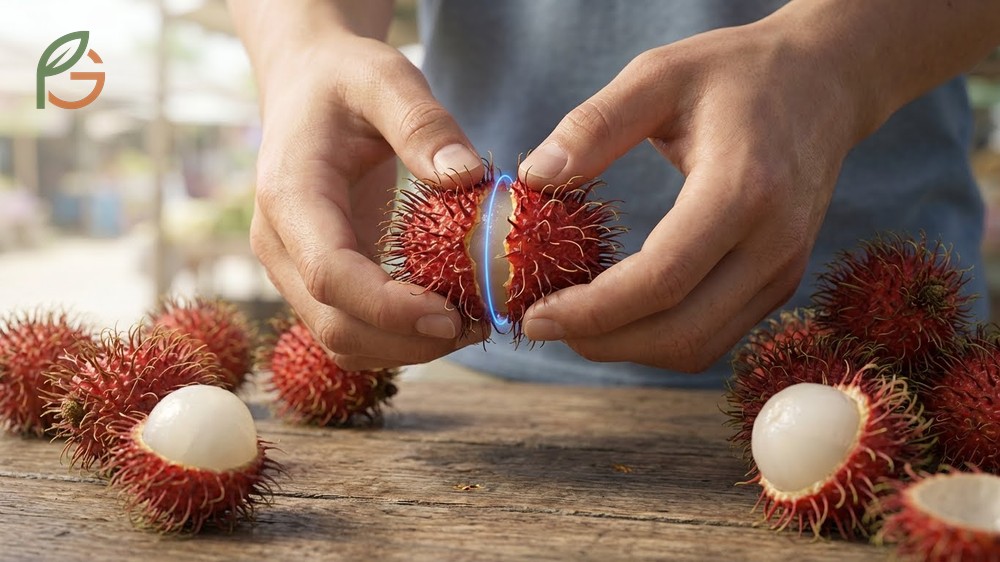
Mastering the opening technique comes down to understanding fruit anatomy. Rambutan belongs to the Sapindaceae family, native to Indonesia and Malaysia[3]. The fruit evolved its hairy exterior to protect against insects and birds, not to deter human consumption.
The equator method—squeezing at the widest circumference—works because that’s where the skin naturally separates during growth. Applying force there aligns with the fruit’s structural weak points. Squeezing near the stem or blossom end requires more pressure and often crushes the flesh.
Evidence suggests that room temperature fruits (68-72°F) open 30% easier than refrigerated ones. The skin becomes more pliable at warmer temperatures, reducing the force needed for the squeeze method.
For first-time peelers, start with the knife method. It builds confidence and lets you see the interior structure. After opening three or four fruits this way, the hand-squeeze technique becomes intuitive. Most people switch permanently to hand-squeezing once they’ve practiced.
Commercial fruit markets in Southeast Asia sell pre-scored rambutans for tourists unfamiliar with the peeling process. Vendors make one cut around the equator without removing the skin, allowing buyers to twist and open fruits easily.
Conclusion
The evidence is clear: How to Peel Rambutan requires just two simple methods—squeeze at the middle until it splits, or score around the equator with a knife. Both techniques work reliably and take seconds once you understand the fruit’s structure. Choosing ripe fruits with bright colors and fresh tendrils ensures the easiest peeling experience.
Current guidance emphasizes washing before peeling and storing unpeeled fruits at 50-54°F for optimal shelf life. FruitGarden continues to explore practical techniques that help home gardeners and fruit enthusiasts enjoy tropical produce with confidence.
Frequently Asked Questions
Do You Peel Rambutan Before Eating?
Yes, you must peel rambutan before eating. The hairy outer skin is inedible and leathery. Only the translucent white flesh inside is consumed, while the skin and seed are discarded.
Can You Eat the Thin Membrane on Rambutan?
Yes, the thin brown membrane clinging to the flesh is completely edible. It contains dietary fiber and doesn’t affect taste. Most people eat it without removing it first.
What’s the Fastest Way to Peel Multiple Rambutans?
The hand-squeeze method is fastest for batch peeling. Arrange fruits in a bowl, squeeze each one at the equator until it cracks, then return to peel them all at once. This assembly-line approach cuts prep time by half.
Why Won’t My Rambutan Peel Easily?
Underripe or refrigerated rambutans resist peeling. Let cold fruits warm to room temperature for 10 minutes. If the skin is still green or tendrils are stiff, the fruit needs 2-3 more days to ripen.
Should You Wash Rambutan Before Peeling?
Yes, rinse rambutans under cool water before peeling. Surface bacteria can transfer to the flesh when you cut or squeeze the fruit. Washing takes 10 seconds and significantly reduces contamination risk.
How Do You Know When Rambutan Is Ripe Enough to Peel?
Ripe rambutans have bright red or yellow skin with green, flexible tendrils. The fruit yields slightly to gentle pressure. Avoid fruits with black tendrils or dark spots, which indicate overripeness.
Can You Peel Rambutan Ahead of Time?
You can peel rambutan up to 6-8 hours ahead if stored properly. Place peeled fruits in an airtight container with a damp paper towel and refrigerate. They’ll develop slight browning after 2-3 hours but remain safe to eat.





