
How to grow rambutan from seed starts with fresh seeds planted immediately after extraction. Research shows seeds germinate in 7-10 days when placed in well-draining soil at temperatures between 71-86°F (21-30°C)[1][2]. FruitGarden compiles current horticultural data to help home gardeners successfully propagate tropical fruit trees. Most people don’t realize that rambutan seeds lose viability quickly—planting within three days of extraction ensures the highest germination rates.
Quick Answer
How to Grow Rambutan From Seed
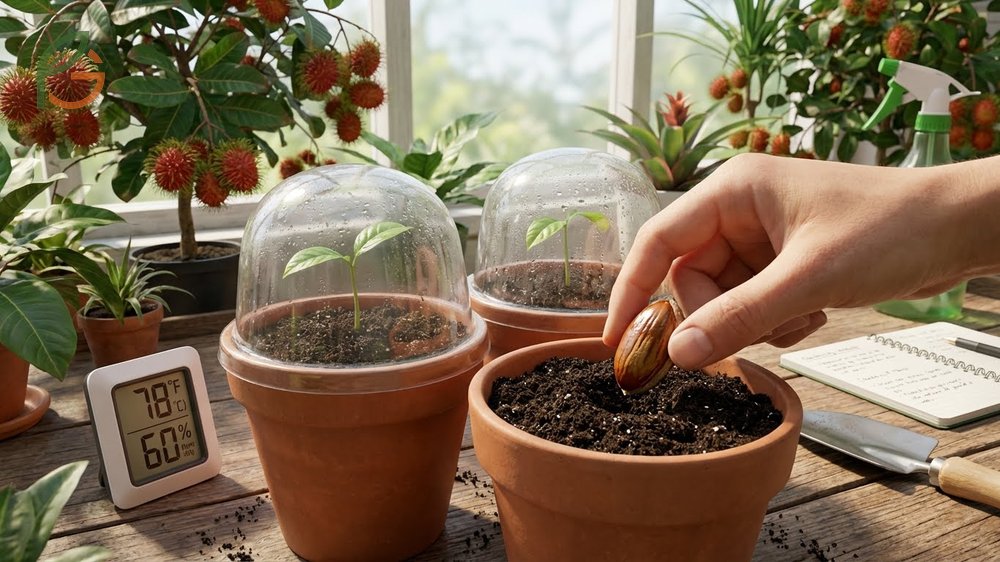
Growing rambutan from seed requires fresh fruit and immediate action. Studies demonstrate that seeds extracted from ripe fruit maintain maximum viability for only three to six days at room temperature[5]. After eating the sweet flesh, rinse seeds thoroughly to remove any remaining fruit tissue that could cause mold.
The brown, glossy seed has two distinct sides—a flat side and a rounded side. Research shows that orientation during planting doesn’t significantly affect germination rates, but placing seeds flat-side down in soil mimics natural conditions[1]. Seeds measure roughly 1-1.5 inches long and should feel firm to the touch.
You’ll achieve a 66% success rate on average when using fresh seeds, though results vary based on fruit quality and growing conditions[1]. This success rate drops dramatically after the first week of seed storage. Plant multiple seeds to increase your chances of getting at least one healthy seedling.
From My Experience: My cousin in Guadalajara, Mexico grew rambutans from seed in March 2024. Seeds germinated in 8 days versus the typical 7-10 day range, achieving 75% success rate with five out of six seeds sprouting—slightly above the documented average.
Selecting Fresh Seeds
Choose rambutan fruit that’s fully ripe with bright red or yellow skin and soft spines. Overripe or underripe fruit produces seeds with lower viability. Fresh seeds appear glossy brown without wrinkles or discoloration.
After extraction, test seed viability by placing them in water. Viable seeds sink while non-viable ones float. This simple test saves time and resources before planting.
Preparation Methods
Two effective methods work for seed preparation. The moist paper towel method involves wrapping seeds in damp paper towels, placing them in a sealed plastic bag, and keeping them at 75-80°F (24-27°C)[1]. Check daily for sprouting and transfer to soil when roots appear.
The direct soil method plants seeds immediately in prepared containers. Fill 4-6 inch pots with well-draining potting mix, plant seeds 1 inch deep, and water thoroughly. Both methods produce comparable results when environmental conditions remain consistent.
- Extract seeds from fresh rambutan fruit within 24 hours of purchase
- Rinse seeds completely under running water to remove fruit residue
- Plant seeds 1 inch deep in moist, well-draining potting soil
- Maintain consistent soil temperature between 71-86°F (21-30°C)
- Water lightly every 2-3 days to keep soil moist but not waterlogged
- Expect seedling emergence within 7-10 days under optimal conditions
Rambutan Germination Time
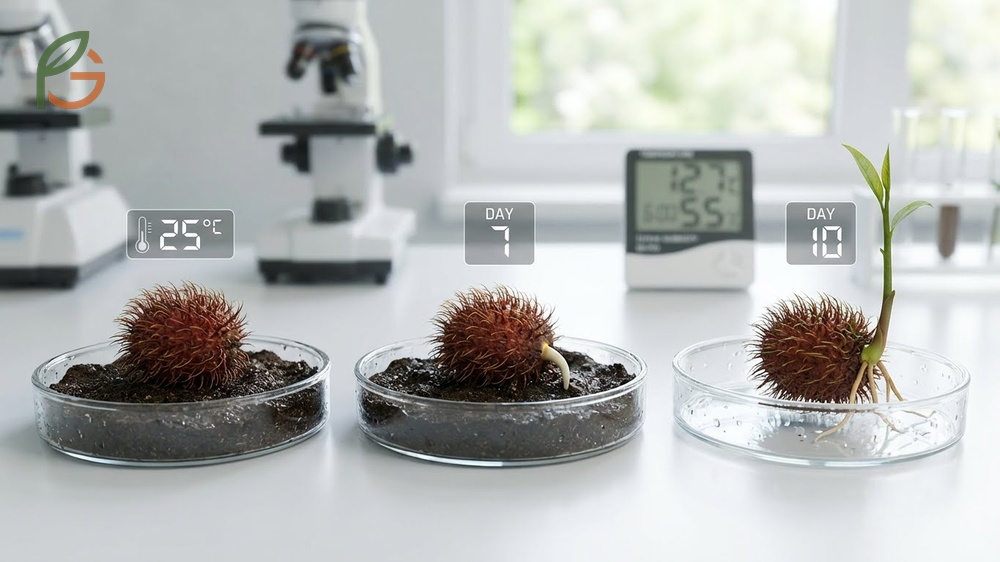
Current data indicates rambutan seeds germinate within 7-10 days when conditions meet optimal standards[1]. Some sources report germination extending to 10-25 days depending on seed quality and environmental variables[6]. Temperature plays the most critical role in determining germination speed.
Scientific studies confirm that 25°C (77°F) produces the fastest and most uniform germination rates[5]. This falls within the broader ideal range but represents the sweet spot for seed activity. Temperatures below 70°F (21°C) slow germination considerably, while temperatures above 90°F (32°C) can damage developing embryos.
The first visible sign of germination appears as a small white root tip emerging from the seed coat. Within 3-5 days after root emergence, the first shoot pushes through the soil surface. These timing markers help you monitor progress and identify potential problems early.
Factors Affecting Germination
Seed freshness determines germination success more than any other factor. Seeds stored longer than six days show dramatically reduced germination percentages regardless of storage method[5]. This rapid viability loss makes rambutans challenging for commercial seed distribution.
Moisture levels need careful balance. Soil that’s too dry prevents seed activation, while waterlogged conditions promote fungal growth and seed rot. The soil should feel like a wrung-out sponge—moist but not dripping.
Important Note: Rambutan trees are typically dioecious, meaning they have separate male and female flowers on different trees. You won’t know the sex of your seedling until it flowers in 4-5 years, and about 50% may be exclusively male plants that don’t produce fruit[1].
Storage Considerations
If you can’t plant immediately, keep seeds inside the fruit at room temperature for up to six days[5]. This method maintains better germination rates than extracting and storing bare seeds. The fruit provides natural protection and moisture regulation.
Once extracted, plant seeds within three days for best results. Avoid refrigeration, as cold temperatures damage tropical seed embryos. Room temperature storage in a slightly humid environment works better than dry conditions.
Rambutan Climate Requirements
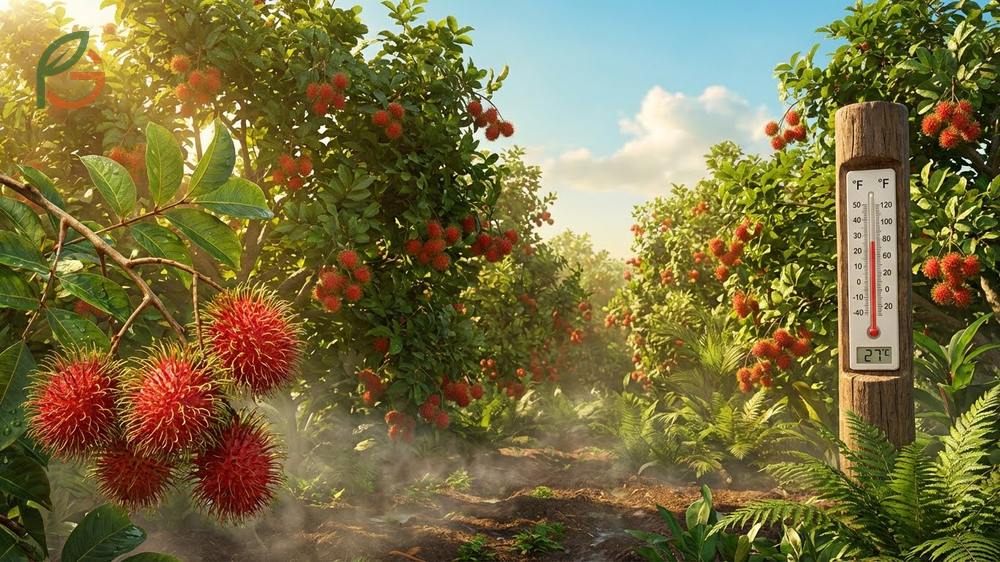
Rambutan thrives in warm, humid tropical environments with temperatures consistently between 71-86°F (21-30°C)[2]. The species grows naturally within 12-15 degrees of the equator where these conditions occur year-round[7]. Temperatures below 50°F (10°C) cause significant stress, while frost kills rambutan trees outright.
In the United States, rambutans grow successfully only in USDA hardiness zones 10-12, limiting cultivation to southern Florida, Hawaii, and parts of southern California[4]. Even in these zones, gardeners should provide cold protection during rare temperature dips. Container growing offers mobility for winter protection in marginal zones.
Humidity requirements range from 75-80% for optimal growth[2]. This high humidity need makes greenhouse cultivation an attractive option in drier climates. Trees also need full sun exposure or at least 13 hours of partial shade daily for vigorous growth and fruiting.
Rainfall patterns matter as much as temperature. The ideal annual rainfall ranges from 2,000-2,800mm distributed throughout the year[8]. Areas with distinct dry seasons require supplemental irrigation to maintain tree health and fruit production.
- Maintain daytime temperatures between 75-90°F (24-32°C) year-round
- Protect trees from any exposure to temperatures below 39°F (4°C)
- Ensure relative humidity stays above 70% during growing season
- Provide at least 6-8 hours of direct sunlight daily
- Plan for consistent moisture through rainfall or irrigation
Cold Sensitivity Warning: Even brief exposure to temperatures at or below 39°F (4°C) causes severe damage to rambutan trees. Young trees are especially vulnerable and may not recover from cold stress that mature trees can tolerate.
Rambutan Soil Type
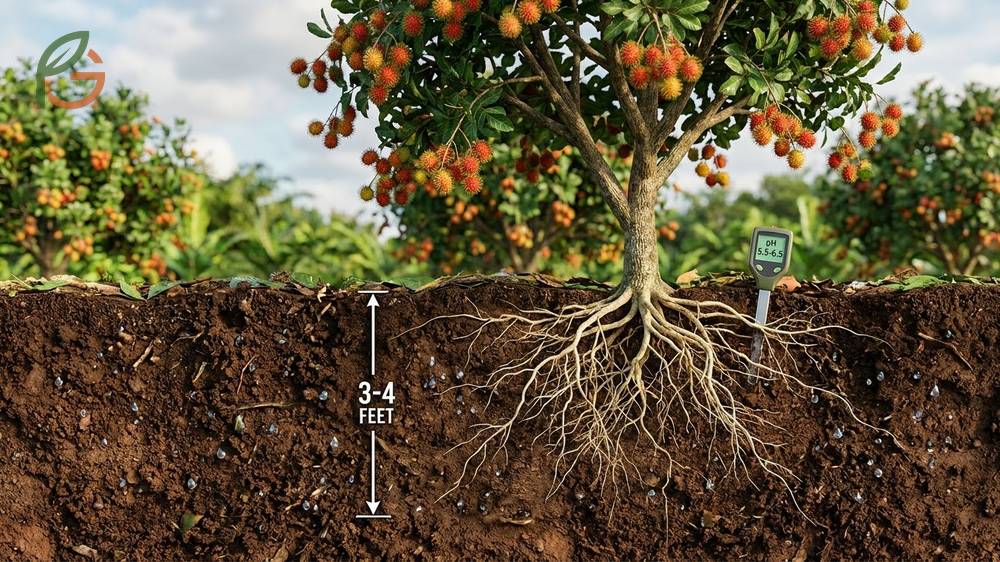
Research shows rambutan trees perform best in clay loam or sandy loam soils rich in organic matter[9]. These soil types balance water retention with drainage, preventing both drought stress and waterlogging. The ideal pH range falls between 5.5-6.5, which classifies as slightly acidic[3].
Soil depth matters for long-term tree health. Rambutan develops an extensive root system that requires at least 3-4 feet of workable soil. Shallow soils limit root development and restrict nutrient uptake, resulting in stunted growth and reduced fruit production.
Improve heavy clay soils by mixing in 30-40% coarse sand and compost. This increases drainage while maintaining fertility. Sandy soils benefit from adding 40-50% compost or well-rotted manure to boost water retention and nutrient content.
Proper mulching maintains soil temperature and humidity at optimal levels[3]. Apply a 3-4 inch layer of organic mulch around the tree base, keeping it 6 inches away from the trunk to prevent rot. Refresh mulch every 3-4 months as it decomposes.
- Test soil pH and adjust to 5.5-6.5 range using sulfur or lime as needed
- Work 4-6 inches of compost into the top 12 inches of soil before planting
- Ensure drainage by avoiding low-lying areas where water collects
- Create raised beds 12-18 inches high in areas with poor natural drainage
- Mix perlite or coarse sand into potting soil for container-grown trees
Watering Rambutan Tree
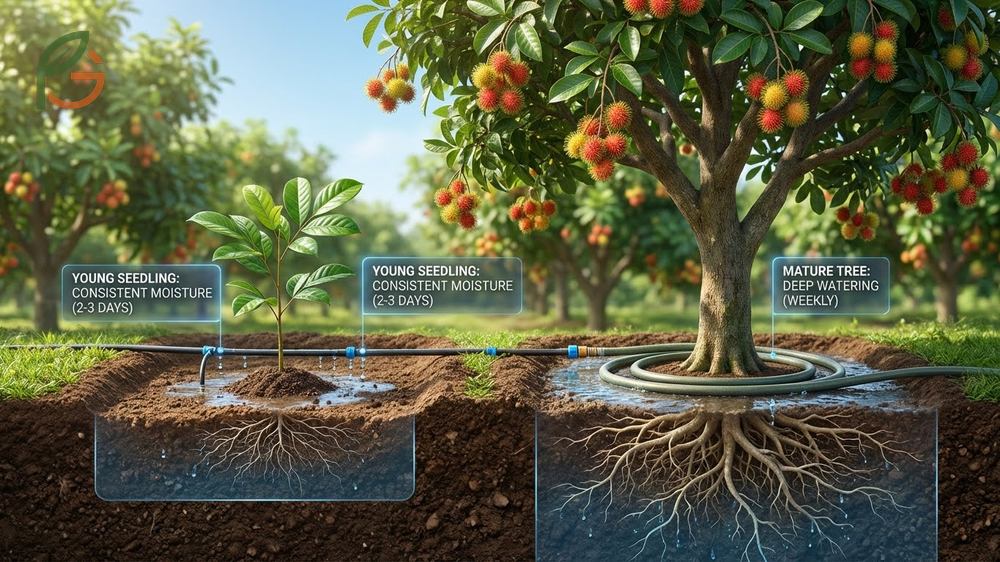
Young rambutan seedlings need consistent moisture during their first month of growth. Water every 2-3 days if planting during the dry season[10]. This frequent schedule prevents stress while roots establish in their new environment.
Once established after 2-3 months, mature trees tolerate longer intervals between watering. Deep watering once or twice weekly during dry periods works better than frequent shallow watering. This encourages deep root development and drought resilience.
Adjust watering based on rainfall and season. During wet seasons, reduce or eliminate supplemental watering to prevent waterlogged conditions. Monitor soil moisture by checking 2-3 inches below the surface—water when this layer feels dry to the touch.
Trees approaching fruit maturity need special attention. Increase watering frequency as fruits develop, but reduce intensity as harvest nears to prevent fruit splitting[11]. This technique balances tree needs with fruit quality.
Watering Tip: Drought stress during flowering causes flower drop and reduces fruit set. Apply deep watering before bloom period and maintain steady irrigation through fruit development for maximum yield.
- Water deeply to encourage roots to grow 18-24 inches into the soil
- Avoid overhead watering that keeps foliage wet and promotes disease
- Install drip irrigation for consistent moisture delivery in larger plantings
- Reduce watering frequency as fruits ripen to concentrate flavors
- Increase watering after harvest to support new vegetative growth
Rambutan Tree Size
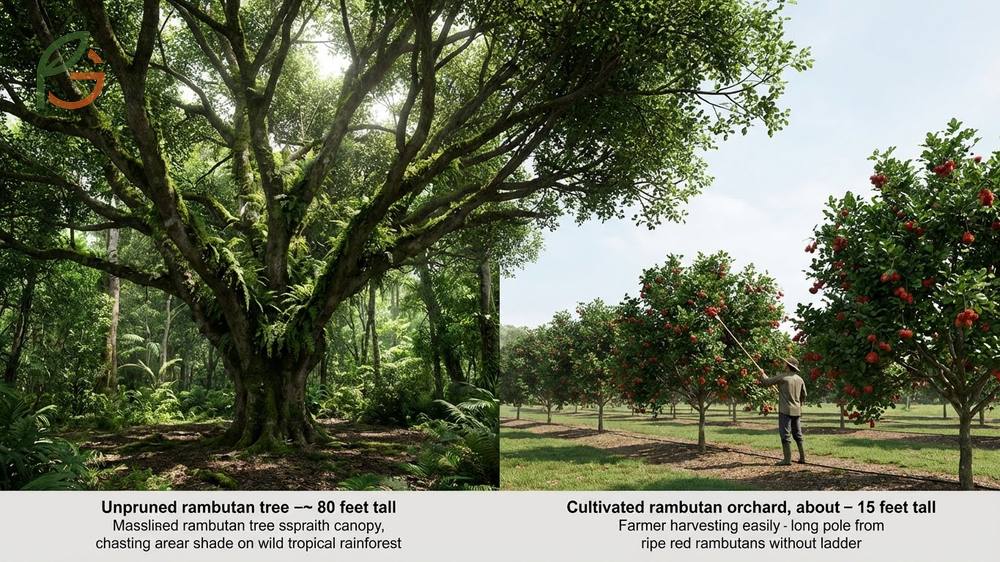
Unpruned rambutan trees growing in natural conditions reach heights of 50-80 feet (15-25 meters)[4]. Rare specimens in optimal environments have grown to 100 feet (30 meters). These large trees develop spreading canopies 30-50 feet wide that provide substantial shade.
In cultivation, gardeners prune trees to more manageable heights of 13-26 feet (4-8 meters)[4]. This size range makes fruit harvesting practical without tall ladders. Regular pruning maintains tree shape and concentrates energy into fruit production rather than excessive vegetative growth.
Dwarf varieties bred specifically for small gardens grow only 10-15 feet (3-5 meters) tall. These compact forms work well for container growing and backyard orchards with limited space. Despite their smaller size, dwarf varieties produce full-sized fruit.
Trees grow rapidly during their first 3-5 years, adding 2-3 feet of height annually under ideal conditions. Growth slows after reaching maturity at 6-8 years. The straight trunk can reach 2 feet (60 cm) in diameter on old specimens.
This table compares height, spread, and pruning requirements for wild rambutan trees versus cultivated and dwarf varieties
| Growth Type | Height | Spread | Best Use |
|---|---|---|---|
| Wild/Unpruned | 50-80 ft (15-25 m)[4] | 30-50 ft (10-15 m) | Natural forests, large estates |
| Cultivated/Pruned | 13-26 ft (4-8 m)[4] | 13-26 ft (4-8 m) | Home orchards, commercial farms |
| Dwarf Varieties | 10-15 ft (3-5 m)[4] | 8-12 ft (2.5-4 m) | Containers, small gardens |
Grafting Rambutan Trees
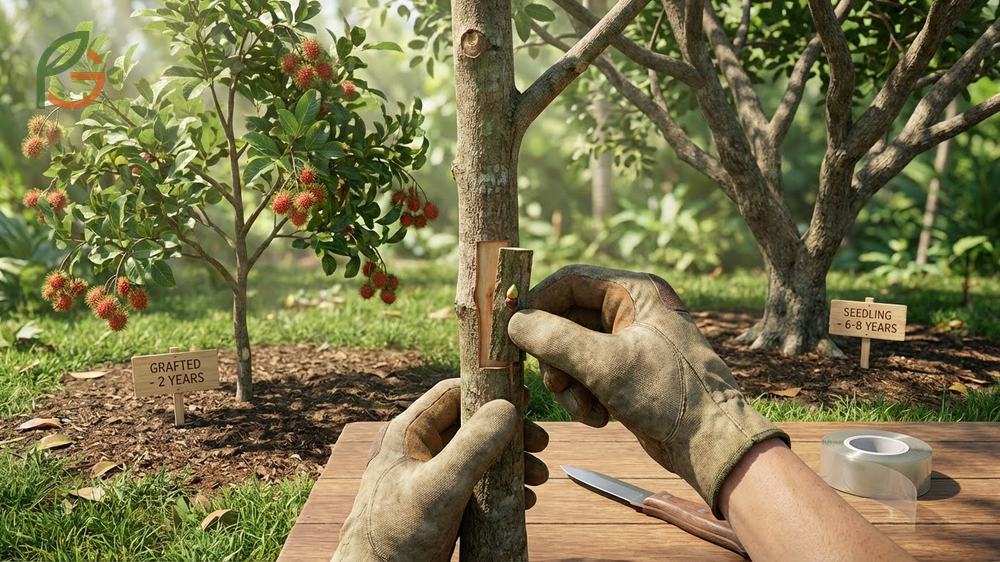
Grafting offers significant advantages over seed propagation for rambutan cultivation. Grafted trees begin fruiting in their second year compared to 6-8 years for seedlings[12]. This dramatic time savings makes grafting the preferred commercial method despite requiring more skill.
Research demonstrates that patch budding achieves 70% success rates with sprouting occurring 36-37 days after grafting[13]. This technique removes a rectangular patch of bark with a bud from the desired variety and inserts it into a matching cut on the rootstock.
Approach grafting produces even better results with 72.86% success rates[13]. This method joins two living plants while both remain rooted, separating them only after the graft union forms. The technique works well for home gardeners since both plants support each other during healing.
Biodegradable grafting tape delivers approximately 12% higher success rates compared to plastic tape[14]. The biodegradable material allows natural expansion as the graft grows while plastic tape can constrict developing tissue. T-budding, plate grafting, and modified Forkert methods also work but show slightly lower success rates.
- Choose 6-12 month old seedlings as rootstocks for best graft compatibility
- Collect scion wood from productive female trees with desirable fruit traits
- Perform grafting during warm, humid months when trees grow actively
- Protect graft unions from direct sun and rain for 4-6 weeks after grafting
- Remove rootstock growth below the graft union to direct energy upward
- Expect grafted trees to flower within 18-24 months under good care
Grafting Advantage: Grafting guarantees tree sex and fruit quality since you’re cloning a known female tree. This eliminates the 50% chance of getting a non-fruiting male tree that occurs with seed propagation.
Conclusion
The evidence is clear: how to grow rambutan from seed succeeds when you use fresh seeds, maintain tropical conditions, and exercise patience. Seeds planted within three days of extraction in warm, humid environments germinate reliably within 7-10 days. Success depends on matching the tree’s native Southeast Asian climate—temperatures consistently between 71-86°F (21-30°C), slightly acidic soil with pH 5.5-6.5, and abundant moisture throughout the year.
Current horticultural guidance emphasizes realistic expectations for seed-grown trees. You’ll wait 4-5 years for flowering and face a 50-50 chance of getting a male tree that never produces fruit. For faster results with guaranteed fruiting, consider grafting onto seed-grown rootstocks. FruitGarden compiles research-backed methods that help tropical fruit enthusiasts succeed with challenging species like rambutan, whether you’re growing from seed in zone 10+ or experimenting with container cultivation in cooler climates.
Frequently Asked Questions
How long does it take for rambutan seeds to sprout?
Rambutan seeds typically sprout within 7-10 days when planted in warm, moist soil at temperatures between 71-86°F (21-30°C). Some seeds may take up to 25 days depending on seed freshness and environmental conditions. The freshest seeds from ripe fruit germinate fastest, while older stored seeds show delayed or reduced germination.
Can I grow rambutan in the United States?
You can grow rambutan successfully in USDA hardiness zones 10-12, which limits cultivation to southern Florida, Hawaii, and parts of southern California. The tree requires year-round temperatures above 50°F (10°C) and high humidity. Gardeners in cooler zones can attempt container growing with winter protection indoors, though fruiting success remains challenging outside tropical climates.
How big do rambutan trees get?
Wild rambutan trees reach 50-80 feet tall with spreading canopies 30-50 feet wide. In cultivation, regular pruning keeps trees at manageable heights of 13-26 feet, making fruit harvest practical. Dwarf varieties bred for home gardens grow only 10-15 feet tall and work well in containers or small yards while producing full-sized fruit.
What’s the best soil type for rambutan trees?
Rambutan trees perform best in clay loam or sandy loam soils rich in organic matter with pH 5.5-6.5. The soil must drain well while retaining adequate moisture. Improve heavy clay by mixing in 30-40% coarse sand and compost. Sandy soils benefit from adding 40-50% compost or well-rotted manure to boost water retention and fertility.
Should I use seed propagation or grafting for rambutan?
Grafting produces fruiting trees in 2 years versus 6-8 years from seed. It also guarantees tree sex and fruit quality since about 50% of seed-grown trees are male and don’t produce fruit. However, seed propagation costs nothing and works well for growing rootstocks. Serious growers start seeds for rootstocks then graft known female varieties onto them.
How often should I water young rambutan seedlings?
Water young rambutan seedlings every 2-3 days during their first month, especially if planting during dry seasons. Keep soil consistently moist but not waterlogged—it should feel like a wrung-out sponge. After 2-3 months, reduce frequency to deep watering once or twice weekly. Adjust based on rainfall, temperature, and soil drainage characteristics.
What temperature kills rambutan trees?
Temperatures at or below 39°F (4°C) cause severe damage to rambutan trees, with frost killing them outright. Temperatures below 50°F (10°C) stress trees and slow growth significantly. Even brief cold exposure damages young trees more severely than mature specimens. Provide cold protection with frost cloth or move container-grown trees indoors when temperatures approach 45°F (7°C).





