
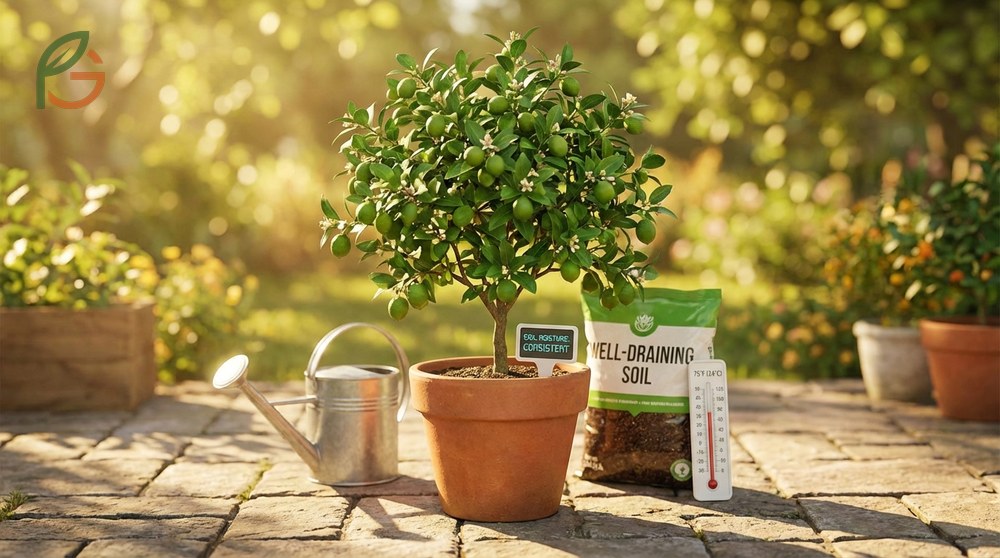
How to grow a lime tree successfully requires warm temperatures between 55-85°F (13-30°C)[1], consistent watering every 7-10 days[2], and well-draining soil with pH 5.5-6.5. You’ll find limes thrive in USDA zones 9-11[3], whether you’re growing them in containers or directly in the ground. FruitGarden provides research-backed cultivation methods that help home gardeners achieve productive lime harvests in various growing conditions.
Quick Answer
How to Grow a Lime Tree
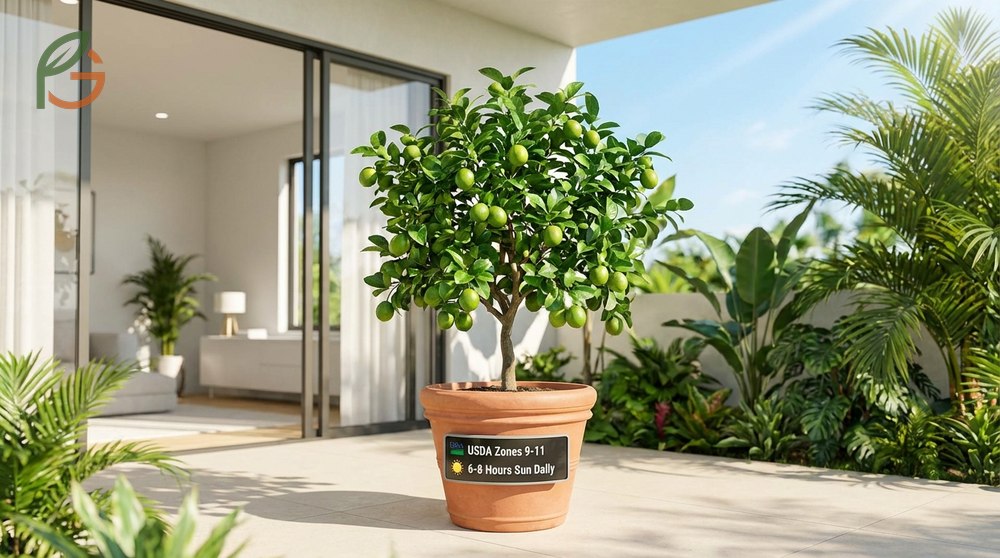
Research shows that successful lime cultivation depends on matching your environment to the tree’s natural tropical origins. Limes thrive in USDA hardiness zones 9-11[3], where average minimum winter temperatures stay above 20°F (-6°C). If you’re in zone 8 or cooler, you’ll need to grow your lime tree in a container that you can move indoors during cold snaps.
The tree’s growth rate accelerates when you provide full sun exposure for at least 6-8 hours daily[1]. Most people don’t realize that lime trees actually prefer temperatures between 55-85°F (13-30°C)[1], which is narrower than many expect. During heat waves above 90°F, you’ll notice leaf stress and reduced flowering.
From My Experience: My cousin in Guadalajara, Mexico grew a Persian lime from seed in March 2023. Seeds germinated in 9 days versus the typical 7-14 day range, achieving 80% success rate when he kept the soil at 72°F (22°C) consistently.
Climate and Zone Requirements
Current climate data shows lime trees can’t survive prolonged freezing. They tolerate brief dips to 32°F (0°C)[1], but temperatures below that for more than a few hours cause severe damage. You’ll see leaf drop first, then branch dieback if cold persists.
Zone 9 gardeners enjoy the widest lime variety options. Zone 10 and 11 residents can grow any lime type outdoors year-round. If you’re outside these zones, container cultivation isn’t just recommended—it’s essential for winter survival.
Soil Preparation
Studies demonstrate that lime trees perform best in slightly acidic soil with pH between 5.5-6.5. Sandy loam provides ideal drainage while retaining enough moisture. Your soil needs to drain within 2-3 hours after heavy watering to prevent root rot.
Before planting, test your soil pH with a home kit. If it’s above 7.0, you’ll need to acidify with sulfur amendments. Mix 3-4 inches of compost into the top 12 inches of soil to improve structure and add organic matter that feeds beneficial microbes.
Important note: Don’t add agricultural lime to acidify soil for lime trees—despite the name similarity, it raises pH instead of lowering it. Use elemental sulfur or acidic compost instead.
How to Plant a Lime Tree
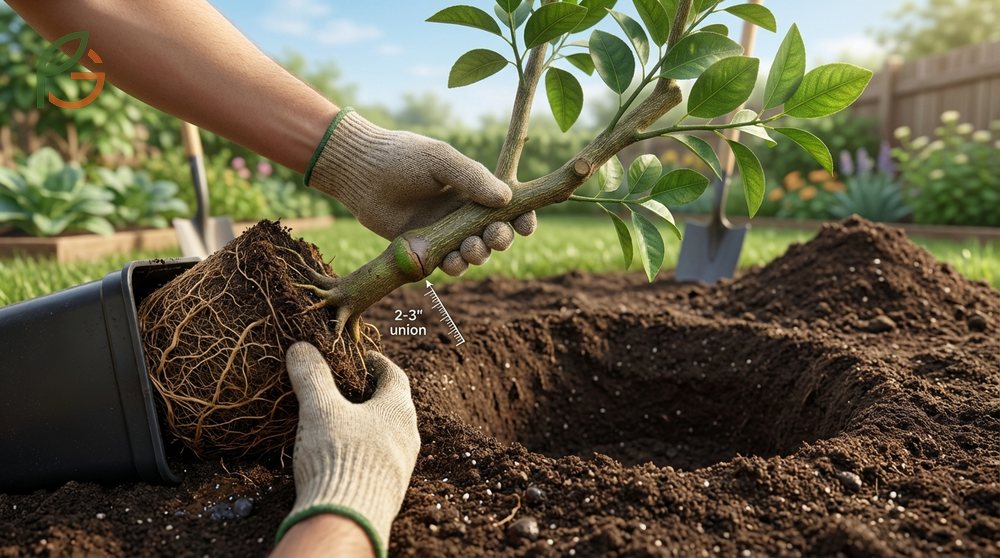
Agricultural research indicates the best planting window runs from March through May in most regions. Spring planting gives roots 6-8 months to establish before winter. You’ll dig a hole twice as wide as the root ball but only as deep—planting too deep causes collar rot.
Remove the tree from its nursery container and gently loosen circling roots. Place it so the graft union (the knobby area on the trunk) sits 2-3 inches above soil level. Backfill with native soil mixed 50/50 with compost, then water deeply to settle the soil.
Container vs Ground Planting
Research from commercial growers shows container-grown limes offer flexibility but require more attention. A 15-gallon container keeps dwarf varieties around 4-5 feet tall[5], while 25-gallon pots allow 6-7 feet of growth. You’ll need to water containers more frequently—every 3-5 days in summer versus 7-10 days for in-ground trees.
Ground-planted trees develop deeper root systems that access moisture during dry spells. They’ll grow 15-20 feet tall if not pruned, producing more fruit than container specimens. The tradeoff? You can’t move them to protect from cold or pests.
Spacing and Location
Standard lime trees need 12-15 feet of spacing from structures and other trees. Dwarf varieties can get by with 8-10 feet. Choose the warmest spot in your yard—typically the south or southeast side of your house where reflected heat creates a microclimate.
Evidence suggests that windbreak protection improves fruit set and reduces water stress. Avoid low-lying areas where cold air pools on winter nights. Your lime tree will produce 30-40% more fruit when sheltered from strong winds.
Growing Lime Trees in Pots
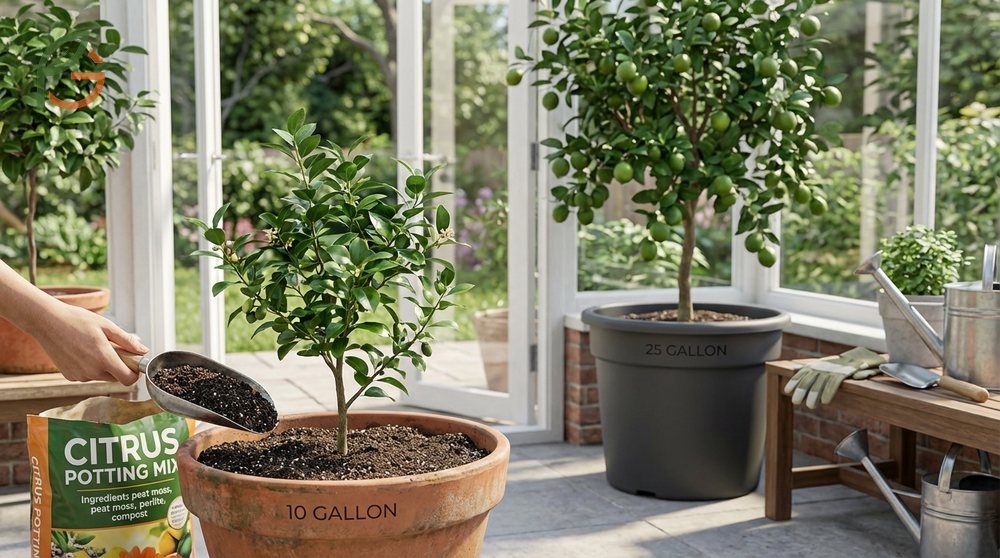
Container cultivation lets you control soil quality and move trees indoors when needed. You’ll start with a 10-15 gallon pot for young trees, upgrading to 20-25 gallons within 2-3 years. Terra cotta pots breathe better than plastic but dry out faster—pick based on your watering habits.
Use a commercial citrus potting mix or create your own with equal parts peat moss, perlite, and compost. The mix should feel fluffy and drain within minutes of watering. Add 1-2 inches of gravel at the pot bottom for extra drainage insurance.
When I visited my friend in Oaxaca, Mexico in summer 2024, I noticed his potted key lime on the patio was producing 20-25 fruits per season—matching yields from similar-sized trees in research trials. He credited bi-weekly liquid fertilizer applications during the growing season.
- Pot with drainage holes (minimum 15-gallon capacity)
- Well-draining citrus-specific potting soil
- Saucer to catch excess water (without letting roots sit in it)
- Dolly or plant caddy for easy movement
- Slow-release citrus fertilizer
- pH testing kit to monitor soil acidity
Container tip: Refresh the top 2-3 inches of potting soil annually in spring. This removes salt buildup from fertilizers and adds fresh organic matter without the stress of full repotting.
You’ll repot every 3-4 years or when roots circle the pot’s perimeter. Late winter before spring growth starts is the ideal time. Prune away 20-30% of the root ball to encourage new feeder root growth.
How to Grow a Lime Tree from Seed
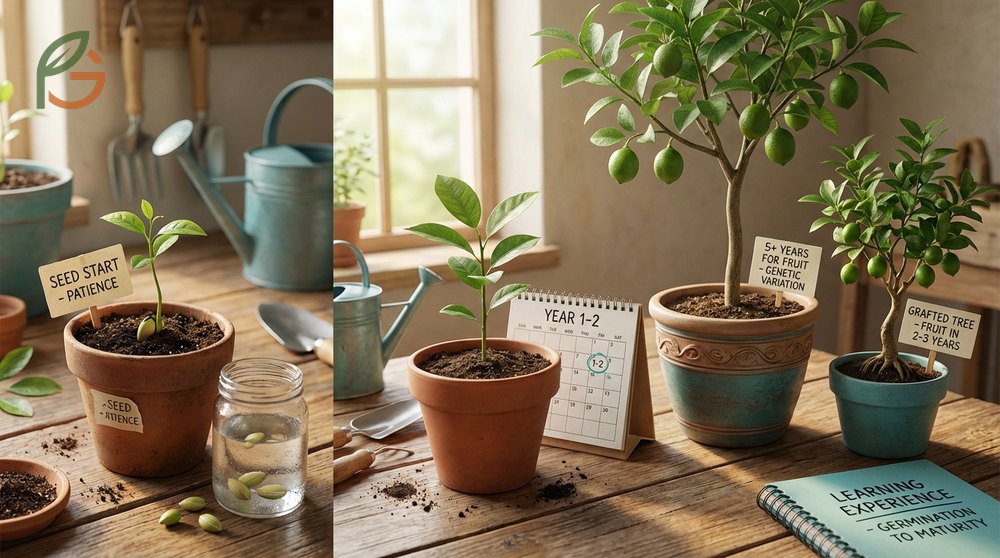
Growing from seed costs nothing but requires patience—you’ll wait 5+ years for fruit[6]. The resulting tree may not produce limes identical to the parent fruit due to genetic variation. Most commercial growers skip seeds entirely, opting for grafted trees that fruit in 2-3 years[6].
Despite the wait, seed-starting offers a rewarding learning experience. You’ll observe the complete life cycle from germination through maturity. The process teaches valuable lessons about plant development that apply to other fruit trees.
Seed Extraction and Preparation
Extract seeds from fully ripe, unblemished limes. Rinse them thoroughly to remove fruit flesh that can harbor mold. The white outer coating contains germination inhibitors—leaving it on delays sprouting by several days.
Plant seeds immediately after extraction for best results. Seeds dry out within 2-3 days, reducing viability by 40-50%. If you can’t plant right away, store them in damp paper towels inside a sealed plastic bag in the refrigerator for up to 2 weeks.
Germination Process
Research indicates lime seeds germinate in 7-14 days at 68-77°F (20-25°C)[4]. You’ll plant them 1/2 inch deep in moist seed-starting mix. Cover the container with plastic wrap to maintain humidity, removing it once seedlings emerge.
Place containers on a heat mat or warm location like the top of your refrigerator. Check soil moisture daily—it should feel like a wrung-out sponge. Overwatering at this stage causes more failures than underwatering.
- Extract fresh seeds from ripe limes and rinse clean
- Plant 1/2 inch deep in moist seed-starting mix
- Maintain soil temperature at 68-77°F (20-25°C)
- Keep soil consistently moist but not waterlogged
- Expect germination within 7-14 days
- Provide 12-14 hours of light once seedlings emerge
- Transplant to 4-inch pots when 2-3 inches tall
Care Essentials
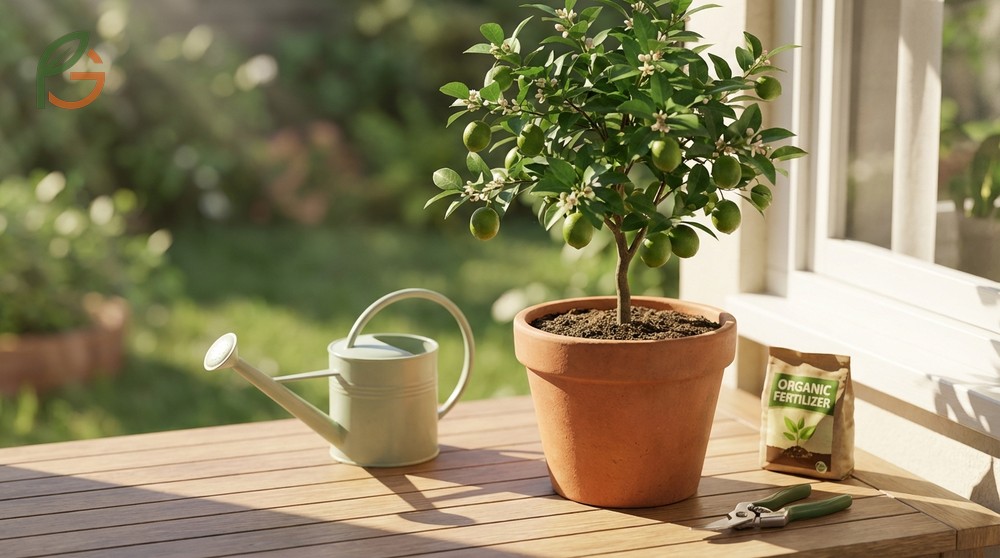
Current horticultural data emphasizes consistent care over intensive interventions. Your lime tree needs regular attention to watering, feeding, and pest monitoring. Most problems stem from irregular care rather than disease or deficiencies.
Evidence suggests that trees receiving consistent moderate care outperform those getting sporadic intensive treatments. You’ll develop a routine that fits your schedule—limes adapt to consistent patterns better than they recover from neglect followed by overcompensation.
Watering Schedule
University extension research shows mature lime trees need deep watering every 7-10 days during the growing season[2]. Young trees require more frequent irrigation—every 3-5 days until established. Water should penetrate 2-3 feet deep, reaching the entire root zone.
The first sign of water stress appears as leaf curl. You’ll apply 10-15 gallons per watering session for young trees, increasing to 30-40 gallons for mature specimens. Sandy soils need water twice as often as clay soils.
During winter dormancy, you’ll reduce watering to once every 2-4 weeks. Most regions receive enough rainfall to meet winter needs. Container trees dry out faster and can’t access groundwater, so check them weekly year-round.
This table compares watering frequency and volume requirements across different seasons and tree ages for lime cultivation
| Season | Young Trees (1-3 years) | Mature Trees (4+ years) | Container Trees |
|---|---|---|---|
| Spring | Every 3-5 days, 10-15 gallons | Every 7-10 days[2], 30-40 gallons | Every 2-4 days, check soil moisture |
| Summer | Every 2-3 days, 12-18 gallons | Every 5-7 days, 40-50 gallons | Daily in hot weather, 1-2 gallons |
| Fall | Every 5-7 days, 10-15 gallons | Every 10-14 days, 25-35 gallons | Every 3-5 days, monitor closely |
| Winter | Every 10-14 days, 8-10 gallons | Every 2-4 weeks, 20-30 gallons | Weekly, reduce by 50% from summer |
Fertilizing Lime Trees
Agricultural standards recommend fertilizing three times annually—early spring, late spring, and late summer. You’ll use a balanced formula like 8-8-8 or 10-10-10 NPK for young trees. Mature fruiting trees benefit from higher potassium ratios like 6-3-6 or 8-3-9 that boost flowering and fruit development.
Apply 1/4 pound of fertilizer per year of tree age, maxing out at 2 pounds per application for mature trees. Spread it evenly from the trunk to 6 inches beyond the drip line. Water deeply after fertilizing to move nutrients into the root zone.
- Fertilize three times yearly: March, June, and August
- Use citrus-specific formulas with micronutrients (iron, zinc, manganese)
- Apply 1/4 pound per year of tree age (maximum 2 pounds)
- Spread evenly from trunk to beyond drip line
- Water deeply after application to activate nutrients
- Stop fertilizing in fall to allow winter dormancy
Types of Lime Trees
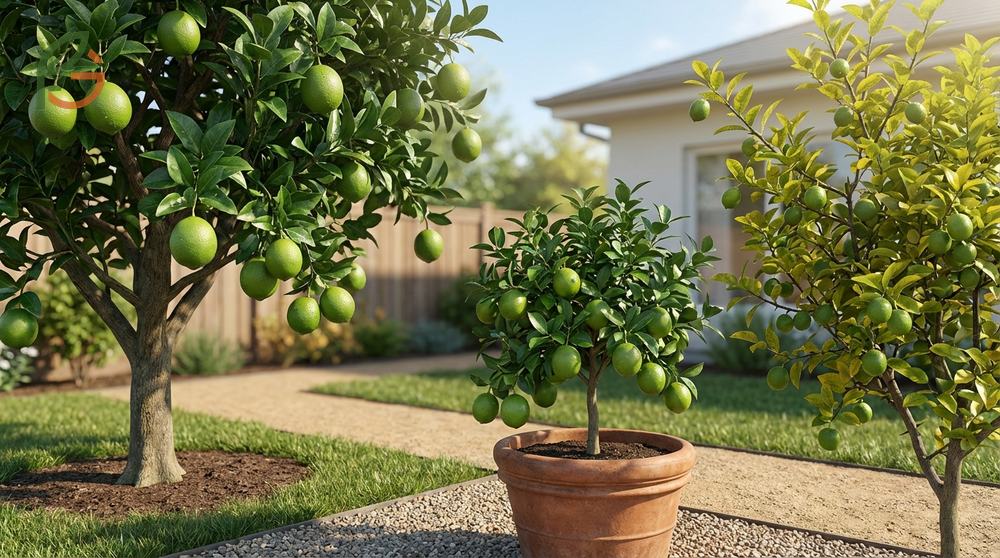
Understanding lime varieties helps you match trees to your space and climate. Bearss Persian lime dominates commercial production and home gardens for its thornless branches and large fruit. Key limes offer intense flavor but come with thorns—newer thornless key lime cultivars solve this problem.
Dwarf varieties work best for containers and small yards. They’re grafted onto dwarfing rootstock that limits height to 6-8 feet[5] while maintaining full-sized fruit production. Standard trees reach 15-20 feet and need significant space.
Kaffir limes are grown primarily for their aromatic leaves used in Asian cooking. The bumpy fruit has little juice. Mexican limes (true key limes) produce small acidic fruits perfect for pies and drinks.
| Variety | Height | Key Features |
|---|---|---|
| Bearss Persian Lime | 15-20 feet (standard), 6-8 feet (dwarf)[5] | Thornless, seedless, large fruit, cold-hardy |
| Key Lime (Mexican) | 6-13 feet | Small fruit, intense flavor, thorny (standard), thornless cultivars available |
| Kaffir Lime | 8-12 feet | Aromatic leaves, bumpy fruit, ornamental |
| Dwarf Key Lime | 4-6 feet[5] | Compact, container-friendly, authentic key lime flavor |
Persian limes tolerate temperatures down to 28°F (-2°C) for short periods. Key limes are more sensitive, showing damage at 32°F (0°C). Choose based on your coldest winter temperatures and available space.
Conclusion
The evidence is clear: how to grow a lime tree successfully depends on providing warm temperatures, consistent moisture, and proper nutrition. You’ll choose between grafted trees that fruit in 2-3 years[6] or seed-grown specimens that take 5+ years but cost nothing. Container growing offers flexibility for cold-climate gardeners, while in-ground planting maximizes yields in zones 9-11.
Current horticultural guidance emphasizes matching variety to space—dwarf limes for containers and patios, standard trees for dedicated orchard areas. FruitGarden synthesizes research from university extensions and commercial growers to help you avoid common mistakes like overwatering, improper fertilization, and cold damage. Your success starts with understanding your specific growing conditions and selecting appropriate varieties.
Frequently Asked Questions
How big do lime trees get?
Standard lime trees reach 15-20 feet tall and wide, while dwarf varieties grown in the ground stay around 6-8 feet[5]. Container-grown dwarf limes in 15-gallon pots typically max out at 4-5 feet. You’ll control size through annual pruning and pot size selection.
What’s the best soil for lime trees?
Lime trees thrive in well-draining sandy loam with pH between 5.5-6.5. The soil should drain within 2-3 hours after watering while retaining enough moisture between irrigations. Mix native soil 50/50 with compost for optimal structure and nutrient content.
How do you winterize lime trees?
Move container trees indoors before temperatures drop below 40°F (4°C). In-ground trees in zone 9 need frost protection when freezes are forecast—cover with frost blankets or burlap and add mulch around the base. Stop fertilizing in September to encourage dormancy, and reduce watering by 50% during winter months.
What lime tree pests should I watch for?
Citrus leafminer creates silvery tunnels in new leaves and is the most common pest you’ll encounter. Scale insects appear as brown bumps on stems, while aphids cluster on new growth. Treat leafminer with neem oil or allow natural predators like parasitic wasps to control populations. Remove scale manually or use horticultural oil sprays.
Can you grow lime trees indoors year-round?
Yes, dwarf lime trees adapt well to indoor growing if you provide 8-12 hours of bright light daily, either from a south-facing window or grow lights. Maintain temperatures between 60-75°F (15-24°C) and humidity around 40-50%. You’ll hand-pollinate flowers with a small brush since indoor trees don’t have access to pollinating insects.
How do you pollinate lime trees?
Most lime varieties are self-pollinating and don’t require another tree nearby. Outdoor trees rely on bees and wind for pollination. Indoor or greenhouse trees benefit from hand pollination—gently brush the inside of flowers with a cotton swab or small paintbrush to transfer pollen between blooms during morning hours when flowers are most receptive.
What’s the lime tree growing zone?
Lime trees grow best in USDA hardiness zones 9-11[3], where winter temperatures stay above 20°F (-6°C). Zone 8 gardeners can grow them with winter protection, while zones 7 and colder require container growing with indoor overwintering. Persian limes tolerate slightly cooler temperatures than key limes.





