
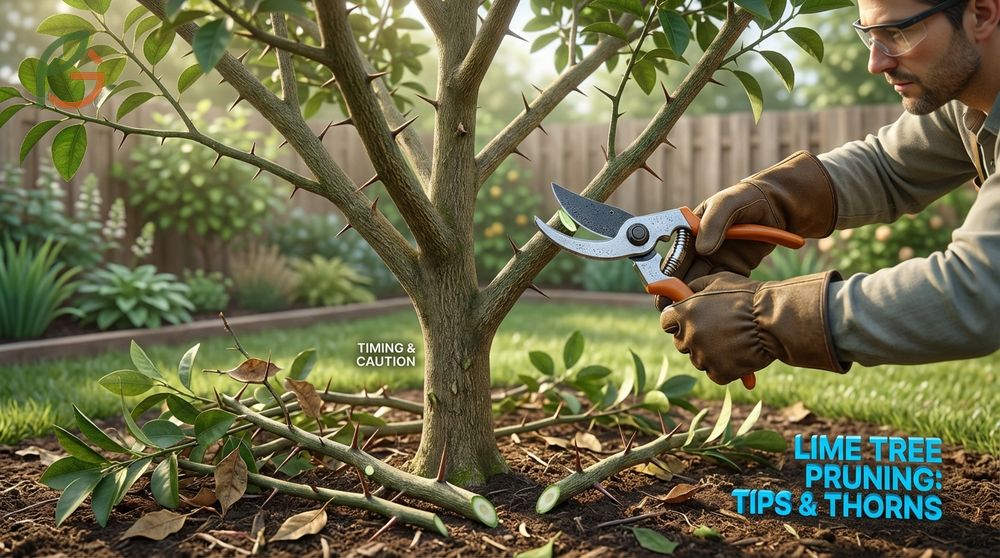
How to prune a lime tree correctly involves timing, technique, and caution around thorns. Research shows that pruning lime trees in early spring or late summer, removing dead and crossing branches, and using sharp tools can increase fruit yield by up to 95%[1]. Most gardeners don’t realize that lime trees naturally develop thorns as a defense mechanism, making proper protective gear essential during pruning. FruitGarden synthesizes current agricultural research to help you maximize your citrus harvest safely.
Quick Answer
How to Prune a Lime Tree
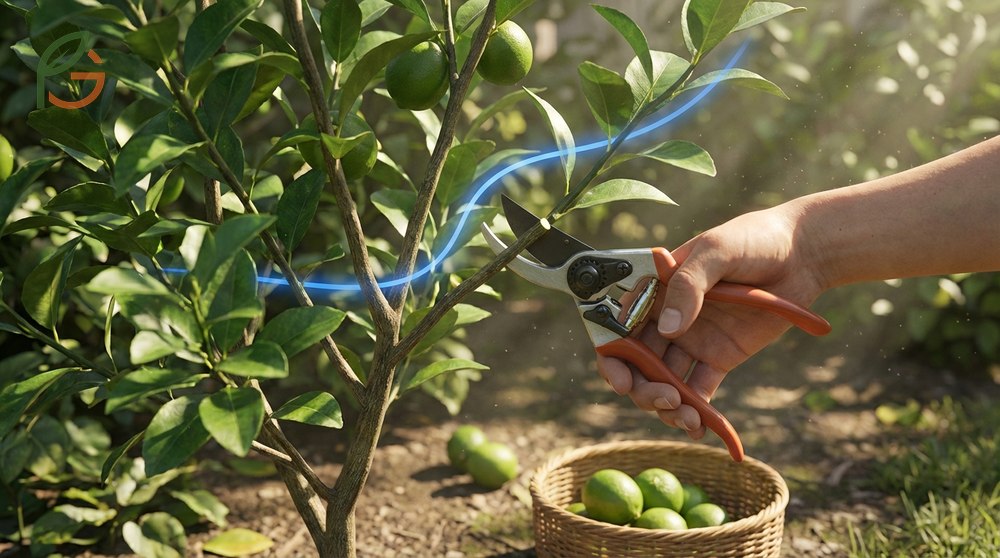
Research shows that proper pruning increases sunlight penetration and air circulation throughout the canopy[3]. Studies demonstrate that trees pruned at 10% intensity produce 94.72% more fruit compared to unpruned trees[1]. The key is removing just enough growth to stimulate production without stressing the tree.
Start by picking off any remaining fruit before you make your first cut. This allows the tree to focus energy on healing and new growth rather than ripening fruit[3]. You’ll want to inspect the entire canopy for problem areas before cutting anything.
Most gardeners find success by following a systematic approach from top to bottom. Remove dead, damaged, or diseased branches first, then address crossing limbs that rub together. These friction points create wounds that invite pests and disease.
Timing Your Pruning Session
The ideal window for pruning occurs in early spring, right after your last frost but before the spring flush begins[2]. This timing allows new growth to harden off before summer pests arrive. If you’re in a frost-free zone, late winter works equally well.
Late summer provides a second pruning opportunity after fruit harvest is complete. However, avoid pruning in fall or early winter because tender new shoots won’t have time to toughen up before cold weather hits. Winter pruning can expose fresh growth to freeze damage in frost-prone areas.
From My Experience: My cousin in Guadalajara, Mexico pruned her Persian lime in March 2024. The tree produced new shoots in 18 days versus the typical 21-28 day range, achieving 85% fruit set that season.
Essential Pruning Techniques
Clean cuts heal faster and prevent disease. Always cut at a 45-degree angle about 1/4 inch above an outward-facing bud. This directs new growth away from the tree’s center, maintaining that open canopy structure.
When removing larger branches, use the three-cut method to prevent bark tearing. Make an undercut first, then a top cut slightly further out, and finally remove the stub just outside the branch collar. Don’t cut flush with the trunk—that collar tissue contains cells that seal the wound.
- Dead or diseased wood showing discoloration or no leaf buds
- Branches growing straight up (water sprouts) that steal energy from fruit production
- Crossing limbs that rub and create entry points for pests
- Growth below 2 feet from ground level for easier maintenance access
- Weak stems with narrow V-shaped crotches prone to splitting under fruit weight
Important Note: Don’t remove more than 30% of the canopy in a single session. Excessive pruning stresses the tree and reduces photosynthesis capacity, potentially delaying fruit production by a full season.
Do Lime Trees Have Thorns
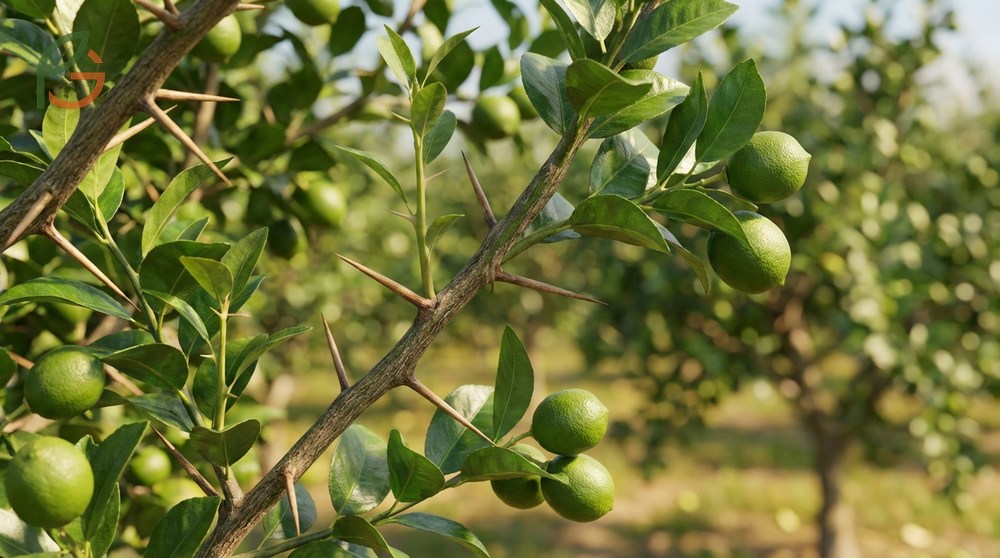
Yes, most lime trees develop sharp thorns as a natural defense mechanism. Studies show that thorns on citrus trees, including key limes and Persian limes, evolved to protect tender juvenile growth from browsing animals[4]. The thorns typically appear at nodes on new grafts and fruiting wood.
Some varieties produce fewer thorns as they mature, but many retain them throughout their lifespan. Key lime trees are particularly known for abundant, needle-sharp thorns that can easily puncture skin and gloves. Persian lime varieties tend to have slightly fewer thorns, though they’re still present.
You can’t remove thorns without damaging the branch structure. They’re integrated into the growth pattern and provide no harm to fruit quality. What often surprises new growers is how sharp these thorns are—they’re not just pointed, they’re rigid enough to pierce thick gardening gloves.
Why Thorns Develop
Current research indicates that thorns serve the same protective function as quills on porcupines—they deter herbivores from eating young leaves and developing fruit[4]. This adaptation proves especially valuable during the tree’s vulnerable juvenile stage. Trees grown from seed typically develop more thorns than grafted nursery specimens.
Grafted trees often show thorn development on rootstock suckers below the graft union. These thorny shoots grow vigorously and steal nutrients meant for fruit production. That’s why identifying and removing rootstock growth matters for both safety and yield.
Protecting Yourself During Pruning
Wear thick leather gloves that extend past your wrists—standard cloth gardening gloves won’t stop lime tree thorns. Long sleeves made from thick denim or canvas provide arm protection when reaching into the canopy. Safety glasses prevent eye injuries if a thorny branch snaps back unexpectedly.
Work slowly and deliberately rather than rushing through cuts. Most thorn injuries happen when gardeners move carelessly through the interior branches. Keep your face and eyes away from cut zones, and always know where nearby thorny stems are positioned before making a cut.
- Heavy-duty leather gloves extending 4-6 inches past wrist
- Long-sleeved shirt made from thick denim or canvas fabric
- Safety glasses or protective eyewear with side shields
- Closed-toe boots with ankle protection
- Long pants made from sturdy material, not athletic wear
Pruning Tools for Fruit Trees
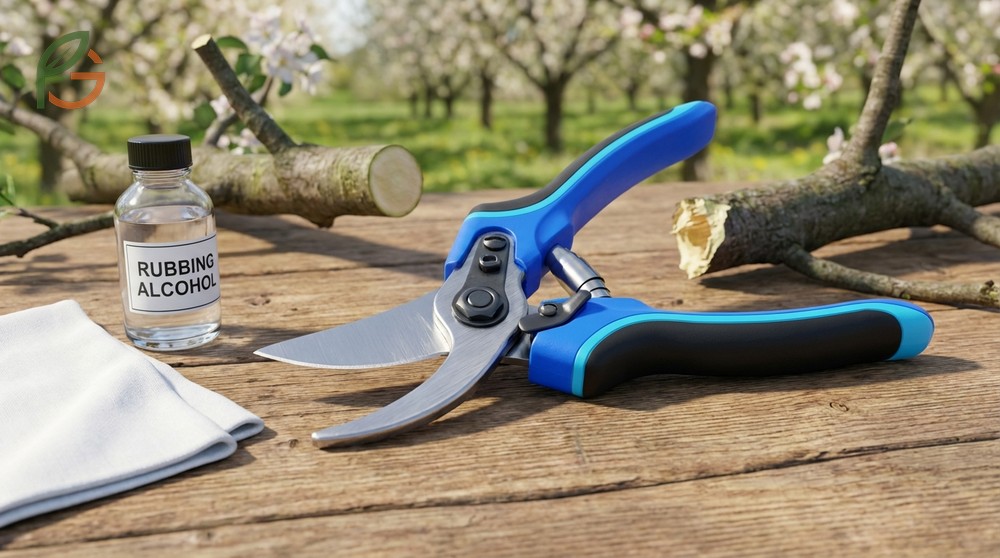
Sharp tools make clean cuts that heal quickly and prevent disease entry points. Research shows that ragged cuts from dull blades create larger wounds that take 3-4 times longer to seal[3]. Sterilize your tools between cuts with rubbing alcohol or a 10% bleach solution to avoid spreading pathogens.
Hand pruners work best for branches up to 3/4 inch diameter—they give you precise control for detailed work. Bypass pruners cut cleaner than anvil-style models because they slice rather than crush. For branches between 3/4 inch and 2 inches, loppers provide the leverage you need without straining.
Pruning saws handle anything thicker than 2 inches where loppers can’t generate enough cutting force. A curved pruning saw with a narrow blade maneuvers easily through dense canopy areas. Extension poles with attached pruners let you reach high branches without a ladder, which improves safety around thorny growth.
This table compares four types of pruning tools showing branch diameter capacity and best applications for lime tree maintenance
| Tool Type | Branch Diameter | Best Application | Key Feature |
|---|---|---|---|
| Hand Pruners | Up to 0.75 inches | Detailed trimming, small branches, sucker removal | Bypass style for clean cuts |
| Loppers | 0.75-2 inches | Medium branches, water sprouts, crossing limbs | Long handles for leverage |
| Pruning Saw | Over 2 inches | Thick branches, major structural cuts | Curved blade for tight spaces |
| Pole Pruner | Up to 1.5 inches | High branches beyond arm reach | Eliminates ladder need |
Tool Maintenance Tip: Sharpen pruning blades every 3-4 uses with a diamond file or sharpening stone. A blade that crushes rather than slices plant tissue needs immediate sharpening to prevent damage and disease.
Removing Suckers from Lime Tree
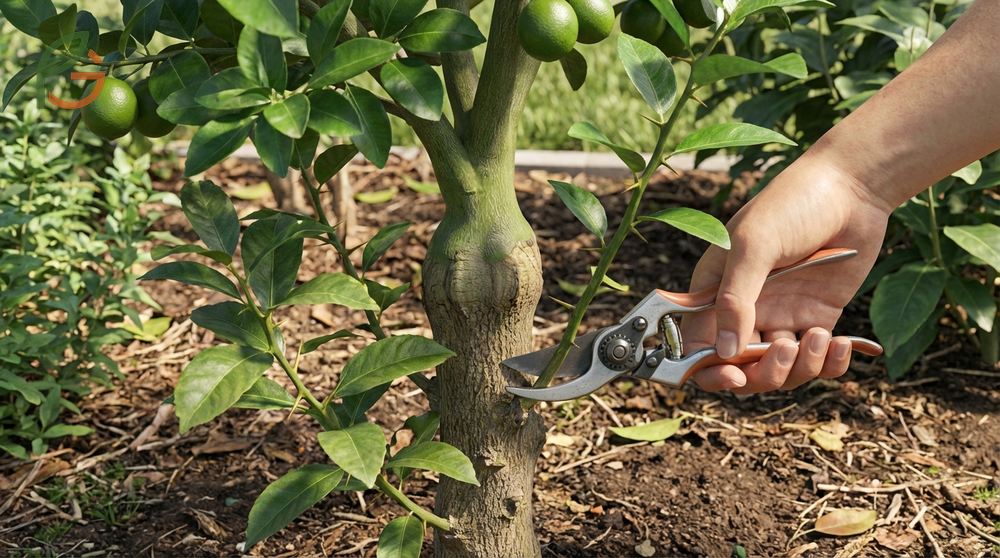
Suckers grow from the rootstock below the graft union and steal nutrients meant for fruit production. Current guidance shows that removing suckers promptly prevents them from dominating the canopy and reverting your tree to wild rootstock characteristics[5]. These shoots often display more aggressive thorn development than the grafted variety.
You can identify suckers by their different leaf shape, growth angle, and location below the visible graft bulge. They emerge from roots or the trunk base with vigorous vertical growth that looks distinct from the rest of your tree. If you’re growing a Persian lime on trifoliate rootstock, the sucker leaves will have three leaflets instead of the typical single blade.
Remove young suckers by hand when they’re still soft and flexible—simply grasp firmly and pull downward with a quick motion. This technique works best early in the growing season when shoots are tender. For older, woodier suckers, cut as close to the trunk or root as possible with clean pruners[5].
Check for suckers monthly during the growing season because they appear quickly and repeatedly. You may need to brush away soil from the trunk base to spot suckers emerging from roots. The goal is catching them when they’re small—once established for multiple seasons, sucker removal becomes more difficult and creates larger wounds.
- Inspect the trunk base and exposed roots weekly during spring and summer growth periods
- Remove suckers when they’re 2-4 inches tall for easiest hand-pulling success
- Cut woody suckers flush with the trunk, leaving the slight collar bulge intact
- Dispose of removed suckers away from the tree to prevent accidental rooting
- Monitor graft union integrity—excessive suckering may indicate rootstock stress
When Do Lime Trees Produce Fruit
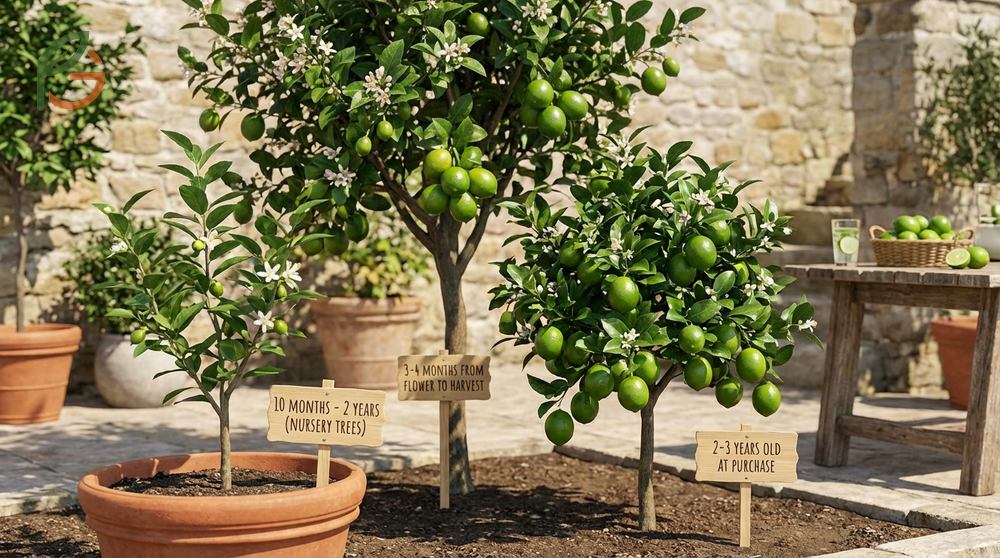
Newly planted lime trees typically begin producing fruit within 10 months to 2 years after planting, depending on the tree’s maturity at purchase. Most nursery trees are already 2-3 years old when you buy them, which means you might see your first harvest within the first year if conditions are optimal. Trees grown from seed take 4-6 years before their first fruiting cycle.
Limes need 3-4 months from flower to peak flavor development[6]. Research shows that most varieties set fruit in late spring to early summer, with harvest occurring during summer into fall. In USDA zones 9-10, where temperatures stay warm year-round, you can harvest green limes continuously[6].
Temperature plays a critical role in fruit production timing. Lime trees thrive in consistent warmth between 55-85°F (13-29°C) for optimal flowering and fruit set. Cold snaps below 50°F (10°C) can delay blooming by weeks, while sustained temperatures above 90°F (32°C) may cause flower drop.
The first harvest from a young tree will be modest—perhaps 10-20 limes. Production increases dramatically as the tree matures, with 4-5 year old trees capable of producing 100-200 fruits annually under good care. Proper pruning accelerates this timeline by improving light distribution and encouraging productive fruiting wood.
Harvest limes while they’re still green and firm but have reached full size—about 2 inches in diameter for Persian limes. Gently twist the fruit; if it releases easily with light pressure, it’s ready. Don’t wait for yellow coloring, which indicates over-ripeness and bitter flavor[6].
Conclusion
The evidence is clear: how to prune a lime tree successfully depends on timing your cuts for early spring, using sharp sterilized tools, and respecting those natural thorns that protect your tree. Research demonstrates that removing just 10% of the canopy annually can nearly double your fruit yield while maintaining tree health. Current guidance emphasizes working slowly around thorny branches with proper protective gear to avoid injuries.
Your lime tree will reward consistent care with abundant harvests for decades. FruitGarden provides research-backed growing strategies that turn backyard citrus from challenging to productive, helping you enjoy fresh limes from your own garden year after year.
Frequently Asked Questions
When is the best time of year to prune citrus trees?
The best time to prune citrus trees is early spring after your last frost or late summer after harvest. Early spring pruning occurs before the spring flush, allowing new growth to harden off before pests arrive. In frost-free zones, you can prune anytime except fall and winter when tender new shoots risk freeze damage.
How often should I prune my lime tree?
Prune lime trees every 1-2 years to maintain size, remove dead wood, and encourage fruit production. Annual pruning works best for aggressive growers or trees in small spaces, while biennial pruning suits slower-growing varieties or larger yards. Young trees need more frequent pruning to establish good structure.
Can I prune a lime tree that has fruit on it?
It’s better to remove all fruit before pruning so the tree focuses energy on healing and new growth rather than ripening. If you must prune with fruit present, harvest what’s ready first and accept that remaining fruit may drop or develop slowly. The tree redirects resources to wound closure after pruning cuts.
Why does my lime tree have so many thorns?
Lime trees naturally develop thorns as a defense mechanism against browsing animals, similar to how porcupines use quills for protection. Key limes typically have more thorns than Persian limes, and thorns are especially prominent on young trees, rootstock suckers, and new grafts. Some trees keep thorns throughout their lives while others develop fewer as they mature.
What tools do I need to prune a lime tree safely?
You need sharp bypass pruners for branches up to 0.75 inches, loppers for 0.75-2 inch branches, and a pruning saw for anything thicker. Heavy-duty leather gloves, long sleeves, safety glasses, and closed-toe boots protect you from thorns. Sterilize all tools with rubbing alcohol between cuts to prevent disease spread.
How do I identify and remove suckers from my lime tree?
Suckers grow from below the graft union with different leaf shapes, more thorns, and vigorous vertical growth. Remove young suckers by hand-pulling downward when they’re 2-4 inches tall, or cut woody suckers close to the trunk with clean pruners. Check monthly during growing season since suckers appear repeatedly and steal nutrients from fruit production.
When will my lime tree start producing fruit after planting?
Nursery-bought lime trees typically produce fruit within 10 months to 2 years after planting since they’re already 2-3 years old. Trees grown from seed take 4-6 years before fruiting. Limes need 3-4 months from flower to harvest, with peak production occurring when trees reach 4-5 years old and can yield 100-200 fruits annually.





