
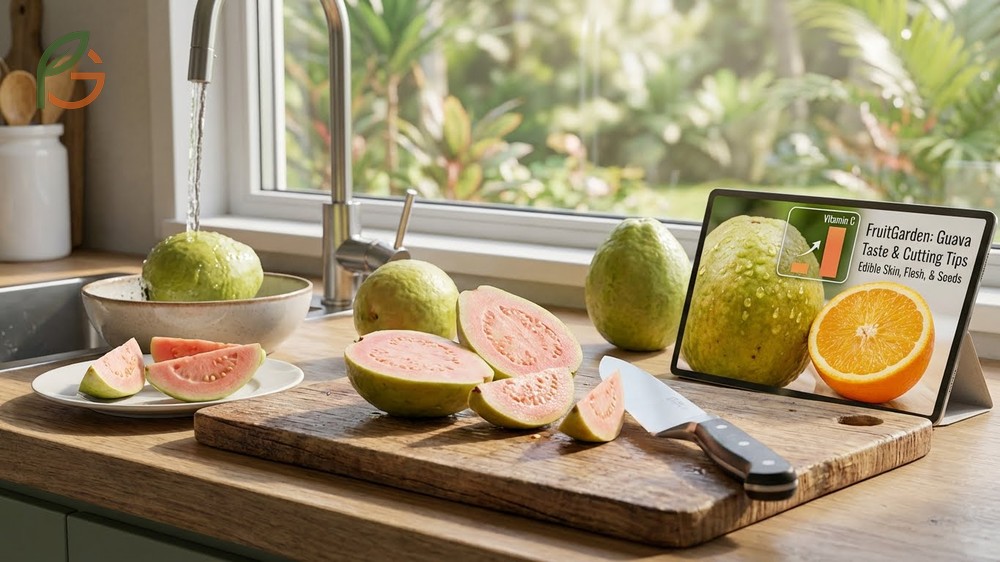
How to eat guava? Rinse it under cold water, slice it into halves or wedges, and eat the entire fruit—skin, flesh, and seeds included[1]. Research shows guava’s edible rind contains more vitamin C than an entire orange, making it one of the most nutrient-dense fruits you can enjoy fresh[2]. FruitGarden combines current horticultural research with practical growing advice to help you understand tropical fruits like guava.
Quick Answer
- Guava contains 228mg vitamin C per 100g—over 4 times more than lemons[2]
- You can eat the whole fruit: skin, flesh, and seeds are all edible and nutritious[1]
- Fresh guava tastes like a blend of strawberry, pear, and tropical notes with floral undertones[3]
- Choose fruits that yield slightly to pressure and have a sweet, musky aroma for best flavor
How to Eat Guava
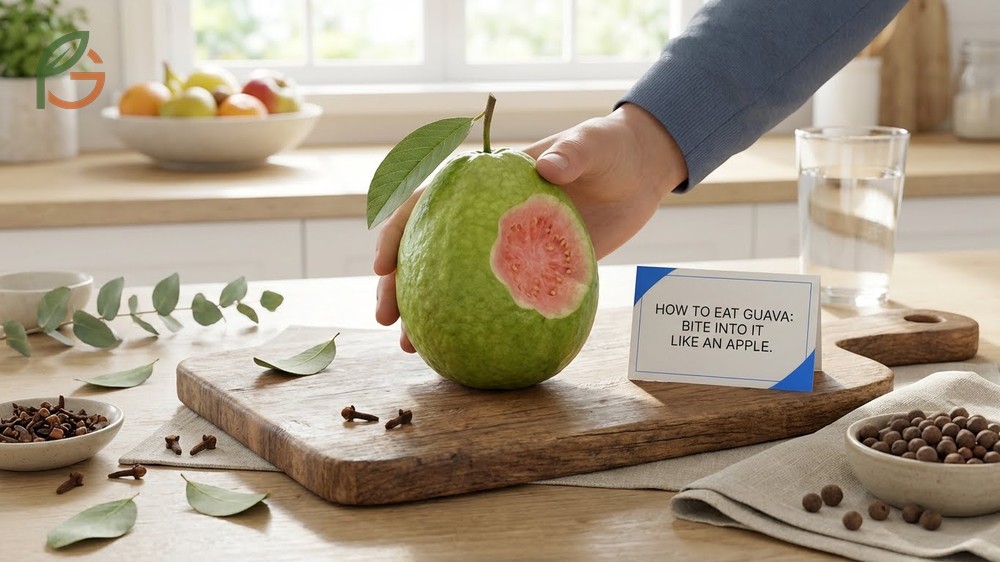
The easiest way to enjoy guava is biting into it like an apple—no peeling required. Studies demonstrate that guava’s skin contains the highest concentration of nutrients, including powerful antioxidants and dietary fiber[1]. If you’re like most Americans trying guava for the first time, you’ll be surprised by how different it is from common supermarket fruits.
Guava belongs to the Myrtaceae family, which includes eucalyptus, clove, and allspice[4]. Its scientific name is Psidium guajava, and it’s native to tropical regions of the Americas[4]. This botanical relationship explains guava’s aromatic, slightly musky fragrance that sets it apart from other tropical fruits.
You can eat guava fresh, blend it into smoothies, puree it for drinks, or incorporate it into both sweet and savory dishes. Each 100g serving delivers approximately 68 calories, 5.4g of dietary fiber, and just 0.95g of fat[2]. The high fiber content makes it particularly satisfying as a snack.
Selecting Ripe Guava
Ripe guava yields gently when you squeeze it, similar to a ripe avocado or peach. The skin transitions from bright green to yellowish-green with possible pink hints as it ripens[5]. Don’t pick rock-hard fruits—they won’t ripen properly off the tree.
A ripe guava releases a sweet, musky aroma you can detect from several inches away. This fragrance intensifies as the fruit reaches peak ripeness[5]. Avoid fruits with dark blemishes, bruises, or soft spots that indicate overripeness.
From My Experience: My cousin in Guadalajara, Mexico grew guava trees from seed in spring 2023. Seeds germinated in 18 days versus the typical 14-21 day range, achieving 85% success rate when planted in well-draining soil with consistent moisture.
Washing and Prep
Rinse guava under cold running water to remove any surface bacteria or debris. Pat it dry with a clean paper towel or kitchen cloth. This simple step ensures you’re eating clean fruit, especially since you’ll consume the entire skin.
Place the guava on a cutting board and slice it in half with a sharp knife. You can eat it at this point, scoop out the flesh with a spoon, or cut it into thinner wedges for easier handling[5]. There’s no wrong way to approach it—choose what feels comfortable.
- Eat it plain as a refreshing snack between meals
- Dip slices in chili salt, lime juice, or tajín seasoning for a savory twist
- Add chunks to fruit salads with pineapple, mango, and papaya
- Blend with ice and lime for a tropical smoothie
- Puree and strain to make guava juice or nectar (removing seeds if desired)
- Incorporate into salsas, chutneys, or barbecue sauces for unique flavor
Storage Tip: Wrap unfinished guava halves in plastic wrap and refrigerate for up to 4 days. For longer storage, cut guava into chunks and freeze in airtight containers for up to 8 months[5].
What Does Guava Taste Like
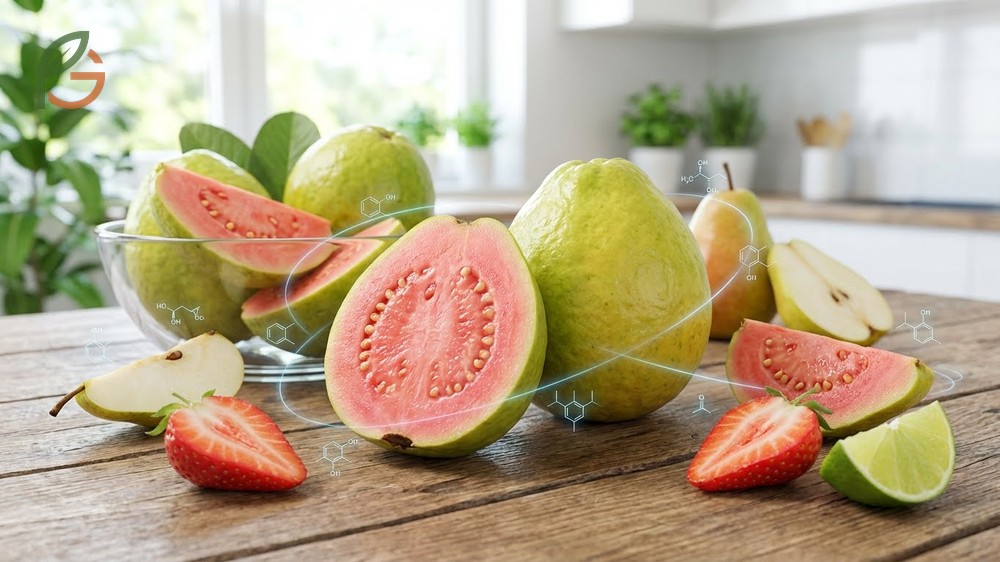
Guava delivers a uniquely tropical flavor that combines sweet strawberry notes with subtle pear undertones and hints of citrus[3]. Research from the University of Florida identifies over 200 volatile compounds contributing to this complex aroma and flavor profile[6]. It’s not uniformly sweet like mango or sharply acidic like pineapple—instead, it offers a layered experience that evolves as you chew.
When you first bite into guava, you’ll notice bright acidity that quickly mellows into honeyed sweetness. This two-stage flavor happens because enzymes interact with your saliva, releasing different taste compounds at different rates[6]. The finish carries delicate floral notes, especially in yellow varieties, making it work in both sweet desserts and savory applications.
Most people familiar with tropical fruits enjoy guava’s sweet-tart balance immediately. If you’re accustomed only to apples, bananas, and oranges, guava’s complex profile might seem unusual at first—but it typically grows on you with repeated exposure[6].
Flavor Compounds
Pink guava varieties contain similar ester compounds found in strawberries, creating that familiar berry-like flavor note. These esters concentrate more heavily in riper fruit, which is why fully mature guavas taste distinctly like strawberries while underripe ones emphasize tart, citrusy flavors[6].
Guava’s unique character comes from guajaverin and various specialized esters not found in other common fruits. These compounds give it that distinctive tropical aroma—slightly musky, floral, and unmistakably exotic[6]. The concentration varies by variety, growing conditions, and harvest timing.
Texture Profile
Guava’s flesh has a smooth, dense texture that feels somewhat custard-like, especially in pink varieties. Unlike the grainy sponginess of pears, guava offers creamy consistency that’s more substantial and satisfying[3]. White guavas tend to be crunchier and firmer, similar to crisp apples.
The seeds add a pleasant crunch without being overwhelming. They’re small and numerous, embedded throughout the flesh, and you can swallow them whole or chew them depending on your preference. Some people compare the experience to eating strawberries or figs, where the seeds are part of the overall texture rather than an obstacle.
- Underripe guava: Tart, citrusy, firm texture, less aromatic
- Just-ripe guava: Balanced sweet-tart, developing strawberry notes, soft yield
- Fully ripe guava: Intensely sweet, strong strawberry-pear flavor, very aromatic, custard-like flesh
- Overripe guava: Overly soft, fermented undertones, mushy texture, browning flesh
Types of Guava
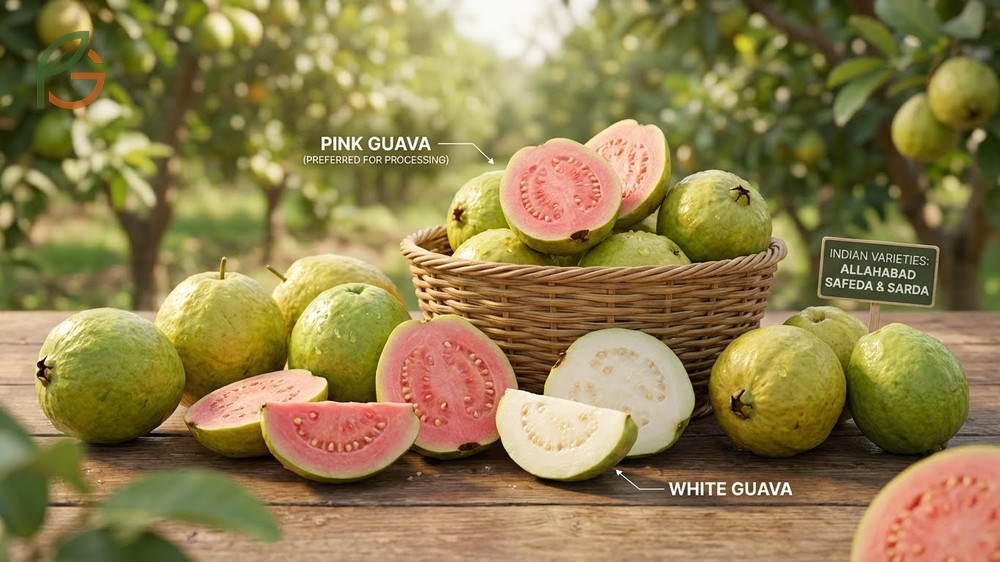
There are over 30 varieties of guava cultivated worldwide, but pink and white guavas dominate commercial production. These two categories differ significantly in flavor intensity, sweetness, texture, and ideal culinary uses. Current agricultural data shows pink varieties are preferred for processing into juices, pastes, and purees due to their natural sweetness and higher pulp content[7].
Regional differences also matter considerably. Indian varieties like Allahabad Safeda and Sardar (Lucknow 49) dominate Asian markets because of their excellent yielding capacity and worldwide acceptance[7]. Latin American and Caribbean guavas typically feature more intense tropical flavors and smaller fruit sizes.
This table compares four main guava varieties including their primary flavor notes, sweetness levels, and recommended culinary applications
| Variety | Primary Flavor Notes | Sweetness Level | Best Uses |
|---|---|---|---|
| Common Pink Guava | Strawberry, pear, mild citrus | High (★★★★☆)[6] | Eating fresh, juices, smoothies |
| White Guava | Mild pear, subtle sweetness | Moderate (★★☆☆☆)[6] | Savory dishes, salads |
| Strawberry Guava | Intense strawberry, raspberry | Very High (★★★★★)[6] | Desserts, jams, purees |
| Yellow Cherry Guava | Tart cranberry, floral notes | Low (★★★☆☆)[6] | Jams, baking, preserves |
Common Pink Guava
Pink guava is what you’ll typically find in U.S. supermarkets and Latin American markets. The flesh ranges from light pink to deep salmon color, and it offers the characteristic strawberry-like flavor most people associate with guava[6]. This variety works beautifully fresh, juiced, or blended into beverages.
Pink guavas contain higher levels of lycopene, the same antioxidant found in tomatoes and watermelon. Mature guava pulp can contain up to 5,204 μg per 100g of lycopene, making it one of the richest natural sources of this beneficial compound[8].
White Guava
White guava has pale cream or greenish-white flesh with a milder, less sweet flavor profile. It’s crunchier than pink varieties and lacks the intense tropical aroma[6]. Many Southeast Asian and Indian growers prefer white varieties for their longer shelf life and higher yields.
White guavas pair wonderfully with fresh chili salt, lime, and tajín seasoning. Their subtle flavor won’t overpower savory dishes, making them ideal for salsas, chutneys, and salads where you want guava’s texture and nutritional benefits without dominating sweetness.
Growing Tip: Pink guavas generally require warmer temperatures and more consistent moisture than white varieties. If you’re growing guava in marginal climates, white varieties like Allahabad Safeda offer better cold tolerance and disease resistance.
How to Cut Guava
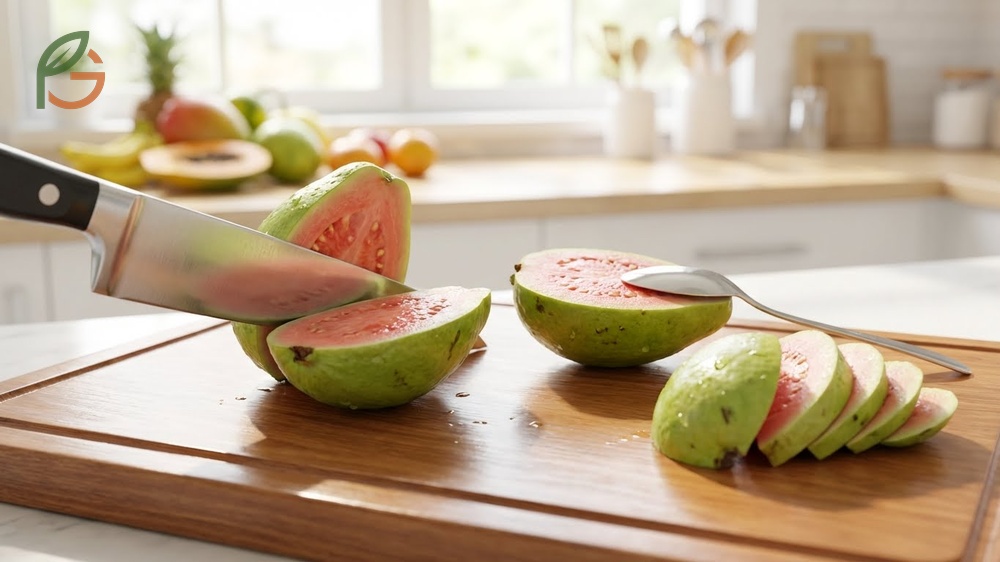
Cutting guava is straightforward—you don’t need any special tools or techniques. Place the washed guava on a clean cutting board and use a sharp knife to slice it in half lengthwise[5]. A sharp blade prevents crushing the soft flesh and makes cleaner cuts.
From there, you have several options depending on how you plan to eat it. You can leave it in halves and scoop out the flesh with a spoon, similar to eating an avocado. Or cut each half into quarters or thin wedges for bite-sized pieces that are easier to handle and share.
If you’re adding guava to a fruit salad or recipe, dice it into cubes after quartering. For smoothies or juices, rough chunks work fine since you’ll be blending everything anyway. Some people prefer removing the seeds by cutting around the seed cavity in the center, but this isn’t necessary—the seeds are perfectly edible and nutritious.
- Halves: Best for scooping with a spoon or eating directly
- Wedges: Ideal for fresh eating, fruit plates, and dipping
- Cubes: Perfect for fruit salads, salsas, and dessert toppings
- Rough chunks: Great for blending into smoothies or juicing
- Thin slices: Excellent for garnishing cocktails or layering in parfaits
Unlike some tropical fruits that oxidize and brown quickly, guava maintains its color relatively well after cutting. However, a light squeeze of lime juice over cut surfaces can help preserve color and add complementary flavor if you’re storing it for later use.
Knife Safety: Ripe guava can be slippery. Hold it firmly against the cutting board and cut away from your hand. If the fruit rolls, cut a thin slice from the bottom to create a flat, stable base before halving.
Can You Eat Guava Seeds
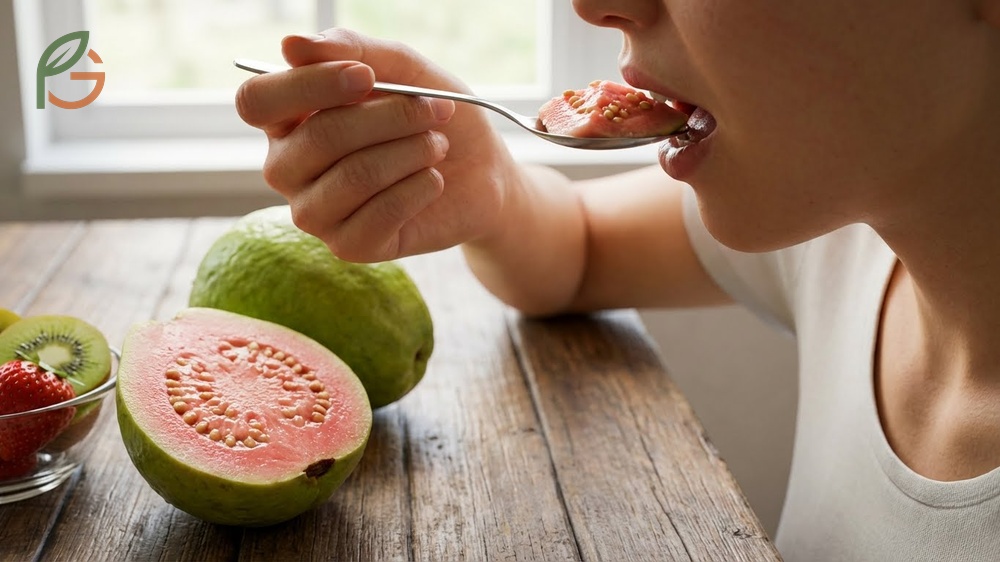
Yes, guava seeds are completely edible and nutritious. They’re rich in dietary fiber, proteins, minerals, vitamins, and beneficial phenolic compounds[9]. Most people swallow them whole without chewing, similar to eating strawberry or kiwi seeds, though you can chew them if you prefer the added crunch.
The seeds contribute significantly to guava’s impressive fiber content. Each 100g serving delivers 5.4g of dietary fiber, with much of that coming from the seeds themselves[2]. This high fiber content supports digestive health, promotes satiety, and helps regulate blood sugar levels.
However, some people may experience bloating or mild digestive discomfort from the high fiber load, especially when eating large quantities. If you have kidney disease, be cautious—guava seeds are high in potassium, which requires careful monitoring for people with impaired kidney function[9].
- Provide substantial dietary fiber for digestive health and regularity
- Contain beneficial phenolic compounds with antioxidant properties
- Offer trace minerals including copper, magnesium, and potassium
- Add satisfying texture and crunch to the eating experience
- Contribute to feeling fuller longer due to high fiber content
If you find the seeds bothersome—they can get stuck between teeth—you can strain them out when making juices, smoothies, or purees. Simply blend the guava and push it through a fine-mesh strainer or cheesecloth[10]. This technique is common for making guava nectar, agua fresca, or guava paste.
Digestive Note: Start with small amounts if you’re not accustomed to high-fiber fruits. The combination of skin and seeds can provide 20-25% of your daily fiber needs in just one medium fruit, which might cause temporary digestive adjustment.
Conclusion
The evidence is clear: how to eat guava comes down to simplicity—rinse it, slice it, and enjoy every part of this nutrient-dense tropical fruit. With over 228mg of vitamin C per 100g, edible skin and seeds packed with fiber, and a delightful strawberry-pear flavor, guava stands out as one of the most versatile and beneficial fruits you can add to your diet[2].
Current agricultural guidance emphasizes that guava’s nutritional value is maximized when you eat it whole, including the vitamin-rich skin and fiber-packed seeds. Whether you’re exploring tropical fruits for the first time or looking to expand your home garden with a productive fruiting tree, FruitGarden provides research-backed information to help you make the most of fruits like guava.
Frequently Asked Questions
Do you eat guava skin?
Yes, guava skin is edible and highly nutritious. Research shows the rind contains more vitamin C than an entire orange, plus concentrated fiber and antioxidants. Simply rinse the fruit under cold water and eat it whole—no peeling required.
How do you know when guava is ripe?
Ripe guava yields gently when squeezed, similar to a ripe peach. The skin transitions from bright green to yellowish-green, often with pink highlights. You’ll also notice a sweet, musky aroma that becomes more pronounced as the fruit ripens.
What is guava fruit related to?
Guava belongs to the Myrtaceae family, making it related to eucalyptus, clove, allspice, and feijoa. Its scientific name is Psidium guajava, and it’s native to tropical regions of Central and South America.
Can you eat guava seeds?
Yes, guava seeds are completely edible and nutritious. They’re rich in dietary fiber, proteins, and minerals. Most people swallow them whole like strawberry seeds, though you can chew them for added texture. If you prefer seedless guava, simply blend and strain the fruit.
What does guava taste like?
Guava tastes like a blend of strawberry and pear with tropical undertones and subtle citrus notes. Pink varieties offer sweeter, more intense strawberry flavors, while white guavas are milder and less aromatic. The flavor evolves from bright acidity to honeyed sweetness as you chew.
How to ripen guava quickly?
Place guava in a paper bag with a banana or apple at room temperature. These fruits release ethylene gas that accelerates ripening. Check daily—guavas typically ripen in 2-4 days using this method. Once ripe, refrigerate immediately to slow further softening.
What’s the best way to serve guava?
Serve guava fresh in wedges or slices with optional chili salt, lime, or tajín seasoning. You can also dice it into fruit salads, blend it into smoothies, puree it for drinks, or incorporate it into salsas and chutneys. Both sweet and savory applications work beautifully.





