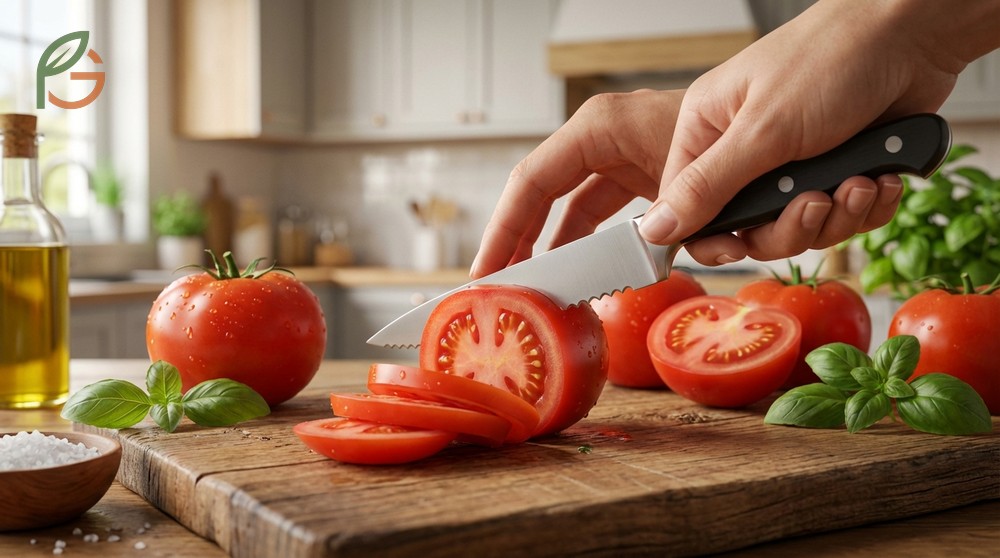
How to cut a tomato? Use a sharp serrated knife and a gentle sawing motion to slice through the skin without crushing the flesh. Research shows that serrated knives outperform straight-edge blades for tomatoes because their saw-tooth design grips the slippery skin while preserving the delicate interior.[1] FruitGarden combines culinary expertise with practical gardening knowledge to help home cooks master essential kitchen skills.
Quick Answer
- A serrated knife (5-8 inches) is essential for clean cuts through tomato skin[2]
- Use a gentle sawing motion—don’t press down or you’ll crush the tomato
- For sandwiches, slice 1/4 inch thick for the perfect balance of flavor and texture[3]
- Cherry tomatoes can be halved in seconds using the two-lid hack[4]
How to Cut a Tomato
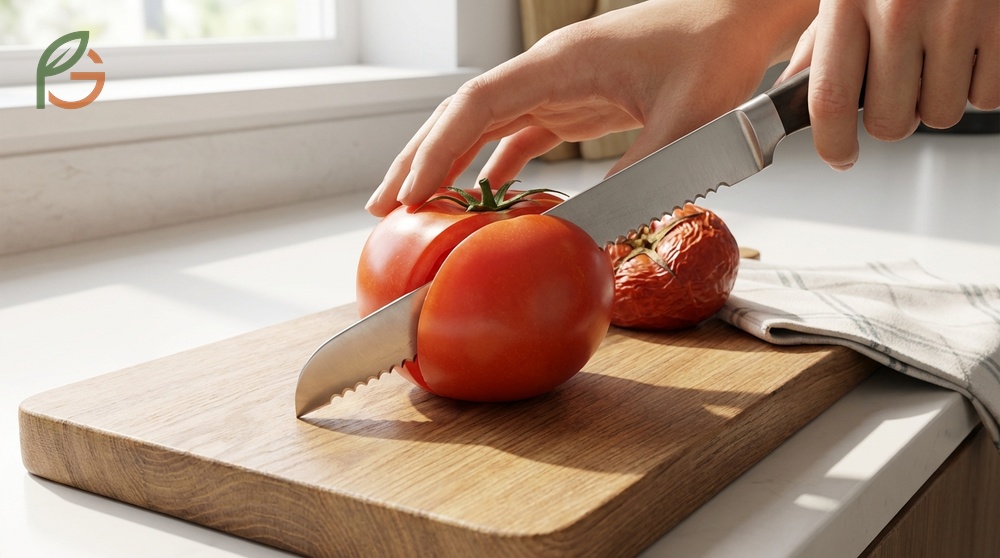
Cutting tomatoes doesn’t require fancy equipment, but it does demand the right technique. Studies show that the knife type matters more than sharpness alone—a serrated blade creates cleaner cuts by gripping the skin rather than sliding across it.[1] Most people make the mistake of pressing straight down with a chef’s knife, which squashes the tomato and releases too much juice.
Before you start cutting, wash and dry your tomato thoroughly. Wet tomatoes slip easily on the cutting board, which creates a safety hazard. Place the tomato stem-side up to identify where you’ll make your first cut.
From My Experience: My cousin in Guadalajara, Mexico grows heirloom tomatoes in her backyard garden. She taught me to chill tomatoes for 10-15 minutes before cutting—this firms up the flesh without affecting flavor, making cleaner cuts every time.
Choosing the Right Knife
A serrated knife is non-negotiable for cutting tomatoes. The saw-tooth edge grips the slippery skin and cuts through without crushing the delicate flesh inside.[2] You’ll get the best results with a 5-8 inch utility knife or bread knife.
For small to medium tomatoes like Roma or cocktail varieties, a 6-inch utility knife with small serrated teeth works perfectly. Larger beefsteak or heirloom tomatoes need an 8-inch serrated knife (similar to a bread knife) to handle their size.[5]
Important note: If you’re in a pinch, a sharp steak knife with finely serrated teeth can substitute for a tomato knife. Never use a dull straight-edge knife—it’ll crush the tomato and create a messy, uneven cut.
Basic Slicing Technique
Position the tomato on its side where it naturally rests without rolling. Use your non-cutting hand in a “claw grip” with fingertips curled inward and knuckles forward—this protects your fingers while guiding the blade.[5] Start with the knife tip at the top of the tomato and use a gentle sawing motion.
Let the serrated edge do the work—you’re guiding the knife, not forcing it through. Apply even pressure without pressing down hard, and work from the stem end toward the blossom end for the most uniform slices. Cut just before you’re ready to use the tomatoes, since they deteriorate quickly once sliced due to enzymatic browning.
How to Cut Tomatoes for Different Purposes
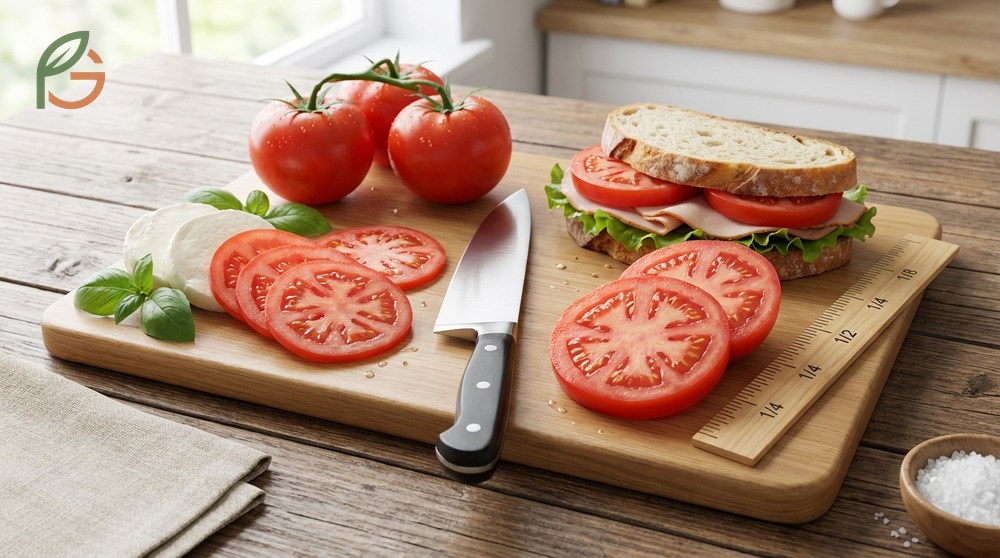
Different recipes call for different cutting styles. Thin slices work best for layered dishes like Caprese salad, while thicker cuts hold up better in burgers and sandwiches. The key is matching your cut to how you’ll use the tomato.
How to Cut a Tomato for Sandwich
For sandwiches, aim for slices about 1/4 inch thick—this provides the perfect balance of tomato flavor without making your bread soggy.[3] Thicker slices (closer to 1/2 inch) work better for hearty burgers, while thinner cuts suit wraps and tea sandwiches.
Remove the stem with a small V-shaped cut before slicing. Position the tomato on its side and make parallel cuts, keeping the slices as uniform as possible. If you’re making multiple sandwiches, place tomato slices on paper towels for 5 minutes to absorb excess moisture—this prevents soggy bread.
How to Slice Tomatoes Thin
Thin slicing (about 1/8 inch) requires extra care and a very sharp serrated knife. Chill the tomato slightly (10-15 minutes in the fridge) to firm up the flesh—this makes thinner cuts easier without the tomato collapsing. Use an even lighter sawing motion and let the weight of the knife do most of the work.
For paper-thin slices, consider using a mandoline with a protective guard. However, most home cooks find that a good serrated knife and patience produce excellent results without extra equipment.
Pro tip: Place a damp cloth under your cutting board to prevent slipping. Never cut tomatoes on glass or marble surfaces—they’re too hard and will damage both your knife and the tomato’s structure.
How to Cut Roma Tomatoes
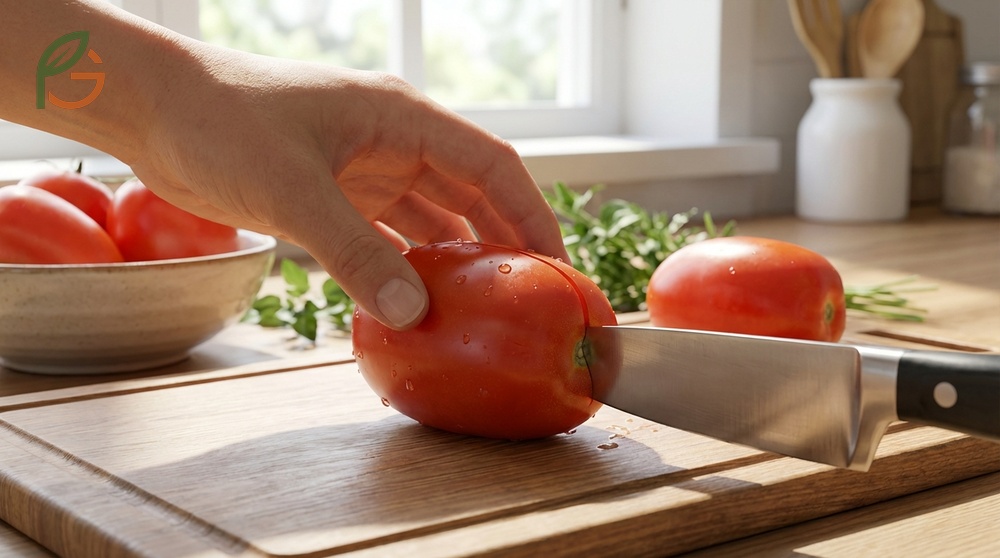
Roma tomatoes (also called plum tomatoes) have less water content and fewer seeds than round tomatoes, making them ideal for cooking. Their oblong shape and meatier texture mean they hold up better when diced or chopped. You’ll find them in most pasta sauces, salsas, and cooked dishes.
Start by washing and drying the Roma tomato. Remove the stem end by making a shallow cut to create a flat surface—this stabilizes the tomato for safer cutting. Roma tomatoes don’t usually have a tough core, but check the stem area and remove any firm white parts you find.
How to Dice a Roma Tomato
Cut the Roma tomato in half lengthwise (from stem to bottom). Place each half cut-side down on your cutting board for stability—this prevents slipping and gives you better control. Make vertical slices about 1/4 inch apart, or thinner if you want a smaller dice.
Turn the tomato 90 degrees and make a series of cuts perpendicular to your first slices—this creates uniform cubes. For very small dices, make one or two horizontal cuts across the width before you dice, though this isn’t necessary for smaller Roma tomatoes. The cut-side-down position is what keeps everything stable and produces consistent pieces.
- Use a very sharp serrated or paring knife for the cleanest cuts
- Keep the entire tomato stable by always placing the cut side down
- Slice evenly—thinner slices equal more consistent tomato pieces
- For smaller pieces, increase the number of vertical and horizontal cuts
- Collect diced tomatoes in a bowl and use immediately for best texture
Cutting Cherry Tomatoes Hack
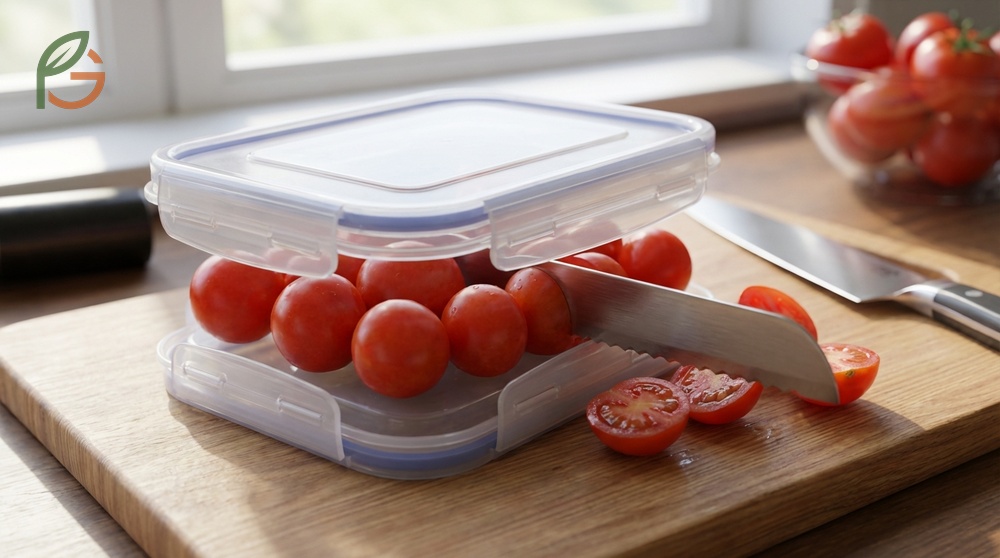
Slicing cherry tomatoes one by one is tedious when you need to prepare a large batch for salads or pasta dishes. There’s a kitchen hack that lets you cut a dozen or more cherry tomatoes at once using two plastic container lids and a bread knife.[4] Most people don’t know about this method, but it cuts your prep time by 75%.
Take two identical plastic lids (from deli containers or yogurt tubs). Place one lid lip-side up on your cutting board—this creates an edge that holds the tomatoes. Fill the lid with cherry tomatoes in a single layer, making sure they’re snug but not overlapping. Place the second lid on top, lip-side down, so both lips face each other and trap the tomatoes between them.
Press down firmly on the top lid to hold everything in place, but don’t squish the tomatoes. Slide a long serrated knife (bread knife works best) horizontally through the gap between the two lids. The blade will slice through all the cherry tomatoes at once, cutting them perfectly in half. It’s like magic—you’ll get clean cuts without any crushed tomatoes or nicked fingers.
- Start with 5-6 tomatoes until you master the technique, then work up to larger batches
- Arrange tomatoes in a single layer without overlapping for even cuts
- Use a bread knife longer than the widest part of your lids
- This method works equally well for grape tomatoes, olives, and grapes
- Larger lids let you cut more tomatoes at once—work up to 15-20 at a time
My friend in Oaxaca, Mexico uses this hack when she preps cherry tomatoes from her garden for weekly meal prep. She cuts 100+ tomatoes in under 5 minutes versus the 20+ minutes it used to take doing them individually.
Removing Tomato Seeds
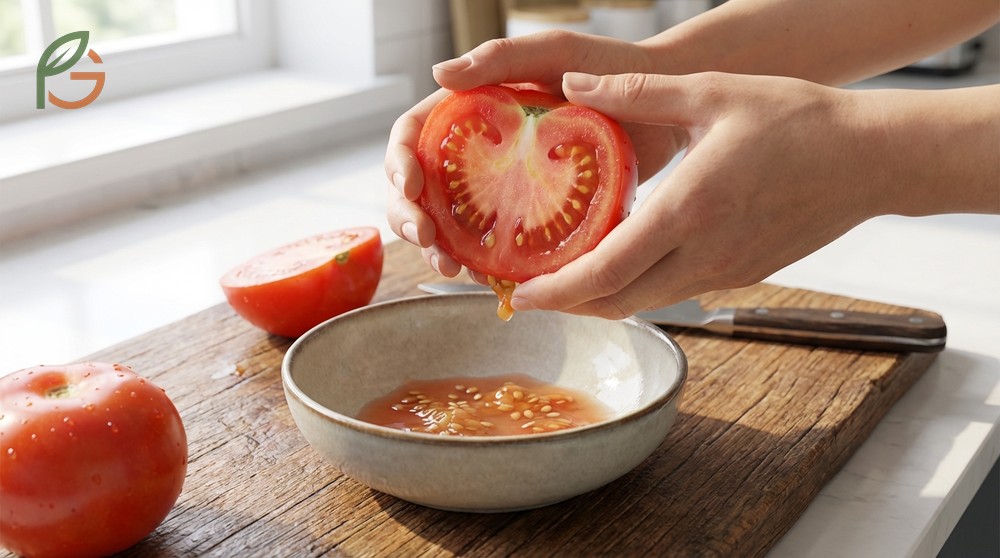
Some recipes call for seeded tomatoes to reduce excess liquid in sauces, salsas, or sandwiches. The seeds and surrounding gel contain most of the tomato’s water content. Removing them concentrates the flavor and prevents dishes from becoming watery or soggy.
Cut the tomato in half horizontally (across the “equator” rather than from stem to bottom). Hold one half over a bowl and gently squeeze to dislodge the seeds from the seed cavities—use gentle pressure to avoid crushing the flesh.[6] Use a small spoon or your fingers to scoop out any remaining seeds and the tough white core that clings to the tomato.
Alternatively, you can use a small spoon (a 1/4 teaspoon works well) to scoop the seeds directly from the cavities without squeezing. This method gives you more control and keeps the tomato halves intact for stuffing or other preparations. For recipes where you need the tomato in wedges, slice it vertically into quarters and use a sharp knife to carefully slice the seeds away from the flesh.
Save those seeds: Don’t throw tomato seeds away if you’re a gardener. Rinse them, dry them on a paper towel for 1-2 weeks, and store them in a cool, dry place. You can plant them next season, though heirloom varieties produce more reliable results than hybrid tomatoes.
Tomato Knife Skills
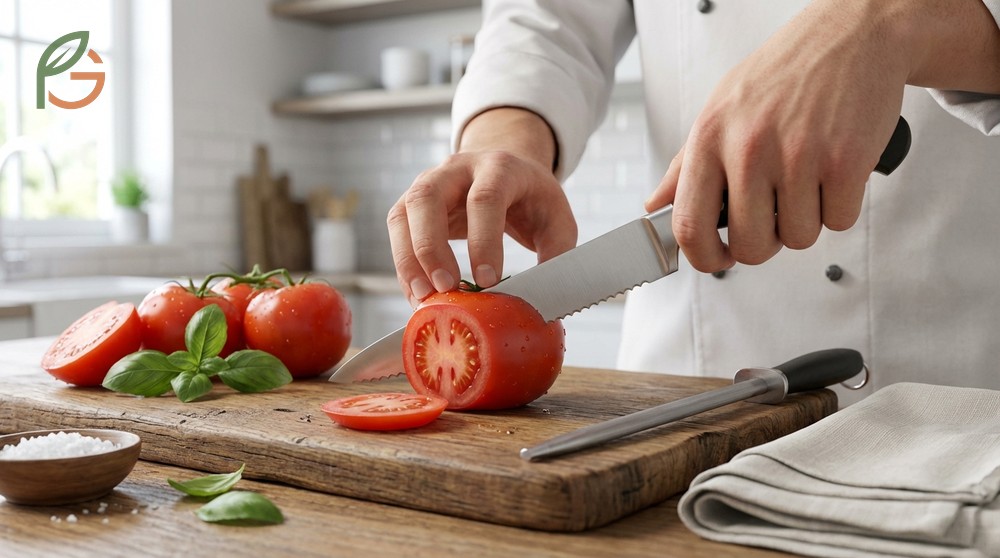
Professional tomato knife skills come down to three elements: proper hand position, controlled motion, and knife maintenance. The “claw grip” is your foundation—curl your fingertips inward while your knuckles guide the knife blade. Your knuckles act as a barrier that prevents the knife from sliding forward and cutting your fingers.
Use a gentle sawing motion with your serrated knife, letting the teeth do the work rather than applying downward force. The knife should move back and forth in short strokes (about 2-3 inches of blade movement) while you guide it through the tomato. This technique works for all tomato varieties and produces clean, uniform cuts without crushing.
| Technique | Best For | Slice Thickness | Key Tip |
|---|---|---|---|
| Standard Slicing | Sandwiches, burgers | 1/4 inch[3] | Cut on its side for stability |
| Thin Slicing | Caprese salad, wraps | 1/8 inch | Chill tomato 10-15 minutes first |
| Dicing | Salsas, sauces, toppings | 1/4 inch cubes | Place cut-side down for stability |
| Wedges | Salads, roasting, grilling | 6-8 wedges per tomato | Cut from stem to bottom |
- Keep your serrated knife sharp—even serrated blades need occasional sharpening or replacement
- Wash and dry tomatoes before cutting to prevent slipping
- Use a damp cloth under your cutting board for extra stability
- Store cut tomatoes in an airtight container in the fridge for up to 2 days
- Season cut tomatoes with salt 10-15 minutes before serving to enhance flavor
- Practice the claw grip consistently until it becomes automatic
Knife maintenance matters just as much as technique. Wash your serrated knife by hand rather than in the dishwasher—the harsh detergents and high heat can dull the teeth and damage the handle. Store it in a knife block or on a magnetic strip to protect the serrated edge from getting damaged in a drawer.
Conclusion
The evidence is clear: mastering how to cut a tomato comes down to using the right knife and the right technique. A serrated blade, gentle sawing motion, and proper hand position will give you clean, professional cuts every time—whether you’re slicing for sandwiches, dicing Roma tomatoes for salsa, or halving cherry tomatoes for a quick salad.
Current culinary guidance emphasizes knife skills as foundational kitchen techniques that improve both efficiency and safety. FruitGarden helps gardeners and home cooks bridge the gap between growing fresh produce and preparing it with confidence.
Frequently Asked Questions
What’s the best knife for cutting tomatoes?
A serrated knife with a 5-8 inch blade is best for cutting tomatoes. The saw-tooth edge grips the slippery skin and cuts through without crushing the flesh, while a straight-edge knife tends to slip and squash the tomato. For small tomatoes, use a 6-inch utility knife; for large beefsteak varieties, use an 8-inch bread knife.
How thick should tomato slices be for sandwiches?
Cut tomato slices about 1/4 inch thick for sandwiches. This thickness provides the right balance of tomato flavor and texture without making your bread soggy. For heartier burgers, you can go slightly thicker (1/2 inch), while lighter sandwiches and wraps work better with thinner slices (1/8 inch).
Should I remove tomato seeds before using them?
Remove tomato seeds when you need to reduce excess liquid in your dish, such as for sauces, salsas, or sandwiches. The seeds and surrounding gel contain most of the water content. For salads, burgers, and dishes where moisture isn’t a concern, you can leave the seeds in—they add flavor and nutrients.
What’s the fastest way to cut cherry tomatoes?
Use the two-lid hack to cut multiple cherry tomatoes at once. Place cherry tomatoes in a single layer between two plastic container lids (lip sides facing each other), then slice horizontally through the gap with a bread knife. This method cuts 10-20 cherry tomatoes in one motion, reducing prep time by 75%.
How do you dice Roma tomatoes properly?
Cut Roma tomatoes in half lengthwise, then place each half cut-side down on your cutting board. Make vertical slices 1/4 inch apart, rotate 90 degrees, and make perpendicular cuts to create uniform cubes. The cut-side-down position keeps the tomato stable and prevents slipping while you dice.
Why do my tomatoes get crushed when I cut them?
Tomatoes get crushed when you use a dull knife or press down instead of using a sawing motion. Switch to a sharp serrated knife and let the teeth do the work with gentle back-and-forth strokes. Avoid pressing straight down, and make sure your tomatoes are at room temperature rather than overly ripe and soft.
Can I cut tomatoes ahead of time?
You can cut tomatoes 1-2 hours ahead if stored properly, but they’re best used immediately. Once cut, tomatoes release moisture and start to deteriorate due to enzymatic browning. If you must prep ahead, store cut tomatoes in an airtight container in the fridge for up to 2 days, but expect some texture and flavor loss.